Tag Archives: JAPAN

Cult Film Review: Mermaid Legend (1984)

Cult Film Review: Mermaid Legend (1984)

Directed by Toshiharu Ikeda

Screenplay by Takuya Nishioka

Main cast: Mari Shirato, Junko Miyashita, Kentarō Shimizu, Jun Etō, etc.

Cinematography by Yonezou Maeda

Music by Toshiyuki Honda

*** MAY CONTAIN SPOILERS ***
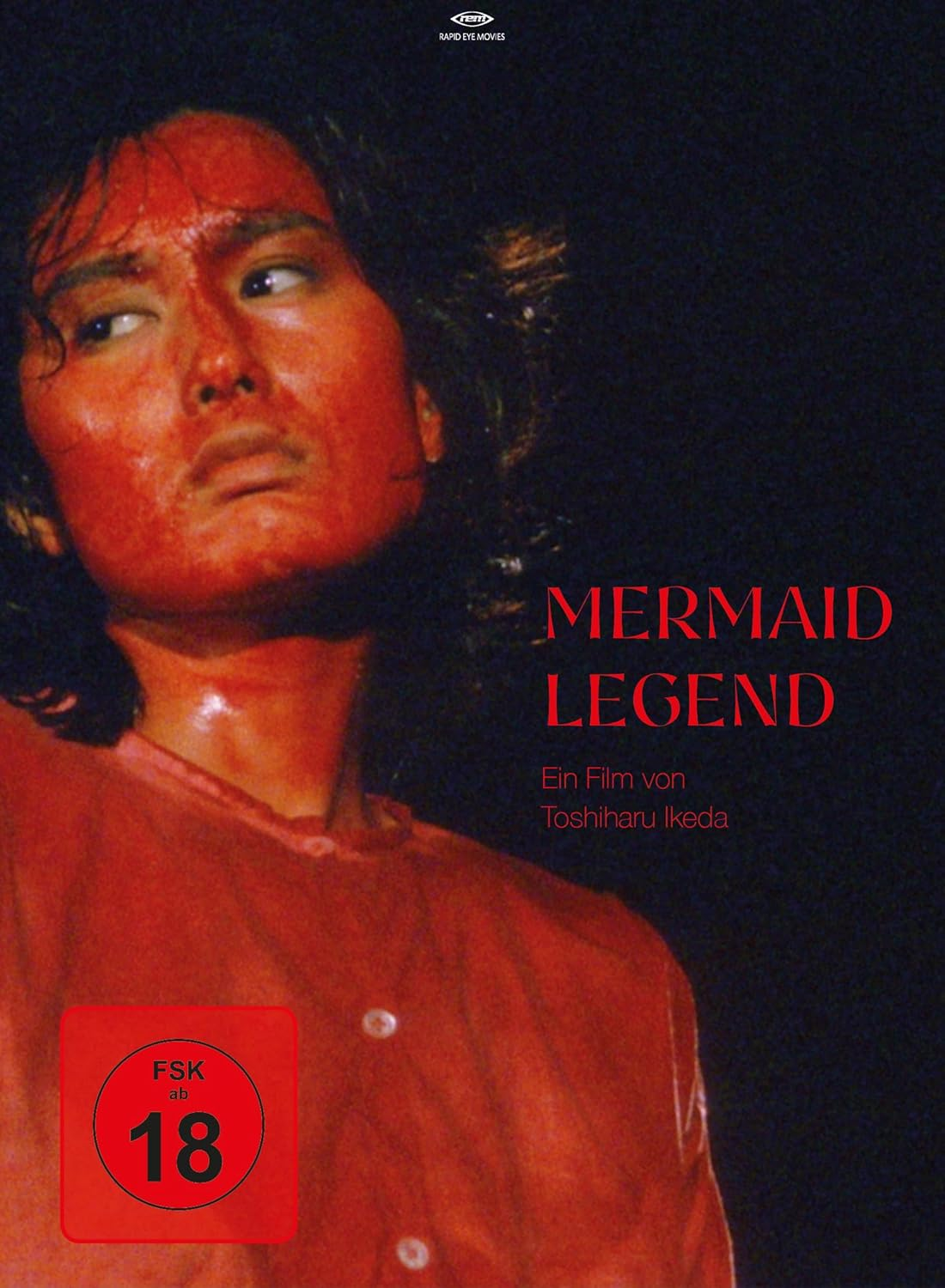


I took a gamble on an unknown Japanese film at the Nickel Cinema and walked out genuinely shaken. Mermaid Legend (1984) isn’t just a cult oddity—it’s a film that mutates before your eyes, seducing you with beauty before drowning you in blood. I was stunned by how something so lyrical could also be so brutally confrontational.

The story begins almost modestly, as a coastal drama about a fisherman and his wife, Migiwa. They bicker constantly, their marriage worn thin by poverty and exhaustion, yet there’s an undeniable bond beneath the arguments. That fragile domesticity is shattered when the fisherman stands in the way of an industrial development scheme. The business developers—faceless, polite, and utterly ruthless—have him murdered, disposing of his life as casually as industrial waste.

From there, Mermaid Legend (1984) transforms again. What starts as marital realism becomes a corporate espionage murder mystery, steeped in anger at nuclear energy, environmental destruction, and the cold machinery of corporate greed. Migiwa, a powerful-lunged pearl diver, initially hides, retreating into grief and the sea itself. But this is not a film about quiet mourning. When she decides to act, she does so with mythic force.
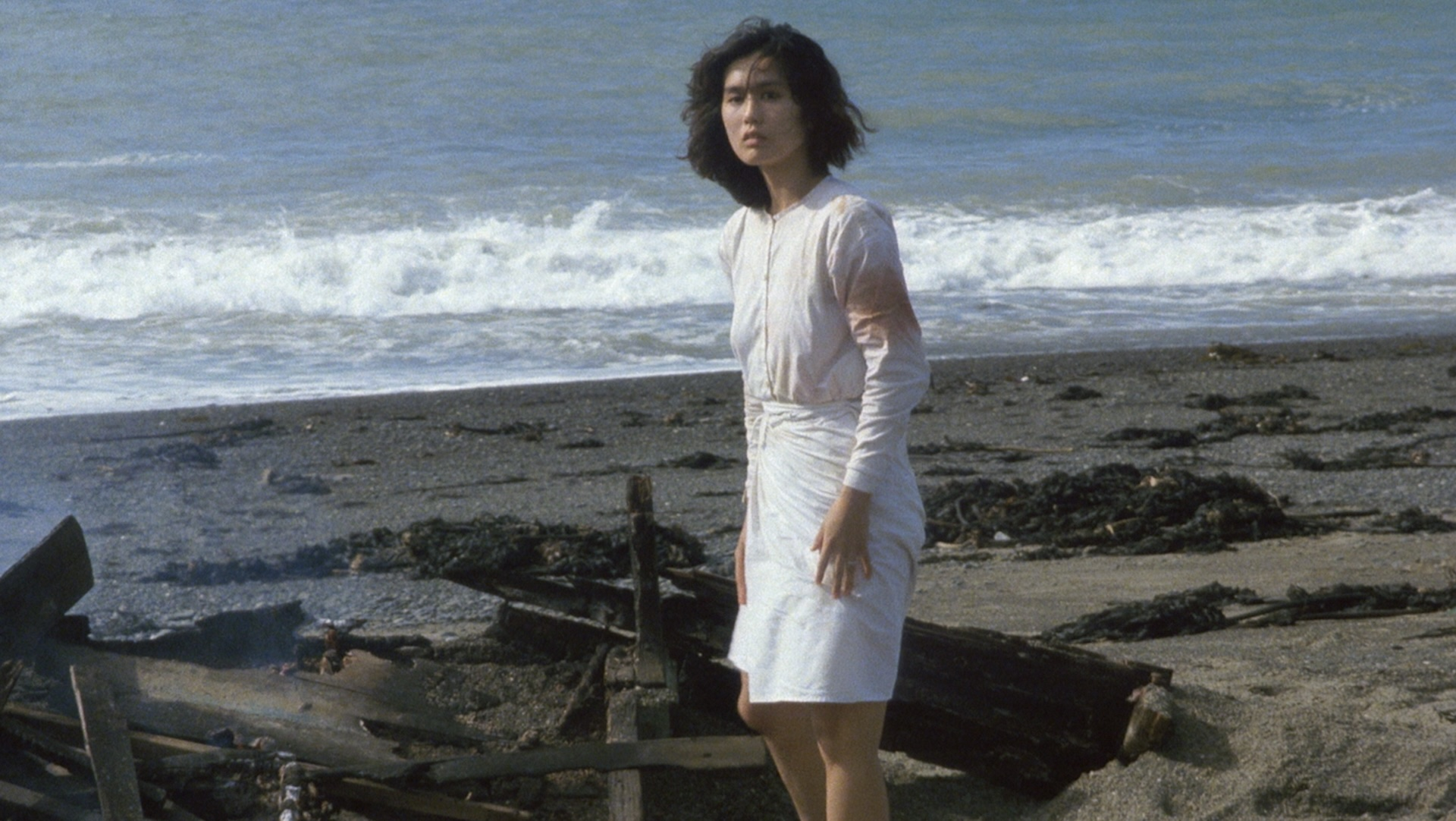


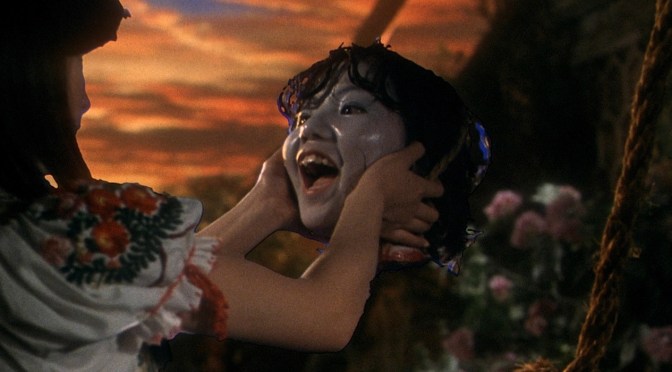
Played by the ethereal and astonishing Mari Shirato, Migiwa becomes something halfway between woman, avenging angel, and sea spirit. Shirato’s performance is magnetic—serene, sensual, and terrifying. As her vengeful pursuit begins, the film plunges headlong into extreme violence and explicit sexuality, reclassifying itself yet again as one of the most shocking exploitation epics I’ve seen from Japan in recent years. These scenes aren’t gratuitous in the lazy sense; they’re confrontational, weaponized, daring you to look away while refusing to let you feel comfortable for a second.

What makes Mermaid Legend (1984) so intoxicating is how its elements collide. Poetic underwater cinematography turns the ocean into a womb, a grave, and a cathedral. Religious, angelic, and environmental imagery blur together, as if Migiwa is both martyr and executioner. The music is heavenly—soaring, mournful, almost sacred—creating a surreal contrast with the carnage on screen. Beauty and brutality coexist in the same frame, each intensifying the other.

And then there’s the ending. The final, elongated pier stabbing rampage is completely off the chart—relentless, bloody, and hypnotic. It plays out like a ritual rather than an action sequence, stretching time until violence becomes abstraction, then meaning, then release. By the time the last body falls, Mermaid Legend (1984) has fully shed realism and entered the realm of legend, justifying its title in blood.

This is a film that shouldn’t work, yet does—furiously, defiantly. A genre-shifting fever dream that moves from domestic drama to political thriller to erotic exploitation to mythic revenge tragedy, Mermaid Legend (1984) is both beautiful and brutal, and I can’t stop thinking about it. Seeing it by chance at the Nickel Cinema felt like discovering a secret too powerful to stay hidden.

Mark: 9.5 out of 11


Cinema Review: The Smashing Machine (2025) – an authentic portrait of a MMA fighter that hits big!

Cinema Review: The Smashing Machine (2025)

Directed by Benny Safdie

Written by Benny Safdie

Based on documentary The Smashing Machine: The Life and Times of Extreme Fighter – Mark Kerr by John Hyams

Produced by Benny Safdie, Dwayne Johnson, Eli Bush, Hiram Garcia, Dany Garcia & David Koplan

Main cast: Dwayne Johnson, Emily Blunt, Ryan Bader, Bas Rutten, Oleksandr Usyk etc.

*** MAY CONTAIN SPOILERS ***


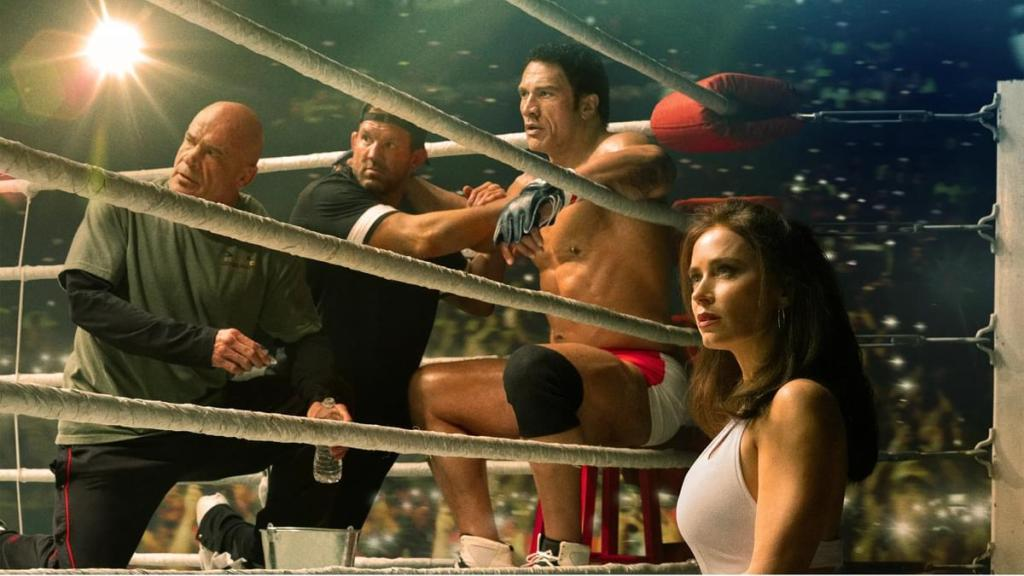
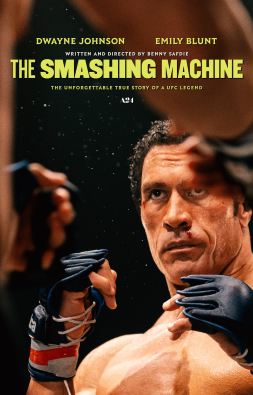
Benny Safdie’s The Smashing Machine (2025) is a bruising, compassionate, and unvarnished portrait of a man torn between physical dominance and emotional fragility. Centered on a three-year stretch (early 2000s) in the dramatic life of MMA pioneer Mark Kerr, the film captures both the bone-rattling intensity of the ring and the private turmoil of a fighter whose greatest battles unfold far from the crowd’s roar.

Dwayne Johnson delivers a revelatory performance as Kerr, casting aside his blockbuster charisma to reveal deep vulnerability and conflict. His portrayal is raw, unguarded, and humane—showing a man both addicted to the high of combat and trapped by the pain that follows. The film traces Kerr’s tumultuous relationship with Dawn Staples (played with nuance and sensitivity by Emily Blunt.) Together they find emotional truth in every scene, exploring the strain that MMA fighting, addiction, mental health, fear-of-losing, obsession and self-doubt place on intimacy.


The fight sequences are stunningly authentic, shot with kinetic immediacy and documentary realism. Safdie immerses the audience in the grit and chaos of early MMA, where glory was fleeting and paydays were meager compared to the sport’s modern era. Supporting performances from real fighters Ryan Bader and Oleksandr Usyk lend further credibility, grounding the film in the texture of lived experience.

Safdie’s direction is as intense and uncompromising as his subject. He resists the traditional rise-and-fall sports narrative, opting instead for a slice-of-life, near-documentary approach that prizes authenticity over heart-pounding drama. If the conflict surrounding Kerr’s addiction, rehab, and Dawn’s own mental health struggles feels under-explored, that restraint is also what makes the film feel so painfully real.

Inspired by the documentary, The Life and Times of Extreme Fighter – Mark Kerr by John Hyams, The Smashing Machine (2025) isn’t a conventional sports movie—it’s a portrait of survival, identity, addiction and the brutal intersection of ambition and vulnerability. Unflinching and deeply human, it cements Johnson’s performance as the best of his career, and confirms Safdie’s gift for finding poetry in the MMA fight scene. Ultimately, the film works best as a tribute to the trailblazing strength and passion of the fighter, Mark Kerr. The fight game is a crazy, tough business and it’s heartening to see, especially in the final scenes, that Kerr survived such battles and lived to breathe another day.

Mark: 8 out of 11


Mubi Film Review: Hirokazu Kore-eda’s exquisite tale of love, loss and rebirth – Monster (2023)

MUBI FILM REVIEW: MONSTER (2023)

Directed and edited by Hirokazu Kore-eda

Written by Yuji Sakamoto

Produced by: Hirokazu Kore-eda, Minami Ichikawa, Kenji Yamada, Megumi Banse, Taichi Itō and Hijiri Taguchi

Main cast: Sakura Andō, Eita Nagayama, Sōya Kurokawa, Hinata Hiiragi and Yūko Tanaka

Cinematography by Ryuto Kondo

Music by Ryuichi Sakamoto

*** MAY CONTAIN SPOILERS ***


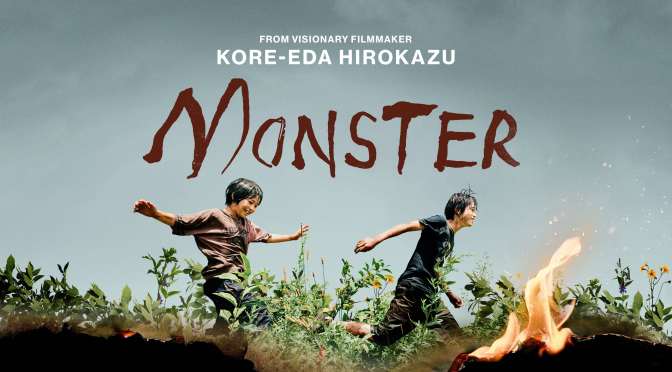
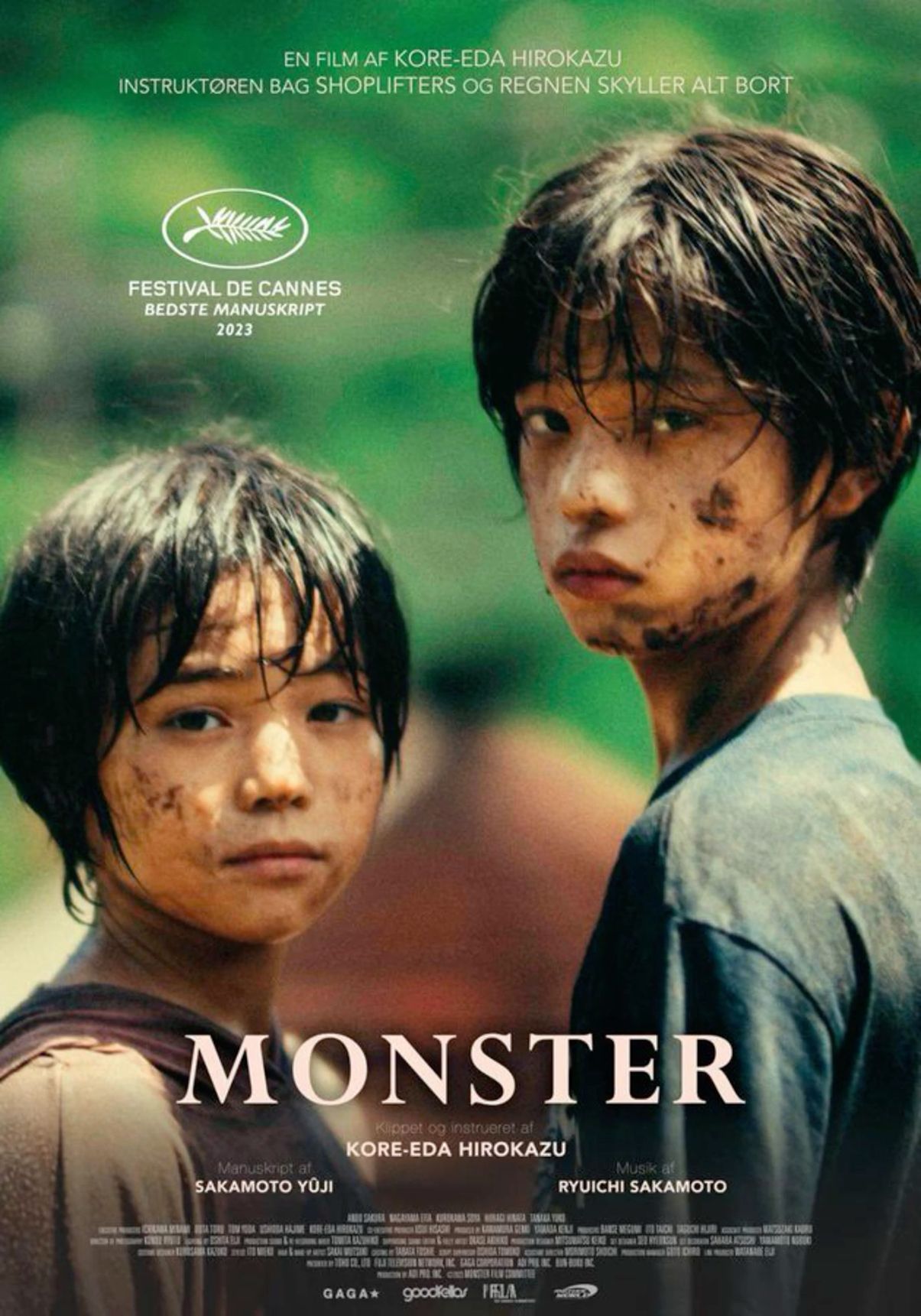
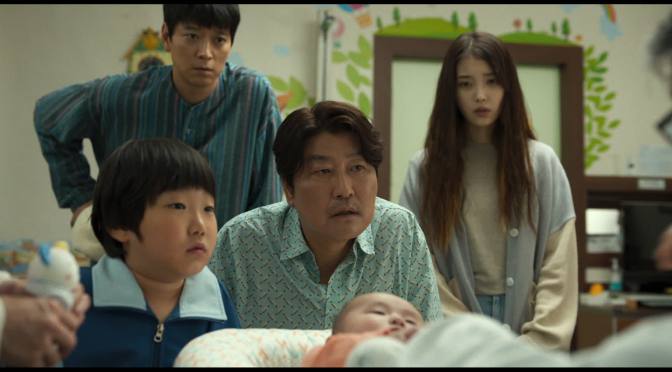
Hirokazu Kore-eda’s Monster (2023) exemplifies his continued mastery of humanist storytelling, a hallmark of his career. As with prior works such as the classic Afterlife (1998), critically acclaimed Shoplifters (2018), and the recent, arguably more commercial comedy-drama, Broker (2022), Kore-eda demonstrates a keen ability to explore the quiet complexities of human relationships, here through themes of bullying, young love, and the tender, taboo nature of queer affection. Monster (2023) delves deeply into the fragility of human connections, revealing the pain and misunderstandings that arise when societal expectations collide with individual identities.

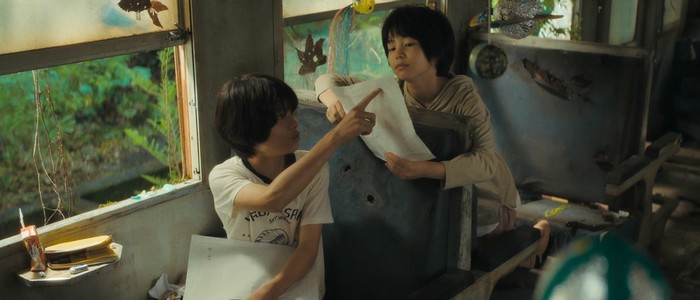
The story focuses on shifting narrative perspectives of two young boys, Minato (Sōya Kurokawa) and Yori (Hinata Hiragi), Mugino’s mother, Saori (Sakura Andō) and the boy’s teacher, Michitoshi Hori (Eita Nagayama). Initially, Minato begins displaying slightly disturbing behavious such as cutting his own hair and throwing tantrums in class. His mother then believes the teacher is bullying him and begins to campaign for Mr Hori’s punishment. What then unfolds is something altogether more complex and powerfully ambiguous.

With Monster (2023), crafted via a Rashomon-style structure by screenwriter Yuji Sakamoto, the narrative approach provides a formidable layer to the film’s emotional resonance. It allow the audience to revisit pivotal events from multiple perspectives. By shifting viewpoints the script highlights how perception shapes reality, illustrating the subjectivity of truth in deeply personal and often painful ways. The multifaceted storytelling reveals how moments of cruelty, compassion, and misunderstanding ripple across different lives, underscoring Kore-eda’s central humanist message: no person is simply a villain or a hero, but a complex amalgam of motives and vulnerabilities.


The script’s structural ingenuity enhances the film’s exploration of societal issues, such as the alienation of queer youth and the lasting scars of bullying. Each retelling reframes the characters’ actions, fostering empathy for even the most seemingly antagonistic figures. This interplay of perspectives elevates Monster (2023) beyond a straightforward tale of adolescent struggle, transforming it into a profound meditation on the intersection of memory, identity, and the pursuit of love and acceptance.

By marrying Kore-eda’s subtle directorial touch with Sakamoto’s intricate script, Monster (2023) achieves a rare cinematic feat: a story that is as intellectually engaging as it is emotionally devastating. Moreover, it reaffirms Kore-eda’s place as a preeminent chronicler of the human condition. Safe to say that it is beautifully filmed, cast and acted. To elicit such incredible performances from these boys is wondrous direction. It also features a fragmented but beautifully poetic final film score of the recently departed Ryuichi Sakamoto. Overall, it’s cinema that breathes pathos and humanity into each and every character, and provides no easy solutions. Monster (2023) is a film that burns, like the fiery tower block featured throughout, long in the heart and memory.

Mark: 9.5 out of 11


Hirokazu Kore-eda Film Reviews: AFTER LIFE (1998) and BROKER (2022)

BROKER (2022)

Directed and written by Hirokazu Kore-eda

Produced by Eugene Lee

Cast: Song Kang-ho, Gang Dong-won, Bae Doona, Lee Ji-eun
and Lee Joo-young.

Cinematography: Hong Kyung-pyo


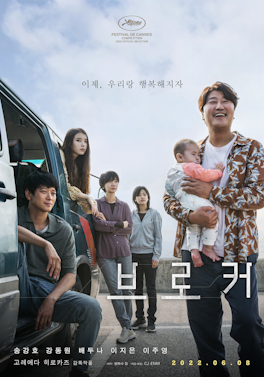
Arguably Japanese director’s Hirokazu Kore-eda’s most accessible film to date is the slice-of-life comedy-drama, BROKER (2022). Elements of Little Miss Sunshine (2006) meets Parasite (2019) meets Juno (2007) as kind-of-likeable and empathetic criminals create a dysfunctional family unit around stealing orphans and finding them families to makes ends meet. Lighter than many of his other brilliant human dramas, there is much to savour here from one of the best filmmakers working today.

There’s a lot going on in Broker (2022) as the duo of Sang-hyeon (Song Kang-ho) and Dong-soo (Gang Dong-won) work a grift of taking the unwanted babies, a police thriller involving murder, an impromptu road movie in a camper van, a cute kid looking for a surrogate father and a mother, Moon So-young (Lee Ji-eun) battling the dilemma of whether to sell or keep her child. A lesser filmmaker could have struggled balancing the many story, character and tonal shifts but Kore-eda manages it with aplomb.

Broker (2022) arguably has too many intertwining subplots though, as it strives to redeem all of the complex characters, but the wonderfully believable performances and brilliant screenplay really grabs you and rarely lets you go. Kore-eda’s direction is, as usual, masterly and assured as he balances the various tones confidently. Overall, this film makes you laugh, cry and is really moving as it highlights that family units can be lovingly born of collective experience, as well as blood.

Mark: 9 out of 11


AFTER LIFE (1998)

Directed and written by Hirokazu Kore-eda

Produced by Masayuki Akieda, Shiho Sato

Cast: Arata Iura, Erika Oda, Susumu Terajima, Sayaka Yoshino, Takashi Naito, Kei Tani, etc.

Cinematography Yutaka Yamazaki


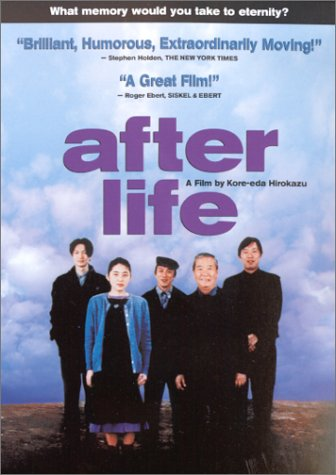
What a delightful, surreal and beautiful film. AFTER LIFE (1998), is easily one of the most imaginative and human films I have watched in a long time. It is set in an administrative centre somewhere between the realms of life and death. Here the staff of the office, kind of social workers, welcome recently deceased people and ask them to recall their life and choose a single memory. After which the filmmaking staff will recreate the memory, shoot this scene and the souls will be able to re-experience this moment forever in heaven.

To me this is a mind-blowing concept for a feature film and I am surprised that it has not been remade (and probably ruined) by Hollywood for either cinema or TV. What makes it so great is, that despite the high concept idea, the design and delivery is so down-to-earth. The offices where events confirmed are not presented with any of the usual angelic or heavenly cliches. Instead, Hirokazu Kore-eda, of which this is only his second feature film, and his production team, decide that the after-life is an unglamorous place run by kindly bureaucrats.

One of the many strengths of After Life (1998) lies with the human representations, both the people who have passed and the office angels who counsel them. The love, humour and emotion derived from the various interviews given by many of the characters are full of joy, sadness and longing. Along with the soulful characters coming to terms with their recent passing, the narrative also focuses on two “young” counsellors, Takashi (Arata Iura) and Shiori (Erika Oda), who must overcome their personal conflicts while helping others. Overall, After Life (1998) builds slowly and beautifully weaves so many fantastic human stories. When the filmed memories are revealed my heart melted, as Kore-eda delivers cinematic moments that will stay with one eternally.

Mark: 10 out of 11


CINEMA REVIEW: ASTEROID CITY (2023)

CINEMA REVIEW: ASTEROID CITY (2023)

Directed by Wes Anderson

Screenplay by Wes Anderson

Story by: Wes Anderson and Roman Coppola

Produced by: Wes Anderson, Steven Rales, Jeremy Dawson

Ensemble Cast: Jason Schwartzman, Scarlett Johansson, Tom Hanks, Jeffrey Wright, Tilda Swinton, Bryan Cranston, Edward Norton, Adrien Brody, Liev Schreiber, Hope Davis, Stephen Park, Rupert Friend, Maya Hawke, Steve Carell, Matt Dillon, Hong Chau, Willem Dafoe etc.

Cinematography Robert Yeoman

*** MAY CONTAIN SPOILERS ***


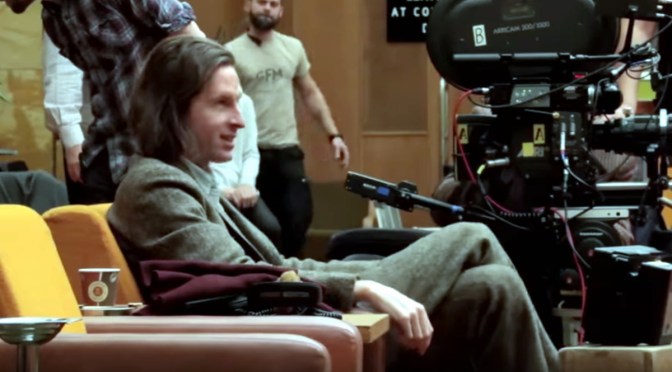
Wes Anderson is a phenomenal filmmaker with an imaginative set of style and narrative conceits. Everyone one of his releases is a rich tapestry containing memorable ensemble casts, adjacent framing, effervescent use of colour, geographical pertinence, intellectual humour and subjects situated in the far-left field of genre cinema. Yet, I do not enjoy ALL his films. Often, they veer too far into eccentric pretentiousness. Indeed, I found The French Dispatch (2021), frustrating and, other than the tremendous story set in the asylum with the mad artist (Benicio Del Toro), disconnected with it overall. While it was another admirable work of cinema, I did not enjoy it as a paying punter.

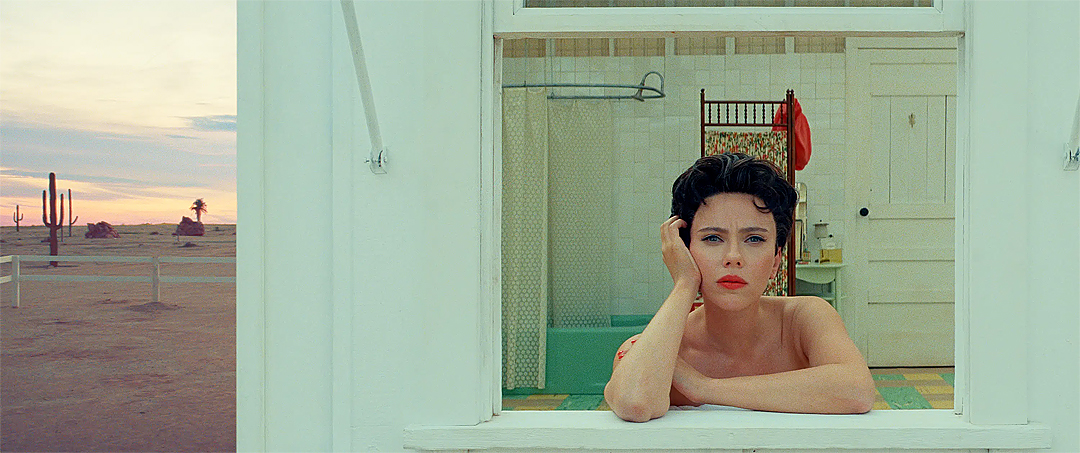
Asteroid City (2023), however, is a film I enjoyed greatly. The famous actors immersed within the ensemble, the cinematic artifice, the clever meta-narrative structure, symmetrical shot composition, beautiful use of colour, offbeat characters, specific era and geographical setting, imaginative props and costume design, and witty humour are all present as per Anderson’s impressive body of work. But Asteroid City (2023) had a larger emotional heart than his recent films, and is my favourite since the superb, The Grand Budapest Hotel (2014).


A heady combination of genres, one could describe, Asteroid City (2023), as a hyper-sci-fi-Western-retro-romantic-futuristic-comedy and study of grief set in 1950s, America. Despite filming taking place in Spain. Anyway, Anderson establishes the characters through the structure of a film within a play. Bryan Cranston’s narrator introduces us to the various middle-class, working class, military and scientific personalities who become trapped in the town of Asteroid City by a series of unlikely but hilarious misfortunes. Throughout the chapter inter-titles the scenes return us to our narrator as Anderson cleverly comments on the process of creating a story while delivering the narrative events.

Anderson delves into familiar themes of grief via the story of war photographer, Augie Steenbeck (Jason Schwartzmann) and his four kids, one of whom is a genius, Woodrow (Jake Ryan). He is there for a Junior Stargazer competition amidst the setting of the gigantic meteorite bunker. Again, the theme of prodigious children is mined for great humour and intellectual wit by Anderson. The futuristic inventions created by the children are especially fantastic. The plot strand of the science geniuses being exploited by the military and corporate sharks is deftly done. Yet, the main emotional heft is delivered within Augie and Hollywood actress, Midge Palmer’s (Scarlett Johansson) budding relationship. Johansson is especially compelling in the role, anchoring the film in welcome pathos, amidst the flurry of idiosyncratic absurdities Anderson throws at us. His framing of Augie and Midge between the their chalets is aesthetically memorable, visually augmenting their growing human connection.

Asteroid City (2023) proves once again Wes Anderson is one of the most original filmmakers of this generation. Will he gain some more converts to his particular set of cinematic bag of tricks? Who knows. What I do know is that I was completely immersed in the colour, movement, pace, humour, aesthetics, performances and themes with the film. I must say though, while it was necessary, the “Area 51” style — and I don’t want to give it away — absurd plot-turn halfway through was not my favourite aspect of the piece. But I realise it was narratively integral to the story. The meta-framing also seemed to get in the way at times of the main action effecting the occupants of Asteroid City. But these are minor gripes at a thoroughly artistic, beautifully immersive, and technically impressive cinematic achievement.

Mark: 9 out of 11


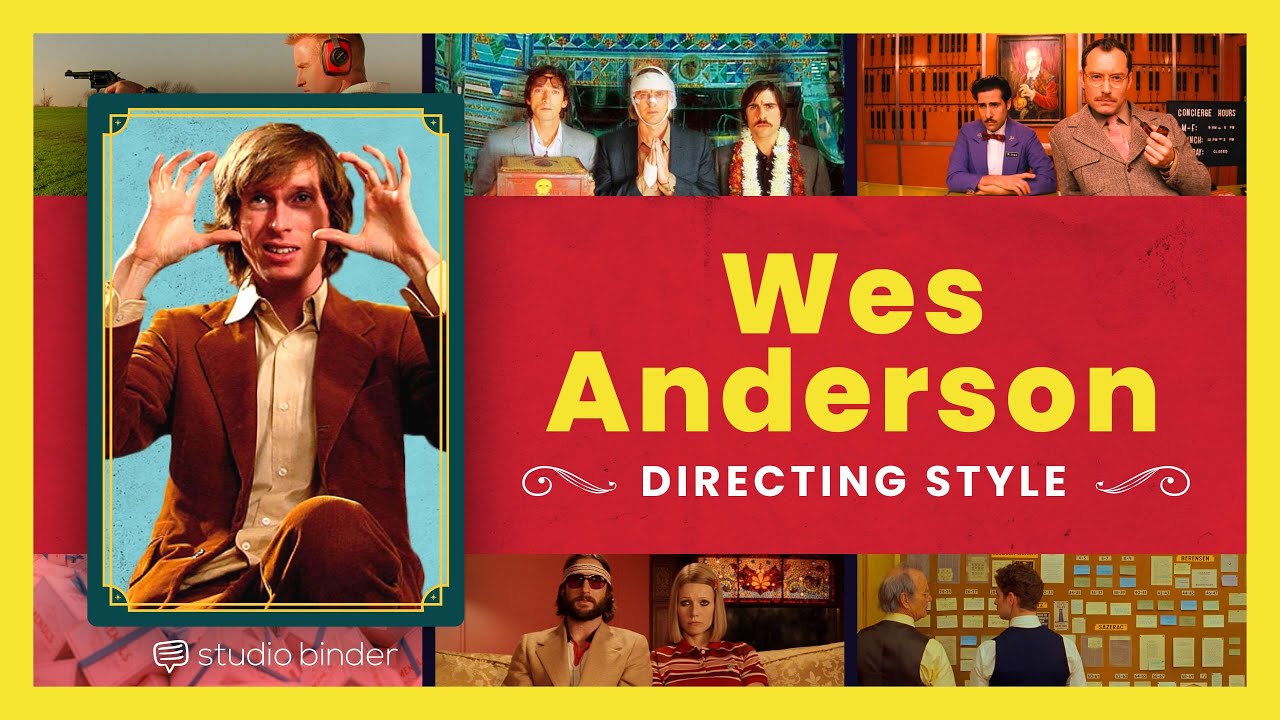
MY CINEMATIC ROMANCE #23 – WES ANDERSON

MY CINEMATIC ROMANCE #23 – WES ANDERSON

quirky
[ˈkwəːki]
ADJECTIVE


“having or characterized by peculiar or unexpected traits or aspects.
“her sense of humour was decidedly quirky”


synonyms:
eccentric · idiosyncratic · unconventional · unorthodox · unusual · off-centre · strange · bizarre · weird · peculiar · odd · freakish · outlandish · offbeat · out of the ordinary · Bohemian · alternative · zany · outré ·


I thought I’d save myself a lot of time using the above variant words in one go. Because they, and the word auteur, are utterly inevitable while writing a short article in praise of the Wes Anderson films I rate. It’s intriguing to write about Anderson though. While many of the pieces in the My Cinematic Romance series concentrate on people in cinema I absolutely adore, he is more a filmmaker who I respect rather than have an undying emotional connection with.

Wes Anderson is a phenomenal filmmaker with an imaginative set of style and narrative conceits. Everyone one of his releases is a rich tapestry containing memorable ensemble casts, adjacent framing, effervescent use of colour, geographical pertinence, intellectual humour and subjects situated in the far left field of genre cinema. Yet, I don’t enjoy ALL of his films. Often they veer too far into eccentric pretentiousness. Indeed, I was going to write a review of The French Dispatch (2021), but I found it frustratingly dull and, other than the tremendous story set in the asylum with the mad artist (Benicio Del Toro) disconnected with it on the whole. But, I must say, it was another admirable work of cinema, but one I did not enjoy as a paying punter.

So, rather than write a middling review about a genius filmmaker’s latest work, here is a piece about my favourite five films of Wes Anderson.

***MAY CONTAIN SPOILERS ***


BOTTLE ROCKET (1996)

Anderson’s debut feature film is based on his short film of the same name. Co-written with Owen Wilson, it is a freewheeling take on the heist movie which eschews hard-boiled professionals for a group of hapless losers led by the positively loopy Dignan (Wilson again). Shot way before Anderson got his ruler and set square out, it’s a naturally filmed, hilarious character comedy that destabilises crime genre conventions with charming effect. Launching the acting careers of the Wilson brothers it is an oddly charming filmic treat.


RUSHMORE (1998)

This is still my favourite Wes Anderson film because it combines a perfect combination of uncommon humour and prevailing verisimilitude. What I mean is I did not feel I was watching a showcase of artistic flourishes, but a true human story full of empathetic characters, feeling and emotion. It is also incredibly funny as we follow the rites of passage story of school maverick, Max Fischer (Jason Schwartzman), a working class kid rebelling against the adults he believes are beneath him. Bill Murray’s career renaissance began here and his character’s vengeful battles with Max are one of the film’s many highlights.


THE ROYAL TENENBAUMS (2001)

The first Wes Anderson film that saw the stylistic devices and themes so prevalent in his later work to truly come to the fore. The ensemble cast crammed with famous names, the omnipotent narrator, symmetrical framing, consistent and complimentary colour palettes, typography, fantastic use of nostalgic music, distinctive costumes and stories structured in chapters of the literary kind. The Royal Tenenbaums (2001) contains many absurd comedic moments, but has several tragic scenes too. This demonstrates Anderson’s growing maturity and remains a confident vision of a dysfunctional American family of geniuses and misfits.


THE GRAND BUDAPEST HOTEL (2014)

While Rushmore (1998) is my favourite film of Wes Anderson, his best is the tour-de-force comedy, The Grand Budapest Hotel (2014). It’s the pinnacle of bravura style and well-honed narrative competence, confidently presenting the rags-to-riches story of Zero Moustafa beginning in 1930s. Europe. Moustafa’s story takes in his first love, his job at the opulent hotel and his moving friendship with the prideful Gustave, an amazing Ralph Fiennes. It’s a film packed with invention, colour, humour, sadness and romance all wrapped in themes of the rise of fascism, loss, love and the wonder of friendship.


ISLE OF DOGS (2018)

Put aside ridiculous millennial online accusations of cultural appropriation and submerge yourself within Anderson’s rich canine narrative and stop-motion tapestry. As aforementioned, I’m not always a fan of his story subjects but he is a master of style and form. Isle of Dogs (2018) is no different and is a wonderful cinematic experience. Set in Japan we concentrate on, hence the title, a bunch of stray dogs dumped on a wasteland left to die and their subsequent adventures. This is much darker than prior Anderson films, but full of the imagination, wit, colour and brilliant technique, containing funny gags and twisting drama throughout. I preferred this to his version of the Roald Dahl classic, Fantastic Mr Fox (2009), as Bryan Cranston and the marvellous cast breathe life into the Anderson’s visionary animated box of tricks.

CULT FILM REVIEW: HOUSE/ハウス – (1977)

CULT FILM REVIEW: HOUSE (1977)

Directed by: Nobuhiko Obayashi

Produced by: Nobuhiko Obayashi, Yorihiko Yamada

Screenplay by: Chiho Katsura

Story by: Chigumi Obayashi

Cast: Kimiko Ikegami, Miki Jinbo, Ai Matubara, Kumiko Oba, Mieko Sato, Eriko Tanaka, Masayo Miyako, Yōko Minamida

Music by: Asei Kobayashi, Mickie Yoshino

***MAY CONTAIN SPOILERS***


This Japanese film from the late 1970s is absolutely nuts, but a riotous genre mash-up of rites-of-passage, horror, musical, martial arts, romance, fantasy, comedy and anti-war genre movie styles. If you are a fan of the work of Takashi Miike’s both energetic and often insane genre films, you can definitely see how, House (1977), may have had a major influence on his and many other Asian filmmaker’s cinematic works.

Initially receiving negative reviews, but big box office in Japan on release, House (1977), opens by introducing a set of seven teenage girls called, Gorgeous, King Fu, Prof, Melody, Fantasy, Mac and Sweet. The names give them their major characteristics too. Kung Fu for example loves martial arts, Fantasy is a daydreamer and Melody loves music etc. You get the idea. As each character is introduced in a basic fashion, the energetic performances of the actors and the quirky screenplay develops their characters beyond the initial stereotypes. Gorgeous is especially well developed as she is suffering the loss of her mother and has rejected her father’s choice of stepmother. Eschewing her kindly father’s protestations, she decides to visit her aged Aunt in the countryside.


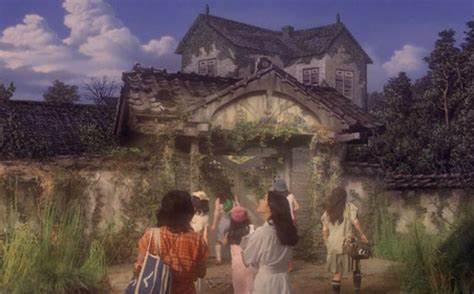
When Gorgeous’ friend’s school trip is cancelled due to several bizarre plot turns, and a couple of crazy musical numbers later, the girls join her on the visit to the creepy house. When they finally arrive Gorgeous’ aunt behaves extremely oddly. She rarely gets visitors and only has a white cat for company. When the girls begin to disappear one-by-one and Fantasy’s daydreams begin to turn to nightmares, the true horror of the situation takes shape. The house itself is a malevolent force and has trapped the girls. What appeared to be a lovely summer vacation is now the total opposite.

Now, what I have described actually seems quite normal in terms of the narrative content. It’s a standard horror plot of characters imprisoned by supernatural forces and trying desperately to stay alive. However, director, Nobuhiko Obayashi, who devised the story with his daughter, presents a series of images and sounds David Lynch would have been proud to have devised. These include: a mirror attacking the viewer, a watermelon being pulled out of a well appearing like a human head, a pile of futons falling on and attacking a character, a carnivorous piano with biting keys and all manner of surreal fights and deaths. Allied to this the eccentric and jolly music works against the horror and suspense, so one is both laughing and disturbed simultaneously.

Ultimately, House (1977) is one wacky viewing experience, but it also taps into themes of friendship, romance, grief, as well as drawing on the horror of destruction Japan suffered when the atomic bombs hit Nagasaki and Hiroshima. It is fast paced with an abundance of imaginative ideas, film styles and practical effects throughout. Thus, if you love the work of aforementioned Miike, Lynch and Sam Raimi, you are bound to want to stay in House (1977) for the rapid eighty-eight minutes duration.


SHUDDER HORROR FILM REVIEWS – EXTREME!

SHUDDER HORROR FILM REVIEWS – EXTREME!

I’m continuing the Shudder film review residency here on my site with this post. However, as I watched so many horror films on the channel recently, I have decided to break them down into categories. This one is called Extreme!

Essentially the films reviewed here are — because of their content, style or both — prime examples of nasty, violent, sickening and in some cases extremely depraved horror movies. So, be warned do not watch these films, unless you have a strong emotional constitution and actually enjoy witnessing graphic scenes of gore, sex and bloody mayhem.

For your information, the films are reviewed in order of my rating, which as usual is out of eleven.


REVENGE (2017) – DIRECTED BY CORALIE FARGEAT

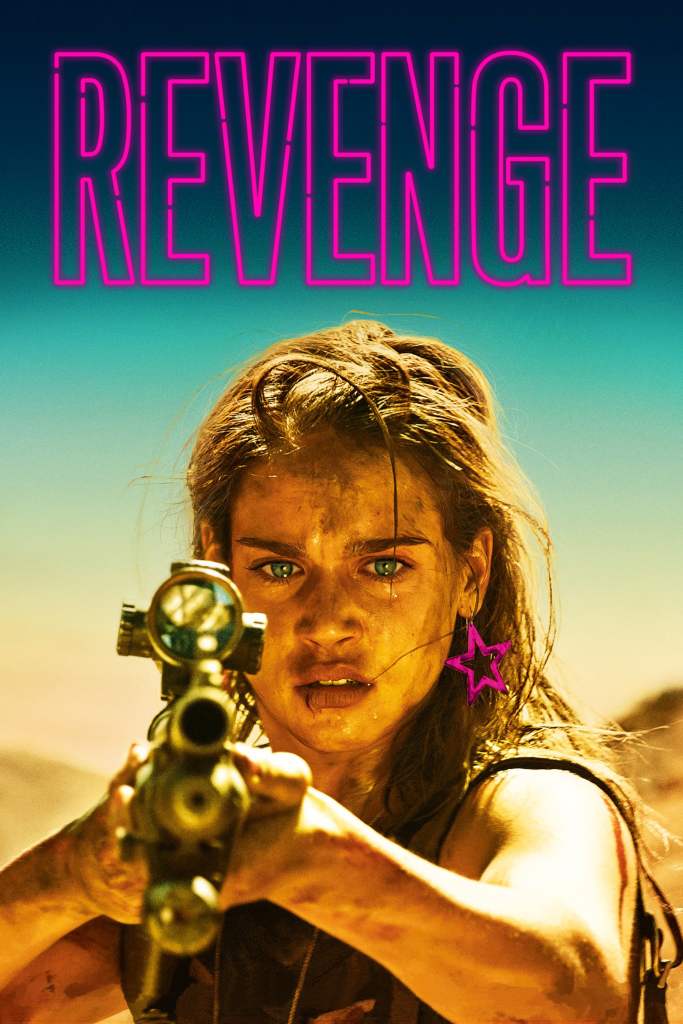
Featuring a B-movie rape and revenge plot, this exploitation story is raised way above its subject matter due to ultra-stylish direction, gorgeous cinematography and a compelling lead performance by Matilda Lutz. She portrays Jen, an aspiring actress, who is on a weekend getaway with handsome boyfriend (cheating husband), Richard (Kevin Janssens). He seems very well off as their break takes place at a stunning isolated villa location. However, things go awry when two of his hunting buddies turn up, and one, Stan (Vincent Colombe) attacks Jen while Richard is out. From then on events twist from incredibly bad to worse for Jen, and she finds herself being hunted down in the blazing heat of the desert. The film looks absolutely incredible with amazing photography and colour design. Overall, what it lacks in story and characterisation though, it more than makes up for in stunning action, searing violence and a powerful critique of toxic masculinity.

Mark: 8 out of 11


TERRIFIER (2016) – DIRECTED BY DAMIEN LEONE

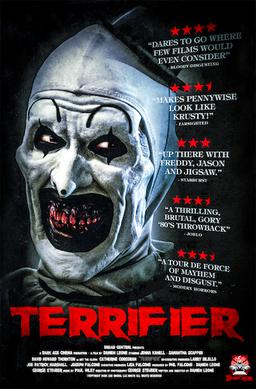
I saw this horror film appear in a post on the YouTube channel What Culture Horror. So, the story of a demented clown who never speaks and slashes people to death on Halloween definitely piqued my interest. It’s both extremely violent and low-budget, having been made for around $100,000. However, it is in fact impressively shot and edited for such a small amount of money. The gory effects are amazingly effective too, summoning up memories of 1980’s prosthetic film effects. There is no real subtext or thematic strength, but I was pretty tense and sickened throughout. Moreover, the clown called Art is a memorably monstrous creation. He kills without reason and purely for his own entertainment. Nihilistic in tone, the director sure knows his horror and delights in presenting many sick ways of murdering his characters. Thus, if you like disembowelling, strangulation, burning, beheading and other gruesome movie deaths then, Terrifier (2016), is worth watching from behind the safety of the sofa.

Mark: 7.5 out of 11


CITY OF THE LIVING DEAD (1980) / THE HOUSE BY THE CEMETERY (1981) – DIRECTED BY LUCIO FULCI

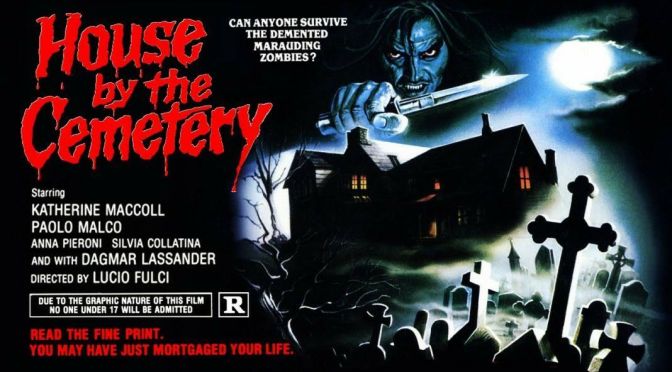
Filmmaker, Lucio Fulci, is often found lurking in the shadow of Italian horror filmmakers such as Mario Bava and Dario Argento, however, he truly knows how to frighten and sicken the life out of an audience. So much so he has been given the nickname, ‘Godfather of Gore’. As well as directing many films, notably, Zombie Flesh Eaters (1979) and The New York Ripper (1982), he is infamous for his “Gates of Hell” trilogy which included: City of the Living Dead (1980), The House By the Cemetery (1981) and The Beyond (1981). I re-watched the first two recently and while not as terrifying as when I saw them in the past, they still have the power to shock. While lacking coherent plots, containing pretty bad acting and some chronically dreadful dubbing in places, paradoxically Fulci’s films can arguably be considered surreal horror classics. They may not make any narrative sense, but his ability to create stunningly violent set-pieces is legendary. Memorable scenes include: the spewing of intestines, crawling maggots, hanging priests, drilled brains, chopped heads and monsters rising from basements and graves. Such imagery and dreaded moments — all set to a creepy synth soundtrack — make Fulci’s movies unsettling viewing experiences.

Mark: 7 out of 11


ISLAND OF DEATH (1976) – DIRECTED BY NICO MASTORAKIS

Not only is this one of the sickest films I have seen, it is also one of the most appalling I have sat through. Having said that, that is in fact what Greek director Mastorakis, based on what I’ve read, set out to do. The story, if you can call it that, focusses on a couple called Christopher (Robert Behling) and Celia (Jane Lyle) who go on a sex-driven-kill-crazy-honeymoon-rampage on the Greek island of Mykonos. If you can get past the couple having sex in a phone booth while telephoning his mother, and stomach Christopher raping a goat before killing it, then do watch the rest of this conveyor belt of pornographic sex and violence. By the end, I was stunned to silence at how sick the film was.

Mark: 1 out of 11


TETSUO – THE IRON MAN (1989) – DIRECTED BY SHINYA TSUKAMOTO

Lauded as a low-budget Japanese extreme body horror cult classic, Tetsuo: The Iron Man (1989), is either the work of a genius or a complete madman. Filmmaker, Shinya Tsukamoto, deserves so much praise for literally making most of the film in his own house and paying for it out of his own pocket. Yet, the thumping industrial soundtrack, jump-cutting-stop-motion style and story of metal invading the body, soul and mind of various characters was too f*cked-up, even for me. I know it gets mentioned as a work of genius, but it was frankly unwatchable. Thankfully, it’s only sixty-seven minutes of hell to get through.

Unmarked!

THE NETFLIX PROCLAMATION – REVIEWS OF: EARTHQUAKE BIRD (2019), i LOST MY BODY (2019), THE KING (2019), THE TWO POPES (2019) and more…

THE NETFLIX PROCLAMATION – FILM REVIEW CATCH-UP MARCH 2020

With COVID-19 threatening the world’s population, it is a time to remain calm and, if required, stay indoors out of the way of potential infection. As long as the Internet holds then there are thousands of films and TV shows to watch online to keep us all occupied. Obviously, one must also take a deep breath and pray that aside from the illness affecting the world, society manages to keep it’s social, financial and medical structures in place too.

Clearly, we need distractions at this difficult time. Films may not be the solution, but they can offer diversion at least. Thankfully, I love staying in and watching movies as it is a major hobby of mine. Indeed, I have been busy lately catching up on some of the latest releases Netflix has to offer. Thus, I present some quick reviews of films currently on the streaming platform, all with the usual marks out of eleven.

***MAY CONTAIN SPOILERS***


A PRIVATE WAR (2019)

Rosamund Pike is absolutely enthralling as the brave war correspondent, Marie Colvin. Putting her life and sanity on the line to report the terrors of conflict in Sri Lanka, Libya and Syria, to name a few, Colvin was both fearless and crazy in equal measures, but remains an incredibly powerful voice. This fine biopic feels haphazard and structurally chaotic but is certainly an impressive tribute to an iconic journalist. (Mark: 8 out of 11)


DESTROYER (2018)

Nicole Kidman gives another excellent performance in this gritty neo-noir-cop-procedural drama. The clever structure — which tracks back and forth between Kidman’s burnt out character in the present and her violent past going undercover in a crime gang — arguably works against the emotional power of the film. However, director Karyn Kusama and Kidman make a formidable team in delivering a moody, bruising and bitter revenge thriller. (Mark: 8 out of 11)


EARTHQUAKE BIRD (2019)

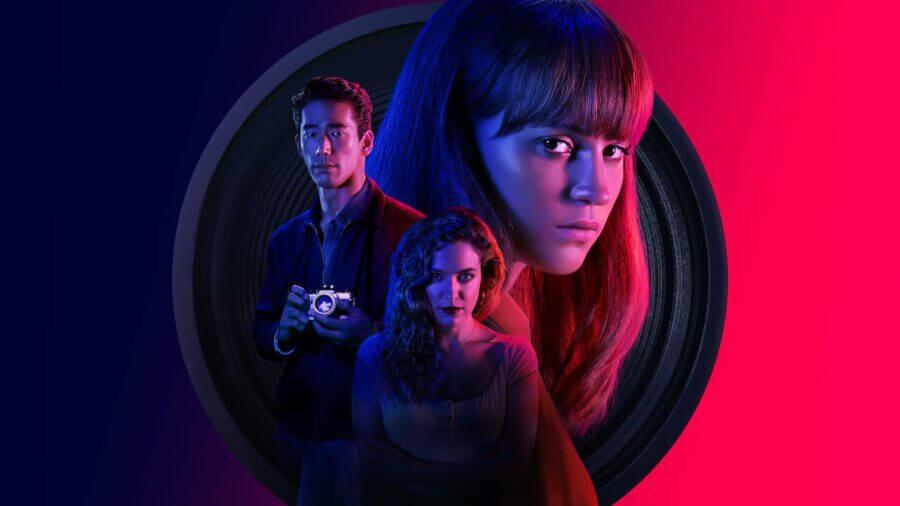
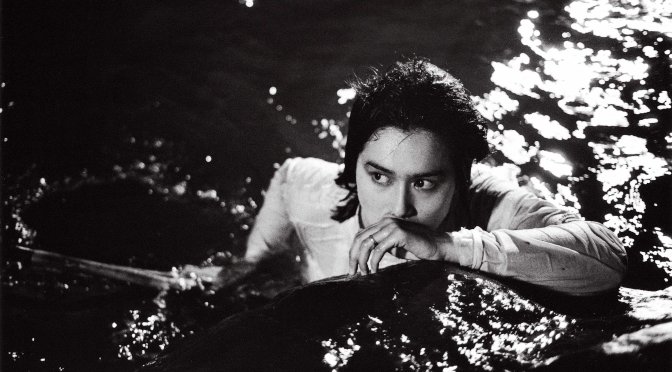
I really loved director Wash Washmoreland’s previous film, Colette (2018), because it was such a vibrant. colourful and sparkling biopic of a fascinating character. I was thus surprised to see he had followed it up with an under-cooked thriller like Earthquake Bird (2019). Alicia Vikander portrays a dour ex-patriot in Japan who gets drawn into a love triangle involving the effervescent, Riley Keough, and photographer, Naoki Kobayashi. The film felt, like Vikander’s protagonist, depressed; ultimately drifting toward a tepid denouement. (Mark: 6 out of 11)


Image result for earthquake bird

ENTEBBE (2019)

Rosamund Pike again! Here she is cast alongside Daniel Bruhl as they portray two Germans who joined a Palestinian military group that hijacked an Air France Flight in 1976. While the politics of the Israelis versus the Palestinians is explored to some extent, I felt more could have been done during the hostage situation to examine such complex issues. Instead, we get something more generic from director Jose Padiha, who inexplicably uses dance troupe montage to convey nebulous emotion and meaning. (Mark: 6 out of 11)


I LOST MY BODY (2019) – (Contains spoilers)

Both original and generic in terms of story, this romantic drama contains some of the most wonderful animation concepts I have seen in a long time. Brilliantly rendered and directed by Jeremy Chaupin, the narrative has two major strands. A severed hand – yes, a hand – seeks to unite with its body. Simultaneously, flashbacks reveal young Naoufel attempting to romance the girl he loves, Gabrielle. I really wanted to enjoy this more as the filmmaking is stunning. But, the final act of the film was too poetic, and it left me feeling cold and confused. (Mark: 7 out of 11)


THE KING (2019)

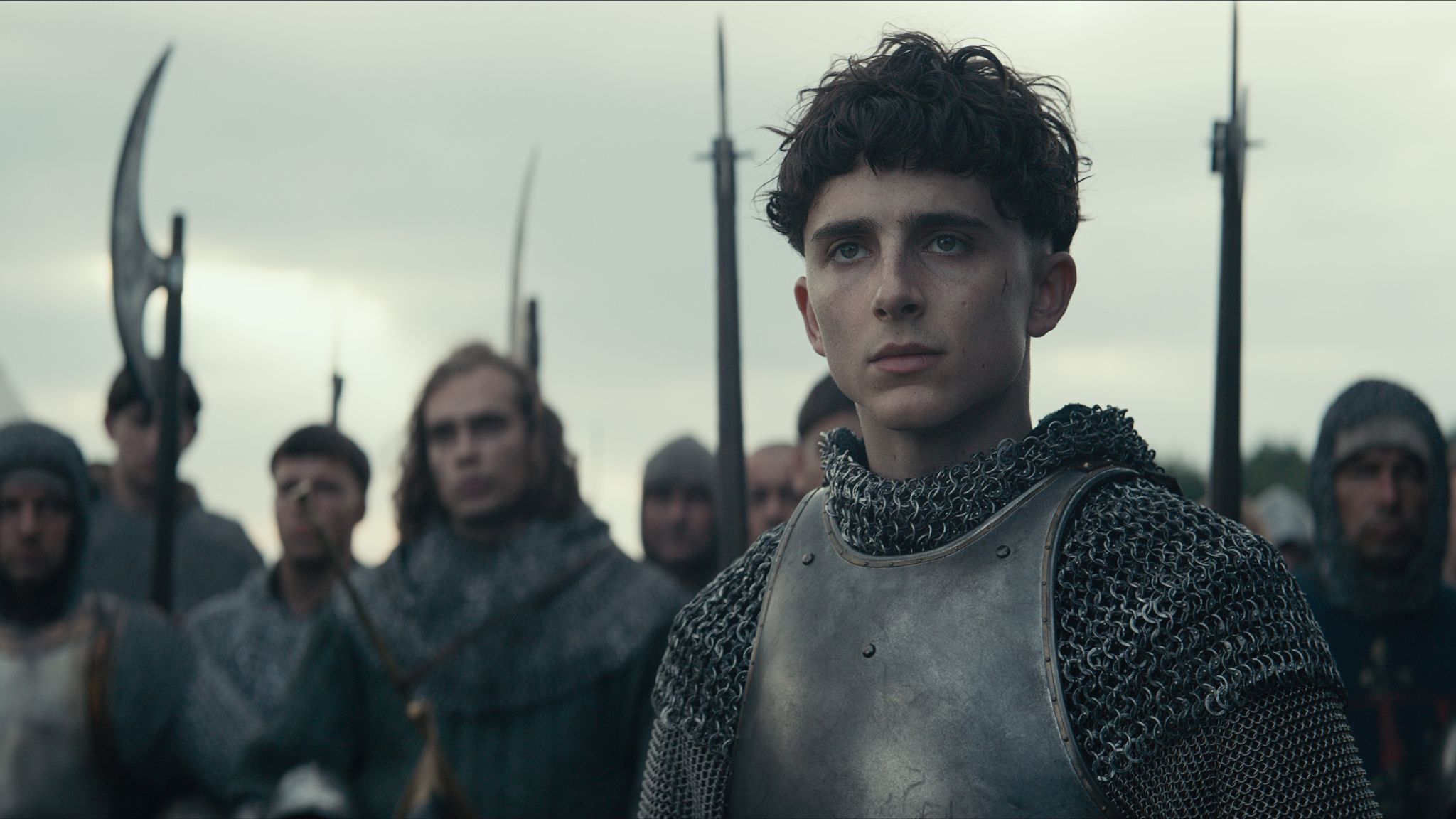
David Michod has been a filmmaker worth keeping tabs on since the release of brutal Australian crime film, Animal Kingdom (2010). After the big budget military satire War Machine (2017), failed, in my view, to hit the target, Michod has gone with another big production in The King (2019). Adapting Shakespeare’s Henry V trilogy (co-writer with Joel Edgerton) is no easy task and they deliver a film full of bravura cinematic moments. Timothee Chalamet is impressive in the lead role as the reluctant, but strong-of-heart young Prince Hal/King Henry. Lastly, Sean Harris, Robert Pattinson, Edgerton (as Falstaff) and Thomasin Mackenzie provide excellent acting support in a stirring period epic. (Mark: 8 out of 11)


Image result for the king timothee chalamet

THE LAUNDROMAT (2019)

Filmmakers Scott Z. Burns and Steven Soderbergh are usually so reliable in their cinematic endeavours. However, a star-studded cast including: Meryl Streep, Gary Oldman, Sharon Stone, Antonio Banderas, Matthias Schoenaerts and Jeffrey Wright cannot save this misguided comedy-drama about the Panama Papers scandal. I’m sure there is a great film in such financial crimes, but this was not it. (Mark: 5.5 out of 11)

MID 90s (2019)

Jonah Hill adds director to his already very successful acting, writing and producing curriculum vitae. Mid 90s (2019) owes much to the low-budget, improvisational and gritty style of filmmakers like Harmony Korine and Larry Clark, however, Hill’s approach is less extreme. The loose and episodic rites-of-passage narrative centres on Los Angeles based skater gangs and specifically Stevie (Sunny Suljic). He longs to grow up too fast and his experiences reminded me of an American version of Shane Meadow’s This is England (2006). While it’s a solid work of cinema, full of heart and believable performances, it’s ultimately quite underwhelming from an emotional perspective. (Mark: 7 out of 11)


THE TWO POPES (2019)

Fernando Merielles directs this adaptation of Anthony McCarten’s play featuring two giants of the acting world in Anthony Hopkins and Jonathan Pryce. The two heavyweight actors portray the real-life Pope Benedict XVI (Hopkins) and future Pope Francis, Cardinal Jorge Mario Bergoglio (Pryce). The duo conflict, debate and laugh about serious matters related to the history of the Catholic Church; plus, some not-so serious matters such as pizza and football. Having sat through Paulo Sorrentino’s uber-pretentious TV series The New Pope (2020) recently, I was not in the mood for more theological drama. However, the two leads are excellent, especially Pryce; and while the film is very dialogue driven, the flashbacks of Argentine history from Cardinal Bergoglio’s early years were powerfully evoked. (Mark: 8 out of 11).


SILENCE (2016): REVIEWED BY A RELIGIOUS OUTSIDER

SILENCE (2016): REVIEWED BY PAUL LAIGHT

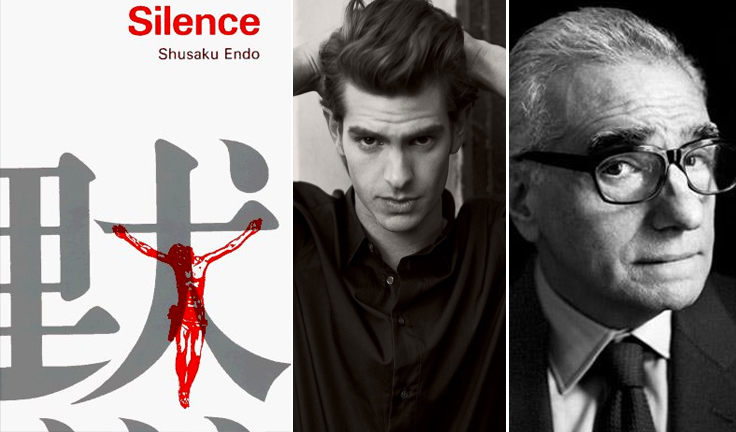
Rather than review every single thing I have seen in one monthly instalment I have decided to theme my reviews concentrating on quality rather than quantity in 2017. So, here I go with a light essay on the nature of the existence of God, the relevance of religion in today’s world and at the same time give my humble opinions on Martin Scorcese’s passion project Silence (2016).

martin-silence1

In my mind I do not believe in God. I do not believe in a higher-power that created Earth and oversees our everyday lives. I believe Jesus, Buddha and Mohammed existed in some form or another in the past and their philosophies and teachings laid the groundwork for Christianity, Islam and Buddhism; plus many of the other religions that are followed today. Personally, I believe in all that I see and hear and experience in life and while I respect other people’s faith, commitment to an all-powerful being is not for me. Each to their own I reckon.

liam-neeson

A belief in Heaven and God certainly explains many things such as why are we here? And what happens when we die? Because let’s face it the threat of a never-ending abyss of no consciousness is a terrifying thought after all. I mean, I lived and studied in Stoke-on-Trent for three years so have seen the void and it is frightening. So, I get that people need some comfort and answers to difficult questions. It’s just a shame that religion, organized or otherwise, has been used historically for not only good but also something that has caused: torture, war, murder, inquisitions, control, heartache and division etc. But, hey, that’s more of a critique of humanity rather than faith.

Thus, while I respect individual’s choice of faith or politics or ideology, religion and prayers are not for me. Having said that, I’m not a fundamental atheist looking to attack those believers and when reputed filmmakers such as Martin Scorcese embark on personal journeys into their own faith it certainly makes one have a look and reconsider your own perspectives. Indeed, Silence features a lead character which clearly acts as Scorcese’s personal conduit as Rodrigues journeys into the heart of darkness and faces a horrific test of faith.

silence-00432.jpg

Like The Last Temptation of Christ (1988) and Kundun (1997), Martin Scorcese is no stranger to broaching heavy and powerful subjects relating to religion. Of course, it’s easy to say I prefer his stylised, violent and darkly humorous gangster films as they are eminently watchable with kinetic camerawork, great soundtracks and brutal men taking each other out in all manner of bloody ways. Having said that these films still ring true to Scorcese as he grew up in a tough Italian neighbourhood where more often than not the choice was to become a gangster or a priest. What a choice!

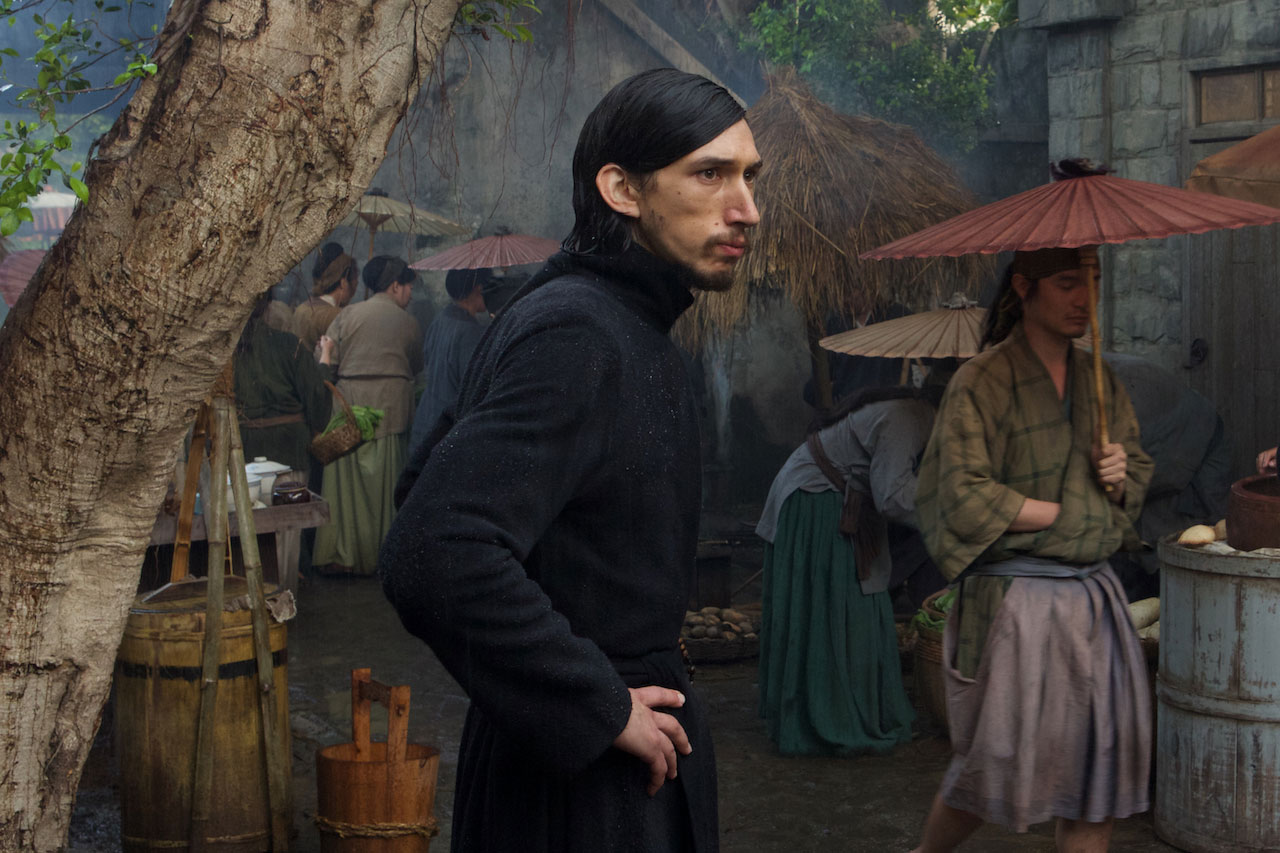
Silence is set as far away from New York as you could get: in 17th century feudal Japan. It concerns two priests Rodrigues and Garupe (brilliant portrayed by Andrew Garfield and Adam Driver) who venture into the heart of darkness to attempt to find their mentor, Father Ferreira (Liam Neeson). It is a long film which requires much stamina in both heart and mind and at times certainly tested my faith in the director. However, after it had ended it left me with so much to think about I knew it was worth the journey. It’s a story that you absorb through your psyche and physicality. It does not strike any easy notes as it discordantly pulls at your cerebral sinews.

silence

The first act quickly establishes the drama but I felt that the second thirty minutes was arguably too slow as I was very keen for the quest to find Ferreira gain some pace. Yet, when the film focusses on Andrew Garfield’s character and the testing of his faith Scorcese really got to the heart of the narrative. Moreover, there was much in the film which reflected today. The priests are captured, humiliated and tortured in a Japanese equivalent of Guantanamo Bay. But the Japanese were not stereotypical or evil for evil’s sake. Their motivations of protecting their culture and own religion were well argued. In fact, it’s an important theme in the film where, in testing Rodrigues’ faith, are they not perhaps right to protect their way of life? Especially given they may have some knowledge of the violence committed by Westerners and Christians in the name of God.

silence3

Overall, Silence is a reflective and personal film about faith and culture clashes. Over the running time Scorcese, through the characters, questions his beliefs and how he should best go about praising the Lord. Scorcese’s soul is in many characters notably Rodrigues but also Neeson’s Ferreira. Most importantly he is also present in a fascinating sin-confess-repent-Judas character called Kichijiro (Yōsuke Kubozuka). While moving at a meditative pace Silence possesses some wonderful cinematography, sterling performances and a brooding score. Ultimately, faith is a personal choice and whether you believe in God or not an individual must choose their own path of faith even if it is silence.