Sometimes it’s not necessary to go on and on about a film so here’s a rapid-fire round-up of films I’ve seen over the last couple of months. It’s like speed-dating for films but without the crushing romantic disappointment of mass rejection in one evening. As usual I accompany the reviews with marks out of eleven.
**SPOILER-FREE**
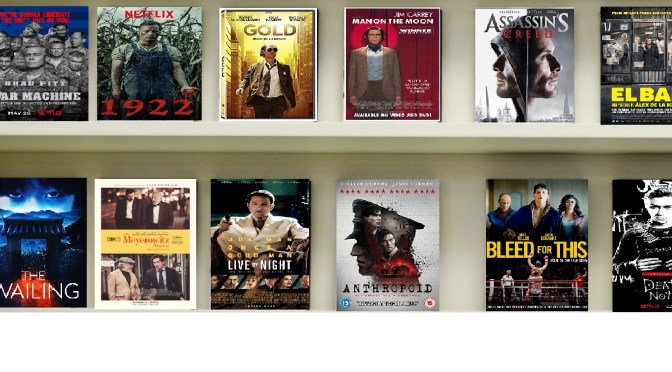
1922 (2017) – NETFLIX
Thomas Jane excels as a scheming farmer haunted by death, greed and rats! (Mark: 8 out of 11)
THE ACCOUNTANT (2016) – SKY CINEMA
An OCD-assassin portrayed by Ben Affleck wreaks havoc in a very tidy fashion. (Mark: 8.5 out of 11)
ANDY AND JIM (2017) – NETFLIX
Schizoid-meta-textual-yet-intriguing Jim Carrey / Andy Kaufmann documentary. (Mark: 7.5 out of 11)
ANTHROPOID (2016) – NETFLIX
Gripping WWII story concerning Czech resistance fighters assassinating Nazis. (Mark: 8 out of 11)
ASSASSINS’ CREED – SKY CINEMA
Stunning production values and cast are let down by a bemusing plot and script. (Mark: 6 out of 11)
THE BAR (2017) – NETFLIX
Spanish comedy-thriller has selfish occupants trapped in a bar all turn on each other! (Mark: 7.5 out of 11)
BLEED FOR THIS (2016) – NETFLIX
Miles Teller excels as boxer Vinny Pazienza battling for survival in and out of the ring. (Mark: 8 out of 11)
DEATHNOTE (2017) – NETFLIX
Hamstrung horror film throws away a brilliant concept via hopeless script and acting. (Mark: 5 out of 11)
FREE STATE OF JONES (2016) – AMAZON
Watchable American Civil War historical drama with McConaughey on good form. (Mark: 7.5 out of 11)
GOLD (2016) – AMAZON
McConaughey again shines as a modern day gold prospector in compelling drama. (Mark: 8.5 out of 11)
LIVE BY NIGHT (2016) – SKY CINEMA
Affleck as gangster anti-hero in stylish but empty “Roaring Twenties” adaptation. (Mark: 7 out of 11)
THE MEYOROWITZ STORIES (2017) – NETFLIX
Narcissistic family members talk at each other about life in pretentious drama. (Mark: 7 out of 11)
SNOWDEN (2016) – NETFLIX
Oliver Stone brings the famous whistle-blower’s story to life in a well-shot drama. (Mark: 7.5 out of 11)
TRUE STORY (2015) – NETFLIX
Franco and Hill sleepwalk through a compelling real-life murder case narrative. (Mark: 6.5 out of 11)
THE WAILING (2016) – NETFLIX
Incredibly rendered yet abstract Korean horror centring on Shamans and viral death. (Mark: 8 out of 11)
WAR MACHINE (2017) – NETFLIX
Tonally haphazard mix of war satire, biopic and drama with Brad Pitt hamming it up. (Mark: 6 out of 11)
Over the past few months I’ve focussed my extra-curricular viewing on BBC produced dramas via the BBC channels and catch-up on Netflix. The British Broadcasting Corporation, being the public-service-tax-payer-funded-beast that it is has a commitment to produce quality programming for national viewing and also overseas sales too. I then got to thinking; why not check out where some of my £12.12 per month money goes. So, here are some bitesize reviews of recent BBC dramas with marks out of the usual eleven.
**CONTAINS MILD SPOILERS**
THE CHILD IN TIME (2017)
Based on Ian McEwan’s prize-winning novel this was an interesting drama which worked in many respects but did not quite connect in others. Benedict Cumberbatch and Kelly McDonald are parents whose child goes missing while out shopping. The drama and grief of this was very well evoked but the supporting story of a publisher’s regression and mental collapse did not quite thematically meld for me. No doubt McEwan’s original source is a master work and I enjoyed many of the emotional moments provided by the excellent acting. (Mark: 8 out of 11)
DOCTOR FOSTER – SEASON 1 (2015) + SEASON 2 (2017)
Suranne Jones is absolutely stunning in this domestic drama written by Mike Bartlett. She acts her heart and soul out as the eponymous GP, who in the face of her husband’s suspected infidelity, attempts to find both the truth and maintain her family unit and sanity. It’s a brilliantly written TV series which creates great drama from the “whodunnit” aspect of the potential spousal treachery. Plus, in addition to the Hitchcockian elements Dr Foster herself is very unpredictable in her actions; making for some nail-biting scenes. Bertie Carvel also excels as the charismatic husband and the second season, while not reaching the emotional heights of the first, and feeling more contrived, had some decent dramatic twists too.
(Season 1 – Mark: 9.5 out of 11)
(Season 2 – Mark: 8 out of 11)
LONDON SPY (2015)
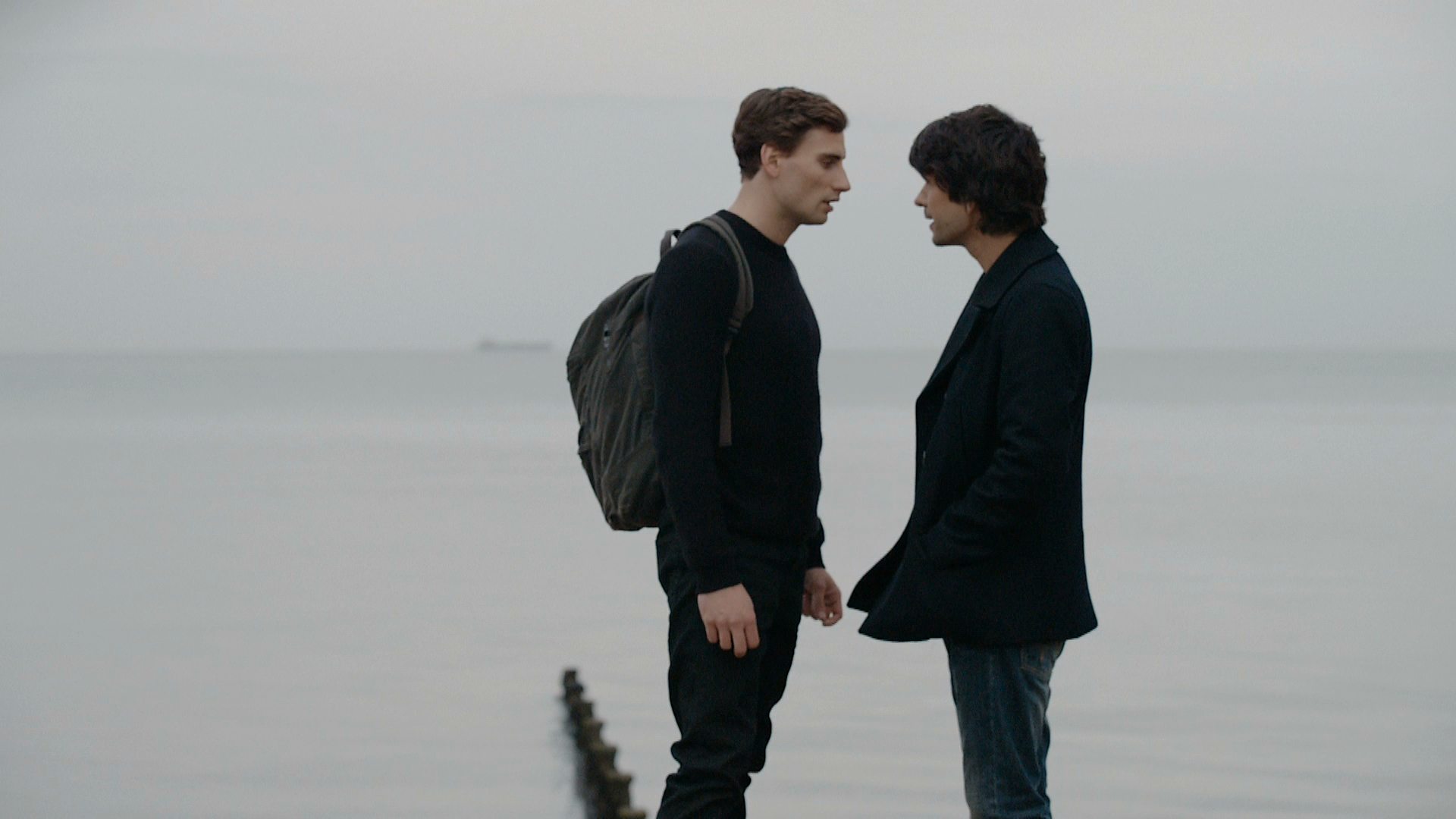
The always-impactful actor Ben Whishaw is superbly supported by thespian giants Jim Broadbent and Charlotte Rampling in this obtuse spy thriller. Playing a troubled warehouse worker called Danny, Whishaw falls for the enigmatic genius, Alex (Edward Holcroft); and is thrown into a murky and murderous world of spymasters and upper-class family feuds. Beautifully acted and designed the story moved too slowly for me. Over five episodes the slow-bleed plot of character despair, double-crosses and cover-ups did not sustain the suspense and tension throughout. (Mark: 7.5 out of 11)
THE SECRET OF CRICKLEY HALL (2012)
Suranne Jones (again!) leads the acting line in an earlier post-Coronation Street role. She portrays a mother who, along with her family, seeks the solace of the countryside after their young child has gone missing. However, the house they reside in is haunted by ghosts from the past and as the family attempt to overcome their grief, evil spirits threaten their present. The contemporary narrative works well with the wartime scenes in a decent haunted house scenario that was adapted from the book by horror legend James Herbert; also featuring an early role for Maisie Williams. (Mark: 7.5 out of 11)
SMALL ISLAND (2009)
Notable for its excellent ensemble cast and featuring before-they-were-famous roles for: Ruth Wilson, David Oyelowo, Naomi Harris, Benedict Cumberbatch and Ashley Walters, this excellent drama focussed on the war and post-war lives of several disparate characters whose lives become intertwined by fate. Based on Andrea Levy’s novel it is especially rich in regard to the diasporic characterizations and experiences of Jamaican immigrants in war-torn England. The writing is solid and there’s some fine acting and emotional moments to keep one enthralled and I enjoyed how the stories dovetailed dramatically at the end. (Mark: 8 out of 11)
TOP OF THE LAKE (2013)
Hey, what if Jane Campion wrote and directed a cop drama? Well, the answer is Top of the Lake! This is a slow-burn, who-why-how-dunnit with a superb cast, beautiful New Zealand vistas and eccentric, dark characters. Some may find it too slow and artsy, while certain decisions by the characters and plot turns were intriguingly weird. However, Elizabeth Moss excels as the burnt-out cop (is there any other kind?) searching for a missing pregnant teenager, while Peter Mullan is suitably vicious as the rural patriarch; and Holly Hunter is fantastic too as the leader of a women’s commune. Overall, Campion’s barbed world-view satirizes humanity and cop show clichés in a compelling crime drama. (Mark: 8.5 out of 11)
TOP OF THE LAKE 2: CHINA GIRL (2017)
Screened earlier this year on the BBC, the follow-up finds Elizabeth Moss, now back in Sydney, tracking down the killer of an Asian prostitute while battling illegal adoption rings and all manner of sexist-pig-men. Like the original it pulls you in with its richly drawn characters and brilliant cast all committing to the lurid and quirky plotlines. Moss is always reliable and does the brooding, melancholic and troubled cop perfectly, while Nicole Kidman is brilliant as the middle-class academic out of her depth with the emotions of her adopted daughter. The sinister beta-male-nemesis Puss portrayed by David Dencik was a great rendition of spurious masculinity while it was great to see Gwendoline Christie out of her Game of Thrones armour, as a naïve rookie cop assisting Moss’ detective. (Mark: 8.5 out of 11)
TRUST ME (2017)
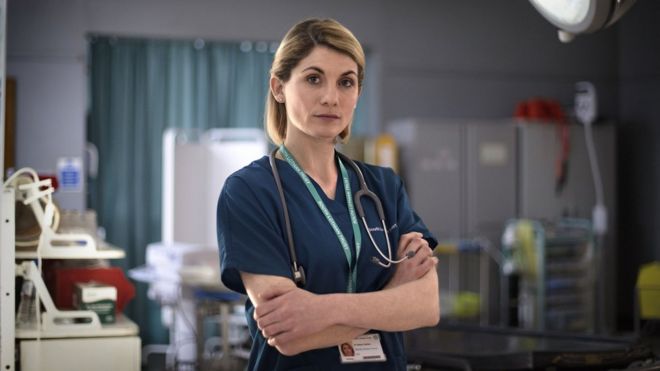
Jodie “New Doctor Who” Whittaker leads the cast as a downtrodden nurse and single-mum struggling with an NHS cover-up over poor service delivery. Faced with the sack she decides to engage in a cover-up herself by taking on the identity of a Doctor; and then the real drama kicks in. Whittaker is very empathetic and natural, while the suspense was very thrilling at times as her character gets deeper and deeper into the mire. Overall, it was a very tense and fun medical drama which made some very good social points in regards to a Doctors’ life and the NHS in general. Ultimately, it made me appreciate what the NHS does for us but also want to avoid getting ill in the future too!
(Mark: 8.5 out of 11)
WAR AND PEACE (2016)
Well, the BBC certainly pushed the budget boat out on this one with a who’s who of new and experienced acting talent including: Jim Broadbent, Paul Dano, Lily James, Tuppence Middleton, Aneurin Barnard, Adrian Edmondson, Jessie Buckley, Tom Burke, Rebecca Front, Greta Scacchi, Brian Cox, Stephen Rea, Gillian Anderson and many more. Adapting Tolstoy’s gigantic and classic doorstop novel must have been some feat and it is indeed and sumptuous and incredible production. As a drama it drew me in with its’ stories of over-privileged Russian lives set during the Napoleonic wars as they live, love, cheat, duel, war and die. Yet, while I did not feel too much empathy for the characters, the acting, design and directing is a joy to behold and I garnered a certain hypnotic pleasure bathing in the high quality of the whole shebang. (Mark: 8 out of 11)
As I’ve written before I’m an avid short film viewer and maker. To tell an impactful story in a lesser period of time to a feature film can be a very difficult but ultimately rewarding experience. Plus, as a member of the audience and filmmaker myself I love seeing the different ways other creatives tell their stories in this medium.
‘Thrill of the Chase’ was curated by the London Film Festival and featured five shorts from Europe and I must say they were of the highest quality. I mean some of the budgets on these must have been very good because they were shot, acted and edited to an exceptionally brilliant standard.The first short, 1745, was a period pursuit drama. Two slaves, wearing big, colourful, tartan, traditional and unwieldy dresses of the Jacobean era, have escaped from a nearby castle and are chased by a steely Scottish Laird, hell bent on recovering his “property”. It’s incredibly well shot as the colour of the costumes countered the misty, green and vast mountainous landscapes up close and from a spectacular god’s-eye view. Overall, it’s a commendable story of two women escaping patriarchal oppression and abuse, set amidst an exquisite looking but harsh Scottish Highlands.
Next up was Oksijan. Set in the harsh contemporary now it also involved a set of characters escaping an oppressive regime. This time is was a group of Asylum seekers, adults and children, encased in the potential moving tomb of an articulated lorry transporting them from a refugee camp. Their deadly journey from Calais to the United Kingdom was made perilous by the air running out. A thrilling and suspenseful short it both raised the pulse and important issues in regard to the plight of human beings fleeing war torn countries.
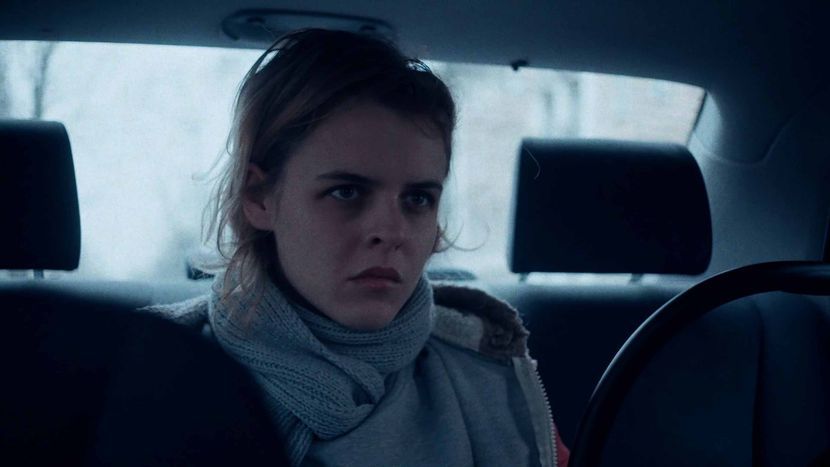
After Scottish and English film productions we next had Hot and Cold from Poland. This was a very harsh film, thirty-five minutes long, and all shot in one take. Technically, it was incredible as the camera follows a young junkie mother throughout her day and her encounter with woman looking to get revenge on her husband. It’s a towering study of motherhood, grief and addiction which creates a claustrophobic nightmarish drama with the colour-bled bleakness of Polish council estates. I wasn’t sure the one-take was actually necessary as the narrative could’ve been pruned but it was very powerful nonetheless.
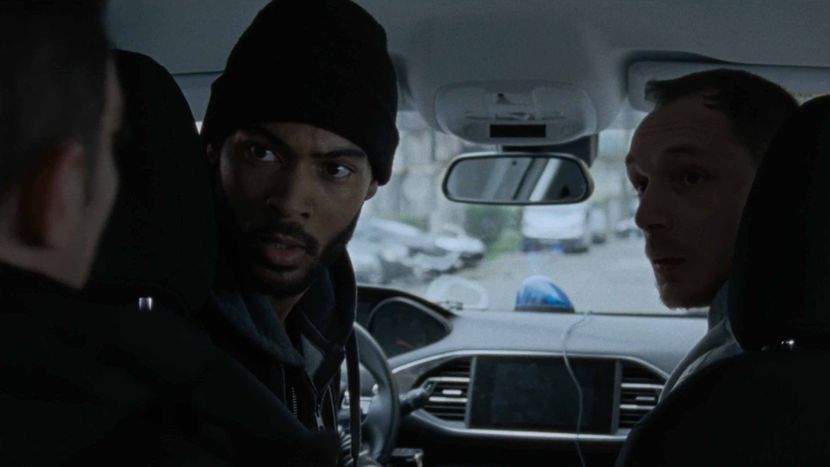
The final two films came from France and Germany respectively. Both reminded me of mini-versions of excellent feature films. The French film Les Miserables (not the Victor Hugo version) concerned cops on a dangerous estate and their heavy-handed dealings with gang-members. It’s well filmed and acted, containing the bruising feel of the classic French movie La Haine (1995).
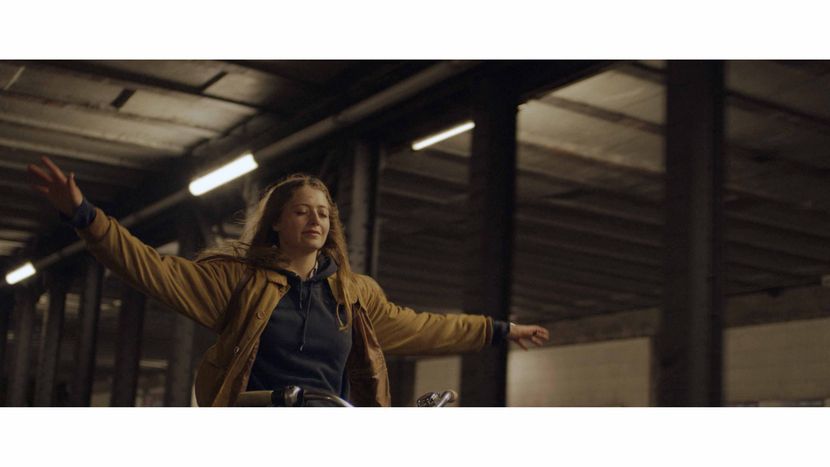
Similarly, the final short was another drama but this time of the romantic kind. Till One Cries concerned two drug-addled millennials sharing a crazy night within an urban German milieu. It reminded me somewhat, without the shot-all-in-one-take business, of the brilliant crime-romance Victoria (2015) and showed the hedonistic highs and lows of two free-wheeling characters.
Overall, the programme was full of gripping drama and thought-provoking subject matter. I’d say the ‘Thrill of the Chase’ title was slightly misleading in my mind, as the films tended toward, not your classic genre thrillers, but rather more social realism and cinema verité than movie artifice. Indeed, it may have benefited throwing in a shorter, punchier thriller with an element of comedy to break up the incredibly heavy themes of the films presented. Nevertheless, this was a set of Premier League short films, in terms of production, performance and storytelling quality.
SCREENWASH CINEMA REVIEWS – SEPTEMBER 2017 – including: IT, WIND RIVER and KINGSMAN 2
**MINIMAL SPOILERS**
I’m a tad tardy on my cinema reviews for last month mainly because I have been writing a couple of short script projects to be filmed. One is a sharp little horror story called Flatmates and I’m looking to shoot in November. The casting has been going well, after which I will rehearse and film on HD video. The other is a follow-up to our Star Trek fan film Chance Encounter (2017) released earlier this year online, which has now has over 40,000 views on YouTube!! Not quite Gangnam Style or dancing cats on a piano but pretty good nonetheless to have one’s work viewed that much.
Anyway, enough of the filmmaking hobby momentarily to switch back to the film reviewing pastime. Below are reviews of three excellent genre films, plus a little reprise of my opinions on Aronofsky’s two hours of hell that was Mother (2017). As usual they are marked out of eleven in tribute to This is Spinal Tap!
IT (2017)
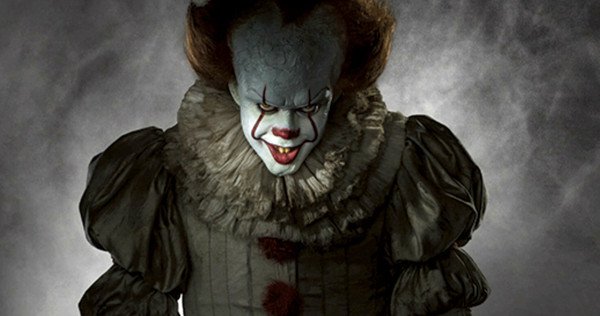
Stephen King is clearly a genius. To be able to maintain creativity and longevity as a writer, plus give birth, as it were, to any number of iconic narratives, characters and events is a testament to his massive energy and talent. When I was young one of the scariest things I ever saw on TV was the horror serial Salem’s Lot (1979), which was about vampires taking over a small town. His book Carrie (1976) was also adapted into one of the best horror films of the seventies too. Moreover, the ‘80s TV and cinema screens were peppered with King’s work notably: The Shining (1980), Stand by Me (1986) and the under-rated Pet Semetary (1989). In 1990, Tommy Lee Wallace directed a mini-series of IT, with the terrifying Tim Curry as Pennywise the Clown. IT proved to be an excellent horror story until the – faithfully sticking to the novel of course – ridiculously silly ending.
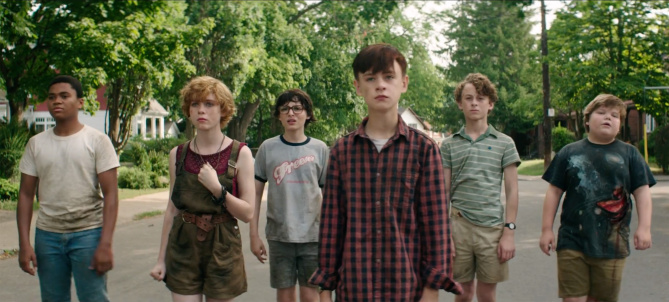
Flash forward twenty-seven years and Pennywise is back to haunt the dreams, drains and sewer pipes of Derry, Maine, using manipulation and fear to lure teenagers to their death. Developed by, among others Cary Fukunaga, the film was eventually directed by Andy Muschietti and has deservedly become a big box office hit. I say deservedly because, while it is not a particularly amazing cinema offering, it is a highly entertaining genre horror film. As an experienced Stephen King cinema and TV viewer all the staples are there such as: geeky-small-town-outsider-kids; abusive tough-guy-bully types; negligent parents or appropriate adult; monstrous beings hidden in the shadows; plus coming-of-age teenage friendship and love.
The clown in this case is portrayed with fiendish joy by Bill Skarsgard and there are some fantastic stand-out scares. My only criticism is, and this is my fault being over-familiar with King’s work, is that with the recent Super 8 (2011) and over-hyped Stranger Things (2016), I felt as if I had seen it all this before. I also felt they crammed too much into the two hours and some of the character emotion was lost at times. However, the cast of kids are excellent in their respective roles, the horror set-pieces are brilliantly staged and King’s iconic bad guy Pennywise makes it well worth the cinema admission fee alone.
(Mark: 8 out of 11)
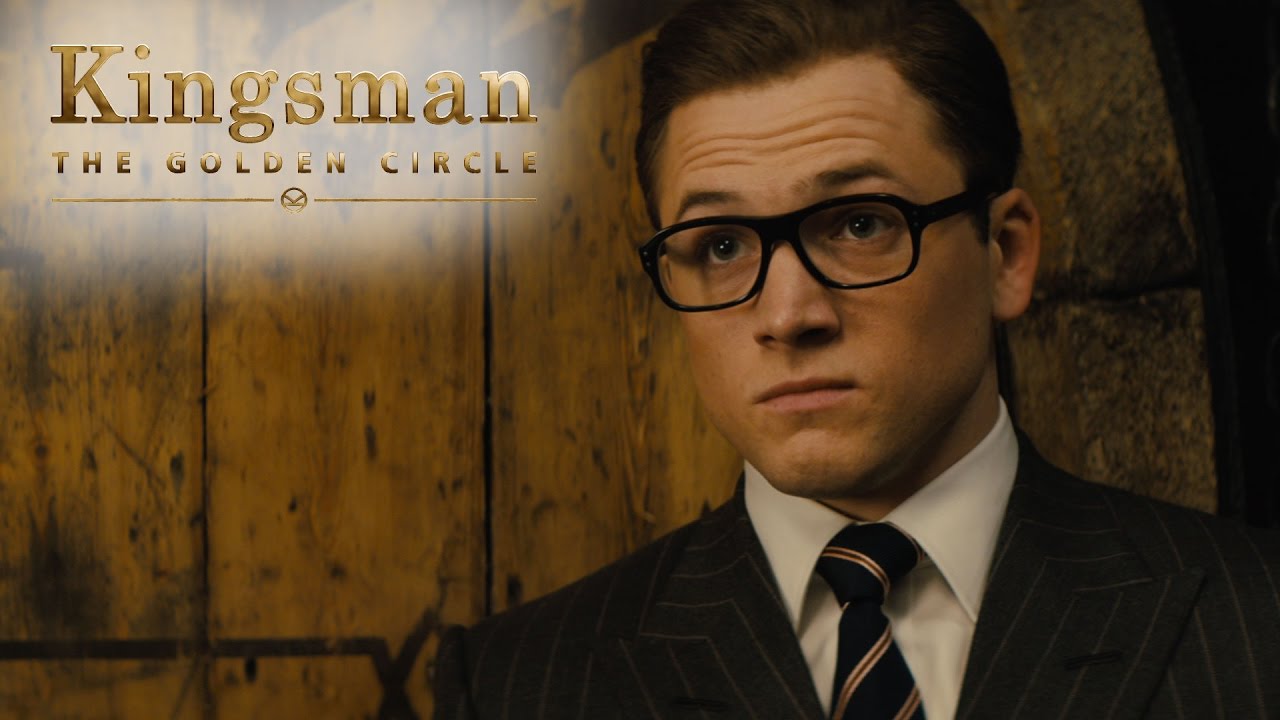
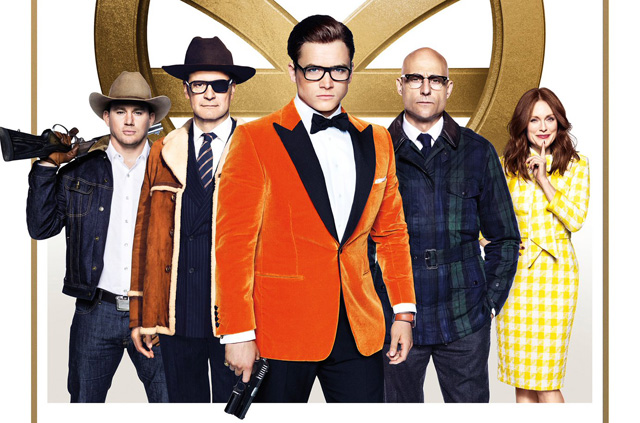
KINGSMAN: THE GOLDEN CIRCLE (2017)
The first Kingsman: The Secret Service (2014) film was one of my favourite genre films of the past couple of years. It showed a clean pair of spy heels to the, occasionally brilliant but overlong Bond disappointment Spectre (2015); while at the same time confirming Taron Egerton as an actor with great star potential. Having done the business at the box office then Jane Goldman and Matthew Vaughan have once again written and directed an explosive, funny, pacey and adrenaline-filled spy spoof sequel.
In this story, Eggsy / Galahad is back with Merlin (Mark Strong), battling with the United States counterparts The Statesmen, against Julianne Moore’s perky, yet deranged, Americana obsessed drug baroness. The Statesmen are represented by such heavyweight acting talent in Jeff Bridges and a cracking turn from Pedro Pascal as the hilariously named Jack Daniels. Channing Tatum pops up too but he is lightweight compared to the effervescent Pascal. Poppy’s fiendish plot is actually quite a decent motivation for the story and the subplot involving a Lazarus-type-return from a major character from the first film is well developed.
To be honest the story is just the bare bones to hang a series of fantastic set-pieces, car chases, shoot-outs and fights, as Eggsy and his kick-ass team once again attempt to thwart the end-of-civilisation as we know it. My main criticism is the film is probably too long with an unnecessary gratuitous sex-driven sequence set in the Glastonbury Festival. It also lacks that sense of characterisation from the first film which had the working class underdog Eggsy battling the upper-class sneers of the over-privileged. Nonetheless, Matthew Vaughan is a great gag-heavy-action-director and the plot has some decent twists and turns throughout making it well worth a watch.
(Mark: 8 out of 11)
MOTHER (2017)
While Darren Aronofsky is a cinematic artist of the highest level, I connected badly with this two-hours-of-hell-excuse-for-entertainment. My full review can be found here but, in a nutshell, this is what I thought of it:
“It was an awful, pretentious heap of a film which exists as an entertainment void both nihilistic and dull. Because this film abuses the privilege and patience of the audience delivering a technically brilliant but overall clichéd, first-world-problems-poet-with-writer’s-block-world-murdering-art-fan-hating two hours I will never get back.”
Mark: 5 out of 11 (for the film) Mark: 9.5 out of 11 (for Darren Aronofsky)
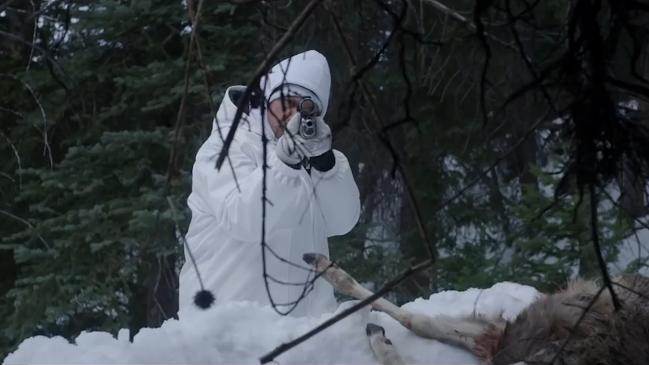
WIND RIVER (2017)
Taylor Sheridan has carved himself a fine reputation for writing very solid character driven genre films such as Sicario (2015) and Hell or High Water (2016). Wind River (2017) is his first writer-director effort and it is a fascinating study of: grief, murder, racial tension and dark humanity. Sheridan is adept at choosing specific areas of America with which to place his stories. Sicario reflected on the war on drugs, located betwixt the violent border of Mexico and the U.S.A. Hell and High Water illustrated the financial ruin of the sub-prime mortgage crash and its effect on West Texas. In his latest screenplay Sheridan focusses on the Indian Reservation territories of Wyoming and the people who inhabit the stark wintry landscapes.
The quietly impressive Jeremy Renner, as Cory Lambert, takes most of the acting plaudits as the respected, expert tracker and estranged family man. He is an individual who, while in perpetual control on the external Reservations and snowy terrain, finds himself crumbling internally due a horrific event from his past. Renner is ably supported by his Avengers co-star, Elizabeth Olsen, who imbues the rookie FBI agent with a steely determination, despite her lack of experience and confidence. The portrayal of the Native Americans I feel was sensitively presented as their lives are further marginalized by corporate America as its venal greed destroys the environment and humanity within the area. While this is a beautifully looking film there is a dark murderous heart within the stunning vistas and natural beauty.
Sheridan again confirms he is adept at combining social commentary with an impressive crime plot. Moreover, throughout the film he also bleeds in a compelling study of grief as well as a subtle critique of patriarchal capitalism and its’ destruction of the Native American’s land and people. Yet, the message could arguably have gone further in its criticism; however, as he proved with his prior screenplays Sheridan prefers subtext and a rising tension rather than polemics. Quietly, Sheridan is building an impressive filmic body of work and Wind River manages to be a thrilling police procedural drama, empathetic character study and socio-political examination of American corruption; all amidst the cold, harsh and white-washed landscapes of Wyoming.
SCREENWASH – SUMMER 2017 – TV DRAMA REVIEW ROUND-UP
I’ve been watching some excellent dramas over the last few months so here’s a few bitesize reviews with the usual marks out of eleven!
BROADCHURCH (2017) – SEASON 3 – ITV
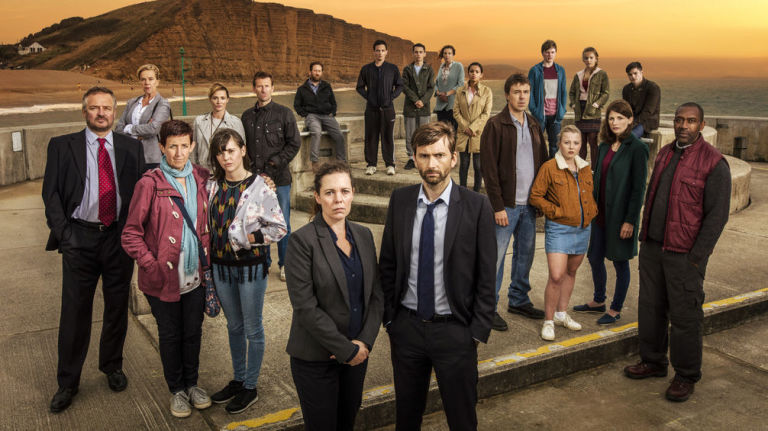
Chris Chibnall’s compelling investigative-crime-coastal-set drama continues as Police Officers Hardy (David Tennant) and Miller (Olivia Coleman) get to grips with a horrific sexual attack. The chemistry between the two leads is, as usual, the glue that holds the show together as does the suspenseful narrative. It’s a very well-crafted human drama too with many well-rounded characters driving the story. The excellent supporting cast including: Jodie Whittaker, Andrew Buchan, Lenny Henry, Julie Hesmondhalgh etc. make this another very watchable drama. (Mark: 8.5 out of 11)
FARGO (2017) – SEASON 3 – MGM / FX
Noah Hawley continues to emulate the Coen Brothers’ oeuvre with pitch perfect expertise. This story of stoic cops, dumb criminals, ultra-violence and random acts of fate amidst the snowy landscapes of Minnesota is highly recommended. Ewan McGregor brilliantly plays TWO warring brothers whose feud escalates out of control while corporate crime also gets a poke as McGregor’s Emmet Stussy car-lot business gets swooped on by shysters. Slyly satirising the police procedural drama with off-centre plot twists and dark humour, David Thewlis’s scumbag businessman and Mary Elizabeth Winstead crafty femme fatale steal the show in ten brilliant-could’ve-watched-it-all-day-violent-but-hilarious episodes. (Mark: 9 out of 11)
GENIUS (2017) – SEASON 1 – NATIONAL GEOGRAPHIC
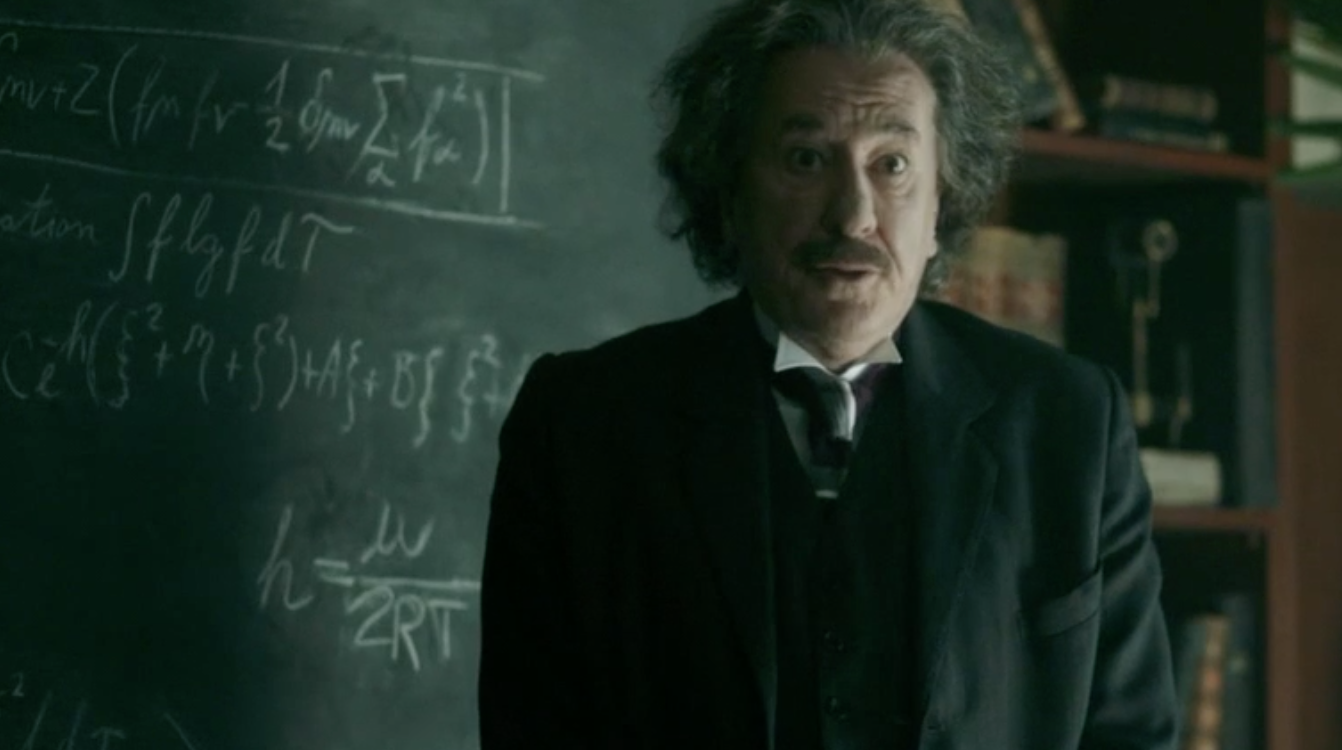
This beautifully shot and well-written educational drama is based on Walter Isaacson’s book Einstein: His Life and Universe (2007). It examines Einstein’s early life as a struggling clerk and events which saw him become one of the most famous scientists. Johnny Flynn portrays young Einstein with a fine energy while Geoffrey Rush excels as the mad-haired genius we have come to recognise. I’m definitely not a science buff, however there was much to be engrossed by in Einstein’s story, not least his dysfunctional family and marital issues. Both informative and enlightening in regard to science and history it’s fascinating throughout. (Mark: 7.5 out of 11)
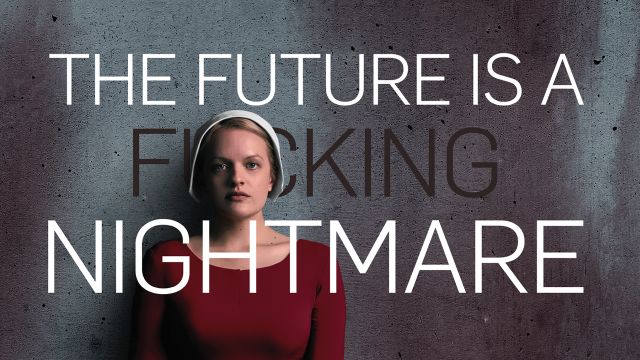
THE HANDMAID’S TALE (2017) – SEASON 1 – HULU / C4
Based on Margaret Attwood’s novel, it is set in a dystopian (is there any other kind) near future where the United States has now become split following a societal breakdown and coup. Having moved to more religious-based dictatorial rule, women on the main are now barren and unable to have children; there are however a select few who can still get pregnant. Rather than herald these individuals they are herded up and given to the ruling elite as brood slaves. Elisabeth Moss is mesmerizing as the lead “Handmaid” Offred/June who must survive oppression following her husband and daughter’s apparent death. This hard-hitting drama is definitely one of the best I have seen during 2017. It moves slowly and is very bleak but, like Children of Men (2006), it contains suggestions of hope, light, rebellion and solidarity in a grim, patriarchal world which crushes life and colour. Impressively directed, acted and shot it had me transfixed and disturbed and I very much look forward to a 2nd season. (Mark: 9.5 out of 11)
HOMELAND (2014) – SEASON 4 – SHOWTIME / C4
Claire Danes deserves so much praise for her role as Carrie Mathison. She owns the screen with her single-handed determination to fight against both bi-polar and “enemies” of the USA. Set in Kabul this season eschews the more romantic intensity of the previous seasons for some thrilling spy twists. Rupert Friend excels too as the burnt out CIA Operative as the story moves more toward 24esque territory. It’s sad that the political landscape gives rise to shows such as this but it remains compelling if slightly generic viewing compared to the other seasons. (Mark: 8 out of 11)
IRON FIST (2017) – SEASON 1 – MARVEL / NETFLIX
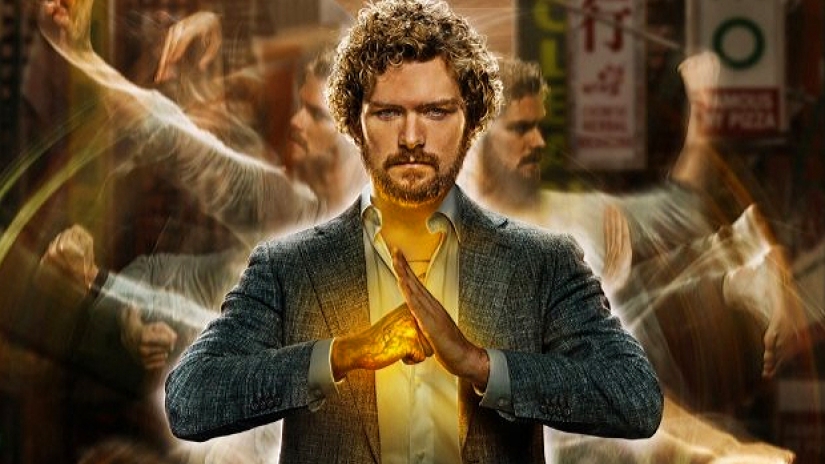
Danny Rand (Finn Jones) – previously believed dead – comes back to claim his family business and takes on both corporate and mystical villains in this contemporary superhero drama. Jones is okay and David Wenham is excellent as one of the bad guys but I really struggled with this. I enjoyed Daredevil and Jessica Jones and thought Luke Cage, while a bit slow, had some excellent moments. Iron Fist, however, had a thin repetitive narrative and the fight scenes, characters and dialogue lacked the fizz of Marvel’s best TV work. (Mark: 6 out of 11)
THE NIGHT OF… (2016) – HBO/SKY
A shy young student Naz portrayed by Riz Ahmed makes several poor life decisions and finds himself in jail for the murder of a young woman. Ambulance-chasing-psoriasis-suffering lawyer John Stone (John Turturro) takes his case as all the evidence points to his guilt. Created by Richard Price and Steve Zaillian and starring Riz Ahmed, John Turturro, Michael Kenneth Williams and Bill Camp this exquisite noir-crime drama carries the confidence and style of the very best cinematic offerings. Moreover, the rich characterisation and performances raise it well above the usual police/lawyer procedural dramas on television. Award winning drama of the highest quality with a superlative cast. (Mark: 9 out of 11)
SCREENWASH CINEMA ROUND-UP – AUGUST 2017 – REVIEWS
A Ghost Story (2017) – review here – was the most impactful and original film I saw in August from a cinematic perspective, however, the other films I saw were very well rendered too. All three were “based on a true story” and had many elements that made them highly watchable. So, here’s my cinema round-up of reviews for August.
**CONTAINS MILD SPOILERS**
AMERICAN MADE (2017) – DIRECTOR: DOUG LIMAN
Tom Cruise leaves the formulaic action blockbusters aside for a while to portray a well-defined anti-hero called Barry Seal. Seal, according to this insane narrative, was a former TWA pilot who, bored with his steady job, grabs the opportunity to fly reconnaissance operations over South America for the C.I.A. That’s when the irreverent fun really gets into gear and before you can say “triple-agent-drug-running-for-the-Colombian-Cartel” you have a very watchable fast-paced, political and at times, farcical thriller.
Doug Liman is an excellent genre director and here pitches the film somewhere between a Martin Scorsese gangster biopic and screwball comedy. I would have preferred a bit more dramatic meat to be honest as seen in the Bryan Cranston Cartel-cop-thriller The Infiltrator (2016), or the subtle terror of Sicario (2015). However, Tom Cruise once again proves he can act and this entertaining movie does make some relevant political barbs against the allegedly corrupt Reagan and Bush administrations during their futile wars against drugs and communism.
(Mark: 8 out of 11)
THE BIG SICK (2017) – DIRECTOR: MICHAEL SHOWALTER
Uber-driving-stand-up-comedian Kumail Nanjiani portrays himself in movie form for the duration of this likable character and culture driven romantic comedy. Eager to forge his own path where love is concern Kumail battles the constant “threat” of his overbearing mother’s attempts to pair him up with an acceptable Pakistani bride. Having met Zoe Kazan’s sparkling Emily he falls for her despite their initial reticence in committing fully to each other.
Of course the path of love is never straight, in fact it’s downright wonky as Emily succumbs to a rare illness and is hospitalized. Kumail, estranged from his own and rejected by Emily’s family, finds his world falling apart as his work and comedy suffers. Overall, this is a very enjoyable and gentle comedy and Kumail and Emily are characters you really root for. The supporting cast including the brilliant Ray Romano, Adeel Akhtar, Bo Burnham and Holly Hunter are very funny indeed. I enjoyed the sub-plots involving the Chicago comedy scene and my only criticism would be that like other Judd Apatow-produced films it was probably ten minutes too long. Having said that it’s a finely observed, well-acted and richly funny character film.
(Mark: 8 out of 11)
DETROIT (2017) – DIRECTOR: KATHRYN BIGELOW
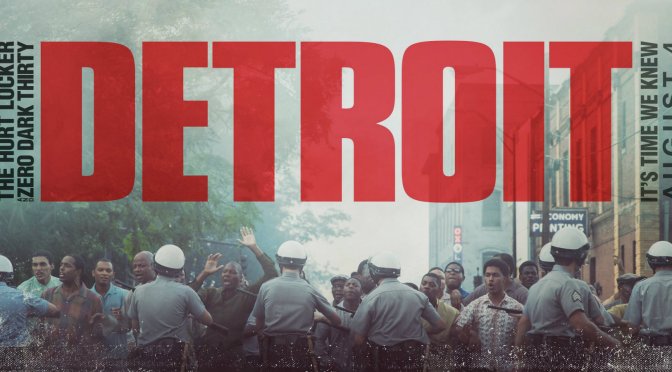
This is a very complex film and probably requires a second view to really get to the heart of the whole situation. Set in 1967, amidst the desperate and violent racial tensions of the age (has there actually been anything else in the United States?) Detroit focuses on a single night and horrific incident involving monstrous cops and their behaviour toward the guests in the Algiers Hotel. Kathryn Bigelow again proves herself an expert director of spine-tingling tension and heart-racing drama as a violent assault is carried out on mostly innocent characters.
Detroit is microcosmic of the issues of race throughout American history and is an impossible pill to swallow as represented by these events. It’s not meant to be easy but a layered, narrative which reflects the different perspectives of those involved without actually getting to the actual truth. John Boyega, Will Poulter and Algee Smith’s performances are the stand-out as a nightmarish event in American history unfolds in almost real time. The only light comes by way of the Motown and Gospel music featured which shines brief hope and light on otherwise grim proceedings. The final act and court case compound the injustice of the crimes committed and only in song and prayer can Smith’s character escape the horrific tragedy of these grim events.
KILLING ME SOFTLY: THE EVOLUTION OF THE HOLLYWOOD THRILLER!
“It is indeed impossible to imagine our own death. Whenever we attempt to do so we can perceive that we are in fact still present as spectators.” Sigmund Freud
Most of us like to be scared and thrilled and made tense, especially if it is in the darkened recesses of the cinema. Because as the adrenaline and stress levels rise we know, at the back of our minds, we’re safe. Nothing can actually harm us because it’s happening on a screen. Yet witnessing characters in danger of harm or death can be an exhilarating and cathartic experience for many. Indeed, as the above quote from Freud suggests watching films of the horror or thriller genres is subconsciously akin to a near-death experience. Facing the reaper from a position of relative safety is part of the thrill of going to the movies.
The thriller genre is one of my favourite types of film and in this piece I would like to draw on elements of psychology, genre and culture theories to examine classic, postmodern and neo-thriller tropes. I also want to investigate some recent cinema offerings which defy certain genre conventions and have what could be described as a subtle less-is-more approach to building suspense and thrilling the audience. For this I will examine three scenes from the work of David Fincher, Denis Villeneuve and Joel and Ethan Coen where, while adhering to thriller genre conventions, they also softly kill us in an arguably more unconventional fashion.
But what draws us toward the darkness of the thriller and, psychologically speaking, why do we enjoy them so much? According to research conducted by Dr Deirdre Johnston in 1995, viewing motivations for watching the horror or thriller genres include: sensation seeking and overcoming fear, whether you’re identifying with the killer or the victim. Moreover, Peter G. Stromberg argues in his piece The Mysteries of Suspense that uncertainty and surprise are powerful tools in the thriller genre. As humans we are uncertain of our mortality and thrillers tap into that innate fear. Also that as social mammals we have the power to experience and feel the fear as characters on a cinema screen do. Lastly, Sheila Kohler opines that a fascination with violence draws us to the thriller genre. While most of us are scared of hurt and pain, by placing violence within the structure and order of a story we both enjoy the sensation of danger while controlling said violence.
These are just a few of the psychological reasons why we are drawn to the thriller genre. Formally and stylistically the thriller also offers a myriad of entertaining devices including: McGuffins (or red-herring), twists, cliff-hangers, flashbacks, flash-forwards, voice-overs etc. Moreover, it also features characteristics like: unreliable narrators, innocents-as-victims, mistaken identity, monstrous villains, revenge, kidnappings, and ticking-time bomb countdowns to name a few. According to James Patterson one of the thrillers enduring characteristic is openness to expansion into subgenres such as: spy, historical, police, medical, religious, tech, and military settings. Essentially, the structural flexibility of the threat of death is far-reaching and the ability to create suspense is very progressive within the thriller genre hence why it has proved popular to audiences and filmmakers alike.
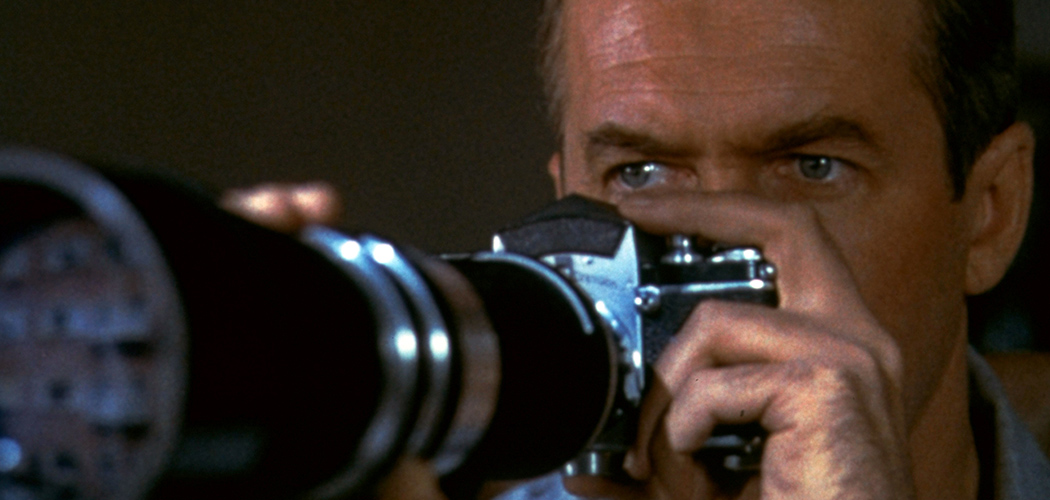
One of the greatest proponents of the thriller was of course Alfred Hitchcock. Often cited as the “Master of Suspense”, Hitchcock is quoted as saying, “Always make the audience suffer as much as possible.” He certainly made us suffer beautifully in all manner of classic films such as: The 39 Steps (1935), Rope (1948), Strangers on a Train (1951), Rear Window (1954), Psycho (1960) and countless others. Aside from Hitchcock’s dazzling skill with form and style his narratives always contained powerful villains or external forces of authority which symbolised death. Thus, while coming close to death throughout Hitchcock’s protagonists more often than not survive while the villain or force perished. Thus, a Hitchcock thriller offers catharsis, which is a Greek term Aristotle used to describe the purging of negative emotions.
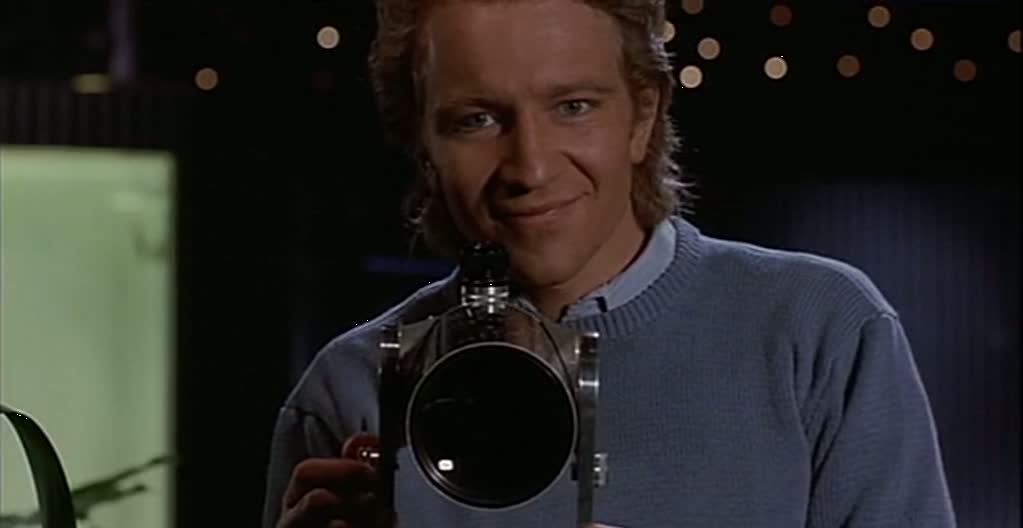
Without a shadow of a doubt Hitchcock had an incredible influence of filmmakers throughout film history. Indeed, the term Hitchockian thriller has entered the vocabulary of cinema. His films have influenced great filmmakers like: Steven Spielberg, Jonathan Demme, Martin Scorcese, and arguably most of all thriller expert Brian DePalma. He, in my opinion is a postmodern filmmaker as he uses devices like homage and pastiche within his filmic style, echoing many of Hitchcock’s films in: Obsession (1976), Dressed to Kill (1980) and Body Double (1984). Within DePalma’s ouevre there are also impressive set-pieces lifted from other films such as the Battleship Potemkin (1925)/Odessa Steps homage in The Untouchables (1987). Likewise in the spy thriller Mission Impossible (1996), DePalma’s iconic Langley heist set-piece was done with no dialogue in a major nod to classic French crime thriller Rififi (1955).
What DePalma has in common with Hitchcock too is the use of humour in his films to provide catharsis or pay off suspenseful moments. I liken this to releasing a valve and letting the audience off the hook somewhat. This is seen none more so than in the wildly over-the-top film Body Double (1984), which is a pastiche of both Rear Window and Vertigo (1958). In a particularly suspenseful scene our protagonist is about to be skewered by a pneumatic drill and just on moment of impact the plug from the wall is pulled, thus releasing the threat of death and finding some sick humour in an especially tense moment. Of late, however, I have noticed a movement away from such humour or release-the-valve safety. Where both Hitchcock and DePalma employed the convention of catharsis and overcoming death, recent cinema releases have taken a slightly different approach.
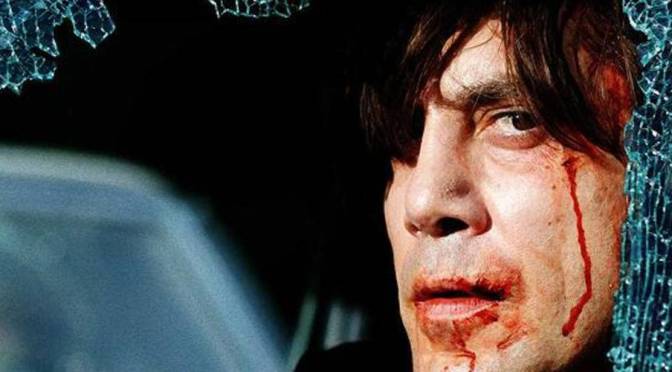
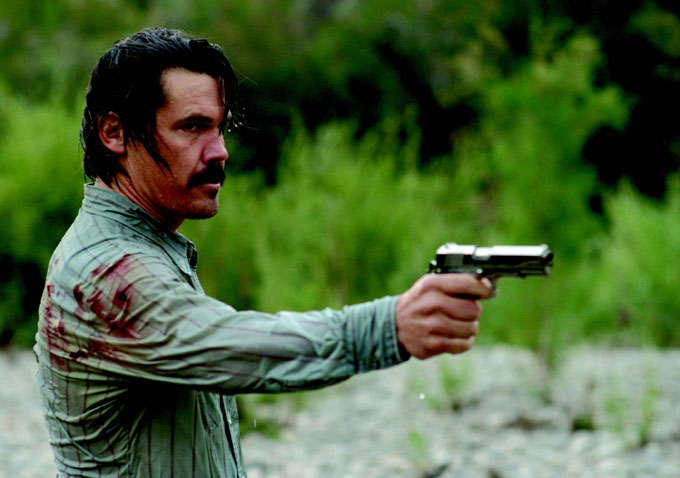
While Hitchcock and DePalma often favoured the highly stylized approach to building suspense it’s interesting to compare their work to some recent films which I feel take a more subtle, yet just as effective, approach. The Coen Brothers adaptation of Cormac McCarthy’s No Country for Old Men (2007) is such a film. The story is a dark crime narrative involving a tense pursuit across country involving heinous hitman, Anton Chigurh (Javier Bardem). The filmmakers establish Chigurh as a force of nature and create suspense through uncertainty, as he kills both law enforcement officers and the people who hired him.
The most tension-inducing scene is Chigurh favouring a coin toss to decide if someone lives or dies. He uses this method both in a scene with a store clerk and at the end with Kelly McDonald’s character Carla Jean. While, the innocents-as-victim is an often used convention in thrillers, the nature of fate or luck within the scene creates unbearable suspense as Chigurh’s crimes become not motivated by a sense of professionalism, but rather scarily, the flick of a coin. There’s some relief when luck seems to shine on the store clerk but no such fortune for the unfortunate Carla Jean. Even then there is ambiguity as we, like her husband, do not see her die; however it is implicit within the editing and performance that sadly she does.
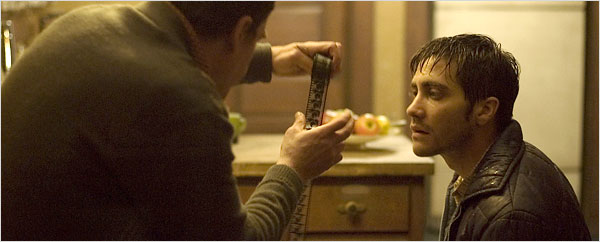
Arguably, the finest thriller director around at the moment is David Fincher and his film Zodiac (2007) was a detailed analysis of the characters involved in the hunt for the eponymous serial killer. It’s a film full of brutal murders and obsessive characters, notably Jake Gyllenhaal’s cartoonist turned investigator, Robert Graysmith. His character becomes obsessive about discovering who the Zodiac killer is and even loses his family and job in the process. Toward the end of the film, Graysmith interviews Bob Vaughn (Charles Fleischer), a film projectionist, and the suspense is created literally out of nothing. The total absence of a known nemesis creates an unlikely amount of tension, especially allied with the way Fincher shoots in shadows and frames his characters. Graysmith is not seemingly in any danger but his paranoia, claustrophobia and growing sense of unease petrifies him until he is forced to flee. In fact, the thriller genre convention of revealing the murderer is, like in the real-life case of the Zodiac, rejected; thus catharsis is denied to the audience throughout this nail-biting paranoiac thriller classic.
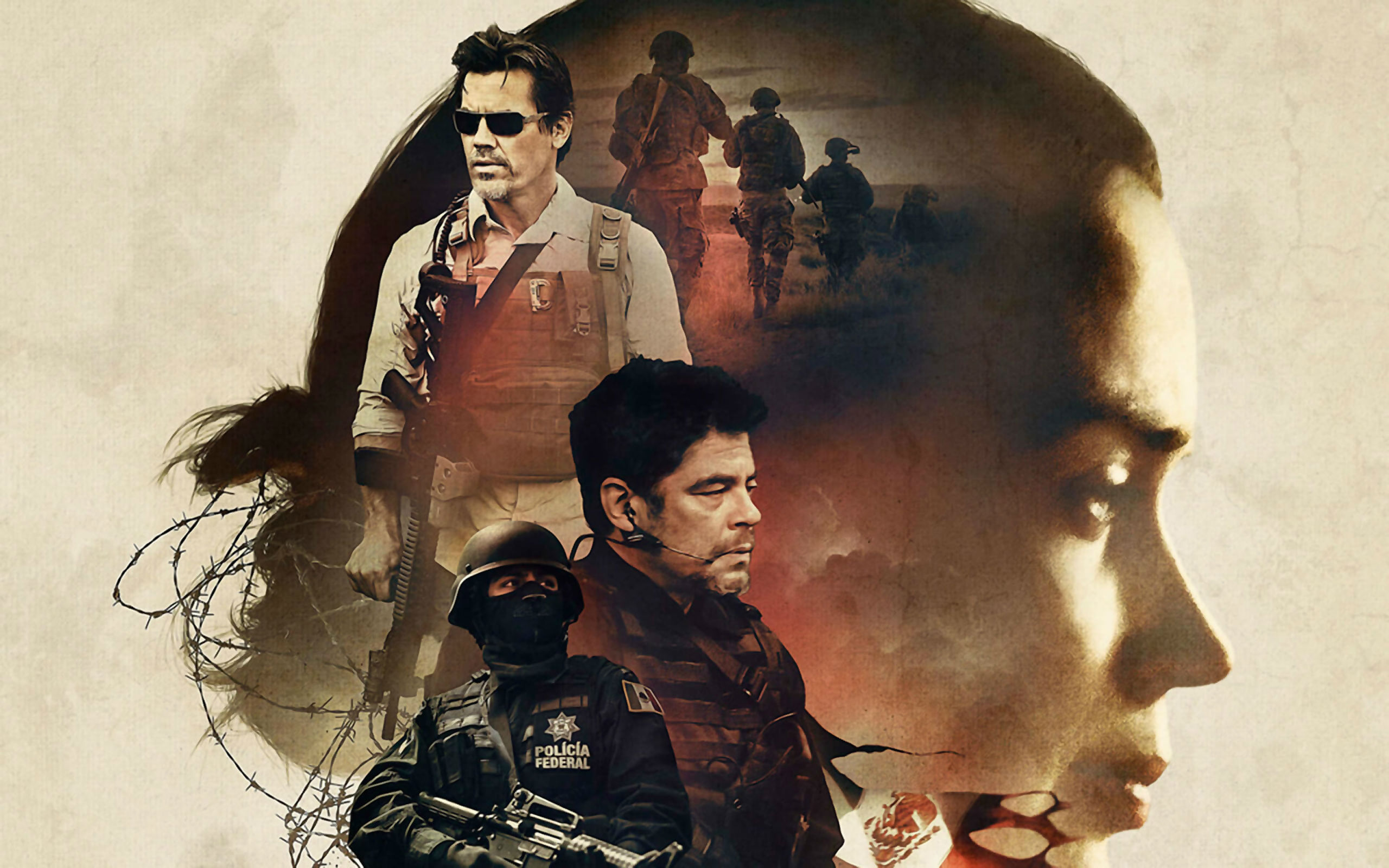
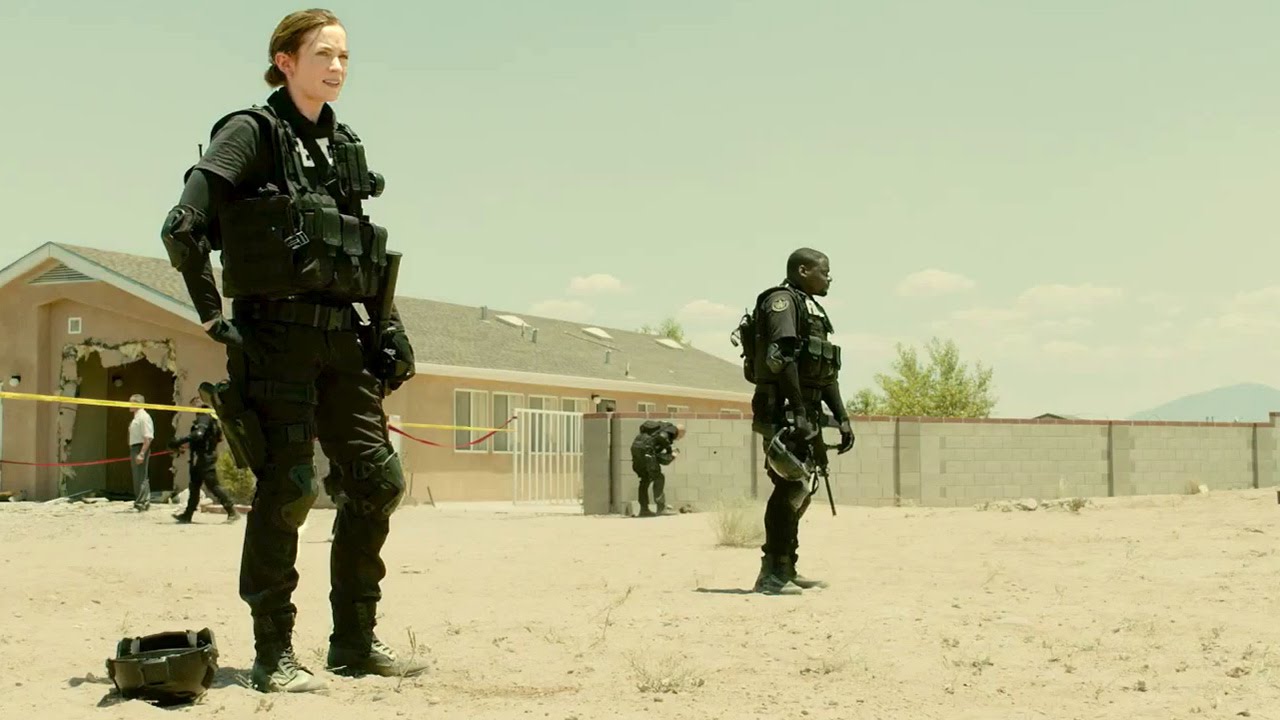
Similarly, in the recent crime thriller Sicario (2015), aside from a the conventional exploding bomb opening, the director Denis Villeneuve uses more subtle techniques to get under the skin of the audience. Often thrillers will have a brutal showdown between our hero and the villain resulting in the nemeses’ death, but at the end of Sicario it is a far more quiet and unnerving scene. Here Emily Blunt’s moralistic Kate Macer realises she has been used to collude the black-ops Cartel murders by CIA-sanctioned assassin Alejandro Gillick (Benecio Del Toro). While Gillick has a gun to Macer’s head the threat is palpable but what makes the filmmaking so striking is it has the confidence to eschew the standard car chase or big fight finale for something so tense and disquieting. The tragedy of humanity here is the realisation for Macer that she will not make a difference in the CIA and the law cannot protect her. Gillick represents as he puts it, “the land of wolves”; thus once again, similar to No Country For Old Men, we as the audience, are given no escape or purging from death as Gillick walks away to continue his morally ambiguous endeavours.
What all these scenes and films provide are a denial of releasing the valve and consequently allaying our fear of death. Moreover, in contravention of the classical thriller model the villains and monsters in these scenes actually get away so while the likes of Alfred Hitchcock and Brian DePalma allow catharsis by generally defeating the bad guy, neo-Hollywood filmmakers like those mentioned above, kill us softly with a creeping nihilism and feeling of dread which remains even after you’ve exited the cinema.
It’s been a busy July for decent cinema releases and my Odeon Limitless card has been earning its dough somewhat! So I decided to compress the reviews into one manageable article and here they are in order of film preference with the usual marks out of 11!
**CONTAINS MINIMAL SPOILERS**
WAR FOR THE PLANET OF THE APES (2017)
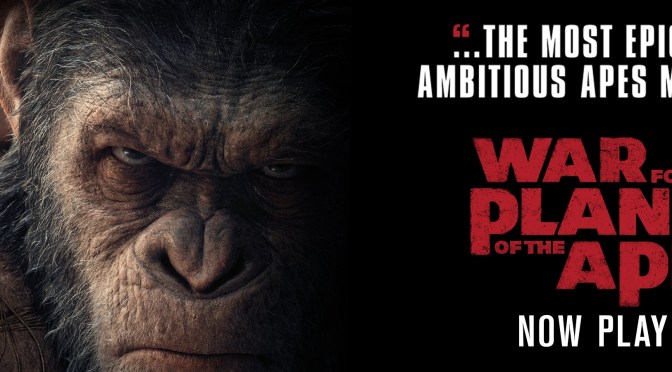
The final part in the prequel trilogy to the movie classic Planet of the Apes (1968) is an apocalyptic epic which had me gripped from start to finish. The story continues a few years after Koba’s rebellion caused further catastrophic events between humans and apes. We find Caesar and his guerrilla army attempting to protect their families from Woody Harrelson’s obsessive Kurtz-like figure The Colonel. When The Colonel causes irreparable damage to Caesar’s clan he sets out on an epic journey to free the apes from their fascistic human captors.
Aside from some convenient plotting for pace, director Matt Reeves and co-writer Mark Bomback have constructed a superb and compelling story which echoes the epic glory of cinema classics such as: The Searchers (1956), Dr Zhivago (1965), The Great Escape (1963), Spartacus (1960), Apocalypse Now (1979); and even the Biblical story of Moses. Andy Serkis is incredible once again as the noble Caesar and his determined, proud and intelligent character is someone we really root for. Special mention to Steve Zahn too who plays the likeable fool, Bad Ape, adding welcome comic relief to the heavy drama and pulsating action.
The cinematography from Michael Seresin’s lense is exquisite as snowy, beach and woodland landscapes provide a beautiful counterpoint to the chaos of war. Moreover, the action set-pieces are breath-taking with expertly staged composition and crisp editing while the motion-capture effects brilliantly support the story. In between the emotional moments hit home too as Matt Reeves and his team have fashioned a big film with an even bigger heart. Overall, this is one of the best cinematic experiences I have had all year as story, style, technology and emotion all work together to bring a fitting end to one of the best film trilogies committed to celluloid.
(Mark: 9.5 out of 11)
SPIDERMAN: HOMECOMING (2017)
Oh no!! Not another Spiderman film!! But don’t panic as this one is presented from within the Marvel Universe! Following quickly after the events of Captain America: Civil War (2016), Tom Holland’s eager arachnid-kid literally bounces off the walls waiting for an assignment from his mentor Tony Stark (Downey Jnr in a cameo-plus-style appearance). However, he’s palmed off with overgrown babysitter Happy (Jon Favreau) and here’s when Peter Parker gets in a pickle by ignoring the adults and going out to play on his own.
With some tremendous set-pieces on the Staten Island Ferry and at the Washington Monument the action really fizzes along and raises the pulse throughout. Having said that the final explosive action set at night was poorly lit in my view rendering the action almost incomprehensible. In between, the high school scenes are very funny, notably Jacob Balaton’s Spidey sidekick, and Peter’s impatient and chaotic teen characterisation was very well drawn. Yet, it is Michael Keaton as the scavenging Vulture who absolutely steals the show. His performance as gritty, working-class and angry antagonist, Adrian Toomes adds shades of dramatic grey to an otherwise shiny and colourful narrative.
While not quite shaking the feeling of creative ennui and Spidey overkill, Homecoming still manages to hit many of the heights reached by Marvel’s sparkling stable of comic-book stars. Newish filmmaker Jon Watt, who directed the brilliant, low-budget film Cop Car (2015), handles it all with some verve and humour while delivering a humdinger of an end of second act dramatic twist. Having seen him recently in Wolf Hall (2015) and The Lost City of Z (2016), Tom Holland confirms himself a bona fide star, and is fantastic as everyone’s favourite neighbourhood spider.
(Mark: 8 out of 11)
IT COMES AT NIGHT (2017)
This haunting post-viral apocalyptic nightmare of a film drips with dread, suspense and bloody heartache throughout. It concerns Joel Edgerton’s everyman who, along with his wife and son, are attempting to survive in their battered and isolated woodland home. Paranoia is a key fuel for the characters’ lives as they follow strict rules of wearing gloves, washing hands, burning bodies and not leaving the house at night. When their space is invaded by Will (Christopher Abbott), his wife and child, the families all form an uneasy pact; yet it is not too long before peace gives way to disharmony and recrimination.
Trey Edward Schults directs the hell out of this low-budget gem with the skill of a way more experienced filmmaker. He creates an eerie, dark and hallucinatory vision which, while lacking in expositional clarity, more than makes up for in atmospheric visuals and human drama. The film glides along at a creepy pace and builds to what feels should be a cathartic and dramatic peak. However, the ending left me slightly disappointed as it was too poetic. I was okay with the mysterious narrative elements such as not knowing the cause of the virus, but I felt that a more traditional horror conclusion would have made it a much better film. Still, Schults is a director to watch out for but being a horror whore myself I wanted a bit more blood and guts at journey’s end.
(Mark: 7.5 out of 11)
THE BEGUILED (2017)
Colin Farrell portrays a Union Army deserter who hides out in an all-women boarding school featuring an excellent cast including: Nicole Kidman, Elle Fanning, Kirsten Dunst, Oona Laurence, and Angourie Rice. It’s based on a novel by Thomas Cullinan and previously adapted into a 1971 film starring Clint Eastwood. Sofia Coppola’s subtle direction is impressive and this gothic drama has amazing cinematography, costume design and decent performances. However, I felt, by the end, the film was completely lacking in drama, eroticism and suspense.
The build-up over the first hour was fantastic but alas there were no major pay-offs to events relating to repressed sexuality and male-female divide. Moreover, thematically I found Coppola had nothing to say on the Civil War, sexual temptation or the damaging impact of patriarchy in a matriarchal world. She also fails to develop Farrell’s character as Faustian sexual threat and aside from some incredibly beautiful lighting and composition from Phillipe Le Sourd the story just peters out unsatisfactorily in my view.
CAST: Ansel Elgort, Jamie Foxx, Eiza Gonzales, John Hamm, Lily James, Kevin Spacey, John Bernthal.
**CONTAINS MINIMAL SPOILERS**
If there is a better and more precisely directed genre film in the last few years than Baby Driver (2017) then I have not seen it. Edgar Wright should take several bows for turning a familiar B-movie-heist-plot with nods to The Getaway (1972), Drive (2011), The Driver (1978), True Romance (1994) and many, many more into an exhilarating, high-octane, funny and dizzying heist thriller.
The story concerns Baby (Ansel Elgort) who is in deep trouble with crime boss Doc (Kevin Spacey) and being the superlative driver that he is works off his debt by assisting with meticulously planned bank jobs. Baby is out of place amidst the rogue gallery of career criminals which feature great character actors such as: John Hamm, Jamie Foxx, Eiza Gonzales and the bruising masculinity of John Bernthal. Baby is a laconic and sensitive soul who lives in his own world, cares for his elderly foster father, has a dry sense of humour; and just loves listening to music!
Not only is Baby Driver a passionate paean to the heist movie but it also serves as a personal playlist for all of Edgar Wright’s musical delights. We get some incredible rock tracks supporting the action notably those by: The Damned, John Spencer Blues Explosion, T-Rex, Queen and many more. In fact, way back in 2003, Wright produced a prototype of Baby Driver for a promo video for the band Mint Royale featuring the comedians and actors: Michael Smiley, Julian Barratt, Nick Frost and Noel Fielding. You can watch it here:
Ansel Elgort was brilliant in the lead and his performance was so fresh and naïve and likeable that you could not help but root for his character despite Baby’s criminal activity. His driving is awesome though and the stunts and manoeuvres that Wright has designed had my heart in my mouth throughout. At times the camera moves and quick cutting become so breath-taking the dips in action are a welcome relief. Conversely, the character work from Lily James as Baby’s romantic interest Debora is very cute; while Hamm, and Foxx especially, bring an impressive unhinged alpha-male brutality to proceedings.
In the non-robbery-less-musical-quieter family, heist-planning and romantic moments Edgar Wright’s script is so full of punchlines, witty retorts and character detail that you cannot fail to enjoy them too. As such I had a lot of fun with this film and Wright proves once again that while thinking and planning every shot and cut and move and punchline he is able to energise the most simplest of B-movie crime narratives. One could argue that the characterisations of supporting characters, such as Gonzales and Spacey could have been filled in a tad but the fuel-injected pace covers such cracks brilliantly.
My only real criticism is minor. It is that there’s mild repetition in the car action and there’s an antagonist switch and slight plot-hole during the finale which jarred momentarily. However, Edgar Wright certainly deserves a very big gig soon because he directs the hell out of the movie. His arsenal of: long takes, quick cuts, swooping camera moves, canted frames, Steadicam, camera holds, frame switches, pans, scans, tilts, low-angles, metronomic editing, point-of-view and god’s eye view shots are all a joy to behold.
Overall, it’s a story we’ve seen done many times before but as with Spaced (1999), Shaun of the Dead (2004), Hot Fuzz (2007) and World’s End (2013), Wright brings such a balletic rhythm, musical verve and kinetic drive to the movie it becomes simply irrepressible. I hope he gets a James Bond film or something similar to showcase his enormous filmmaking skills because while I really enjoyed Ant-Man (2015) you have to wonder how good his version of that material would have been.
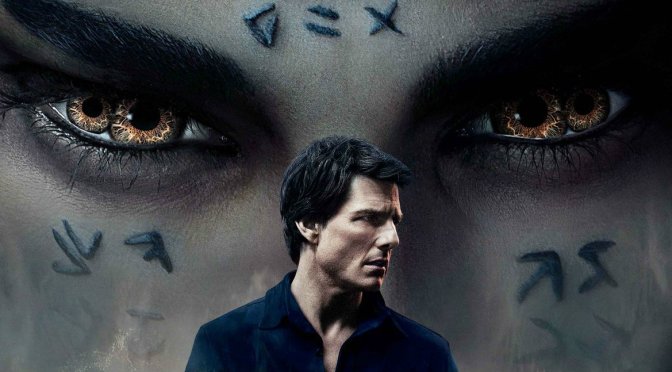
Is The Mummy (2017) an original movie? No! Is Tom Cruise’s latest attempt at a movie franchise a good film? Not particularly! But is it an entertaining-take-your-brain-out-popcorn movie? Yes! Now, of course, film reviews are all about opinions and The Mummy is an average film at best, but compared to some of the blockbusters of recent years such as Batman v. Superman (2016) and Suicide Squad (2016), it at least makes sense and has a decent through-line narrative.
I mean, I watch a lot of films, some great, some okay and some not-so-great and every now and then a film receives a critical pasting it deserves. But sometimes films get a kicking they don’t deserve. I think that bloggers and critics, professional or hobbyists, love the sound of their own voice, keyboard-tapping and ego passing judgement. Indeed, I am no different. To give the thumbs up or thumbs down can be empowering; it’s a lot of fun. Yet, at times one can get so caught up in their higher ideals of film critique and actually apply intelligent analysis to the wrong films. Either that or they just thought the film was crap! But in The Mummy’s case I don’t think it is.
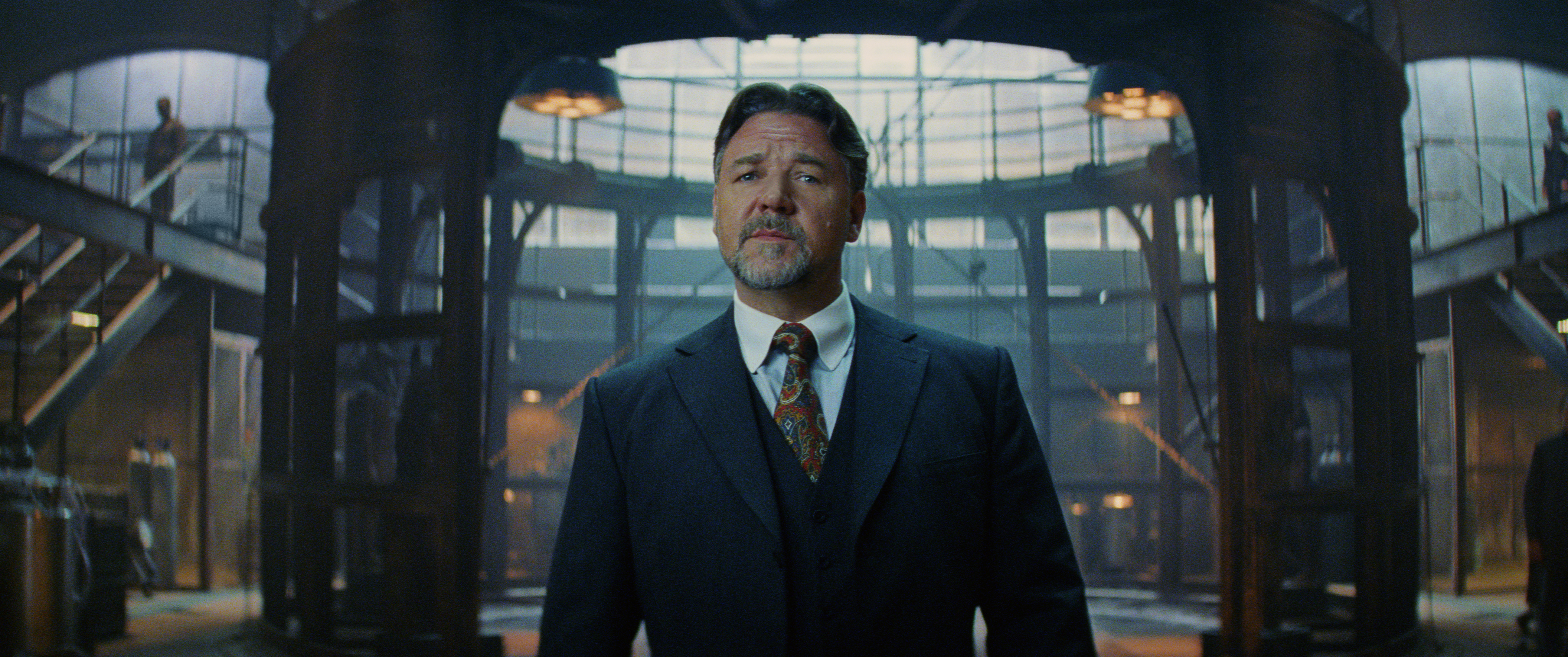
The film kicks off at a fantastic pace and aside from a mid-act breather for some exposition from Russell Crowe’s Dr Jekyll, keeps up the fast action relentlessly. Because, essentially this is all plot, action, jokes and monsters and is NOT MEANT TO BE TAKEN SERIOUSLY! The story is pretty simple and mirrors the Brendan Fraser movies from the late 90s/early 2000s; and any number of Mummy monster films where a hidden tomb is opened up and releases unimaginable horror upon the world. The old Universal Boris Karloff classic from 1932 was a moodier, low-budget and atmospheric affair while this is an altogether whizz-bang-rollercoaster-ride-affair.
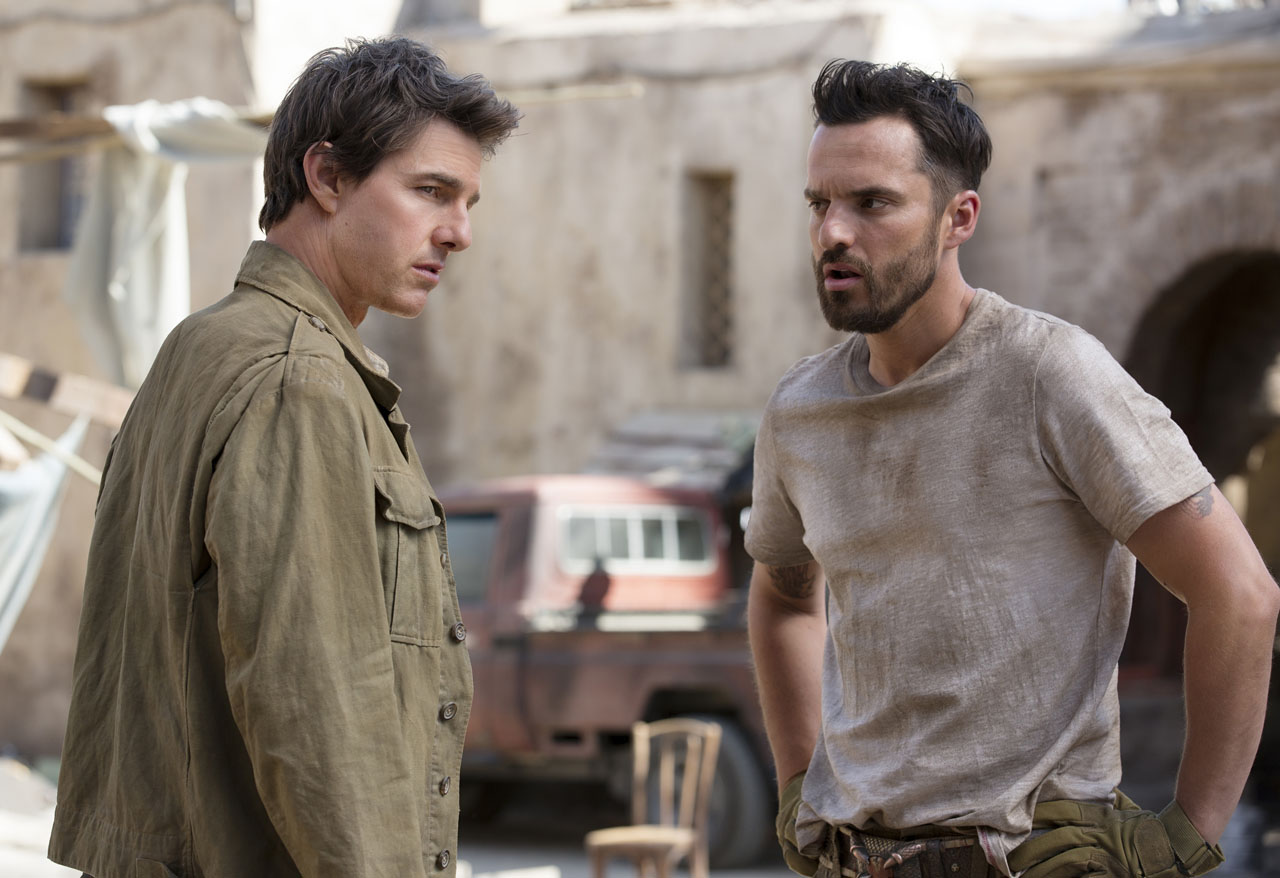
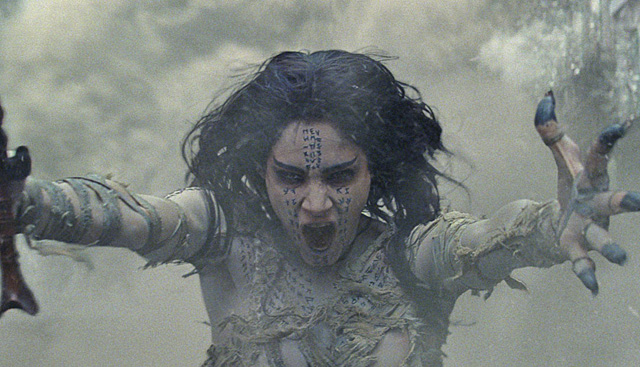
The main protagonist is Tom Cruise’s Nick Morton. He is basically an Indiana Jones meets Ethan Hunt type soldier, who along with his partner Chris Vail (Jake Johnson) is looting Iraq for Saddam’s hidden treasures. Of course, things don’t go according to plan and he and his partner, along with Annabelle Wallis’ fill-in-the-history-dots-archaeologist, unearth a monstrous and murderous Egyptian princess called Ahmanet (striking Sofia Boutella). In recent films such as Kingsman: Secret Service (2014) and Star Trek: Beyond (2016), Boutella has proved herself a physically commanding performer and once again she stands out here.
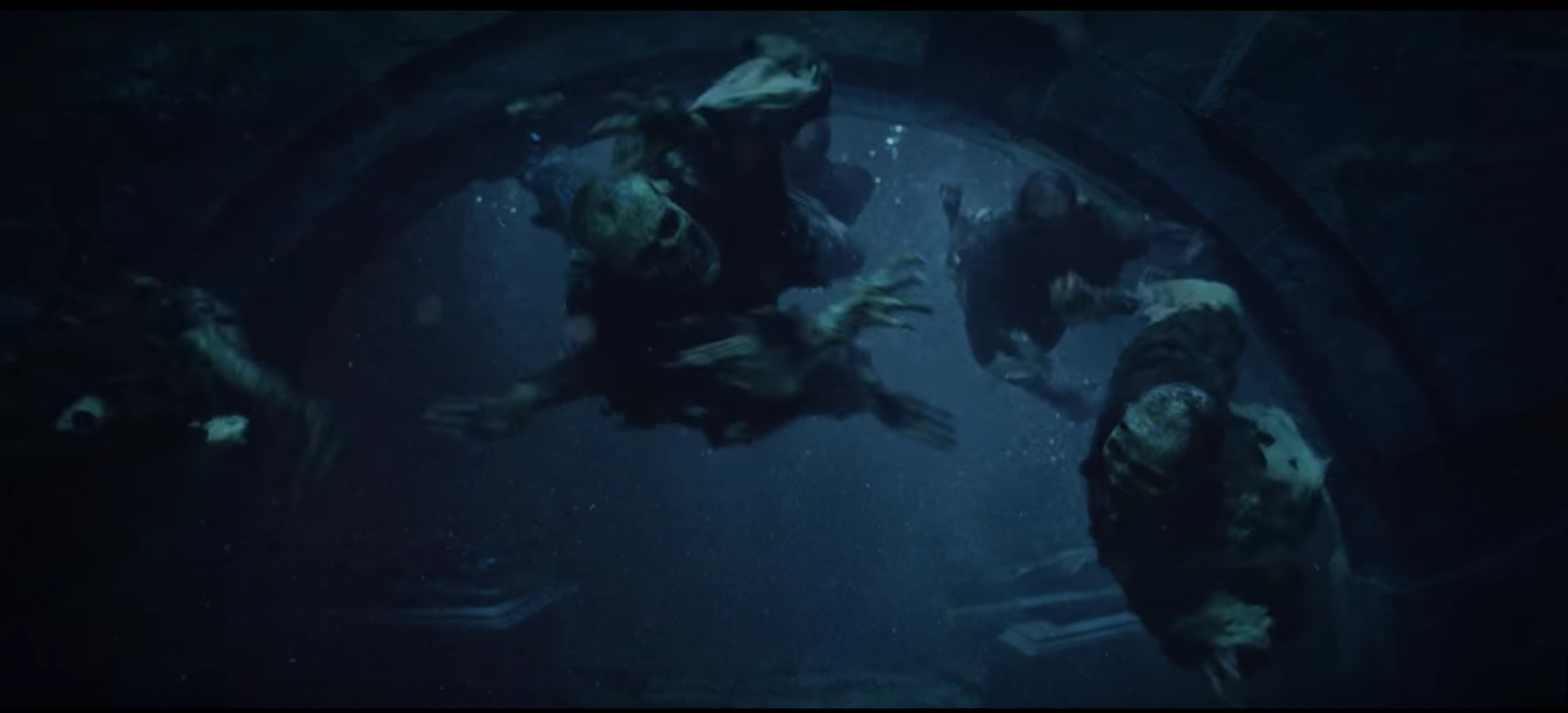
I don’t know but maybe I was in a good mood but I really enjoyed the bone-snapping ghouls; heart-stopping plane crash; Ahmanet’s sensual yet suspenseful pursuit; car chases through the murky woods; underwater zombies; duality of man versus monster theme; plus a great little homage to An American Werewolf in London (1981). I would say though that Tom Cruise probably unhinged the story slightly with his “superstar” persona and a less well-known actor may have added a bit more suspense. However, his characters’ arc was actually quite interesting as a cursed thief questioning his morals and actions. Plus, the final pay off, suggesting further adventures, was actually quite satisfying too.
In fact, while it’s very generic with haphazard plotting it is no worse than blockbusters like A Force Awakens (2015) or Fast and Furious 7 (2015) or Mission Impossible 6 (2016); which I enjoyed but are all very surface and style-driven, while remaining entertaining action films. Overall, The Mummy was totally unoriginal and I would’ve preferred even more horror and gore! But if, like me, you sometimes don’t want to think too much it works as a silly bit of monster entertainment with some brilliant action stunts thrown in. An alternative title perhaps could have been The Mummy: Romancing the Bones – and ultimately it is nowhere near as bad as many critics have stated; in my humble keyboard-tapping opinion that is.













 The Cinema Fix presents