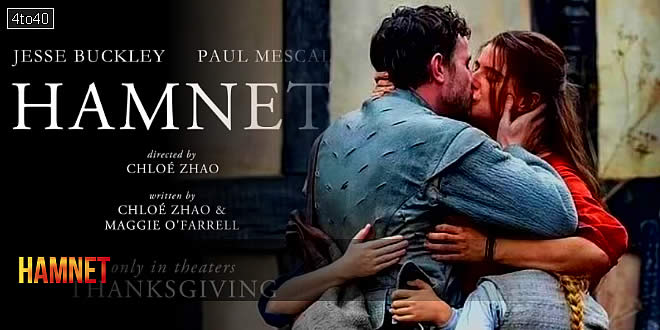
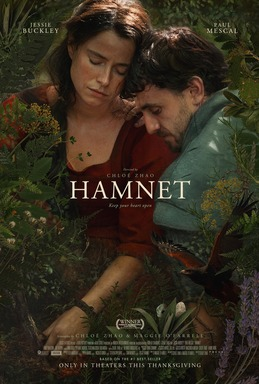
Screenplay by Chloé Zhao & Maggie O’Farrell – Based on Hamnet by Maggie O’Farrell Produced by Liza Marshall, Pippa Harris, Nicolas Gonda, Steven Spielberg & Sam Mendes Main cast: Jessie Buckley, Paul Mescal, Emily Watson, Joe Alwyn, David Wilmot, Jacobi Jupe, Olivia Lynes, etc.
Cinematography by Łukasz Żal
There are actors who impress, and then there is Jessie Buckley, who seems to detonate the screen every time she appears. From the feral menace and vulnerability of Beast (2017) to the raw, soul-baring musical grit of Wild Rose (2018), Buckley has proven herself fearless; from the existential unravelling of I’m Thinking of Ending Things (2020) to her razor-sharp, unclassifiable turn in Fargo (2020) – Season 4, and the aching restraint of Fingernails (2023), her work consistently redefines what emotional truth on screen can look like. Now, with an earth-shattering rendition of Agnes Shakespeare in Hamnet (2025), Buckley doesn’t just command attention—she claims her place as one of the most electrifying actors of her generation.
Hamnet (2025) is an adaptation of Maggie O’Farrell’s critically acclaimed novel is a quietly thunderous piece of cinema—one that chooses intimacy over spectacle and emotion over mythology. At its core is the relationship between Agnes and William Shakespeare, charted from their first, tentative connection through marriage, parenthood, and the fractures that emerge when love collides with loss and ambition.
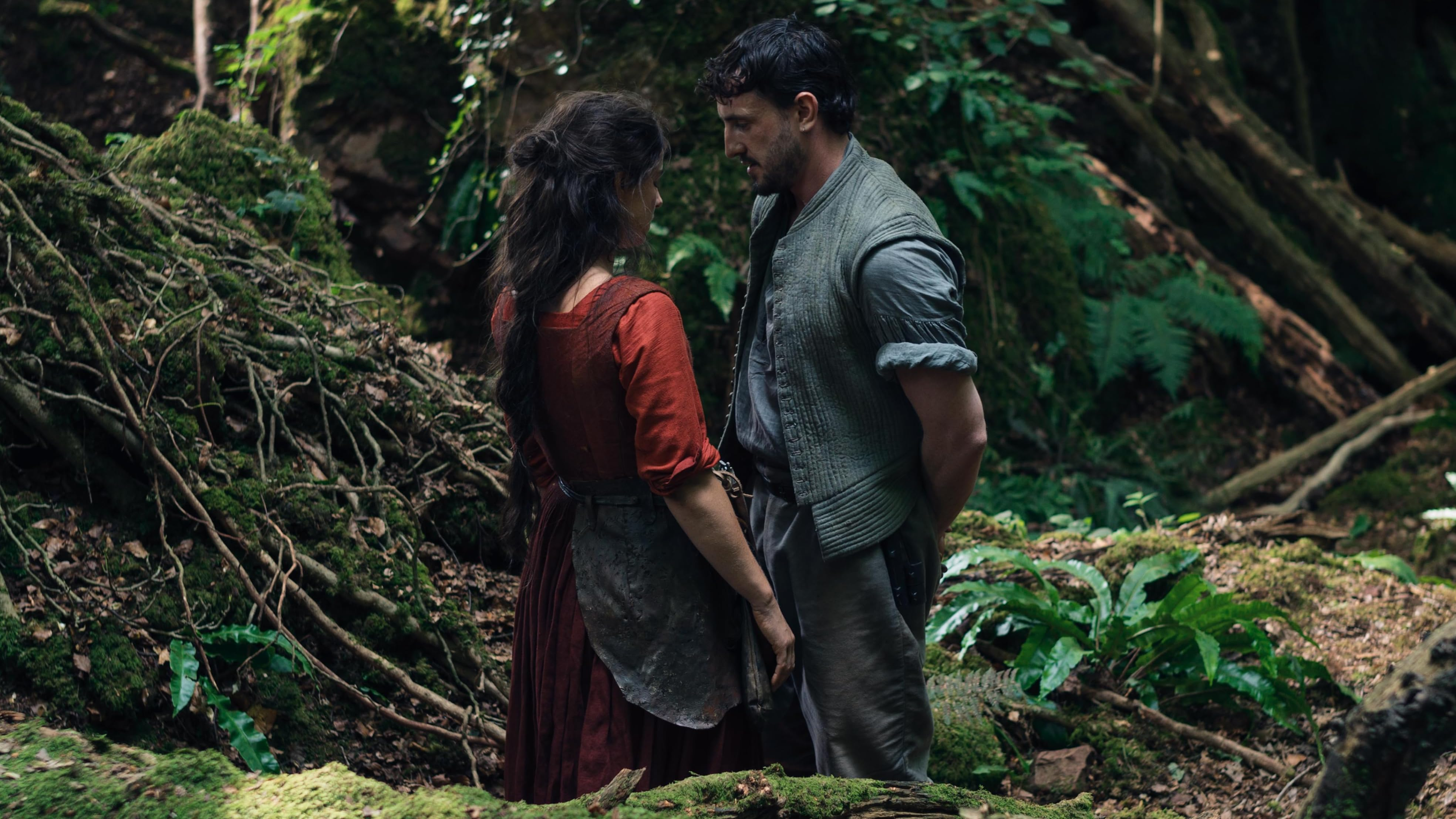
The film is less concerned with the legend of Shakespeare than with the human beings behind it: a scholar and poet struggling to find his literary voice, set against Agnes, a woman of the land and forest, spiritually attuned to nature, instinct, and ritual. Their romance blooms in the space between these worlds, with Agnes’s chanting communion with the natural world acting as an unspoken counterpoint to Will’s search for language and form.
Director Chloé Zhao brings her signature elegance and patience to the material, allowing moments to breathe and emotions to surface organically. Her collaboration with cinematographer Łukasz Żal results in imagery that feels almost painterly—soft, natural light spilling across interiors and fields, rendering the English countryside as something tactile and alive. Every frame seems steeped in earth, wind, and time, reinforcing the film’s grounding in the physical and the elemental.
At the centre of it all is Jessie Buckley, delivering a stunningly embodied performance as Agnes. Her work is raw, intuitive, and deeply moving—she plays grief not as a single rupture but as a living force that reshapes the body and spirit. Paul Mescal brings a quiet intelligence and aching restraint to William, capturing the tension between domestic devotion and creative restlessness, while the incredible, Jacobi Jupe, as the young son, Hamnet, adds genuine emotional resonance, grounding the family dynamic with heart-breaking sincerity.
Hamnet (2025) is ultimately a powerhouse drama about family, grief, and the curative—often painful—power of the creative process. It understands art not as triumph but as transformation, something born from love and loss in equal measure. My one reservation is a personal one: I found myself wanting more of Shakespeare’s journey in London and his struggle toward theatrical success and subsequent writing on the classic, Hamlet. But this absence is deliberate and understandable. The film is weighted toward the emotional interiority of Agnes’s experience, and in centring her perspective—so exquisitely rendered by Buckley—Hamnet (2025) finds its true, devastating strength.
Main cast: Mari Shirato, Junko Miyashita, Kentarō Shimizu, Jun Etō, etc.
Cinematography by Yonezou Maeda
Music by Toshiyuki Honda
*** MAY CONTAIN SPOILERS ***
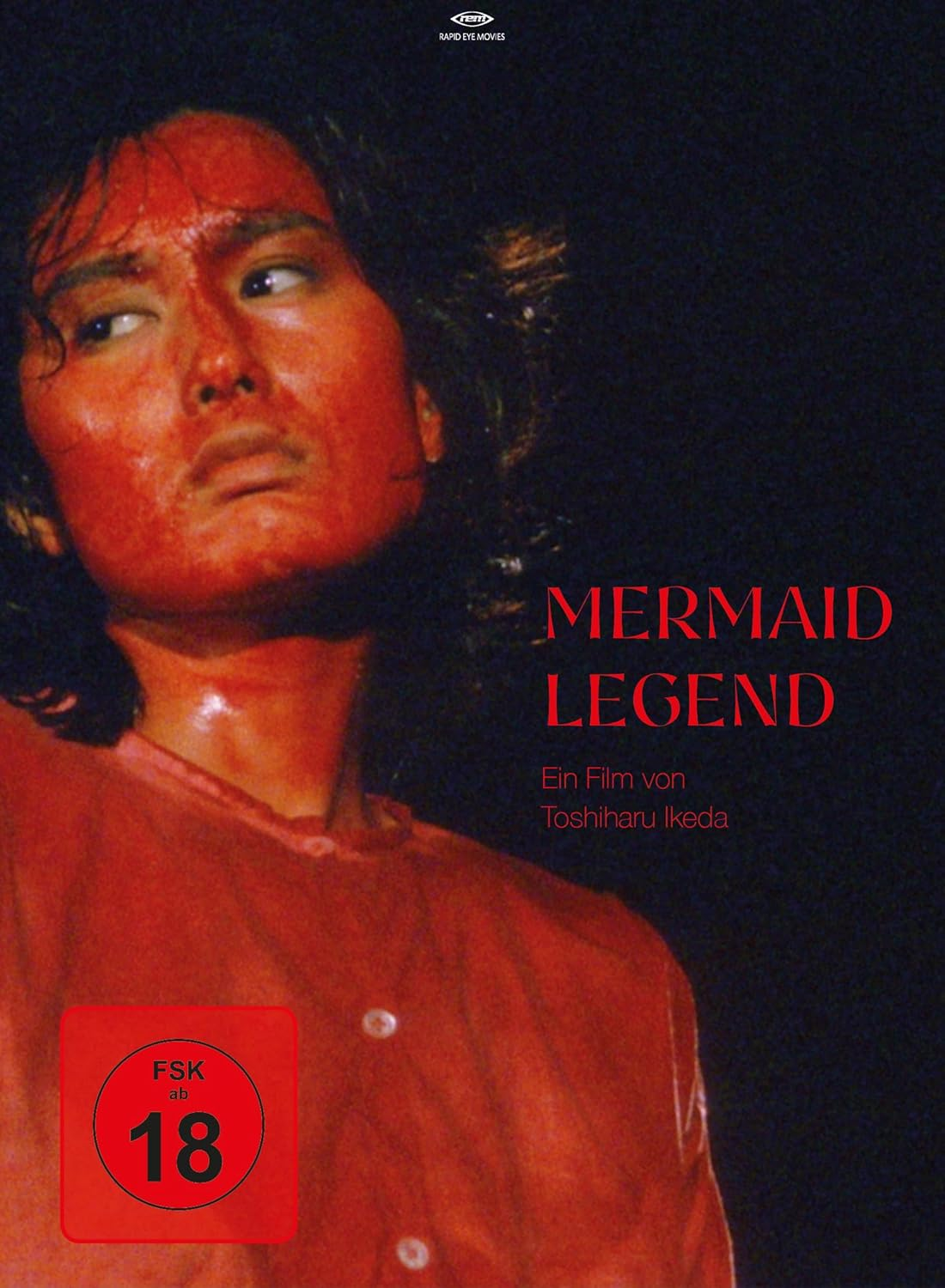
I took a gamble on an unknown Japanese film at the Nickel Cinema and walked out genuinely shaken. Mermaid Legend (1984) isn’t just a cult oddity—it’s a film that mutates before your eyes, seducing you with beauty before drowning you in blood. I was stunned by how something so lyrical could also be so brutally confrontational.
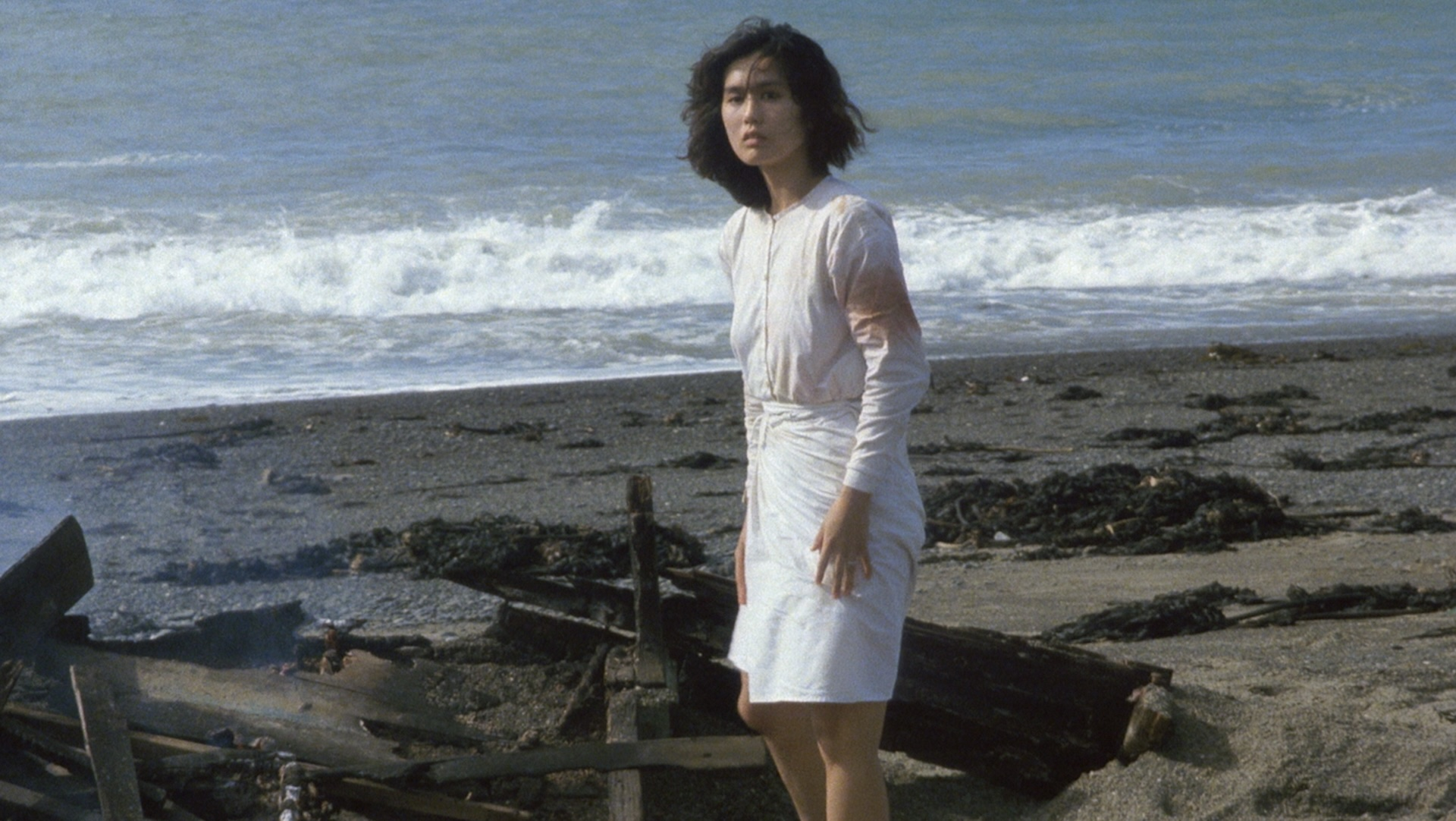
The story begins almost modestly, as a coastal drama about a fisherman and his wife, Migiwa. They bicker constantly, their marriage worn thin by poverty and exhaustion, yet there’s an undeniable bond beneath the arguments. That fragile domesticity is shattered when the fisherman stands in the way of an industrial development scheme. The business developers—faceless, polite, and utterly ruthless—have him murdered, disposing of his life as casually as industrial waste.
From there, Mermaid Legend (1984) transforms again. What starts as marital realism becomes a corporate espionage murder mystery, steeped in anger at nuclear energy, environmental destruction, and the cold machinery of corporate greed. Migiwa, a powerful-lunged pearl diver, initially hides, retreating into grief and the sea itself. But this is not a film about quiet mourning. When she decides to act, she does so with mythic force.
Played by the ethereal and astonishing Mari Shirato, Migiwa becomes something halfway between woman, avenging angel, and sea spirit. Shirato’s performance is magnetic—serene, sensual, and terrifying. As her vengeful pursuit begins, the film plunges headlong into extreme violence and explicit sexuality, reclassifying itself yet again as one of the most shocking exploitation epics I’ve seen from Japan in recent years. These scenes aren’t gratuitous in the lazy sense; they’re confrontational, weaponized, daring you to look away while refusing to let you feel comfortable for a second.
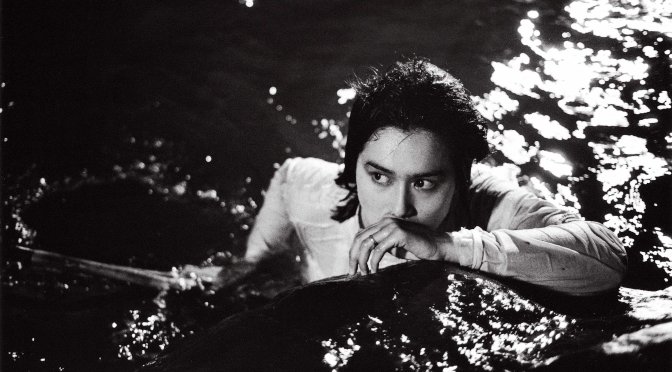
What makes Mermaid Legend (1984) so intoxicating is how its elements collide. Poetic underwater cinematography turns the ocean into a womb, a grave, and a cathedral. Religious, angelic, and environmental imagery blur together, as if Migiwa is both martyr and executioner. The music is heavenly—soaring, mournful, almost sacred—creating a surreal contrast with the carnage on screen. Beauty and brutality coexist in the same frame, each intensifying the other.
And then there’s the ending. The final, elongated pier stabbing rampage is completely off the chart—relentless, bloody, and hypnotic. It plays out like a ritual rather than an action sequence, stretching time until violence becomes abstraction, then meaning, then release. By the time the last body falls, Mermaid Legend (1984) has fully shed realism and entered the realm of legend, justifying its title in blood.
This is a film that shouldn’t work, yet does—furiously, defiantly. A genre-shifting fever dream that moves from domestic drama to political thriller to erotic exploitation to mythic revenge tragedy, Mermaid Legend (1984) is both beautiful and brutal, and I can’t stop thinking about it. Seeing it by chance at the Nickel Cinema felt like discovering a secret too powerful to stay hidden.
Production companies: Paramount Network Television, Braga Productions & Rick Berman Productions
Selected writers: Brannon Braga, Rick Berman, Manny Coto, Mike Sussman, Phyllis Strong, Judith Reeves-Stevens, Garfield Reeves-Stevens, André Bormanis, Chris Black, David A. Goodman, Fred Dekker, and more.
Selected directors: Roxann Dawson, LeVar Burton, Robert Duncan McNeill, Allan Kroeker, David Livingston, Winrich Kolbe, James L. Conway, Mike Vejar, Michael Grossman, Marita Grabiak, Brennan Spencer, Michael S. Watkins, Vincenzo Natali, and more.
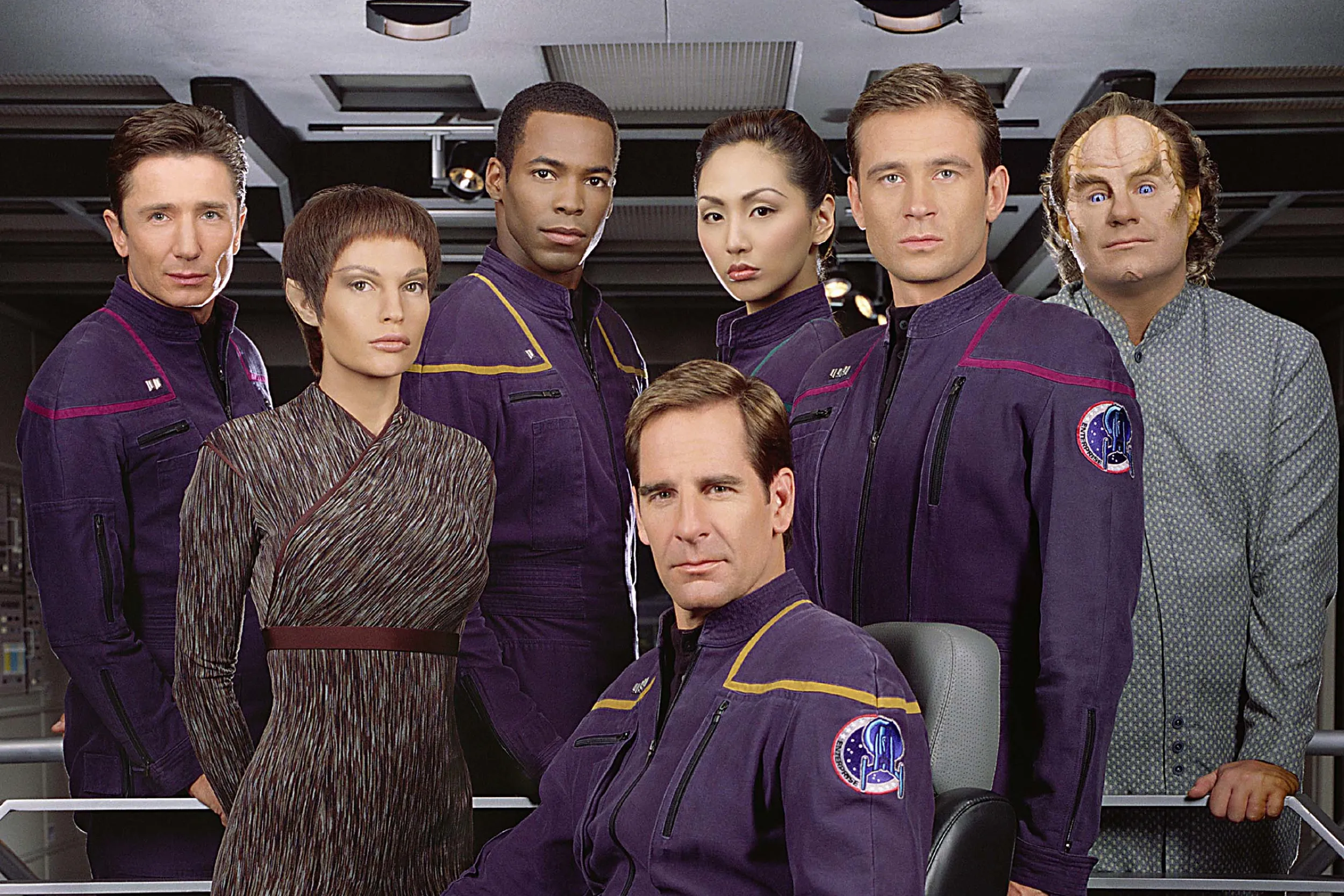
Main cast: Scott Bakula, John Billingsley, Jolene Blalock, Dominic Keating, Anthony Montgomery, Linda Park, Connor Trinneeretc.
Notable guest actors: Jeffrey Combs, Vaughn Armstrong , Gary Graham, Matt Winston, Randy Oglesby, James Cromwell, Brent Spiner, Daniel Dae Kim, Fionnula Flanagan, Robert Picardo, Tony Todd, Bruce Davison, Seth MacFarlane, Steven Culp, Noa Tishby, Rene Auberjonois, Peter Weller, Dean Stockwell etc.
Composer(s): Dennis McCarthy, Jay Chattaway, Brian Tyler, John Frizzell, Mark McKenzie, David Bell, Velton Ray Bunch, Kevin Kiner & Paul Baillargeon
*** MAY CONTAIN SPOILERS ***
It’s been a while since I reviewed Star Trek on the site. But I have now finally completed the task I set myself to watch and review all the legacy Star Trek series. I am currently on the fence regarding the more recent Star Trek offerings. Anyway, having reviewed Voyager (see below) last year, I can now provide a detailed report back on Enterprise.
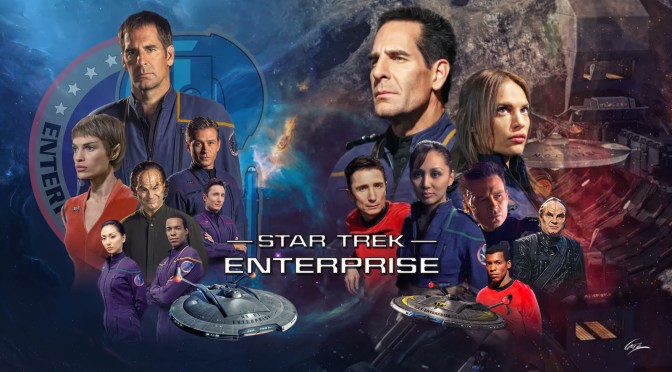
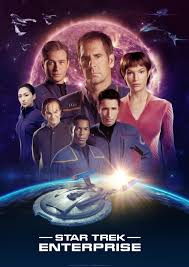
Star Trek: Enterpriseoccupies a fascinating corner of the franchise’s sprawling canon. Set a century before Kirk and more than a century after humanity’s first steps into spaceflight, the series charts the formative years of Starfleet—before there even was a “Starfleet” in the sense fans recognize. Its premise alone is rich: a pre-Federation frontier where humanity is inexperienced, unsteady, and often outmatched, yet eager to join a much larger galactic community. In this sense, Enterprise is both a prologue and a missing link, retrofitting the swaggering optimism of The Original Series with a more grounded, early-21st-century sensibility.
The show’s commitment to exploring those transitional years is what secures its place in canon. Enterprise seeds the diplomacy, technology, and interspecies tensions that future shows build upon—from the first warp-5 engine, to early encounters with Vulcans, Andorians, and the ever-shadowy Temporal Cold War. Watching Captain Jonathan Archer and his crew stumble toward the ideals later embodied by the Federation gives the series a distinctive historical weight. It doesn’t merely fit into Star Trek continuity; it actively sculpts the bedrock beneath it.
Central to the show’s appeal is Scott Bakula, whose performance as Captain Archer blends warmth, stubbornness, and a palpable sense of moral growing pains. Bakula gives Archer a grounded humanity that stands apart from the polished command styles of Picard or the passionate Sisko, yet his sincerity and resolve make him every bit their equal. When the writing rises to meet his talent—as in standout episodes like “Cogenitor,” “The Andorian Incident,” “Carbon Creek,” or the Xindi arc’s best moments—the show can reach the emotional and thematic heights of The Original Seriesand The Next Generation.
But Enterprise is also a series defined by uneven execution. For every episode that lands with classic-Trek resonance, there are others hampered by muddled plotting, bland direction, or creative decisions that feel more reactive than visionary. The show often struggled to decide whether it wanted to be a rough-edged prequel, a 2000s-era action drama, or a traditional episodic Trek—frequently trying to be all three at once. While it contains genuinely excellent science-fiction storytelling, its overall writing and directorial cohesion never consistently matched the clarity, ambition, or confidence of its most celebrated predecessors.
Yet despite its flaws, Star Trek: Enterprise remains an essential and often underrated part of the canon—a show whose best moments remind us exactly why Trek endures, and whose imperfections make its aspirations feel all the more human. Here are eight of the best episodes I watched – two per series.
Series 1 – The Andorian Incident (Episode 7)
This episode is the first truly great hour of Enterprise—the point where the show proves it can handle nuanced political storytelling within the Trek universe. The introduction of Jeffrey Combs as Shran is a masterstroke; he immediately brings depth, wit, and volatility to the Andorians. The plot, centered on Archer and his crew discovering that a supposedly pacifist Vulcan monastery is hiding darker secrets, reshapes our understanding of Vulcan–Andorian tensions. Strong direction, tight pacing, and a morally thorny reveal make this the first episode that feels essential to larger Star Trek canon.
Series 1 – Dear Doctor (Episode 13)
A thoughtful, character-driven story told through Dr. Phlox’s personal logs, “Dear Doctor” represents Enterprise at its most philosophically ambitious. It confronts the ethics of medical intervention, cultural evolution, and the limits of humanitarian aid—classic Trek territory handled with sensitivity and restraint. John Billingsley delivers one of the best performances of the season, infusing Phlox with curiosity, compassion, and unsettling pragmatism. The episode’s controversial ending also resonates, sparking debate among fans and critics alike. It’s a quietly powerful hour that demonstrates the series’ potential for moral complexity.
Series 2 – Carbon Creek (Episode 2)
Widely regarded as the highlight of Season 2—and for many, the best Enterprise episode of its first two years—“Carbon Creek” is a charming, unexpectedly heartfelt detour into Trek history. Told by T’Pol as a possibly-true, possibly-mythic story, it follows a stranded Vulcan survey team living incognito in 1950s Pennsylvania. The fish-out-of-water premise is handled with warmth, humour, and subtle social commentary, while Jolene Blalock shines in a dual role that lets her explore a softer, more playful Vulcan persona. It’s imaginative, character-rich, and quietly profound—the kind of tonal experiment that pays off beautifully.
Series 2 – Regeneration – (Episode 23)
A tense, surprisingly effective prequel to The Next Generation’s Borg storyline, “Regeneration” threads a tricky needle: introducing Borg elements without breaking canon. The episode smartly uses the wreckage from Star Trek: First Contact as its entry point, turning the narrative into a chilling, atmospheric thriller. The direction is sharp, the pacing taut, and the danger feels unusually real for this era of Trek. The crew’s desperation—fighting an enemy they can’t possibly understand—creates some of the season’s most gripping moments. It’s both fan-pleasing and genuinely suspenseful.
Series 3 – Twilight – (Episode 8)
Often cited as the masterpiece of Season 3, “Twilight” is a time-bending character drama that blends emotional storytelling with classic Trek sci-fi ingenuity. When Archer becomes afflicted with a neurological condition that erases his short-term memory, the episode jumps forward into an alternate future where humanity has been nearly wiped out by the Xindi. What follows is a surprisingly intimate exploration of Archer and T’Pol’s relationship, played with sincerity and restraint by Scott Bakula and Jolene Blalock. The script balances tragedy, hope, and big ideas without feeling gimmicky. It’s moving, tightly written, and stands alongside the franchise’s finest “what-if” stories.
Series 3 – Azati Prime – (Episode 18)
“Azati Prime” is the moment Season 3’s slow-burn storytelling snaps into urgent, high-stakes clarity. The episode follows Archer’s attempted suicide mission to destroy the Xindi superweapon, giving Scott Bakula one of his strongest performances in the entire series. The moral weight is heavy, the action tense, and the pacing relentless. Crucially, this is where the Xindi cease being abstract antagonists and become three-dimensional political factions torn between fear and diplomacy. The episode’s final act—Enterprise under brutal assault—is among the most cinematic sequences the series ever produced, setting up the endgame of the season with real emotional gravity.
Series 4 – United – (Episode 13)
“United” is Enterprise finally fulfilling its prequel potential—showing the messy, reluctant, and hard-fought beginnings of what will eventually become the United Federation of Planets. The political maneuvering is smart and grounded, the Andorian–Tellarite tension is played with grit and humor, and Jeffrey Combs delivers another magnetic performance as Shran. The episode’s centerpiece—the Andorian duel where Archer must fight to prevent a larger war—is tense, dramatic, and deeply character-driven. It’s classic Trek diplomacy mixed with riveting conflict, all while pushing the franchise’s history forward in meaningful ways.
Series 4 – In a Mirror, Darkly – (Episodes 18–19)
One of the most stylish and purely fun stories Enterprise ever told, this two-parter fully embraces the decadent brutality of the Mirror Universe. The production team goes all-in: redesigned sets, re-imagined uniforms, a pulpy remixed title sequence, and a stunning recreation of the USS Defiant from The Original Series. The cast seems to relish the opportunity to play villainous, unhinged versions of their characters—especially Jolene Blalock and Connor Trinneer. Visually bold, lore-rich, and brimming with dark humour, “In a Mirror, Darkly” is a love letter to both TOS and long-time Trek fans.
Last year I wrote and produced seven monologues inspired by the deadly sins. With careful planning, myself and a quality cast and crew shot them all in one day at Raindance Film School. I’m now releasing them online via YouTube. They are in essence a proof of concept project with an aim for myself to develop them into a feature film screenplay. Below are episodes 1 to 3, with episodes 4 to 7 to come soon.
PITCH
“Let those without sin cast the first stone.”
An anthology of 7 monologues based around the seven deadly sins. Moments, drama, humour, character studies and themes exploring the darker side of human nature. Influenced by: Alan Bennett’s Talking Heads, Inside No. 9, Tales of the Unexpected and Amicus/Hammer horror film anthologies.
SLOTH starring Paul Laight
Sloth, features Kevin, a Spurs fan, recounting how he took revenge on one of the laziest people he has ever met.
GREED starring Sydney Curtis
This moving monologue features, Gary, at an AA meeting, sharing how he believes greed has contributed to a close friend’s death.
GLUTTONY starring Antigone Duchesne
Kate Briggs serves up a monologue, via a video will, enacting a grudge-driven, but sweet revenge against her gluttonous pig of a brother.
CREDITS
Writer and Producer: Paul Laight Camera and Post-Production: Gary O’Brien Sound: Ali Kivanc Camera Assistant: Maka Natsvlishvili Music by: Epic Violin Music NO Copyright royalty free music Special thanks: Raindance Film School and Universal Video
Produced by Emerald Fennell, Josey McNamara and Margot Robbie
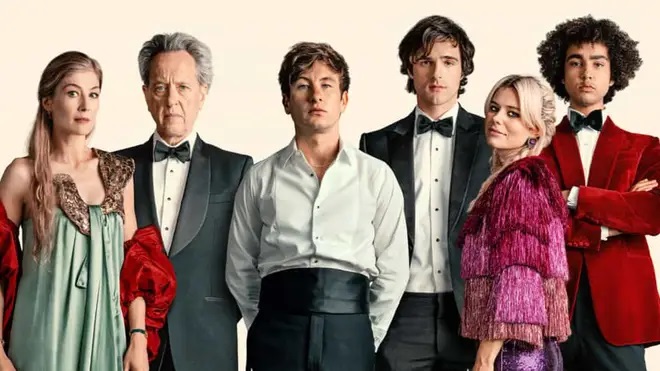
Cast: Barry Keoghan, Jacob Elordi, Rosamund Pike, Richard E. Grant, Alison Oliver, Archie Madekwe, Carey Mulligan, Paul Rhys, etc.
Cinematography by Linus Sandgren
*** MAY CONTAIN SPOILERS ***
As the awards garnered upon Emerald Fennell’s brilliant Promising Young Woman (2020) will testify, she is clearly a major talent. Fennell has also acted in TV shows such as Call the Midwife and The Crown, as well as writing and producing the second series of Killing Eve. Not only is Fennell an excellent actress, writer, director and producer, but is also now an Oscar and BAFTA winner. Thus, Fennell’s “difficult second film” arrives in the guise of the pitch black comedy,Saltburn (2023). Although to describe this hilarious, bleak, sexy, and often twisted exploration of the British class system as such evidently tests the very definition of comedy.
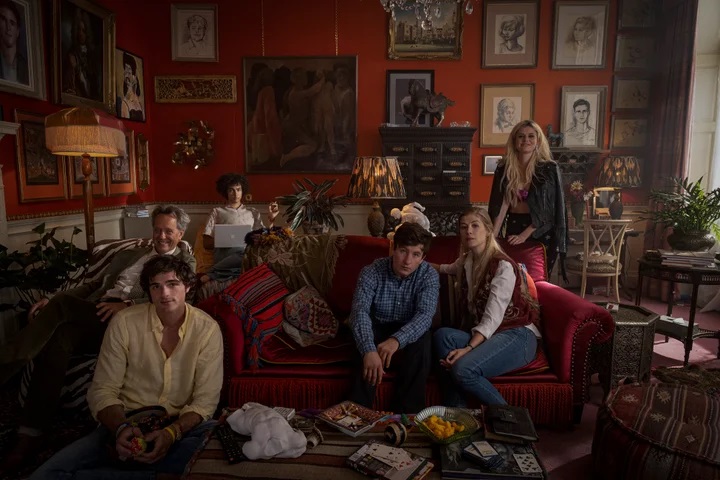
Saltburn (2023) is set in 2006. Oliver Quick (Barry Keoghan) attends Oxford University as a naive fresher with an inferiority complex and desire for company. While he is incredibly intelligent, coming from a lower class background places bookish Oliver as a very small fish in big water. Especially when compared to the so-called Oxford elite including handsome and wealthy, Felix Catton (Jacob Elordi) and his cousin, the handsome and not-as-wealthy, Farleigh Start (Archie Madekwe). While Farleigh is suspicious of Oliver, Jacob soon befriends him and takes the Northerner under his wing. The two connect and form an “odd couple” bromance, with Felix even going so far as to invite Oliver to his stately home, Saltburn, for the summer. There we meet the rest of Felix’s family including his flaky sister, Venetia (Alison Oliver), eccentric father, Sir James (Richard E. Grant) and effervescent mother, Lady Elspeth (Rosamund Pike).
After building Oliver and Felix’s characters carefully during their time at Oxford, Fennell’s savage and satirical screenplay gathers pace in the second act at Saltburn. Here Oliver tries to fit in and ingratiate himself into the Catton family, but it soon becomes clear that however friendly they may be, he will only ever be an outsider to them. Simultaneously, Farleigh sees Oliver as a rival for the Cattons’ emotional and financial affections and the two begin a retaliatory personal war amidst the balmy summer days, breakfasts, dinner parties and social gatherings. Oliver’s main journey is to connect as much with Felix as possible, so much so his passion veers toward obsession. But Felix is a roaming spirit and a hedonist and does not quite requite Oliver’s feelings. Yet, Felix does show compassion for Oliver, as illustrated when he drives him on a mercy mission to visit Oliver’s family. This is where the story takes an intriguing and ever deadly turn.
I cannot recommend Saltburn (2023) enough for its fantastically witty script, devastatingly brilliant cast and some quite disgustingly explicit, but contextually justifiable, character moments and scenes. Fennell takes the setting and structure of Evelyn Waugh’s Brideshead Revisited and turns it upside down, spinning a devious tale of infatuation, love, privilege and social climbing. Through the character Oliver Quick, and I really don’t want to give anything away, there is a powerful and jaw-dropping character arc of upward mobility. Rosamund Pike’s and Keoghan’s performances are both amazing and award-worthy. While the final act twists certainly do shock and surprise they arguably are rushed when compared with the more effective pacing of the opening and middle acts. Moreover, I am also unsure why the exquisite cinematography and stunning locations were presented in the 4:3 (1:33:1) aspect ratio. Why squeeze in Linus Sandgren’s light and framing and not expand them to the widescreen format?
Ultimately, Emerald Fennell proves herself an important voice in British cinema. Unafraid to test the boundaries of taste, genre, and audience expectations, she has crafted one of the most consistently challenging films of the year with Saltburn (2023). One could easily describe the themes presented here as a critique of the upper classes and how the uber-rich are bad people to be brought down to their knees. However, Fennell’s script is not that simplistic. It cleverly careers between love/hate for the characters and irony-bombing the class system, before becoming a damning indictment on the darkest flaws of humanity. Lest one forget the indelible one-liners throughout and THAT final dance sequence, which are both to die for!
Produced by: Wes Anderson, Steven Rales, Jeremy Dawson
Ensemble Cast: Jason Schwartzman, Scarlett Johansson, Tom Hanks, Jeffrey Wright, Tilda Swinton, Bryan Cranston, Edward Norton, Adrien Brody, Liev Schreiber, Hope Davis, Stephen Park, Rupert Friend, Maya Hawke, Steve Carell, Matt Dillon, Hong Chau, Willem Dafoe etc.
Cinematography Robert Yeoman
*** MAY CONTAIN SPOILERS ***
Wes Anderson is a phenomenal filmmaker with an imaginative set of style and narrative conceits. Everyone one of his releases is a rich tapestry containing memorable ensemble casts, adjacent framing, effervescent use of colour, geographical pertinence, intellectual humour and subjects situated in the far-left field of genre cinema. Yet, I do not enjoy ALL his films. Often, they veer too far into eccentric pretentiousness. Indeed, I found The French Dispatch (2021), frustrating and, other than the tremendous story set in the asylum with the mad artist (Benicio Del Toro), disconnected with it overall. While it was another admirable work of cinema, I did not enjoy it as a paying punter.
Asteroid City (2023), however, is a film I enjoyed greatly. The famous actors immersed within the ensemble, the cinematic artifice, the clever meta-narrative structure, symmetrical shot composition, beautiful use of colour, offbeat characters, specific era and geographical setting, imaginative props and costume design, and witty humour are all present as per Anderson’s impressive body of work. But Asteroid City (2023) had a larger emotional heart than his recent films, and is my favourite since the superb, The Grand Budapest Hotel (2014).
A heady combination of genres, one could describe, Asteroid City (2023), as a hyper-sci-fi-Western-retro-romantic-futuristic-comedy and study of grief set in 1950s, America. Despite filming taking place in Spain. Anyway, Anderson establishes the characters through the structure of a film within a play. Bryan Cranston’s narrator introduces us to the various middle-class, working class, military and scientific personalities who become trapped in the town of Asteroid City by a series of unlikely but hilarious misfortunes. Throughout the chapter inter-titles the scenes return us to our narrator as Anderson cleverly comments on the process of creating a story while delivering the narrative events.
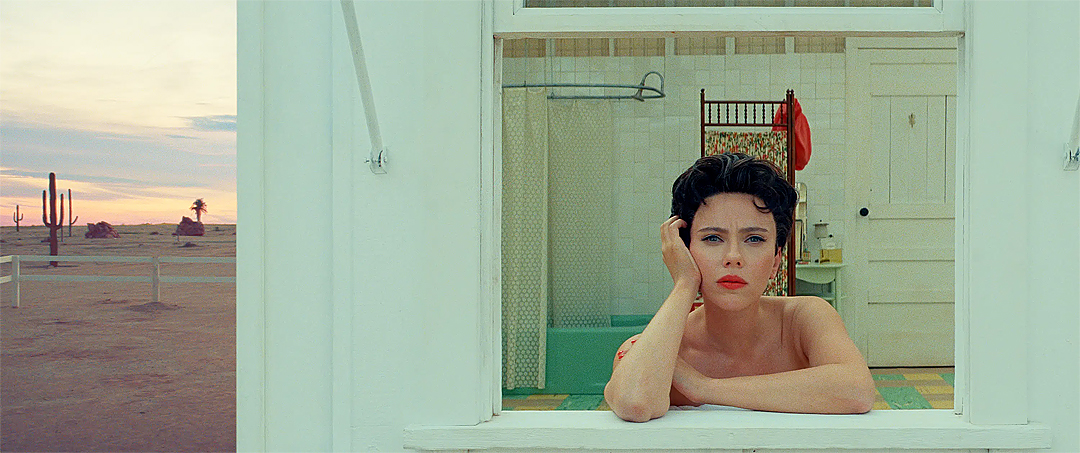
Anderson delves into familiar themes of grief via the story of war photographer, Augie Steenbeck (Jason Schwartzmann) and his four kids, one of whom is a genius, Woodrow (Jake Ryan). He is there for a Junior Stargazer competition amidst the setting of the gigantic meteorite bunker. Again, the theme of prodigious children is mined for great humour and intellectual wit by Anderson. The futuristic inventions created by the children are especially fantastic. The plot strand of the science geniuses being exploited by the military and corporate sharks is deftly done. Yet, the main emotional heft is delivered within Augie and Hollywood actress, Midge Palmer’s (Scarlett Johansson) budding relationship. Johansson is especially compelling in the role, anchoring the film in welcome pathos, amidst the flurry of idiosyncratic absurdities Anderson throws at us. His framing of Augie and Midge between the their chalets is aesthetically memorable, visually augmenting their growing human connection.
Asteroid City (2023) proves once again Wes Anderson is one of the most original filmmakers of this generation. Will he gain some more converts to his particular set of cinematic bag of tricks? Who knows. What I do know is that I was completely immersed in the colour, movement, pace, humour, aesthetics, performances and themes with the film. I must say though, while it was necessary, the “Area 51” style — and I don’t want to give it away — absurd plot-turn halfway through was not my favourite aspect of the piece. But I realise it was narratively integral to the story. The meta-framing also seemed to get in the way at times of the main action effecting the occupants of Asteroid City. But these are minor gripes at a thoroughly artistic, beautifully immersive, and technically impressive cinematic achievement.
I thought I’d save myself a lot of time using the above variant words in one go. Because they, and the word auteur, are utterly inevitable while writing a short article in praise of the Wes Anderson films I rate. It’s intriguing to write about Anderson though. While many of the pieces in the My Cinematic Romance series concentrate on people in cinema I absolutely adore, he is more a filmmaker who I respect rather than have an undying emotional connection with.
Wes Anderson is a phenomenal filmmaker with an imaginative set of style and narrative conceits. Everyone one of his releases is a rich tapestry containing memorable ensemble casts, adjacent framing, effervescent use of colour, geographical pertinence, intellectual humour and subjects situated in the far left field of genre cinema. Yet, I don’t enjoy ALL of his films. Often they veer too far into eccentric pretentiousness. Indeed, I was going to write a review of The French Dispatch (2021), but I found it frustratingly dull and, other than the tremendous story set in the asylum with the mad artist (Benicio Del Toro) disconnected with it on the whole. But, I must say, it was another admirable work of cinema, but one I did not enjoy as a paying punter.
So, rather than write a middling review about a genius filmmaker’s latest work, here is a piece about my favourite five films of Wes Anderson.
***MAY CONTAIN SPOILERS ***
BOTTLE ROCKET (1996)
Anderson’s debut feature film is based on his short film of the same name. Co-written with Owen Wilson, it is a freewheeling take on the heist movie which eschews hard-boiled professionals for a group of hapless losers led by the positively loopy Dignan (Wilson again). Shot way before Anderson got his ruler and set square out, it’s a naturally filmed, hilarious character comedy that destabilises crime genre conventions with charming effect. Launching the acting careers of the Wilson brothers it is an oddly charming filmic treat.
RUSHMORE (1998)
This is still my favourite Wes Anderson film because it combines a perfect combination of uncommon humour and prevailing verisimilitude. What I mean is I did not feel I was watching a showcase of artistic flourishes, but a true human story full of empathetic characters, feeling and emotion. It is also incredibly funny as we follow the rites of passage story of school maverick, Max Fischer (Jason Schwartzman), a working class kid rebelling against the adults he believes are beneath him. Bill Murray’s career renaissance began here and his character’s vengeful battles with Max are one of the film’s many highlights.
THE ROYAL TENENBAUMS (2001)
The first Wes Anderson film that saw the stylistic devices and themes so prevalent in his later work to truly come to the fore. The ensemble cast crammed with famous names, the omnipotent narrator, symmetrical framing, consistent and complimentary colour palettes, typography, fantastic use of nostalgic music, distinctive costumes and stories structured in chapters of the literary kind. The Royal Tenenbaums (2001) contains many absurd comedic moments, but has several tragic scenes too. This demonstrates Anderson’s growing maturity and remains a confident vision of a dysfunctional American family of geniuses and misfits.
THE GRAND BUDAPEST HOTEL (2014)
While Rushmore (1998) is my favourite film of Wes Anderson, his best is the tour-de-force comedy, The Grand Budapest Hotel (2014). It’s the pinnacle of bravura style and well-honed narrative competence, confidently presenting the rags-to-riches story of Zero Moustafa beginning in 1930s. Europe. Moustafa’s story takes in his first love, his job at the opulent hotel and his moving friendship with the prideful Gustave, an amazing Ralph Fiennes. It’s a film packed with invention, colour, humour, sadness and romance all wrapped in themes of the rise of fascism, loss, love and the wonder of friendship.
ISLE OF DOGS (2018)
Put aside ridiculous millennial online accusations of cultural appropriation and submerge yourself within Anderson’s rich canine narrative and stop-motion tapestry. As aforementioned, I’m not always a fan of his story subjects but he is a master of style and form. Isle of Dogs(2018) is no different and is a wonderful cinematic experience. Set in Japan we concentrate on, hence the title, a bunch of stray dogs dumped on a wasteland left to die and their subsequent adventures. This is much darker than prior Anderson films, but full of the imagination, wit, colour and brilliant technique, containing funny gags and twisting drama throughout. I preferred this to his version of the Roald Dahl classic, Fantastic Mr Fox (2009), as Bryan Cranston and the marvellous cast breathe life into the Anderson’s visionary animated box of tricks.
“If there’s specific resistance to women making movies, I just choose to ignore that as an obstacle for two reasons: I can’t change my gender, and I refuse to stop making movies. It’s irrelevant who or what directed a movie, the important thing is that you either respond to it or you don’t. There should be more women directing; I think there’s just not the awareness that it’s really possible. It is.“— Kathryn Bigelow in 1990
Having most recently directed the searing period drama, Detroit (2017), Bigelow has been making feature films, since her debut, The Loveless (1981), for over thirty-nine years. With a strong academic background, having studied at the San Francisco Art Institute and Columbia University, it’s fascinating to review a career which has eschewed arthouse cinema and essentially been spent working mainly on big-budget genre films. However, one can see in her directorial canon that Bigelow, while striving for commercial success, is constantly testing the boundaries of genre storytelling.
Along with a powerful visual style that attains symbiosis with the core material, she intelligently explores themes relating to violence, individual freedom versus the system, masculinity in crisis, gender representations and socio-political corruption. Lastly, her characters are often outsiders, morally complex and dealing with deep personal trauma. In short: Bigelow’s worldview is one of both healthy scepticism and cynicism, but also an element of hope within the longing for control. So, here are five of Kathryn Bigelow’s most impactful cinematic releases.
***ARTICLE CONTAINS FILM SPOILERS***
NEAR DARK (1987)
While The Lost Boys (1987) is rightly regarded as a very entertaining 80’s vampire film, Near Dark (1987) is way, way superior. Despite not catching fire at the box office, this neo-horror-western contains a fantastic cast of James Cameron alumni, including: Lance Henriksen, Bill Paxton and Jenette Goldstein. These great character actors inhabit this snarling gang of vampires perfectly as the film contains shockingly brutal violence and hard-bitten dialogue amidst a tender love story.
BLUE STEEL (1990)
While Jamie Lee Curtis is generally better known for her horror and comedy film performances, Kathryn Bigelow made excellent use of her dramatic acting ability as a rookie police officer caught up with Ron Silver’s psychotic commodities trader. Blue Steel (1990) is a variegated genre film which takes a standard police procedural narrative and twists it into something far more psychologically compelling. Lee Curtis excels, as does vicious bad-guy Silver, aptly named Eugene Hunt!
POINT BREAK (1991)
This classic heist meets surfing movie meets gay subtext bromance is jam-packed with classic action scenes and faux-deep philosophical musings. Keanu Reeves is the daftly named cop, Johnny Utah, who goes undercover, amidst the beach brigade to find a bunch of bank robbers. His suspicions fall on Patrick Swayze’s elemental surfer-dude-god and a dangerous “bromantic” game of cat-and-mouse ensues. Bigelow scored her first major hit with Point Break (1991), infusing it with some incredibly visceral stunt, surfing, robbery and chase sequences in an exhilarating film experience.
THE HURT LOCKER (2008)
After the box office failures of her previous three films, the under-rated sci-fi thriller, Strange Days (1995), enigmatic mystery, The Weight of Water (2000), and stodgy cold war film, K-19: The Widowmaker (2002), Bigelow’s seemingly took a career break. She would, however, come back with her most critically acclaimed and Oscar-winning film, The Hurt Locker (2008). From a brilliant script by Mark Boal and led by Jeremy Renner’s standout lead performance, The Hurt Locker (2008), put the audience right at the heart of a bomb disposal unit in Iraq. Putting aside the politics for a moment, the film is full of incredibly tense and superbly edited scenes which have your heart in your mouth. Simultaneously too, the film also shows the devastating emotional, physical and mental effect war has on the people of Iraq and the soldiers sent to fight this horrifically unjust conflict.
ZERO DARK THIRTY (2012)
Whereas The Hurt Locker (2008) had highly emotional and empathetic protagonists, Bigelow and Boal’s next film Zero Dark Thirty (2012), is a much more clinical and technically efficient cinematic experience. In parts, both a war drama and espionage thriller, the story also has a feel of an old-fashioned Western as American military and CIA operatives, led by the excellent Jessica Chastain and Jason Clarke, hunt down Osama Bin Laden. Politically speaking this is a film which makes me feel very uncomfortable for a number of reasons. It plays out like a revenge story. It also seems to both criticize and vindicate torture in the early scenes. This makes me uneasy as I understand the 9/11 attacks were just horrific, yet they seemed to get used as a motive for many more atrocities by the United States government. I guess that was what Bigelow and Boal were going for. They attempted to create a morally and emotionally complex war thriller that lets you interpret the events yourself and conclude one’s own judgements.
I’ve been busy trying to avoid the booze in the fridge most days, although I did fail miserably on Saturday. But I was kind of celebrating fifteen years of low budget short filmmaking. If you didn’t know my production company is called Fix Films Ltd. Here is my latest showreel video. It’s basically a look back at all the films we have made. Also, it’s a tribute to all of the talented people we have worked with.
Fix Films are a filmmaking collective. Since 2005 they have been involved in the creation of many, many short films and promos. They self-produce, write, direct, edit and score their own films to a very high standard despite the low budgets. They are true independent filmmakers.
This showreel features images, clips and music from most of our major short films productions.
Fix Films Ltd are:
Paul Laight, Gary O’Brien and all the amazing people we have worked with.
Produced by: Amy Pascal, Denise Di Novi, Robin Swicord
Cast: Saoirse Ronan, Emma Watson, Florence Pugh, Laura Dern, Timothee Chalamet, Meryl Streep, Tracy Letts, Bob Odenkirk, James Norton, Louis Garrel, Chris Cooper etc.
Cinematography: Yorick Le Saux
**MAY CONTAIN SPOILERS**
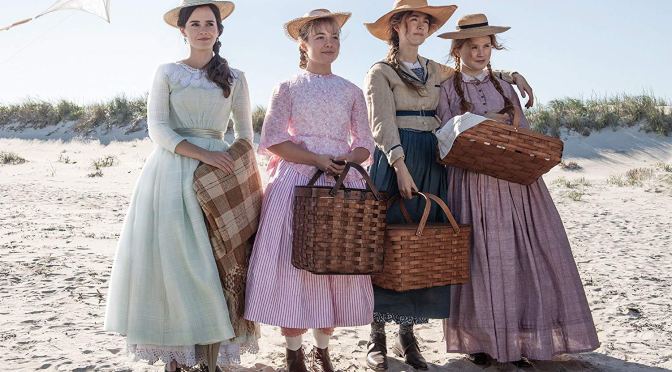
It’s Boxing Day and you’re nursing a slight Christmas Day hangover, plus your brain is still trying to piece together the crazy jigsaw that was HBO’s Watchmen (2019). You now want a story that’s a bit more comforting; something that will make you warm and snug and feel safe. Step forward Greta Gerwig, Louisa May Alcott and an incredible cast of fine actors in the latest adaptation of the classic novel, Little Women (2019). It’s a perfect Christmas film full of romance, love, spirit, passion and just a little bit of pathos and heartache.
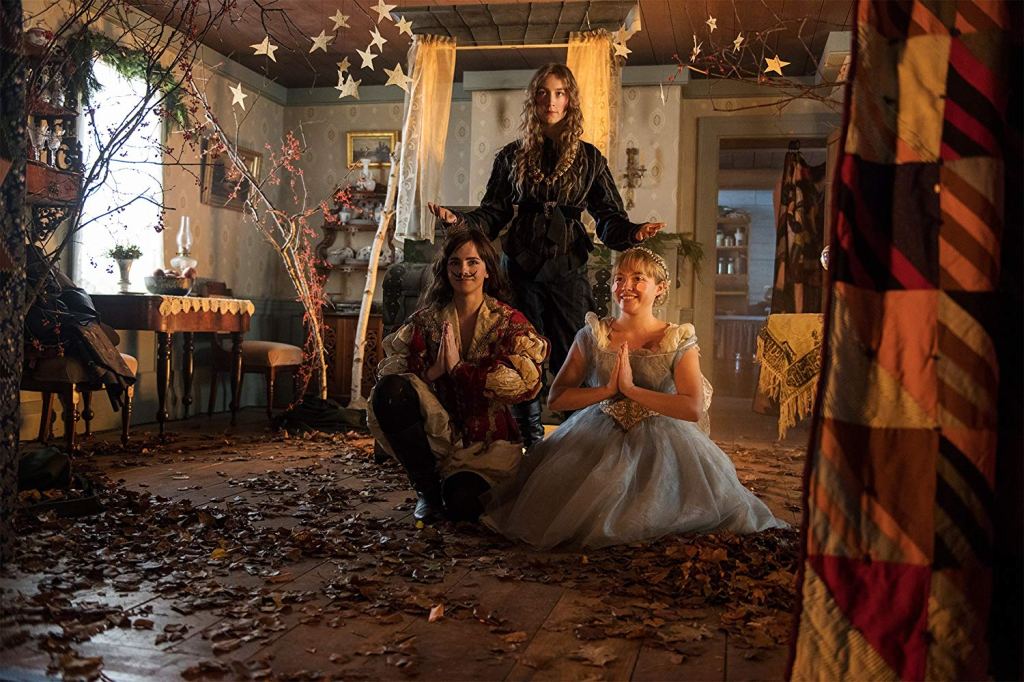
Set in Massachusetts at the time of the American Civil War, this splendid old chestnut of a story covers the lives of four teenage sisters — Meg (Emma Watson), Jo (Saoirse Ronan), Beth (Eliza Scanlan) and Amy March (Florence Pugh). They live with their Marmee (Laura Dern) and the story criss-crosses various years and narrative events as they search, find, lose and find again happiness, sadness and love. While the sisters prove to be very different personalities and clash often throughout the film, ultimately, it’s a film about solidarity, strength, sisterhood and family bonds.
It’s interesting Gerwig would choose something so safe for her next film project following the acclaim she correctly received for writing and directing Ladybird (2017). However, it’s not surprising either. While the title states these women are little, they are in fact anything but. Ronan as Jo and Pugh as Amy are especially energetic and larger than life. Both strive for artistic excellence and attempt to gain control over their personal and working lives in a traditionally patriarchal society. Jo’s desire to be a successful writer drives the story along impressively as Gerwig determines a meta-structure through her character. Indeed, Jo’s scenes with Tracy Letts’ publisher and editor are particularly amusing amdist some of the losses the March family suffer.
Amidst the familiarity of the text, Gerwig does attempt originality in her cutting between past and present events. While cross-cutting becomes slightly distracting from the emotions of the narrative, you can see how Gerwig wanted to stamp her own identity. The device also allows some wonderful juxtaposition of shots, emotions and camera movement. My one criticism would be that because the characters looked of a similar age in past and present, you did not always know what year you were in. Ultimately though, I really enjoyed this high-class film production. Greta Gerwig is an incredibly talented filmmaker and obtains exceptional performances from all the cast, especially Ronan and future stars, Florence Pugh and Timothee Chalamet. The film was so warm and safe, my Christmas Day hangover, like my heart, all but melted.









 The Cinema Fix presents