Tag Archives: Writing

THE TIN DRUM (1979) – CLASSIC FILM REVIEW

THE TIN DRUM (1979) – CLASSIC FILM REVIEW

**THIS REVIEW CONTAINS SPOILERS**

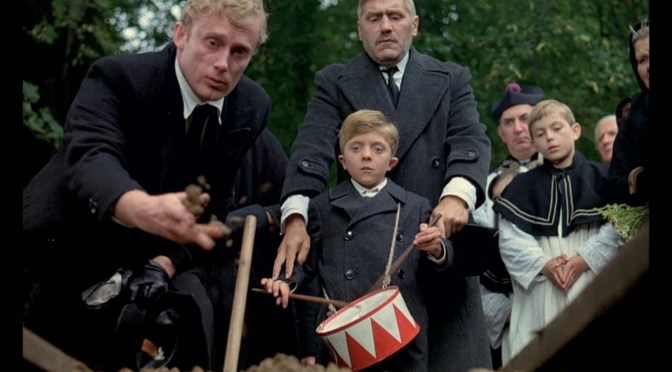
I’d never seen this film before and am so glad I did because it now in my top twenty best films I have EVER witnessed. It is a tour-de-force of writing, directing, acting, design, narration, humour, drama, sound and imagination. Based on Gunter Grass’ exceptional novel The Tin Drum – directed by Volker Schlondorff – it is set in the realistic backdrop of post-World War 1 Germany, and during World War 2, before veering into magical realism and surrealism to present a giddy allegorical tale of some wonder.

The comical opening contains a prologue which sets the ambiguous tone of humour and darkness.  It establishes the ancestry of our leading character Oskar Matzerath (amazing David Bennent) and clearly echoes and influences current filmmakers such as Paul Thomas Anderson, the Coens and Wes Anderson with its’ curious oddity. From there on Oskar himself enters the world and while initially reluctant he is forced into life and what a life that is!

Born with the mind of an adult, at the age of three, Oskar decides that he will NOT grow up for as long as he chooses. Anyone who crosses him is subject to a visceral scream which is loud enough to shatter glass. In addition, Oskar also smashes a tin drum incessantly revealing a psychotic pathology which disregards the pain and suffering of those around him. My reading is that Oskar is representative of the rise of fascism and Hitler in these difficult socio-political times for Germany. This idea is further supported by the fact his mother has two men chasing her affection; a gruff German grocer, Alfred, and gentler Polish man, Jan; and either could be Oskar’s father. These are divisive and confusing times for Germany, and a child, especially one who is as precocious, strange and violent as Oskar.

The meat of the film is continual conflict, death and dark situations. The scenes on the beach with eels being captured using a dead horse’s head is full of symbolism and a black humour I will never forget.  More conflict for Oskar ensues as he rejects all authority including religion.  When his mother dies, seemingly from overwhelming guilt, and his friend, a Jewish toymaker, commits suicide following Nazi oppression, Oskar’s life is further stained by death. Latterly, the film enters a stage where – while he is still physically a three-year-old – he hits puberty and become sexually active. The explicit sex scenes involving Maria, a sixteen year old shop girl, are disturbing and unforgettable and this leads to further conflict with Oskar’s father who eventually marries Maria.  Anger and jealousy provokes Oskar so much he literally runs off with the circus and becomes part of a troupe that entertains German soldiers during the war. It is not long though before further tragedy strikes and his strange romance with dwarf singer Roswitha, ends suddenly with her demise.


The Tin Drum is intense, visceral and brave filmmaking. While it uses history as a backbone, its’ muscle, skin and clothes are eccentricity, allegory and insanity. It was one of the most financially successful German films of the era and won the 1979 Oscar for Best Foreign Film. I guess I missed it because it is rarely shown on television, no doubt due to the controversial sex scenes involving 11 year-old Bennent. Overall, it is one of the most original stories I have seen on screen and the child actor who played Oskar was a revelation. I have rarely been so horrified, moved and made to laugh as much as I have by a recent cinema visit. I would heartily recommend this film to anyone serious about making films and those who demand intensity in their cinema viewing.


SCREENWASH – SEPTEMBER 2016 – PART ONE – TV SHOW REVIEWS

SCREENWASH – SEPTEMBER 2016 – TV SHOW REVIEWS

I love watching TV shows and films. Mainly to fill a void in my soul, or put it another way, stop me drinking myself to death. Oh, also because I just enjoy escaping reality by watching stuff on a screen.

I have split my September Screenwash reviews into television and movies, because I watched so much damned stuff last month. Here are the TV shows I watched with marks out of eleven.

**THERE MAY BE SPOILERS AHEAD**

ASH V. THE EVIL DEAD (2015) – SEASON 1 – STARZ/VIRGIN  

This 30-years-later-sequel to the original Sam Raimi Evil Dead trilogy featuring Bruce Campbell is a gory, cheesy and bloody delight. It brings back one of the most iconic-blue-shirted-wise-cracking-big-chinned-chain-sawing-action-horror-dudes ever in Ash Williams.

Having accidentally conjured up the Deadites from the Necronomicon – Book of the Dead, Ash heads cross country battling demons and ghouls with his trusty chainsaw and boomstick. He finds new friends and enemies along the way and Campbell is on wonderful form as the sexist, ageing demon-killer.

Plot wise the story is flimsy and generic, yet the bloody and bone-crunching gore is brilliant and Bruce Campbell is hilarious as usual. Ignore the evil and abominable reimagining from 2013 and get on board this silly and superb horror nostalgia trip with Ash Williams and co.  (Mark: 9 out of 11)

BLACK MIRROR – WHITE CHRISTMAS (2014) – NETFLIX

Charlie Brooker is pretty much a genius in my eyes and as well as being a bastard-funny TV critic, he is also a formidable storyteller. The Black Mirror stories echo the short-sharp-shocking plots of Rod Sterling’s The Twilight Zone and Roald Dahl’s Tales of the Unexpected; yet with a very contemporary and technological twist. Season 3 Black Mirror is imminent on Netflix yet this Chrimbo special provided some darkly imaginative tales for the season.

Brooker presents a triptych of stories including: a Dating Coach (John Hamm) guiding – via contact-lens-style-Go-Pro – a naïve lad on a sexual conquest; a spoilt and demanding rich bitch (Oona Chaplin) who buys the ability to digitally clone herself so she can be her own personal ‘slave’; and a story of a doomed relationship between Rafe Spall and Janet Montgomery where an app allows a human to physically BLOCK them in reality. Safe to say all the narratives criss-cross to fiendish effect as cyber-technology is presented as initially a positive thing but ultimately something horrific which undermines humanity and hinders emotions and physical contact. Brooker is of the view that the future isn’t orange but very black indeed.  (Mark: 9 out of 11)

FARGO (2015) – SEASON 2 – NETFLIX

Was Season 2 Fargo any good? It sure was – darn tooting!  For me this was almost perfect television viewing. It had a great story, memorable characters, and brilliant dialogue and is filtered, like the first season, through the twisted eccentricities, imagery, sounds, music and narrative style of the Coen brothers.  Having said that, the writer and showrunner Noah Hawley has taken the Coen’s football and sprinted away with it and almost transcended the primary source material.

Season 2’s plots – and there’s some serpentine shit going down – are set in Fargo and surrounding counties, mid 1979.  We focus on country gangsters the Gerhardts and the attempted takeover by some Kansas City “business” people who think they can run the hicks out of town. In amongst the bloody hits, kidnapping and badassery we have Patrick Wilson and Ted Danson as the good cops who, having seen the horrors of war overseas, just want an easy life. Thrown into the mix by the dark lords of fate are self-improver Kirsten Dunst (amazing)  and simple butcher Jess Plemons who get out of their depth very quickly.

Overall, the drama, humour and suspense are incredible as is the cast, notably: eloquent hitman Bokeem Woodbine and brutal rural gangsters Jean Smart and Jeffrey Donovan. Philosophically and thematically the writing is very strong too with an existential bent which makes the whole show gold-plated genre TV of the highest quality.   (Mark: 10 out of 11)

THE KILLING (2007) – SEASON 1 – NETFLIX

I recall when this first hit the TV screens the Guardianistas shitting bricks over how good this Danish cop-procedural-politico drama was. The moody atmosphere, murky lighting and winter jumpers were all the rage with the lentil-eaters; as were the performances of Sofie Grabol, Soren Malling and the formidable Lars Mikkelsen. In the cold light of day and almost ten years later there is still much to like about this Scandi-genre-cop-thriller. Over twenty gruelling episodes we find ourselves amidst the investigation of the vicious murder of a young woman called Nanna Larsen. Simultaneously a mayoral election is taking place in Copenhagen and the two events become fatefully entwined.

Ultimately, it is pretty generic stuff with the device of “red herring” suspects and characters revealing information later than they could of being over-used. Also, it could’ve have been wrapped up WAY before the twenty episode run, yet, it was gripping throughout with some terrific suspense. I especially liked Grabol’s intuitive cop who could see past the surface and into the psychology of a situation or person. Her obsessional cop was flawed but brilliant at her job even though her family life was threatening to implode. Also, exceptional is Lars Mikkelsen as mayor candidate Troels Hartmann, a man trying to do the right thing, yet with ghosts of the past haunting him. The best scenes were with the Larsen family whose lives were about-faced by the death of their daughter. Their grief brought a real depth to proceedings with many heart-breaking and emotive moments surrounding their ordeal. Perhaps over-hyped on first release, this remains a tremendous cop drama with loads of twists to keep you hooked.   (Mark: 8.5 out of 11)

ORANGE IS THE NEW BLACK (2014) – SEASON 2 – NETFLIX

What started, in Season 1, as an ensemble prison drama with the focus mainly on spoilt-brattish-over-grown-Prom-Queen, Piper Chapman (Taylor Schilling), has developed quite brilliantly, by Season 2, into a sexy-black-comedy-drama of the highest quality. Piper is of course still there driving me mad with her bouts of narcissistic wants but this time she’s toughened up and is now bouncing off the inmates, walls and screws with a bit more spunk and verve.  However, the power of this narrative is now driven by the ensemble characters – both inmates and guards – who all get a chance to shine in a collection of stories, flashbacks and vignettes which the writers weld together expertly over thirteen brilliant episodes.

Season 2 develops further the histories of, among others, love-struck Morello, cancer-sufferer Rosa, Taystee, Black Cindy, Poussey and Sister Ingalls; as well revealing more about crooked Assistant Warden Figeroa, prison Counsellor Sam Healy and ambitious head screw Joe Caputo. Also, entering the prison was a cracking antagonist Vee Parker brilliant portrayed by Lorraine Toussaint and her battle to control rackets in jail saw her on a collision course with ‘Red’ Reznikov (Kate Mulgrew). Overall, there was SO much going on in the show yet it didn’t feel cluttered. The characters  were drawn so well, relying on archetypes and human definition rather than soapy stereotypes. I was just going to give it one more season but the drama, dialogue, performance, humour and pathos delivered here made me want to go in for Season 3 and beyond.  (Mark: 9.5 out of 11)

SIX OF THE BEST #2 – MY MOST HATED CINEMA & TV CHARACTERS by PAUL LAIGHT

Following on from listing six of my favourite British sitcom episodes recently, I thought I’d have a bit of fun venting about some of the most irritating characters I have witnessed on film or TV screen. I mean did the writers intend for them to be annoying pricks or was it the actor or direction or performance or all of the above?  Anyway, whatever the weather, its great fun kicking the boot into these annoying arseholes!

**SPOILERS AHEAD**

ALL THE KIDS (EXCEPT CHARLIE) – WILLY WONKA AND THE CHOCOLATE FACTORY (1971)

I’ll ignore the Tim Burton version of this story and concentrate on the original adaptation of Roald Dahl’s classic morality adventure. If you don’t know the story a reclusive sweet-maker lures kids to his factory on the promise of a “golden ticket” competition win. There’s Teutonic glutton Augustus Gloop; weirdo TV addict Mike Teevee; demanding, harpy-bitch Veruca Salt, upper-class, gum-maniac Violet Beauregarde and finally humble Charlie Bucket. Each kid, Charlie aside, is a spoilt bastard and each satisfactorily gets their just desserts, as Dahl’s fantasy punishes the rich and greedy ones to maximum audience delight.

FERGEE – JUDGE DREDD (1995)

I could basically include ANY character portrayed by Rob Schneider but I reserve special hatred for this monstrosity. I mean the film Judge Dredd was pretty bad, however, the action and design were bearable and Stallone – despite removing the protective mask – was kind of okay. YET the tone of the film was all over the shop! None more so than when acting cyst Rob Schneider pops up as an unofficial comedy sidekick for Dredd.  Yeah – like that was a staple of the cynical, dystopian and violent world the 2000AD comic was known for right!  No, I didn’t think so!  Morons!


JAR JAR BINKS – STAR WARS: PHANTOM MENACE etc. (1999)

Jar Jar, let’s face it, is an obvious choice but he is a complete cunt!  The worst crime is, as the comic relief, he is NOT funny!!  Moreover, his accent is unintelligible and he suffers from looking completely stupid. The Phantom Menace (1999), while having some fantastic actors (Liam Neeson, Natalie Portman and Ewan McGregor), great action and superior baddie in Darth Maul, was let down by plodding plot, soggy politics and dreadful dialogue. Yet, Jar Jar Binks was the rancid cherry on top of a rotten cake. Not only that his character was also portrayed in an abominably stereotypical fashion seeming to echo the racist early-Hollywood representations of black characters that were seen as un-heroic, dumb and figures of scorn or fun.

JOFFREY BARATHEON – GAME OF THRONES (2011 – 2014)

The prostitute-murdering-Sean-Bean-killing-bullying-maniac-twat was clearly intended to be the pantomime villain we loved to hate from the start. But, like Malfoy from Harry Potter his character and the slimy performance from Jack Gleeson, he, for me eventually became a character I just hated without any enjoyment. I mean, I know he was sadistic in his treatment of Sansa Stark and mocking of Tyrion but he was also a bottle-job when it came to battle, perfectly encapsulating the worst kind of royal family traits. Moreover, Gleeson’s soulless face, clipped speech and acting on its’ own made me want to drag him out of the television and strangle him. Of course, Joffrey would eventually get poisoned at his own wedding and much joy was had from his demise from pretty much everyone who has ever watched the show.

RUBY RHOD – THE 5th ELEMENT

Luc Besson’s imaginative and colourful sci-fi-action epic had much to enjoy, notably: the performances of Milla Jovovich’s innocent alien, Bruce Willis’ cynical taxi driver and Gary Oldman’s terrific pantomime space villain. The action comes thick and fast and the production is a joy to watch. However, just over halfway through Chris Tucker’s performance of media whore Ruby Rhod takes a massive shit on the film; one it almost never recovers from. I mean, he’s loud, high-pitched, ridiculously dressed and THINKS HE’S FUNNY!  What was Besson thinking – who knows!? Even in an over-the-top-colour-clashed-sci-fi-action-romance-extravaganza Ruby Rhod was a stain and travesty of a character!

WHITNEY SOLLOWAY – THE AFFAIR (2014 –  )

Clearly this spoilt upper-middle-class New York teenager was intended by the writers to be a right royal pain in the arse. She throws sweet-sixteen tantrums of the highest order throughout and her nasally high-pitched voice grated me so much that I actually stopped watching the show during the second season. While the actress Julia Goldani Telles performance is excellent, the character was just too manipulative and psychotic to ever get my sympathy. Even amidst a whole host of privileged, narcissistic first-worlders Whitney Solloway took the biscuit and in the end I hated her so much I wished she’d been killed to death!

SPECT-ACULAR TIMES – SPECTRE (2015) A FILM REVIEW

SPECT-ACULAR TIMES – SPECTRE (2015) A FILM REVIEW

 We live in a spectacular society, that is, our whole life is surrounded by an immense accumulation of spectacles. Things that were once directly lived are now lived by proxy. Once an experience is taken out of the real world it becomes a commodity. .  . It becomes a substitute for experience.  (Larry Law, Images and Everyday Life)

**CONTAINS MASSIVE SPOILERS**

Life is all about managing expectations. I mean we don’t why we’re here on this planet and we don’t know why we’re alive. Is there a point to life? Perhaps there is no point? If that’s the case then why carry on living? Why not kill yourself or go berserk and do what the hell you want and be damned to the consequences. Well, it doesn’t really bear thinking about does it? Thus, generally, we block out such existential questions – well I do – by filling our life and times with things we enjoy doing, seeing, feeling, and eating, hearing and experiencing.

One of the major things I use to distract me from the inquisitions of life is going to the cinema. I am obsessed with films. I could perhaps, rather than watch films, raise a people’s army and seize control of the state?  But what system would I put into place instead of the necessary evil of capitalism? I could eschew society and live off the land growing my own vegetables; but whose land?  All land is now owned by some person, persons or shadowy corporations. I could become a criminal and finagle the law in order to avoid the punch-clock drudgery of life; but I’d like to sleep guilt-free at night and hurting others does not sit well with me. I could train a pack of ants to perform tricks for money in an Ant Circus; but that would just be silly. I could go on…

spectre_3

What I am saying is films and television are helpful in drawing a big thick line between the sane and insane shit in life. They are a big deal for me. Not as bigger deal as my loved ones but pretty close. So, when a new series of a current show I love such as Doctor Who or South Park or It’s Always Sunny in Philadelphia or Game of Thrones is released I am very happy. Life is good. That thing called hope rear its head and says, “Hi, it’s me again!” The same goes with film releases from my favourite directors or movie franchises or series. It happened at the fag-end of the 90s with the new Star Wars trilogy and also when the new Indiana Jones film was released; hope came a knocking and expectations were raised. Unfortunately the Lucas’ space opera prequels were pretty bad and least said about Indiana Clones and The Kingdom of Crystal Dulls the better!

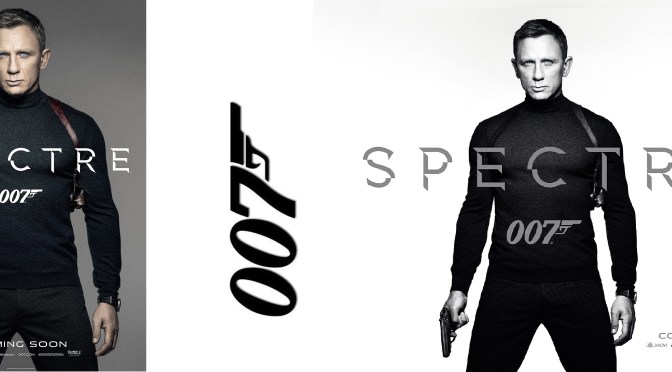
So, what I am saying is, AND I realise this is a sad thing to admit, A JAMES BOND FILM IS A BIG DEAL TO ME!  I know Karl Marx, Guy Debord and Edward Bernays are all correct in that the media is corrupting the proletariat, BUT WHO CARES – IT IS JAMES BOND and CHRISTOPH WALTZ IS THE BAD GUY!   I got my hopes up! I was really looking forward to it! It stopped me from thinking about reality! I failed to lower my expectations. So, what I am saying is I liked Daniel Craig’s fourth outing as Bond but not as much as I’d hoped. I shall explain why.

spectre_7

I have seen Spectre twice now and it is very entertaining. Was it was good film?  Yes – it was fine. Was it a good Bond film though?  Yes and no I would say.  I should qualify this by saying I thought Skyfall (2012) was a cracking film in its own right; a fantastic action thriller with fine characterisation and a formidably nasty, yet playful, villain in Javier Bardem. Thematically it was very strong with Bond’s orphan background and relationship with M (other) providing a fulcrum to the narrative. Skyfall was also lusciously shot with fantastic set-pieces and direction but it wasn’t necessarily a great Bond espionage adventure like From Russia With Love (1963) or The Living Daylights (1987) or a combustible boy’s own adventure like Casino Royale (2006). It was an Oedipal soap opera with explosions and the past destroying the present. Spectre is very similar in fact although the destruction is much larger in scale.

I would also compare Spectre to Quantum of Solace (2008) in the context that it is a kind of sequel to the previous outing and links back to Bond’s past. The main difference is Spectre is over fifty minutes longer than Quantum of Solace and certainly feels slow in places. I’m aware that Quantum of Solace is not rated highly in the Bond canon. However, I feel there are some incredible action sequences in there; notably the Opera shootout, great Plane chase and explosive desert hotel/hide-out denouement. While the villain was weak and it failed in terms of narrative, Quantum of Solace succeeded for me as a spectacle and by tying up the loose ends from Casino Royale.

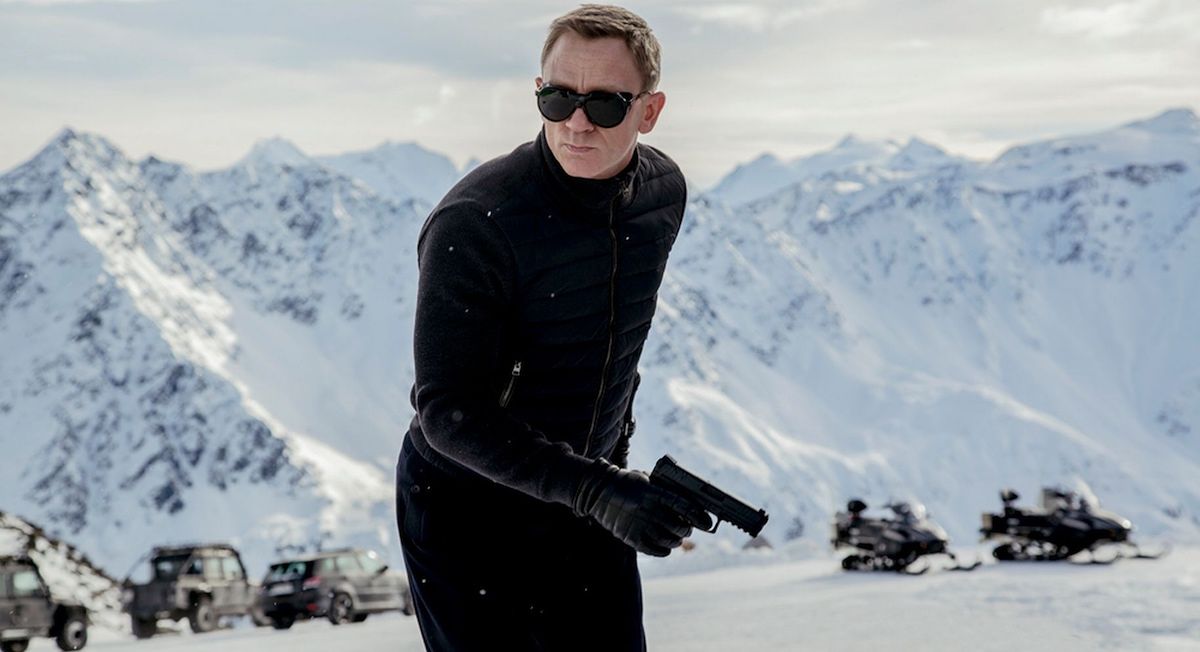
Similarly, Spectre has some breathtakingly cinematic moments. Indeed, the first hour was sensational in terms of pace, action, mood and atmosphere. It’s a film about death and the past and opening at the massive Day of the Dead festival in Mexico City was a masterstroke in symbolism. Bond is an assassin; a hired killer used by the British government to take out the bad guys and where better to do it at a carnival celebrating those that have kicked the bucket. The opening chase, building demolition and helicopter fight is classic Bond and really kicks the film off in style. A spurious plot twist then gets Bond to Rome where he then meets – in the shadows – his nemesis, and the childhood ‘friend’ he thought dead, Franz Oberhauser played by Christoph Waltz. Waltz is one of my favourite actors but is criminally underused in Spectre. Aside from one particularly brilliant torture scene he is not allowed to express that wicked wit and devilish smile witnessed so adroitly in Django Unchained (2012) and Inglourious Basterds (2009).

The Oberhauser backstory does offer an interesting subplot to the main action and a very fun Bond revelation; however, it is similar to the Skyfall revenge-plot with touches of Cain and Abel thrown in.  Arguably too it doesn’t quite gel alongside other aspects of the script such as the global “Big Brother” programme to connect ALL the security and CCTV systems across the world which would make the 007 programme obsolete. So, with Bond under threat physically, emotionally AND politically we have an ambitious story with a thin plot that gets soggy at times.  Thematically Spectre is strong but Bond feels very reactive in some respects and not always making the decisions. Indeed, there is a scene where a RAT assists him; not torture or cunning or sheer violence but an actual rodent.  This moment and the anorexic characterisation of Madeline Swann (Lea Seydoux) were very much weaknesses in the script.

Sam Mendes and his production team have produced much for Bond fans to revel in. The opening credit sequence is stunning and I loved the Octopus imagery and motifs throughout. It also manages to mask the soporific non-entity which is Sam Smith’s theme song Writing on the Wall. Hinx (Dave Bautista) is a brute of a henchmen and his Rome car chase, Austrian snow pursuit and train punch-up were all brilliant action set-plays. Q (Ben Wishaw), M (Ralph Fiennes) and Moneypenny (Naomie Harris) all brought fine dramatic and comedic qualities to the film although, again, with SO many characters involved it took away screen time from Christoph Waltz. Finally, the “ticking-time” bomb denouement was well-executed but the film had run out of steam a bit by then.

Spectre is a technical tour-de-force and in Daniel Craig we have an actor who absolutely nails the role. He rocks the action, driving, shooting, running, falling, crashing with a coolness, toughness and insouciance which will be a hard act to follow. Indeed, the way they tied in the strands from previous films tells me this is probably his final Bond. Overall, the first hour-and-a-half of Spectre writes a spectacular cheque the final act cannot quite cash.  The big-bad-wolf reveal is not as surprising as I would have hoped and the Orwellian supporting story didn’t feel that deadly to me. And while our villain’s revenge on James was believable I didn’t quite buy the fact that Oberhauser was the architect of ALL Bond’s woes in the previous three films.

I realise it is a very big responsibility to maintain quality in a big movie franchise and Spectre does so but the long running time does it no favours. Paradoxically too by trying to give it more depth in respect of the familial backstory it again lost the espionage stuff I love.  We do indeed live in the Society of the Spectacle and this film offered up some solace away from the daily grind. But I must learn to manage expectations and perhaps stop living my life by proxy through fictitious cinematic spies and face the spectre of existence a bit more realistically.   (Mark: 008 out of 11)

SPECTRE_5

ALCOHOLICS ASSEMBLE! SOME “GREAT” ON-SCREEN DRUNKS!

ALCOHOLICS ASSEMBLE!  SOME “GREAT” ON-SCREEN DRUNKS! 

“I was in love with a beautiful blonde once. She drove me to drink. It’s the one thing I’m indebted to her for.”
W.C. Fields, Never Give a Sucker an Even Break

Cinema and booze have always been two of my favourite things to distract me before I stagger off to the great pub in the sky!  So, why not have a look at some of the great drunks, characters and performances I have enjoyed over the years on the box or at the cinema.

AL PACINO – SCARFACE (1983)

While the rise of Pacino’s monstrous Cocaine-Capitalist owes much to narcotics and murder, he also plays a mean and nasty drunk. This is seen most notably in the restaurant scene where he spits and spews insults at his wife and the upper-middle classes surrounding him.  Never has intoxication been so nasty and yet as sociologically adroit.

ARTHUR HOUSMAN – LAUREL AND HARDY (VARIOUS)

Laurel and Hardy are still the funniest people ever committed to celluloid but they had also had a fine “mess” of supporting actors. One of them was Arthur Housman, who was the go-to-guy when you wanted a funny lush.  I reckon acting drunk is far more difficult than it looks but this guy nails it perfectly.

BARNEY GUMBLE – THE SIMPSONS (1989 – )

Barney Gumble’s status as a boozer is so legendary he actually makes Homer’s drinking look normal.  Rarely is Barney sober and even his catchphrase is a supersonic belch from the pits of hell.  Occasionally he will clean up or venture into normality but Barney will always be a hilarious alcoholic we’ve come to love.

BILLY BOB THORNTON – BAD SANTA (2003)

We all love a Christmas piss-up but Billy Bob Thornton’s drunken Santa does it all year round. He basically drinks in order to escape the shittiness of his life and a job he hates.  This film is one of the greatest comedies of all time as Willie Stokes hits rock bottom and the self-destruct button too!

DEAN MARTIN – RIO BRAVO (1959)

Part of the original Rat Pack, Dean Martin, was known for his wild drinking ways off-stage.  So, when he played drunkard, the Dude, in classic Western Rio Bravo (1959) there’s a thick varnishing of truth brought to the role. Martin’s Dude is a ridiculed because of his over-reliance on booze, thus the character attempts to get back some self-respect in a narrative heavy on machismo and redemption.

DENZIL WASHINGTON – FLIGHT (2012)

A jaw-dropping plane crash and landing introduces us to super-pilot Whip Whitaker. He should be celebrated as a hero but the character’s downfall is he performed this death-defying feat while high on drugs and alcohol.  Washington is incredible in this brilliant evocation of a man battling addiction and his struggle is brilliantly orchestrated by Robert “Back to the Future” Zemeckis.

LEE REMICK & JACK LEMMON – DAYS OF WINE AND ROSES (1962)

This heart-breaking film — with brilliant performances from Lee Remick and Jack Lemmon — shows the power alcohol has as it systematically shakes you like a rabid dog until one’s soul is hollowed out. The story shows a couple succumbing to the demon drink after which their relationship is torn apart. It’s also demonstrates the power of AA in aiding treatment for recovery.

MICKEY ROURKE – BARFLY (1987)

Charles Bukowski was one of the great boozers of all time as he actually drank incessantly AND became a celebrated author. He didn’t just write about drinking and women but also his failure to reconcile with the futility of existence.  Thankfully such dark materials made some great books as well as Barfly starring Mickey Rourke and Faye Dunaway. It’s painful to watch but a faithful rendition of Bukowski’s jet-black wit and mordant writing.

MICHAEL ELPHICK – AUF WEIDERSEHEN PET (1983 – 1984)

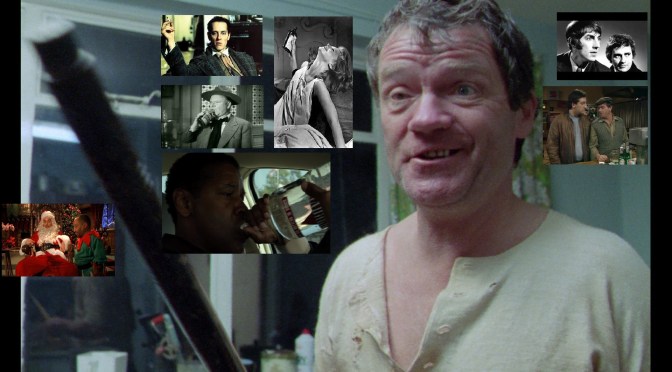
Elphick was a stalwart of British TV and cinema for years and brought a grizzled but often empathetic quality to his roles. He was comfortable as the lovable rogue and vicious hard man; none more so when he played psychotic drunken Irishmen McGowan in classic 80s comedy-drama Auf Weidersehen Pet. His character was so scary even Jimmy Nail’s Oz was fearful of him. Sadly, Elphick himself would pass away due to alcohol-related illness.

NICOLAS CAGE – LEAVING LAS VEGAS (1995)

The “Town Drunk” and “Tart with A Heart” are staple characters throughout our culture and these archetypes are breathed new life through incredible performances by Nicolas Cage and Elizabeth Shue.  Cage’s writer is determined to drink himself to death while Shue’s hooker is just trying to survive. They are an unlikely romantic couple as this hard-hitting drama plays like a touching prayer to the bottle, the gutter and the emptiness of existence without love.

PETER COOK AND DUDLEY MOORE – DEREK AND CLIVE GET THE HORN (1979)

Derek and Clive were the filthy alter-egos of comedians Peter Cook and Dudley Moore. They released a series of sexually explicit, racist, sexist, homophobic, scatological and scurrilously hilarious albums in the 1970s. Moore and Cook basically got smashed and committed to tape a string of obnoxious sketches unsuitable to man nor beast. Both were alcoholics and the film version of Derek and Clive illustrates that. Dudley Moore would even have a box office hit as millionaire pisshead Arthur (1981) but this film, shot as they were kind of splitting up, is raw, funny and at times painful to watch.

RAY MILLAND – LOST WEEKEND (1949)

This dark noir is another filmic masterpiece from Billy Wilder. Ray Milland’s writer battles the bottle and those closest to him in an attempt to feed his addiction. Milland won an Oscar and not only lost weight but stayed in a mental institution in preparation. It’s an important film as it was one of the first to show alcoholic’s destructive nature rather than present the comedic drunk that had appeared mostly on screen up until that then.

RICHARD E. GRANT – WITHNAIL AND I (1987)

“We want the finest wines available to humanity. And we want them here, and we want them now!”

This often quoted but rarely bettered screenplay is one of the greatest I have ever witnessed and read; brimming with towering poetry, bilious insults and drunken repartee.  Richard E. Grant is incredible as the paralytic, pathetic and cowardly actor who with Paul McGann’s eponymous ‘I’ for company laments a lack of career opportunities at the fag-end of the 1960s. It’s a hedonistic and bitter sweet joy with Withnail drinking every liquid known to humanity attempting to obliterate the now to avoid the tomorrow. Unbelievably, Richard E. Grant was teetotal so director Bruce Robinson had to get him “pissed” in preparation for a role he never bettered in his whole career.

W.C. FIELDS – VARIOUS

W. C. Fields was a comedy genius who began on the stages of Vaudeville as a juggler and became one of the most famous drunks on the silver screen. One may argue he simply transferred his alcoholic persona onto film but there’s some skill in being able to turn a weakness into a towering comedic strength. His one-liners and insults have gone down in history as some of the smartest and sarcastic ever written and when compiling this list his was one of the first name’s on it.

WILLIE ROSS – RITA SUE AND BOB TOO (1987)

Last but not least is the imperious drunk Willie Ross.  His is the best lagging-pisshead acting I have ever seen on screen!  His character in Rita, Sue and Bob Too was a racist, sexist, unemployable, drunken bully who when stood up to would simply cower amidst his own weak character and lack of bravado.  Club comedian Ross also appeared in classic British TV drama Our Friends in The North as Daniel Craig vicious alcoholic father and also on stage in plays by Chekhov and Coward.

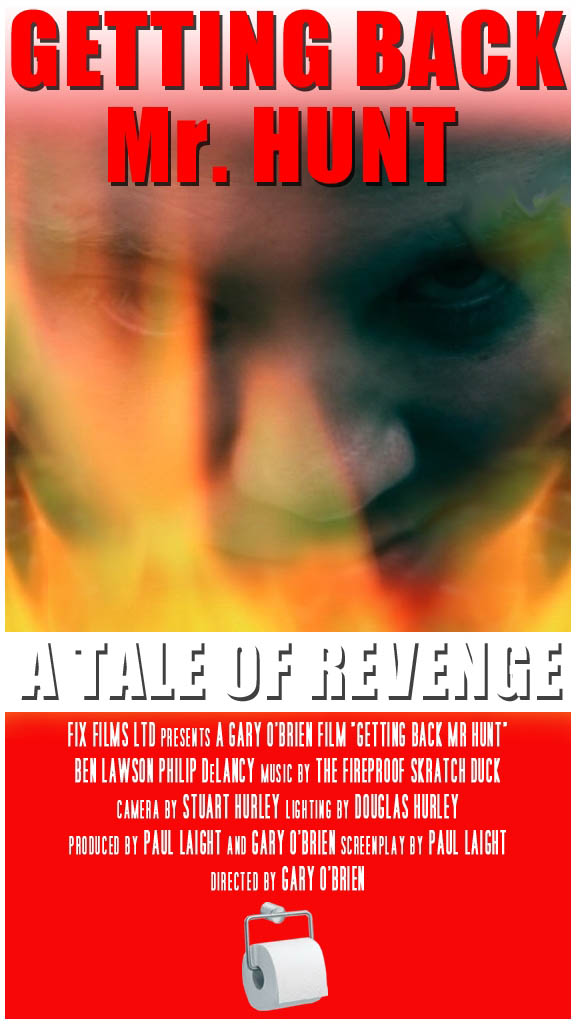
FIX FILMS RETROSPECTIVE – GETTING BACK MR HUNT (2005)

GETTING BACK MR HUNT (2005) – RETROSPECTIVE

Incredibly it’s been TEN years since myself and my creative ally Gary O’Brien began working on short films together!  And despite no actual financial success, some short film festival screenings and vague industry interest in our work (I made that last bit up) we are STILL going!  Now we are planning our TENTH short film this year! Why I hear you ask:  because we love films AND the creative process and that is success enough for us.  I think.  That or we are a little bit mental! Or delusional.  Both probably!

Anyway, to celebrate  a DECADE of short filmmaking I’m taking a trip down memory lane to examine the films we have made and maybe just maybe add a few more views to their YouTube status.  Or gain a new fan.  Hope springs eternal.

GETTING BACK MR HUNT (2005)

This low budget short was a great experience for myself and Gary. We’d met at the Running Horse pub one drunken evening in Bracknell a few months earlier in 2005 and immediately bonded over our love of movies and movie-making. Gary was a veteran director of his own videos shot and edited — from his early teens — on VHS recorders or in-camera; and I a budding writer full of hopes and dreams having just finished a MA in Screenwriting at Royal Holloway University.  A decade on those dreams are now shattered and strewn to the winds of time and history as a legacy of bitter experiences lay in our wake. There were some really bad times as well.

Check out Gary’s old videos here:

https://www.youtube.com/user/TAGfilmsarchive/videos

This one is a beauty:

So these two great minds conjoined to form the creative team known as Fix Films and inspired by our friend Douglas Hurley and his brother Stuart we decided to make a short film to enter into the BBC New Filmmaker’s Competition of 2005.  The film failed completely to gain any recognition but it gave us a great insight into the filmmaking process.

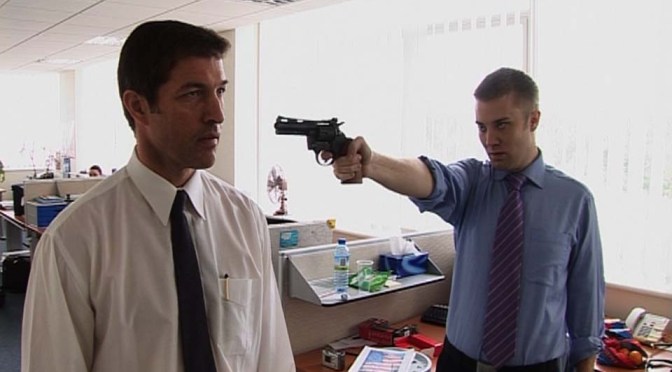
I’d written the screenplay a year or so before and it, like many films, was based on wish fulfilment:  the desire to wreak revenge on all the bad bosses I had had. Plus, in the subtext was my own vain disgruntlement at desiring a creative career but ultimately ending up with a prosaic office job which made little use of my brain or perceived skills and in the process reduced my existence to that of a clock-punching drone.  Not much has changed there.

gettingbackmrhunt

It’s very therapeutic to channel one’s experiences and emotions through a cinematic conduit but the actual filmmaking itself is often one of compromises due to budgetary constraints or unforeseen mishaps or actors pulling out at the last minute.   The latter happened to us on the day before the two-day shoot was to begin so I had to re-cast the role of our bad-guy Nigel Hunt.  It was a blessing in disguise because after hunting (sorry) high and low on t’internet I found the wonderful actor Philip Delancy Shooting People and the rest they say is history.  Because Phil subsequently worked on two more of our productions. Do check out Philip’s CV at http://www.philipdelancy.com/ – he’s a fine actor and great bloke too.

Myself, Gary, Doug, Stuart and cast and crew worked TWO long days one balmy weekend at FIVE different locations all those year’s ago and successfully produced a pretty witty little short film.  It has some fine moments and arguably some elements don’t hold up. Personally I wanted to redo the voiceover but in the end we left it.  But Gary did a great job filming, editing and composing the music for the film. Indeed,  for a £150 budget we very much did the script justice and breathed life into a universal desire. I mean, who hasn’t ever had a boss they couldn’t stand or wanted to rain down furious vengeance against?  If you haven’t then you’re probably THE boss!  And we’re coming for YOU!  Up the workers!  Vive l revolution!

Enjoy the film!