Cinema Review: One Battle After Another (2025) – an exhilarating revolutionary romp that lacks the depth of those films it attempts to emulate!

Cinema Review: One Battle After Another (2025)

Directed by Paul Thomas Anderson

Written by Paul Thomas Anderson

Inspired by Vineland by Thomas Pynchon

Produced by Adam Somner, Sara Murphy, Paul Thomas Anderson

Main Cast: Leonardo DiCaprio, Sean Penn, Benicio del Toro, Regina Hall, Teyana Taylor, Chase Infiniti, Wood Harris, Tony Goldwyn, Kevin Tighe, Shayna McHayle, etc.

Cinematography by Michael Bauman

Music by Jonny Greenwood

*** CONTAINS SPOILERS ***
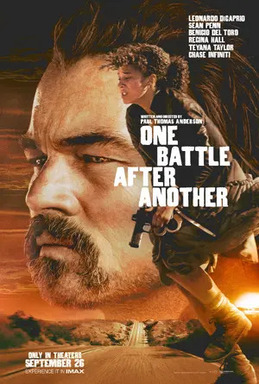


It’s a brave filmmaker that quotes one of the greatest revolutionary films of all time during it’s runtime, namely Battle of Algiers (1966). But Paul Thomas Anderson’s formidable cinematic career more than earns him the right to quote a film as towering as The Battle of Algiers (1966) in his latest release One Battle After Another (2025).

Across works like Boogie Nights (1997) and Magnolia (1999), he has demonstrated a mastery of ensemble storytelling and emotional crescendo; with Punch-Drunk Love (2002) he revealed a gift for intimate, offbeat romance; and in There Will Be Blood (2007) and Phantom Thread (2017) he proved himself one of the most rigorous visual stylists and psychological dramatists of his generation. Such a body of work grants him the authority to converse with cinema’s political masterpieces, even if his more recent Licorice Pizza (2021) felt comparatively diffuse and lacking in urgency. His filmography, at its strongest, stands as evidence of a filmmaker deeply attuned to the legacies and possibilities of the medium.

Having said that, Gillo Pontecorvo’s The Battle of Algiers (1966) wields revolutionary power through its raw immediacy, embedding viewers in the lived experience of anti-colonial struggle with a documentary-like realism that blurs the line between record and re-creation. By contrast, Anderson’s One Battle After Another (2025) approaches revolution less as lived history than as a cinematic genre to be emulated, drawing on the tropes and textures of upheaval without grounding itself in the direct urgency of political struggle. Where Pontecorvo conjures revolution as something happening before our eyes, Anderson refracts it through the prism of style, making revolution as much a matter of aesthetic construction as lived reality. It is during its lengthy running time extremely entertaining though.
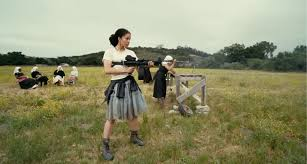


The opening hour is fast-paced and crams in a lot of action and personality. It establishes a fine ensemble cast, strong characters, striking palette and compelling themes which bring to life Anderson’s sharply written and fantastically filmed screenplay. The narrative focuses on “Ghetto” Pat Calhoun (Leonardo DiCaprio) and Perfidia Beverly Hills (Teyana Taylor), lovers and leaders of the far-left French 75, who storm detention centres, bomb banks, and sabotage power grids, while their soon-to-become nemesis—Officer Steven Lockjaw (Sean Penn)—becomes erotically obsessed with Perfidia, sparing her life when he catches her planting a bomb in exchange for a sexually masochistic tryst. Thus, begins a warped love/hate triangle and rivalry which provides the backbone for the action.

The second hour pivots sharply after establishing Perfidia as a commanding revolutionary presence. The focus pulls to her daughter, Willa (Chase Infiniti), some sixteen years later, now living off the grid and avoiding all but the most basic technology out of fear of surveillance. ‘Pothead’ Pat, has withered into a paranoid and barely functioning stoner-alcoholic, leaving Willa to emerge as the steadier, more mentally resilient figure in their fractured household. The film undeniably suffers from the absence of Perfidia’s charisma and drive, yet it regains momentum when the now Colonel Lockjaw revives his obsessive pursuit, setting the stage for a tense reconfiguration of the story’s revolutionary stakes.

The acting in One Battle After Another (2025) crackles with intensity, led by standout turns from Taylor, Penn, and crafty scene-stealer, Benicio Del Toro. Further, Anderson’s casting team find some amazing supporting military personnel who deliver with uncanny authenticity. Sean Penn’s performance as a swaggering officer radiates brute masculinity—his very walk and gait dripping with testosterone and worthy of awards consideration on their own. Leonardo DiCaprio, meanwhile, folds another eccentric, messy, and deeply contradictory figure into his already remarkable CV, a creation that resonates with the layered complexity of his recent work in Scorsese’s Killers of the Flower Moon (2023). He is actually far more hilarious here, as demonstrated in his desperate attempts to overcome the revolutionary helpline he calls for instructions.

Overall, One Battle After Another (2025) works best as a searing, darkly funny revolutionary black comedy, blending sexual, military, conspiracy, and social politics into a heady mix of action, crime, road movie, and romance tropes. The result is a wildly entertaining visual and musical feast, even if it stops short of delivering true socio-political depth. While the film’s closing stretch leans into deliberate plot ambiguities that complicate its resolution, Anderson ultimately serves up a combative cinematic blast—stylish, sharp, and exhilarating—if just shy of a bona fide classic.
Mark: 8.5 out of 11


Sky Cinema Review: The Apprentice (2024) – a mesmerizing portrayal of the rise of Donald Trump!

Sky Cinema Review: The Apprentice (2024)

Directed by Ali Abbasi

Written by Gabriel Sherman

Produced by Ali Abbasi, Louis Tisné, Ruth Treacy, Julianne Forde, Jacob Jarek, Daniel Bekerman

Main cast: Sebastian Stan, Jeremy Strong, Martin Donovan and Maria Bakalova, etc.

Cinematography Kasper Tuxen

*** CONTAINS SPOILERS ***


Ali Abbasi’s previous directed films such as Holy Spider (2022) and Border (2018) are brilliant and powerful films centered around stories relating to serial killers and trolls, respectively. So, I had to pause for a moment and ask: what attracted him to a film about businessman, reality TV personality and now, President of the USA, Donald Trump?

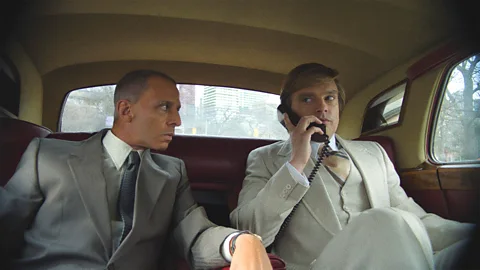
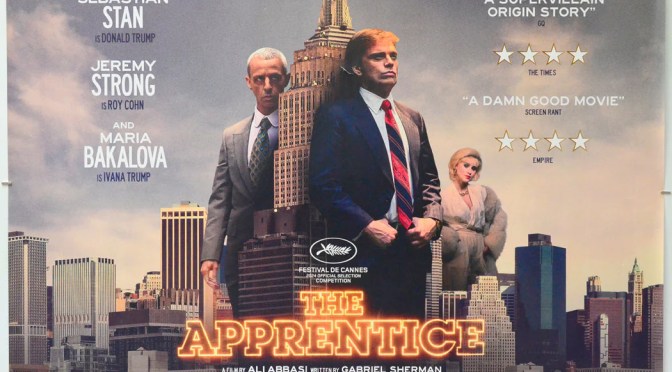
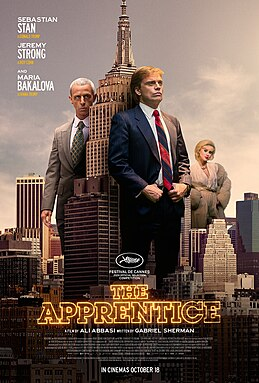
Abbasi’s The Apprentice (2024) is less a deep psychological excavation than a chillingly slick chronicle of power corrupted at its root. Framed like a “greatest hits” package of Donald Trump’s (Sebastian Stan) formative years, the film charts his transformation from brash outer-borough real estate hustler into the ruthless media manipulator and future political juggernaut — all under the tutelage of the infamous Roy Cohn (Jeremy Strong) and his three essential rules of business and life.


Sebastian Stan delivers a startling performance as a young Trump, capturing the man’s bravado, insecurity, and relentless hunger for dominance without slipping into caricature. Opposite him, Jeremy Strong is mesmerizing and serpentine as Cohn — a master manipulator who recognizes, nurtures, and ultimately weaponizes Trump’s worst instincts. Together, they form a grotesquely compelling duo: two charismatic monsters locked in a dance of mutual ambition and moral decay.

While the film occasionally skims across the surface of its characters — opting for scenes that feel like historical checkpoints rather than dramatic revelations — it compensates with a queasy momentum and sharp stylistic flair. It also looks great with the film and video stock reflecting the era of which it is set. Overall, this isn’t a biopic searching for sympathy or redemption; it’s a portrait of the making of one of the most divisive figures in modern history, seen through the lens of a mentor whose own legacy drips with cynicism and menace. In conclusion: The Apprentice (2024) may not dig as deep as it could, but what it shows is enough: monsters aren’t simply born — they’re coached.

Mark: 8 out of 11


Cinema Review: The Long Walk (2025) – a compelling adaptation of Stephen King’s anti-war allegory!

Cinema Review: The Long Walk (2025)

Directed by Francis Lawrence

Screenplay by JT Mollner

Based on The Long Walk by Stephen King

Produced by Roy Lee, Steven Schneider, Francis Lawrence, Cameron MacConomy

Main Cast: Cooper Hoffman, David Jonsson, Garrett Wareing, Tut Nyuot, Charlie Plummer, Ben Wang, Roman Griffin Davis, Joshua Odjick, Judy Greer, Mark Hamill etc.

Cinematography by Jo Willems

*** MAY CONTAIN SPOILERS ***


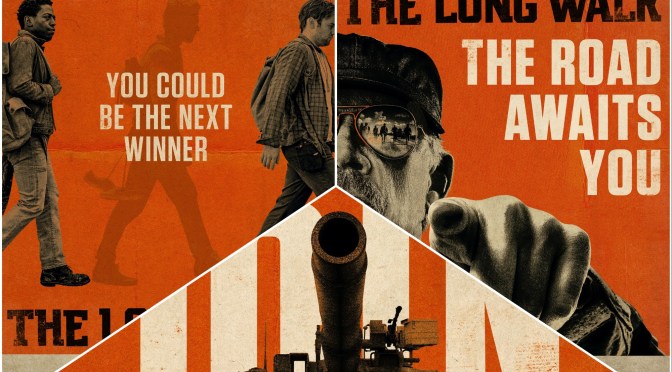
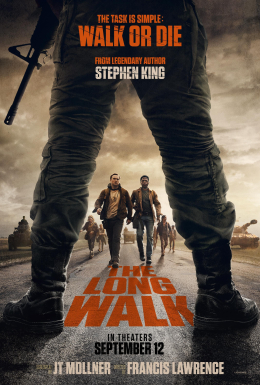
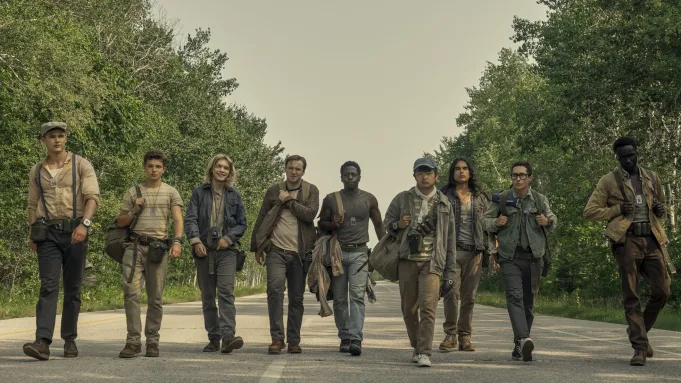
This compelling and moving anti-war film was adapted from the Stephen King novel, The Long Walk (1979), originally published under his pseudonym, Richard Bachman. The story is set in a dystopian alternative version of the United States ruled by a totalitarian regime; a new military-driven world order. The plot follows the fifty young male contestants of a gruelling annual walking contest, who must follow a set of rules or face the grim consequences. Ultimately, most of their fates are doomed as only the last boy standing gains the prize.

As an aside, I often wondered why King published under a pseudonym and after a quick net search I found that the author was limited to publishing one book per year, since publishing more would be “unacceptable” to the public. King therefore wanted to write under another name in order to increase his publication without saturating the market for the King “brand”. So, there you go. But what of The Long Walk (2025)? How does it compare to the plethora of other King film adaptations?


Grim, unrelenting, and devastatingly poignant, The Long Walk (2025) transforms a brutal endurance contest into an unmistakable anti-war allegory. Fifty young men, each plucked from a different state, march forward under the banner of national pride and promised glory — but what unfolds is the slow annihilation of their bodies and spirits. The premise, simple on the surface, becomes a searing critique of how nations sacrifice youth for power, money, and hollow ideals.

The film thrives on the camaraderie and conflict between the boys: fleeting alliances form, bitter rivalries crack open, and in moments of exhaustion or terror, we glimpse the fragile humanity beneath their forced bravado. Echoes of The Hunger Games franchise, also directed by Francis Lawrence, are impossible to miss. However, this story clearly influenced The Hunger Games and other examples of survivalist literature. Yet, The Long Walk (2025) is way more rawer, more intimate, and ultimately more scathing in its indictment of systemic cruelty.

Among the excellent ensemble cast, Cooper Hoffman as Ray and David Jonsson as Peter emerge with standout performances. Their characters, drawn together in unlikely connection, add emotional depth to the carnage, grounding the relentless attrition in genuine feeling. As their bond develops, the horror of the “Walk” feels sharper, the futility more unbearable. Overall, aside from slight repetition of action and an ending I’d have preferred to have gone a different way, The Long Walk (2025) carries hypnotic and bloody power. It is both a war story without a battlefield and a coming-of-age tale without the promise of adulthood — a haunting testament to how societies can destroy their own sons in pursuit of an impossible prize.

Mark: 8.5 out of 11


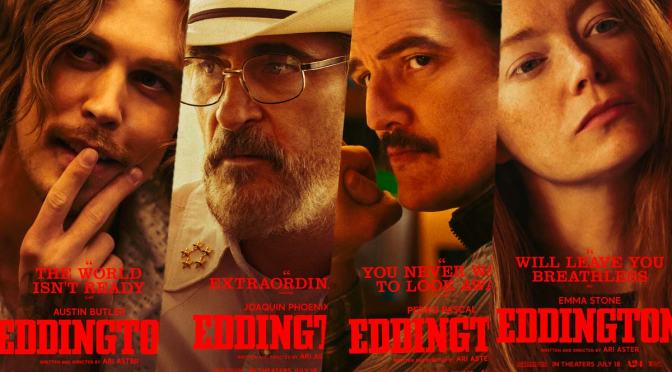
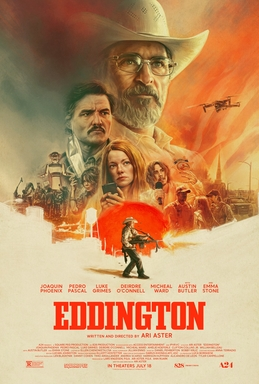
Cinema Review: Eddington (2025) – a daring Western satire on COVID-era America, US politics and the poison of social media!

Cinema Review: Eddington (2025)

Directed by Ari Aster

Written by Ari Aster

Produced by: Lars Knudsen, Ari Aster & Ann Ruark

Main Cast: Joaquin Phoenix, Pedro Pascal, Luke Grimes, Deirdre O’Connell, Micheal Ward, Austin Butler and Emma Stone.

Cinematography by Darius Khondji

*** MAY CONTAIN SPOILERS ***


Ari Aster’s first two horror films, Hereditary (2018) and Midsommar (2019) were rightly critically acclaimed and delivered at the box office too. His third film Beau is Afraid (2023) was a flop when compared and in my view not surprising. The film was arguably, depending on your view, a hilarious, risk-taking arthouse tragi-comedy or a self-indulgent act of egregious career self-sabotage. Safe to say I did not enjoy it, so approached the latest A24-produced film of Aster’s, Eddington (2025), with emotional caution.

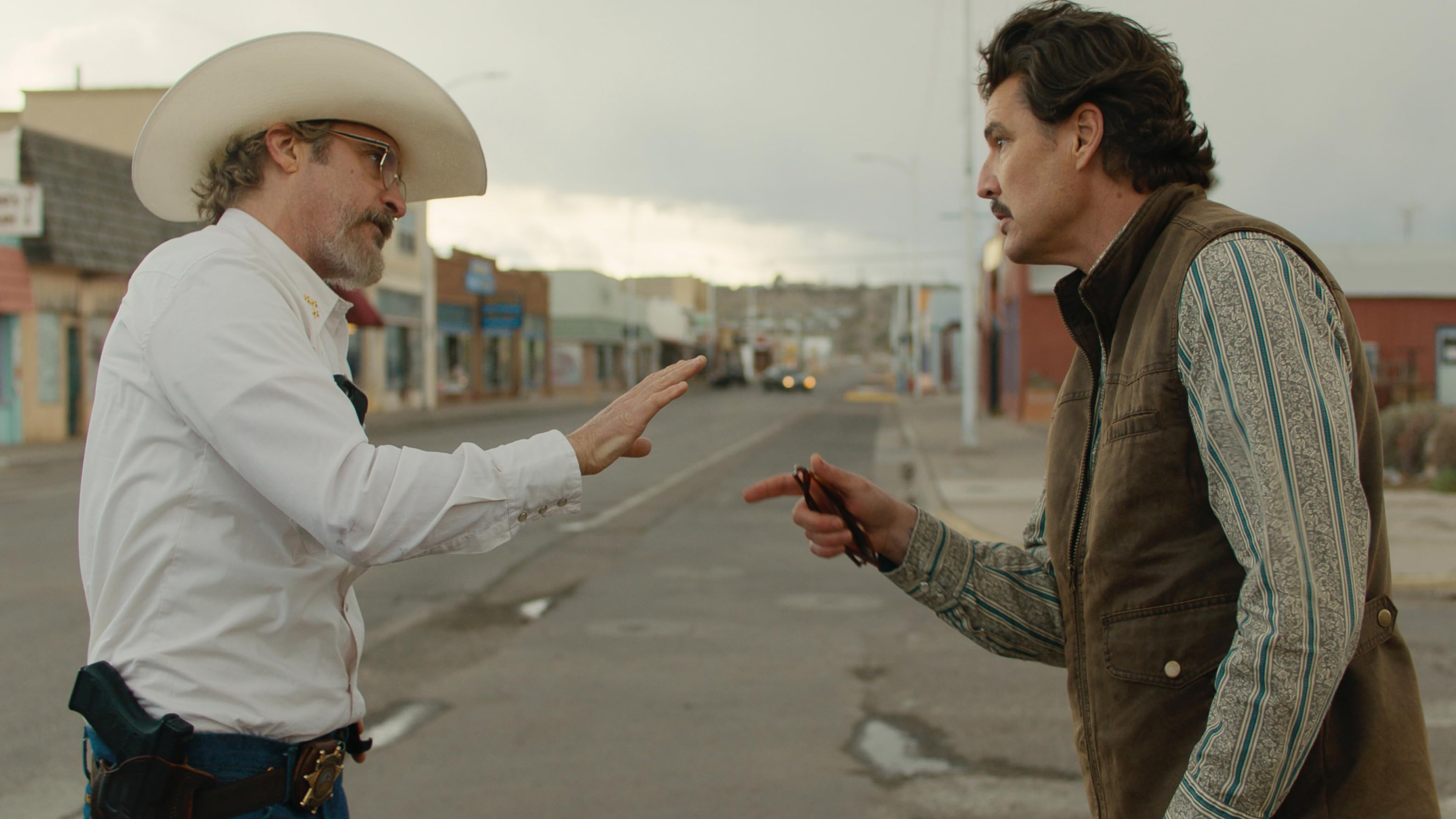
Thankfully Aster’s screenplay, characters and all-round production of Eddington (2025), are far more accessible and focused than his third feature. Pedro Pascal and Joaquin Phoenix anchor Eddington (2025) superbly, as Aster delivers a blistering small-town allegory that uses a public health crisis as the spark for something far larger. What begins with Mayor Ted Garcia (Pascal) dutifully following the Governor’s lockdown orders quickly escalates when Sheriff Joe Cross (Phoenix) refuses to comply and runs for Mayor himself. This casts the town and people into a conflict that mirrors America’s own political division.


Phoenix brings his trademark intensity to Sheriff Cross, whose defiance feels equal parts principled and unhinged, while Pascal’s Mayor, revealed to be a corporate puppet, balances him as a leader losing grip on his authority. Thus, Eddington (2025) is a powerful film whose strength lies in the performances and a brave, intelligent screenplay which asks many questions. The main issues I had were under-developed character arcs for Emma Stone’s and Austin Butler’s characters. Further, as in previous films Aster relies heavily on left-field plot turns, which go more for shock, rather than understandable character development. Indeed, the final act Western-style shootout, while incredibly exciting, seems out-of-sync with the thoughtful build-up and drama established in the first hour.

Ultimately, Director Ari Aster resists turning Eddington (2025) into just a COVID-era-morality tale; instead, the film confidently threads together a powerful mix of left and right-wing US politics, toxic masculinity, historical sexual abuse, conspiracy and alternative theories, cultish religious fervour, white saviour virtue-signalling, homegrown terrorism, algorithmic influence of social media, and the creeping threat of corporate greed. Each theme and subplot fold back into the central question: who really controls the narrative in modern America or is it a nation spiraling out of control toward inevitable civil war? The result is a tense, unsettling portrait of a town—and a country—at war with itself.

Mark: 8 out of 11


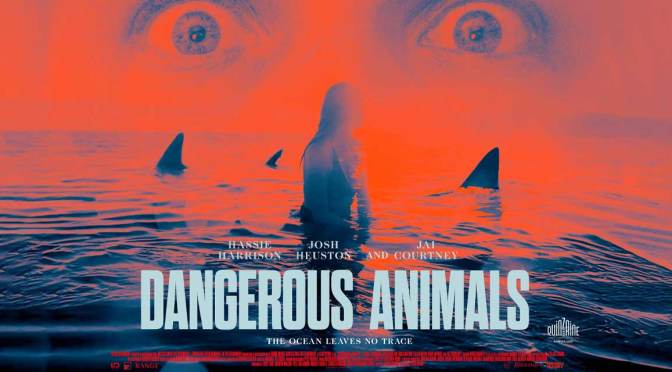
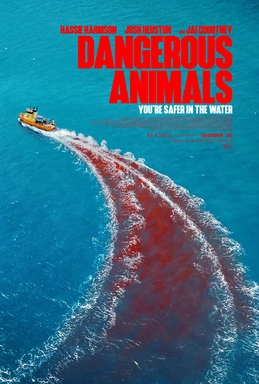
Cinema Review: Dangerous Animals (2025) sprays ‘Jaws’-dropping and bloody thrills!

Cinema Review: Dangerous Animals (2025)

Directed by Sean Byrne

Written by Nick Lepard

Produced by Troy Lum, Andrew Mason, Pete Shilaimon, Mickey Liddell, Chris Ferguson & Brian Kavanaugh-Jones

Main Cast: Hassie Harrison, Josh Heuston, Rob Carlton, Ella Newton, Liam Greinke, Jai Courtney etc.

Cinematography by Shelley Farthing-Dawe

*** MAY CONTAIN SPOILERS ***


Set amidst the golden beaches and deep blue sea of the Gold Coast, Australia, the film begins with boat captain, Tucker (Jai Courtney) springing a shocking and literal tourist trap. The film then moves onto establishing a fledgling romance between surf drifter, Zephr (Hassie Harrison) and local office clerk, Moses, (Josh Heuston). What then follows is a brutal and gory thriller which had me on the edge-of-my-popcorn throughout. It also once again proves that human beings are more of a threat than the actual big fish in the sea.

Dangerous Animals (2025) consistently delivers thrills thanks to Nick Lepard’s witty, nasty script and two standout performances. Hassie Harrison shines as a gutsy fighter who refuses to play the victim, while Jai Courtney both embodies and skewers the Aussie male stereotype in a scenery-chewing turn sharper than a shark’s jaws. His hulking frame, blunt verbals and piercing looks emulate a predatory fearfulness throughout creating one of the most memorable screen villains in recent years.

After watching the trippy Kafkaesque Nicolas Cage beach thriller not long ago, The Surfer (2024), I found Australian toxic masculinity once again raising its head with blood and bite in the Jaws-meets-Silence of the Lambs suspense thriller. Dangerous Animals (2025) isn’t without minor plot snags, but ultimately Lepard’s twisted script ensures we care about the leads, weaving a believable romance amid tense shark attacks and sea-sprayed suspense. Director, Sean Byrne, orchestrates the shark and human action brilliantly on a relatively low budget, ensuring the result is a lean, bloody, and entertaining ride that bites down hard and doesn’t let go.

Mark: 8 out of 11


The Suicide Shift – short film update and posters!

The Suicide Shift – short film update

In January 2025 I announced my next independent short film project called The Suicide Shift.

You can read about it here: https://thecinemafix.com/2025/01/20/fix-films-present-a-new-horror-short-the-suicide-shift-2025/


Gradual but excellent progress has been made on the post-production. Editing and the musical score have been completed so the film should be ready by the end of September 2025 for submission to festivals.

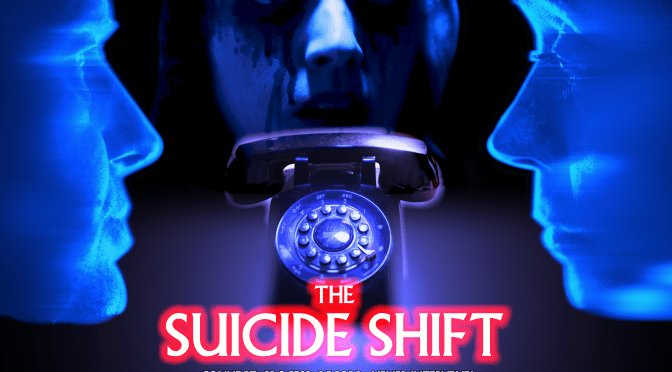
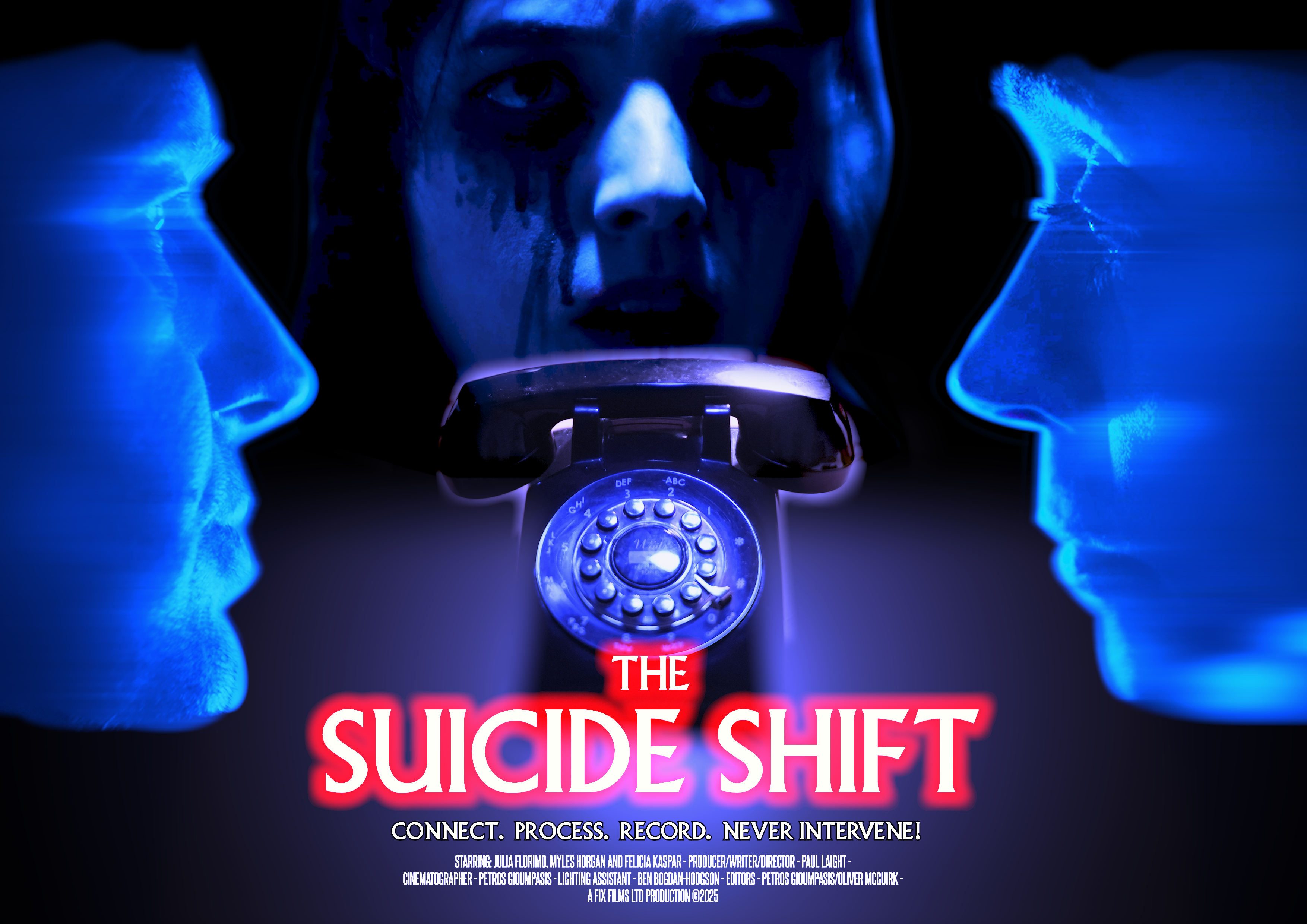
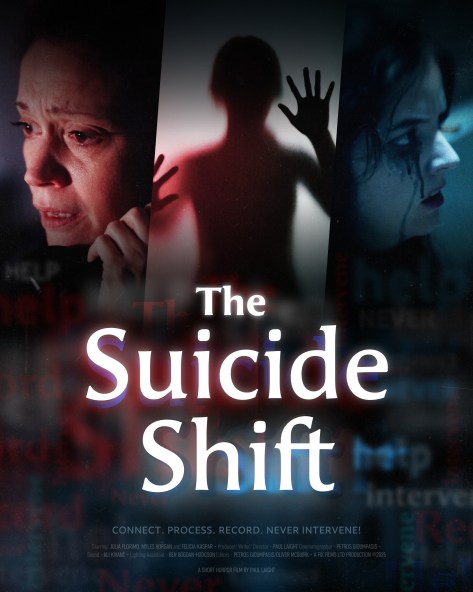
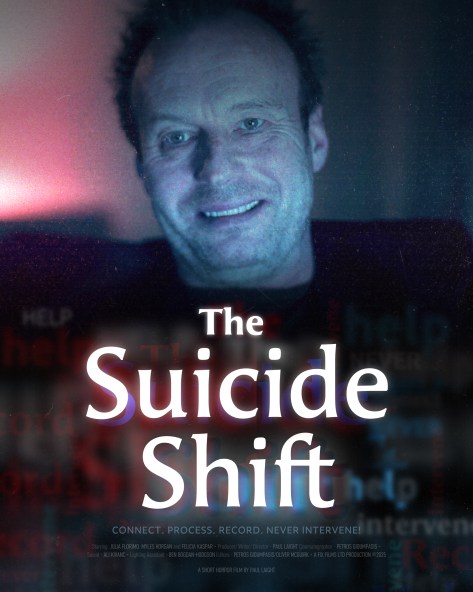
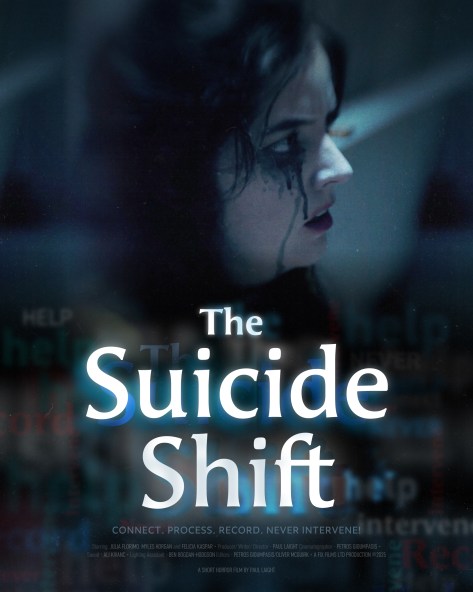
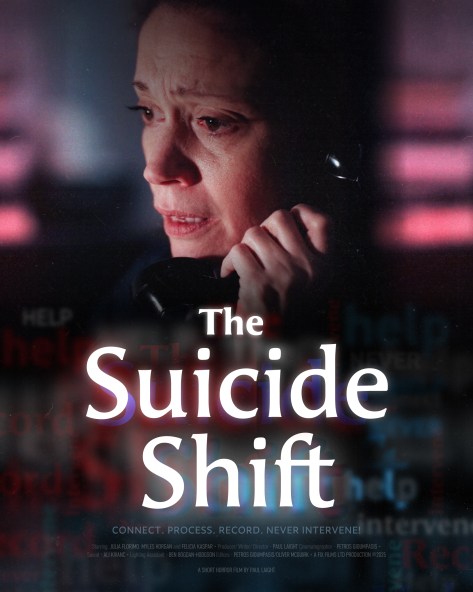
A trailer will be released soon. In the meantime, I commissioned some film and character posters. See above and the slideshow below.


Logline

Banished to the “suicide shift” for breaking spirit call centre regulations, CARMILLA FERRY, now deals with the most tortured of souls moving from this world to the next. After being blasted by her line manager on the phone, Russell, Carmilla is feeling even more isolated and demoralised than usual. After a series of heart-crushing calls, culminating in a particularly stressful shift, Carmilla is then faced with the most heart-wrenching call of all.


Cast

Julia Florimo as Carmilla Ferry

Myles Horgan as Russell Schaeffer

Felicia Kaspar as Lucy (Carmilla’s daughter)


Crew

Director, Producer & Writer: Paul Laight

Cinematography: Petros Gioumpasis

Sound Recordist / Designer: Ali Kivanc

Camera Assistant: Ben Bogdan-Hodgson

Make-Up: Georgie Lang

Location Manager: Melissa Zajk

Editors: Oliver McGuirk & Petros Gioumpasis

Composer: Ben Randall

© 2025 A Fix Films Production