I celebrated my fiftieth birthday last week. So, for a bit of fun I set myself a cinema game involving the theme of fifty. I gave myself no more than five minutes to list fifty favourite films. The rules are simple:
Pick 50 favourite films off the top of your head.
Take no longer than 5 minutes.
No checking Imdb.com or other cinema sites.
One film per franchise.
Go with your instinct – don’t overthink it!
Once you have written fifty down – you cannot change any.
Of course, these aren’t necessarily the best films ever, but instinctively films I love. Obviously, I am now kicking myself for the many great works of cinema I have missed. But, it’s just a bit of fun! So, here we go! In alphabetical order – FIFTY FAVOURITE FILMS chosen in FIVE MINUTES to celebrate FIFTY YEARS alive!
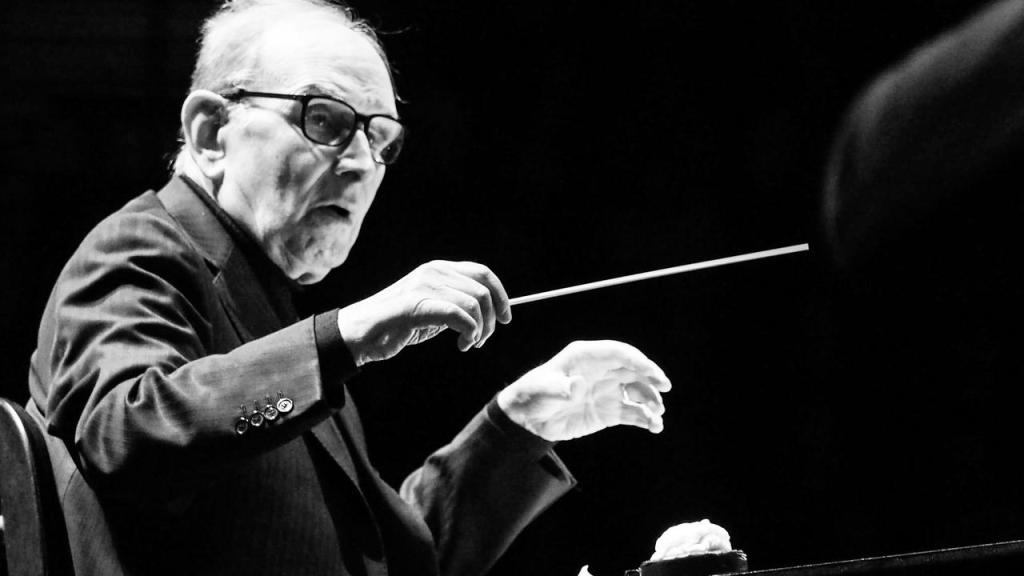
SIX OF THE BEST #26 – ENNIO MORRICONE – (R.I.P – 1928-2020)
“If you scroll through all the movies I’ve worked on, you can understand how I was a specialist in westerns, love stories, political movies, action thrillers, horror movies, and so on. So, in other words, I’m no specialist, because I’ve done everything. I’m a specialist in music.”Ennio Morricone
As if 2020 couldn’t get any more dramatic, one of the greatest musical composers and dramatists ever known has passed away. Ennio Morricone, rather incredibly, wrote the scores for over four hundred films and television works. He also managed to write well over one hundred classical pieces. To say Ennio Morricone was a prolific genius is somewhat of an understatement.
Morricone won six BAFTAs, eleven Nastro d’Argento, three Grammy Awards, three Golden Globes, six BAFTAs, ten David di Donatello, two European Film Awards, the Golden Lion Honorary Award and the Polar Music Prize. In 2007, he received the Academy Honorary Award for his outstanding commitment to cinema. Moreover, he was also nominated for a further six Oscars. Lastly, Morricone had to wait until 2016 to receive his only competitive Academy Award for the haunting score to Quentin Tarantino’s The Hateful Eight (2016). For Morricone to receive only one Oscar for musical composition is astounding and proves once again there is no justice in the world.
A meagre blog piece from a London-based hack will never be enough of a tribute to a composer who worked in every cinematic genre and with an incredible array of famous and infamous filmmakers. Notables include: Sergio Leone, Oliver Stone, Warren Beatty, John Carpenter, Quentin Tarantino, Sergio Corbucci, Dario Argento, Duccio Tessari, Sergio Sollima, Henri Verneuil, Bernardo Bertolucci, Mauro Bolognini, Giuliano Montaldo, Roland Joffé, Don Siegel, Mike Nichols, Brian De Palma, Barry Levinson and many more companies including advertisers, singers, recording artists and fashion designers. Morricone even found time to compose the 1978 World Cup theme song.
Thus, as a tribute to one of the greatest cinematic artists I have selected six of Morricone’s best film orchestrations. Although given his brilliance and spectacular output, one could certainly pick many more; even sixty of the best!! Riposa in pace, Ennio, il maestro!
“If there’s specific resistance to women making movies, I just choose to ignore that as an obstacle for two reasons: I can’t change my gender, and I refuse to stop making movies. It’s irrelevant who or what directed a movie, the important thing is that you either respond to it or you don’t. There should be more women directing; I think there’s just not the awareness that it’s really possible. It is.“— Kathryn Bigelow in 1990
Having most recently directed the searing period drama, Detroit (2017), Bigelow has been making feature films, since her debut, The Loveless (1981), for over thirty-nine years. With a strong academic background, having studied at the San Francisco Art Institute and Columbia University, it’s fascinating to review a career which has eschewed arthouse cinema and essentially been spent working mainly on big-budget genre films. However, one can see in her directorial canon that Bigelow, while striving for commercial success, is constantly testing the boundaries of genre storytelling.
Along with a powerful visual style that attains symbiosis with the core material, she intelligently explores themes relating to violence, individual freedom versus the system, masculinity in crisis, gender representations and socio-political corruption. Lastly, her characters are often outsiders, morally complex and dealing with deep personal trauma. In short: Bigelow’s worldview is one of both healthy scepticism and cynicism, but also an element of hope within the longing for control. So, here are five of Kathryn Bigelow’s most impactful cinematic releases.
***ARTICLE CONTAINS FILM SPOILERS***
NEAR DARK (1987)
While The Lost Boys (1987) is rightly regarded as a very entertaining 80’s vampire film, Near Dark (1987) is way, way superior. Despite not catching fire at the box office, this neo-horror-western contains a fantastic cast of James Cameron alumni, including: Lance Henriksen, Bill Paxton and Jenette Goldstein. These great character actors inhabit this snarling gang of vampires perfectly as the film contains shockingly brutal violence and hard-bitten dialogue amidst a tender love story.
BLUE STEEL (1990)
While Jamie Lee Curtis is generally better known for her horror and comedy film performances, Kathryn Bigelow made excellent use of her dramatic acting ability as a rookie police officer caught up with Ron Silver’s psychotic commodities trader. Blue Steel (1990) is a variegated genre film which takes a standard police procedural narrative and twists it into something far more psychologically compelling. Lee Curtis excels, as does vicious bad-guy Silver, aptly named Eugene Hunt!
POINT BREAK (1991)
This classic heist meets surfing movie meets gay subtext bromance is jam-packed with classic action scenes and faux-deep philosophical musings. Keanu Reeves is the daftly named cop, Johnny Utah, who goes undercover, amidst the beach brigade to find a bunch of bank robbers. His suspicions fall on Patrick Swayze’s elemental surfer-dude-god and a dangerous “bromantic” game of cat-and-mouse ensues. Bigelow scored her first major hit with Point Break (1991), infusing it with some incredibly visceral stunt, surfing, robbery and chase sequences in an exhilarating film experience.
THE HURT LOCKER (2008)
After the box office failures of her previous three films, the under-rated sci-fi thriller, Strange Days (1995), enigmatic mystery, The Weight of Water (2000), and stodgy cold war film, K-19: The Widowmaker (2002), Bigelow’s seemingly took a career break. She would, however, come back with her most critically acclaimed and Oscar-winning film, The Hurt Locker (2008). From a brilliant script by Mark Boal and led by Jeremy Renner’s standout lead performance, The Hurt Locker (2008), put the audience right at the heart of a bomb disposal unit in Iraq. Putting aside the politics for a moment, the film is full of incredibly tense and superbly edited scenes which have your heart in your mouth. Simultaneously too, the film also shows the devastating emotional, physical and mental effect war has on the people of Iraq and the soldiers sent to fight this horrifically unjust conflict.
ZERO DARK THIRTY (2012)
Whereas The Hurt Locker (2008) had highly emotional and empathetic protagonists, Bigelow and Boal’s next film Zero Dark Thirty (2012), is a much more clinical and technically efficient cinematic experience. In parts, both a war drama and espionage thriller, the story also has a feel of an old-fashioned Western as American military and CIA operatives, led by the excellent Jessica Chastain and Jason Clarke, hunt down Osama Bin Laden. Politically speaking this is a film which makes me feel very uncomfortable for a number of reasons. It plays out like a revenge story. It also seems to both criticize and vindicate torture in the early scenes. This makes me uneasy as I understand the 9/11 attacks were just horrific, yet they seemed to get used as a motive for many more atrocities by the United States government. I guess that was what Bigelow and Boal were going for. They attempted to create a morally and emotionally complex war thriller that lets you interpret the events yourself and conclude one’s own judgements.
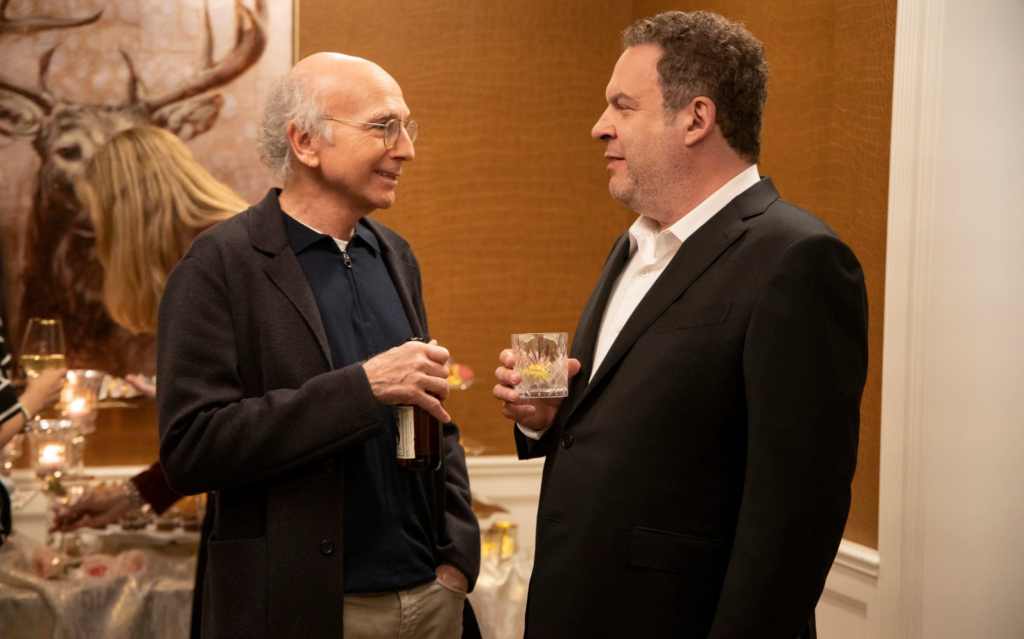
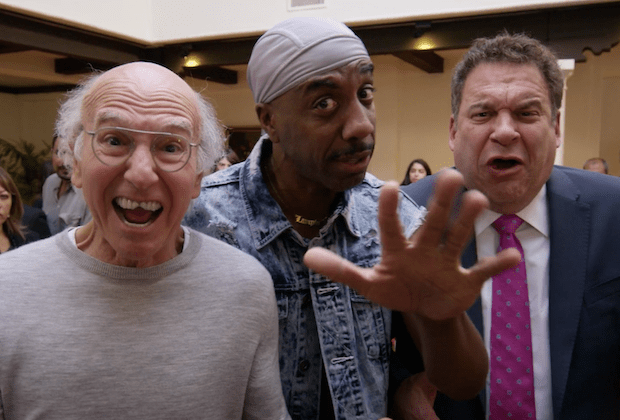
Main Cast: Larry David, Jeff Garlin, Cheryl Hines, Susie Essman, J. B. Smoove, Ted Danson, Richard Lewis, Vince Vaughan, Kaitlin Olson etc.
Guests: Mila Kunis, Clive Owen, Laverne Cox, Chris Martin, Sean Penn, Jonah Hill, Jon Hamm, Philip Rosenthaland many more.
Distribution Platform: HBO (USA) – SKY (UK)
**CONTAINS MASSIVE SPOILERS**
“AH! INTERESTING. . . “
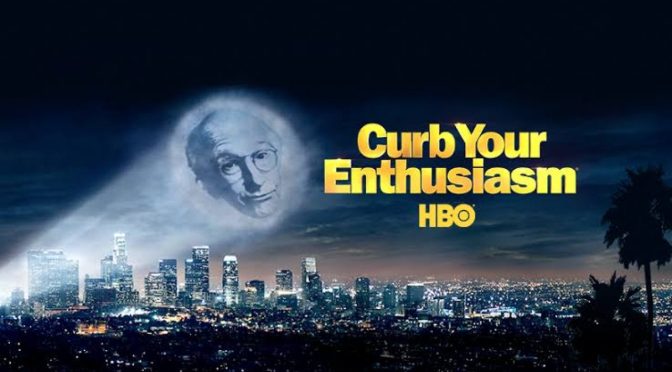
During a lengthy hiatus from 2011 to 2017, fans of Curb Your Enthusiasm were left bereft of their dose of Larry David’s inimitable and eccentric behaviour. The multi-millionaire writer of Seinfeld had carved out a wonderfully politically incorrect comedy series, full of misunderstanding, farce and hilariously embarrassing situations. Thankfully, he returned with season 9, and it was absolutely brilliant. Larry managed to get himself a death sentence, having written a musical called Fatwa, along with all manner of other comedic shenanigans. Season 10 has now followed and, once again, anti-heroic Larry delivers ten more fantastically offensive and funny episodes. More often than not we find his behaviour abhorrent as he goes about upsetting friends, family members, celebrities, and strangers on a daily basis. However, sometimes we are with Larry and his actions have merit and reason. Furthermore, due to the wonderful writing, improvising, cast and situations the humour is always more than pretty, pretty good!
NARRATIVE ARC (OF THE COVENANT)
Usually, Curb Your Enthusiasm episodes can stand alone due to the richness of the narrative strands Larry David and his writers create. But most seasons will have a very solid narrative arc running through it to provide looping rejoinders, a structural spine and a fitting conclusion. In season 10, there were echoes of storylines from prior seasons. Larry wanted to get back with Cheryl and they even committed divorced adultery, cuckolding Ted Danson in the process. However, the main arc revolved around the return of coffee store owner, Mocha Joe (Saverio Guerra). Larry pisses Mocha Joe off because he complains about “cold” coffee, wobbly tables and weak scones. Following Larry’s customary banishing he swears revenge on Mocha Joe. This takes the form of the wonderfully named ‘spite store’ he sets up next door. Thus, Latte Larry’s is born, and ten episodes of fast-paced, tit-for-tat, vengeful and hilarious scenes ensue.
“THE GOLDEN RULE” – STYLE AND THEMES
Curb Your Enthusiasm is not just funny because of the situations, dialogue, observations, guest stars and acting performances. It is also very sophisticated and stupid, combining a variety of comedy styles to fuel the humour. Earlier seasons could be argued to be more based in reality per se. The interactions between the characters felt more natural, in keeping with the pilot episode which was shot as a mockumentary about Larry returning to stand-up. Later seasons, especially seasons 9 and 10, upped the gag rate and one could even say felt slicker. Don’t get me wrong, the jokes have always come thick and fast in Curb Your Enthusiasm, but in the last two seasons there is not only a reliance on the usual comedy of embarrassment, observations and satire, but farce, slapstick and gross-out humour too have been added to the palette. Lastly, the show has always skated close to the edge in regard to non-PC humour and causing offence. Evidently, Larry David has now fully thrown himself over that edge and is happy to offend everyone in a two-fingered salute to so-called snowflakes or liberals out there.
In regard to thematics, Larry David clearly has his finger on the pulse relating to contemporary society, politics and human behaviour. Much of the humour and funny scenarios derive from what is acceptable behaviour and certain “rules” within everyday living. In season 10, Larry finds himself questioning, among other things: the behaviour of a pregnant woman; the merits of artificial fruit; what is and what isn’t’ sufficient praise; usage of disable parking badges; whether he should be in a restaurant’s ‘ugly section’; whether sex with Cheryl’s sister is post-relationship cheating; and the overall benefits of running a spite store. These elements, the running feuds with Ted Danson, Mocha Joe and Larry’s assistant, Alice, and themes relating to the Harvey Weinstein scandal and #MeToo movement; Larry and Leon’s continued chats about the nature of being black/white; Donald Trump’s presidency; fat shaming; suicide; Susie’s alleged plot to murder Jeff; nationalist ridicule; egotistic actor types; and transgender issues, all connectedly make this season a very rich product, full of ideas and challenging storylines.
“PRETTY GOOD. . . ” – EPISODE RATINGS
Episode 1 – Happy New Year – (8.5 out of 10)
Larry goes to war with Mocha Joe and reignites his romance with Cheryl. His relationship with his assistant also descends into accusations of sexual harassment.
Highlight: Larry wearing his Donald Trump, “Make America Great Again!”and ensuring no one wants to be seen with him.
Episode 2 – Side Sitting – (8.5 out of 10)
Larry’s relationship with his assistant, Alice, is possibly going to court unless he settles and makes amends. His attempts to get back with Cheryl are rebuked, so he dates his lawyer’s assistant.
Highlight: Larry gives Susie a portrait of herself as a birthday present. She loves it – but Jeff doesn’t.
Episode 3 – Artificial Fruit – (9 out of 10)
Larry’s donation to a charity fails to bring forward redemption when he refuses to hug Laverne Cox at an event, because she has a cold. Meanwhile, Richard and Larry argue over who is paying a lunch bill, leading to a very embarrassing escapade at a Spanish funeral.
Highlights: Larry is unsure if the Heimlich manoeuvre is appropriate when his assistant is choking. Plus, Larry’s doodle debate with Christine Lahti blows up into a serious disagreement.
Episode 4 – You’re not going to get me to say anything bad About! – (9 out of 10)
Larry, Donna (his new girlfriend), Cheryl, Jeff, Susie and Leon go to Cabo San Lucas for a friend’s wedding. Larry becomes fixated with Donna’s yo-yo dieting, but he and Leon do find some incredible coffee beans for Latte Larry’s.
Highlight: Larry’s determination to locate a toothbrush descends into a farcical conclusion. Later, at the wedding, Ted discovers Larry and Cheryl’s infidelity in a hilarious fashion.
Episode 5 – Insufficient Praise! – (9 out of 10)
Preparations for Latte Larry’s gather pace as Larry asks for a specific urinal type. Larry also gets a new housekeeper and is given a sex doll by Freddy Funkhouser. Meanwhile, Larry clashes with actor Clive Owen and Richard Lewis’ new girlfriend; a professional “crier”.
Highlights: Larry’s frantic battle with the sex doll resulting in his housekeeper and Cheryl catching him. Also, Clive Owen’s brilliantly pretentious send-up of narcissistic acting types.
Episode 6 – The Surprise Party! – (8.5 out of 10)
Larry meets a German inventor who has an anti-Semitic Alsatian called Adolf, and he gains joy from the use of a disabled parking badge. He also clashes with Susie over the surprise party she intends to throw for Jeff.
Highlight: Despite not having an appointment, Larry uses his cardiologist’s reception area to wait, because it’s a “waiting room”.
Episode 7 – The Ugly Section! – (9.5 out of 10)
Larry consistently keeps getting placed in the “ugly section” at the back of a restaurant. Simultaneously, he attempts to woo the widow of his friend who recently committed suicide.
Highlights: Larry asking Jane Krakowski’s character where she got the handles for her husband’s coffin. Later, Larry ruins a possible sexual liaison with her by arguing about the New York Jets. Lastly, Larry insults Susie as she should be in the restaurant “ugly section”.
Episode 8 – Elizabeth, Margaret and Larry! – (10 out of 10)
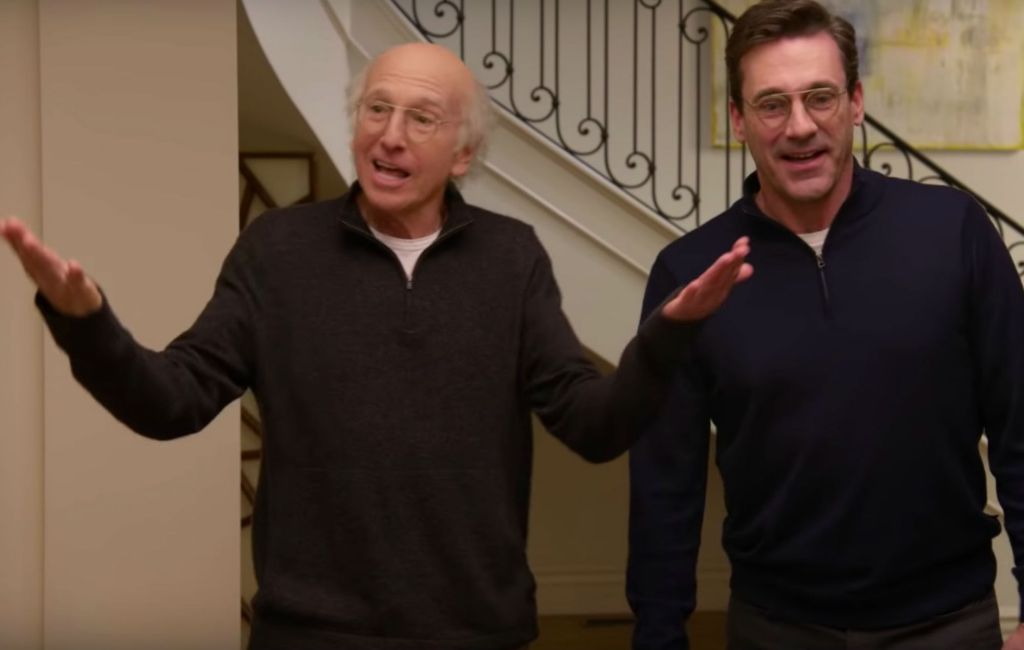
Actor, Jon Hamm, shadows Larry as he prepares to play a character like him in a film. Larry and Leon start a new business venture which initially proves profitable. Cheryl is angered when Larry spontaneously begins a relationship with her sister, Becky.
Highlights: Jon Hamm slowly turning into Larry throughout the episode, culminating in them both being ejected from a dinner party. Also, Kaitlin Olson returning as Becky and the surprising sex with Larry.
Episode 9 – Beep Panic! – (9 out of 10)
Larry strikes up a friendship with a waitress that dripped sweat into his soup. He also becomes obsessed with the liqorice at his car showroom. Meanwhile, Mocha Joe plots his own revenge using DVD film screeners.
Highlights: Leon and Larry succumb to the severe laxative effect of the liqorice in a silly bit of toilet humour.
Episode 10 – The Spite Store! – (10 out of 10)
Latte Larry’s is well and truly open, and it inspires other celebrities to open similar spite stores. Larry is irked by siren abusers and gives a job to Joey Funkhouser, but his big penis causes the store no end of issues.
Highlights: Sean Penn’s opening a spite-driven pet store. All Larry’s innovations at the coffee store ultimately lead to a very explosive downfall.
“NO GOOD?” – CONCLUSION
In preparing for this review I rewatched season 9 and watched season 10 twice. So, it’s obvious to say that I love, Curb Your Enthusiasm. Overall, I found the latest season to be a wonderful mix of old-fashioned slapstick and farce, combined with Larry David’s original and skewed vision of humanity. What was also impressive was the structural coherence of juggling so many comedy plots and situations. Plus, Larry behaves appallingly, and this is very appealing in an ever-increasingly politically correct world. Many times, throughout the season Larry is shown to be a provocative arsehole, but on occasions he very much has a valid point. Larry’s issues are very much first world problems, but because of the skilled writing and consistently high joke rate I related greatly to this season. Plus, Larry doesn’t win. His spiteful plotting and perpetual disagreements with those around him mostly fail. Indeed, ultimately, the joke is always on him.
I’ve been busy trying to avoid the booze in the fridge most days, although I did fail miserably on Saturday. But I was kind of celebrating fifteen years of low budget short filmmaking. If you didn’t know my production company is called Fix Films Ltd. Here is my latest showreel video. It’s basically a look back at all the films we have made. Also, it’s a tribute to all of the talented people we have worked with.
Fix Films are a filmmaking collective. Since 2005 they have been involved in the creation of many, many short films and promos. They self-produce, write, direct, edit and score their own films to a very high standard despite the low budgets. They are true independent filmmakers.
This showreel features images, clips and music from most of our major short films productions.
Fix Films Ltd are:
Paul Laight, Gary O’Brien and all the amazing people we have worked with.
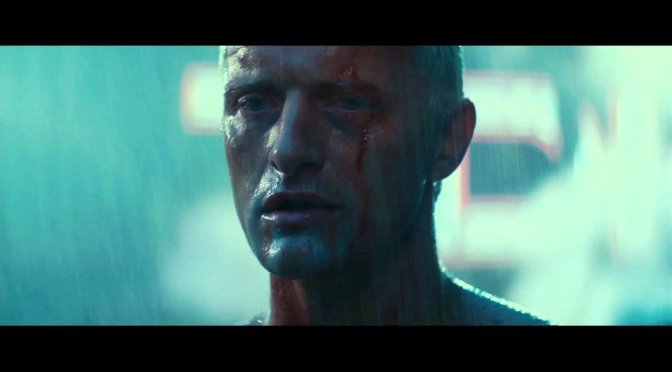
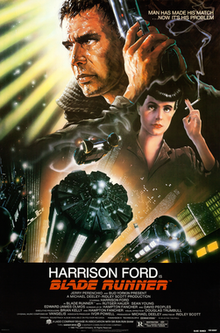
CLASSIC MOVIE SCENES #13 – BLADERUNNER (1982) – “TEARS IN THE RAIN.”
Directed by: Ridley Scott
Produced by: Michael Deeley
Screenplay by: Hampton Fancher and David Webb Peoples – based on the novel, Do Androids Dream of Electric Sheep by Philip K. Dick
Cast: Harrison Ford, Rutger Hauer, Sean Young, Daryl Hannah, James Edward Olmos etc.
Cinematography: Jordan Cronenworth
Music: Vangelis
*** CONTAINS MASSIVE SPOILERS ***
Philip K. Dick’s dense, dystopic and futuristic novel, Do Androids Dream of Electric Sheep (1968), is an ugly, beautiful, depressing, obtuse, hypnotic skip-through-treacle read full of incredible concepts relating to: Artificial Intelligence; robot technology; android simulacra; animal husbandry; apocalyptic disease; virtual reality/empathy mood tech; extinguished humanity; and ultimately, of course, mortality and death. The fact that Hampton Fancher and David Webb Peoples were able to fashion a workable screenplay for Ridley Scott to direct is a creative miracle. Moreover, it is testament to the writing and Scott’s incredible production team that, Bladerunner (1982), is held in such high esteem among cinema fans now.
The original Bladerunner, despite bombing at the box office and subsequently going through a number of cuts, re-cuts, final cuts and re-re-re-releases, has become a bona fide science fiction cinema classic. I watched the original theatrical version recently and despite the deadpan Harrison Ford voiceover and spurious, tacked on “happy” ending, it actually has a lot going for it. Obviously the ‘Unicorn Dream’ re-edits released under the guidance of Ridley Scott are the purer versions but the film holds up notably because of Ford’s gruff, depressive and world-weary performance as Rick Deckard; the imperious psychopathy of Rutger Hauer as android assassin Roy Batty; Scott’s glorious tech noir rendition of our desecrated future; as well as the evocation of Philip K Dick’s thematic existential power.
Such existential power is demonstrated in one of the final scenes where Batty has pushed Deckard to the edge of a building and death. The rain falls and the majestic soundtrack swells. A stripped down Batty, rather than let Deckard die, saves his life. It’s an ambiguous decision, but one of redemption for a replicant that is more used to delivering death. Perhaps, it proves that Batty does indeed have human qualities and Deckard will take up the cause. Delivering one final heartfound speech, Batty regales and laments the beautiful things he has seen. But they are gone – just like tears in the rain. It is a moving epitaph and amazing end to an incredible science-fiction classic. Batty closes down for good, but his demise and Hauer’s incredible performance will live long in the memory.
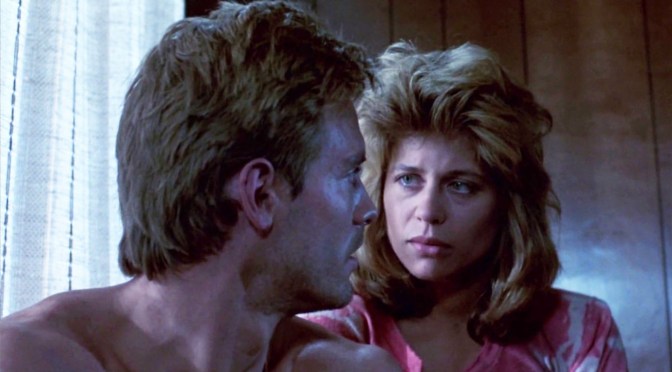
MEMORABLE FILM CHARACTERS – SARAH CONNOR – VIDEO ARTICLE
I have already written a text article regarding this subject and that can be read here. However, I am trying to promote my YouTube site too, and thus have been busy creating short online video content which may interest some cineastes. So here is a tribute to one of the most memorable film characters of all time – SARAH CONNOR.
CREDITS
This video article is a fun and educational piece highlighting our one of our favourite film characters – SARAH CONNOR.
Written by: Paul Laight
Narrated by: Melissa Zajk
Music: Sci Fi – Bensound | Royalty Free Music – No Copyright Music | Bensound Music
The copyright of the images and trailers are those of the film studios. I do not own any of the images or films.
Film/Trailer clips credits:
1) The Terminator (1984) – Orion Pictures 2) Terminator 2: Judgement Day (1991) – TriStar Pictures 3) Terminator: Dark Fate (2019) – Paramount Pictures / 20th Century Fox
Created and written by: Steve Pemberton & Reece Shearsmith
Directors (Season5): Matt Lipsey, Guillem Morales, Steve Pemberton
Original Network: BBC (available on BBC Iplayer and Netflix)
No. of Episodes: 6
***CONTAINS PROPER SPOILERS***
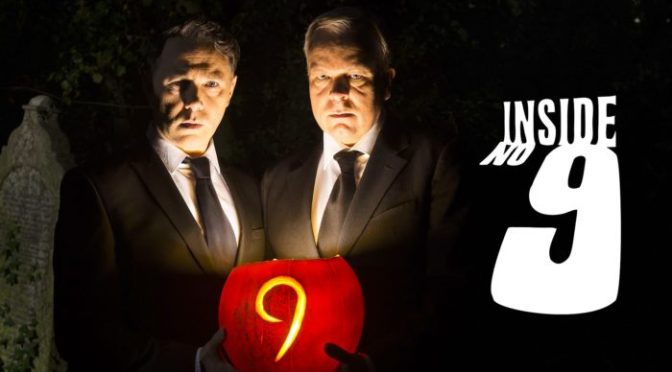
Inside No. 9is written by and stars Steve Pemberton and Reece Shearsmith. Both are brilliant comedic and dramatic actors, having appeared in many TV shows and films down the years. They are arguably most famous for beginning their careers in amazing comedic troupe The League of Gentlemen; however, their work on Inside No. 9 surpasses the ‘League’ in my view.
If you have never seen Inside No. 9 before, I urge you to do so. It is an exceptional anthology series with six standalone episodes per season. Individual episodes feature a whole host of different characters and actors each time. As per the prior seasons, the latest one is absolutely brilliant. It privileges tightly woven thirty-minute short narratives, which more often than not, feature a twist in the tale. Moroever the events usually unfold in one location with never more than a handful of characters. This makes the narratives feel more focussed, intense and intimate.
Inside No. 9 is also a surprising delight because you never know what kind of genre you will get. One week you could get comedy, horror, drama, crime, romance or musical; and sometimes a combination of all of them. They also take chances with their use of form and structure, with many episodes either paying homage or parodying different genre styles. So, here are some short reviews of each episode from Season 5. Usually, I mark my reviews out of eleven (in homage to This is Spinal Tap (1984)), however, for obvious reasons, I will be marking these reviews out of NINE.
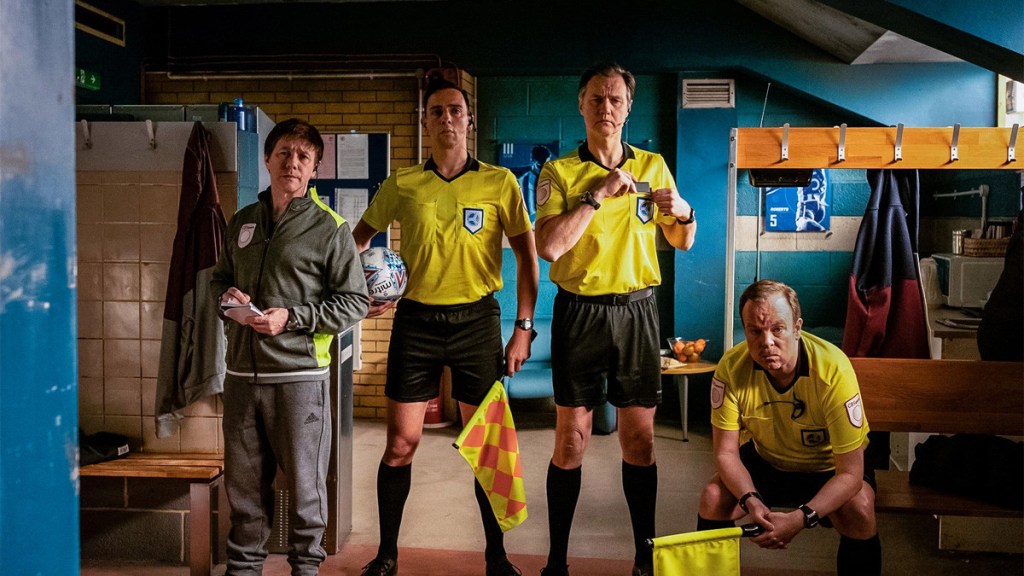
EPISODE 1 – THE REFEREE’S A W**NKER
Cast: David Morrissey, Ralph Little, Steve Pemberton, Reece Shearsmith
The number 9 of this episode occurs in a football referees’ changing room before, during and after a critical final game of the season. Tensions rise between players, mascots and officials in what is the referee’s last game before retirement. David Morrissey is brilliant as the ultra-professional ref attempting to keep control amidst the chaos. Ralf Little also excels as the vain referee’s assistant, with Shearsmith and Pemberton offering fine comedic support. On the main this plays out as a comedy, but there are also serious moments. Indeed, The Referee’s a Wanker explores themes of corruption, gay footballers, and the obsessive win-at-all-costs nature of football fanatics. Fast-paced, funny and containing a great twist, this episode kicked off the season very positively.
Mark: 8 out of 9
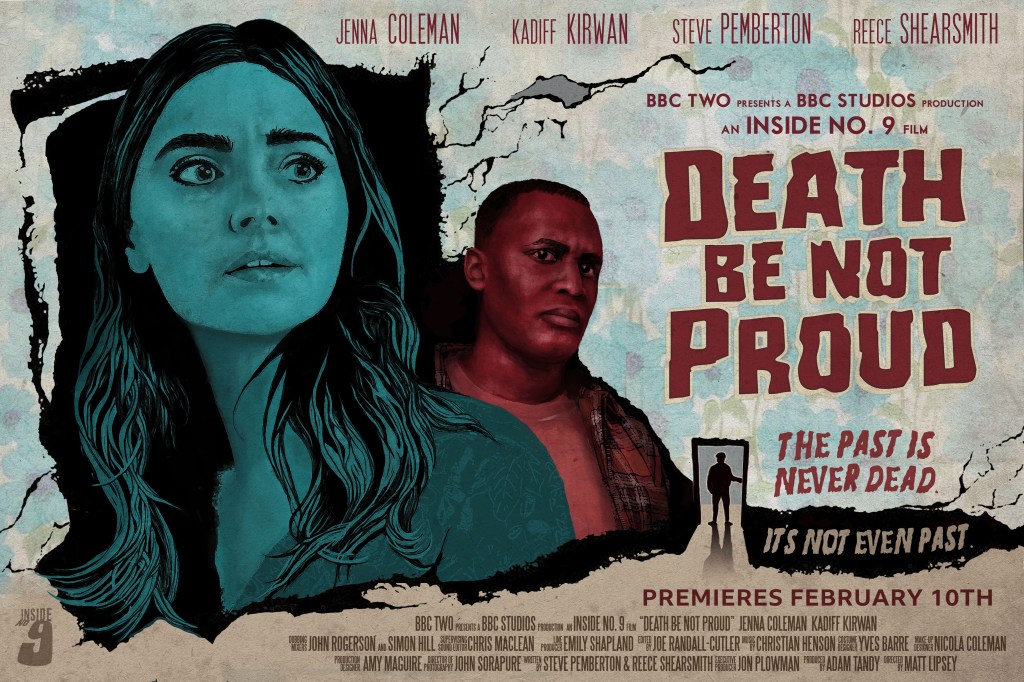
EPISODE 2 – DEATH BE NOT PROUD
Cast: Jenna Coleman, Kadiff Kirwan, Steve Pemberton, Reece Shearsmith, Sarah Solemani
This episode was a joy on many levels. Firstly, it was a fantastic mixture of dark comedy and bloody horror. Most significantly, it contained a wonderful series of meta-cultural call backs to Shearsmith’s and Pemberton’s prior work called Psychoville. A grotesque and demented sitcom, Psychoville contained a gallery of crazed characters with many portrayed by Pemberton and Shearsmith. In Death Be Not Proud the opening is quite conventional. Young couple (Jenna Coleman and Kadiff Kirwan) get what they think is a property bargain. However, the flat was host to a grisly murder and something from beyond the grave is tormenting the new tenants. When the previous owner, David Sowerbutts returns things get even weirder. Only then do we learn about the horrific history of this murder home, to sick and hilarious effect.
Mark: 8.5 out of 9
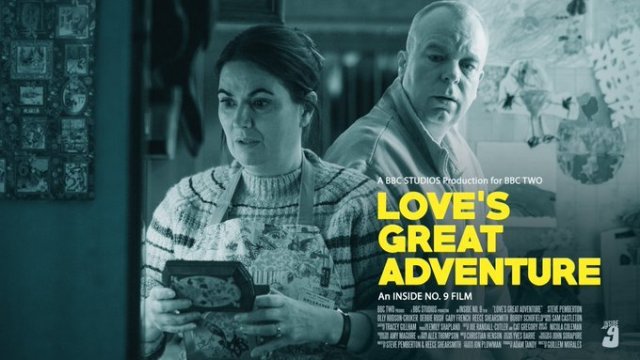
EPISODE 3 – LOVE’S GREAT ADVENTURE
Cast: Steve Pemberton, Debbie Rush, Gaby French, Bobby Schofield, Reece Shearsmith.
Once again displaying fine writing and actorly versatility, Love’s Great Adventure plays out as a straight family drama. It’s of such high quality and hits such emotional and dramatic peaks, TV writers like Paul Abbott, Jimmy McGovern and Jed Mercurio would have been proud to have written it. Cleverly structured around an advent calendar, the Christmas setting adds texture to the financial struggles of one working class family. Trevor (Pemberton) and Julia (Debbie Rush) are devoted to each other, their teenage daughter and grandson who lives with them. They are even prepared to forgive their self-destructive addict son. Set mainly in the kitchen on various days leading up to Christmas day, the events unfold in a subtle, but powerfully realistic manner. These are ordinary, but compelling characters, who prove there is nothing stronger than family love.
Mark: 8.5 out of 9
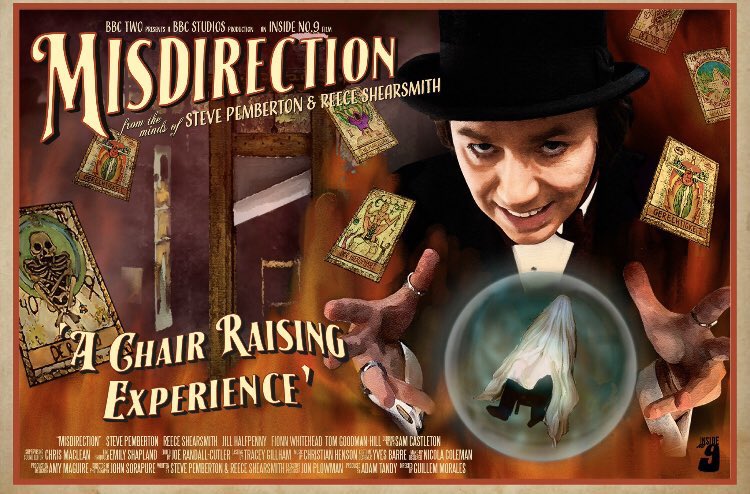
EPISODE 4 – MISDIRECTION
Cast: Reece Shearsmith, Steve Pemberton, Jill Halfpenny, Fionn Whitehead
One of my favourite ever TV shows is Tales Of The Unexpected and Inside No. 9 certainly owes a debt to that series of twisted genre narratives. Misdirection is a case in point. It is up there with the best Pemberton and Shearsmith plots, as a young student journalist, Fionn Whitehead, interviews Reece Shearsmith’s famous magician. Safe to say that as this is about magic there is much in the way of tricksy turns, bluffs and diversionary tactics. Shearsmith is on brilliant form as the arrogant traditionalist with a dark secret. He criticizes the inelegance of street magicians while a battle of wits ensues with Whitehead’s seemingly naive novice. Echoing the structural and stylish dexterity of Peter Schaffer’s brilliant Sleuth (1972), Misdirection holds all the cards when it comes to being a deviously clever and totally unexpected tale.
Mark: 9 out of 9
EPISODE 5 – THINKING OUT LOUD
Cast: Maxine Peake, Phil Davis, Ionna Kimbrook, Sandra Gayer, Sara Kestelman, Reece Shearsmith, Steve Pemberton
Before reviewing this season, I watched every episode twice. I’m glad I did because Inside No. 9 can be complex and pack a lot in thirty minutes. So, it proves in Thinking Out Loud, as we get seven seemingly disparate characters all unconnected. Or so we are led to believe. The episode uses the video diary format, which was something of a popular phenomenon in the 1990s, plus it echoes the “talking heads” style of Alan Bennett. Thus, we get a character in therapy, her therapist, a criminal on death row, a singer, a man suffering from cancer, a man looking for love and an Instagram influencer. All directly address the camera and as we cut between them, their connection slowly filters through until the incredible reveal. Owing much to films like Identity (2003) and Split (2017), this psychological thriller is very crafty with many chilling moments that bear up to multiple viewings.
Mark: 8 out of 9
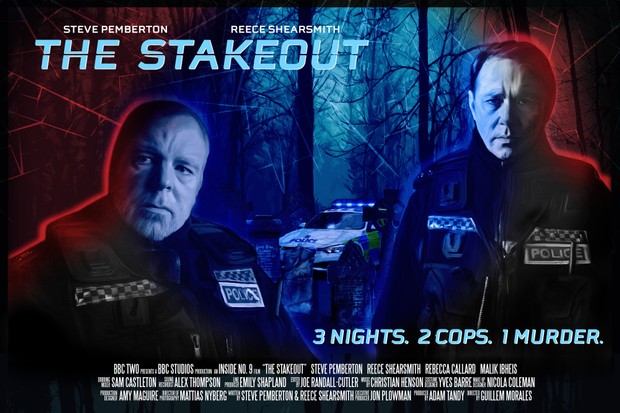
EPISODE 6 – THE STAKEOUT
Cast: Steve Pemberton and Reece Shearsmith
This virtual two-hander concentrates all of the action within the confines of a police car. Steve Pemberton portrays the jaded and experienced police officer obsessed with finding out who killed his partner. Joining him in the vehicle is new partner, played by Shearsmith. The latter’s character is a Special Constable who seeks to follow the book causing tension on a stakeout during a literal graveyard shift. The two clash over diet, riddles, word-games and police procedure, but over three nights they eventually find mutual respect. The bulk of the episode’s enjoyment comes from Pemberton and Shearsmith’s sparring and their performances are exemplary. The writing is also impressive as it plays with the tropes of the police procedural genre. Finally, it also sets up a suspenseful opening only to confound us by the bloody fiendish denouement.
“It’s the end of the World as we know it – and I feel fine!” Michael Stipe
With the world gripped by the COVID-19 virus threat one’s mind can run amok and look to possible futures. Thus, I thought it interesting to explore some visions of the Apocalypse as seen on the film. I mean you have to hand it to humanity; it’s able to distract itself from the possible end of the world by creating stories and entertainment ABOUT the end of the world! Here’s TEN of the best I could think of.
***CONTAINS MASSIVE SPOILERS***
NIGHT OF THE LIVING DEAD (1968) – UNKNOWN CAUSE
George Romero’s seminal classic zombie film gave birth (and death) to a whole subgenre of horror films. The low budget is no barrier to an ingenious concept involving the dead rising up and attempting to wipe out the rest of humanity. Both powerful as a horror narrative and social commentary, it remains one of the most influential films of all time.
PLANET OF THE APES (1969) – NUCLEAR WAR
Poor old Charlton Heston never had much luck with the future as his characters often ended up in dystopian visions of hell. Such films included: Soylent Green (1973), Omega Man (1971) and the classic Planet of the Apes, where simian humanoids are running the planet and enslaving the savage natives. One of the great sci-fi epics with probably the greatest film ending of all time, the film remains a timeless vision of the future.
MAD MAX: ROAD WARRIOR (1981) – NUCLEAR WAR
In between the road-raging original and this brilliant sequel there was some kind of global nuclear meltdown hitherto bringing about a dusty wasteland where fuel is God and humans will kill to get their hands on it! Out of the dust rises a reluctant hero, Max Rockatansky (Mel Gibson), who strives to survive while battling hordes of petrolheads, psychos and punks! Definitely one of the best sequels of all time, George Miller spectacularly remade it with the equally pulsatingFury Road (2015).
THE TERMINATOR (1984) – ARTIFICIAL INTELLIGENCE
Bloody Internet, sorry Skynet! We create these wonderful computers to help us with everyday life including our Missile Defence Systems and they turn on us! Only a Mother and her child – who hasn’t been born yet – can save us from a life of death and slavery at the hands of the machines. Cameron’s seminal sci-fi action film delivers an unforgettable feast of story, concepts and emotion, containing in Sarah Connor’s, one of the best character arcs of all time.
THE MATRIX (1999) – ALIEN MACHINES / ARTIFICIAL INTELLIGENCE
Damned alien machines enslaving humanity and feasting on our fluids and organs for energy in some sick, twisted vision of a futuristic Harvest festival. Then again, compared to some of the shitty office jobs I’ve had I think I’d choose the “Matrix” over those; just don’t tell me I’m in the Matrix! Neo (Keanu Reeves) chose the other pill and it’s a good job he, Morpheus and Trinity did, because we get some kick-ass slow-motion action out of it.
WATERWORLD (1995) – GLOBAL WARMING
In this future we will basically live in the water and grow gills. Also, pure dirt and water will be our most priceless commodity. Well, that’s what will occur according to this apocalyptic-polar-ice-caps-melting-earth-swimming-pool-with-pirates movie. At the time it was one of the most expensive film flops in history, but IT actually wasn’t THAT bad. Kevin Costner plays a softer and more soaked version of Mad Max, while Dennis Hopper chews up the scenery as the over-the-top Napoleonic baddie at sea.
TWELVE MONKEYS (1995) – DEADLY VIRUS
Seeing someone close to you die in front of your eyes as a child is not a future you really need is it? But what if THAT person is. . . Following the opening of this brilliant film, the plot centres around future prisoners being sent back in time to find the cause of the deadly viral apocalypse. The awesome mind of Terry Gilliam filtering Chris Marker’s classic short La Jetée (1962), makes this an intelligent and exciting end-of-the-world blockbuster. Bruce Willis and Brad Pitt are on particularly good form too amidst Gilliam’s frightening visuals.
28 DAYS LATER (2002) – RAGE VIRUS
Alex Garland and Danny Boyle’s blistering British horror classic springboards a Day of The Triffids style opening as Cillian Murphy wakes up in a seemingly empty London. Alas, he is not alone as he finds, along with a ragtag bunch of survivors, the world has been populated with raging and rapid zombies hellbent on feeding. Boyle directs with a low budget, yet prodigious inventive flair in a modern-day monstrous classic.
THE WORLD’S END (2013) – ALIEN INVASION
The third in the Edgar Wright, Simon Pegg and Nick Frost ‘Cornetto Trilogy’ is often seen as the weakest of the three. That’s because the first two are so strong, The World’s End suffers slightly in their shadow. However, a stellar British cast all combine brilliantly as a group of friends reuniting to enact the same town pub crawl they had done year’s before. It’s just a shame a bunch of aliens have decided to take over the town at the same bloody time!
THIS IS THE END (2013) – BIBLICAL APOCAPLYPSE
The end of days has never been so hilarious and dumb as in this Seth Rogen and Evan Goldberg directed apocalyptic comedy. The stellar who’s-who cast of rising Hollywood actors including: Jonah Hill, Rogen, James Franco, Craig Robinson, Jay Baruchel, Danny McBride plus many more cameos turns, all find themselves battling monsters, fiery sinkholes and each other, in an irreverent and gleeful disaster movie.
SIX OF THE BEST #24 – FILMS TO HELP YOU KEEP CALM AND FEEL BETTER!
As everyone knows we’re all being impacted by the medical pandemic and COVID-19 virus in some way. Essentially, these are troubled times for everyone and my sympathies go out to anyone who has the virus, lost someone to it or knows someone who has it. Similarly, if you are vulnerable and isolated, I wish you all the best. If we can, as a species, all keep calm, work together and NOT panic, I think we can work through this. That is my hope, anyway.
The United Kingdom is slowly moving toward, like many other European countries, some kind of lockdown scenario. Indeed, cinemas have shut down, so that means we will be watching a lot of movies indoors. Obviously, there may be a clamouring to watch apocalyptic or dystopian visions of society. However, I would advise watching some feel good or feel better films too. So, here are Six of the Best Films to Help you Keep Calm and Feel Better! Please note that some of these films have darker themes and events, but the narratives represent hope and light, finding resilient and positive characters overcoming the odds.
BABE (1995)
“This is a tale about an unprejudiced heart, and how it changed our valley forever.”
E. T. THE EXTRA TERRESTRIAL (1982)
“You could be happy here, I could take care of you. I wouldn’t let anybody hurt you. We could grow up together, E.T.”
IT’S A WONDERFUL LIFE (1946)
“What is it you want, Mary? What do you want? You want the moon? Just say the word and I’ll throw a lasso around it and pull it down. Hey. That’s a pretty good idea. I’ll give you the moon, Mary.“
SEABISCUIT (2003)
“I was crippled for the rest of my life. I got better. He made me better. Hell, you made me better.”
THE SHAWSHANK REDEMPTION (1994)
“I guess it comes down to a simple choice, really. Get busy living, or get busy dying.”
UP (2009)
“Hey, I know a joke! A squirrel walks up to a tree and says, “I forgot to store acorns for the winter and now I am dead.” Ha! It is funny because the squirrel gets dead.”