Written by: Jeffrey Hatcher – Based on The Good Liar by Nicholas Searle
Cast: Helen Mirren, Ian McKellen, Russell Tovey, Jim Carter etc.
**MAY CONTAIN SPOILERS**
Bill Condon is an interesting filmmaker. His movie choices oscillate between big budget Hollywood productions such as Beauty and the Beast (2017) and mid-budget, character-led productions like Mr Holmes (2015) and his latest film The Good Liar (2019). This is, by my reckoning, his fourth collaboration with the living legend that is Ian McKellen and casting him alongside Helen Mirren is a masterstroke. In this story we get a whole different kind of ‘Beauty and the Beast’ narrative.
McKellen portrays charismatic septuagenarian, Roy Courtnay. He meets Helen Mirren’s widow, Betty McLeish, and they begin a friendly courtship. As the romance blossoms, her grandson Steven (Russell Tovey), begins to suspect Roy is after more than companionship. I won’t spoil the twisting plot, but safe to say the story develops in a compelling fashion. Indeed, I love a good con-artist thriller and McKellen and Mirren’s chemistry on-screen was particularly impressive.
Overall, there’s much to enjoy about The Good Liar (2019). I love it when London is used as a main location, as I will see places I know and have been to. I have to say that the twists in the story, particularly one second act reveal are very well handled too. By the end you could see where the story was going, but not the why and how. My only gripes were some of the banking machinations were a tad sloppy and the final reveal did not necessarily connect all the dots successfully. Nonetheless, this is an enjoyable thriller with an excellent cast and solid direction. It does not have the scintillating scripts con-artist films such as The Sting (1973) and Nine Queens (2000) do, but not many do.
Produced by: Peter Chermin, Jenno Topping, James Mangold
Written by: Jez Butterworth, John-Henry Butterworth, Jason Keller
Cast: Matt Damon, Christian Bale, John Bernthal, Catriona Balfe, Tracy Letts, Josh Lucas, Noah Jupe etc.
Cinematography: Phedon Papamichael
**MAY CONTAIN SPOILERS**
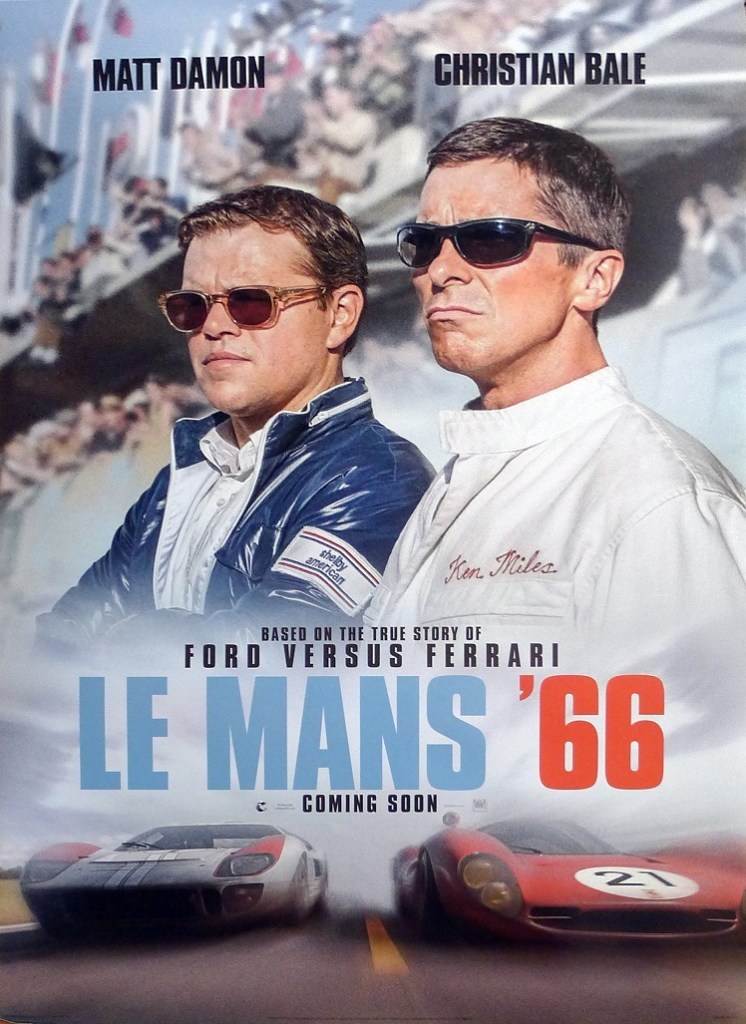
Le Mans ’66 (2019) — AKA Ford versus Ferrari (2019) — is a historical sports biopic centred on the desire by Ford Motors to take on and beat Ferrari during the legendary Le Mans 24-hour race. Now, I’m not a massive fan of motor racing itself. I mean I admire the sports men and women who compete, but it’s not one of my favourite sports. Having said that, due to the speed, visuals, action and rivalry involved, car racing lends itself to tremendous cinematic possibilities. Films such as Senna (2010), Rush (2013) and the hilarious comedy, Talladega Nights (2006), are testament to that.
Arguably the best sports films, e.g. Rocky (1976), Raging Bull (1980), The Wrestler (2008), A League of Their Own (1992), Remember the Titans (2000), Field of Dreams (1992), Moneyball (2011) to name a few, are not just about the sport, but the heroes, flawed characters or underdogs seeking to achieve victory or overcome adversity. Le Mans ’66 (2019) follows a similar pattern, but here the cars and racing scenes are very much to the fore. This is where the film really hits the mark with incredible direction, cinematography, visuals and editing style on the road and racetrack. Moreover, the costumes, locations, cars and rendition of the 1960’s era are all perfectly captured.
Off the track, the characters and emotional aspects are pretty strong too. They are led by the tremendous casting of Christian Bale as the driver, Ken Miles, and Matt Damon as salesman and car designer, Carroll Shelby. Bale is one of my favourite actors, and here he eschews masks and flashy prosthetics from previous roles, to present a volatile eccentric who is also an incredible mechanic and driver. Further, the ever-reliable ‘everyman’ actor, Matt Damon, produces another likeable and energetic performance as Shelby. The double act repartee between the obsessive Brummie, Miles, and smooth-talking Shelby, allows the narrative to cruise along splendidly.
One of the films’ weakness is that arguably the stakes aren’t particularly high. Of course, racing drivers are at risk of crashing, burning and losing their lives, so there is drama there. But, in essence, the filmmakers are asking for us to root for a billion-dollar company in Ford, against another big company in Ferrari. The excellent script however, by Jez and John-Henry Butterworth cleverly positions Miles and Shelby as outsiders attempting to overcome the obstacles put in their way by Ford’s corporate suits. These money-men are ably represented by Josh Lucas, Tracy Letts and the more sympathetic, John Bernthal. Ultimately, Miles and Shelby are car purists and technicians interested in the drive for perfection, rather than marketing, image and profits.
Overall, the film could have been trimmed for pace, ironically, in terms of running time. However, Le Mans ’66 (2019) works as a fine tribute to both Miles and Shelby’s talents and as a cinematic extravaganza. Indeed, James Mangold and his production team have produced some of the best driving scenes I have ever seen on the screen. What the film lacks in deep emotional impact is more than made up for by the kinetic velocity throughout, putting the film firmly in the leading pack of sports films.
Cast: Eddie Murphy, Da’Vine Joy Randolph, Keegan-Michael Key, Mike Epps, Wesley Snipes, Titus Burgess, Craig Robinson etc.
Music: Scott Bonnar
Distribution: Netflix
**MAY CONTAIN SPOILERS**
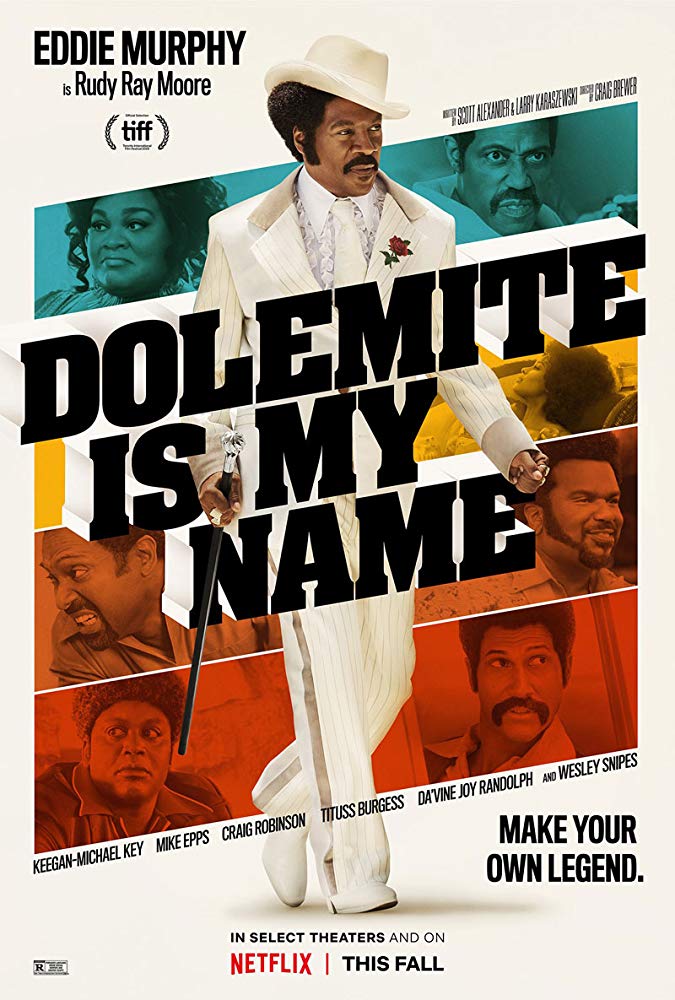
DOLEMITE IS MY NAME (2019)
It’s obvious to say that as I, like many others, love watching films, love writing about films and love talking about films with other film lovers. But, does that mean one also loves films that are actually about making films? Yes, of course it does! I love watching and writing about films that are about filmmaking. Therefore it stands to reason I would love Eddie Murphy’s latest role as comedian/actor/filmmaker/singer, Rudy Ray Moore.
Having burst on the cinema screen in the early 1980’s in a series of classic hits, notably 48 Hrs. (1982), Trading Places (1983) and Beverley Hills Cop (1984), Murphy became one of the most bankable movie stars in the world. His talent, stamina and comedic genius have meant his career is still going strong, despite many career ups and downs. However, it’s a bit disappointing that Murphy hasn’t stuck with more dramatic roles or character driven roles, as he cast himself in more family and light comedy-oriented films. This is because Murphy is an incredible actor, as demonstrated once again in Dolemite is My Name (2019).
Set in 1970’s Los Angeles, Dolemite is My Name (2019) finds Rudy as a struggling comedian, compere and record shop manager still trying to crack his dream of becoming famous. Time and opportunity have knocked him back for years, but he still has the energy and drive to continue. I identified with Rudy as I have a dream of being a successful filmmaker, but if I’m honest that ship has not just sailed, it’s crashed on the rocks. But I will carry on. Because I really enjoy it.
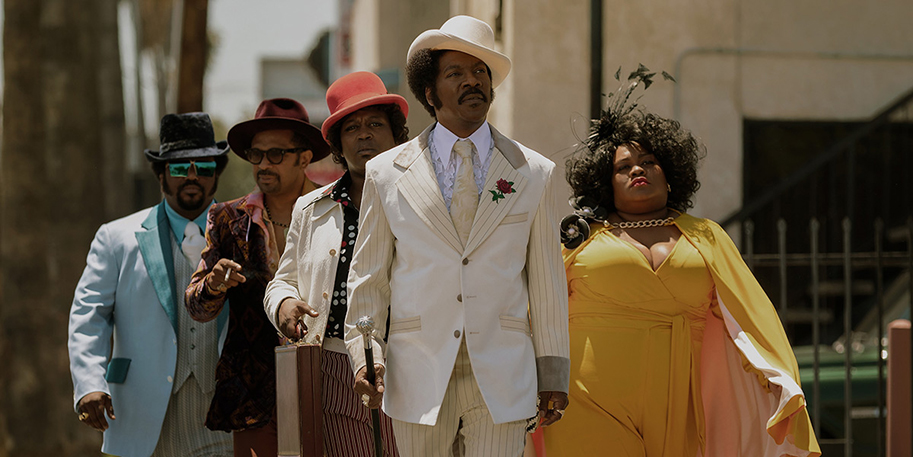
Inspiration comes to Rudy when he creates a new character and begins rapping routines in the clubs as flamboyant pimp, “Dolemite.” Recording his own comedy albums and selling them out of the trunk of his car slowly brings dividends, and Moore becomes a cult hit. Then the fun really starts as Rudy decides he wants to make a movie. But he has no money, crew or equipment. Cue many fantastic filmmaking scenes that make fun and pay homage to Moore’s energy as a producer/actor/writer and kung-fu “artist”.
Accompanying Murphy as Moore in this delightful and hilarious film is a stellar ensemble cast that includes: Titus Burgess, Da’Voy Joy Randolph, Keegan-Michael Key and Craig Robinson. Not forgetting a scene-stealing turn by Wesley Snipes as a wide-eyed drunken movie actor-turned-director, D’Urville Martin. The cast, given energetic direction by Craig Brewer, fashion likeable characters and performances. Moreover, the funky music, colourful costumes, wicked dancing and comedy timing hit their marks constantly.
Overall, I’m a sucker for films about filmmaking and this one is highly recommended. Dolemite is My Name (2019) could have been a bit more dramatic in places and perhaps commented more on the socio-politics of the era and Blaxploitation film genre. However, as a film about Rudy Ray Moore’s energy, passion and never-say-die attitude it is a fine cinematic tribute. Above all else, it’s a testament to the ability, talent and infectiousness of Eddie Murphy. Rudy Ray Moore is a part he was born to play and he smashes it out of the park.
FIVE REASONS THIS COULD BE GOOD: THE GENTLEMEN (2020)
Written and directed by: Guy Ritchie
Produced by: Guy Ritchie, Ivan Atkinson, Bill Block
Story by: Guy Ritchie, Ivan Atkinson Marn Davies
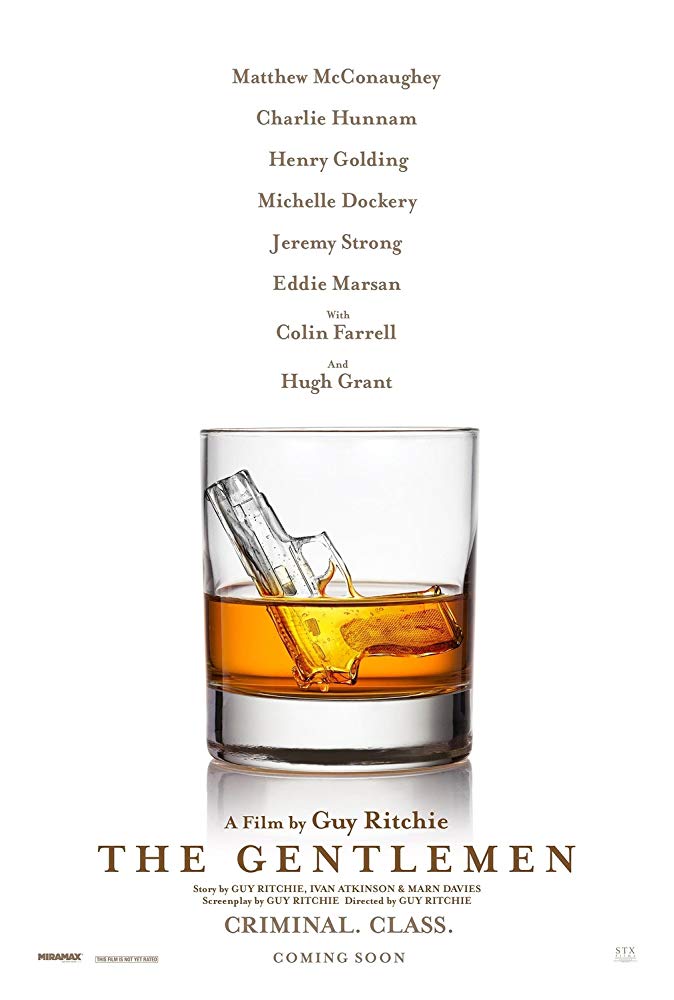
Cast: Matthew McConaughey, Charlie Hunnam, Henry Golding, Michelle Dockery, Jeremy Strong, Eddie Marsan, Colin Farrell, Hugh Grant etc.
UK Release Date: 1st January 2020
***SPOILER FREE***
THE GENTLEMEN (2020)
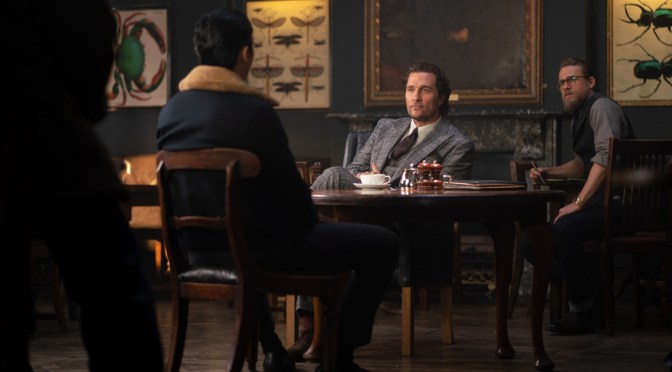
Guy Ritchie’s new film is released on New Year’s Day 2020 in the UK, and here are five reasons why it could be good.
1. THE DIRECTOR
Having dipped a big foot in the Hollywood studio pool with franchise hits like Sherlock Holmes and most recently Disney’s live action version ofAladdin (2019), Ritchie is back to the crime genre where he made his mark. His reboot of The Man From Uncle (2015) was very under-rated, and while his King Arthur: Legend of the Sword (2017) didn’t quite work as a swords and geezer epic, Ritchie remains an excellent genre director and almost always produces very entertaining movies.
2. THE GENRE
With Lock, Stock and Two Smoking Barrels (1998), Snatch (2000) and Rock N Rolla (2008), Ritchie excelled at carving himself a name in fast-paced-twisting-crime stories. They are full of hard nuts, femme fatales, dodgy geezers, businessmen, travellers, assassins, gamblers, plus working and upper class types all trying to outwit and out do each other in a variety of dodgy dealings. The films also feature fine ensemble casts, crunching violence, colourful language and cracking soundtracks. All of this combines to create fine entertainment all round. It may lack subtlety, suspense and emotion, but crime has never been so much fun.
3. THE STYLE
Guy Ritchie may not be everyone’s cup of tea, but he certainly knows how to put together a movie. Some may also argue he’s all style and no substance. However, his visual style and ability to direct a brilliant action set-piece always stand out for me. Using lashings of music to compliment the freeze frames, voice-overs, whip-pans, flashbacks, flash-forwards, close-ups, canted frames, slow motion and anything else that smashes the story along is fine by me. Plus, don’t forget the over-the-top, but ever quotable zinging dialogue!
4. THE CAST
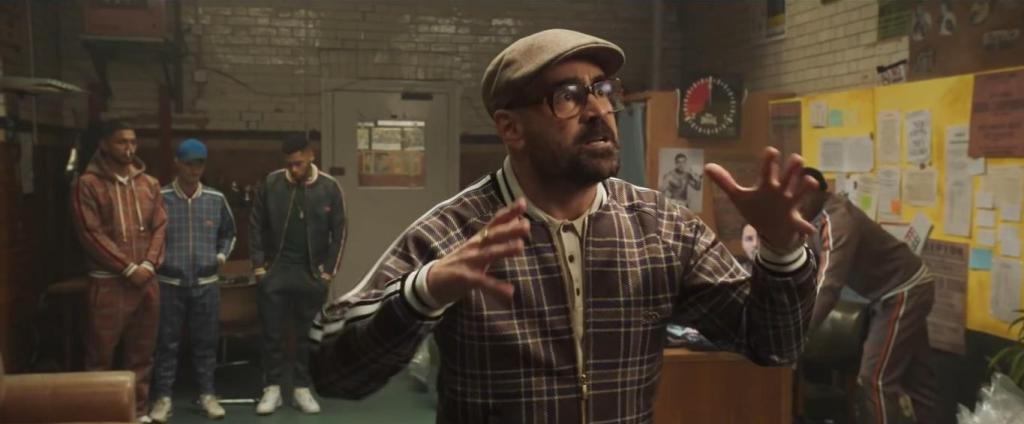
Ritchie must be a very positive on-set filmmaker to work with. Because ever since Lock Stock and Two Smoking Barrels (1998) was released he’s managed to bag a proper good cast in all of his films. The Gentlemen (2020) is no different. Here we get Matthew McConaughey, Colin Farrell, Jeremy Strong, Michelle Dockery, Charlie Hunnam, Henry Golding and Hugh Grant too. The trailer shows Grant effecting an interesting Michael Caine impression, while Farrell looks like he’s having the most fun as a chav-meets-traveller type gangster up for a bit of trouble!
5. THE TRAILER
The trailer dropped recently and looks really quite decent. Here it is:
Screenplay by: Mike Flanagan – Based on Doctor Sleep by Stephen King
Cast: Ewan McGregor, Rebecca Ferguson, Kyleigh Curran, Cliff Curtis, Zahn McClarnon, Cliff Curtis, Emily Alyn Lind, Bruce Greenwood, Carl Lumbly, Jacob Tremblay etc.
Music: The Newton Brothers
***MAY CONTAIN SPOILERS***
I read Stephen King’s classic novel The Shining when I was eleven. I didn’t quite understand the complexities of the supernatural elements, but I understood the emotion of a mother and child trapped within a traumatic family scenario. When I watched the film a year later in 1982, on VHS video, I recall not quite grasping the complex and creeping genius of Kubrick’s adaptation. I wanted them to get to the bit where the guy goes nuts with the axe!!
Flash forward many decades, and having seen The Shining (1980) more times than I can remember, I now feel that it’s one of the best horror films of all time. It is meticulously directed, edited and designed and feel like I understand it. Having said that, I still see something new in it every time I watch it. I guess what I’m trying to say is I grew up and grew older with King’s characters and Kubrick’s film, so a sequel has a lot to live up to.
While I haven’t read Stephen King’s novel Doctor Sleep, I was confident screenwriter and director, Mike Flanagan, was a good choice for the continuation of the story of Danny Torrance and his ‘Shining’ gift. Flanagan is a solid and unflashy genre filmmaker. He presents characters and narratives in a considered style, allowing the concepts to flourish and actors to shine. I would recommend you check out his previous work on The Haunting of Hill House (2018), Gerald’s Game (2017), Hush (2016) and the very under-rated,Before I Wake (2016).
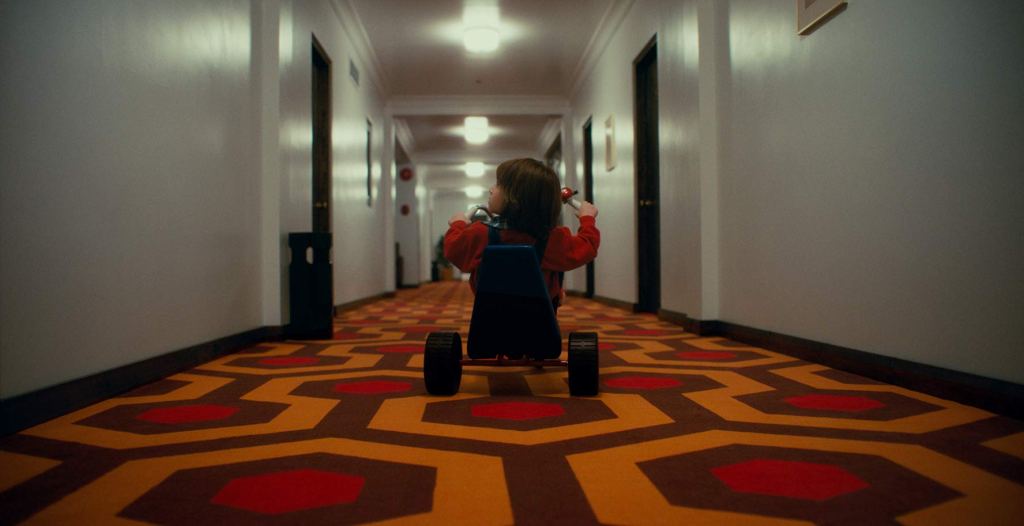
Doctor Sleep (2019) is a film, typically for King, about good versus evil. It’s also about recovery, addiction, finding yourself, death, defeating one’s demons and appreciating your inner gifts. It opens by re-establishing the trauma young Danny Torrance suffered at the Overlook Hotel. Flanagan takes great joy re-enacting scenes, locations and characters from the Kubrick adaptation. These are striking and impressive at first. I must say though, the shadow of the original The Shining (1980), arguably impinges too much in the final act. Nonetheless, as a fanatic of the original film, Flanagan is clearly having a lot of fun re-introducing ghosts of the past.
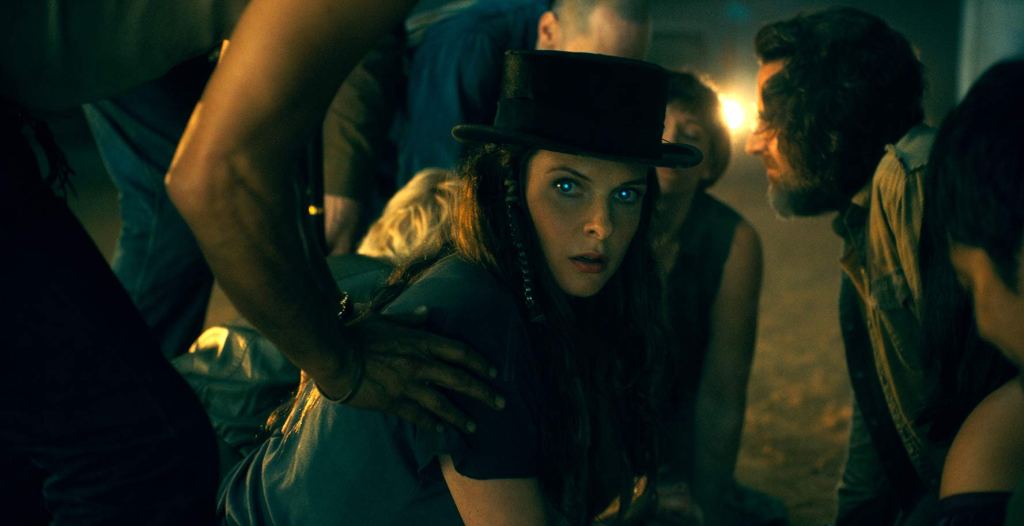
Thematically the film opens very strongly. As Danny Torrance attempts recovery from alcoholism, Ewan McGregor delivers a compelling performance. His scenes as an orderly in a hospice present some really moving moments, as he finally finds a place to utilize his telepathic gifts positively. The action really kicks in when he is contacted via ‘Shining’ by a teenage girl, Abra Stone (Kyleigh Curran). She is an incredible young talent and soon her gifts are putting her in danger. A nefarious troupe of energy vampires led by Rose the Hat (Rebecca Ferguson), feed off the ‘shine’ of these children to sustain their existence.
Rebecca Ferguson and Zahn McClarnon as Rose the Hat and Crow Daddy represent formidable nemeses in the narrative. Their group, ‘The True Knot’, reminded me off the vampires from Near Dark (1987) and also the carnival monsters from Ray Bradbury’s Something Wicked This Way Comes. Ferguson is especially alluring. She’s both sensual and attractive, but with a dark, wicked heart internally. I would have liked a bit more history of their vampiric troupe, but they were memorable villains and symbolic of the veracious nature of addiction.
Doctor Sleep (2019) is, above all else, another solid genre adaptation of King’s work. Indeed, Mike Flanagan has delivered a visually impressive and psychologically interesting film. Arguably, I felt, it was much stronger when concentrating on Danny’s movement toward recovery in the first half. Having said that this theme is played out in the inevitable face off with Rose the Hat at the end. The denouement, while generically necessary is still creepy and highly satisfying though.
As I said, the over-reliance on the images and scenes from the original The Shining (2019), while necessary, impact the sequel’s identity a tad. However, as a psychologically moving film it works very well. I suppose it could have been scarier in places, but Stephen King’s concepts retain power and really get under the skin in Flanagan’s capable hands. There is a powerful air of familiarity to the tale, but I love stories that delve into addiction and telepathic characters; especially in the horror genre. Ultimately, this is where Doctor Sleep (2019) shines. In fact, while it is a long film, it never drags and could have benefited from an episodic TV adaptation to explore the characters and fantastic concepts further.
Produced by: Alejandro Landes, Fernando Epstein, Santiago Zapata, Cristina Landes
Written by: Alejandro Landes, Alexis Dos Santos
Cast: Julianne Nicholson, Moises Arias, Sofia Buenaventura, Julian Giraldo, Karen Quintero, Laura Castrillon, Deiby Rueda, Wilson Salazar, Esneider Castro, Paul Cubedes etc.
Music: Mira Levi
**MAY CONTAIN SPOILERS **
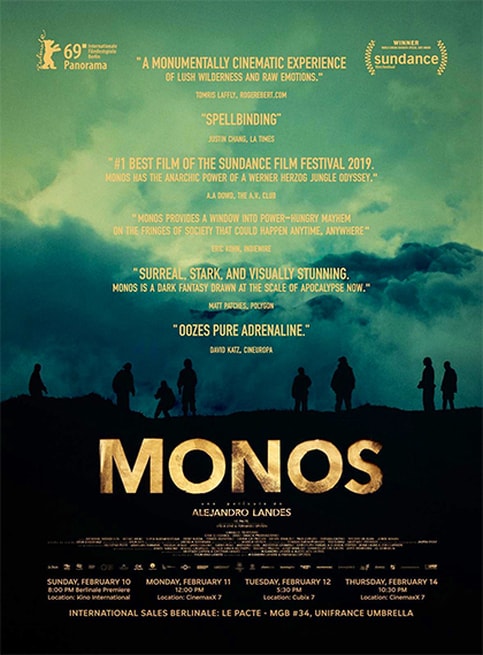
Those American teenagers, as represented in recent film and television offerings such asStranger Thingsand IT, have some serious problems to deal with, such as inter-dimensional aliens and extra-terrestrial demons masquerading as killer clowns. Such foes, however scary, are of course fantasy. The horrors that the kids in feature film MONOS (2019) have to deal with, feel very real, raw and altogether horrifically more deadly.
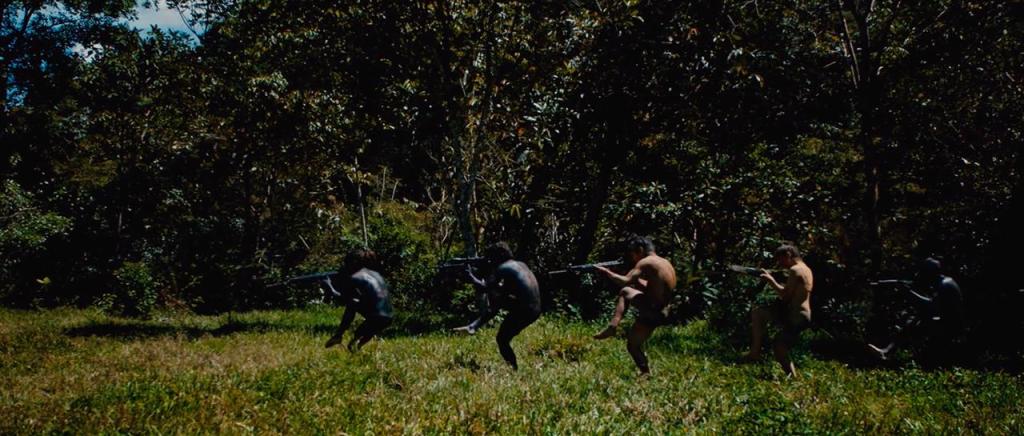
The film opens on South American mountaintop in Columbia. We are thrown straight into the everyday lives of young rebel soldiers known only by their war names including: Rambo, Smurf, Lady, Dog, and Wolf among others. The fact we never learn their real names establishes the dehumanized and exploited nature of these characters. They are denied a childhood and used as young soldiers within a guerrilla cell. The adults controlling them are represented by a man known only as The Messenger, who visits, drills and orders them about. While they act out, have sex, drink and “play” with the illusion of freedom, if they do not follow orders then there is hell to pay.
“Hell-to-pay” is an apt phrase for both the characters and the audience watching. For me this is not an enjoyable film in terms of entertainment. It is not intended to be. It is a very angry film and a shocking war of attrition to sit through. There is a documentary feel and in-your-face realism throughout, with little or no sympathetic characters to root for. Don’t get me wrong, I empathised with the plight of the children and what had happened to them. Yet, it’s difficult to sympathise with them, because when we join them they all seem so irreparably damaged by war and their existence. It’s a dog eat dog world and these dogs have guns, knives and semi-automatics.
Overall, I found the characterisations and elliptical narrative jarring throughout. For me, it created alienation in terms of emotional impact. However, the cinematic storytelling is of the highest quality. The visuals, sound, score and acting are all exceptional. Indeed, Alejandro Landes is a fearlessly talented filmmaker and definitely one to watch for the future. The mountain vistas and jungle scenery were majestic and beautiful to behold, despite the hellish events unfolding. Lastly, the film carries a deeply important message about these lost children of South America. Their lives are no fantasy. They are violent, animalistic, dirty, carnal and, based on what I saw in Monos (2019), completely devoid of hope.
Produced by: Todd Phillips, Bradley Cooper, Emma Tillinger Koskoff
Written by Todd Phillips, Scott Silver
Based on : DC Comics’ Joker created by Bill Finger, Bob Kane & Jerry Robinson
Cast: Joaquin Phoenix, Robert DeNiro, Bill Camp, Zazie Beetz, Francis Conroy, Glen Fleshler, Brian Tyree Henry, Marc Maron etc.
Music: Hildur Guðnadóttir
Cinematography: Lawrence Sher
**** MAY CONTAIN SPOILERS ****
“Is it just me – or is it getting crazier out there?”
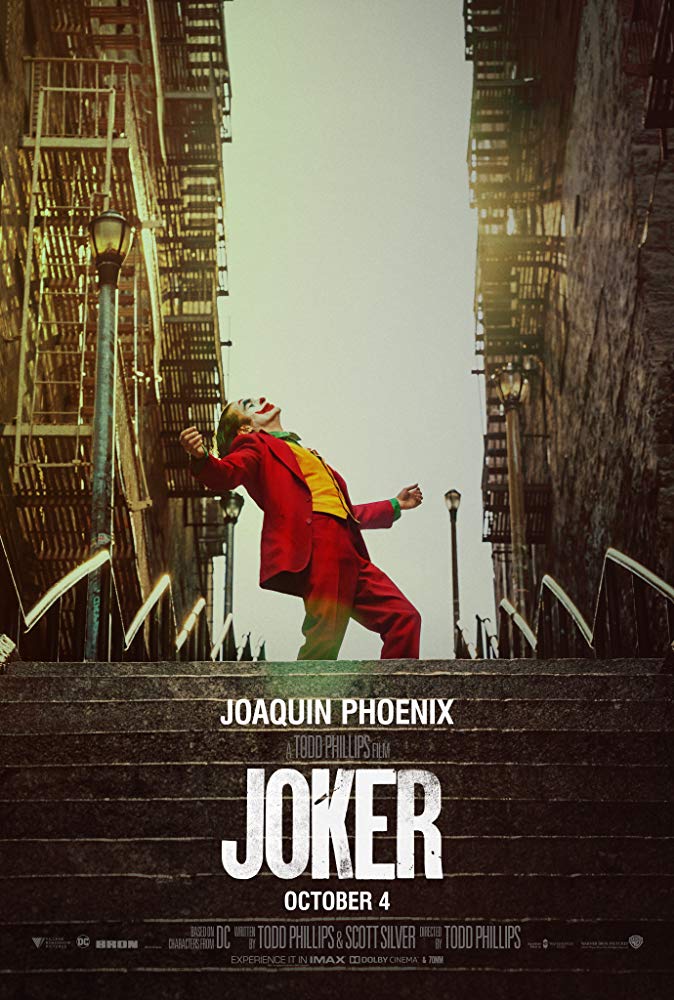
There’s no let up for poor coulrophobes. You wait so long for an evil clown and two come along in quick succession! First Pennywise hits the big screen twice. Now, Todd Phillips and Joaquin Phoenix deliver an incendiary cinematic masterpiece, based on DC’s uber-villain, Joker.
With Marvel’s cinematic universe heroically saving the world and making Disney a lot of money in the process, everything was looking a bit bright in the comic book film world. Not anymore, because Joker (2019) brings darkness, chaos, delusions and insanity to the screen. This film doesn’t reflect a safe world full of heroes, but instead illustrates one without them or a shred of hope.
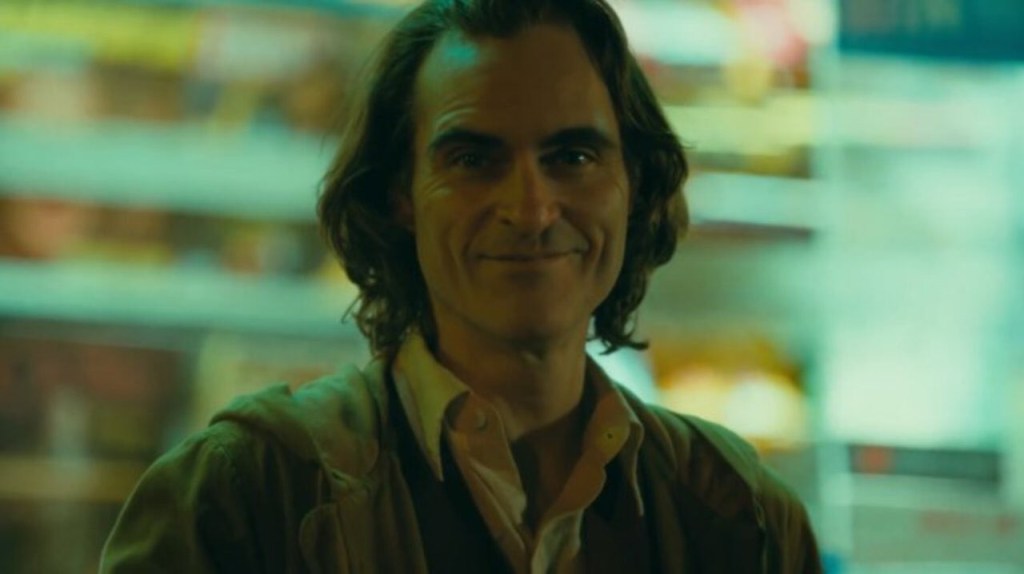
The year is 1981. The place is Gotham. The symbol of this urban disintegration will be downtrodden clown, Arthur Fleck (Joaquin Phoenix). Crime and garbage ravage the city and social services budgets are being cut. Arthur struggles with his mental health, his clown work and his unwell mother (Francis Conroy). He attempts to find solace in stand-up comedy, but his psychological problems stretch to uncontrollable laughing fits, making people laugh AT him, as opposed to WITH him. He seeks potential romance with a neighbour, Sophie (Zasie Beetz), but his world begins to collapse when he loses his job and his medication is cut off. Attacked by kids on the street and bankers on the tube, Arthur is forced to fight back. But, violence begets violence, as a new, more dominant persona comes to the fore.
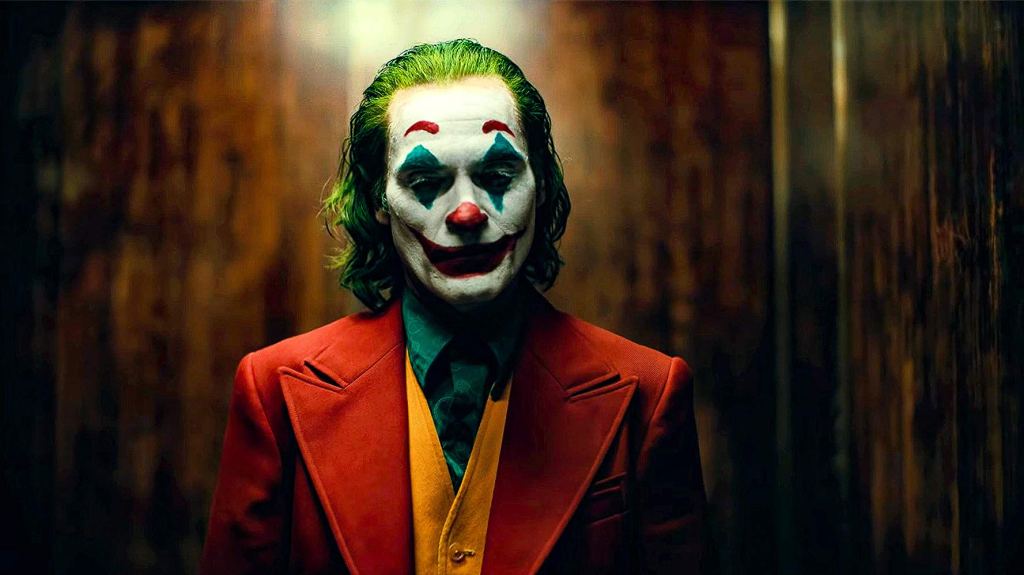
Joker (2019) is a bravura and risk-taking character study charting the downward spiral of both a city on the edge; and an individual losing touch with the real world. Rather than being cared for by the system, Arthur is thrown to the gutter, only to rise up with fire, violence, colour, costume and maniacal chuckling. From the mean streets of Gotham comes not calm, but social unrest and protests; not a hero but a painted villain, dancing and plotting bloody murder.
I have read that there have been complaints that the film trivialises mental health. Well, having experienced a close family member suffer mental breakdown and have a friend commit suicide due to extreme anxiety, I actually think Joker (2019) presents madness in a very truthful way. Mental health is scary, unpredictable, difficult to treat and prone to startling bursts of uncontrollable energy. It’s hard to comprehend what happens in people’s brains to make them act a certain way and this film captures that. The reason the film is scary is because mental health is scary. If it is not treated, then people can harm themselves and others. Therein lies the truth and tragedy of mental illness.
Joaquin Phoenix is absolutely incredible as Arthur Fleck/Joker. Hysterical laughter echoes and haunts the screen. Every cigarette he smokes drags nicotine anxiety into his ravaged lungs. As violent outbursts jolt and as his skinny body dances, I felt a gamut of emotions including: fear, humour, shock and sadness. Fleck’s transformation into Joker is a slow-burn trajectory and masterful acting performance. He tries to avoid violence and confrontation, but it’s drawn to him like a moth to a flame. He tries to make people laugh, but sadly only ends up hurting them. Joker is an outsider desperate to step inside and be part of society, but, even down to his unknown parentage, he is rejected at every turn.
As well as Phoenix, Todd Phillips deserves much kudos for creating an incredibly dark, but impressive cinematic experience. He is ably assisted by the startling cinematography of Lawrence Sher, who captures that gritty, paranoiac and urban look perfectly. Much praise also to Hildur Guðnadóttir, who, for me, has orchestrated the musical score of the year. Lastly, the genius of marrying cinematic classics like Taxi Driver (1976) and The King of Comedy (1983), with a DC comic-book super-villain is an absolute masterstroke. Indeed,Joker (2019), is one of the most memorable and compelling films of 2019. Why so serious? Watch it and discover for yourself.
Directed by: Matt Bettinelli-Olpin & Tyler Gillett
Produced by: Tripp Vinson, James Vanderbilt, Willem Sherak, Bradley J. Fischer
Written by: Guy Busick, R. Christopher Murphy
Cast: Samara Weaving, Adam Brody, Mark O’Brien, Henry Czerny, Andie Macdowell etc.
Music by: Brian Tyler
Cinematography: Brett Jutkiewicz
******* MAY CONTAIN SPOILERS ********
I hadn’t heard too much buzz about this reasonably low-budget fun cat-and-mouse-horror B-movie, but the poster really grabbed me. Thus, as I have an Odeon Limitless Card, I thought why not take a chance. I’m glad I did too becauseReady or Not (2019) is a highly efficient, violent, funny and pacy horror film.
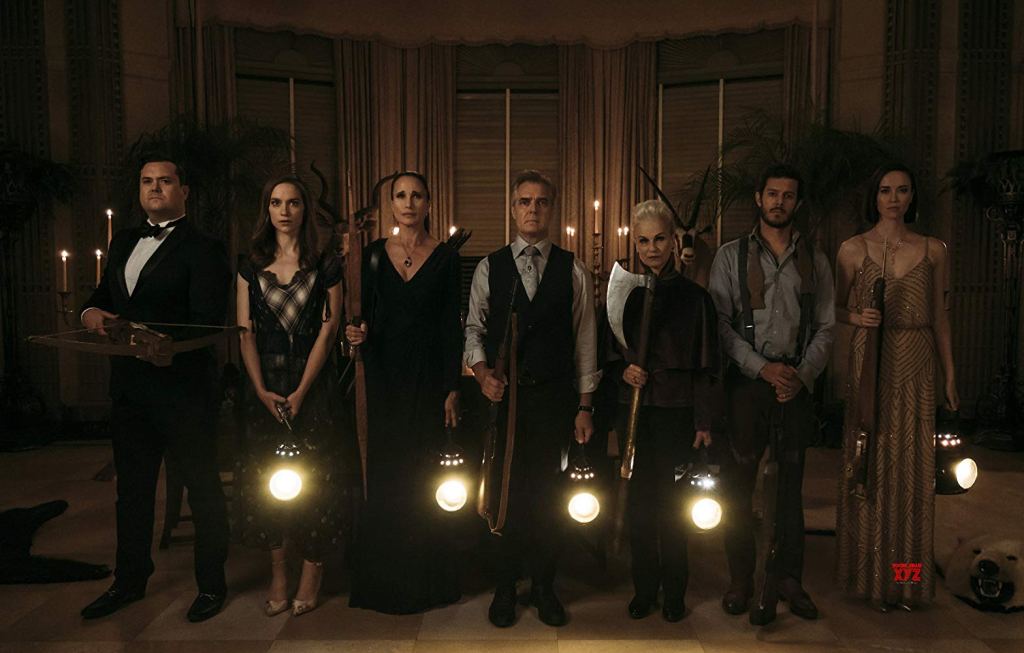
After a quick flashback, which foregrounds the gore to come, we are introduced to soon-to-be-wed Alex (Mark O’Brien) and Grace (Samara Weaving). They are to be married amidst the opulent surroundings of the Le Domas family home. The huge commanding property and the gigantic grounds establish we are in the playground of the wealthy and these rich kids play rough.
After an uneventful wedding ceremony the fun really begins. Well, I say fun, because essentially it’s a game of “Hide and Seek” meets Hard Target (1993) meets Saw (2004) meets Get Out (2017). The similarity to Jordan Peele’s classic horror is loose, however, there is an element of social satire with the millionaire family hunting down a person of perceived lower social standing.
But the Le Domas family, headed by Henry Czerny and Andie MacDowell, are about to meet their match in Grace. Raised in foster homes she is a fighter and imbued with terrific energy by star-in-the-making Samara Weaving. Moreover, Grace, like Ellen Ripley and Sarah Connor, raises her game and battles back. As the body count rises and the blood spills across the screen, Grace’s wedding dress becomes a symbol of carnage, as opposed to love.
Ready or Not (2019) is an unpretentious ninety-minute movie gem. It’s not the most original work I will watch all year, but it had me very entertained with some great tension and blood-curdling deaths. The theme of the rich sacrificing the underclasses for continued existence could have been developed further, but why let it get in the way of a bloody good game of hide and seek.
Produced by: Brad Pitt, Dede Gardner, Jeremy Kleiner, James Gray, Anthony Katagas, Rodrigo Teixeira, Arnon Milchan
Written by: James Gray, Ethan Gross
Cast: Brad Pitt, Tommy Lee Jones, Ruth Negga, Donald Sutherland, Liv Tyleretc.
Music: Max Richter
Cinematography: Hoyte Van Hoytema
**MAY CONTAIN SPOILERS**
There’s a moment toward the end when Brad Pitt’s intrepid astronaut, Roy McBride, is floating in space, and he asks himself (via a voice-over), should I carry on? Is there any point? In the vastness of space, nearing the endgame of an epic mission full of danger, he asks himself if it is worth, existentially speaking, continuing. It’s a central theme to the whole film and perfectly encapsulates McBride’s character. Externally he is heroic, however, internally he is perpetually questioning whether life is worth living. I often find myself doing this, but not in space. It’s usually when my alarm goes off in the morning and I have to go to work.
But McBride is not pathetic like me. I cannot even get on a plane for fear of crashing. He is on a mission to save Earth. Because, in the near future, catastrophic destruction is threatening us. Thus, he is given the task of venturing to Neptune, via Mars and experience all manner of space obstacles in order to track down the person or persons who may have caused the beginning of the end. This individual is alleged to be his father, portrayed by Tommy Lee Jones. So begins McBride’s very personal journey to the stars; to the heart of the darkest space.
A while ago I wrote an article about Hollywood making unofficial “remakes” as part of their film output – you can read the article here. Essentially, I proposed that in amidst their sequel, prequels, adaptations and superhero movie releases, you will get original screenplays and content too. However, sometimes these original ideas are thinly veiled carbon copies of ideas and structures from other films or literary sources.
For example, Star Wars (1977) used The Hidden Fortress (1958) structure and characters as an original starting point. Likewise, James Gray’s stunningly crafted science-fiction drama. Ad Astra (2019) is clearly using Joseph Conrad’s Heart of Darkness and Francis Ford Coppola’s Apocalypse Now (1979), as, not just influences, but total structural replication.
This in no way effected my enjoyment of this enthralling epic. What did happen though is that the story structure felt very familiar. The narrative unfolds in a staccato style with elegantly shot space transportation sequences and McBride’s psyche testing stops, spiked with bursts of action, fighting and surprising twists. When Clifford finally reaches Kurtz, I mean his father, his character and the audience have experienced some truly thrilling and visually spectacular moments. We also experience the psychological and philosophical musings of McBride. But, arguably these are nowhere near as poetic as Martin Sheen’s voice-over from the Coppola war classic.
In most scenes the visuals steal the show. The cinematography by Hoyte Van Hoytema and production design creates a hive of imagery which, amidst the darkness, bursts with colour and light. I genuinely, especially on Mars, felt like I was in a moving art installation. Having said that, Brad Pitt’s subtle but emotional performance and Max Richter’s sumptuous score also enhance the emotional pull of the story. Pitt, I expect to win a Best Supporting Oscar as Cliff Booth in Once Upon A Time in Hollywood (2019), but he could also get a Best Actor nomination here.
James Gray directs with a deft and “less is more” hand throughout. While the production itself looks epic, the psychology of the film is one of introspection. His themes of obsession, journey and existentialism drew me in the way they did in his last film, The Lost City of Z (2016). Ultimately, although the film’s screenplay could have ironed out some thin characterisations and plot inconsistencies, Gray demonstrates that the very existence of his films certainly make life worth living.
Produced by: Daniele Melia, Peter Saraf, Marc Turtletaub, Andrew Miano, Chris Weitz, Jane Zheng, Lulu Wang, Anita Gou
Main Cast: Awkwafina, Tzi Ma, Tzi Ma, Diana Lin, Jiang Yongbo, Zhao Shuzhen, Lu Hong, Chen Han, Aoi Mizuhara etc.
Cinematography: Anna Franquesca Solano
Music: Alex Weston
**MAY CONTAIN SPOILERS**
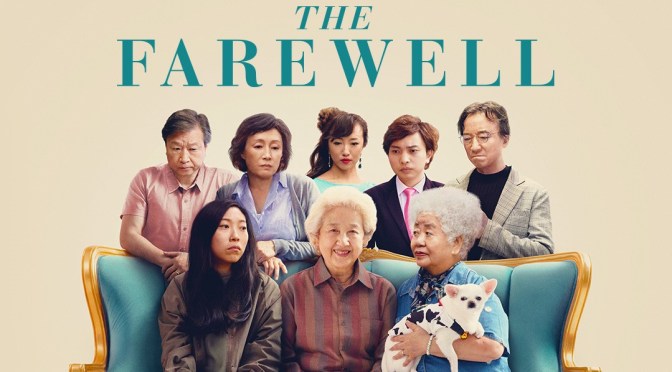
High concept film pitches usually take a tremendously marketable idea that can hook you in seconds, but also cost tens of millions of dollars to make. Sometimes though you’ll get a lower budget, more art-house character film, which will have an equally alluring premise for a fraction of the price. Lulu Wang’s second directorial release, The Farewell (2019), is one such film.
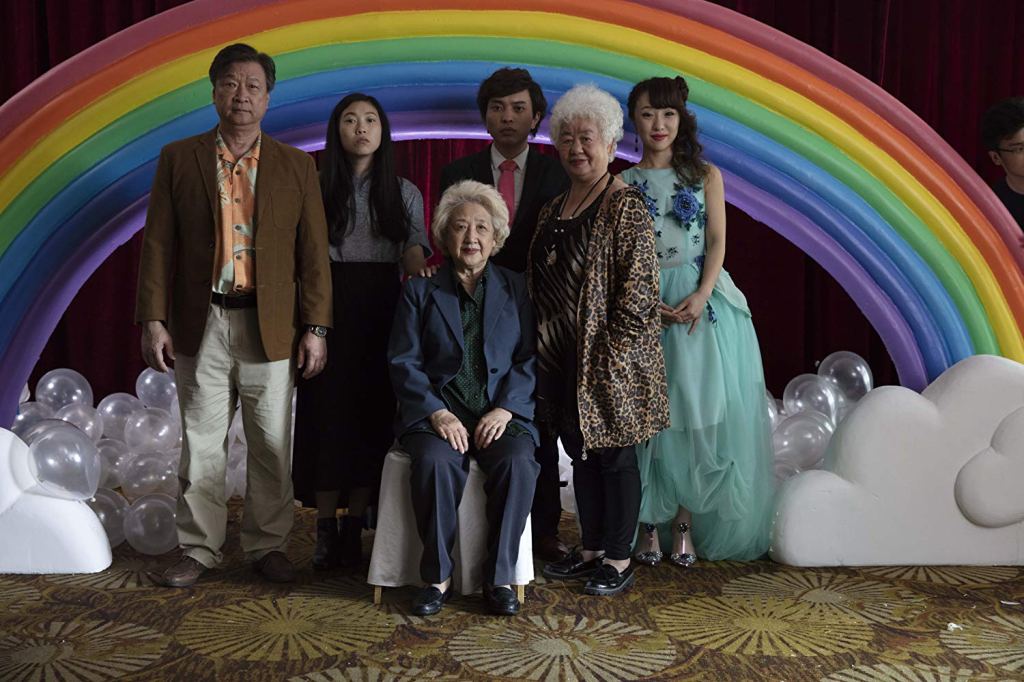
Based on a true story or “actual lie” as the prologue text reveals, the narrative revolves around a Chinese family and their decision not to reveal to their paternal Grandmother, or Nai-Nai (Zhao Shuzhen), that she has terminal cancer. This leads to a bittersweet series of scenes, full of comedy and pathos, as the whole family must keep the secret while arranging a fake family wedding in China.
While it is an ensemble cast generally, the audience conduit is Awkwafina’s Billi Wang. As her character, along with her mother and father, have lived in America for several years she believes that the Grandmother she loves has a right to know about her illness. As the scenes unfold, she clashes with various family members creating a palpable suspense as to whether Billi will reveal the truth. Moreover, we get many scenes where the family debate the various cultural and philosophical reasons why Nai-Nai should or should not be told. These I found very thoughtful and engaged both my heart and mind in equal measure.
Overall, it’s a low-key character study but nonetheless gripping, funny and sad throughout. I was especially drawn in because I wondered what I would have done in that situation. Personally, I think it is best to tell the person they are ill, but as the film wore on, I could see the other side of the argument too. In other hands this could have been turned into a poorly conceived farcical comedy, but as this is based on the writer and director’s Lulu Wang’s real-life experiences, we ultimately get a very touching film about life, death, family, love, culture and truth.
Personally, I would have liked Billi’s character to have been a bit more fleshed out at the start. Mainly because I was unsure of her personality and she just seemed a bit depressed. I mean was she a writer or a pianist and what was her job? Having said that, Awkwafina provides subtle brilliance in her role as Billi, yet, Zhao Shuzhen steals the show as the effervescent Nai-Nai, whose character shows an unabated lust for life throughout this fine film.















 The Cinema Fix presents