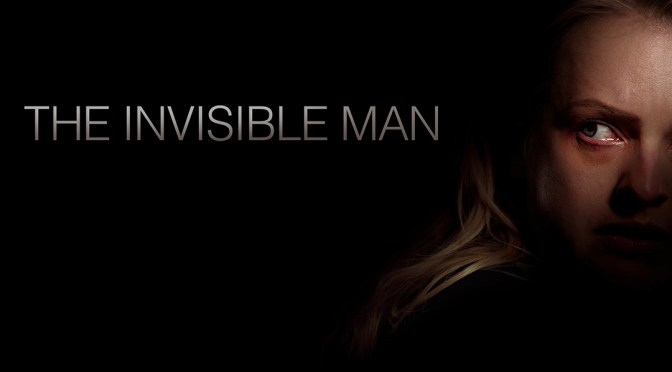
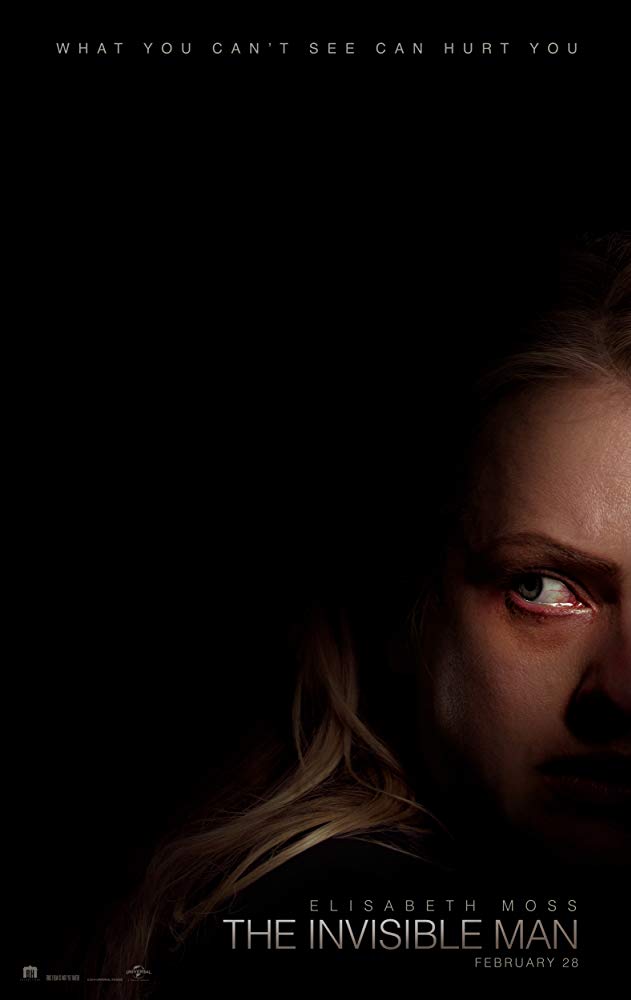
5 REASONS THIS COULD BE GOOD – THE INVISIBLE MAN (2020)
Directed by: Leigh Whannell
Screenplay by Leigh Whannell – based on H. G. Wells The Invisible Man
Produced by: Jason Blum, Kylie du Fresne
Main cast: Elisabeth Moss, Aldis Hodge, Storm Reid, Harriet Dyer, Oliver Jackson-Cohen
UK Release date: 28th February 2020
*****SPOILER FREE*****
THE INVISIBLE MAN (2020)
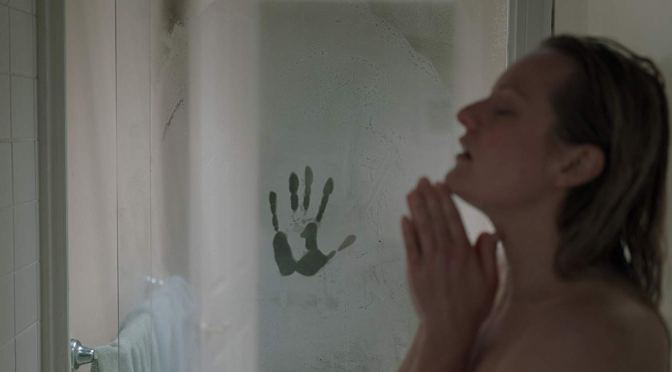
A contemporary version of the science fiction classic The Invisible Man has been made. Here are five reasons it could be good.
1. LEIGH WHANNELL
Whannell has great experience writing and producing low-budget horror films including: Saw (2004) andInsidious (2010). His directorial debut Upgrade (2018) was a fantastic mix of 1980’s, sci-fi and horror movies. I loved it and it proved to be one of my favourite films of 2018.
2. ELISABETH MOSS
Elisabeth Moss is one of the best actresses around as she has proved with her brilliant work in television classics Mad Men and The Handmaid’s Tale. Moss is now breaking out in cinematic releases and proved she excels in horror having starred in Jordan Peele’s frightening film Us (2019).
3. BLUMHOUSE PRODUCTIONS
The prolific Blumhouse Productions certainly turn out a lot of product each year. Their modus operandi is to keep film budgets low in order to maximise profits on release. You could be forgiven for thinking Jason Blum greenlights just cheap exploitation films, however, Whiplash (2014) The Gift (2015), Split (2016), Get Out (2017),BlackKklansman (2018) and Us (2019) transcend the low-budget model to provide excellent cinematic experiences.
4. BASED ON A LITERARY CLASSIC
H. G. Wells original novel is an absolute genre masterpiece. It has been made, remade, re-imagined and re-booted in horror, comedy, thriller and romance genres. Arguably the most famous version was filmed in 1933 with incredible practical effects and an exceptional performance from Claude Rains. In this new version the conventional scientist-goes-mad following successful experimentation into invisibility remains, but he now seems to be targeting Elisabeth Moss’s character.
5. THEMES
The trailer reveals a slightly conventional female-protagonist-as-victim narrative. But I expect Leigh Whannell will have a number of twists and surprises up his sleeve. Indeed, science fiction and invisibility are ripe for the exploration of themes relating to toxic masculinity and hidden identity. Either that or it will simply be a fun, scary and suspenseful experience in the hands of the reliable Whannell.
A BEAUTIFUL DAY IN THE NEIGHBORHOOD (2019) – CINEMA REVIEW
Directed by Marielle Heller
Produced by: Youree Henley, Peter Saraf, Marc Turtletaub, Leah Holzer
Written by: Micah Fitzman-Blue and Noah Harpster – Based on the article – “Can You Say Hero?” by Tom Junod
Cast: Matthew Rhys, Tom Hanks, Susan Kelechi-Watson, Chris Cooper, Christine Lahti
Cinematography: Jodee Lee Lipes
**CONTAINS MILD SPOILERS**
“Hello Neighbour!” – Fred Rogers
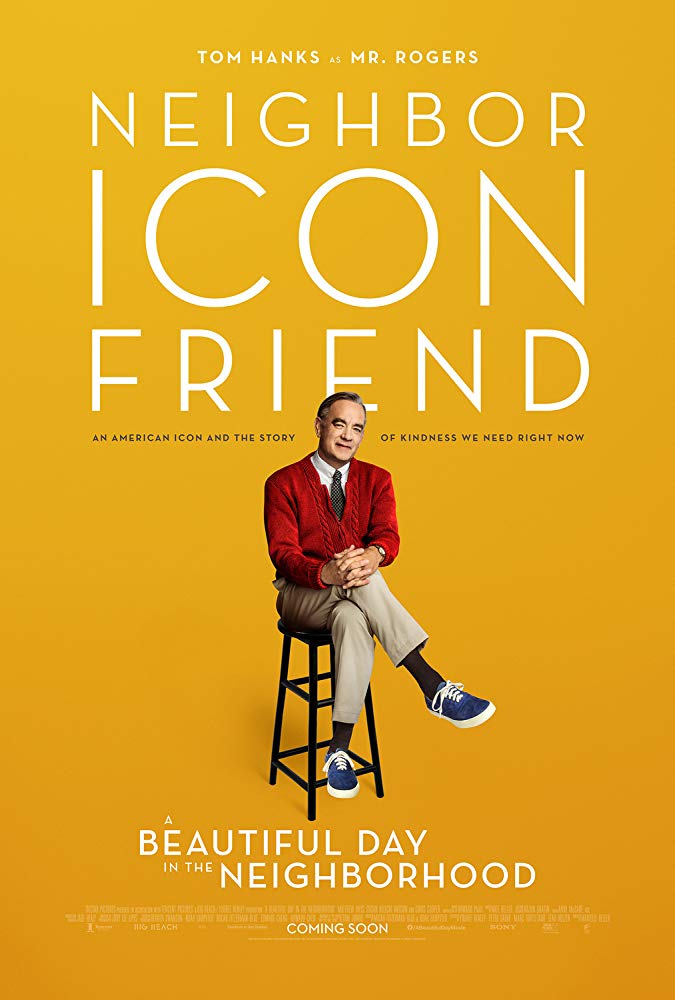
I watch a lot of horror, thriller and drama films that you could say are “feel-bad” in nature. They may eventually have some form of happy or morally satisfying ending, but such cinema seeks to create a sense of danger, anxiety and emotional distress as entertainment. Now I enjoy watching films on the edge of my seat and having my nerves shredded, however, sometimes it’s great to watch something that is quite the opposite. A Beautiful Day in the Neighborhood (2019) is one such “feel-good” film, profiling an American icon and arguably one of the nicest people who ever lived: Fred Rogers.
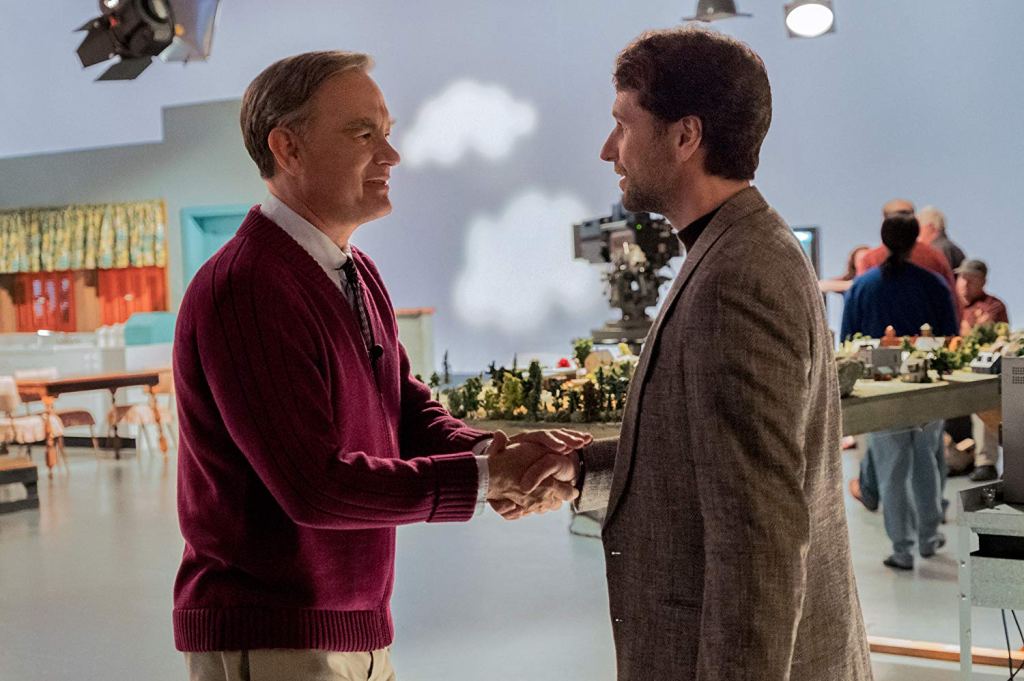
Rogers (Tom Hanks) was the creator and host of Mister Rogers’ Neighbourhood which ran for decades on U.S. cable channel PBS. The programme, while aimed at children, dealt with serious subjects like illness, divorce and death via puppetry, songs and Rogers’ wise and simple homespun philosophies. Over the years he became a household name and a staple of American family life. Yet, A Beautiful Day in the Neighbourhood (2019), is not a standard biopic exploring Fred Rogers life from birth to death. In fact, he’s more of a magical mentor type of character for the lead protagonist, journalist Lloyd Vogel, portrayed by Matthew Rhys.
Opening with a meticulously presented simulacrum of Mister Rogers’ Neighbourhood TV show with Tom Hanks in the hosting chair, the film immediately welcomes us into a positive and safe place. The audience are the children and we are about to be told a story about Lloyd. Because Lloyd is lost and troubled and needs help. Cleverly combining the TV show with flashbacks to Lloyd’s difficult family life is just one of the wonderful devices the film presents. Another is the use of models to emulate the locations within the film. Given the job of interviewing Fred Rogers for an Esquire piece, there’s a sense that Lloyd could well be looking to do a hatchet job on Rogers. However, he finds himself drawn to Rogers’ soft, magnetic and calming charm. The relationship between Rogers and Vogel’s character is superbly teased and developed by an excellent script.
While the drama is relatively low-key, the film is not without emotional impact throughout. There are several stand-out scenes where Lloyd’s negative and cynical worldview is airbrushed away by Rogers’ incredible goodness. As Vogel’s attitude to Rogers changes, so does his feelings toward his estranged father, his wife and child and the world in general. At the same time, Tom Hanks exceptional performance completely captured my heart. I’d never seen any of Fred Rogers TV shows before, but Hanks conveyed the inner peace and wisdom of this man perfectly. Moreover, my wife, who is American, was crying her eyes out with joy and nostalgia all the way through. Ultimately, this is another fine character and human drama from director, Marielle Heller. So, if you want a break from all the nasty unpleasantness in the world, you should definitely knock on Mr Rogers’ door. Everyone is welcome.
THE PERSONAL HISTORY OF DAVID COPPERFIELD (2019) – CINEMA REVIEW
Directed by: Armando Iannucci
Produced by: Armando Iannucci, Kevin Loader
Screenplay by: Simon Blackwell, Armando Iannucci
Based on: David Copperfield by Charles Dickens
Cast: Dev Patel, Aneurin Barnard, Peter Capaldi, Morfydd Clark, Daisy May Cooper, Rosalind Eleazar, Hugh Laurie, Ben Whishaw, Tilda Swinton, Benedict Wong, Anthony Welsh, Paul Whitehouse etc.
Music by: Christopher Willis
Cinematography: Zac Nicholson
**MAY CONTAIN SPOILERS**
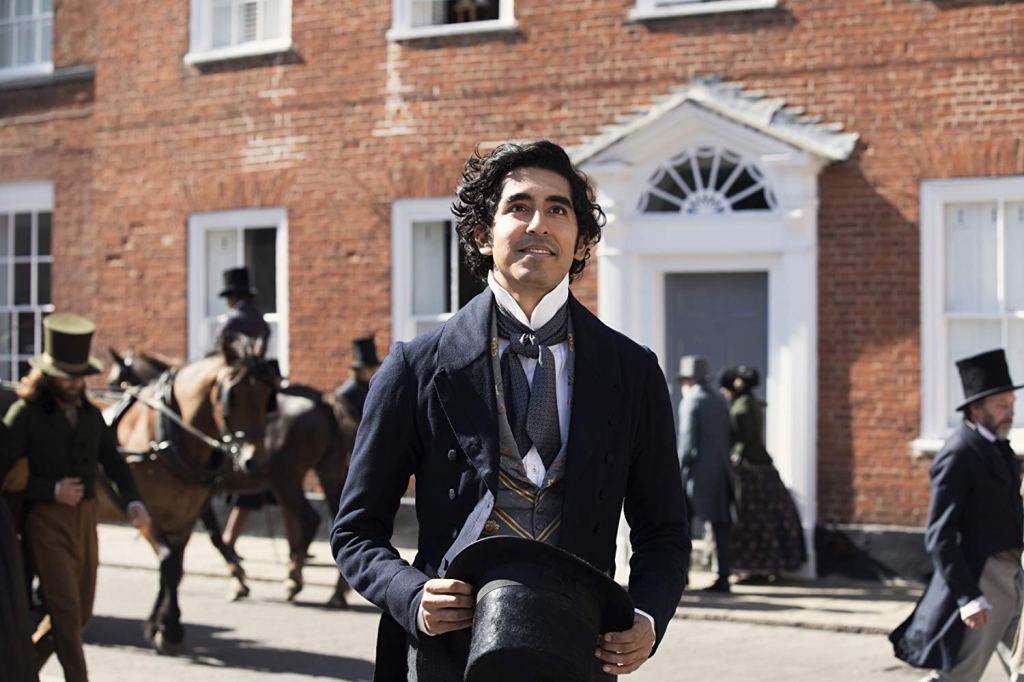
Armando Iannucci is a bona fide genius if you ask me. For over thirty years I have been listening, watching and laughing at his various collaborative comedic works. These include notables such as: The Day Today, I’m Alan Partridge, The Thick of It, Time Trumpet, Veep, In the Loop (2009), andThe Death of Stalin (2017). Now, one can include the wonderful delectation of an adaptation that is The Personal History of David Copperfield (2019). While I am embarrassed to say I am not as familiar with this Charles Dickens novel as I am his other books, Iannucci has taken his own inimitable style and married it perfectly to Dickens’ narratively opulent Victoriana vision. The result is an entertaining comedic and dramatic romp, tantamount to a quasi-greatest hits package of a Dickens masterwork.
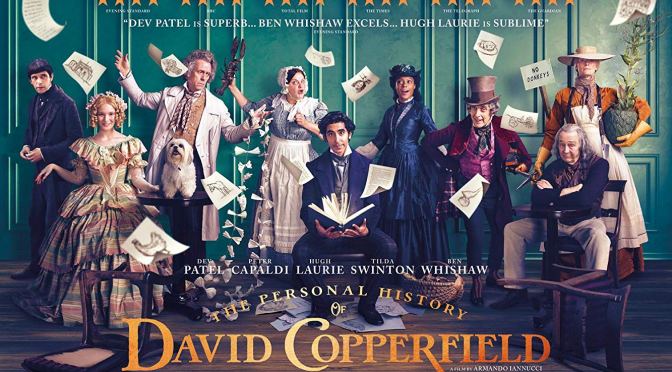
Dev Patel stars as the eponymous hero in adulthood, while the young David is portrayed with energy and charm by Jairaj Varsani. As a child, his father passed, David is brought up by his mother, Clara and the ebullient housekeeper, Peggotty. Peggotty, portrayed brilliantly by Daisy May Cooper, encourages David’s word-smithery and youthful imagination. But this being Charles Dickens, David’s innocent and magical childhood soon gives way to tragedy and he soon finds himself at the mercy of fate. Conversely, the narrative is more of a chronicle of David’s life and contains what I call an “up-and-down” structure.
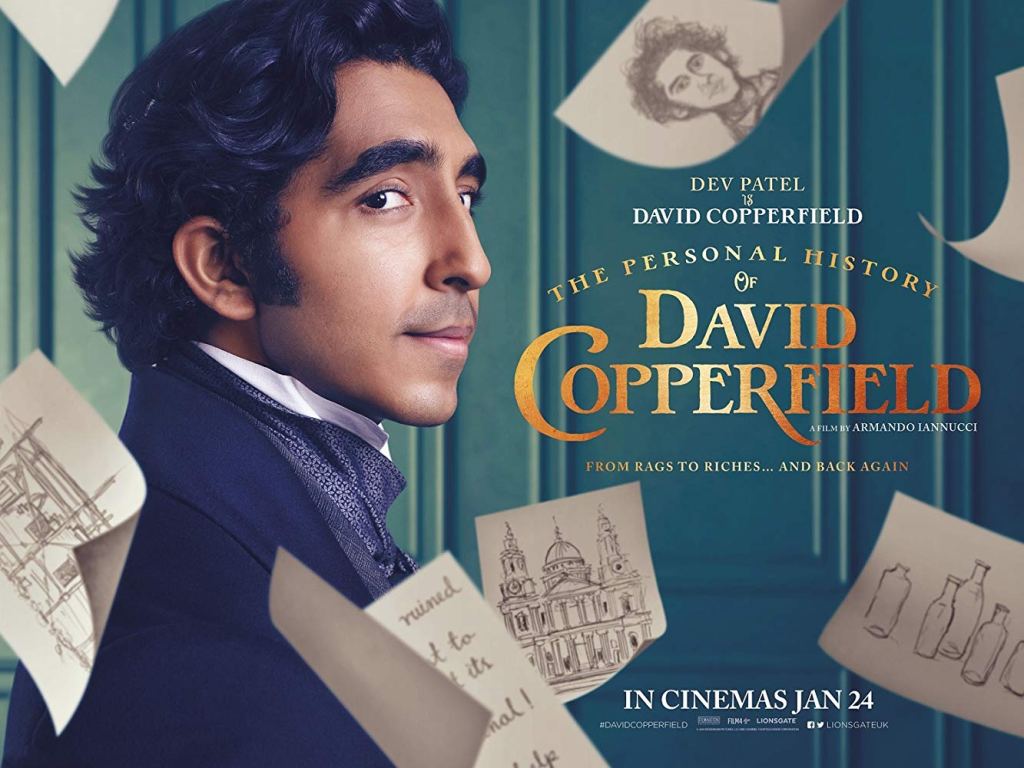
Through the rollercoaster that is David’s life he finds family love, then industrial pain via his stepfather condemning him to years of child labour. Then in an attempt to overcome his cruel fate he finds positive gain through family, creativity, romantic love, friendship and education. But destiny tests him by having this all taken away once again. Throughout, Dev Patel shines brightly. His David Copperfield is as tough as they come, as he rolls with the punch’s life throws at him. Moreover, he is a fantastic conduit and spine within the structure. Through him we are introduced to some wonderfully vivid characters; some likeable and some not so. Indeed, Iannucci’s casting is a primary joy with Peter Capaldi as Mr Micawber, Hugh Laurie as Mr Dick, Tilda Swinton as Betsy Trotwood, Ben Whishaw as Uriah Heep and Aneurin Barnard as Steerforth, all giving splendid renditions of their respective characters.
Overall, Iannucci and his scriptwriting partner, Simon Blackwell, mine Dickens’ novel for much comedy gold and there are so many hilarious one-liners and funny situations. Moreover, there’s some depth here too as it’s a story of an individual finding their soul, identity and place in a cruel world. One could argue a feature film is not enough to do the novel justice, and it would probably best be served as a television mini-series. However, for a whip-cracking, razor-sharp and heart-warming two hours, in the company of one the greatest novelists, one of the greatest modern satirists, wonderful set design; and finally one of the most impressive ensemble casts gathered in recent memory, this film is highly recommended.
Produced by: Sam Mendes, Pippa Harris, Jaybe-Ann Tenggren, Callum McDougall, Brian Oliver
Written by: Sam Mendes, Krysty Wilson-Cairns
Cast: George McKay, Dean Charles-Chapman, Mark Strong, Andrew Scott, Colin Firth, Claire Duburcq, Benedict Cumberbatch etc.
Cinematography: Roger Deakins
Music by: Thomas Newman
**CONTAINS HISTORICAL SPOILERS**
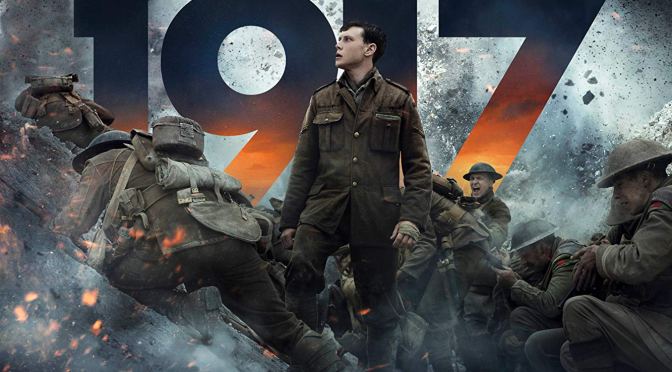
If Roger Deakins doesn’t win every single award for best cinematography in the world, I will be completely shocked! Together with Sam Mendes’ and their respective creative and production teams they have delivered a barnstorming, aggressive and beautiful work of pulsating cinema with 1917 (2019). In fact, the whole project is such a feat of technical brilliance, I think Sam Mendes will probably win best direction and the film will most likely win best film at the 2020 Academy Awards.
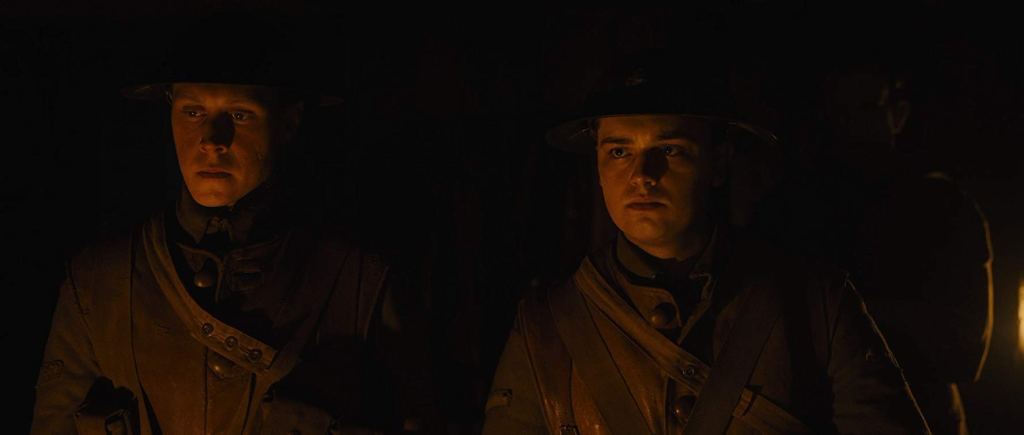
The form and style of the film are dictated by Mendes and Deakins audacious decision to film in one long continuous take. Set, as the title states in 1917 during World War I, we open with a long tracking shot and from there the shot never ends. Establishing the main protagonists Lance Corporal Will Schofield (George MacKay) and Lance Corporal Tom Blake (Dean-Charles Chapman), the camera glides along as they make small-talk, creating humour, warmth and calm before the storm to come. That storm derives from their mission to carry a message through perilous territory and prevent 1,600 British soldiers falling into a German trap. Immediately the stakes are high and these two brave men set out to achieve this dangerous task.
The choice to film in one continuous shot is a fascinating one and here it is executed brilliantly. Of course, there are occasions where a cut has occurred, but this is masked by darkness, water, camera movement or CGI. I personally am not a massive fan of longer takes though. They can be seen as a stylish, but empty process and usually work best in opening scenes. Moreover, by not cutting or using montage techniques I feel you can lose suspense, impact and pace from a film. However, that is certainly not the case with 1917 (2019). Here it works perfectly with the camera following, tracking, running, falling and stalking the characters, so much so, the audience becomes the camera. We are right in this war with them!
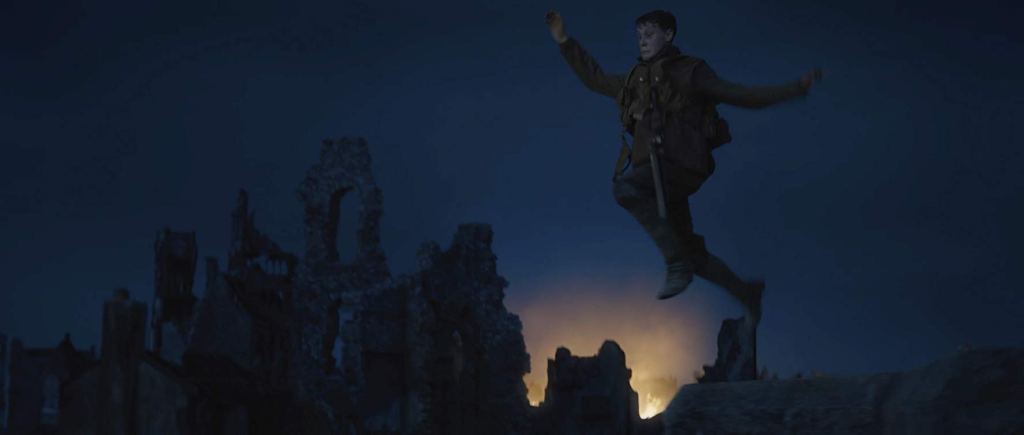
As we track Blake and Schofield through bunkers, trenches, fields, farmhouses, derelict buildings and villages, the stench of death and destruction surrounds them. Mendes and his writing partner, Krysty Wilson-Cairns, also create some heart-sweating and explosive set-pieces for the soldiers to overcome. Indeed, the pace with which they regularly find themselves under attack, married with the filmmaking style, puts you in the heart of the action and fight. The final battle where Schofield valiantly strives to reach his final destination and relay the message is utterly exhilarating and spellbinding cinema.
As the two everyman soldiers, George MacKay and Dean-Charles Chapman give convincing performances. MacKay is especially memorable as his tall frame, hollowed cheekbones and haunted eyes dominate the screen. Furthermore, the two leads are supported ably by a “who’s-who” of British actors. The likes of: Mark Strong, Colin Firth, Benedict Cumberbatch and Andrew Scott puncture the action throughout with their quality. Scott is especially excellent as a cynical officer, drunk and bereft of hope. The two heroes ignore his jaded battle worn persona, but soon find themselves surrounded by corpses, quickly coming to understand this character’s despairing heart.
Like Dunkirk (2017), the film is arguably thin on characterisation and character development, but stylistically impressive in it’s rendition of the horrors of war. Indeed, when the events switch to night, Deakin’s lighting skills dominate as he paints images with darkness, moonlight and fire with majestic results. Thus, overall, one could argue this is just one long chase film; an extended version of the climax of another World War I classic, Gallipoli (1981). However, the cinematic marvel that is, 1917 (2019), overcomes it’s narrative and thematic familiarity with an amazing technical achievement in both form and style. Awards glory beckons for all involved; and more importantly the film pays fine tribute to the gallant soldiers who served in an ultimately senseless war.
Produced by: Scott Rudin, Eli Bush, Sebastian Bear-McClard
Written by: Ronald Bronstein, Josh Safdie, Benny Safdie
Cast: Adam Sandler, Lakeith Stanfield, Julia Fox, Kevin Garnett, Idina Menzel, Eric Bogosian, Judd Hirsh etc.
Cinematography: Darius Khondji
**MAY CONTAIN SPOILERS**
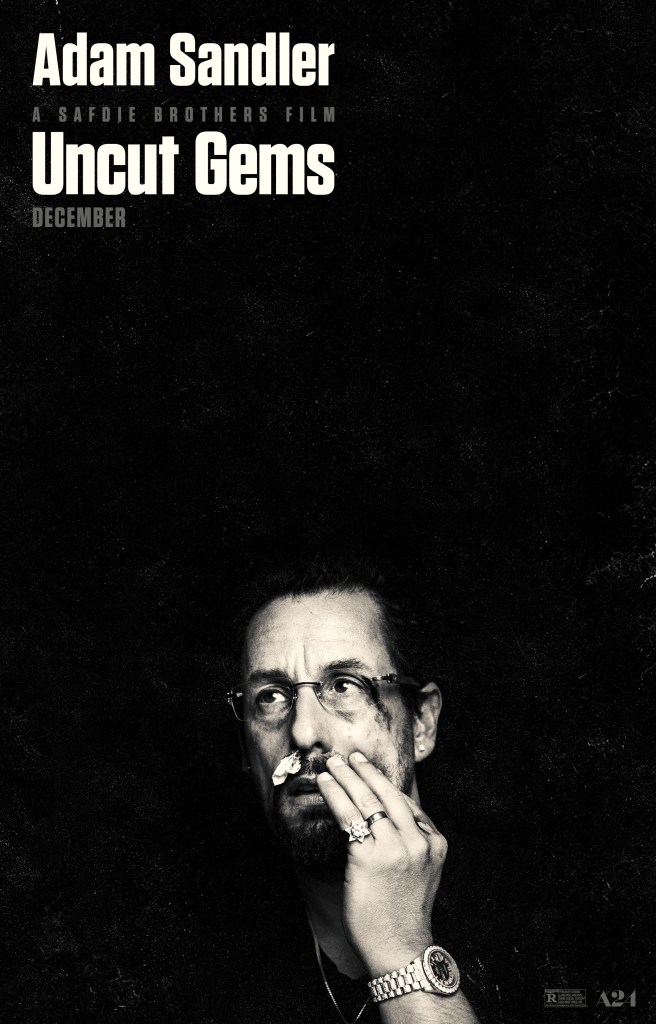
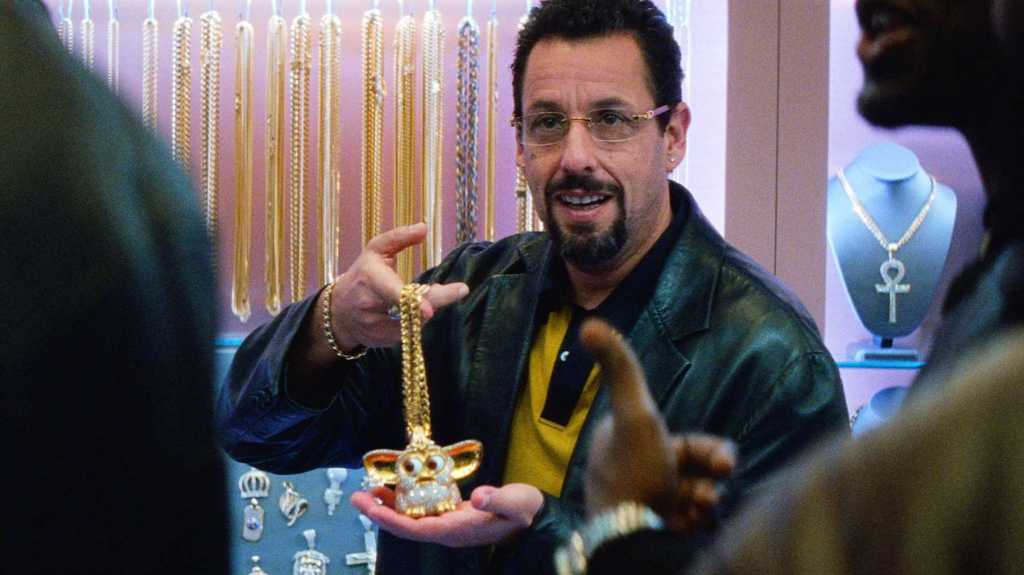
This is a film about an arsehole. Aptly enough we are introduced to the main protagonist, Howard Ratner (Adam Sandler), as he has a rectal examination of his colon and other extremities. From here on we descend into the mired cesspool that is Howard’s dysfunctional business, family, love and extra-curricular activities. He is, on the surface, a successful businessman selling jewellery, watches and gems within New York’s Diamond district. Alas, he is also a degenerate gambler who is being chased by all manner of shark-like money lenders. Most hungry of all is Eric Bogosian’s Arno, who also happens to be Howard’s brother-in-law.
So, we find ourselves in the company of a thoroughly unedifying character such as Howard. Yet, in Adam Sandler’s brilliant performance and searing direction by the Safdie Brothers, you get caught up in his latest cynical money-making plan to sell an uncut opal rock from Ethiopia at auction. The rock itself becomes — reminiscent of Guy Ritchie’s Snatch (2000) — a metaphorically blood-stained McGuffin that drags us into the underbelly of New York’s sports, pawnbroker, bookmaker, entertainment and loan shark territories. Aside from Howard’s wife and children everyone is looking for luck and a buck. Everyone’s a hustler. Everyone talks and shouts and swears over each other, creating a sense of panic throughout many scenes of deal-making and deal-breaking.
Opening with two visually very different internal examinations that involve “mining”, the Safdie brothers film Uncut Gems (2019), is a stylish and rampant anxiety inducing character study and thriller. The plot, which in itself, is quite straightforward, is wrapped in a series of heart-sweating gambles, twists and double-crosses. Supporting Sandler’s fine central performance, the Safdie Brothers find acting gold with Lakeith Stanfield’s memorable supporting turn, plus basketball legend, Kevin Garnett brilliantly playing himself! Allied to this, you also get a rogue’s gallery of personalities straight out of the local New York jewellery area itself. These characters add a further dirty authenticity to the already chaotic urban environment.
Like the Safdie Brothers previous film, the ironically titled, Good Time (2017), we are once again introduced to a set of morally repugnant characters who, rather than root for, you are dragged down into their disturbing lifestyle choices and increasingly poor decisions. Howard himself is an unrelenting addict, his own worst enemy and a whirlwind of broken promises. But, I must admit I was gripped throughout due to overwhelmingly brilliant style, cinematography, editing, direction, darkly funny script and acting performances. My only criticism is that for all the black humour, bone-breaking violence and heart-sweating suspense, the film could have easily been 15 minutes shorter. I like a lot of plot and action, but at times the narrative was over-loaded with characters and scenes that could have been chopped. Lastly, it’s great to witness Adam Sandler taking another risky role, even if Howard Ratner is fundamentally an arsehole from the probing start to the very bitter end.
Produced by: Guy Ritchie, Ivan Atkinson, Bill Block
Story by: Guy Ritchie, Ivan Atkinson Marn Davies
Cast: Matthew McConaughey, Charlie Hunnam, Henry Golding, Michelle Dockery, Jeremy Strong, Eddie Marsan, Colin Farrell, Hugh Grant etc.
**MAY CONTAIN SPOILERS**
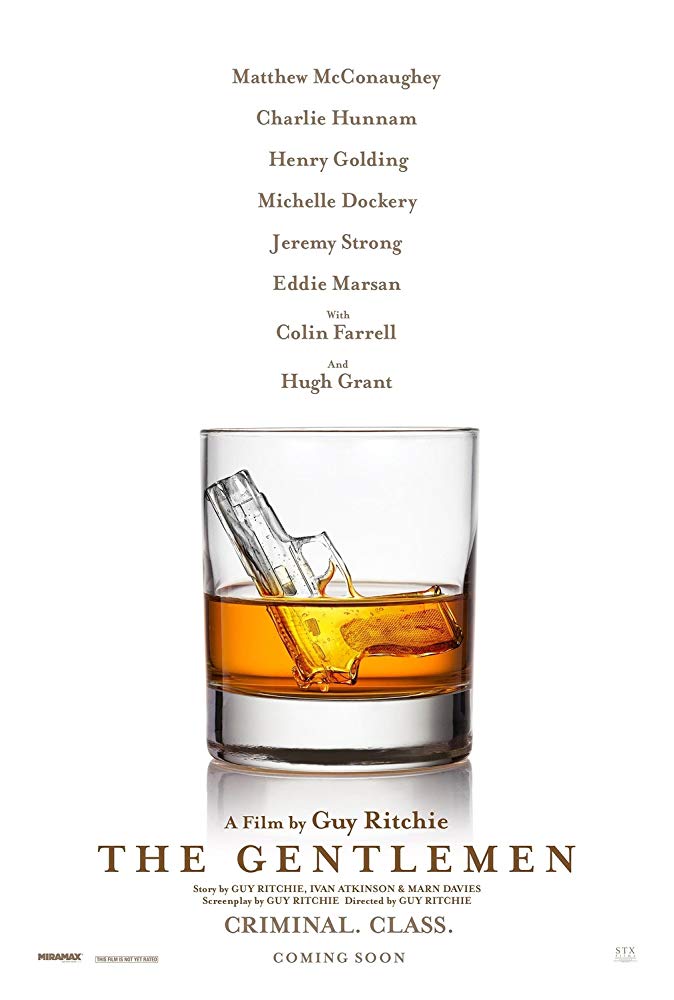
THE GENTLEMEN (2020)
Having dipped a big foot in the Hollywood studio pool with franchise hits like Sherlock Holmes and most recently Disney’s live action version ofAladdin (2019), Guy Ritchie is back to the crime genre where he made his mark. His reboot of The Man From Uncle (2015) was very under-rated, and while his King Arthur: Legend of the Sword(2017) didn’t quite work as a swords and geezer epic, Ritchie remains an excellent genre director and almost always produces very entertaining movies.
With Lock, Stock and Two Smoking Barrels (1998), Snatch (2000) and Rock N Rolla (2008), Ritchie excelled at carving himself a name in fast-paced-twisting-crime stories. They are full of hard nuts, femme fatales, dodgy geezers, businessmen, travellers, assassins, gamblers, plus working- and upper-class types all trying to outwit and out do each other in a variety of dodgy dealings. The films also feature fine ensemble casts, crunching violence, colourful language and cracking soundtracks. All of this combines to create fine entertainment all round. It may lack subtlety, suspense and emotion, but crime has never been so much fun.
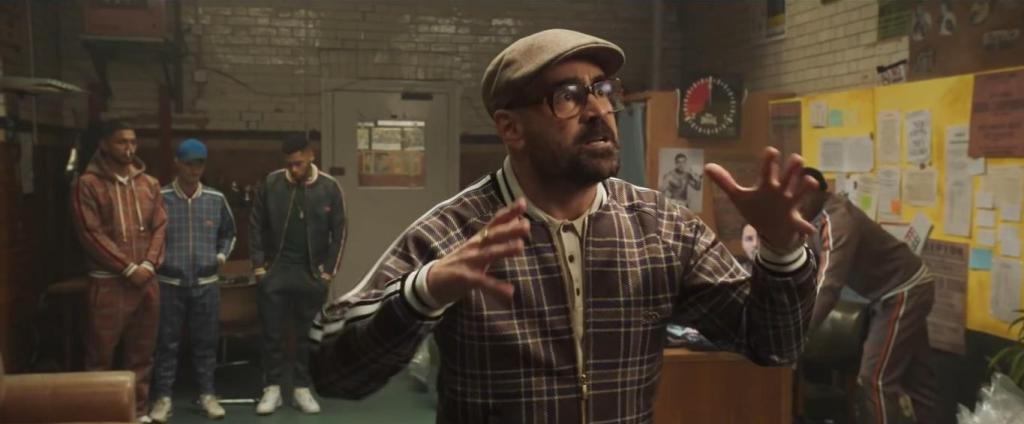
The Gentlemen (2020) continues Guy Ritchie’s decent form in the gangster comedy genre. Matthew McConaughey is the “Kingpin”, Mickey Pearson, whose underground marijuana empire is about to come under threat from various rival gangs. The plot is essentially a story of a capitalistic hostile takeover with added bullets, punch-ups, YouTube viral videos, boxers, junkies and copious use of the C-word.
Ritchie may not be everyone’s cup of tea, but he certainly knows how to put together a movie. Using lashings of music to compliment the freeze frames, voice-overs, whip-pans, flashbacks, flash-forwards, close-ups, canted frames, slow motion and anything else that smashes the story along is fine by me. Plus, don’t forget the over-the-top, but ever quotable zinging dialogue and the unreliable narrator that is Hugh Grant’s weasly tabloid newspaper investigator. Grant is the standout performer here along with Colin Farrell and Charlie Hunnam’s cool but deadly fixer and second-in-command. Able support also comes from Jeremy Strong, Michelle Dockery, Eddie Marsan and Henry Golding.
Overall, The Gentlemen (2020) is not a particularly subtle film. In fact, many may find the language rather offensive in this age of the woke generation. Don’t get me wrong I’m all for political correctness and equality, but sometimes it’s just great to have a laugh and Ritchie provides this in many hilarious scenes of action and dialogue. There’s an element of substance provided in regard to the destruction drugs can cause and very mild analysis of England’s class system. However, such themes only skim the surface in what is a wonderfully irreverent, over-the-top, violent, offensive and entertaining crime comedy.
STAR WARS: THE RISE OF SKYWALKER (2019) – MOVIE REVIEW
Directed by: J.J. Abrams
Produced by: Kathleen Kennedy, J.J. Abrams, Michelle Rejwan
Screenplay/Story by: J.J. Abrams, Chris Terrio, Derek Connolly, Colin Trevorrow – based on characters created by George Lucas
Cast: Carrie Fisher, Mark Hamill, Adam Driver, Daisy Ridley, John Boyega, Oscar Isaac, Naomi Ackie, Domhnall Gleeson, Anthony Daniels, Lupita Nyong’o, Keri Russell, Richard E. Grant etc.
Music by: John Williams
**SPOILER FREE REVIEW**
The J. J. Abrams directed Star Wars: The Force Awakens(2015) reboot broke not only the internet, but also box office records worldwide. It was a safe, entertaining and impressive spectacle which combined a mix of older characters we knew and loved, plus some bright young new things too. The action was breathtaking and brilliantly done, however, the story was a retread of A New Hope (1977) (with a female Luke), plus a series of glaring plot holes. Still, loads of action and great bad guys made this a fun blockbuster.
Director Rian Johnson’s, sequel Star Wars: The Last Jedi (2017) was, of course, another massive hit across the galaxy too. However, having watched it again recently, I felt it was racked with inconsistencies in tone and suffered weak storytelling. Indeed, the whole trilogy ground to a virtual standstill with Rey’s central story standing still and Poe and Finn’s mission proving to be a redundant decoy and wild goose chase rolled into one. Furthermore, I was shocked that a meta-filmmaker like Rian Johnson was given the Star Wars gig. To me, his filmmaking choices are too genre subversive and so it proved. Because, while The Last Jedi (2019) had some memorable moments, (mostly Adam Driver) and Luke’s emotionally charged arc, yet overall it failed as a Star Warsstory.
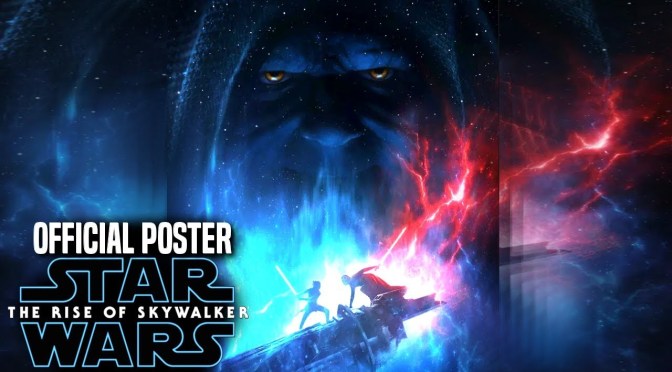
Thus, it was not surprising when genre specialist, J. J. Abrams, was brought back to save the trilogy with The Rise of Skywalker (2019). In returning to the safe, fast-paced, spectacular blockbuster style of The Force Awakens (2015), we may have lost idiosyncratic moments of character and humour, but at least this story has plot cohesion, punchy pay-offs and emotional impact. What The Rise of Skywalker (2019) also has is incredible visual set-pieces throughout. The J. J. Abrams led production army of special effects wizards have given us some memorable light-sabre and space battles. One in particular on the moon of Endor, that finds Kylo-Ren (Adam Driver) and Rey (Daisy Ridley) facing off, took my breath away.
Another major strength of this final episode is that Rey’s narrative arc is finally given the development it should have got in The Last Jedi (2017). Daisy Ridley’s performance too in this film is excellent. While she was a bit lightweight in the first two films, I felt she really came into her own here. This is helped by the revelation as to who her real parents were. Having said that, Abrams and his co-writers desperately scrabble around in the first hour of the film trying to set this up. At times the pace was too hectic. However, once it settled and all the flashbacks and back stories were in place, Rey’s character faces a very ominous choice. Conversely, her deadly psychic link with Kylo Ren continues to be a fascinating duel of mind, spirit and body. These developments are assisted by another compelling performance by Adam Driver. Kylo Ren’s internal struggle comes to the fore too, with a number of heart-pounding pay-offs at the end.
I’m also pleased to say that Poe (Oscar Isaac), Chewbacca, and Finn (John Boyega) are given a real meaty mission to get their teeth into. One that in fact links to the main story and themes of the whole film too. The standard plot McGuffin here is a Sith “wayfinder”, which the rebel team and Rey set out to recover. Let’s be honest, it’s no more than a “Treasure Hunt” plot structure, however, at least it allows for the more emotionally charged aspects of the story to develop and leads us perfectly to the incredible battle sequences in the final act. Moreover, plot predictability aside, there are other weaknesses in the film. I didn’t mind the CGI-driven rendition of Leia Organa (Carrie Fisher), however, by the ninth episode in the franchise I felt maybe they’d waited too late to introduce new aspects of the Jedi mind-trickery. But, hey it worked well in the story and was so cool that you just accept ‘the force’ as is.
Ultimately, The Rise of Skywalker (2019) is a return to genre form following the idiosyncratic subversion of The Last Jedi (2017). In fact, it was so entertaining it is the most enjoyable one (excluding the prequels) of the new trilogy. Despite a rapid start to the narrative, which tries to recoup the ground lost by the prior film, once it finds a rhythm there are some amazing action set-pieces, impressively cinematic visuals and thrilling emotional moments. While it may adhere to cookie-cutter, franchise genre expectations, overall, The Rise of Skywalker (2019) is delivered with incredible force and made for perfect holiday blockbuster entertainment.
Produced by: Amy Pascal, Denise Di Novi, Robin Swicord
Cast: Saoirse Ronan, Emma Watson, Florence Pugh, Laura Dern, Timothee Chalamet, Meryl Streep, Tracy Letts, Bob Odenkirk, James Norton, Louis Garrel, Chris Cooper etc.
Cinematography: Yorick Le Saux
**MAY CONTAIN SPOILERS**
It’s Boxing Day and you’re nursing a slight Christmas Day hangover, plus your brain is still trying to piece together the crazy jigsaw that was HBO’s Watchmen (2019). You now want a story that’s a bit more comforting; something that will make you warm and snug and feel safe. Step forward Greta Gerwig, Louisa May Alcott and an incredible cast of fine actors in the latest adaptation of the classic novel, Little Women (2019). It’s a perfect Christmas film full of romance, love, spirit, passion and just a little bit of pathos and heartache.
Set in Massachusetts at the time of the American Civil War, this splendid old chestnut of a story covers the lives of four teenage sisters — Meg (Emma Watson), Jo (Saoirse Ronan), Beth (Eliza Scanlan) and Amy March (Florence Pugh). They live with their Marmee (Laura Dern) and the story criss-crosses various years and narrative events as they search, find, lose and find again happiness, sadness and love. While the sisters prove to be very different personalities and clash often throughout the film, ultimately, it’s a film about solidarity, strength, sisterhood and family bonds.
It’s interesting Gerwig would choose something so safe for her next film project following the acclaim she correctly received for writing and directing Ladybird (2017). However, it’s not surprising either. While the title states these women are little, they are in fact anything but. Ronan as Jo and Pugh as Amy are especially energetic and larger than life. Both strive for artistic excellence and attempt to gain control over their personal and working lives in a traditionally patriarchal society. Jo’s desire to be a successful writer drives the story along impressively as Gerwig determines a meta-structure through her character. Indeed, Jo’s scenes with Tracy Letts’ publisher and editor are particularly amusing amdist some of the losses the March family suffer.
Amidst the familiarity of the text, Gerwig does attempt originality in her cutting between past and present events. While cross-cutting becomes slightly distracting from the emotions of the narrative, you can see how Gerwig wanted to stamp her own identity. The device also allows some wonderful juxtaposition of shots, emotions and camera movement. My one criticism would be that because the characters looked of a similar age in past and present, you did not always know what year you were in. Ultimately though, I really enjoyed this high-class film production. Greta Gerwig is an incredibly talented filmmaker and obtains exceptional performances from all the cast, especially Ronan and future stars, Florence Pugh and Timothee Chalamet. The film was so warm and safe, my Christmas Day hangover, like my heart, all but melted.
Cast: Scarlett Johansson, Adam Driver, Laura Dern, Alan Alda, Ray Liotta, Julie Hagerty, Azhy Robertson, Merrit Weaver etc.
Cinematography: Robbie Ryan
Distributed by: Netflix
**MAY CONTAIN SPOILERS**
I think one of the trickiest things that can hinder a writer, is that doubt whether it is worth telling one’s story. This is especially true of privileged or first world narratives involving wealthy characters or those deemed not having to struggle daily. For me the way to beat such doubt is to write the hell out of your story. Moreover, you’ve got to make the story relevant to all audiences by concentrating on universal themes and creating empathetic characters. Noah Baumbach achieves this by writing and directing the hell out of Marriage Story (2019); a moving drama that focuses on something we can all relate to — a relationship break-up.
The film centres on a couple of creatives, Nicole and Charlie Barber, portrayed by Scarlett Johansson and Adam Driver. Charlie is a New York theatre director; Nicole is a Los Angeles actress. They have both been committed to forging successful careers. The film opens brilliantly as they attend relationship mediation, attempting to divorce amicably without the use of lawyers. Baumbach’s superb script starts strongly with each character delivering bittersweet monologues that describe what attracts them most to each other. Sadly, for them and their young son, Henry (Azhy Robertson), mediation fails and it’s not long before they are drawn into the Kafkaesque, manipulative and financially draining American legal system.
This is a gem of a film which finds a seemingly suited couple learning that their differences have slowly been driving a wedge between them. Charlie is a controlled and respected director who has worked his way up from nothing. Nicole is a more privileged, but equally talented actress; however, her free-spirited nature is locked in his shadows. Geographically too they are very different. While he is originally from Indiana, he has made New York his home. Moreover, while his avant garde plays have gained him critical acclaim, she yearns for the sunlight of Los Angeles and the offer of TV work. Thus, through sheer brilliance of the writing we, in a short period of time, understand and empathise with both characters’ situations.
As the narrative develops Baumbach’s script is brought to life with two incredible central performances by Adam Driver and Scarlett Johansson. They imbue Nicole and Charlie with a humanity and warmth, that even when we do not agree with their actions, we are still with them. As the story was inspired by his own divorce, Baumbach cares very much about these people. Indeed, he gives each actor the chance to shine during a number of fine monologues, bitter exchanges and heartfelt scenes of acceptance and potential reconciliation. Further, the supporting cast members are also really great too. Ray Liotta as a bitter shark of a lawyer and Laura Dern, as his legal adversary, have some wonderfully biting lines of dialogue. Meanwhile, Alan Alda, as Charlie’s other legal representative, is arguably too nice and avuncular for this cutthroat business. Together these collective legal minds, while shining a plausibly negative light on divorce proceedings, added strong energy to the comedy and drama of the film.
Ultimately, I have always respected Noah Baumbach’s films because he is a very solid independent writer and director. However, with Marriage Story (2019), he has matured beyond belief to create a compelling and funny relationship drama. It is full of standout scenes, with Adam Driver ever impressing and Scarlett Johansson delivering the best performance of her career. Lastly, as someone who has experienced a very difficult break-up involving a child, I felt every moment of grief, heartache, humour, love and relief on the screen. Yet, it’s worth reliving those moments because you know you survived; and so will Charlie, Nicole and their son, Henry.
Produced by: Debra Hayward, Tim Bevan, Eric Fellner, Tom Hooper
Written by: Lee Hall and Tom Hooper – Based on the stage musical Cats by Andrew Lloyd Webber and Old Possum’s Book of Practical Cats by T.S. Eliot.
Cast: Jennifer Hudson, Francesca Hayward, Idris Elba, Judi Dench, Ian McKellen, James Corden, Rebel Wilson, Jason DeRulo, Laurie Davidson, Ray Winstone, Taylor Swift, etc.
Music by: Andrew Lloyd Webber
**MAY CONTAIN SPOILERS*
I think it’s easy to be overtly negative and nasty in reviews, and that is fine in general, as long as you can justify it. What I have found though is there seems to have been an unhealthy pile-on this Christmas by critics in regard to the film Cats (2019). One could even interpret some reactions to the film as hysterical and unfair bullying. I, in no way have any reason to defend wealthy people such as Andrew Lloyd Webber or the director Tom Hooper. But, this review asks the question: is Cats (2019) a really bad film? The answer in short is: no! It’s just not a particularly good one.
My wife loves musicals and was a fan of the original show. Personally, I don’t like cats, nor musicals generally (there are exceptions); and did not know the original stage production either. So, my expectations were pretty low for the film. What I did know is the original musical stage production was one of the longest running musicals in the West End. Plus, it made grossed over £32 billion in various productions across the world. Clearly a film production would make commercial sense and with acclaimed director, Tom Hooper, at the helm — what could go wrong?
Firstly, it’s an obvious thing to say that stage and screen productions generally work very differently. The original Cats was based on the poems of T.S. Eliot and was adapted organically in the 1970s by the likes of Andrew Lloyd Webber, Richard Stilgoe and Trevor Nunn. It was released in 1981 and became a phenomenal success. The narrative on stage and screen concerns a tribe of cats, inhabiting the streets, shops, theatres and homes of London, called the ‘Jellicle Cats’. Each year there is a competition as to who will be given a new life and reach the Heaviside Layer. Imaginatively named characters such as: Rum Tum Tugger (Jason DeRulo), Bustopher Jones (James Corden), Mr Mistoffelees (Laurie Davidson), Grizabella (Jennifer Hudson), Old Deuteronomy (Judi Dench), Bombalurina (Taylor Swift) and many more litter the screen. Several of these characters compete via song and dance routines, but obstacles are introduced by the nasty nemesis, Macavity (Idris Elba).
As I did not know the original adaptation, I have to say that given the lack of a proper narrative, I am surprised the show took off in the first place. This is clearly a testament to the love felt for the many powerful songs in the show, notably the brilliant ‘Memory’. The film itself is essentially a series of musical set-pieces with a very thin narrative and thematic thread throughout. The rules of the world and mythology are not very well established by Lee Hall and Tom Hooper’s screenplay. In fact, there didn’t seem to be much in the way of an opening introduction to the world. So, for me, the film fails to establish believable unbelievability and ease you into the fantasy elements properly. Basically, if you know the original production it is likely you will really enjoy the film. However, I felt it was creatively hamstrung from the start.
Overall, much of Tom Hooper’s rendition of Cats (2019) feels rushed in terms of the CGI, the editing, pacing and general flow of the action and events. The first forty minutes sees a flurry of songs from various characters and this left me dizzy. However, there are some excellent set-pieces, rousing compositions, flashy choreography and impactful singing performances in here. Taylor Swift, Jennifer Hudson and Idris Elba I felt were excellent. The rest of the cast, performers and production team also commit wholeheartedly to the project too. They cannot be faulted for certain creative decisions made at studio level. Indeed, whose idea was it to even release the film at Christmas when the Star Wars franchise is likely to defeat all cinema competition.
Maybe the film could have worked better as a lower budgeted, intimate and more stripped-down production. Moreover, while they attempted to include narrative exposition via the character of Francesca Hayward’s innocent stray, Victoria, the film still felt bereft of story. But, as it’s based on a set of poems, this is case with the original show too. Lastly, while Cats (2019) valiantly attempts to deliver a fun, humorous, emotional, energetic and fresh take on thestage show, it does fall short in many places. However, given the catastrophic reviews online and in the media in general, I have to say that it is genuinely enjoyable in places and not as bad as it’s being made out to be. It is still shocking though that such experienced producers and filmmakers would release what appears to be a dog rough work-in-progress product. It just goes to show that however talented you may be, no one is purr-fect!