Category Archives: Reviews

CINEMA REVIEW: THE BANSHEES OF INISHERIN (2022)

CINEMA REVIEW: THE BANSHEES OF INISHERIN (2022)

Written and Directed by Martin McDonagh

Produced by: Graham Broadbent, Peter Czernin & Martin McDonagh

Main Cast: Colin Farrell, Brendan Gleeson, Kerry Condon, Barry Keoghan, etc.

Cinematography: Ben Davis

Edited by: Mikkel E. G. Nielsen

Music by: Carter Burwell

*** MAY CONTAIN SPOILERS ***


The Banshees of Inisherin (2022) is Martin McDonagh’s latest cinematic masterpiece. Not only is it one of the best films of the year he has, as with Three Billboards Outside Ebbing, Missouri (2017), constructed one of the most formidable screenplays of many a year. As a playwright McDonagh has won many awards for his works. His debut film, In Bruges (2008), was a deceptively simple story of two hitmen on the run which, with rich thematic power, became a darkly hilarious existential cult classic. His follow-up Seven Psychopaths (2012), a heady mix of criminals versus writers in a meta-fictional Hollywood-based narrative was brilliantly written and acted, if slightly lacking thematic clarity. Like Three Billboards Outside Ebbing, Missouri (2017), The Banshees of Inisherin (2022) is a highly emotional human drama which contains intelligent allegory, incredible characterization, and cracking dialogue.

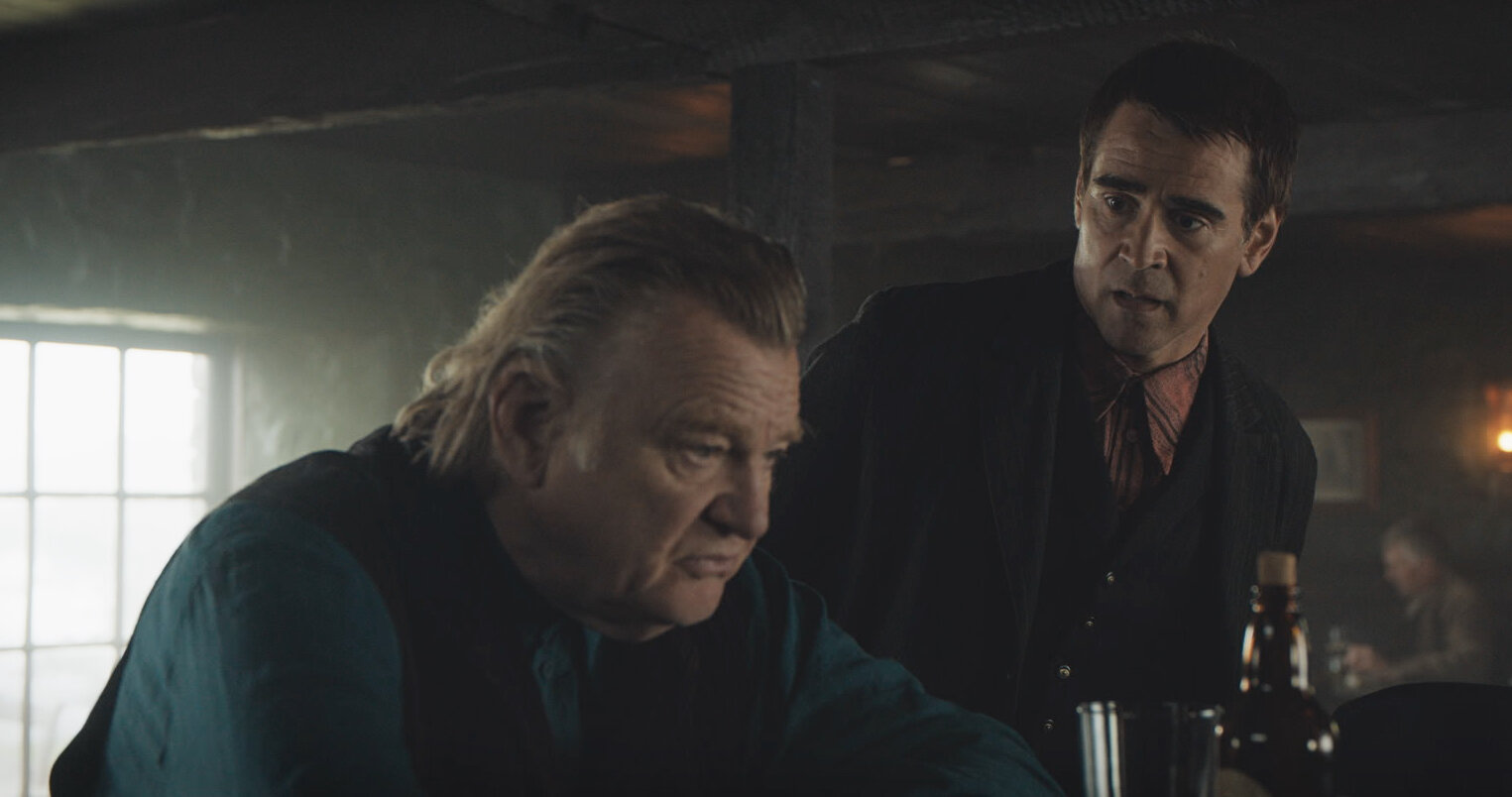
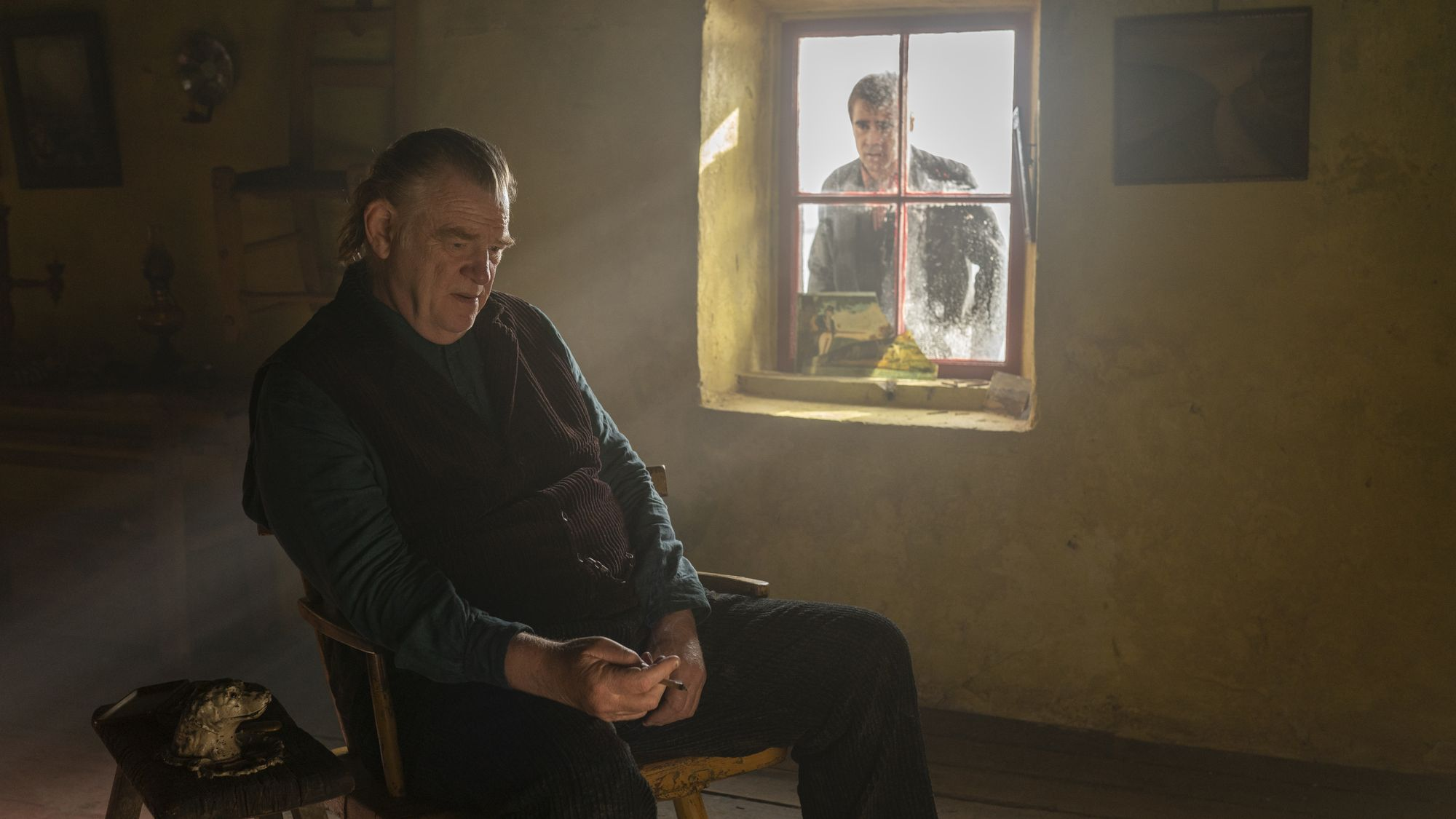
Set in 1923 on an island off of Southern Ireland called aptly Inisherin, the film opens by focussing on genial everyman farmer, Pádraic Súilleabháin (Colin Farrell) and his daily routine. After tending to his animals, he usually calls for his friend, Colm Doherty (Brendan Gleeson) to go to the island pub, the J.J. Devine or Jonjo’s. In England there is an idiom called, “sending someone to Coventry.” This means to ignore or ostracize an individual or individuals. So, basically Colm chooses to do this to his long-standing friend, Pádraic. This shunning completely bemuses Pádraic and despite Colm’s pleading for Pádraic to respect his wishes, he continually seeks an answer to his former friend’s decision.


After this intriguing premise is established, what follows is a tremendously original, darkly funny and emotionally penetrating succession of scenes. The exchanges between the two characters begins as bickering but then descends into some seriously disturbing acts of recrimination. Attempting to make them see sense are various eccentric characters on the island who provide many witty and absurd exchanges that McDonagh specialises in. Further, Pádraic’s sister Siobhán (Kerry Condon) is almost the one voice of reason as the feud escalates. As she tries to diffuse the conflict, even Barry Keoghan’s young idiot, Dominic Kearney, the initial comic relief in the film, attempts to make these two men see sense.

Visually, The Banshees of Inisherin (2022), is incredibly rich. The territory displays gorgeously photographed shots of the rocks, the sea, the stone roads and the lush green countryside. But while there is a sense of expanse and freedom initially, the feeling of isolation pervades. As the story continues the characters feel more and more segregated by the sea and their own or other’s decisions. None more so than Farrell’s Pádraic. A simple man who just wants to do his work and get drunk with his friend, he finds he is sequestered by Colm’s desire to self-isolate and concentrate on his music. Here, Farrell and Gleeson give tremendous character work. Farrell especially has rarely been better as Pádraic’s attitude turns initially from shock to bitterness over the journey of the narrative.


A film director’s job is for me about making key creative choices. Martin McDonagh makes brilliant choices while working from his own exceptional script. I loved everything about The Banshees of Inisherin (2022). The look, the performances, the pacing, the locations and Carter Burwell’s phenomenal score are absolutely first class. I haven’t even mentioned Barry Keoghan’s memorable supporting turn. He surely is one of the most naturally gifted actors of his generation. Not to forget other striking characters in the ensemble such as the creepy, Mrs McCormick (Sheila Flitton), an old harridan who acts as a portent for death on the island.

Martin McDonagh expertly combines a superb ear for dialogue, a psychologically absorbing analysis of the human condition with elements from Waiting For Godot and Channel Four situation comedy, Father Ted. Above all else, The Banshees of Inisherin (2022) is a darkly, spectacular cinematic experience which works on many levels. On one level it is about the isolation of island life and its inhabitants. On another it’s about the death of a friendship. While on yet another level it is about the analogous absurdity of civil war and how conflict can start for the merest of reasons. While the best cinema is certainly about showing and not telling, McDonagh proves again that dialogue-driven films can produce cinematic theatre, comedy and tragedy of the highest order.

Mark: 10 out of 11


CINEMA REVIEW: DON’T WORRY DARLING (2022)

CINEMA REVIEW – DON’T WORRY DARLING (2022)

Directed by: Olivia Wilde

Screenplay by: Katie Silberman – Story by Carey Van Dyke, Shane Van Dyke and Katie Silberman

Produced by: Olivia Wilde, Katie Silberman, Miri Yoon, Roy Lee

Main Cast: Florence Pugh, Harry Styles, Olivia Wilde, Gemma Chan, KiKi Layne, Nick Kroll, Chris Pine etc.

Cinematography Matthew Libatique

*** MAY CONTAIN SPOILERS ***


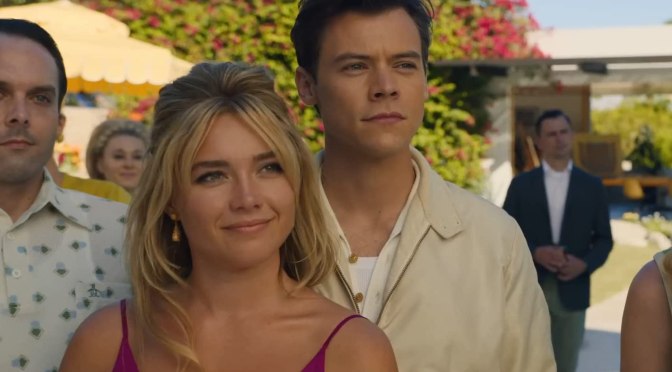
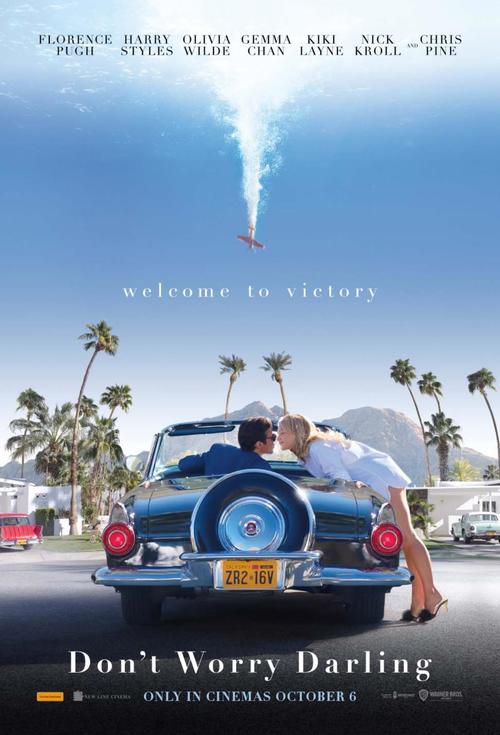
Part arthouse character study, part science fiction social satire and eventually a rushed concertinaed thriller, the Olivia Wilde directed, Don’t Worry Darling (2022) is a visual feast, anchored by Florence Pugh’s devastatingly brilliant performance. However, the ambition of the themes remains hamstrung by pacing and structure which fails to serve the story to its full potential.

Set within a utopian 1950’s sun blanched town called Victory, Wilde and her writers throw us straight into the hedonistic lives of a set of youthful and dynamic couples, drinking, partying and sexing. They work and play hard. Well, the husbands work as the dutiful women stay at home cleaning and churning out kids. So far-so-Stepford Wives! At the heart of Don’t Worry Darling (2022) is Pugh as the loyal but inquisitive, Alice. Her husband, Jack (Harry Styles) is ambitious, seeking the approval of big boss, the hubristic Frank (Chris Pine). When Alice begins to experience Kafkaesque dreams of feeling trapped by her daily life, she slowly realises all is not quite perfect in paradise.


No one does anguish and anxiety on screen like Florence Pugh. As Alice falls deeper down the rabbit hole of despair, Pugh produces true cinematic power once again. Olivia Wilde also brings a compelling image system to fully visualise Alice’s hellish descent. In comparison, the male characters are far less developed and the exchanges between Pugh and Styles, especially in the final act, are really lacking in dramatic punch. Styles himself I felt was miscast, but he does have an engaging screen presence. It’s just I didn’t feel enough threat from him.

Structurally, Don’t Worry Darling (2022) is also flawed. The major reveal comes way too late to assuage the pacing issues. While the narrative contains some striking visual set-pieces there are too many parties, barbecues and social events getting in the way of the potential thrills that could have occurred if Alice had discovered her plight much earlier. Overall, there is too much set-up and not enough punch. The longer you wait to reveal the twist, the bigger the revelation needs to be. The Outer Limits and The Twilight Zone have done this style of story with more emotional impact and better economy. Pugh and Wilde though prove once again they are major talents and thematically speaking it’s good that men get another kick in. Men are fast becoming the go-to villains of this century and long may it continue.

Mark: 6.5 out of 11


CINEMA REVIEW: NOPE (2022)

CINEMA REVIEW: NOPE (2022)

Directed by Jordan Peele

Written by Jordan Peele

Produced by: Jordan Peele and Ian Cooper


Cast: Daniel Kaluuya, Keke Palmer, Steven Yeun, Michael Wincott, Brandon Perea, Wrenn Schmidt, Barbie Ferreira, Keith David, etc.

Cinematography: Hoyte van Hoytema

*** MAY CONTAIN SPOILERS ***


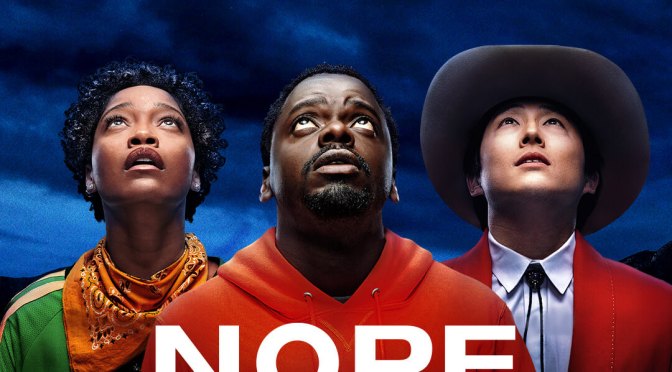
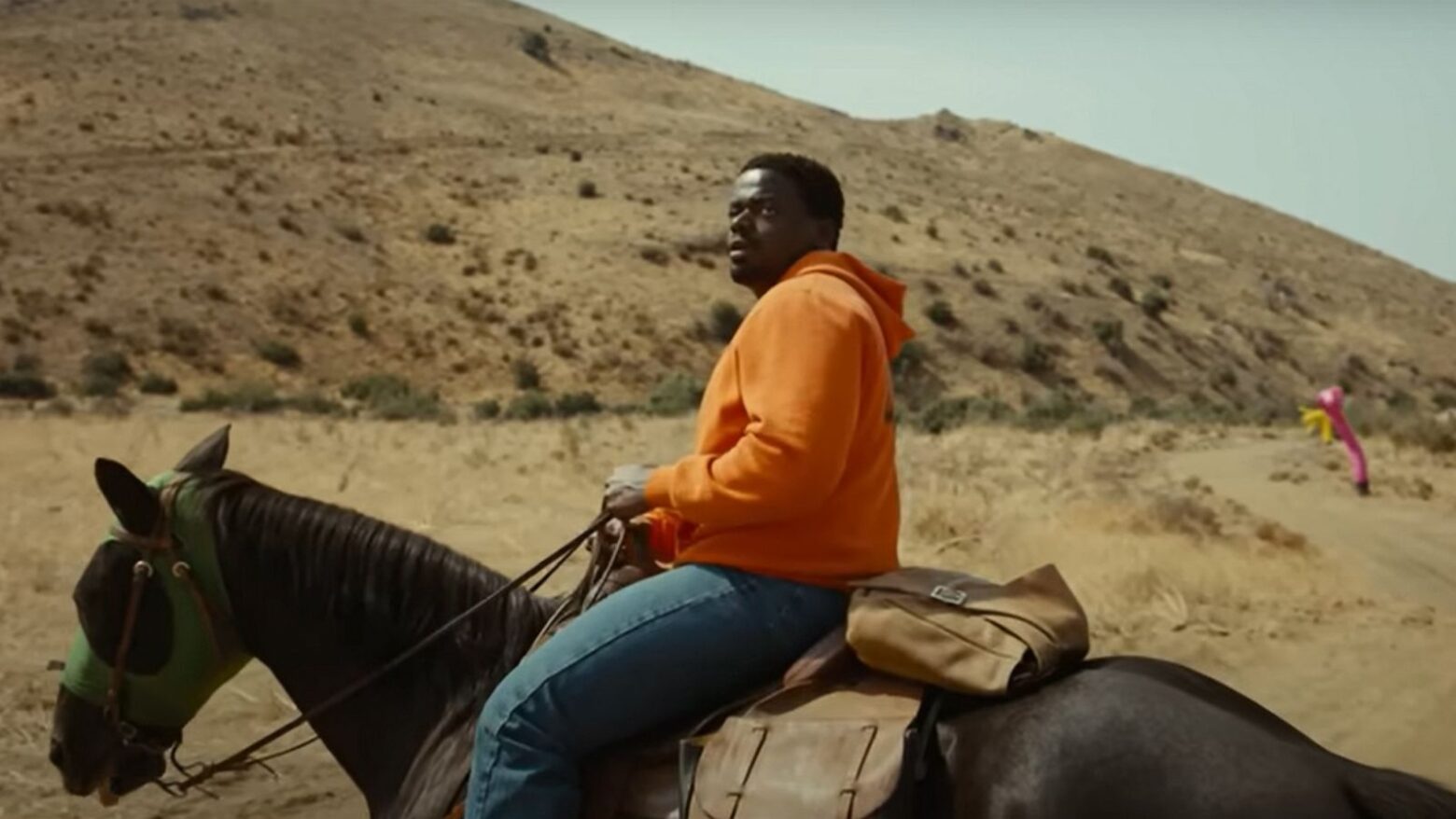
Following on from the Oscar winning, Get Out (2017), and the should-have-won-an-Oscar-for-Best-Actress-in-Lupita-Nyong’o, Us (2019), Jordan Peele is back with the enigmatically titled, and equally ambiguous sci-fi-Western-horror film, NOPE (2022). Taking on writing and directing duties again, Peele has delivered a majestic looking cinematic feast, brimming with incredibly memorable images involving horses, chimpanzees, cinema, waving inflatables, surveillance cameras, carnival shows, and something very large that comes from beyond the clouds.

So, what’s Nope (2022) actually about? Well, put simply it’s all about cowboys and girls overcoming a monster. But it is much more than that. Because, narratively speaking it is difficult to sum up in a few sentences. Peele builds his most complex film to date by delivering a series of visually powerful set-pieces throughout. He also challenges the audience with an intelligent visual system which thematically links television, cinema, cameras, Hollywood, animals and a spectacular eye in the sky. Like Tarantino’s Once Upon a Time in Hollywood (2019), Joel Coen’s The Tragedy of Macbeth (2021) and Martin Scorsese’s religious epics, Nope (2022), is what I consider to be a big-budget, arthouse blockbuster.


The film, which is divided into chapters, establishes brother, OJ (Daniel Kaluuya) and sister, Emerald (Keke Palmer), trying valiantly to keep the family ranch from going under. Once thriving under their father’s management, the ranch would supply horses to the Hollywood conveyor belt of A-list and B-movie Westerns. With such work now in short supply, OJ is forced to sell horses to local theme park owner, Ricky “Jupe” Park (Steven Yeun), however, he vows to get them back when business improves. But a bigger threat is soon looming over the ranch.

Kaluuya’s performance as OJ is laconic, invoking pure Robert Mitchum. Did I like and root for OJ? Sort of. Keke Palmer as Emerald brought the energy to the screen, but I never felt the two characters really gelled with the themes successfully. Peele’s intellectual leaps, while thought-provoking, barriered an emotional connection within Nope (2022). Likewise, Yuen’s Jupe is given a tremendously imaginative and powerful backstory which brings us into his character, but ultimately fails to pay off dramatically. In fact, these scenes felt like they were from a different film altogether. Indeed, Peele uses the sci-fi monster genre to hang his view of the world on, not always to maximum impact.

While the characterisations and themes arguably fail to gel within the screenplay, it is visually where Nope (2022) really soars. Hoyte van Hoytema should sweep the board come awards time. Further, Peele creates an optical banquet by juxtaposing the majestic vistas of the Californian landscape with modern camera and surveillance equipment, plus those colourful inflatable dummies. Then there’s the thing that is “Not Of Planet Earth”. What is it and what does it represent? Who is watching and controlling and feeding on us? Peele’s challenging concepts are to be applauded within the genre blockbuster, but I just wanted to be scared and care a bit more. On additional viewings, Nope (2022), may be considered a masterpiece, but at the moment it could be one of those great films which I kind of didn’t like. As discussed previously here.

Mark: 8 out of 11


CINEMA REVIEW: THE BLACK PHONE (2021)

CINEMA REVIEW: THE BLACK PHONE (2021)

Directed by Scott Derrickson

Screenplay by: Scott Derrickson & C. Robert Cargill

Based on “The Black Phone” by Joe Hill

Produced by: Jason Blum, Scott Derrickson, C. Robert Cargill

Main cast: Mason Thames, Madeleine McGraw, Jeremy Davies, James Ransone, Ethan Hawke


Cinematography Brett Jutkiewicz

** MAY CONTAIN SPOILERS **


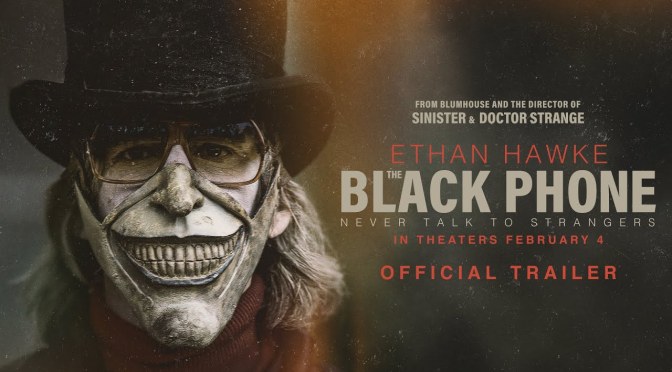
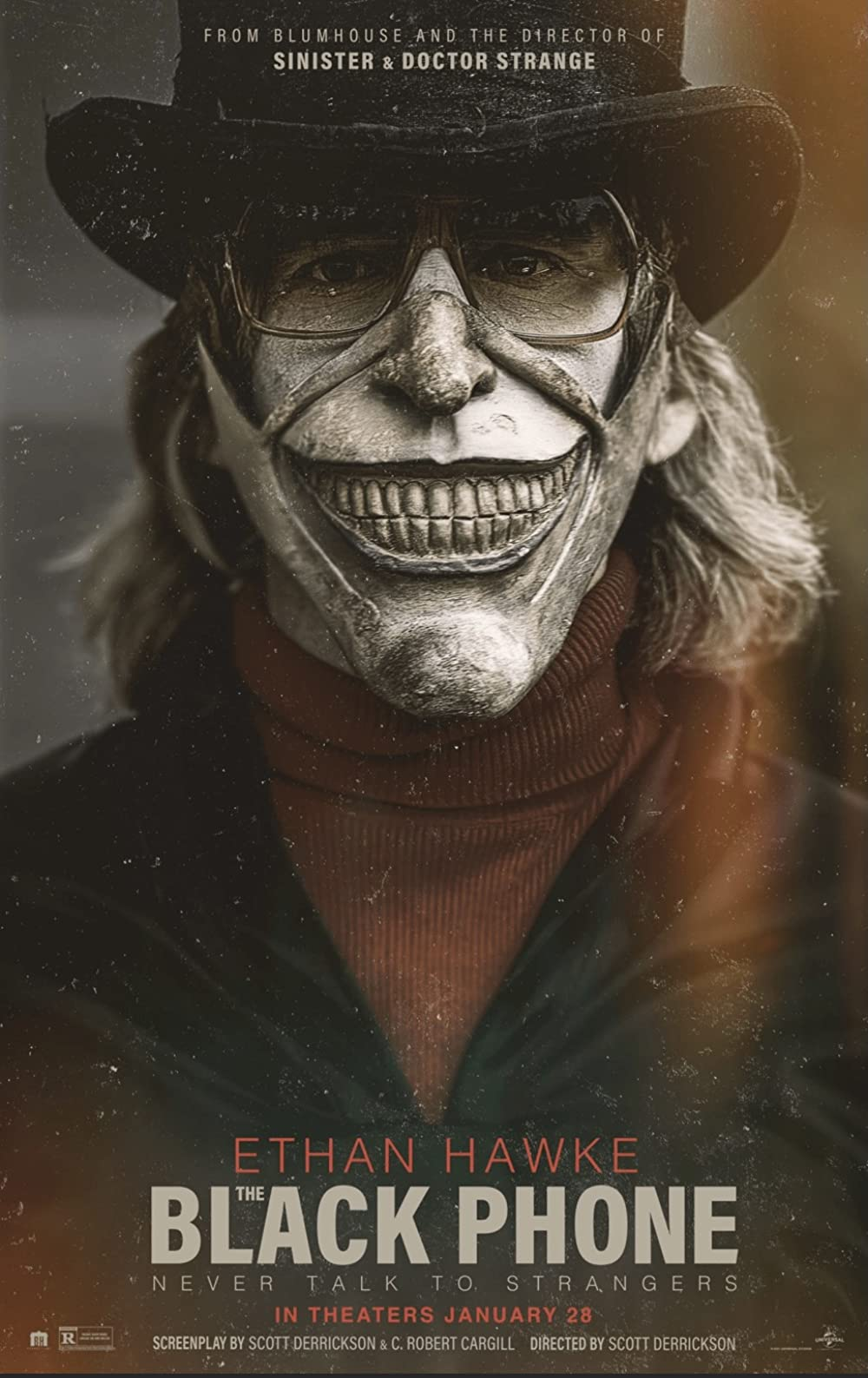
Halloween party-goers now have a new mask to wear on their faces in the guise of The Black Phone (2021) villain daubed, “The Grabber”. Although one must point out the mask is highly influenced by Japanese classic horror, Onibaba (1964). Anyway, the Grabber is a sick individual who prowls and abducts kids from the Denver suburbs in the 1970s, using black balloons and a creepy van as his signature. Portrayed by Ethan Hawke, he isn’t most subtle or interesting of killers, but his chilling behaviour drives this effective horror film from director Scott Derrickson.

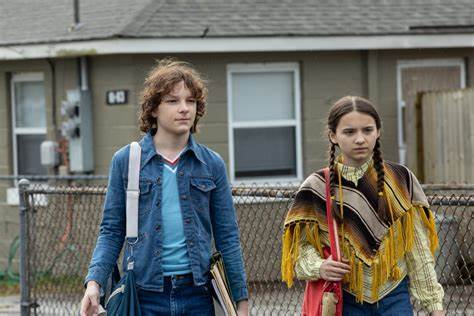
The story is the essence of every parent’s living nightmare. Their child goes missing having been snatched off the street in broad daylight. The film takes the time to establish many of the children’s characterisations so we have time to bond with them and feel the horror of their plight. Central to the story are teen brother, Finney (Mason Thames), and younger sister, Gwen (Madeline McGraw). Even without the threat of the murderer, their mother has passed and they are brought up by abusive and alcoholic father (Jeremy Davies). To add further woe, Finney, finds himself bullied by older kids at school. Could things get any worse? Of course! Finney finds himself the next victim of the evil Grabber!


Plunged into a gloomy and sound-proofed basement, Finney, is trapped with no way out from the Grabber’s nefarious plans. Ah, but Finney suddenly gets assistance from, not one, but two supernatural sources. Firstly, the titular black phone which hangs on the wall of the basement and scares us half to death when it rings. Who is on the other end? Well, lets just say they are not of the living. The second magical helper for Finney is that Gwen has the second sight in her dreams. Over time she is able to conveniently assist the police at significant stages of the narrative. Much suspense is raised from Finney’s attempts to escape as time begins to run out for him. His conversations on the black phone are imaginatively delivered as he reaches some weird dimension beyond life and death.

The Black Phone (2021) is both a suspenseful and silly ride, efficiently directed by expert genre filmmaker, Scott Derrickson. The characters are nicely written and you really root for them as the kids deal with all manner of terror. Themes relating to sibling community, stranger-danger, and sticking up for yourself against bullying are intelligently explored also. However, I must say the film has, for all the emotional depth felt and evocative 1970s locations and costumes displayed, a number of serious plot-holes struck me as incredibly questionable. I also thought Ethan Hawke’s villain while visually striking, lacked intelligence and a proper characterisation. I get that he is masked symbol of evil, but a great actor like Hawke was wasted in such casting. Overall though, The Black Phone (2021) is definitely a cinematic call worth answering.

Mark: 7.5 out of 11


“CINEMA” REVIEWS: FRESH (2022) + WHERE THE CRAWDADS SING (2022)

“CINEMA” REVIEWS: FRESH (2022) + WHERE THE CRAWDADS SING (2022)

Two entirely different types of film on the surface, one a black comedy-horror and the other a romantic murder-mystery. Although both feature examples of the female outsider fighting against variant elements of toxic masculinity and the patriarchy. What they also have in common is impressive acting performances from rising star, Daisy Edgar-Jones. Thus, I thought it interesting to review said films side-by-side. With the usual marks out of eleven.

*** MAY CONTAIN SPOILERS ***


FRESH (2022)

Directed by Mimi Cave

Written by Lauryn Kahn

Main cast: Daisy Edgar-Jones, Sebastian Stan, Jonica T Gibbs, Charlotte Le Bon, Andrea Bang etc.

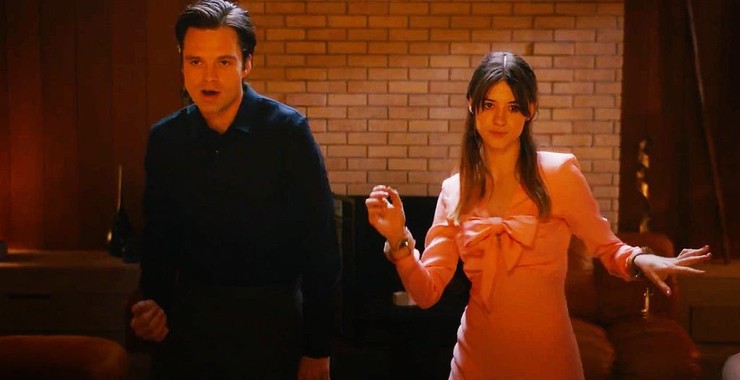
Essentially a beat-by-beat replica of Get Out (2017) as the main protagonist finds themself under threat from a nefarious force as their best friend desperately seeks to rescue them from grisly danger. Rather than raising important points about racism within the horror genre, Mimi Cave’s deliciously directed horror story with comedic elements, explores the precarious threat of singledom, toxic masculinity, gastronomy and relationships.

Daisy Edgar-Jones portrays cynical twenty-something, Noa, who is sick of the dating game and feels isolated where romance is concerned. I empathised with her decision to remain single, but then she has a meat cute with likeable charmer, Steve (Sebastian Stan), in the supermarket. They go on a date and more than hit-it-off. Before you can say “no-don’t-go-away-for-the-weekend-with-a-man-you-hardly-know!” Noa goes away with Steve and the plot ingredients really come to the boil.

Sebastian Stan and Daisy Edgar-Jones have fine chemistry throughout and are attractive protagonists. The first half of the film builds raw suspense, before the revelation arguably over-cooks the central relationship on the menu. Providing excellent support to the leads is Noa’s bestie, Mollie (Jonica T. Gibbs), who turns detective to locate Noa before the knives come out for her. Fresh (2022) runs out of steam toward the end as the plotting unravels with the characters making dumb horror movie decisions. However, I really want to see what writer, Lauren Kahn and director, Mimi Cave, deliver next as their debut feature Fresh (2022) is a very tasty starter.

Mark: 8 out of 11


WHERE THE CRAWDADS SING (2022)

Directed by Olivia Newman

Screenplay by Lucy Alibar (Based on Where the Crawdads Sing by Delia Owens)


Main cast: Daisy Edgar-Jones, Taylor John Smith, Harris Dickinson, Michael Hyatt, Sterling Macer, Jr., David Strathairn etc.

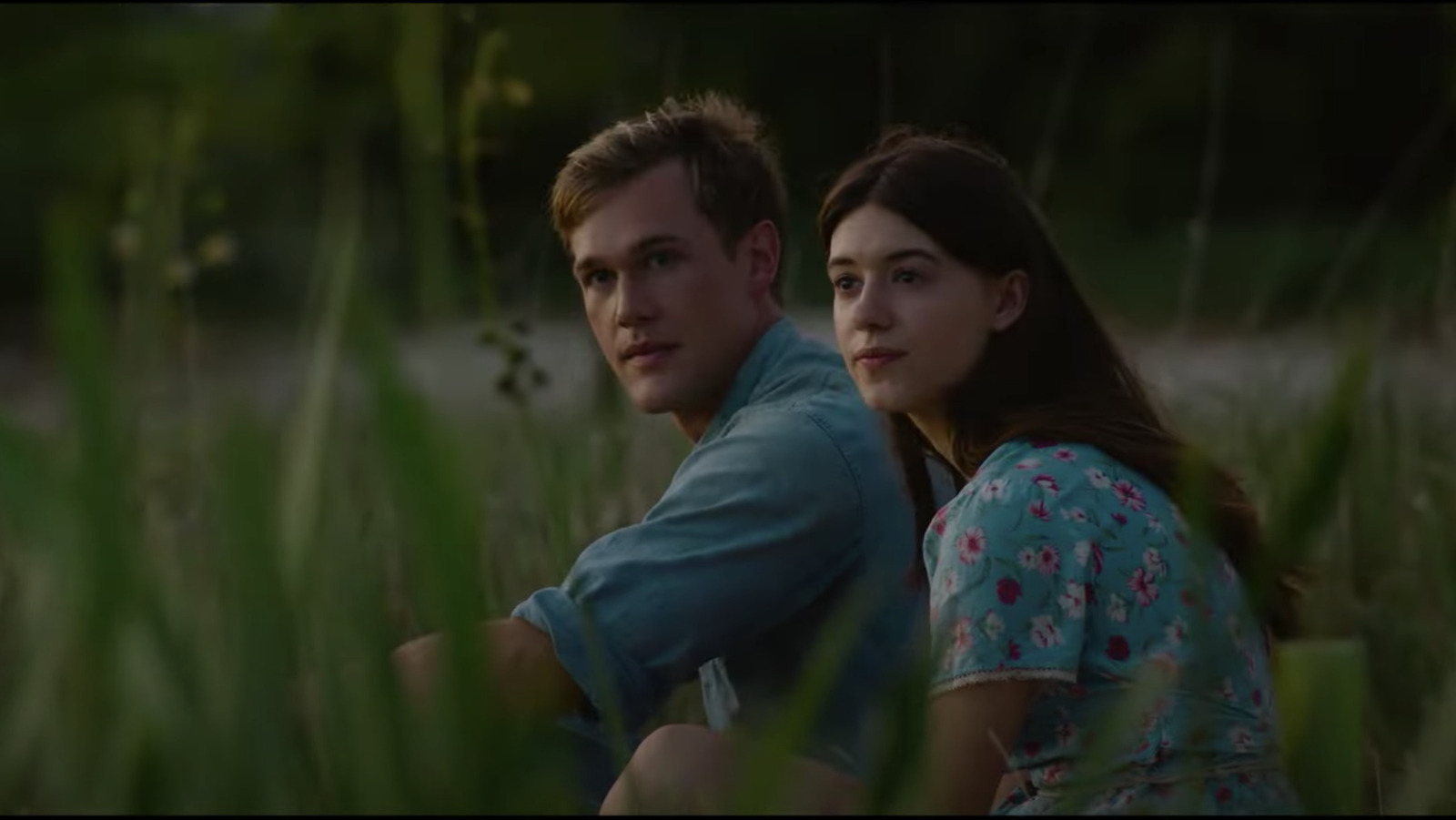
Adapted from the best-selling phenomenon written by Delia Owens, I went into Where the Crawdads Sing (2022) cold without any prior knowledge of the story. I hadn’t read the novel and even the trailer, thankfully, didn’t give swathes of plot away when I saw it. But what’s it all about? Well, it’s a sprawling cake mix of genres including murder-mystery, court drama, period piece, romance, and rites-of-passage with a movie-of-the-week cherry on top feel.

Daisy Edgar-Jones sensitively portrays Kya Clark, a young girl living in the North Carolina marsh, dealing with all manner of drama and trouble throughout her life. Considered an outcast and weirdo by the town locals of Barkley Cove, the film quickly places Kya as the main suspect in the murder of a privileged jock, Chase Andrews (Harris Dickinson). Via flashbacks we are then introduced to the misery of Kya’s abusive childhood, with her father frightening away Kya’s mother and brothers with his drunken battery. When Kya is ultimately abandoned by everyone, she finds some solace in her fledgling romance with Tate Walker (Taylor John Smith) and her interest in wildlife and art.

There are many elements of Where the Crawdads Sing (2022) that felt extremely familiar, notably the Nicholas Sparks-inspired love triangle. Kya having to choose between generic good boy/bad boy types. However, it is integral to the character-driven aspect of Kya growing from a shy caterpillar and blossoming into a radiant butterfly. While the arguably patronising characterisation of the black characters did not convince, Kya’s character arc is certainly compelling, thanks to Edgar-Jones intelligent performance. Moreover, I enjoyed the locations and some wonderful scenery too. Overall, while it is undemanding and generic, I found Where the Crawdads Sing (2022) a pleasing diversion with a couple of obvious, but decent twists in the tale. The kind of film my mum would love.

Mark: 6.5 out of 11

CINEMA REVIEW: EVERYTHING, EVERYWHERE, ALL AT ONCE (2022)

CINEMA REVIEW: EVERYTHING, EVERYWHERE, ALL AT ONCE (2022)

Directed by: Dan Kwan & Daniel Scheinert

Written by: Dan Kwan & Daniel Scheinert

Produced by: Anthony Russo, Joe Russo, Mike Larocca, Dan Kwan, Daniel Scheinert, Jonathan Wang, Michelle Yeoh, etc.

Cast: Michelle Yeoh, Stephanie Hsu, Ke Huy Quan, Jenny Slate, Harry Shum Jr., James Hong, Jamie Lee Curtis, etc.

Cinematography: Larkin Seiple

Editor: Paul Rogers

*** CONTAINS MILD SPOILERS ***


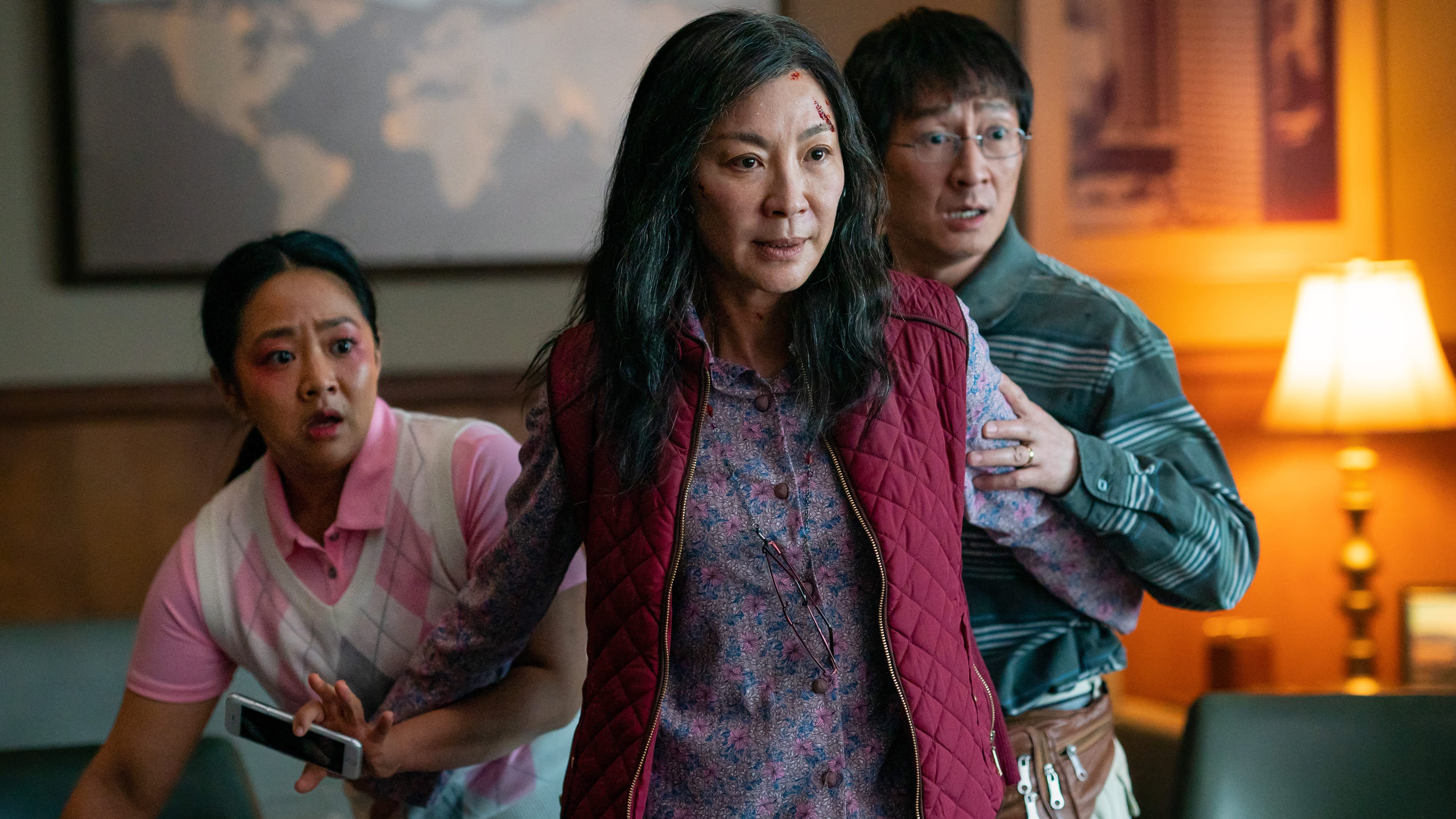
Wow, where does one start when reviewing Dan Kwan and Daniel Scheinert’s highly entertaining and genre-colliding film, Everything, Everywhere, All at Once (2022)? Well, let’s start inward and work outwards. Thus, overall, it is one of the most exhilarating cinema releases of the year. Michelle Yeoh gives a spectacular series of performances as middle-aged wife, mother, business person, actor, chef, martial artist, sign-flipper, lesbian pianist, planet saviour, and rock named simultaneously Evelyn Wang, Evelyn Wang, Evelyn Wang, Evelyn Wang and yet more Evelyn Wang’s. Yes, if you didn’t know this is another multiverse narrative, but arguably the best and most fun of the lot.

Spinning a plot that could be pitched as Crouching Matrix, Hidden Beauty the relentless Everything, Everywhere, All at Once (2022) has a seriously insane story and series of crazy, funny set-pieces throughout, with the filmmakers throwing drama, science-fiction, kung-fu, horror, comedy, rites-of-passage, romance, surrealism, and kitchen sink genres at the page and screen in a riotous visual and aural feast. I mean what other films deliver a talking raccoon, giant dildo fight and homage to Stanley Kubrick into the creative mixer. And that’s just for starters. I could say more but don’t want to spoil all the spectacular surprises on show. Safe to say, I won’t look at a bagel the same after watching this devastating cinematic smorgasbord. Word of warning the tone of this film smash cuts all over the place, and while I could find fault with this, the sheer pace, imagination and diversity of the concepts did not just win me over, but smashed me into submission.


But what the hell is the story, Paul? Oh yes, there is a narrative core and spine with which to hang the madness on. I said I was going outwards didn’t I? So, Michelle Yeoh, Evelyn, is married to Waymond (Ke Huy Quan) and their relationship is slowly cooling like campfire embers. The family business is in financial strife and as the launderette struggles, Evelyn finds herself being audited by the I.R.S. Adding to these woes are stressful relationships with her daughter, Joy (Stephanie Hsu) and elderly father, Gong Gong (James Hong), thus Evelyn’s mid-life is not so much in crisis as about to explode. She needs a miracle. An escape. A means with which to resolve and work through her issues. But this reality bites. Hard. Thankfully, this isn’t real life. It is cinema. And there are alternatives universes. Many alternative Evelyn’s in fact. But is this Evelyn the chosen one? So a journey of identity and discovery begins. Will Evelyn save herself? Will Evelyn save the world(s)? And does it even matter?

I would probably need to watch Everything, Everywhere, All at Once (2022) again to see if the myriad of plot concepts actually make sense. My instinct was that the writers were in control and deliberately out of control with their material. Throwing punchlines, taking risks, improvising and not so much pushing but burning many, many envelopes. Yet, they have found a rock in Michelle Yeoh to build their multi-stranded narratives and themes around. She superbly anchors the film allowing the filmmakers to simultaneously explore the meaning of life, identity and existence in two-hours-or-so of exhilarating cinemas. Yeoh deserves award nominations galore for the energy, strength and emotion shown within the many lives of Evelyn Wang. It was also terrific too to see Ke Huy Quan return to a prominent movie role. He is so likeable and funny. Please never retire again!

Lastly, kudos to Dan Kwan and Daniel Scheinert for delivering one of the most extraordinary films about ordinary people of the year. They potentially could have shaved some minutes of the runtime for pace. Because, by the time yet another smashing fight scene had finished I was almost too exhausted to feel at one with the final act familial reconciliation. But, Kwan and Scheinert succeed with Everything, Everywhere, All at Once (2022) because as well as a machine-gun splattering of hilarious ideas and gags combined with some pretty lofty themes, this film ultimately has a hell of a heart. More than one; a multiverse of hearts in fact. All beating as one.

Mark: 9 out of 11


CLASSIC FILM REVIEW: WINGS OF DESIRE (1987)

CLASSIC FILM REVIEW: WINGS OF DESIRE (1987)

Directed by: Wim Wenders

Written by: Wim Wenders, Peter Handke, Richard Reitinger

Produced by: Wim Wenders, Anatole Dauman

Cast: Bruno Ganz, Solveig Dommartin, Otto Sander, Curt Bois, Peter Falk, Nick Cave, etc.

Cinematography: Henri Alekan

*** MAY CONTAIN SPOILERS ***


I hadn’t seen Wim Wenders cinematic masterpiece, Wings of Desire (1987), for many years. Probably thirty-three years. I’m glad I waited so long because I think I am mature enough now to appreciate the poetry of the filmmaking style and the soulful gravity of the characters and themes on display.

I am of the belief that cinema is a collaborative craft in general. Yet, on fleeting occasions a film will be released that transcends the craft of the medium and become art. Wings of Desire (1987) is such a film. Moreover, while I am not a religious person watching Wings of Desire (1987) is as close to experiencing a spiritual filmic happening as I could have. It truly is a thing of transcendent beauty concerned as it is with the afterlife, the soul, humanity, angels, life, love, death and rebirth.

Angels walk amongst the living in a Berlin separated by the wall. Voices reveal their inner most thoughts as said Angels listen, watch, witness and gather human experience, thoughts and emotions. The Angels led by Damiel (Bruno Ganz) and Cassiel (Otto Sander) inhabit Berlin aiming to assemble, preserve and testify reality. In a stunningly beautiful opening sequence the gliding camerawork, chiming harps, poetic voiceovers and sublime photography introduces both a majestic world and compelling characterisations. The monochrome film sets a moody glow illuminating and beautifying the urban locales. If you didn’t know, the black & white sequences were shot through a filter made from a stocking that belonged to cinematographer Henri Alekan’s grandmother.


Wim Wenders directs Wings of Desire (1987) with an assured confidence throughout. Every stylistic and formal choice is driven by the characters’ hearts and an imaginative vision of both reality and the afterlife. It is incredible that Wenders and his production team did not have a traditional script when filming began. Thus, the poetic feel of the film derives from a series of experimental concepts and improvisatory creative choices. Having said that, there is a strong narrative spine amidst the seemingly loose narrative and episodic bones. The anchor amidst these hypnotic vignettes is Damiel’s journey of falling in love, ceasing to be immortal and becoming human.

As Damiel experiences the pain of existing outside human life, Bruno Ganz’s performance is heartbreakingly moving. Damiel also finds love too for Solveig Dammartin’s circus artist. His romantic longing and empathy for her and humanity overall is unforgettable. I mean this celestial and immortal being desires the opportunity to feel, taste and love. There is also humour amidst the pathos too, with a supporting story that follows the actor, Peter Falk, working on a film in Berlin. His brilliant scenes provide a quirky counterpoint to Damiel’s celestial crisis and fledgling romance. Indeed, Peter Falk called his role in Wings of Desire (1987) “the craziest thing I was ever offered”. When Wenders told him his part had not been developed yet, Falk responded, “I’ve worked that way with John Cassavetes. I prefer working without a script.”

Wings of Desire (1987) is deservedly acclaimed as one of the best films ever made. I couldn’t agree more, such is its cinematic power and beauty. It combines both visual, aural and literary styles almost to perfection. Thematically it is just as impressive. While it is a universal story about life, death, love and sacrifice, the fact it is set in Berlin adds an incredible gravitas. The politics and separation caused by the Cold War course through the veins of the film like ice. Nevertheless, Wim Wenders and his creative team wholly reject the gloom of oppression, choosing hope, life and love over said deathly wall.*

Mark: 10 out of 11


(*Note: Interestingly, filming the actual Berlin Wall was prohibited, so a replica of the wall twice had to be built close to the original. The first fake wall warped in the rain because the contractor cheated the producers and built it from wood.)

CINEMA REVIEW: THE NORTHMAN (2022)

CINEMA REVIEW: THE NORTHMAN (2022)

Directed by  Robert Eggers

Written by: Sjón Eggers & Robert Eggers

Based on: The Legend of Amleth by Saxo Grammaticus

Produced by: Mark Huffam, Lars Knudsen, Robert Eggers, Alexander Skarsgård, Arnon Milchan

Cast: Alexander Skarsgård, Nicole Kidman, Claes Bang, Anya Taylor-Joy, Ethan Hawke, Björk, Willem Dafoe, etc.

Cinematography    Jarin Blaschke

*** MAY CONTAIN SPOILERS ***


Robert Eggers is a formidable cinematic talent. His dark visions of folklore and historical fable are steeped in impressive research and a striking attention to detail within his work. Artistically and thematically speaking, Eggers is a major talent, however, one could argue his narratives deny clarity preferring hazy ambiguity. His debut film The Witch (2015) is an arthouse classic, but I just did not connect with the characters, despite the filthy realistic strangeness. His follow-up, The Lighthouse (2019), is a claustrophobic, black-hearted and dirty descent into a watery hell. Both are bravura low-budget films which created two distinct periods. In both films you can almost feel the plague and scurvy in your mouth, presented as they are with such earthy authenticity.

Thus, unsurprisingly, Robert Eggers latest film is NOT a romantic comedy. The Northman (2022) is another obsessively researched and realised historical drama. But because of the reported $70 million budget, his vision of Vikings and blood and revenge and muscle and familial treason and murder screams epic, more epic and even more EPIC! Eggers script and story is inspired by the historical myth, The Legend of Amleth, a narrative which in turn is said to have influenced none other than the quite well known play, Hamlet. Here Eggers has a solid structure for the thunderous battles and mystical manifestations on show. Our hero, Amleth (Alexander Skarsgård), finds his father, the King (Ethan Hawke) murdered by his uncle (Claes Bang), while he is a boy. Fleeing his village he grows into a scary, ripped and roaring Viking warrior who has never even seen a carbohydrate. A hunger for bread and a desire for revenge on his uncle propels the story powerfully. Intense Amleth must locate his kidnapped mother (Nicole Kidman) and smash the man who did his family wrong.


Eggers is a brilliant film director. In Alexander Skarsgård he also has a battering ram of a physical specimen leading the charge from deathly pillage to bloody battle to fiery hand-to-combat with impressive purpose and power. Amidst the vengeance-fuelled fight sequences and Amleth’s confrontations with the seers and magicians of the land, his journey also encompasses love and marriage to Olga of the Birch Forest, a Slavic sorceress (Anya Taylor-Joy). While Skarsgård’s character is more muscle than charisma, Taylor-Joy breathes ethereal and sensual life into the middle act. Their collaboration battling against enforced slavery gives us something to root for above the familiar revenge plot. Having said that, Amleth is not the easiest of characters to warm to. Despite Eggers genius and Skarsgård’s brutalism I wondered if I really cared about his quest.

I would argue that this story was done far more successfully from an emotional perspective by Ridley Scott’s awesome Roman epic, Gladiator (2000). Russell Crowe was just phenomenal as Maximus and his performance was one of magnetic emotion and charismatic depth. That film had amazing action married to integral character development. However, there is a violent momentum to The Northman (2022), with Amleth’s quest charging like a juggernaut toward the jugular of his foes. Eggers’ image and colour system of Viking costumes, iconography, weaponry, plus human, godly and ungodly beings provide the depth when the characterisation feels thin. And wow, does he know how to stage a battle. Bones crunch, teeth crack, blood bursts and weapons sever, scorch and devastate. As the fire burns in Amleth’s heart and across the landscape, The Northman (2022) rages from the cinema screen with dominant visual ascendancy.

Mark: 8 out of 11


HAIL BRITISH CINEMA! REVIEWS OF: AFTER LOVE (2020), BOILING POINT (2021), CALIBRE (2018), COUNTY LINES (2019) & ROSE PLAYS JULIE (2019)

HAIL BRITISH CINEMA!

Tired of watching big-budget homogeneous Hollywood product dominated by superheroes, sequels, remakes, prequels and remakes of prequels to sequels? I kind of am. Not that I don’t love a genre blockbuster when it’s done well. However, from time to time it’s good to diversify and watch films with more depth.

BFI Player has some terrific new and classic releases from all over the world. So, of late I have concentrated on watching some of the newer releases made by British filmmakers. My homeland has always been rich in talented people both in front and behind the camera. This has meant an incredible array of actors, filmmaking artists and technicians being poached by Hollywood. This is not just an artistic decision but an economic one. There just isn’t the money here to make big budget films, however, that doesn’t mean there isn’t some cinematic gold coming out of Britain.

While there have been some very successful film studios in the past, the British film industry has the air of an independently driven environment now. Film Four, the BFI, Aardman, BBC films, Heyday, Baby Cow, Salon Pictures, Marv Films and Number 9 films are all production companies which inhabit the industry. However, it is difficult competing with the gigantic corporate film companies, especially those that dominate distribution at the cinemas.

Yet, here are several brilliant British films I have watched on BFI Player, Netflix and Amazon lately. They are low-budget, mostly independently produced and highly recommended. Check them out as they certainly offer a divergent and absorbing change from the standard generic product at the multiplexes. With marks out of the usual eleven.

*** MAY CONTAIN SPOILERS ***


AFTER LOVE (2020) – BFI PLAYER

Written and directed by: Aleem Khan

Main cast: Joanna Scanlan, Natalie Richard, Talid Arliss etc.

Joanna Scanlan is mesmerising as a Western woman, Mary Hussain, who converted to Islam when she married her childhood sweetheart. In the present, her husband dies suddenly and she discovers he had a secret history. Dealing with both grief and shock at this news, this beautifully acted and directed character study is quietly devastating and moving. Covering themes relating to family, religion, love and fidelity After Love (2020), deservedly won best film at the British Independent film awards. Scanlan, more synonymous with comedic roles, is outstanding and Aleem Khan is a filmmaker who is definitely going places.

Mark: 9 out of 11


BOILING POINT (2021)

Written by: Philip Barandini, James Cummings

Directed by: Philip Barandini

Main cast: Stephen Graham, Vinette Robinson, Ray Panthaki etc.

I’m not a big fan of one-take films generally as it is kind of an unnecessary gimmick, yet this fantastic restaurant-set drama makes full dramatic use of the technique. Stephen Graham is the Head Chef at a Dalston eatery and has to navigate a stressful shift with environmental health, marital, staffing, customer, financial and culinary issues all mounting up around him. There’s even a food critic in the venue. It is brilliantly acted and directed and extremely tense throughout. Graham is always a cracking watch, but Vinette Robinson, as his over-worked deputy, really brings the soup to a boil, serving up a tasty performance amidst the fine ensemble.

Mark: 9 out of 11


CALIBRE (2019) – NETFLIX

Written and directed by: Matt Palmer

Main cast: Jack Lowden, Martin McCann, Tony Curran etc.

This nerve-wracking thriller takes two former boarding-school friends, Vaughn and Marcus, portrayed by Lowden and McCann, on a shooting trip to the Highlands of Scotland and throws them into the pits of despair when tragedy strikes. Taut is not the word when a fateful shooting incident occurs, as a series of bad decisions places their fractious relationship at the mercy of the angry locals. Further conflict derives as Vaughn’s attempts to mature are countered by the reckless Marcus’ aggressive behaviour. Meanwhile, the film also pointedly comments on the corporate invasion of Scottish nature. Overall, Calibre (2019), had me on the edge-of-my-seat, not wasting a moment to raise the pulse. Finally, Lowden is superb, giving a nuanced performance in an impressively directed feature film debut.

Mark: 8.5 out of 11


COUNTY LINES (2019) – BFI PLAYER

Written and directed by: Henry Blake

Main cast: Conrad Khan, Ashley Madekwe, Harris Dickinson etc.

If you didn’t know ‘County Lines’ is the practice of trafficking drugs into rural areas and small towns, away from bigger cities. Traffickers often recruit vulnerable children, including those who have been excluded from school, as drug dealers. Part-thriller and part-cautionary tale, Henry Blake’s gritty and impactful film draws on his own experiences working in a pupil referral unit. Lead character, teenager Tyler (Conrad Khan), is groomed and drawn into a murky world of drugs, only to learn some harsh life lessons. Ashley Madekwe gives a fighting performance as the mother who fears her son is lost to the mean streets of London and Harris Dickinson’s charismatic dealer.

Mark: 8 out of 11


ROSE PLAYS JULIE (2019) – BFI PLAYER

Written and directed by: Christine Molloy and Joe Lawlor

Main cast: Ann Skelly, Orla Brady, Aiden Gillen etc.

Similar in style and tone to Lynn Ramsay’s intense You Were Never Really Here (2018), this poetic thriller takes a generic revenge narrative and delivers an eerie experience through haunting performances, direction, editing and musical composition. While the story moves at a glacial pace it retains power and purpose, as Ann Skelly portrays adoptee, Rose/Julie, a veterinarian student searching for her biological parents. Her detective work unearths devastating secrets which then precipitate twisted turns into thematically dark territory. Skelly gives a subtle but intelligent performance, while Orla Brady and Aiden Gillen also give emotional depth to their respective roles. Ultimately, despite the film delivering certain plot points too enigmatically, one cannot fail to be moved by Rose’s shocking journey of discovery.

Mark: 8 out of 11


Lest we forget. . .

SAINT MAUD (2019) – AMAZON PRIME

Written and directed by: Rose Glass

Main cast: Morfydd Clark, Jennifer Ehle etc.

The film is more than just a calling card for the extremely talented director, Rose Glass. Her grasp of the material is superb and the cinematography and shot composition support her dark vision brilliantly. The film may disappoint those who prefer conventional supernatural films, as it is more arthouse than classic horror. Moreover, it has much in common with searing character studies by Paul Schrader, such as Taxi Driver (1976), and the more recent, First Reformed (2017). Indeed, Maud’s voiceover permeates like a prayer to an empty sky bleeding into the powerful imagery to compelling effect. The true horror of Saint Maud (2019) is not in jump scares or one-dimensional monsters, but rather the slow descent into hell by a character who strives to be a saviour. Tragically though, Maud is a self-appointed Angel, whose mental fragility disintegrates under the weight of holy desire and biblical fervour.

Mark: 9 out of 11


CINEMA REVIEW: THE BATMAN (2022)

CINEMA REVIEW: THE BATMAN (2022)

Directed by: Matt Reeves

Written by: Matt Reeves, Peter Craig

Based on: Characters from DC

Produced by: Dylan Clark, Matt Reeves

Cast: Robert Pattinson, Zoë Kravitz, Paul Dano, Jeffrey Wright, John Turturro, Peter Sarsgaard, Andy Serkis, Colin Farrell, etc.

Cinematography: Greig Fraser

*** MAY CONTAIN SPOILERS ***


Three hours of darkness, shadows, fireworks, distorted sound and vision, dull emo-bluster, explosions, fist-to-fist combat, choppy chases, limp dialogue, sparse suspense, blaring sirens, mumbling delivery and humdrum sexual chemistry combine to an incredibly stylish yet boring experience. It may be the biggest box office hit of the year, but The Batman (2022) was interminable filmic disappointment for me. Bruce Wayne/The Batman is a miserable cipher here for the action on show. He is also arguably one of the worst detectives I have witnessed on the screen. Yet, be aware it is NOT the filmmaker’s fault. It is mine. I am a bad cinemagoer.

I am as jaded, and world weary as Robert Pattinson’s noir gumshoe in a costume on screen. Except I have earned it. I have lived through dead-end jobs, despair and disappointment. This film starts by asking us to follow Bruce Wayne’s Caped Crusader into the mean streets of Gotham to battle nefarious gangsters and a crazed, riddle-driven terrorist. But why do we care about him? Christopher Nolan and Christian Bale breathed vibrancy and commitment into the DC comic hero. His trilogy, though not faultless, made us root for the rich kid scared of flying rats. Going on a journey of discovery and finding himself an identity in the process, Bale’s Batman was a three-dimensional hero. Matt Reeves eschews all that with The Batman (2022), presenting familiar characters searching for some semblance of plot and characterisation in the dark.


The story is a breadcrumb plot as Pattinson’s suited vermin plods through scene after scene trying to work out who is killing the corrupt officials of Gotham City. There are fireworks and expertly designed action sequences although many of them are difficult to see amidst the cinematographic murk. Moreover, there isn’t really any empathetic characters here. I love a good cinematic anti-hero, but that requires personality and energy. This Batman has neither of those. Although the screen work of Jeffrey Wright, Paul Dano, John Turturro, Colin Farrell, Andy Serkis and Zoe Kravitz does breathe light and heat into the dull script. Farrell is The Penguin but essentially an Al Capone substitute. His excellent caricature gets buried and almost lost in obsidian and prosthetics.

But as I say, I am to blame. I am a bad superhero cinema person. I am saturated and fatigued by comic book film adaptations and TV shows from Marvel to DC to Vertigo and Image and Icon (yes I know this is Marvel too). I mean the best I can say is The Batman (2022) blasts away the rot that Affleck and Snyder implanted into the Batman franchise. Although that isn’t saying much. Because an obscene $200 million dollars was spent on this hollow vision of a wealthy emo-brat in a dark suit kicking the crap out of shadows. But remember this is my fault. I am old. I am cynical. I applaud Matt Reeves and his talented production team for delivering an impressive visual feast. It’s just a shame that in the bloated running time (15 minutes of that being end credits), they didn’t write any characters worth spending three hours with.

Mark: 7 out of 11