Produced by: Claude Herroux, Pierre David, Victor Solnicki
Cast: James Woods, Sonja Smits, Deborah Harry, Les Carlson, Jack Creley, Peter Divorsky etc.
Music: Howard Shore
***CONTAINS SPOILERS***
With the lack of cinema-going action, I am now looking at building other review ideas and articles into my blog. I have regular new release reviews, classic film reviews, great ensemble casts and under-rated film reviews. I suppose that’s enough really, but there are some films that don’t quite fit these categories and they are cult movies. How does one define a cult film? It could have been a box-office bomb or be a no-budget gem, be transgressive or have controversial subject matter. Conversely, it could be a video nasty or banned or even an ultra-arthouse film which defies classical filmmaking conventions. More importantly, I do not have to actually like the film for it to qualify as a cult film. It could be a difficult film I am evaluating or re-evaluating from a fan or academic perspective. Lastly, it could just simply be a film that is uncategorizable or so bad it’s bad or so bad it’s good.
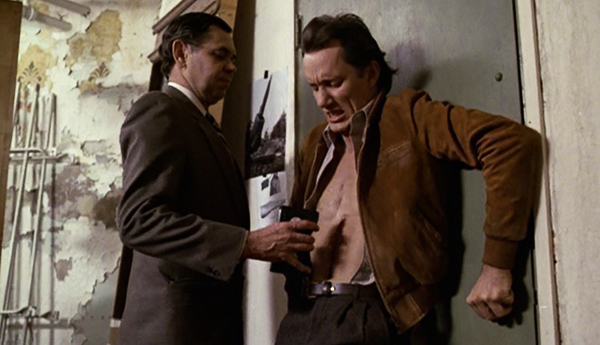
My first review in this category is David Cronenberg’s body-horror film, Videodrome (1983). Now, it may fit the specific rules of an under-rated classic laid down in previous articles, however, Videodrome (1983) is not necessarily a film I love or believe is a classic. It is a remarkably original narrative descent into the hellish and surreal world of demented psychological snuff television. It contains amazing practical special effects by the legend Rick Baker, yet, having re-watched it last week I cannot say it’s a film one can enjoy from an entertainment perspective. Don’t get me wrong, David Cronenberg is a true auteur and genius filmmaker, it’s just Videodrome (1983) is a hallucinatory and disturbing nightmare of a film that works outside the boundaries of usual image systems and narrative conventions. Basically, it’s more a powerful set of concepts and scenarios rather than a simple and satisfying story.
The story opens with anti-heroic, Max Renn (James Woods) as president of CIVIC-TV, seeking new content for his Toronto-based TV channel. Despite Woods’ charisma as an actor he is an expert at playing dominant alpha male types who challenge the audiences’ empathy. He portrays Max with a sleazy charm hunting for, what one may consider, soft-pornographic shows for his station. He’s basically an addict looking to push the walls of taste for his sex-hungry viewers. Max then discovers a channel, via a grainy satellite feed, called Videodrome. It shows unfiltered torture and sexual aggression, and Max becomes determined to tap into that market. At the same time, he begins a sado-masochistic sexual relationship with a radio host, Nikki Brand (Deborah Harry). Soon, these two intense narrative strands entwine and threaten Max’s mind, body and very existence.
Videodrome (1983) is a highly intelligent shocker which explores the nature of television violence, notions of taste and censorship, fears of technological programming, and the mental damage caused by over-exposure to violent pornography. It is an extremely psychologically and physically graphic film to watch. Nevertheless, it is also full of incredible imagery involving on-screen murder, Renn being swallowed by his TV; and also literally transforming into a human video cassette player. While an audience may not like Max Renn as a person, his journey is one that grips with magnetic shock and disgust. As he gets ever closer to the Videodrome channel his downward spiral plays out like a demented morality story, with Max representing the journey of those audience members who lose themselves in the illusory realities of television product. As he begins to lose touch with reality, Max experiences a complete lack of control over his mind and desires, all seemingly controlled by a heinous corporation led by insidious suit, Barry Convex (Leslie Carlson).
Incredibly, David Cronenberg apparently turned down directing The Return of the Jedi (1983) to write and direct this more personal vision of cinema. Could there be two more different films? Nonetheless, while it may not be a film I can easily recommend to those of a sensitive disposition or those who like their horror to have tidy conclusions, Videodrome (1983), retains its relevance and power to this day as a shocking critique of modern media. Hence qualifying it as a cult horror film which pushes all the wrong buttons in the right way.
TO BOLDLY REVIEW #9 – STAR TREK: NEXT GENERATION (1990 – 1991)– SEASON 4
Based on Star Trek & Created by: Gene Roddenberry
Season 4 writers (selected): Michael Piller, Michael Wagner, Rick Berman, Jeri Taylor, Lee Sheldon, Melinda Snodgrass, Richard Manning, Ronald D. Moore, David Bischoff, , Joe Menosky, Drew Deighan, Brannon Braga, J. Larry Carroll, Hilary J. Bader, Harold Apter, Stuart Charno, Sara Charno, Maurice Hurley, Shari Goodhartz, Timothy DeHaas, Randee Russell, Ira Steven Behr, Rene Echevarria etc.
Season 4 directors (selected): Jonathan Frakes, Winrich Kolbe, Rob Bowman, Robert Weimer, Les Landau, Robert Scheerer, Cliff Bole, Robert Legato, Tom Benko, Chip Chalmers, Timothy Bond, David Carson, Gabrielle Beaumont, Patrick Stewart, David Livingston, Marvin V. Rush, Chip Chalmers etc.
Main Cast: Patrick Stewart, Jonathan Frakes, LeVar Burton, Whoopi Goldberg, Colm Meaney, Michael Dorn, Marina Sirtis, Brent Spiner, Wil Wheaton, Gates McFadden, John De Lancie, Dwight Schultz, Majel Barrett, Rosalind Chao etc.
Music/Composers: Alexander Courage, Jerry Goldsmith, Dennis McCarthy, Ron Jones, Jay Chattaway
Production Company(s): Paramount Television, CBS Television
**** CONTAINS SPOILERS ****
My simultaneous retrospective and futuristic journey into space and time continues, and I have finally finished watching Season 4 of Star Trek: The Next Generation. It’s commonly admitted to being one of the most consistently excellent seasons of TNG. I very much enjoyed the mixture of sci-fi concepts, drama, humour and tragedy within the well established formula of the Starship Enterprise boldly exploring various galaxies.
Major themes of the season related to family, honour, love, espionage, war and divided loyalties. While the Wesley Crusher character left for the Starfleet Academy (Wil Wheaton left the show), the majority of our favourite characters remained. Indeed, Miles O’Brien (Colm Meaney) was given more airtime and a marriage subplot. More dramatically the Klingons and Romulans featured heavily as pillars of conflict, with many of the best episodes featuring Romulan deceptions and Klingon brutalism.
Star Trek: The Next Generation continues to be a compelling show to watch and look back on with respect and nostalgia. While I continually enjoyed pretty much all the episodes, here are six of the best ones featuring Picard and his devoted crew.
THE BEST OF BOTH WORLDS – PART II – EPISODE 1
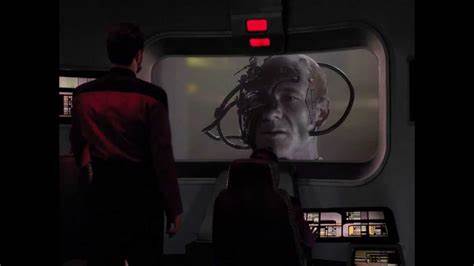
A continuation of Season 3’s cliff-hanger episode found Picard in the grips of the Borg. Even more thrilling was Riker, Data, La Forge and the rest of the crew have to stop the evil machines from launching a deadly assault on Earth. With dual battles of the mind and in space occurring simultaneously, this episode is memorable in so many ways. Patrick Stewart as Picard gives a fantastically intense performance as he battles the evil within.
FAMILY – EPISODE 2
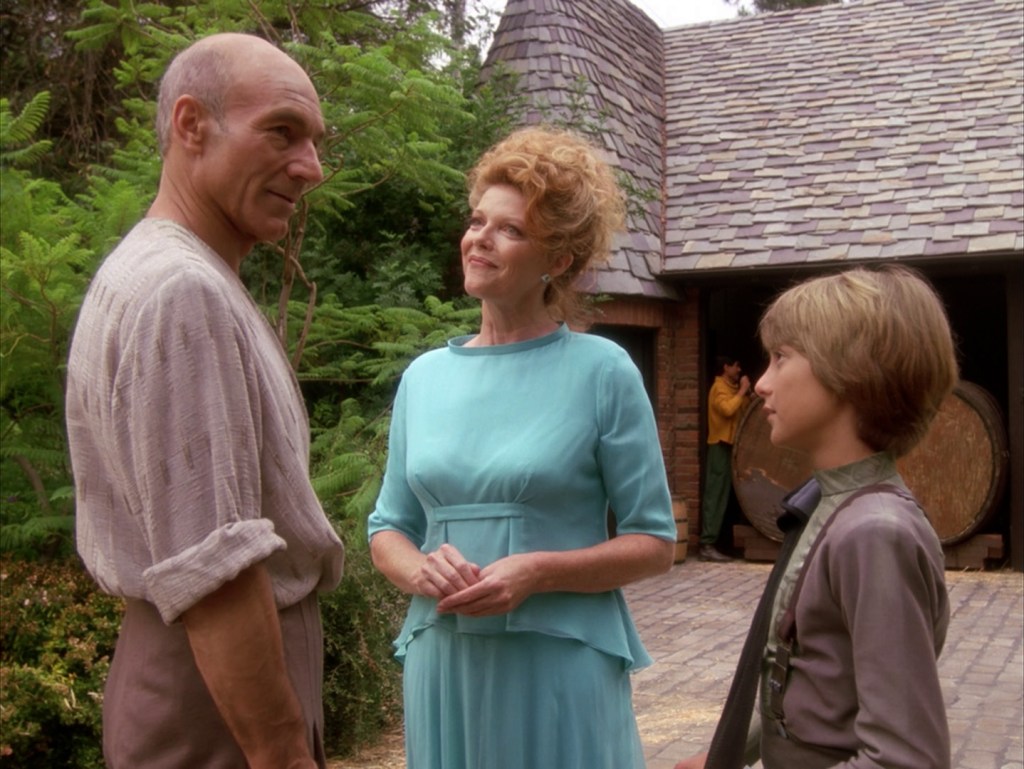
Gentler in approach than the opening episode, Family, has a brilliantly written script with three very emotionally charged storylines. Wesley Crusher must decide whether to watch a video recorded by his deceased father. Worf is met by his adoptive human parents who seek to console him following his Klingon discommendation. Lastly, a still shaken Picard returns to Earth and reconnects with his brother. The trio of narratives combine to forge a highly satisfying and emotionally charged episode.
REUNION – EPISODE 7
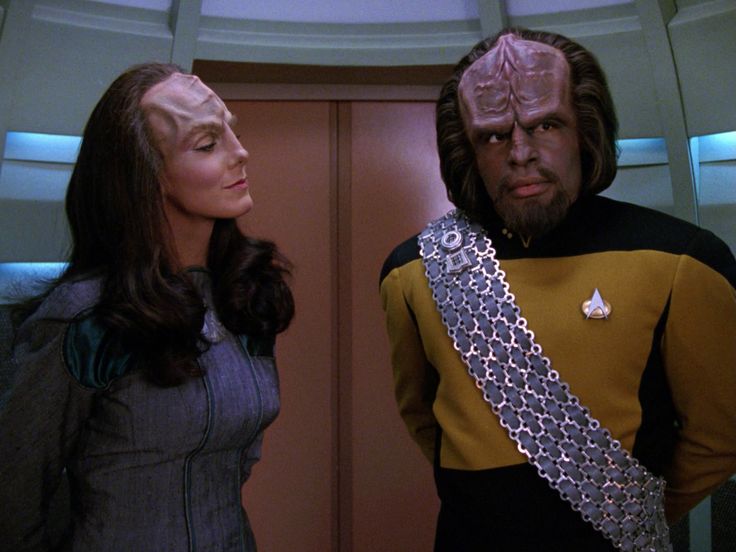
While Patrick Stewart as Captain Picard often garners the acting acclaim with his fine performances, I think Michael Dorn as Lt. Worf always gives great portrayals too. Worf’s conflicted cultural identity – between Klingon and Starfleet – always provides constant moments of explosive and introspective drama. In this episode his former love, K’Ehleyr (Suzie Plakson) returns to oversee, with Picard, the fight for the Klingon leadership. It is revealed that Worf also has a son by K’Ehleyr as the episode delivers excitement, intrigue and tragedy.
THE DRUMHEAD – EPISODE 21
This brilliant episode is unlike many others as the Enterprise crew are not faced with a divisive alien enemy. Instead, Picard and his crew come under Starfleet suspicion from the formidable Admiral Satie. Jean Simmons as Satie gives a memorable acting masterclass, as her over-zealous paranoia causes a witch-hunt culture to poison the court proceedings. I’m a big fan of the courtroom drama and this expertly paced and written episode reminded me of a reverse-engineered version of, The Caine Mutiny (1954).
THE MIND’S EYE – EPISODE 24
Chief Engineer Geordi La Forge is a very under-rated character within the TNG crew. He’s a brilliant engineer with a likable personality, so when he is “brainwashed” by the Romulans to commit an assassination it was intriguing to see his character go over to the dark side as it were. I especially liked the suspense and plot twists of this episode which paid homage to films such as: A Clockwork Orange (1971) and The Manchurian Candidate (1962).
REDEMPTION – PART I – EPISODE 26
This brilliant season culminated with a superlative episode which brought together all of the plots and subplots involving the battles with the Romulans and Klingons. Lt. Worf has a particularly difficult choice between his Starfleet commission and family honour. Ultimately, he chooses to fight for honour and in a wonderful conclusion to the episode joins the Klingon fleet to fight alongside his brother, Kurn (Tony Todd), against the Duras hordes. Despite the out-of-the-box temporally strained twist involving, Sela (Denise Crosby), a Tasha Yar Romulan lookalike, the episode was full of dramatic moments and provided a compelling cliff-hanger for the next season.
Original songs by: Glenn Hansard, Marketa Irglova and Interference.
Cinematography: Tim Fleming
**** MAY CONTAIN SPOILERS ****
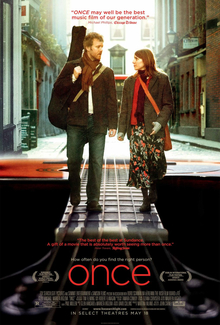
I am not sure why I missed this film first time around, however, it’s most likely due to prior prejudices against musical or music-based films. Yet, since I married in 2016, I have began to watch and enjoy more musicals. This is mainly due to my wife being a massive fan of musical cinema and theatre. While it’s still not necessarily my favourite genre, every now and then an utter gem of a musical will emerge. John Carney’s beautifully moving love story between a hoover repair guy and a flower-selling girl, Once (2007), is certainly one of those.
John Carney is an honest filmmaker who is attracted to outsiders and people with real emotional turmoil. They tend to be at crossroads in their lives and are struggling either with their dreams or their relationships. He also loves musicians, flaws and all. In Begin Again (2013), a washed-up musical executive, portrayed by Mark Ruffalo, meets unhappy singer-songwriter, Keira Knightley and their first-world romance is played out to bittersweet consequences. Similarly, in Sing Street (2016), a troubled teenager comes of age through his 1980’s pop band and bittersweet romance with a rebellious and equally-troubled schoolgirl. Notice a pattern? Well, this style of music, gritty city backdrops and salty romances were established in Carney’s breakout hit, Once (2007).
Made for a ridiculously low budget of around $150,000, this ultra-realistic musical contains songs that burst with love and pain from the characters of Guy (Glenn Hansard) and Girl (Marketa Irglova). The two meet and connect, but this is no conventional romance as they both have powerful emotional histories between them. It’s the beautiful music and their authentic dialogue exchanges which drive the story. Hansard’s singing and guitar playing are so powerful and moving. Their duet in the music shop of the song, Falling Slowly is a tour-de-force. I was not surprised when I saw it had won the Oscar for best original film. Overall, Once (2007) is a surprisingly brilliant no-budget feature, shot on the streets of Dublin, which deservedly became a big hit.
Written by Jason George – based on the novel The Old Axolotl by Jacek Dukaj
Cast: Pauline Ettienne, Laurent Capulletto, Stefano Cassetti, Nabil Mallat, Jan Bijvoet, Vincent Londez, Babetida Sadjo, Mehmet Kurtulus, Alba Gaia Bellugi, Regina Bikkinina, etc.
Distribution: Netflix
****MAY CONTAIN SPOILERS ****
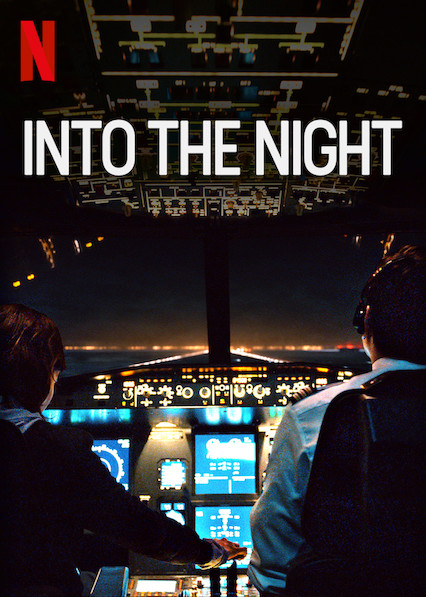
Netflix’s first Belgian original production series is an inspired adaptation of Jakub Dukaj’s electronic science fiction work, The Old Axolotl. While that work may be a digital release about a post-apocalyptic Earth, Into The Night (2020), is not a futuristic tale, but rather a very contemporary one set in the now. Opening in the Brussels airport the suspense is ratcheted up from the start when a NATO Officer, Terenzio Gallo, takes a Moscow bound plane hostage at gunpoint. Frantic and dangerous he orders the pilot and crew to take off immediately as they are all in danger. I won’t reveal what that danger is for fear of spoilers. What I can say is though these six episodes are one hell of a thrilling and panic-stricken plane journey.
Jason George’s excellent adaptation is written as a fast-paced disaster movie over six sharp episodes. Given the characters convene at an airport and the Brussels office of the United Nations is close by, the narrative establishes an ensemble of various nationalities including: Polish, Italian, Belgian, French, Turkish, Russian, Moroccan and in later episodes, English. Indeed, as well as the environmental threat and technological challenges the characters face, national identities and cultural clashes drive the drama of the series. The various personalities may be facing impending doom from an unknown source, while flying thousands of feet in the air, yet they cannot put their petty prejudices aside and this leads to much trouble. Amidst the in-fighting though some solidarity is found as the passengers and crew overcome a plethora of suspenseful moments and situations.
I personally cannot stand flying. Thus, my heart was literally in my mouth throughout this exciting series. The acting, action, direction and editing are all extremely well delivered, and I can safely say that this is one of Netflix’s winners. The threat the humans face is also very believable too. Furthermore, a classic disaster movie trope is to give the characters enough depth to bring you into their personal stories. Each episode is named after a character and is accompanied by a mini-flashback establishing their back story. We get one character seeking romance, one facing grief, another having an affair, a mother attempting to save her sick son, and so on. While these are very much standard types within the genre, the breathless pace of Into The Night (2020) leaves you dizzy from both the high altitude and anxiety.
Produced: Antony Russo, Joe Russo, Mike Larocca, Chris Hemsworth, Eric Gitter, Peter Schwern
Screenplay by: Joe Russo – based on Ciudad by Ande Parks, Joe Russo, Fernando Leon Gonzalez
Cast: Chris Hemsworth, Rudhraksh Jaiswal, Randeep Hooda, Golshifteh Farahani, Pankaj Tripathi, David Harbour, etc.
Distribution: Netflix
***MAY CONTAIN SPOILERS***
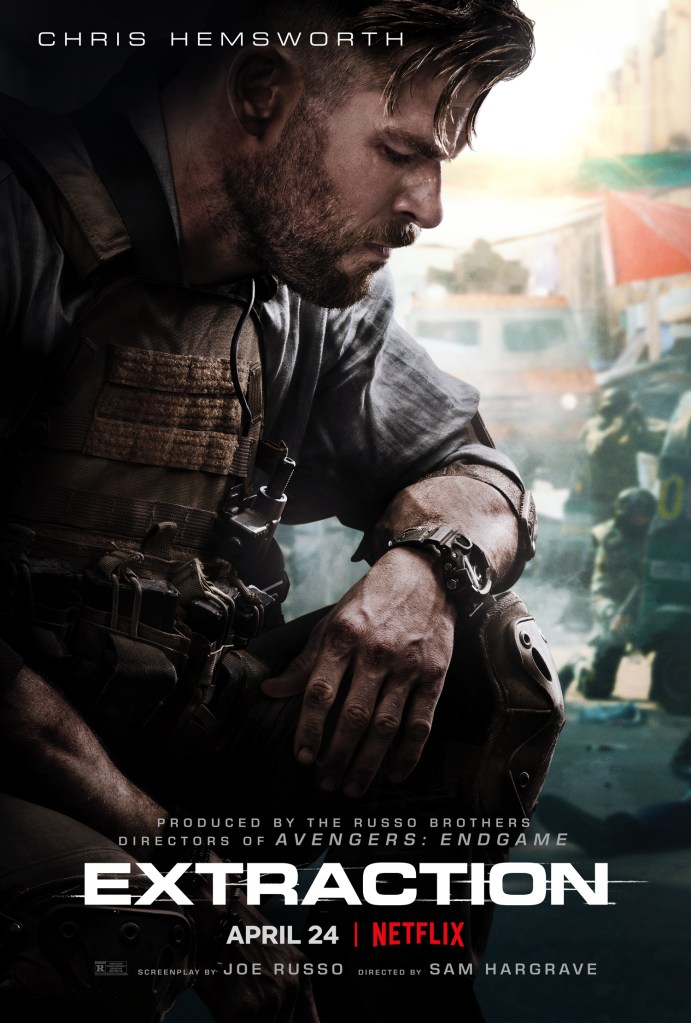
Do you remember when action heroes used to be larger than life, filling up the screens with muscles, charisma, and wise-cracking one-liners. I am old, so I certainly do. The likes of Arnold Schwarzenegger, Steven Seagal, Bruce Willis, Jean Claude Van Damme and of course, Sylvester Stallone were just some of the leading men crunching and blowing up the cinema screens. Okay, they may have been reactionary 1980s and 1990s masculine archetypes, and arguably nationalistic, sexist, militarist and incredibly over-the-top characters, but I kind of miss them. Because today’s action heroes, while equally talented at killing and delivering mayhem, are somewhat less colourful.
Don’t get me wrong, I still enjoy the technically excellent and brutally realised fight scenes and stunts of today. However, John Wick, Bryan Mills of Taken (2008), Lorraine Broughton of Atomic Blonde (2017), Jason Bourne, and now Chris Hemsworth’s mercenary, Tyler Rake in Extraction (2020), are individuals of fewer words and even less humour. I guess Jason Statham isn’t too bad, but he’s still quite serious. Lastly, while one can certainly rely on the sanitized fun of the Marvel Universe for some humour and personality within the action, it’s still not the same as a good old Arnie action flick. The more adult oriented superhero, Deadpool (2016), can be relied on for X-rated violence and constant verbal quips. But, he wears a suit and it’s just not as good as the action heroes I grew up watching. Ah, but that’s nostalgia for you.
Why the trip down memory lane, Paul? What about the kinetic and explosive action of Extraction (2020)? Yes, the well-choreographed manoeuvres are extremely exciting. They are also bone-crushingly relentless from the moment Tyler Rake enters Bangladesh to extract an imprisoned Indian gangster’s teenage son, Ovi Mahajan (Rudhraksh Jaiswal). Hemsworth and director Sam Hargrave get you in and out of hand-to-hand fights, car chases, leaps and falls from buildings, and constant gun battles with stunning brilliance throughout. The camera and editing work present virtuoso work, capped by an almost seamless eleven minute long take involving all manner of mayhem. While Ovi and Tyler kind of bond later in the film, I found myself needing more emotional or political subtext to narrative. Even John Wick (2014) created its own mythology and universe, where this relies on fast-paced movement, military tropes and lazy stereotypes. Ultimately, Extraction (2020) was like an explosive fireworks display. Great to watch while it lasted, but ultimately forgettable. Man on Fire (2004) did this story way better and with way more feeling.
Produced by: Kitty Green, James Schamus, Scott Macauley, P. Jennifer Dana, Ross Jacobson
Cinematography: Michael Latham
Cast: Julia Garner, Matthew Macfadyen, Mackenzie Leigh, Kristine Froseth, Noah Robbins etc.
*** MAY CONTAIN SPOILERS ***
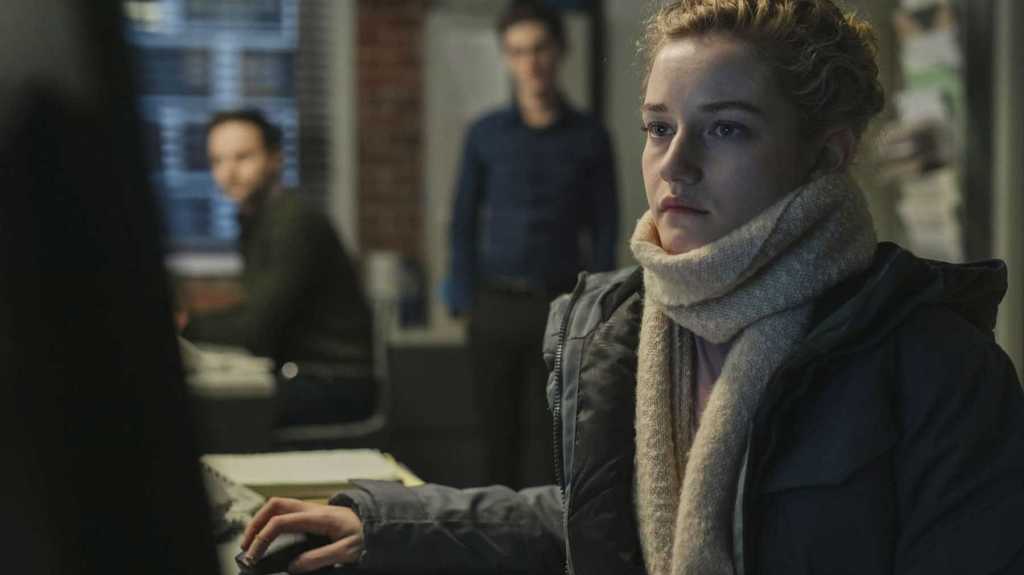
Having worked initially in the documentary genre, Kitty Green now presents her first fictional film, The Assistant (2019), with the ever-impressive Julia Garner in the lead. Garner portrays the titular assistant, Jane, a PA in an unnamed New York based film production company. However, while the characters may be fictional, the events reflected are very much based in reality, as the film explores endemic sexism within the film industry and office workplaces more generally. This isn’t a sensationalist #MeToo expose or revenge story, but rather a subtle narrative which conveys it’s criticisms with hushed and damning power.
The film is structured over one day. I’m a big fan of such a convention and wrote about the positives of single day narratives here. Anyway, The Assistant (2019), begins with Jane first in the office, and ends with her being one of the last there at night. In the middle we get a succession of expertly composed scenes which find Jane working for a big-shot movie producer. The fact that we never see him, but hear him and experience the aftermath of his behaviour through Jane is an ingenious concept. By showing rather telling us directly about his covert sexist exploitation, one is truly brought into Jane’s painful situation. She is told she is lucky to have this job and it presents a great opportunity to eventually become a film producer. Yet, to do so requires her to turn a blind eye to events which other employees horrifically consider to be the norm in a media company.
Weinstein’s name is never mentioned. It doesn’t have to be. He is the sexual predator in the room and probably among many film producers who have utilised the casting couch to have their disgusting way with budding actors and actresses. That is why Kitty Green deserves so much praise because she chose a directorial style that really works for the story. Green and her cinematographer suck all of the colour out of the film industry, making it grey and beige and stark and unglamorous. Via the character of Jane, and Garner’s exquisitely reserved performance, we learn that such bullying cultures exist, and the character must choose to accept it or move on. Garner’s scene with the HR Executive, played by Matthew Macfadyen, is superb in conveying the difficult choice Jane faces.
Lastly, as well as making important points about the patriarchal corruption within the film industry, I enjoyed that it also captured the repetitive nature of administration work. Photocopiers hum, phones ring, paper flaps, printers and faxes whir, while florescent strip lights glow amidst the drudge of the daily office grind. Jane is a prisoner within a myriad of shadowy walls and filing cabinets. Further, Jane is also torn between being a just person and following her dream of working in the movies. But, at the end of another exceptionally exhausting day, that dream is soured by the insidious lust of human behaviour. Thus, The Assistant (2019) asks, will things ever change? Go watch it and decide if you think they will.
Written by: Anna Winger, Alexa Karolinski, Daniel Hendler
Based on: Unorthodox: The Scandalous Rejection of My Hasidic Roots by Deborah Feldman
Cast: Shira Haas, Amit Rahav, Jeff Wilbusch, Alex Reid, Aaron Altaras, Ronit Asheri, Dina Doron, Gera Sandler, and more.
Original Network: Netflix
**** MAY CONTAIN SPOILERS ****
When one watches a memoir based on true events such as Netflix’s Unorthodox (2020), you realise how lucky you are in regard to the freedom you have. This isn’t about an individual going through social lockdown for good reason, but someone who is trapped by their strict religious and family traditions. Such traditions in themselves could be deemed acceptable as we must respect different ways of living. However, what if that person wants to leave their life and is not allowed? This is called incarceration of the soul and body. This is wrong. People must be allowed to choose their own way in life and not be tethered by dogma or ideology. I repeat, I respect people’s belief systems, but not if it has a negative effect on that person.
Based on Deborah Feldman’s bestselling autobiography, Unorthodox, is an impressive four-part drama which focusses on Esty Shapiro, portrayed with provocative emotion and vulnerability by Shira Haas. Esty is an unhappy Jewish woman, who finds herself trapped in a traditional ultra-Orthodox marriage in Williamsburg, Brooklyn. She is denied many things such as a control, position, voice, personality, expression and her love of music. The compelling episodes go back and forth in time between the build up to her marriage to inexperienced, Yanky (Amit Rahav), and Esty’s escape to Berlin, where she explores the world outside her religion for the first time.
While Yanky is shown to be kindly, he is committed, some may say brainwashed, to his faith. Therefore, the marriage process is one of suppression and control. Every moment of Esty’s life is plotted, from the shaving of her hair prior to the wedding, and after, the days they are meant to have sex. The intercourse, however, proves anxious for the young couple. Rather embarrassingly though, this private matter becomes a huge issue with other family members. Privacy, it seems, is secondary as Esty is treated no better than a brood mare. Even after she escapes to Berlin, Esty is pursued by her husband and brutish cousin, Moishe (Jeff Wilbusch). Sadly, there seems to be more control in the Hasidic community than love. Of course, this is a representation of Deborah Feldman’s experience, thus, I cannot begin to understand the nature of the Hasidic Jewish community in full. For many it is probably a safe space and designed to protect individuals from the often rotten world outside. Faith and family can be great protectors, however, in this story, for one person, that life became a living hell.
In the character of Esty we are introduced to a fascinating world, and her riveting struggle to become an individual rather than follow patriarchal doctrine. While the narrative takes a slight left turn in the final episode, I can heartily recommend this mini-series. Lastly, I cannot judge if the representation of the Samtar movement is realistic, yet the setting, costumes and culture feels authentic. The actors speak, on the main, Yiddish, and in Shira Haas’s commanding performance Unorthodox we get a very realistic encapsulation of a desire to escape oppression. Haas may be diminutive in size, but her rendition of Esty Shapiro is mighty in heart and soul.
Main Cast: Larry David, Jeff Garlin, Cheryl Hines, Susie Essman, J. B. Smoove, Ted Danson, Richard Lewis, Vince Vaughan, Kaitlin Olson etc.
Guests: Mila Kunis, Clive Owen, Laverne Cox, Chris Martin, Sean Penn, Jonah Hill, Jon Hamm, Philip Rosenthaland many more.
Distribution Platform: HBO (USA) – SKY (UK)
**CONTAINS MASSIVE SPOILERS**
“AH! INTERESTING. . . “
During a lengthy hiatus from 2011 to 2017, fans of Curb Your Enthusiasm were left bereft of their dose of Larry David’s inimitable and eccentric behaviour. The multi-millionaire writer of Seinfeld had carved out a wonderfully politically incorrect comedy series, full of misunderstanding, farce and hilariously embarrassing situations. Thankfully, he returned with season 9, and it was absolutely brilliant. Larry managed to get himself a death sentence, having written a musical called Fatwa, along with all manner of other comedic shenanigans. Season 10 has now followed and, once again, anti-heroic Larry delivers ten more fantastically offensive and funny episodes. More often than not we find his behaviour abhorrent as he goes about upsetting friends, family members, celebrities, and strangers on a daily basis. However, sometimes we are with Larry and his actions have merit and reason. Furthermore, due to the wonderful writing, improvising, cast and situations the humour is always more than pretty, pretty good!
NARRATIVE ARC (OF THE COVENANT)
Usually, Curb Your Enthusiasm episodes can stand alone due to the richness of the narrative strands Larry David and his writers create. But most seasons will have a very solid narrative arc running through it to provide looping rejoinders, a structural spine and a fitting conclusion. In season 10, there were echoes of storylines from prior seasons. Larry wanted to get back with Cheryl and they even committed divorced adultery, cuckolding Ted Danson in the process. However, the main arc revolved around the return of coffee store owner, Mocha Joe (Saverio Guerra). Larry pisses Mocha Joe off because he complains about “cold” coffee, wobbly tables and weak scones. Following Larry’s customary banishing he swears revenge on Mocha Joe. This takes the form of the wonderfully named ‘spite store’ he sets up next door. Thus, Latte Larry’s is born, and ten episodes of fast-paced, tit-for-tat, vengeful and hilarious scenes ensue.
“THE GOLDEN RULE” – STYLE AND THEMES
Curb Your Enthusiasm is not just funny because of the situations, dialogue, observations, guest stars and acting performances. It is also very sophisticated and stupid, combining a variety of comedy styles to fuel the humour. Earlier seasons could be argued to be more based in reality per se. The interactions between the characters felt more natural, in keeping with the pilot episode which was shot as a mockumentary about Larry returning to stand-up. Later seasons, especially seasons 9 and 10, upped the gag rate and one could even say felt slicker. Don’t get me wrong, the jokes have always come thick and fast in Curb Your Enthusiasm, but in the last two seasons there is not only a reliance on the usual comedy of embarrassment, observations and satire, but farce, slapstick and gross-out humour too have been added to the palette. Lastly, the show has always skated close to the edge in regard to non-PC humour and causing offence. Evidently, Larry David has now fully thrown himself over that edge and is happy to offend everyone in a two-fingered salute to so-called snowflakes or liberals out there.
In regard to thematics, Larry David clearly has his finger on the pulse relating to contemporary society, politics and human behaviour. Much of the humour and funny scenarios derive from what is acceptable behaviour and certain “rules” within everyday living. In season 10, Larry finds himself questioning, among other things: the behaviour of a pregnant woman; the merits of artificial fruit; what is and what isn’t’ sufficient praise; usage of disable parking badges; whether he should be in a restaurant’s ‘ugly section’; whether sex with Cheryl’s sister is post-relationship cheating; and the overall benefits of running a spite store. These elements, the running feuds with Ted Danson, Mocha Joe and Larry’s assistant, Alice, and themes relating to the Harvey Weinstein scandal and #MeToo movement; Larry and Leon’s continued chats about the nature of being black/white; Donald Trump’s presidency; fat shaming; suicide; Susie’s alleged plot to murder Jeff; nationalist ridicule; egotistic actor types; and transgender issues, all connectedly make this season a very rich product, full of ideas and challenging storylines.
“PRETTY GOOD. . . ” – EPISODE RATINGS
Episode 1 – Happy New Year – (8.5 out of 10)
Larry goes to war with Mocha Joe and reignites his romance with Cheryl. His relationship with his assistant also descends into accusations of sexual harassment.
Highlight: Larry wearing his Donald Trump, “Make America Great Again!”and ensuring no one wants to be seen with him.
Episode 2 – Side Sitting – (8.5 out of 10)
Larry’s relationship with his assistant, Alice, is possibly going to court unless he settles and makes amends. His attempts to get back with Cheryl are rebuked, so he dates his lawyer’s assistant.
Highlight: Larry gives Susie a portrait of herself as a birthday present. She loves it – but Jeff doesn’t.
Episode 3 – Artificial Fruit – (9 out of 10)
Larry’s donation to a charity fails to bring forward redemption when he refuses to hug Laverne Cox at an event, because she has a cold. Meanwhile, Richard and Larry argue over who is paying a lunch bill, leading to a very embarrassing escapade at a Spanish funeral.
Highlights: Larry is unsure if the Heimlich manoeuvre is appropriate when his assistant is choking. Plus, Larry’s doodle debate with Christine Lahti blows up into a serious disagreement.
Episode 4 – You’re not going to get me to say anything bad About! – (9 out of 10)
Larry, Donna (his new girlfriend), Cheryl, Jeff, Susie and Leon go to Cabo San Lucas for a friend’s wedding. Larry becomes fixated with Donna’s yo-yo dieting, but he and Leon do find some incredible coffee beans for Latte Larry’s.
Highlight: Larry’s determination to locate a toothbrush descends into a farcical conclusion. Later, at the wedding, Ted discovers Larry and Cheryl’s infidelity in a hilarious fashion.
Episode 5 – Insufficient Praise! – (9 out of 10)
Preparations for Latte Larry’s gather pace as Larry asks for a specific urinal type. Larry also gets a new housekeeper and is given a sex doll by Freddy Funkhouser. Meanwhile, Larry clashes with actor Clive Owen and Richard Lewis’ new girlfriend; a professional “crier”.
Highlights: Larry’s frantic battle with the sex doll resulting in his housekeeper and Cheryl catching him. Also, Clive Owen’s brilliantly pretentious send-up of narcissistic acting types.
Episode 6 – The Surprise Party! – (8.5 out of 10)
Larry meets a German inventor who has an anti-Semitic Alsatian called Adolf, and he gains joy from the use of a disabled parking badge. He also clashes with Susie over the surprise party she intends to throw for Jeff.
Highlight: Despite not having an appointment, Larry uses his cardiologist’s reception area to wait, because it’s a “waiting room”.
Episode 7 – The Ugly Section! – (9.5 out of 10)
Larry consistently keeps getting placed in the “ugly section” at the back of a restaurant. Simultaneously, he attempts to woo the widow of his friend who recently committed suicide.
Highlights: Larry asking Jane Krakowski’s character where she got the handles for her husband’s coffin. Later, Larry ruins a possible sexual liaison with her by arguing about the New York Jets. Lastly, Larry insults Susie as she should be in the restaurant “ugly section”.
Episode 8 – Elizabeth, Margaret and Larry! – (10 out of 10)
Actor, Jon Hamm, shadows Larry as he prepares to play a character like him in a film. Larry and Leon start a new business venture which initially proves profitable. Cheryl is angered when Larry spontaneously begins a relationship with her sister, Becky.
Highlights: Jon Hamm slowly turning into Larry throughout the episode, culminating in them both being ejected from a dinner party. Also, Kaitlin Olson returning as Becky and the surprising sex with Larry.
Episode 9 – Beep Panic! – (9 out of 10)
Larry strikes up a friendship with a waitress that dripped sweat into his soup. He also becomes obsessed with the liqorice at his car showroom. Meanwhile, Mocha Joe plots his own revenge using DVD film screeners.
Highlights: Leon and Larry succumb to the severe laxative effect of the liqorice in a silly bit of toilet humour.
Episode 10 – The Spite Store! – (10 out of 10)
Latte Larry’s is well and truly open, and it inspires other celebrities to open similar spite stores. Larry is irked by siren abusers and gives a job to Joey Funkhouser, but his big penis causes the store no end of issues.
Highlights: Sean Penn’s opening a spite-driven pet store. All Larry’s innovations at the coffee store ultimately lead to a very explosive downfall.
“NO GOOD?” – CONCLUSION
In preparing for this review I rewatched season 9 and watched season 10 twice. So, it’s obvious to say that I love, Curb Your Enthusiasm. Overall, I found the latest season to be a wonderful mix of old-fashioned slapstick and farce, combined with Larry David’s original and skewed vision of humanity. What was also impressive was the structural coherence of juggling so many comedy plots and situations. Plus, Larry behaves appallingly, and this is very appealing in an ever-increasingly politically correct world. Many times, throughout the season Larry is shown to be a provocative arsehole, but on occasions he very much has a valid point. Larry’s issues are very much first world problems, but because of the skilled writing and consistently high joke rate I related greatly to this season. Plus, Larry doesn’t win. His spiteful plotting and perpetual disagreements with those around him mostly fail. Indeed, ultimately, the joke is always on him.
Producers: Jason Bateman, Chris Mundy, Bill Dubuque, Mark Williams
Director(s): Jason Bateman, Alik Sakharov, Ben Semanoff, Amanda Marsalis, Cherien Dabis
Writers: Chris Mundy, Paul Kolsby, Ning Zhou, Martin Zimmerman, Miki Johnson, John Shiban, Laura Deeley
Cast: Jason Bateman, Laura Linney, Sofia Hublitz, Skylar Gaertner, Julia Garner, Lisa Emery, Janet McTeer, Charlie Tahan, Tom Pelphrey, Joseph Bedford Lloyd, Joseph Sikora, Felix Solis, Jessica Frances Dukes etc.
Original Network: Netflix
**CONTAINS SEASON 1 & 2 SPOILERS**
So, the third season of the Netflix crime drama, Ozark, confirms its status as one of my must-watch TV programmes. It joins the likes of Game of Thrones, Penny Dreadful, It’s Always Sunning in Philadelphia, Breaking Bad, Doctor Who, Curb Your Enthusiasm, Inside No. 9 and many more, which became essential viewing. If you haven’t seen the show, Jason Bateman plays an accountant who has to go on the run with his family to Ozark, Missouri, while working for a murderous Mexican drug cartel. Accompanying him are his wife, Wendy, portrayed by Laura Linney and their two teenage children, Jonah and Charlotte. The structure of the season one and two is to essentially place the American “nuclear family” at the heart of a noir thriller and watch them use their wits to survive. What is even more apparent though is that the ingenuity of the writing means we are rooting for the bad guys. Of course, there is always a bigger fish or predator, but slowly and surely the Byrdes are climbing a slippery ladder up the crime food chain.
Season 3 begins not long after season 2 ended. The explosive and brutal Mexican drug wars, involving the Navarro Cartel and bitter rivals, provides a violent back drop for the drama. It heightens the tension and danger for Marty and Wendy, who are now running a casino literally on the Ozark lakes. With the Cartel wars raging, the Byrdes also have major problems closer to home. They are attending marriage therapy, the FBI are about to audit their casino, Navarro himself is breathing down their necks about the flailing money-laundering operation, Janet McTeer’s devious lawyer, Helen Pierce, wants more control, and Frank Cosgrove Junior, from the Kansas City mob, is being a spoilt arsehole. His character and Julia Garner’s foul-mouthed Ruth Langmore face off many times during the season. In addition, Wendy’s erratic wanderer of a brother, Ben (Tom Pelphrey) is thrown into the heady mix, while always lurking is devilish Darlene Snell (Lisa Emery). The stakes are high, and the players are set for one almightily gripping game of life and death.
All the ingredients of what I loved in the first two seasons of Ozark are still present in the latest season. This is good old-fashioned crime and noir drama, with ultra-violence and shocking plot twists, presented via a stylish set of production values. The cinematography alone is just so stylish with natural lighting, shadows and silhouettes used to cloak the characters. Furthermore, many of the narrative twists and turns could be deemed as over-the-top, but the scriptwriting and lead performances are of such high quality you cannot fail to be drawn into this shady world of drug dealers, gangsters, assassins and liars. Indeed, pretty much every character is a liar and there are very few innocent or righteous characters in Ozark. Even the kids are in on the lies and have some of their own too.
Of the new characters introduced, FBI Agent Maya Miller (Jessica Frances Dukes) is a welcome addition to the machinations. Yet, her attempts to follow the rules leads her directly into dark water, as Marty attempts to manipulate her to his own ends. Not as innocent is Wendy’s brother, Ben. While he is lively and a bit of a maverick, he still has a good heart though. However, he has a secret which will come to the fore later in the season. This allows Wendy to face one of the most difficult life choices she ever has to make. In such scenes the acting from Tom Pelphrey and Laura Linney is incredibly powerful. Some may say that these episodes trivilize mental illness, but Ozark is not attempting to explore major issues. Instead, it uses them to serve the darker plot developments and continued tragedy within this savage world. Afterall, this is a show which literally had a character suffer a Caesarean section with a hunting knife.
Overall, season 3 of Ozark is a brutal and exciting wade through a swamp of vicious and calculating set of characters. There is also much dark humour, especially in the industrial language and biting delivery of the amazing Julia Garner. Even Jason Bateman as Marty Byrde, a cool and calm individual, continues to prove he will stop at nothing to keep him and his family alive. I think also that Marty enjoys the games and the gambles. He wants to win at all costs as demonstrated in flashbacks to his childhood experiences with a particular arcade game. Likewise, Wendy, whose character really came to the fore in season 2, is just as ruthless. To both of them death has become part of their everyday lives. As Bateman and Linney continue to give incredible performances, I’m hooked on where Ozark is leading us. Given season 4 promises old and new rivals to threaten the Byrde family, I bet it’s going to get darker and even more shocking.
NETFLIX REVIEW – TIGER KING: MURDER, MAYHEM AND MADNESS (2020)
Directed by: Eric Goode and Rebecca Chaiklin
Executive Producers: Chris Smith, Fisher Stevens, Eric Goode, Rebecca Chaiklin
Cinematography: Damien Drake
Edited by: Doug Abel, Nicholas Biagetti, Dylan Hansen-Fliedner, Daniel Koehler, Geoffrey Richmond
Original Network: Netflix
***CONTAINS SPOILERS***
“Truth is stranger than fiction, but it is because Fiction is obliged to stick to possibilities; Truth isn’t.” Mark Twain
Personally, I love nothing more than to immerse myself in fictional worlds created by writers, showrunners and filmmakers, but sometimes it’s important to face the “truth” in storytelling. Thus, documentary filmmaking has always been a popular genre too. Having said that are documentaries actually reflecting the truth? Because the documentary genre over the years has become ultra-sophisticated and many “true” stories are not just simply filmed documents or events or interviews. Now, documentaries are often carefully constructed and mediated narratives with as much, if not more, drama and turns in their tales than fictional works. Conversely, some stories and characters are so incredible they are indeed stranger than fiction.
Netflix churns out a lot of quality and not-so high-quality content. There is an arguably scattergun approach with subscribers paying their money and taking their chances. They have of course had some big hits. The documentary Making a Murderer (2015), prestige Royalty drama, The Crown (2016 – ) and 1980’s sci-fi show Stranger Things (2016 – ) are three such shows that have become cultural phenomenon. The latest one is the docuseries Tiger King (2020); a true crime documentary centred around eccentric, to say the least, zookeeper, Joe Exotic (not his real name). Filmed in a “fly-on-the-wall” form it covers a six-year period from 2014 to 2020. The setting is a number of zoos and animal “sanctuaries” in Oklahoma, Florida and South Carolina respectively. These zoos contain some of the most dangerous animals in the world, namely humans. They also contain tigers, lions, leopards, panthers, chimpanzees, lemurs, snakes and all manner of other exotic animals. So, with larger than life people and animals on show, what could possibly go wrong?
This series presents the very worst examples of human madness, cruelty and behaviour. Firstly, I must say that there are some decent people in the show. Some of the zookeepers do display care for the animals and make it their living to protect them, however, the documentary illustrates powerfully the institutional cruelty of those individuals who breed and keep animals in cages for money. Even Carole Baskin, Joe’s bitter rival, who runs the Big Cat Rescue zoo in Tampa, Florida, and an advocate for saving these animals, did seem to make a lot of money out of it. I guess we’re all to blame in society though as we have all visited zoos and safari parks in our day. But this is not an advocate documentary for an organisation like PETA (People for Ethical Treatment of Animals), although they certainly were able to use the footage as evidence for their cause. This, ultimately, is a tabloid expose of a world containing some of the most narcissistic and insane people you could encounter. It’s car-crash-freak-show-television and I feel ashamed to say I was gripped by this zoological soap opera from start to finish.
The leading lunatic is aforementioned Joe Exotic. He is a gay, mullet-haired, gun-toting, self-promoting, country-and-western “singing”, rage-addicted polygamist. Even the greatest Hollywood screenwriter could not invent such a character. Over seven startling episodes the series charts his rise and fall from successful zookeeper to failed politician to eventually, well, I won’t give away the ending. The other characters of the series are just as dodgy. While she does seem to be doing some good, Carole Baskin, was presented as some weird ‘Mother Earth’ type who may or may not have killed her husband. Joe Exotic’s hatred of her drives the narrative and his words and actions toward her are pure malevolence. Other big cat owners such as, Bhagavan “Doc” Antle, and Joe’s former business partner, Jeff Lowe, feature prominently throughout. Doc Antle seemed the sanest of the lot and had provided animals for big Hollywood productions, however, even his lifestyle, according to the documentary, seemed to involve grooming younger women and examples of animal cruelty.
Overall, this short review merely skims the surface of what goes on in this explosive TV show. There are big cat attacks, lawsuits, deaths, murder plots, suspected suicides, drug abuse, arson, constant threats, political campaigns, federal investigations and court indictments. It is both an intense viewing spectacle and also a tragic one. The animals kept in cages are so beautiful and majestic, it is sad that their lives are one of incarceration. The crazy thing is that they were bred in captivity for profit by the likes of Joe Exotic and then sadly discarded when of no use. Tiger King (2020) presents a truth that people do not deserve this Earth and I’m ashamed to be part of the human race. On the other hand, this string of crazy characters and events make absolutely sensational television. The biggest tragedy is the animals will continue to be prisoners, while attention-seeking people profit from such cruelty.