Category Archives: Reviews

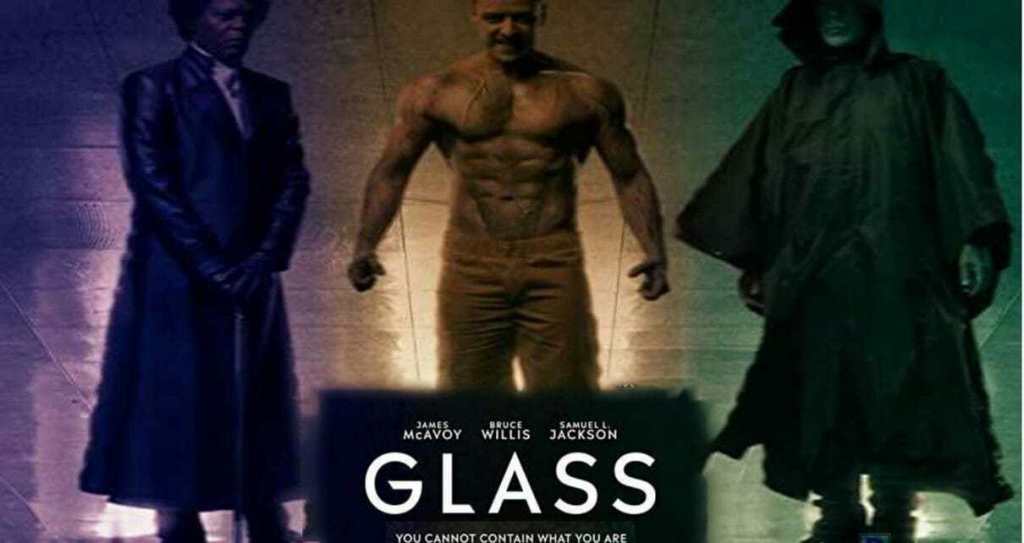
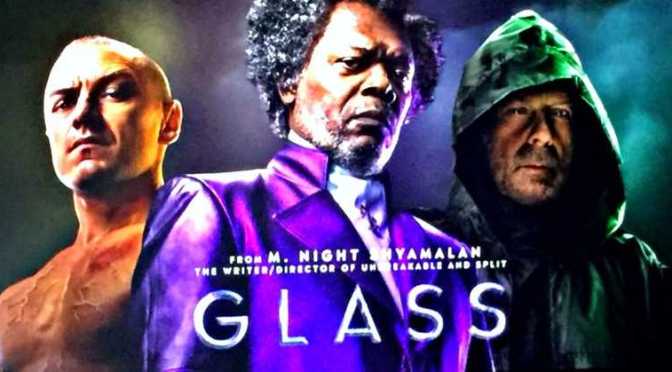
GLASS (2019) – MOVIE REVIEW

GLASS (2019) – MOVIE REVIEW

Directed by: M. Night Shyamalan

Produced by: M. Night Shyamalan, Jason Blum, Marc Bienstock, Ashwin Rajan

Written by: M. Night Shyamalan

Starring: James McAvoy, Bruce Willis, Anya Taylor-Joy, Sarah Paulson, Samuel L. Jackson

Music by: West Dylan Thordson

**CONTAINS SPOILERS FROM SHYAMALAN’S PRIOR FILMS**

M. Night Shyamalan is arguably one of the most critically divisive directors working today. Not because his films are particularly controversial, but mainly because he is a risk-taker that tests the boundaries of genre expectations. He has so many different ideas and concepts that quite often his movies have back-fired spectacularly, however, when he gets it right his genre films are highly entertaining and compelling. Films such as: The Sixth Sense (1999), Unbreakable (2000), Signs (2002), and The Village (2004), were for me, brilliant genre films full of invention, suspense and wicked twists. Many people felt The Village stretched the limits of suspending disbelief, but it was a masterpiece compared to his filmic failures like: The Lady in the Water (2006), The Happening (2008) and The Last Airbender (2010).

I missed seeing the apparent disaster that was After Earth (2013), yet it was opined that Shyamalan returned to some essence of form with the horror film The Visit (2015). However, I still felt there were some dodgy creative decisions in that, such as the story-filler-white-middle-class-rapping kid in amidst a creepy thriller. Yet, with Split (2016), Shyamalan was back to his best, weaving an exploitational B-movie kidnap-plot with a searing psycho-performance from James McAvoy. The ending, which found Anya Taylor-Joy’s ultra resilient Casey fighting back against McAvoy’s twenty-plus split-personality maniac, then brilliantly linked the film to Shyamalan’s Unbreakable (2000). Therefore Glass (2019), becomes the third part of an unlikely trilogy; three films where Shyamalan strives to create his own universe and mythology within a more realistic superhero and super-villain world.

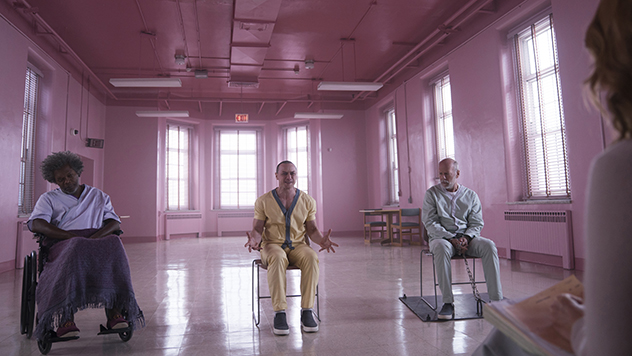
Glass starts three weeks after the end of Split  and opens with a terrific and bruising encounter between McEvoy’s dominant “Beast” personality and David Dunn’s (Bruce Willis) vigilante, daubed “The Overseer” by the media. Captured by authorities, the two are locked up and analyzed by Sarah Paulson’s seemingly sympathetic psychiatrist, Dr Ellie Staple. Enter Samuel L. Jackon’s Elijah Price, who is ALSO being held at the same mental health facility. I mean what could go wrong? Does the catatonic Price have villainous plans for The Horde and The Overseer? What do you think?

What I love about Shyamalan’s screenwriting, and this is something which he could equally be criticized for, is you can hear the cogs of contrivance creaking with every plot turn. Yet his ideas really capture your imagination and you genuinely want to know what happens next. Personally, as a fan of say Agatha Christie, I love theatrical exposition and clear “rules-of-the-world” mechanics. Shyamalan gets his three big-hitters in the same place and cinematic fireworks, however unlikely and full of plot-holes it may be, ensue. Woven within the fights, monologues and narrative misdirections are very clever meta-textual references to comic-book structures. This adds a welcome context to the denouement, which contains at least two incredible revealing twists.

Ultimately, I feel, unlike certain critics, that Glass is a fun and entertaining end to the trilogy. Yes, it tests the believability grid but Shyamalan must be applauded for striving, once again, toward some form of originality within his chosen genre.  It arguably goes down a deep rabbit hole at the end which is hard to get out of; but the impressive cast keep you in the light for the most part. James McAvoy is simply, once again, outstanding. Why hasn’t he been nominated for an Oscar? Who knows! Jackson and Willis are always solid performers, although I felt that Dunn’s character was slightly thrown away at the end. Anya Taylor-Joy also stood out and she is going to be a big star if she carries on delivering wide-eyed and steely performances such as these. Thus, Shyamalan gives us another big hit and something very different from the Marvel and DC superhero universes; something altogether more human.

Mark: 8.5 out of 11

STAN AND OLLIE (2018) – CINEMA REVIEW

STAN AND OLLIE (2018) – CINEMA REVIEW

Directed by: Jon S. Baird

Produced by: Faye Ward

Written by: Jeff Pope

Cast: Steve Coogan, John C. Reilly, Shirley Henderson, Nina Arianda, Rufus Jones, Danny Huston etc.

**CONTAINS HISTORICAL SPOILERS**

There are very few things as warming and pleasant as taking a trip down memory lane, recalling the fuzzy thoughts of a bygone childhood time when everything was laughter and escape. Escape in this instance came in the form of a black and white television box; while laughter came from watching arguably the greatest comedy double act in movie history on TV every early evening after school on BBC2. To be sure, my youth would have been a lot more depressing without Laurel and Hardy’s comedies to divert my mind away from family strife, school bullies and grey council estate existence.

Watching Stan Laurel and Oliver Hardy’s comedies was a formative part of my early years and I have continued to be a fan of there work to this day. It’s incredible that, when I was a kid, films made nearly forty years before had me in uncontrollable fits of laughter. Even now classics such as: Laughing Gravy (1931), Way Out West (1937), The Music Box (1932), Sons of the Desert (1933), County Hospital (1932), Busy Bodies (1933), Our Relations (1933), The Flying Deuces (1939) etc. to name just a few of their incredible output, retain the power to have me in stitches. Laurel’s skinny dumb man-child perfectly contrasted Hardy’s larger more confident, yet deluded leader of the two. Their comedy derived from their hapless misadventures, usually involving some new business venture or fish-out-of-water situation which resulted in anarchic chaos and silliness all round. But the comedy was not simple pratfalls but carefully constructed sight-gags, complex slap-stick set-pieces and constant battles with wives, girlfriends or authority figures.

After briefly establishing the characters of Stan and Ollie in Hollywood during 1937, the Jeff Pope scripted film moves to the United Kingdom in 1953. Here Laurel and Hardy’s star is on the wane and they have taken a music hall tour to try and make a few quid, while potentially getting a Robin Hood movie off the ground. With their health suffering, especially Hardy’s, due to excessive alcohol and food intake, the two begrudgingly go on tour while bitter acrimony simmers underneath. On top of that the tour is struggling due to a lack of promotion by Bernard Delfont and the whole thing looks like it could be a disaster. I must admit the film is not really that dramatic and stands more as a nostalgic tribute to the power of Stan and Ollie’s friendship and comedic relationship. Laurel is the workaholic always cracking wise and looking for the next gag, while Hardy is the more sociable and relaxed with an eye for the ladies and horses.

Jon S. Baird directs with a deft hand, yet he has two incredible actors in the lead roles. Steve Coogan and John C. Reilly are absolutely perfect as Stan and Ollie. Their mannerisms and comic timing in capturing the comedy duo are a joy to watch. Moreover, there’s a wistful pathos in the fact a great life journey is about to come to an end. Here, Coogan and Reilly bring a real warmth to the roles and as they resolve their tensions the over-riding emotion ultimately is love. As the tour continues they are joined by their wives, portrayed by Shirley Henderson and the scene-stealing, Nina Arianda. Their relationships at times reflects the hen-pecking women Stan and Ollie would find themselves chained to in their movies, but there’s clearly a lot of love on screen too. Lastly, despite their health issues Stan and Ollie are born entertainers, fully committed to the ethos that the show must go on.

Overall, Stan and Ollie is a wonderful paean to two of the greatest comedic actors that ever lived. It’s gentle in pace and drama but anchored by two mesmerising performances by Coogan and Reilly. Despite the low budget, the period locations and costumes are brilliantly designed, and I especially enjoyed seeing many recognizable London locations. The biggest highlight though throughout is the hilarious re-enactments of many of Laurel and Hardy’s famous sketches, songs and movie moments. These took me back to my youth and days of watching Stan and Ollie on that small black and white box at home, laughing my silly head off without a care in the world.

Mark: 8.5 out of 11

COLETTE (2018) – CINEMA REVIEW

COLETTE (2018) – CINEMA REVIEW


Directed by: Wash Washmoreland

Produced by: Elizabeth Karlsen, Pamela Koffler, Michel Litvak and Christine Vachon.

Screenplay by: Richard Glatzer, Rebecca Lenkiewicz and Wash Washmoreland

Cast: Keira Knightley, Dominic West, Eleanor Tomlinson, Denise Gough etc.

**CONTAINS HISTORICAL SPOILERS**

In a coincidental twist of cultural fate I only recently became aware of turn-of-the-century novelist, libertine, bohemian and society trailblazer that was Sidonie-Gabrielle Colette. I’d been listening to a brilliant audio-documentary by Adam Roche, which was about Audrey Hepburn’s early life prior to becoming a Hollywood star. Interestingly, it was an elderly Colette who spotted the then unknown Helpburn filming a supporting role in Monte Carlo. Furthermore, it was Colette who insisted Hepburn was, despite her lack of stage experience, the ideal person to portray her famous creation Gigi on Broadway. Thus, even in later life Colette was to the fore of the cultural aesthetic; both a major talent and celebrity ripe for respect and admiration.

From her Claudine (1900) novels, to La Vagabond (1910) to Gigi (1944), Colette was a prolific writer of many books and short stories. She was also an actor, dancer and mime, who seemingly delighted in confronting the stuffy middle and upper classes of French society. Unashamed by on-stage nudity and choice of sexual parters, Colette had love affairs with both men and women. Not only did she break down sexual taboos, she also furthered gender equality and would be nominated for the Nobel Prize for Literature in 1948.

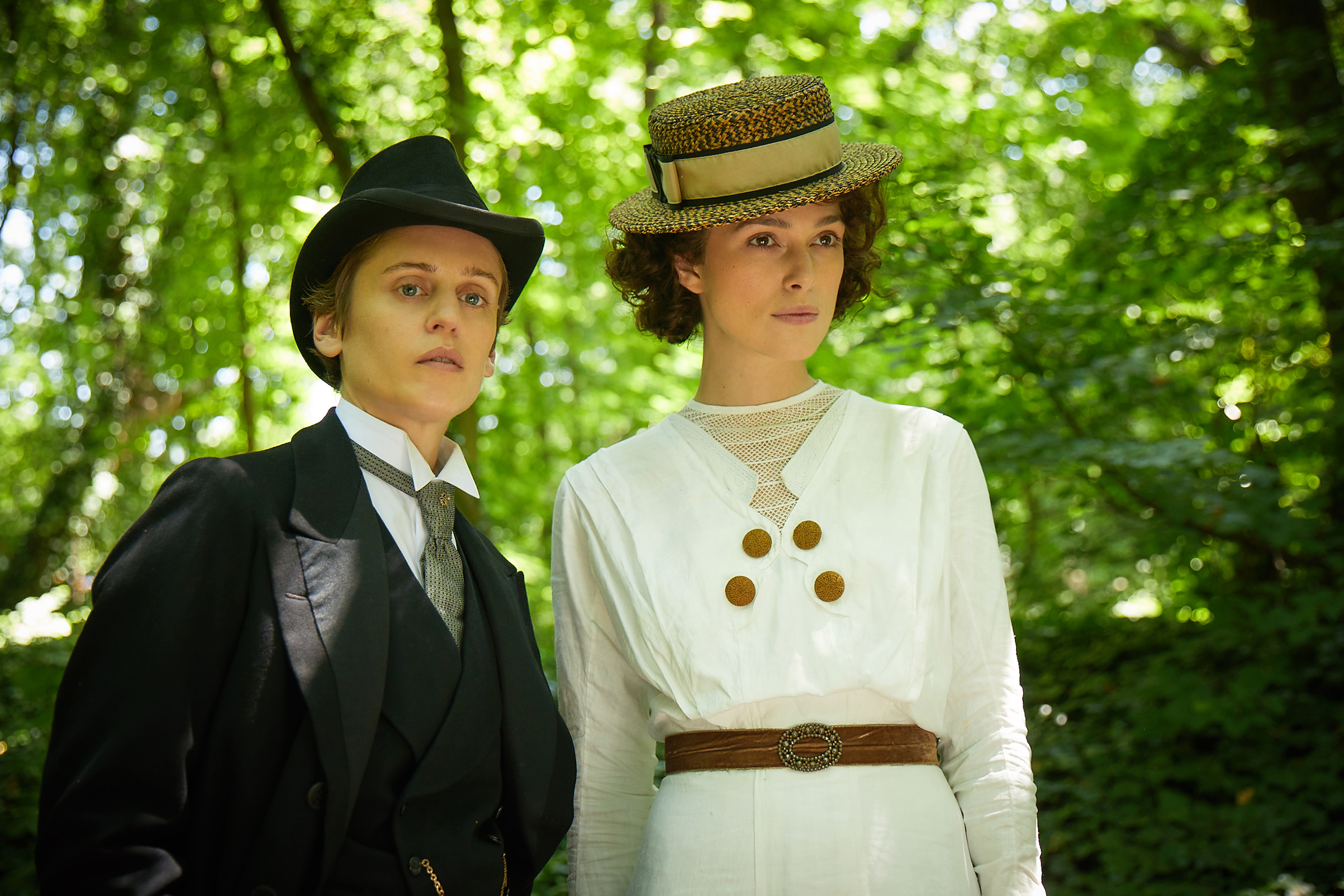
Denise Gough stars as Missy and Keira Knightley as Colette in COLETTE
Credit: Robert Viglasky/Bleecker Street

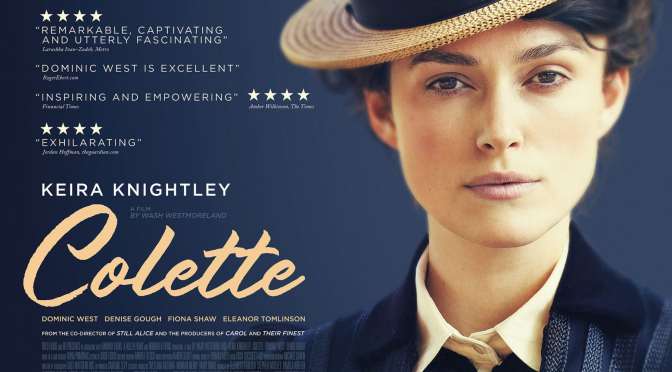
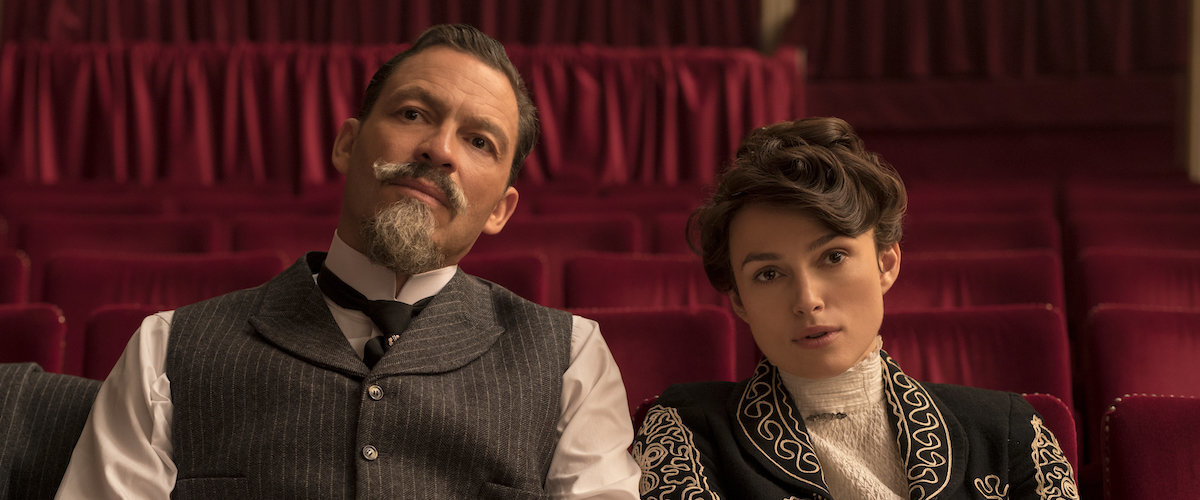
The cinematic version of her life finds Keira Knightley portraying the titular character with a committed energy, verve and magnetism. Knightley has never been the most nuanced of actors but she is a striking movie star, delivering a fine performance here. Likewise, the ever reliable Dominic West is on excellent form as Henry Gaulthier-Villars – AKA ‘Willy’ – Colette’s first husband. West represents him as a charismatic cad with an insatiable lust for women, gambling and booze. While able to wow publishers with his sales pitches he relies on others to do the writing, while happily wasting the advances and royalties.

Willy sweeps the naive country girl Colette off her feet and introduces her to the artistic and literary circles of Paris. As such it is his connections which enable Colette to gain her first publishing success. However, it is Willy who takes all the plaudits, publishing under his own name. This authorial switch inevitably creates a dramatic schism as Colette fights for her name to be on the books. Willy refuses, highlighting both his own egomania and the sexist prejudice of the day. Like the similarly plotted biopic Big Eyes (2014), this film illustrates the nefarious nature of dominant masculinity; however, it also made me consider whether the artists would have been successful if it HADN’T been for these dastardly blokes. Who can tell? One would hope the talent of said artists would shine through come what may.

Structurally, Colette is very linear representing a “greatest hits” of how Colette progresses creatively, romantically and sexually. As aforementioned Knightly gives a fearless performance and the period setting is beautifully evoked within an excellently directed production. My only criticism is a fair amount of time was spent on Colette’s sexual exploits when I would have preferred more drama relating to her authorship battles with feckless Willy. Nonetheless, as period biopics go the film stands as a stylish and admiral tribute to a trailblazing feminist and literary icon.

Mark: 8 out of 11
MY BRILLIANT FRIEND (2018) – HBO / SKY TV REVIEW

MY BRILLIANT FRIEND (2018) REVIEW

Based on: My Brilliant Friend by Elena Ferrante

Directed by: Saverio Costanzo

Written by: Elena Ferrante, Francesco Piccolo, Laura Paolucci, Saverio Costanzo

Starring: Elisa Del Genio, Ludovica Nasti, Gaia Girace, Margherita Mazzucco, Anna Rita Vitolo, Luca Gallone, Imma Villa, Antonio Milo, Alessio Gallo etc.

**MAY CONTAIN SPOILERS**

Image result for my brilliant friend

The quality of Italian produced TV dramas in recent years has been spectacularly high. I devoured three bloody seasons of the macho-gangster brutality of Gomorrah (2014 – 2017) with both shock and enthusiasm. I subsequently imbibed avidly the magisterial and philosophical depth of Paulo Sorrentino’s The Young Pope (2016). Thus, expectations were equally raised by HBO’s production of My Brilliant Friend; my confidence eventually rewarded with a moving, fiery, sensual, violent and intelligent drama about friendship and family rivalries.

Based on the first of four Neapolitan novels written by Elena Ferrante, the drama charts the lives of various families who inhabit a 1950s Naples neighbourhood. It’s a traditionally working class environment, set amongst run down blocks with cars travelling along dusty roads which lead to the city, country or sea. While encompassing a large ensembel cast, the story focusses on two specific characters: “Lenu” Greco and “Lilu” Cerullo. Forging a powerful friendship in their primary school years, the narrative unfolds over a ten-year period until they are sixteen. Their lives become entwined in family dramas, fights, romances and death, as both characters rival and connect with each other and those in the neighbourhood.

Image result for my brilliant friend

Class differences underpin the various plots and sub-plots with Lilu displaying incredible academic acumen but held back as her family are too poor to send her to school. Galvanised by competition Lenu pushes herself to get ahead of her friend and despite such division the two are drawn together when facing seemingly insurmountable emotional odds. As such, their friendship and loyalty toward each other drives the story powerfully. Lilu, while contrary and irritating at times, is passionate and principled, while Lenu is more passive and demure. Yet, together they form a resilient whole.

The performances from the cast are brilliant, while the production overall is a thing of beauty. Max Richter’s score is sumptuous and haunting, with the era, setting and locations all wonderfully evoked. But it’s not nostalgia for happier times, rather an honest examination of humanity and rites of passage struggle through puberty and into adulthood. While the sun shines brightly in Naples, these are ultimately hard times. The many stories unfold in sand-hit tenement blocks where men, women and children struggle to make ends meet. Moreover, the show prefaces sisterhood as a means to overcome the misogyny and sexual exploitation of the era.

Toxic masculinity dominates throughout, with men represented as either: sexual predators, gangsters, wife-beaters and Catholic Priests. There are some positive male role models and there is a whiff of solidarity in the air as Communist doctrine is presented; however, there is no escape for the working classes other than to die or struggle onwards. Lastly, the only way out for Lenu and Lilu is sticking and fighting together; educating themselves academically and emotionally to grow and gain the experience necessary to cope with the slings and arrows of Neapolitan life.

Mark: 9 out of 11

RESOLUTION (2019): DR WHO NEW YEAR’S SPECIAL REVIEW

RESOLUTION (2019): DR WHO SPECIAL TV REVIEW

Directed by: Wayne Yip

Written by:  Chris Chibnall

Cast: Jodie Whittaker, Mandip Gill, Bradley Walsh, Tosin Cole, Charlotte Ritchie, Nikesh Patel etc.

Produced by: Nikki Wilson

Executive producer(s): Chris Chibnall, Matt Strevens, Sam Hoyle

Music composer: Segun Akinola

**SPOILER WARNING**

Image result for DOCTOR WHO RESOLUTION

And so Jodie Whittaker’s first raft of television adventures as the Gallifreyan Time Lord / Lady came to an end with this New Year’s Day Special. Aptly entitled Resolution it offered lots of intrigue and action and invention and one of the worst kept TV trailer secrets of recent times.

Opening with an impressive battle sequence involving humans defeating some unknown and villainous beast in the 9th Century, we then flash forward to the present wondering whether the creature would be seen again. Of course it would! It’s a fine opening and very cinematic, creating both a sense of awe and suspense, while owing much to the Marvel, DC Universes and Lord of the Rings type fantasy genres. In the present we are then introduced to flirtatious archaeaologists Lin and Mitch, who suddenly unearth that which has been buried in the earth for centuries. So far: so Quatermass!

Image result for DOCTOR WHO RESOLUTION CHARLOTTE RITCHIE

When the archaeologists’ find brings to life a slimy, tentacled and horrific monster from the darkness, the Doctor, Tardis and ubiquitous gang are not too far behind. The monster itself is an (SPOILER WARNING) unshelled Dalek who has been woken from centuries of slumber with anything but peace and goodwill on his or her mind. I’m not sure if Dalek’s are gender specific but probably best to keep within the politically correct rules the show rightly follows and projects.

With all the back-story and exposition out of the way, what follows is essentially a Terminator: Judgment Day (1991) type pursuit plot. The Dalek gains control of Lin and envelops her mind in order to carry out its’ evil bidding. Here Charlotte Ritchie is absolutely brilliant in her role as she valiantly battles the Dalek’s nefarious battle plans. Likewise I felt that Whittaker’s Doctor was on good form in Resolution; the Dalek threat really galvanises the Doctor’s mettle, as this episode felt more like some of the classic episodes of the past.

Overall, I really enjoyed this fast-paced narrative and Chris Chibnall’s script has a lot of fun with this solo Dalek as they re-shell, re-arm and attempts to exterminate everyone in its’ path. Not so successful is the sub-plotting resolution of Ryan’s relationship with his father. It worked out but it slowed the main action story down unnecessarily and there was some right old clunky dialogue in a cafe scene which really added nothing other than some mild emotional turmoil for Ryan. However, Yas suffered even more with very little to do character wise; while Bradley Walsh again really shone as the chirpy cockney Graham. Nonetheless, overall it was great bit of Dr Who entertainment to start the New Year.

Mark: 8.5 out of 11

“TIME TO GET CEREAL!” – SOUTH PARK (2018) – SEASON 22 REVIEW

SOUTH PARK (2018) – SEASON 22 REVIEW

Directed by: Trey Parker
Produced by: South Park Studios
Written by: Trey Parker
No. of episodes: 10
Release Date: September 22 2018 – December 12 2018
UK Release: Comedy Central

Trey Parker’s scandalous and scatological satire South Park shows no sign of slowing down in its mission of targeting the various sacred cows, media, celebrities, politicians and fads of society. The shenanigans of the small Colorado town reach their 22nd season, as the likes of: Cartman, Sharon, Randy, Kyle, Mr Mackey, PC Principal, Stan, Mr Hankey, Butters, Mrs Cartman etc. continue to be used as Parker’s conduits for comedy and social commentary.

Season 22 started slowly but ultimately proved a hit for me. Nonetheless the show is arguably a victim of its own formula and success. There are few surprises left as the show bases most episodes on satirising current events and the cultural zeitgeist. Plus, the characters are so well formed that we are rarely shocked by what they do. However, the writing, gag-rate and thought-provoking narratives prove the show is as strong as ever.

Arguably not as memorable as the incredible Season 19 (review here); there is a lot to recommend in Season 22! Below, I will now look at each episode in turn and consider their various merits.

**CONTAINS SPOILERS**

EPISODE 1 – DEAD KIDS – Mark: 8 out of 11.

School shootings and the lack of reaction to them force Sharon Marsh to become apoplectic in her outrage. A solid episode which didn’t quite catch fire but had its moments; as Sharon’s PMT is ridiculed by Randy unfairly with Parker clearly stating gun crime something must be done about this horrendous stain on United States society.

EPISODE 2 – A BOY AND A PRIEST – Mark 8 out of 11.

Butters “befriends” Father Maxi as the Catholic Church once again try and cover up historical paedophilia. I was shocked but how unshocked I was by the episode yet it contains many great gags. Parker ensures we do not forget the horrific crimes committed by priests down the age; highlighting the hypocrisy that continues to be presented by the Catholic hierarchy.

EPISODE 3 – THE PROBLEM WITH A POO – Mark 8.5 out of 11.

Talking turd Mr Hankey was never my favourite character, but the show literally gets loads of “shit” jokes out of him. Here, Parker satirises celebrity Twitter scandals but more interestingly focusses on Vice Principal Strong Woman giving birth to five PC Babies! This precipitates a fantastic running joke throughout the series involving PC Babies crying persistently at mention of something that does not fit their progressive agenda.

EPISODE 4 – TEGRIDY FARM – Mark: 9 out of 11

The series really started hitting its stride as Parker snipes at the vaping craze and the legalisation of marijuana in Colorado. Typically, Randy Marsh driven episodes are almost often classics and here he becomes a hemp farmer. Similarly, Cartman has become a vape dealer and the two narrative strands combine to delightful effect.

EPISODE 5 – THE SCOOTS – Mark: 9 out of 11

This was another brilliant and funny episode. It combines elements of Hitchcock’s The Birds, with satirising of human beings’ obsession with smartphones and Halloween. I loved the way the episode built from Mr Mackey’s panic with the E-Scooters as they threaten to take over the town. As this is South Park it all soon descends into disaster and brilliant anarchic humour.

EPISODES 6 & 7 – TIME TO GET CEREAL / NO ONE GOT CEREAL – Mark: 9 out of 11

In this hilarious two-parter the kids’ old “friend” Al Gore comes out of retirement due to a monster killing citizens of South Park. It turns out it’s the analogous beast ‘ManBearPig’; a demonic animal part-pig-part-man-part-bear. If you didn’t know ‘ManBearPig’ is an absurd symbol for the Environment, and here Parker depicts Gore as not just a figure of fun but actually smugly correct in his global predictions. Meanwhile, the authorities – including the police – reject the existence of ‘ManBearPig’ and blame the kids for the murders. Satan makes an appearance too as the two-parter amusingly critiques: Climate Change deniers, inept policing and addiction to video-games such as Red Dead Redemption 2.

EPISODE 8 – BUDDHA BOX – Mark: 8 out of 11
Cartman’s anxiety leads him to wear a cardboard ‘Buddha Box’ over his head to isolate himself from society. Sending up further our obsession with mobile phones by eschewing meaningful human contact is always going to get laughs and Parker achieves that here. However, the PC Babies gags win the episode as taking the piss out of snowflake millennials continues to be hilarious.

EPISODES 9 & 10 – UNFULFILLED / BIKE PARADE – Mark: 10 out of 11

The highlight of the season was undoubtedly the episode called Unfulfilled. Here South Park pokes its parodic tentacles at Amazon, never losing its grasp. Amazon open a warehouse in South Park, and after an accident, the employees go on strike. This industrial action leads to Jeff Bezos himself coming to South Park; with Parker depicting him as a cold telekinetic alien. The episode and the follow-up Bike Parade show the various ways the people of South Park deal with the lack of fulfilment from the Amazon non-deliveries. Here Parker combines Marxist doctrine and consumer culture satire with absurd comedy and horror parody to amazing effect. These episodes once again show that South Park retains the balls and strength to make us laugh and think in equal measures.  

Overall mark: 8.5 out of 11.

THE CINEMA FIX: 12 FAVOURITE TV SHOWS OF 2018

12 FAVOURITE TV SHOWS OF 2018

I love television and watched a lot of it last year on most terrestrial and streaming services; especially the BBC, ITV, SKY and NETFLIX channels.  I must admit I am way behind on many AMAZON and ALL 4/CHANNEL 4 programmes so will be rectifying that this year. Indeed, there are probably some glaring omissions because of this.

For comparison I include last year’s favourite TV shows. This year I have not included South Park (Season 22) as it was not as good as prior years, despite clearly being one of the funniest shows around. Also, Doctor Who does not make my list as there were too many average episodes. Lastly, a special mention to The Walking Dead (Season 9), which at the mid-season break had somehow pulled itself out of the torpid decline that occurred around Season 6. It may make my 2019 list once the latest season has finished screening this year.

FAVOURITE 12 TV SHOWS OF 2017

BIG LITTLE LIES (2017) – HBO
CURB YOUR ENTHUSIASM – SEASON 9 (2017) – HBO
FARGO (2017) – SEASON 3 – FOX / CHANNEL 4
GAME OF THRONES
(2017) – SEASON 7 – HBO
THE HANDMAID’S TALE (2017) – HULU/CHANNEL 4
IT’S ALWAYS SUNNY IN PHILADELPHIA (2017) – SEASON 12 – NETFLIX
LEAGUE OF GENTLEMEN – 20TH YEAR ANNIVERSARY (2017) – BBC
LEGION (2017) – FOX
MINDHUNTER (2017) – NETFLIX
SOUTH PARK – SEASON 21 – SOUTH PARK STUDIOS
STRANGER THINGS 2 (2017) – NETFLIX
THE YOUNG POPE (2016) – HBO

FAVOURITE 12 TV SHOWS OF 2018

ATLANTA (2018) – SEASON 2 – FOX

BILLIONS (2018) – S3 – SKY

Image result for billions season 3

BLACK MIRROR (2017)NETFLIX

Image result for BLACK MIRROR SEASON 4

BODYGUARD (2018) – BBC1

Image result for bodyguard season 1

THE DEUCE (2018) – S2 – HBO / SKY

Image result for THE DEUCE season 2

HANDMAID’S TALE (2018) – S2 –C4

Image result for handmaidS TALE season 2

HAUNTING OF HILL HOUSE (2018) – NETFLIX

Image result for haunting of hill house

INSIDE NO. 9 (2018) – S4 – BBC

Image result for INSIDE NO 9 SEASON 4

KILLING EVE (2018) – S1 – BBC

Image result for KILLING EVE

PATRICK MELROSE (2018) – SKY

Image result for PATRICK MELROSE

VANITY FAIR (2018) – ITV

A VERY ENGLISH SCANDAL (2018) – BBC

Image result for A VERY ENGLISH SCANDAL

BIRD BOX (2018) and ROMA (2018) – NETFLIX “CINEMA” REVIEWS 

BIRD BOX (2018) & ROMA (2018) – NETFLIX “CINEMA” REVIEWS

Firstly, may I wish you all a happy holiday season and thank all the people who have visited and read my reviews and articles this year. There are a lot of film review sites out there so it’s great so get so many visitors in a saturated online market.

For my final reviews of the year I have decided to double-up two Netflix releases. I watched them pretty much back-to-back in the hope, on top of enjoying them for entertainment purposes; I may be able to add them to my 2018 favourites.

So, here are my quick and concise reviews of Birdbox (2018) and Roma (2018) with the usual marks out of eleven. By the way, if you’re interested my favourite films and TV show lists of 2018 will appear early in January. Happy 2019 in advance!

**MAY CONTAIN SPOILERS**

BIRD BOX (2018)

Directed by: Susanne Bier

Produced by: Chris Morgan, Scott Stuber, Dylan Clark, Clayton Townsend

Screenplay by: Eric Heisserer / Based on: Bird Box by Josh Malerman

Starring: Sandra Bullock, Trevante Rhodes, John Malkovich, Danielle Macdonald etc.

It’s the end of the world as we know it: AGAIN!  I’d say that many of us may be getting apocalypse fatigue by now. So much so that if the end of the world does happen we’ll be mentally ready. Thus, any genre film about the end of the world must fight against the tide of similar films and TV shows released in the last decade or so to gain our attention or praise. Bird Box, for me, was a very entertaining and thrilling addition to the sub-genre. It benefits from an excellent ensemble cast and sterling lead performances from Sandra Bullock and Trevante Rhodes. Moreover, John Malkovich steals every scene he’s in as a cynical and obnoxious lawyer.

The story involves an invisible alien or natural force which infects the world’s population once they look; seeing it is deadly. It grips an individuals’ mind and then forces them to do horrific acts of violence to themselves. The film establishes Bullock’s character, blindfolded, with her two children just about surviving in the wilderness. After which we flash back five years and find Bullock’s pregnant character thrown into a memorably gripping set-piece. After which anyone familiar with George A. Romero’s zombie-film template will recognise many of the twists and turns in the story. Indeed, Bird Box is not that original because the superior, A Quiet Place (2018), also had a very similar premise but used sound rather than vision as the danger. Nonetheless, as a genre film Bird box rips along compellingly and Suzanne Bier has created some intense horror moments throughout.  

Mark: 8 out of 11
ROMA (2018)

Directed by: Alfonso Cuarón

Produced by: Alfonso Cuarón, Gabriela Rodriguez, Nicolas Celis

Written by: Alfonso Cuarón

Starring: Yalitza Aparicio, Marina de Tavira

Alfonso Cuarón writes, directs, edits and shoots a clear love and hate letter to his Mexican childhood. It contains the love he feels for his mother and the maid who helped raise him; and ire towards the men that negatively affected his young life and his country of birth. Set in the 1970s it covers around a year in the life of one middle-class family living in Mexico City; the main focus being the young help, Cleo. We follow her as she carries out her mundane tasks on a daily basis in an Upstairs Downstairs thematic structure. She is committed to her work and it is clear that she dotes and loves the children as if they are her own. As a historical film the era aesthetics are incredibly realistic and Cuaron’s cinematography, presented in crisp black and white imagery, is virtually perfect. You feel like you are there with the characters in 1970s Mexico. Historically too, the film evokes between the lines the politically charged danger of the era; however, Roma is more of a personal film than determinedly socio-political.

Cuarón is an auteur at the height of his powers. His direction on both Children of Men (2006) and Gravity (2013) was phenomenal; utilising technological brilliance with fierce storytelling acumen. Likewise, in Roma his stylistic choices are fascinating, although I think it actually works against the themes and content at times. The long take pans and tracking shots, while expertly done, slow the pace of the story and in my humble opinion are repetitive and overdone. Moreover, Cuaron the editor has fallen in love with own work and to me would have been a masterpiece if trimmed to two hours. There are at least four incredible standout cinematic scenes – that I won’t spoil – which all linger long in the memory. Furthermore, the characters, led by the humble Cleo are empathetic and at times tragically formed against the backdrop of political unrest. Yet, despite evoking the Italian neo-realist era of post-war filmmaking, Cuaron’s film feels padded at times, lacking the economy of Rossellini’s and De Sica’s work. Overall, it’s a touching work of cinema about birth, life and death, which arguably did not need the stylistic flourishes to tell such a simple, slice-of-life story.                                           

Mark: 8.5 out of 11

THE OLD MAN AND THE GUN (2018) – CINEMA REVIEW

THE OLD MAN AND THE GUN (2018)

Written and Directed by: David Lowery

Produced by: James D. Stern, Dawn Ostroff, Jeremy Steckler, Anthony Mastromauro, Bill Holderman, Toby Halbrooks, James M. Johnston, Robert Redford

Based on: The Old Man and the Gun (article) by David Grann

Starring: Robert Redford, Casey Affleck, Danny Glover, Tika Sumpter, Tom Waits, Sissy Spacek

Music by: Daniel Hart

Cinematography: Joe Anderson

**CONTAINS SPOILERS**


Forrest Tucker was a career criminal destined to die in jail. His life in between was one of many bank robberies, incarcerations and successful and unsuccessful prison breakouts. The morality of his actions must be condemned as the man was a recidivist addicted to the thrill of crime, making money and also the chase. While I’m not a fan of banks, who themselves are bigger criminals than the robbers, I rarely find myself rooting for such characters, unless there are mitigating circumstances for their actions.

Indeed, Tucker’s illegal acts would have left the authorities drained chasing him across America, and prevent them from protecting other people. Moreover, by holding a gun in people’s faces and demanding money Tucker would have most likely scared a good number too.  Tucker would go on to rob banks well into his late seventies but he never fired his gun; and was often described as a gentleman by his victims. Yet, despite his wrong-doings, the film of his life in the hands of acting legend Robert Redford and director David Lowery is well worth a watch.


It’s a pretty simple story based on a New Yorker article by David Grann and Lowery adapts with warmth and empathy towards Tucker’s aging bank robber. The casting of Redford is also a masterstroke. As he has throughout his career he exudes a mercurial class and poise.  There’s some wonderful usage of stock photos of Redford from earlier in his career, supplanted to the character of Tucker. This nostalgic trip down memory lane both serves the story and reminds us what a great movie star Redford has always been. It’s a shame that Redford has decided to retire from acting, as reported in August 2018, but this is a fine film to bow out on.

Lowery, whose last film was the amazing A Ghost Story (2017), changes tack with a more conventional character study here; however, he invests lots of imaginative touches in the presentation. He also gets a memorable performance from Sissy Spacek who sparkles as Redford’s romantic interest. It’s beautifully and hazily shot by Joe Anderson on Super 16mm and contains a misty-eyed halcyonic feel to it. I felt like I was watching a film from the 1970s even though it was set in or around the 1990s. So, despite my inherent dislike of the man and the crimes he committed, I very much enjoyed this excellent drama about a fascinating, if misguided, character.                                        

Mark: 8 out of 11
VANITY FAIR (2018) – ITV DRAMA REVIEW

VANITY FAIR (2018) – ITV DRAMA REVIEW

Created and written by: Gwyneth Hughes

Based on: Vanity Fair by William Makepeace Thackeray

Executive producer(s): Damien Timmer, Tom Mullens, Gwyneth Hughes, James Strong

Directed by: James Strong

Starring: Olivia Cooke, Claudia Jessie, Tom Bateman, Johnny Flynn, Charlie Rowe, Simon Russell Beale, Anthony Head, Martin Clunes, Frances de la Tour, Michael Palin

Composer(s): Isobel Waller-Bridge

Distributor: ITV, Amazon Studios

**MAY CONTAIN SPOILERS**

It’s an interesting anomaly in my later years that having previously boycotted period dramas which illustrate the lives of the wealthy and privileged, I now find myself being less partisan and actually watching more. This change doesn’t derive from a mellowing of my socialist working class roots but more an intelligent inquisitiveness as ignorant dismissal of the genre, be they on television or film, means one is possibly missing out on some fine drama or comedy. Indeed, many historical periods’ works of literature or theatre are in fact satirising or damning the upper classes.

Dickens for example dealt with the lower, middle and upper classes, shining a critical light at the many degradations of the era. Likewise, William Makepeace Thackeray also critiqued the folly of war, greed and narcissistic pursuits of the privileged. Stanley Kubrick demonstrated this brilliantly in his classic adaptation of Barry Lyndon (1975); while in ITV’s most recent adaptation Vanity Fair (2018), Thackeray’s adroit study of ambition and upward mobility shows the strengths, weaknesses and foibles of the women and men at the time of the Napoleonic wars.

Vanity Fair is widely considered a classic and considered the founder of the Victorian domestic drama. Originally serialised between 1847 and 1848 it was at the time a massive hit and one could argue the equivalent of what we would call a soap opera today. There have been, since the novel’s release, a plethora of screen, radio and television adaptations. Did we need another one? Probably not; but over seven compelling episodes Gwyneth Hughes’ screenplay does great justice to bring to life an army of: well-to-dos, country lords and ladies, soldiers, clergy, businessmen, plus the sparkling scheming of anti-heroine Rebecca or Becky Sharp.

Indeed, the effervescent, nuanced and outstanding performance of Olivia Cooke as Becky drives the narrative forward with absolute purpose. Cooke owns every scene as Becky attempts, from lowly beginnings, to rise through the ranks of society. It is both her strength of character and confidence which is her biggest asset and greatest enemy, because, always pushing for more, she doesn’t quit when she’s ahead. In stark reflection to Becky, Claudia Jessie as Amelia, is characterised as a romantic and desirous not of wealth or position, but rather love and romance. She is a pure spirit and her personality contrasts perfectly with Becky’s. While we admire Becky’s ambitious drive we remain suspicious of her motives, yet Amelia we warm to due to her big and gracious heart.

The men in the piece are a mixture of romantics, noble soldiers, treacherous or haphazard patriarchs, foppish fools, gamblers or all of the above. Tom Bateman gives a solid performance as Rawdon Crawley, Becky’s gambling military husband, as does Charlie Rowe as the more conflicted romantic, George Osborne. Furthermore, the adaptation contains sterling support from the cream of English character acting royalty including: Martin Clunes, Frances De La Tour, Claire Skinner, Anthony Head and Simon Russell Beale to name a few. However, the standout performance for me was Johnny Flynn as William Dobbin. This is such an empathetic and selfless character that, while holding a torch for Amelia, was prepared to sacrifice his love to make everyone happy. Potentially seen as a weakness, this for me was a real strength in a story which was full of selfish narcissists out for what they could get.

Aside from slightly dodgy green-screen CGI for the later scenes in India this was beautifully shot and lit, with the vistas of the English and French countryside wonderfully rendered. The interiors were eloquently designed as the stately and city homes of the characters, likewise the colourful costumes, were expertly brought to life.  James Strong is a prolific television director and he gets brilliant performances and marshals the pace and machinations of the narrative precisely. With Olivia Cooke and Johnny Flynn delivering star turns in their roles I was consistently surprised by this adaptation of Thackeray’s masterpiece. Ultimately, I’ve learned that whether something is a period drama or not one must give it a chance as it could have qualities which continue to stand the test of time.

Mark: 8.5 out of 11