Tag Archives: children

Cinema Review: Weapons (2025) – a finely constructed horror mystery!

Cinema Review: Weapons (2025)

Directed by Zach Cregger

Written by Zach Cregger

Produced by Zach Cregger, Roy Lee, Miri Yoon, J. D. Lifshitz, Raphael Margules, etc.

Main Cast: Josh Brolin, Julia Garner, Alden Ehrenreich, Austin Abrams, Cary Christopher, Benedict Wong and Amy Madigan.

Cinematography by Larkin Seiple

*** MAY CONTAIN SPOILERS ***
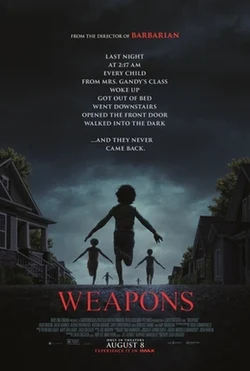


Zach Cregger’s Barbarian (2022) was an intriguing feature debut that captivated viewers with a suspenseful, tension-filled first half, expertly building a sense of dread and mystery. The film begins with a seemingly simple premise — a woman arrives at an Airbnb, only to find it double-booked — but what starts as a quiet psychological thriller quickly takes an unexpected turn. As the plot unfolds, the sense of unease grows, drawing viewers deeper into its web of secrets.

However, the second half of the film ventures into increasingly bizarre and chaotic territory, unravelling into a frankly insane series of twists and reveals. While it might initially seem like a more grounded thriller, Barbarian (2022) pushed the boundaries of genre, diving head first into over-the-top absurdity. It’s a thrilling ride that keeps you on the edge of your seat, even if the madness of the final act leaves you both bewildered and entertained. In some ways Cregger’s follow-up Weapons (2025) shares such structural and thematic similarities with his first film, however, it is a much more controlled and impactful mystery. Until the end.

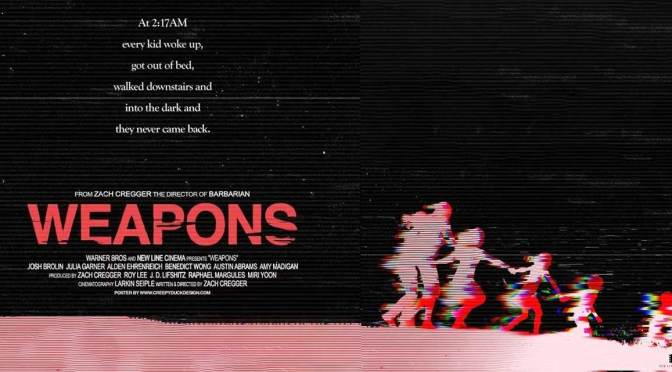
Weapons (2025) immediately hooks viewers with the mystery of the seventeen children going missing in the town of Maybrook. This instantly draws us into a world brimming with tension and unanswered questions. The authorities investigation into their disappearance soon stalls and how the townsfolk react becomes the central thread, gradually unraveling a complex, carefully structured narrative. Thus, Cregger’s postmodern fairy-tale unfolds through the eyes of various interconnected characters, each of whom brings a unique perspective and layer to the plot.
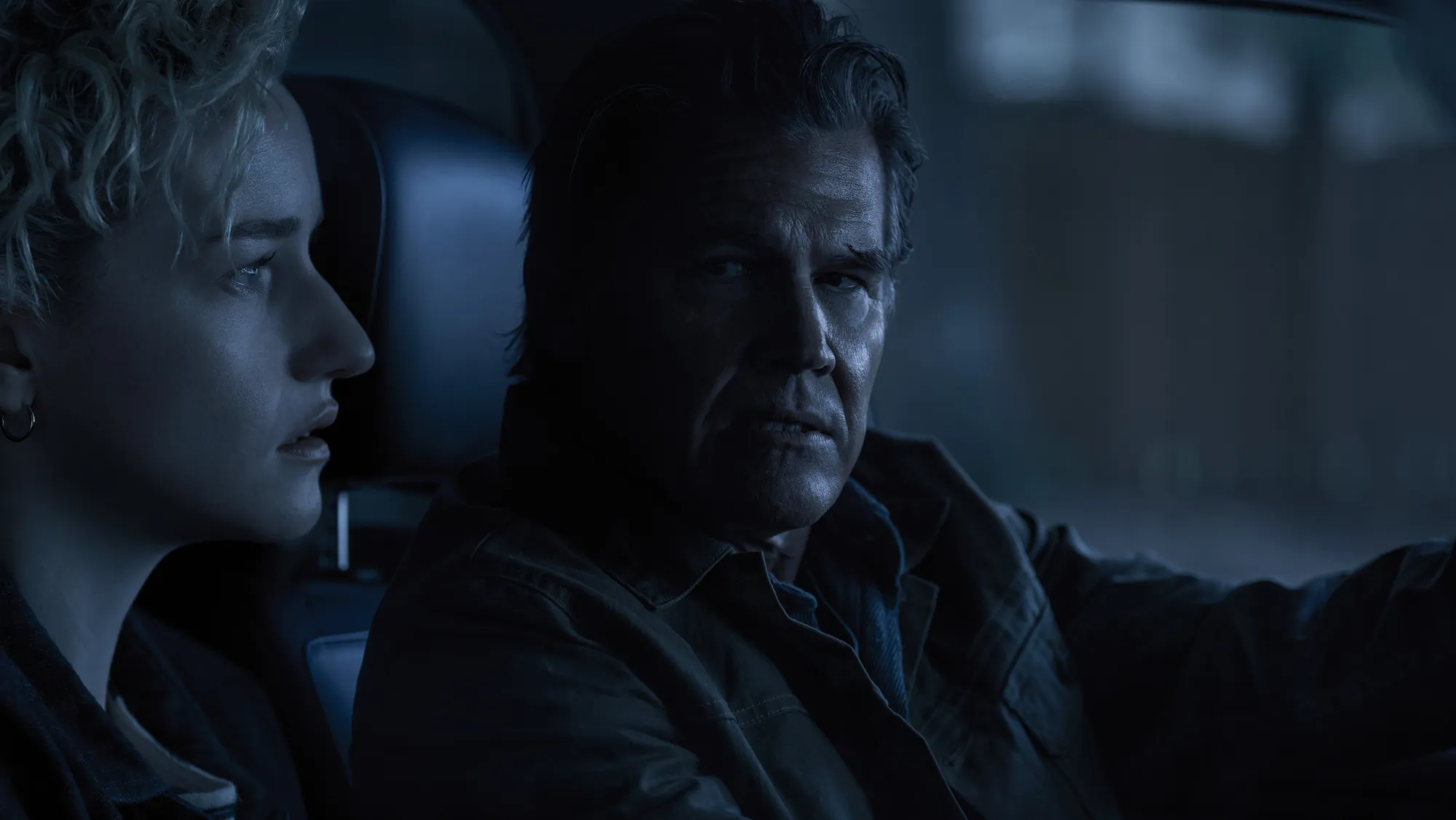


Josh Brolin plays Archer Graff, a father grieving the disappearance of his son Matthew, one of the missing children. His portrayal is poignant, balancing grief with a desperate need for answers, and his journey pushes the narrative forward with a personal stake in the outcome. Next, Julia Garner’s Justine Gandy, a dedicated teacher, adds another emotional dimension. She’s devastated when she discovers that nearly all of her students have vanished without a trace, with the exception of Alex Lilly (played by Cary Christopher), the only child from her class who remains. Justine’s struggle to find out what happened to her students, coupled with her own crumbling personal life and alcoholism, make her a compelling protagonist.

Other characters include Alden Ehrenreich’s Paul Morgan, a troubled police officer with his own set of demons, is a reluctant ally to Justine. Their past relationship adds a layer of tension as they navigate the growing sense of danger and urgency surrounding the missing children. Then, Austin Abrams brings a sense of raw, chaotic energy to James, a homeless drug addict and burglar whose past intersects with the mystery in unexpected ways. Lastly, Benedict Wong plays Marcus Miller, the school principal, who serves as an important figure in Justine’s quest for answers. Though sympathetic to her, Marcus is often caught between his professional responsibilities and the mounting pressure of the situation.

Weapons (2025) masterfully weaves its non-linear narrative with a striking array of tense, spine-chilling moments that keep audiences on edge throughout. As the plot unfolds through intersecting character arcs, the film expertly intersperses surprising scares, thrilling foot chases, and creepy locations, all while pulling you deeper into its twisting mystery. The jumps in time and the interconnected storylines create a sense of disorientation that builds forces viewers to constantly question what’s real and what isn’t.

Each character’s journey is filled with psychological unease and physical danger, leading to some genuinely heart-pounding sequences. Meanwhile, the eerie, claustrophobic settings—ranging from decaying homes to ominous, unfamiliar spaces—serve as perfect backdrops for the increasing horror. These moments contribute to the growing sense that something monstrous is lurking just beneath the surface, waiting to break free. Further, the film also plays with ambiguity, surreal dreams and unreliable narrators, allowing characters’ perspectives to fracture.

However, similar to Barbarian (2022), Weapons (2025) takes a tonal right-turn in the final moments, descending into all-out mania and Savini-style gore. The reveal of the matriarchal menace, who emerges as a central ‘Pied Piper’ type villain, feels somewhat unearned, undermining the narrative choices before. The ending also didn’t quite fully connect with the deeper themes or subtext of the film that were promised in the set-up. Yet, despite such inconsistencies Cregger’s Weapons (2025) has been marketed incredibly well and as has deservedly done great box-office business. Lastly, Creggers is a very talented filmmaker and his second film remains a smartly written and gripping ride filled with tension, scares, and that insane final act.
Mark 8.5 out of 11


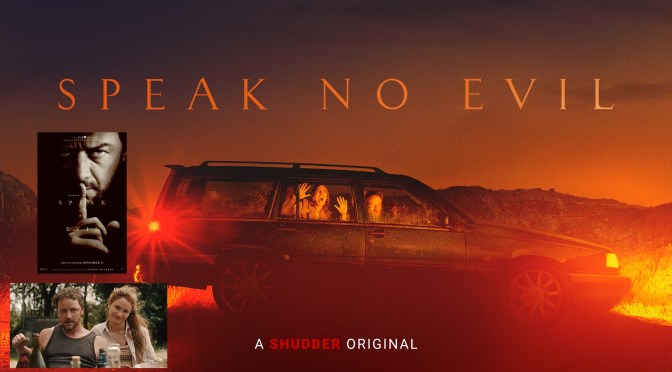
HORROR REVIEWS: SPEAK NO EVIL (2022) / SPEAK NO EVIL (2024)

SPEAK NO EVIL (2022)

Directed by Christian Tafdrup

Written by Christian Tafdrup and Mads Tafdrup

Main Cast: Morten Burian, Sidsel Siem Koch, Fedja van Huêt, Karina Smulders, Liva Forsberg and Marius Damslev.

Speak No Evil (2022), directed by Christian Tafdrup, is a chilling psychological horror that explores the perils of politeness within middle-class sensibilities, turning everyday discomfort into a waking nightmare. The film follows a Danish family with a young daughter, visiting a Dutch family unit, only to find themselves trapped in a horrifying and twisted game of cat and mouse. All smiles and charisma at first, the ‘Alpha’ Patrick, dominates his wife and young son, who unfortunately has no tongue. Tafdrup deftly dissects how the fear of offending others—deeply ingrained in bourgeois values—leads the protagonists to ignore increasingly unsettling behaviour.

Losing or not using one’s voice is inherent within the text. Further, what begins as awkward social tension escalates into something far more sinister, as the family is manipulated through their desire to maintain decorum. This dynamic plays on the anxieties of modern, polite society, where confrontation is often avoided at all costs. The film’s climax delivers a shocking, almost biblical punishment for their inability to break free from these conventions, suggesting a moral reckoning for those who allow fear of impoliteness to override survival instincts.

Subtle, creeping dread makes Speak No Evil (2022) a disturbing meditation on the dangers of middle-class complacency, and the terrifying consequences of choosing politeness over personal safety. Lastly, the film also explores the theme of toxic masculinity as the muscular ‘Alpha’ threatens the ineffective ‘Beta’ male, proving one should always stand up to bullies or face the consequences.

(Note: for those seeking out the film in the UK, it is currently screening on Shudder.)

Mark: 8.5 out of 11


SPEAK NO EVIL (2024)

Directed by James Watkins

Screenplay adaptation by James Watkins


Main cast: James McAvoy , Mackenzie Davis, Scoot McNairy, Alix West Lefler, Dan Hough, and Aisling Franciosi

The English remake of Speak No Evil (2024) delivers a faithful and unnerving adaptation of Christian Tafdrup’s original, with James McAvoy’s chilling performance at its heart. McAvoy, playing the charming yet menacing antagonist, brings a sinister edge to the character that heightens the tension and discomfort throughout the film. His portrayal effortlessly captures the unsettling power dynamics, making each of his polite gestures and subtle manipulations all the more terrifying. McEvoy relishes every moment of this characterful performance.

What truly stands out in this remake is how it retains the meticulous craftsmanship of the original. The film carefully balances tension, awkwardness, and psychological dread, maintaining the slow-burn atmosphere that made the Danish version so unsettling. Director James Watkins ensures the pacing and visual style honour Tafdrup’s vision, with each shot and interaction loaded with unease. Watkin’s adaptation also provides further exposition and fleshes out the character dynamics and motivations, notably with the children, whose actions are integral to propelling the narrative thrills.

The Cape Fear (1991)-style climax veers away from the original’s more subtle, thought-provoking and bleak ending. However, it further amplifies the anxiety, offering a nerve-shredding confrontation that feels both inevitable and brutal. The remake pays homage to the original’s themes of social etiquette, hidden danger and finding one’s voices against bullies, while delivering a climactic showdown that mirrors the power struggles found in classic thrillers. Overall, like the original Speak No Evil (2024) successfully inverts the home invasion dynamic, making it a worthy, terrifying and almost necessary remake.

Mark: 8.5 out of 11


FILMS THAT GOT AWAY #11 – WAVES (2019)

FILMS THAT GOT AWAY #11 – WAVES (2019)

Directed by: Trey Edward Shults

Produced by: Kevin Turen, Jessica Row, Trey Edward Shults

Written by: Trey Edward Shults

Cast: Kelvin Harrison Jr., Lucas Hedges, Taylor Russell, Alexa Demie, Renée Elise Goldsberry, Sterling K. Brown, Alexa Demie, Clifton Collins Jr., Vivi Pineda, etc.

Music by: Trent Reznor, Atticus Ross

Cinematography: Drew Daniels

*** MAY CONTAIN SPOILERS ***


“First your parents, they give you your life, but then they try to give you their life.”

― Chuck Palahniuk


Being a parent is an extremely difficult job and mostly impossible to get right. It is a rewarding and joyous experience, but can also be a frustrating one. Raising another human being in this world is a fluid and ever-shifting set of tasks. Once you have got past a certain age and seemingly resolved the issues of that time, their next period of growth provides a whole different set of puzzles. Whatever books you read or advice you take, or help you get, you will never be prepared enough to meet the challenge of being a parent. Even those who have had more than one child can attest that what occurred with the first child will not be the same for the next or the next after that. Every individual being is different and will have a varied set of intricacies.

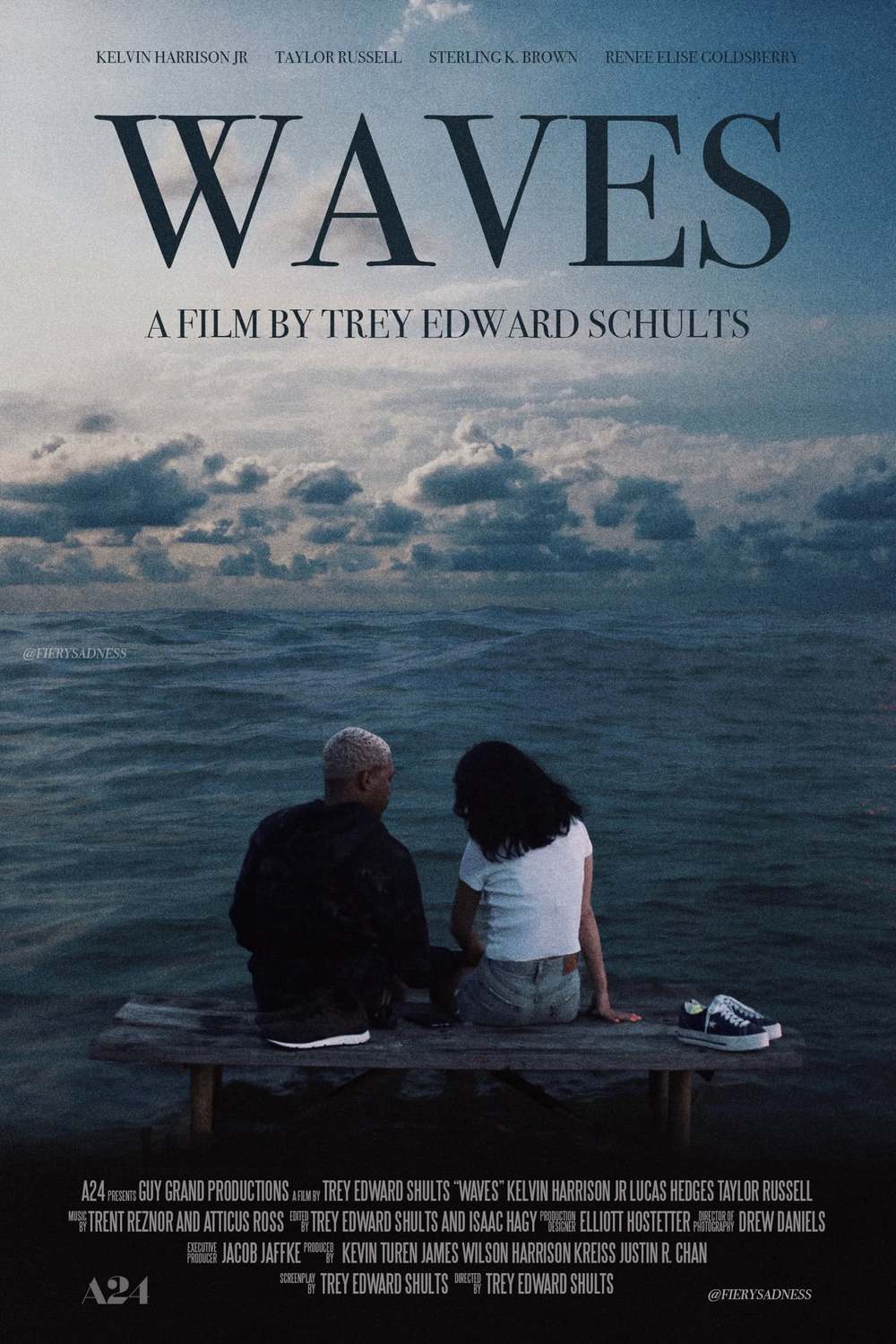
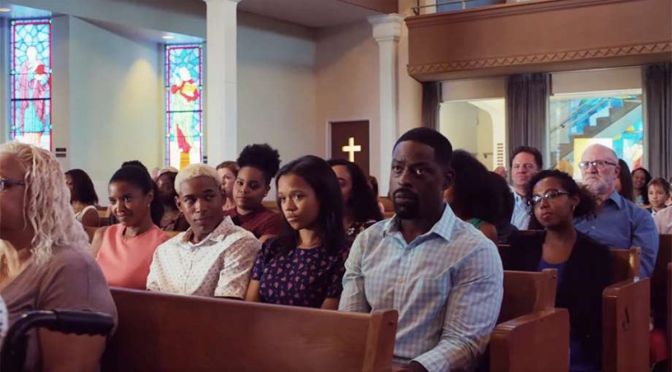
In the majestic family drama, Waves (2019), for example, Ronald (Sterling K. Brown) and Catherine Williams (Renee Elise Goldsbery), are middle-class parents with successful jobs who provide a fabulous Florida home and upbringing to their teenage children. Their son, Tyler (Kelvin Harrison Jnr.), is smart, athletic and a popular student, while their younger daughter, Emily, is quieter but equally bright. Ronald pushes Tyler to excel in every way, in study, work and on the wrestling team. He’s doing it with best intentions, but it creates incredible pressure for the lad. So much so, when Tyler suffers a serious injury and a problematic romantic situation he mentally and emotionally breaks.


Waves (2019)

This is a tale of two children and their parents attempts to raise, guide and control them. Not control in a negative fashion, but out of love and desire to see they are on the correct path in life. But what the narrative illustrates is that even the most loving and comfortable families can have tragedy bestowed upon them via a mixture of spontaneously poor life choices, youthful emotional imbalance and the fickle finger of fate. Thus, some could argue that with subjects such as unwanted pregnancy, pushy parents and rebellious teenagers, the film is over-familiar and melodramatic in places. However, the acting, direction and cinematography render the film wholly cinematic. Special mention to the extremely talented cinematographer Drew Daniels, who also lit HBO’s stylish mini-series Euphoria (2019). The production’s choice of colour, lighting, lens differentiation and aspect ratio switches are another reason this fabulous film impacted me so much.

No disrespect intended to the films nominated for Best Picture at the last Academy Awards, but how Waves (2019) did not get on that list is beyond me. Maybe it didn’t qualify due to some technicality, but it was definitely one of the best films of last year. It’s a shame I missed it as Trey Edward Schults proves he is a formidable young director. Sterling K. Hayden is impressive as the father who thinks he knows best, but is ultimately as emotionally lost as his son. Taylor Russell as Emily is an absolute shining star in the role and Kelvin Harrison Jnr. is, following his mesmerising performance in Luce (2019), destined for great things. Lastly, I’m not sure how Waves (2019) got away from me on release, but I’m glad I finally caught up with this searing and complex drama.

Mark: 9 out of 11


FILMS THAT GOT AWAY #10 – CAPTAIN FANTASTIC (2016)

FILMS THAT GOT AWAY #10 – CAPTAIN FANTASTIC (2016)

Written and directed by Matt Ross

Produced by: Nimitt Mankad, Monica Levinson, Jamie Patricof, Shivani Rawat, Lynette Howell Taylor

Cinematography: Stephen Fontaine

Music: Alex Somers

Cast: Viggo Mortensen, Frank Langella, Kathryn Hahn, Steve Zahn, George MacKay, Samantha Isler, Annalise Basso, Nicholas Hamilton, Shree Crooks, Charlie Shotwell, Trin Miller, Elijah Stevenson, Teddy Van Ee, Erin Moriarty, Missi Pyle, Ann Dowd,

***MAY CONTAIN SPOILERS***


Have you ever thought about living “off the grid?” Maybe you already do. It’s something I have considered from time to time. Get out of the rat race and stop punching the clock. I don’t think I have the abilities or desire to do so though ultimately. Moreover, I would probably miss my television and home comforts like baths and central heating. Having said that, it’s always fascinating to watch films or TV programmes about characters or people who have tried to live outside conventional societal rules. Films like: Together (2000), The Commune (2016), Leave No Trace (2018) and Into the Wild (2007) are all excellent narratives which represent characters who, to varying degrees of failure and success, have eschewed civilization. Matt Ross’ excellent recent release, Captain Fantastic (2016), is another darkly humorous and poignant movie to add to that list.

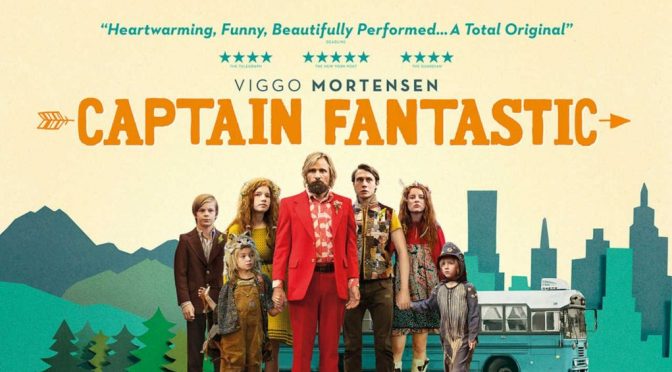
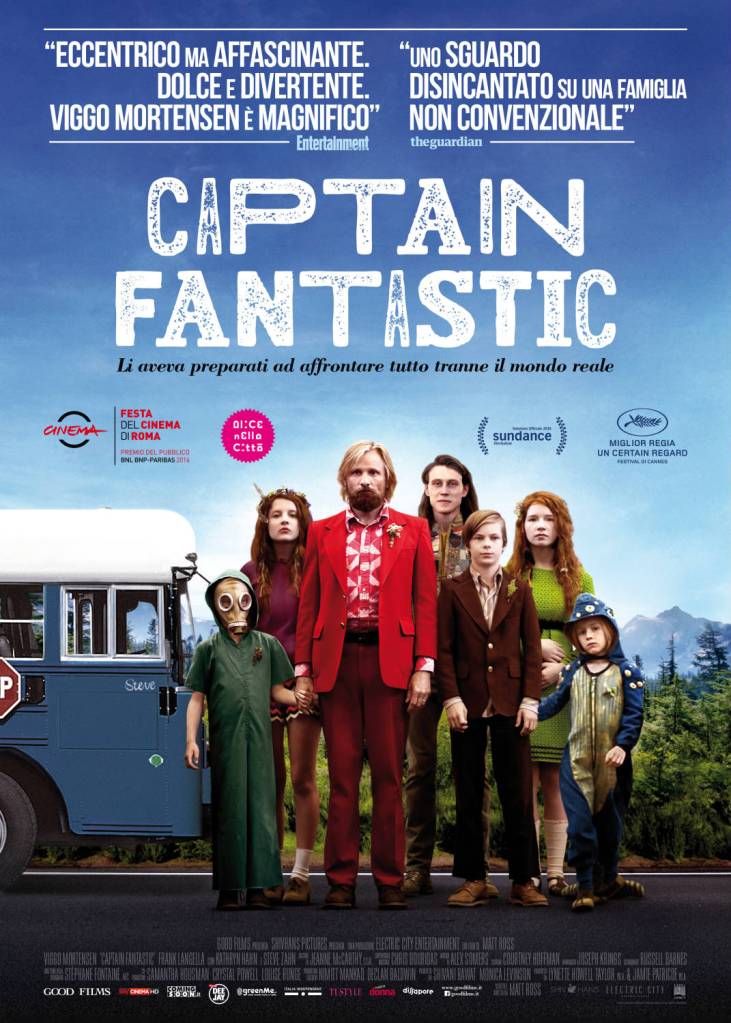
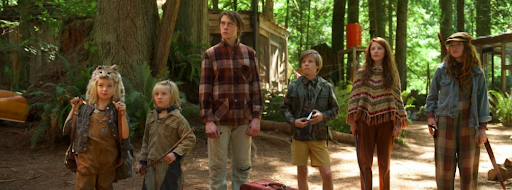
I’m not sure why I missed seeing Captain Fantastic (2016) first time round at the cinema, but I am so glad I caught up with it on Netflix. It stars the ever-brilliant Viggo Mortensen as Ben Cash, the father-of-six children, ages ranging from seven to late teens. Their mother, Leslie, alas, has suffered long bouts of depression linked to bipolar disorder and is currently in a mental health facility. Having established Ben and the children’s unorthodox living arrangements in a forest dwelling, the script throws them the tragic curveball of Leslie’s suicide. The family leave behind their strict hunting, education and exercise routine, as well as their self-built huts, shacks and wooden dens, to drive cross-country on their transformed mobile home, a bus called Steve, to attend Leslie’s funeral.


While grief and sadness hang heavy over the family unit, Matt Ross’ brilliant screenplay structures the film around that great American film genre — the road movie. As the bus, Steve, carries them away from the wilderness into civilisation, the clashing of the Cash’s alternative lifestyle and socially eccentric behaviour with society, provides a rich vein of comedic and dramatic moments. For example, Viggo Mortensen eating breakfast naked at a campsite while people pass by, and oldest son, Bodevan (George Mackay), romantically declaring his love to Claire (Erin Moriarty), who was just expecting a random hook-up, are both hilarious scenes. Similarly, Ben and Leslie, having tutored their kids at home quite impressively, have not factored in their apparent lack of socialisation in the outside world. Lastly, Ben’s candidness in matters of sex is shocking too and he conflicts with his sister, portrayed by Kathryn Hahn, who believes the children should have a more “normal” life.

Amidst the humour and hilarious culture clash punchlines, the director, Matt Ross, expertly weaves some heartfelt drama in their too. Ben fights with his father-in-law, Jack (Frank Langella) over Leslie’s funeral arrangements. Jack then attempts to take the children off him via legal means. Throughout all this Viggo Mortensen’s majestic acting performance anchors the film with searing emotional depth. His character must deal with the death of his wife and whether he has made the right decisions for his family. I mean, the kids have cuts and bruises from hunting exploits, possess strange invented names, wear unconventional clothes and do not celebrate Christmas at all. Furthermore, they eschew all organised religion in favour of celebrating academic philosopher, Noam Chomsky’s birthday. With the death of his wife and pressure from her family, it’s no surprise Ben feels cornered. However, Matt Ross’ film, Captain Fantastic (2016), lives up to the positive title and overall gives us a sense of warmth, community and love, proving that family unity is often an impossible bond to break.

Mark: 9 out of 11


TO BOLDLY REVIEW #9 – STAR TREK: NEXT GENERATION (1990 – 1991)– SEASON 4

TO BOLDLY REVIEW #9 – STAR TREK: NEXT GENERATION (1990 – 1991)– SEASON 4

Based on Star Trek & Created by: Gene Roddenberry

Season 4 writers (selected): Michael Piller, Michael Wagner, Rick Berman, Jeri Taylor, Lee Sheldon, Melinda Snodgrass, Richard Manning, Ronald D. Moore, David Bischoff, , Joe Menosky, Drew Deighan, Brannon Braga, J. Larry Carroll, Hilary J. Bader, Harold Apter, Stuart Charno, Sara Charno, Maurice Hurley, Shari Goodhartz, Timothy DeHaas, Randee Russell, Ira Steven Behr, Rene Echevarria etc.

Season 4 directors (selected): Jonathan Frakes, Winrich Kolbe, Rob Bowman, Robert Weimer, Les Landau, Robert Scheerer, Cliff Bole, Robert Legato, Tom Benko, Chip Chalmers, Timothy Bond, David Carson, Gabrielle Beaumont, Patrick Stewart, David Livingston, Marvin V. Rush, Chip Chalmers etc.

Main Cast: Patrick Stewart, Jonathan Frakes, LeVar Burton, Whoopi Goldberg, Colm Meaney, Michael Dorn, Marina Sirtis, Brent Spiner, Wil Wheaton, Gates McFadden, John De Lancie, Dwight Schultz, Majel Barrett, Rosalind Chao etc.

Music/Composers: Alexander Courage, Jerry Goldsmith, Dennis McCarthy, Ron Jones, Jay Chattaway

Production Company(s): Paramount Television, CBS Television

**** CONTAINS SPOILERS ****


My simultaneous retrospective and futuristic journey into space and time continues, and I have finally finished watching Season 4 of Star Trek: The Next Generation. It’s commonly admitted to being one of the most consistently excellent seasons of TNG. I very much enjoyed the mixture of sci-fi concepts, drama, humour and tragedy within the well established formula of the Starship Enterprise boldly exploring various galaxies.

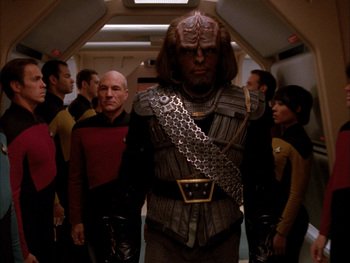
Major themes of the season related to family, honour, love, espionage, war and divided loyalties. While the Wesley Crusher character left for the Starfleet Academy (Wil Wheaton left the show), the majority of our favourite characters remained. Indeed, Miles O’Brien (Colm Meaney) was given more airtime and a marriage subplot. More dramatically the Klingons and Romulans featured heavily as pillars of conflict, with many of the best episodes featuring Romulan deceptions and Klingon brutalism.

Star Trek: The Next Generation continues to be a compelling show to watch and look back on with respect and nostalgia. While I continually enjoyed pretty much all the episodes, here are six of the best ones featuring Picard and his devoted crew.


THE BEST OF BOTH WORLDS – PART II – EPISODE 1

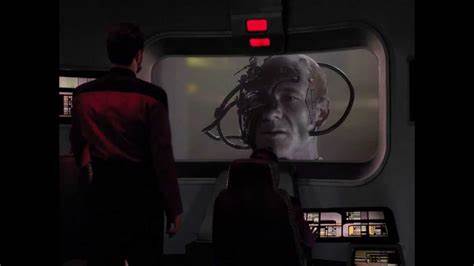
A continuation of Season 3’s cliff-hanger episode found Picard in the grips of the Borg. Even more thrilling was Riker, Data, La Forge and the rest of the crew have to stop the evil machines from launching a deadly assault on Earth. With dual battles of the mind and in space occurring simultaneously, this episode is memorable in so many ways. Patrick Stewart as Picard gives a fantastically intense performance as he battles the evil within.


FAMILY – EPISODE 2

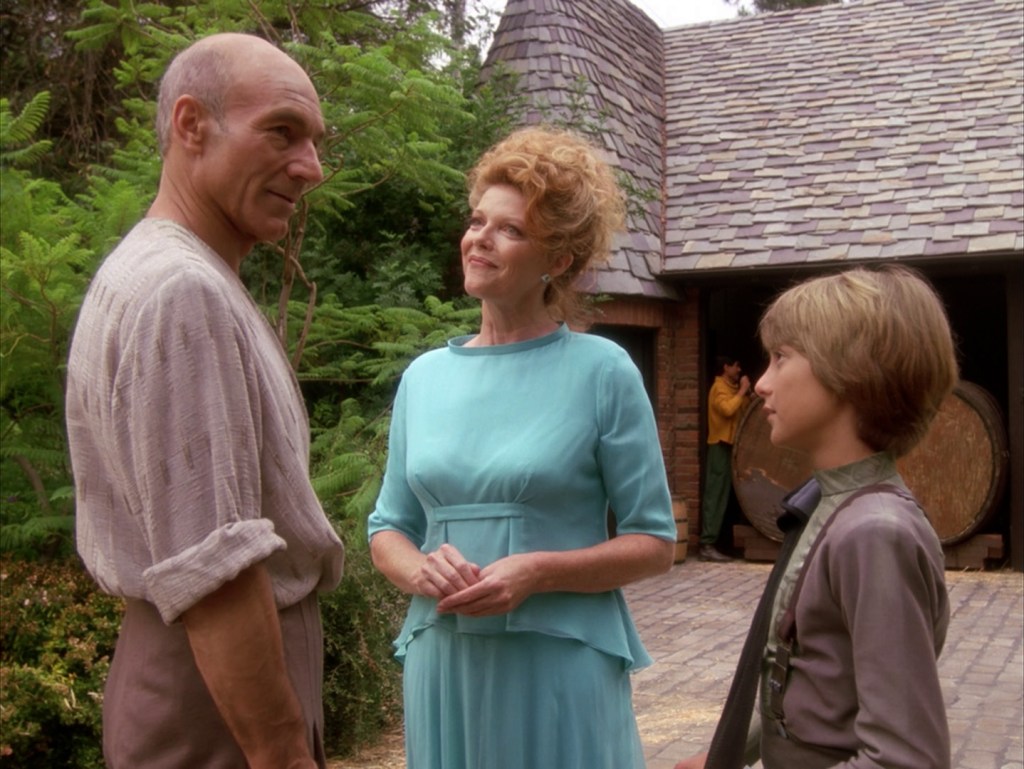
Gentler in approach than the opening episode, Family, has a brilliantly written script with three very emotionally charged storylines. Wesley Crusher must decide whether to watch a video recorded by his deceased father. Worf is met by his adoptive human parents who seek to console him following his Klingon discommendation. Lastly, a still shaken Picard returns to Earth and reconnects with his brother. The trio of narratives combine to forge a highly satisfying and emotionally charged episode.


REUNION – EPISODE 7

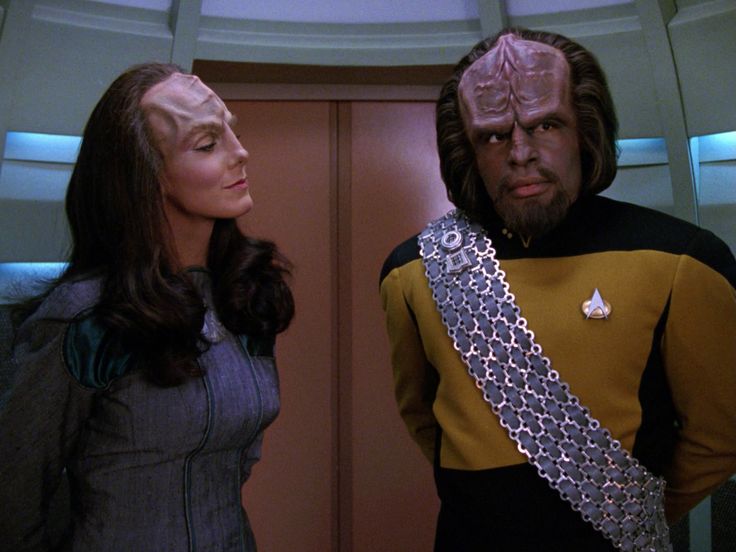
While Patrick Stewart as Captain Picard often garners the acting acclaim with his fine performances, I think Michael Dorn as Lt. Worf always gives great portrayals too. Worf’s conflicted cultural identity – between Klingon and Starfleet – always provides constant moments of explosive and introspective drama. In this episode his former love, K’Ehleyr (Suzie Plakson) returns to oversee, with Picard, the fight for the Klingon leadership. It is revealed that Worf also has a son by K’Ehleyr as the episode delivers excitement, intrigue and tragedy.


THE DRUMHEAD – EPISODE 21

This brilliant episode is unlike many others as the Enterprise crew are not faced with a divisive alien enemy. Instead, Picard and his crew come under Starfleet suspicion from the formidable Admiral Satie. Jean Simmons as Satie gives a memorable acting masterclass, as her over-zealous paranoia causes a witch-hunt culture to poison the court proceedings. I’m a big fan of the courtroom drama and this expertly paced and written episode reminded me of a reverse-engineered version of, The Caine Mutiny (1954).


THE MIND’S EYE – EPISODE 24

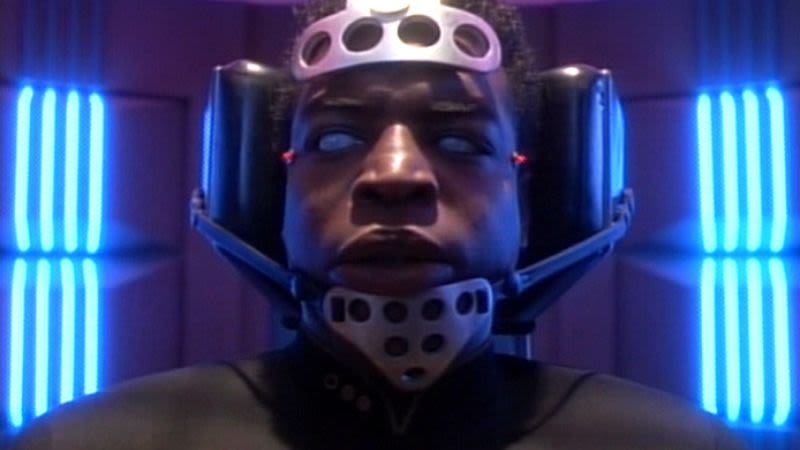
Chief Engineer Geordi La Forge is a very under-rated character within the TNG crew. He’s a brilliant engineer with a likable personality, so when he is “brainwashed” by the Romulans to commit an assassination it was intriguing to see his character go over to the dark side as it were. I especially liked the suspense and plot twists of this episode which paid homage to films such as: A Clockwork Orange (1971) and The Manchurian Candidate (1962).


REDEMPTION – PART I – EPISODE 26

This brilliant season culminated with a superlative episode which brought together all of the plots and subplots involving the battles with the Romulans and Klingons. Lt. Worf has a particularly difficult choice between his Starfleet commission and family honour. Ultimately, he chooses to fight for honour and in a wonderful conclusion to the episode joins the Klingon fleet to fight alongside his brother, Kurn (Tony Todd), against the Duras hordes. Despite the out-of-the-box temporally strained twist involving, Sela (Denise Crosby), a Tasha Yar Romulan lookalike, the episode was full of dramatic moments and provided a compelling cliff-hanger for the next season.


A BEAUTIFUL DAY IN THE NEIGHBORHOOD (2019) – CINEMA REVIEW

A BEAUTIFUL DAY IN THE NEIGHBORHOOD (2019) – CINEMA REVIEW

Directed by Marielle Heller

Produced by: Youree Henley, Peter Saraf, Marc Turtletaub, Leah Holzer

Written by: Micah Fitzman-Blue and Noah HarpsterBased on the article – “Can You Say Hero?” by Tom Junod

Cast: Matthew Rhys, Tom Hanks, Susan Kelechi-Watson, Chris Cooper, Christine Lahti

Cinematography: Jodee Lee Lipes

**CONTAINS MILD SPOILERS**


“Hello Neighbour!” – Fred Rogers


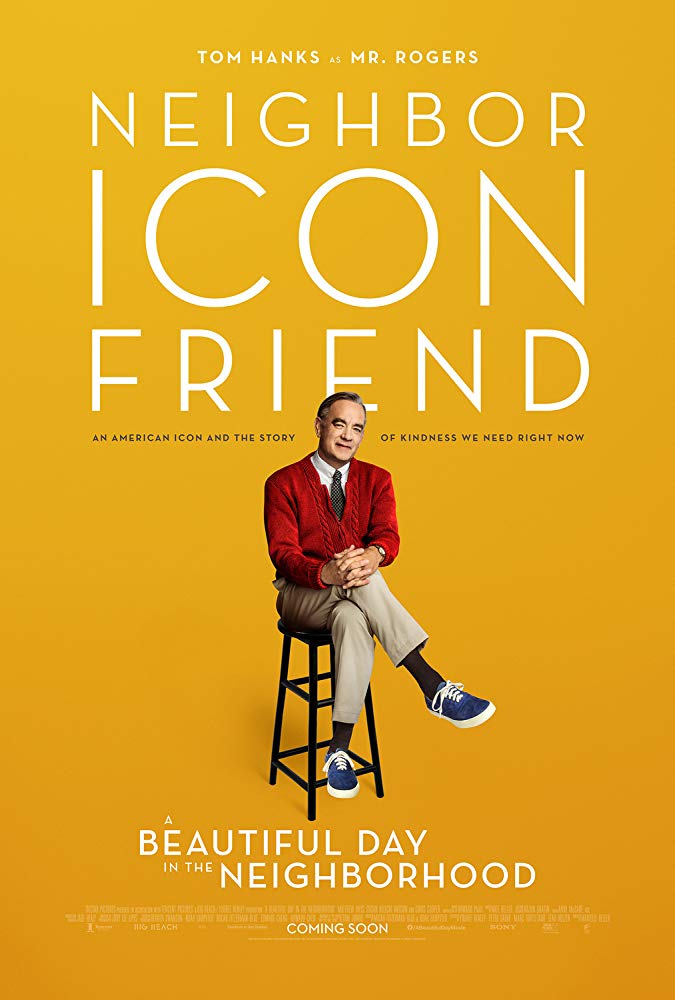
I watch a lot of horror, thriller and drama films that you could say are “feel-bad” in nature. They may eventually have some form of happy or morally satisfying ending, but such cinema seeks to create a sense of danger, anxiety and emotional distress as entertainment. Now I enjoy watching films on the edge of my seat and having my nerves shredded, however, sometimes it’s great to watch something that is quite the opposite. A Beautiful Day in the Neighborhood (2019) is one such “feel-good” film, profiling an American icon and arguably one of the nicest people who ever lived: Fred Rogers.

Rogers (Tom Hanks) was the creator and host of Mister Rogers’ Neighbourhood which ran for decades on U.S. cable channel PBS. The programme, while aimed at children, dealt with serious subjects like illness, divorce and death via puppetry, songs and Rogers’ wise and simple homespun philosophies. Over the years he became a household name and a staple of American family life. Yet, A Beautiful Day in the Neighbourhood (2019), is not a standard biopic exploring Fred Rogers life from birth to death. In fact, he’s more of a magical mentor type of character for the lead protagonist, journalist Lloyd Vogel, portrayed by Matthew Rhys.


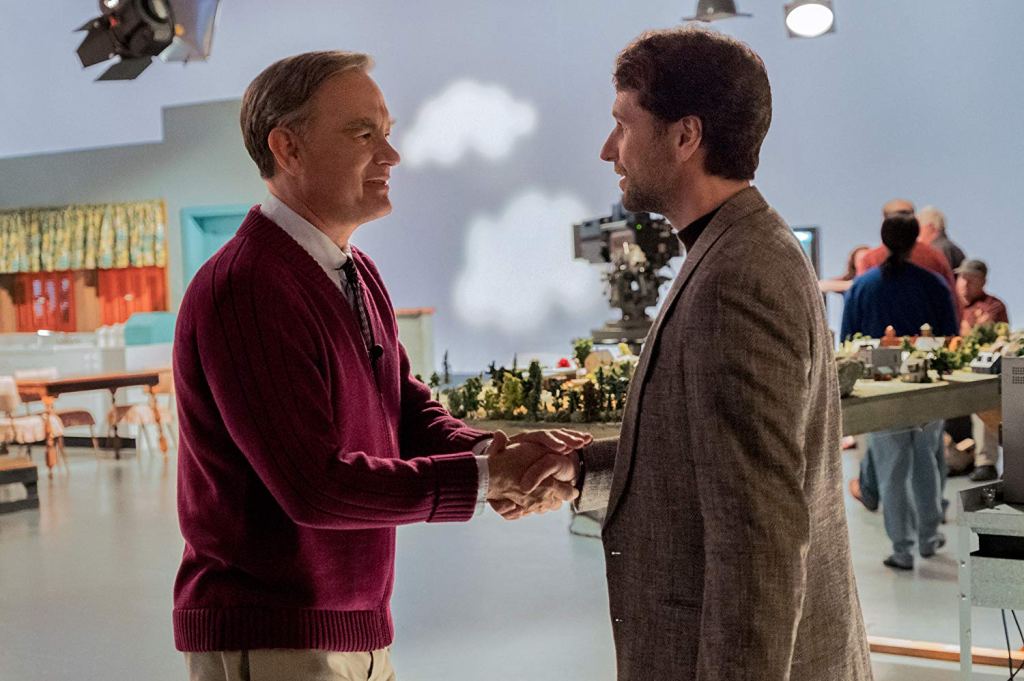
Opening with a meticulously presented simulacrum of Mister Rogers’ Neighbourhood TV show with Tom Hanks in the hosting chair, the film immediately welcomes us into a positive and safe place. The audience are the children and we are about to be told a story about Lloyd. Because Lloyd is lost and troubled and needs help. Cleverly combining the TV show with flashbacks to Lloyd’s difficult family life is just one of the wonderful devices the film presents. Another is the use of models to emulate the locations within the film. Given the job of interviewing Fred Rogers for an Esquire piece, there’s a sense that Lloyd could well be looking to do a hatchet job on Rogers. However, he finds himself drawn to Rogers’ soft, magnetic and calming charm. The relationship between Rogers and Vogel’s character is superbly teased and developed by an excellent script.

While the drama is relatively low-key, the film is not without emotional impact throughout. There are several stand-out scenes where Lloyd’s negative and cynical worldview is airbrushed away by Rogers’ incredible goodness. As Vogel’s attitude to Rogers changes, so does his feelings toward his estranged father, his wife and child and the world in general. At the same time, Tom Hanks exceptional performance completely captured my heart. I’d never seen any of Fred Rogers TV shows before, but Hanks conveyed the inner peace and wisdom of this man perfectly. Moreover, my wife, who is American, was crying her eyes out with joy and nostalgia all the way through. Ultimately, this is another fine character and human drama from director, Marielle Heller. So, if you want a break from all the nasty unpleasantness in the world, you should definitely knock on Mr Rogers’ door. Everyone is welcome.

Mark: 8.5 out of 11


MARRIAGE STORY (2019) – NETFLIX FILM REVIEW

MARRIAGE STORY (2019) – NETFLIX FILM REVIEW

Written and Directed by: Noah Baumbach

Produced by: David Heyman, Noah Baumbach

Cast: Scarlett Johansson, Adam Driver, Laura Dern, Alan Alda, Ray Liotta, Julie Hagerty, Azhy Robertson, Merrit Weaver etc.

Cinematography: Robbie Ryan

Distributed by: Netflix

**MAY CONTAIN SPOILERS**


I think one of the trickiest things that can hinder a writer, is that doubt whether it is worth telling one’s story. This is especially true of privileged or first world narratives involving wealthy characters or those deemed not having to struggle daily. For me the way to beat such doubt is to write the hell out of your story. Moreover, you’ve got to make the story relevant to all audiences by concentrating on universal themes and creating empathetic characters. Noah Baumbach achieves this by writing and directing the hell out of Marriage Story (2019); a moving drama that focuses on something we can all relate to — a relationship break-up.

The film centres on a couple of creatives, Nicole and Charlie Barber, portrayed by Scarlett Johansson and Adam Driver. Charlie is a New York theatre director; Nicole is a Los Angeles actress. They have both been committed to forging successful careers. The film opens brilliantly as they attend relationship mediation, attempting to divorce amicably without the use of lawyers. Baumbach’s superb script starts strongly with each character delivering bittersweet monologues that describe what attracts them most to each other. Sadly, for them and their young son, Henry (Azhy Robertson), mediation fails and it’s not long before they are drawn into the Kafkaesque, manipulative and financially draining American legal system.


This is a gem of a film which finds a seemingly suited couple learning that their differences have slowly been driving a wedge between them. Charlie is a controlled and respected director who has worked his way up from nothing. Nicole is a more privileged, but equally talented actress; however, her free-spirited nature is locked in his shadows. Geographically too they are very different. While he is originally from Indiana, he has made New York his home. Moreover, while his avant garde plays have gained him critical acclaim, she yearns for the sunlight of Los Angeles and the offer of TV work. Thus, through sheer brilliance of the writing we, in a short period of time, understand and empathise with both characters’ situations.

As the narrative develops Baumbach’s script is brought to life with two incredible central performances by Adam Driver and Scarlett Johansson. They imbue Nicole and Charlie with a humanity and warmth, that even when we do not agree with their actions, we are still with them. As the story was inspired by his own divorce, Baumbach cares very much about these people. Indeed, he gives each actor the chance to shine during a number of fine monologues, bitter exchanges and heartfelt scenes of acceptance and potential reconciliation. Further, the supporting cast members are also really great too. Ray Liotta as a bitter shark of a lawyer and Laura Dern, as his legal adversary, have some wonderfully biting lines of dialogue. Meanwhile, Alan Alda, as Charlie’s other legal representative, is arguably too nice and avuncular for this cutthroat business. Together these collective legal minds, while shining a plausibly negative light on divorce proceedings, added strong energy to the comedy and drama of the film.

Ultimately, I have always respected Noah Baumbach’s films because he is a very solid independent writer and director. However, with Marriage Story (2019), he has matured beyond belief to create a compelling and funny relationship drama. It is full of standout scenes, with Adam Driver ever impressing and Scarlett Johansson delivering the best performance of her career. Lastly, as someone who has experienced a very difficult break-up involving a child, I felt every moment of grief, heartache, humour, love and relief on the screen. Yet, it’s worth reliving those moments because you know you survived; and so will Charlie, Nicole and their son, Henry.

Mark: 9.5 out of 11


JUDY AND PUNCH (2019) – CINEMA REVIEW

JUDY AND PUNCH (2019) – CINEMA REVIEW

Written and Directed by Mirrah Foulkes

Produced by: Michele Bennett, nash Edgerton, Danny Gabai

Cast: Mia Wasikowska, Damon Herriman, Benedict Hardie, Gillian Jones, Virginia Gay etc.

**MAY CONTAIN SPOILERS**


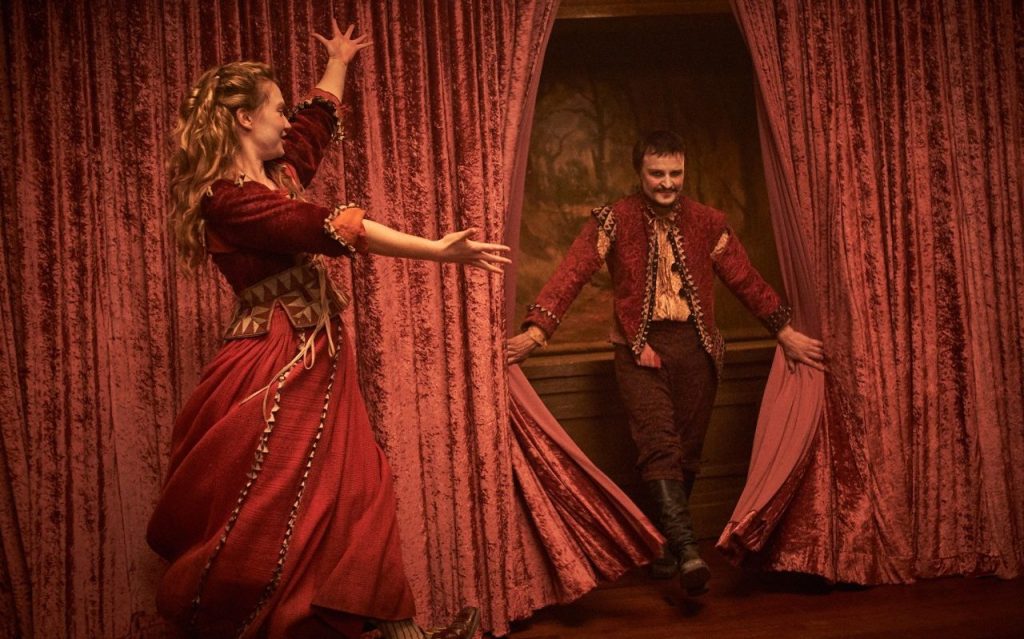
If you’re not aware of the good, old-fashioned Punch and Judy puppet show, then it was basically a seaside attraction that has its origins in 16th century Italian commedia dell’arte. Over the decades it thrived and would move from marionette stylings to a mobile glove puppet show. Punch would batter various characters including his wife, Judy, a crocodile, a police officer, a dog, a blind man and the Devil. He would be a very bad parent; often drunk and violent in charge of his own baby. Incredibly, this rather unsavoury character would become very popular with children, appearing at carnivals, fairs and coastal shows.

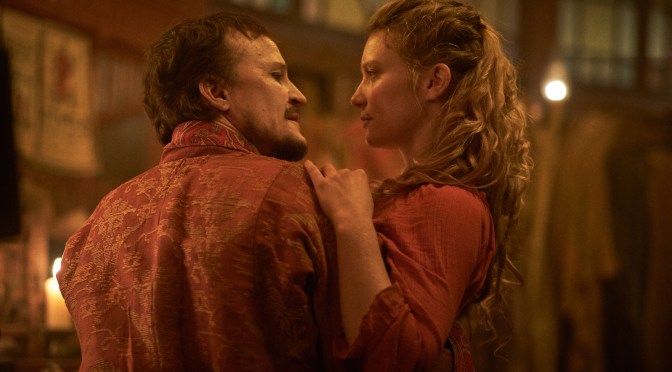
With Disney cornering the market adapting myths, fairy tales and Theme Park rides over the years, I’m surprised they did not have a go at Punch and Judy. How they would reconcile this brightly coloured, but despicable character would have been fascinating. Yet, it is Australian filmmaker Mirrah Foulkes, who has written and directed this arthouse drama starring Mia Wasikowska as the harassed Judy, and Damon Herriman as the drunken puppeteer. Set during the Dark Ages in the town of Seaside, the plot follows the traditional narrative of the original puppet show. Except, this time Judy is very pissed off and about to go medieval on Punch’s arse!


Part revenge thriller, part-black comedy and part mythical origins drama, Judy and Punch (2019) is full of fantastic and gritty detail. The reconstruction of the theatrical puppet shows are brilliant, and evocation of the era is very realistic. The film performs well as a savage denouncement of toxic masculinity in the #MeToo era. But, despite the excellent performances from Wasikowska and Herriman, the characters were a bit too one-dimensional to really grip me. Yet, Wasikowska is especially memorable as Judy, eliciting an inner strength to overcome the cruelty of her husband and the town she lives in.

Lastly, the story also felt a little flat and lacked surprise in places, but that may be because the trailer gave a lot of the narrative away. It’s also because I am very familiar with the original Punch and Judy show, as I watched loads of them as a kid. Having said that, Mirrah Foulkes has delivered a stylish film curiosity which is destined for cult status. Moreover, she deserves much praise for attempting to give a children’s puppet show story depth. The visual iconography is powerful, as is the exploration of themes relating to domestic violence, child neglect, witch hunts; and the exclusion of the outsider or other by petty townsfolk mentality.

Mark: 8 out of 11


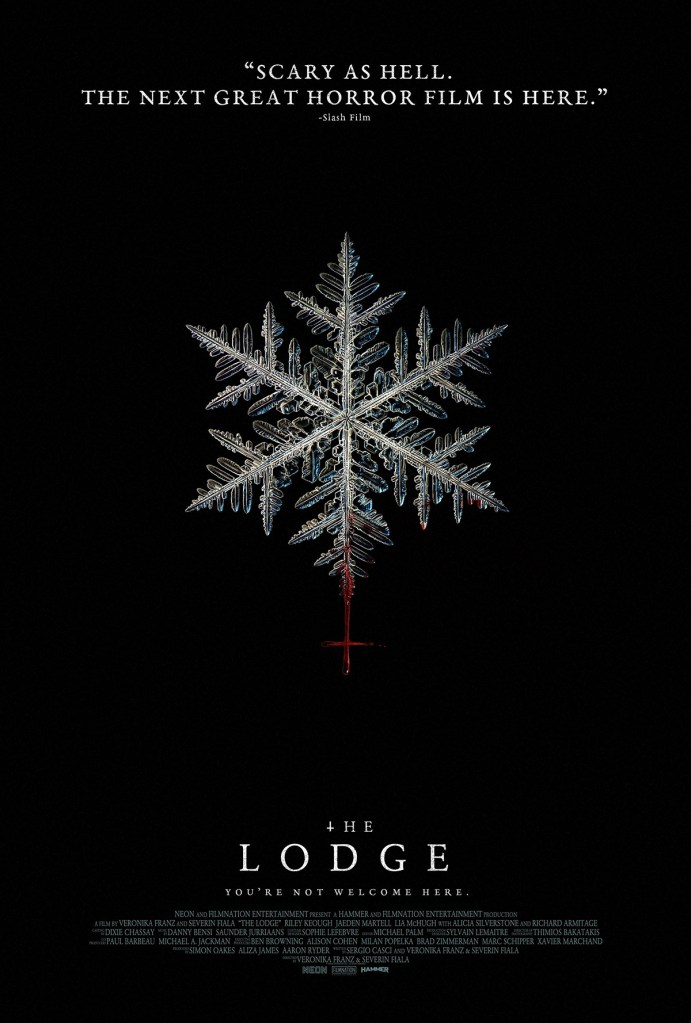
LFF REVIEW – THE LODGE (2019) – SPOILER FREE

LFF REVIEW – THE LODGE (2019)

Directed by: Veronika Franz, Severin Fiala

Written by: Sergio Casci, Veronika Franz, Severin Fiala

Produced by: Simon Oakes, Aliza James, Aaron Ryder

Cast: Riley Keough, Jaeden Martell, Lia McHugh, Alicia Silverstone, Richard Armitage

Music by: Danny Bensi, Saunder Jurriaans

******* SPOILER FREE *******


If you haven’t seen the Austrian horror film Goodnight Mommy (2014), then I urge you to do so. It is genuinely one of the most startling and creepy films of recent years. It psychologically gets under the skin with the story of a mother and her two children, isolated, as she recovers from reconstructive surgery. The directors, Veronika Franz and Severin Fiala, proved themselves adept at creating memorable imagery, tense dread and a shocking ending up there with the horror classics.

With their latest film The Lodge (2019), they have once again ventured into the horror genre. Working with a fascinating screenplay from Silvio Casci, the film is full of intriguing themes relating to religious cults, grief, isolation, post-traumatic stress and family dysfunction. However, despite stellar work from the cast and compelling direction, the film never quite filled me with fear, nor shocked me enough to satisfy my horror needs. It works well as a slow turning of the screw type story, but at times it was too slow for me.


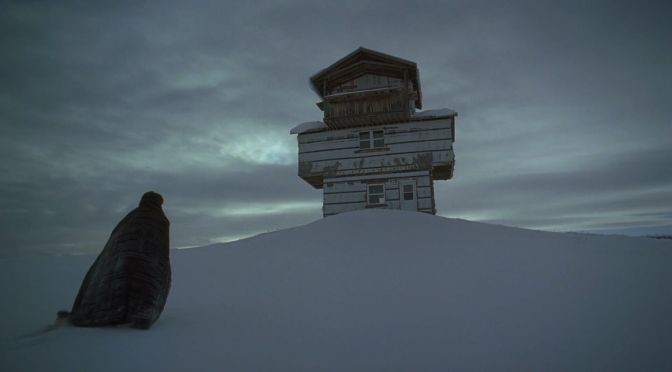
In essence the narrative is similar to Goodnight Mommy (2019); two kids and a maternal character are trapped together in one location and things get weird. Richard Armitage portrays Richard, a father to Aidan (Jaden Martell) and Mia (Lia McHugh), who is desperate for them to connect with his new girlfriend, Grace (Riley Keough). To precipitate this they spend Christmas at their remote holiday lodge, as you do. When Richard is called back to the city for work, Grace and the kids’ relationship begins to get cold. Thus, amidst the isolation and snowy landscape, a frozen atmosphere exists inside and outside the cabin.

Overall, the film is worth watching for Riley Keough’s committed performance as Grace; a victim of childhood trauma trying to be part of a caring family. Her character is striving for sanity, however, she gets something else altogether. The directors also do sterling work and create a compelling image system, notably around dolls, snow and religious iconography. The lodge itself is rendered creepy with sharp angles, overhead shots, skin-crawling music and darkness all used to sinister effect. But, despite the quality of the production, the central premise, slow pace and confusing plot developments drained any fear I felt by the end. Nonetheless, fans of The Shining (1980), The Thing (1982) and any number of cabin-in-the woods-horror films will find something to chill them here.

Mark: 7 out of 11