Tag Archives: DEATH

SIX OF THE BEST #18 – FILM ANTHOLOGIES

SIX OF THE BEST #18 – FILM ANTHOLOGIES

While we all love a good proper feature film containing one continuous narrative, the anthology or portmanteau film has thrown up some fine cinematic entertainment over the years. Generally, an anthology film can be described as a collection of works with a linked theme, genre, style and author etc.

Thus, in my occasional Six of the Best series I have decided to pick some favourite ones. To make it more interesting I have chosen them from different genres. Otherwise, I would have just chosen all horror films. So, here are six of the film anthology films worth watching.

**MAY CONTAIN SPOILERS**


THE BALLAD OF BUSTER SCRUGGS (2018) – WESTERN

The Ballad of Buster Scruggs is a mischievous alchemy of stories. Here, the Coen Brothers reach into their cinematic bag of tricks to deliver an entertaining and memorable collection of characters, songs, bloody death, jokes, pathos, landscapes, snappy dialogue, dark humour and action. Coen’s films often improve with each viewing as their work is so full of stylish depth and this is no different. Quite often, you’re laughing so much you miss the philosophical happenstance which is occurring in many of these fine stories.

Image result for buster scruggs

DEAD OF NIGHT (1945) – HORROR

It seems sacrilege not to include the likes of George Romero’s Creepshow (1982) or one of Amicus’ unhinged collections such as Dr Terror’s House of Horror (1965). But, having watched this classic recently I can certainly say it has some brilliant and scary stories which stand the test of time. Full to the brim with the cream of British acting, writing and directing talent, the standout tale is Michael Redgrave’s troubled ventriloquist, although the whole film is a nightmarish treat for horror fans.

Image result for DEAD OF NIGHT

FANTASIA (1940) – ANIMATION

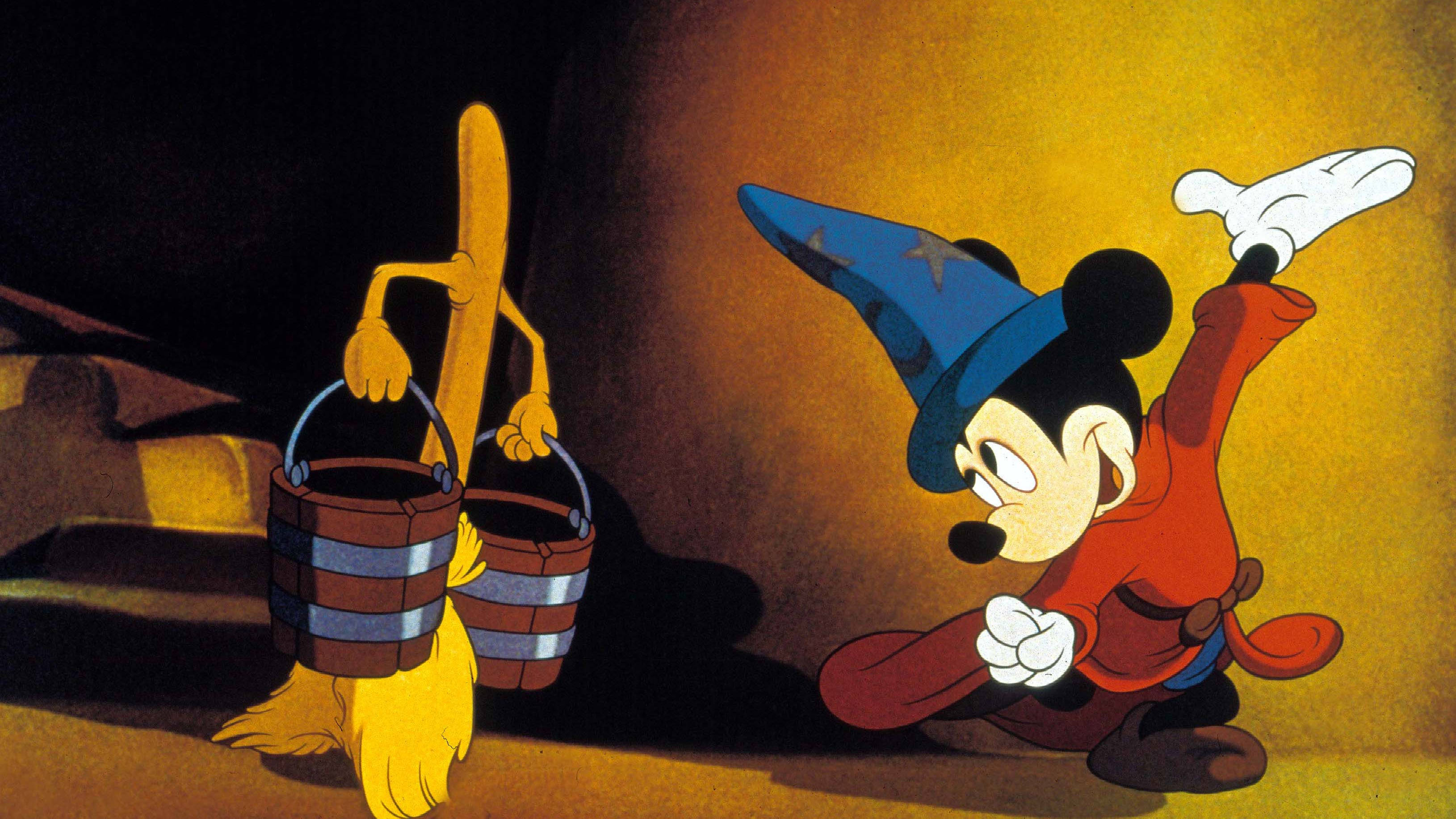
With the current trend for Disney to remake their back catalogue as “live” action films in mind, I very much doubt they will doing this with Fantasia. Conceived as a short to re-invigorate the slowing career of Mickey Mouse, the film is unlike any other Disney have made. It consists of experimental, non-narrative and hallucinogenic vignettes mainly set to wondrous classical music. A masterpiece of hand-drawn animation, style, colour and design, it’s certainly not just for kids. I recall many images giving me nightmares when saw it as a child and it remains a powerful cinematic work to this day.

Image result for fantasia

NIGHT ON EARTH (1991) – COMEDY

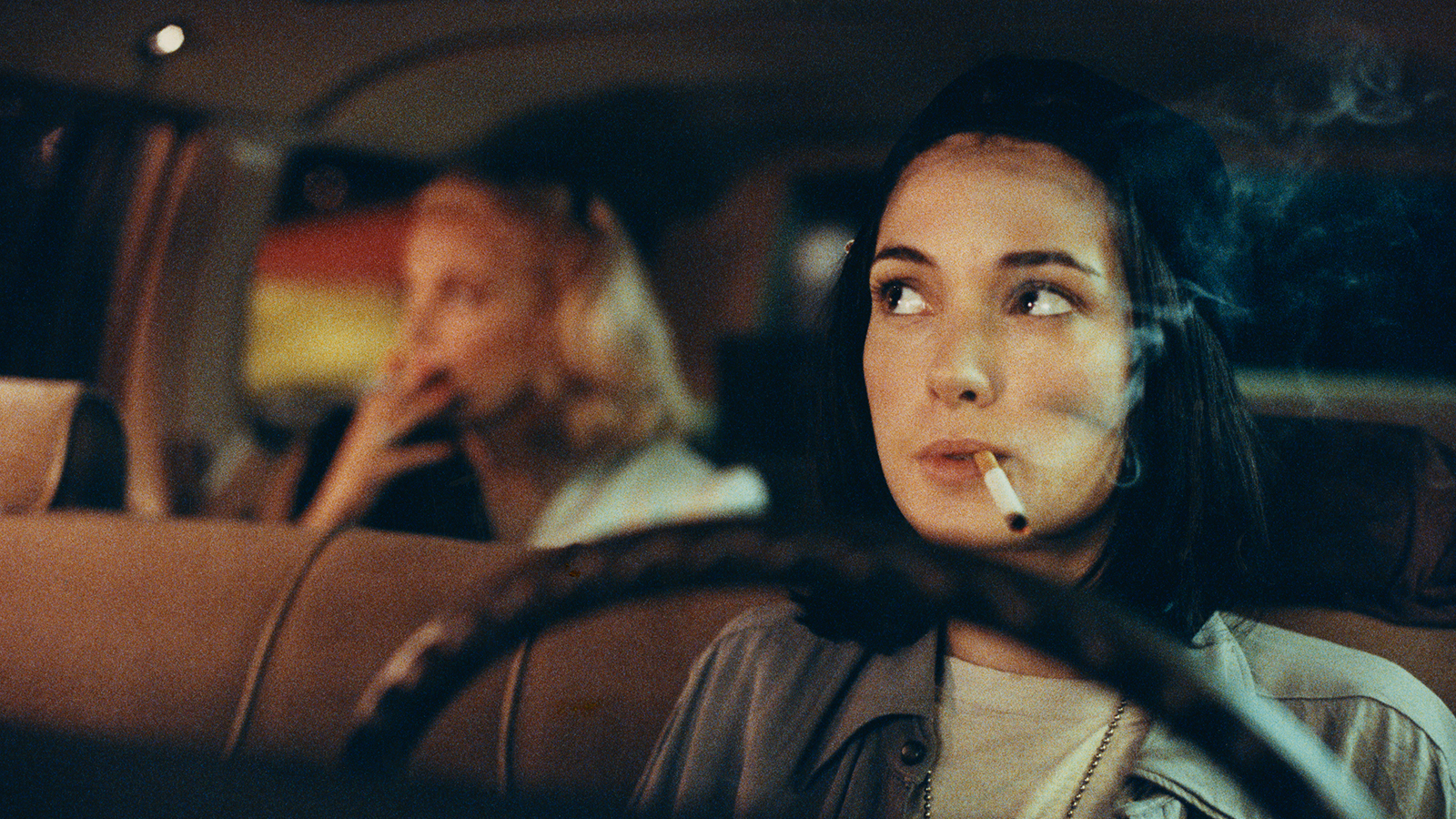
I was going to choose Woody Allen’s erotic sketch film, Everything You Wanted to Ask About Sex but were Afraid to Ask (1972), for the comedy section. However, I decided to select a more deadpan and character oriented film. What better then, than a Jim Jarmusch curiosity. I love the concept of the film as Jarmusch sets several themes and parameters in place. There are five slice-of-life vignettes set on the same night in the cities of Helsinki, New York, Rome, Paris and Los Angeles, all starring some of Jarmusch’s favourite actors. Relationships and quirky interactions between cab driver and passenger are explored in the filmmakers’ inimitable style.


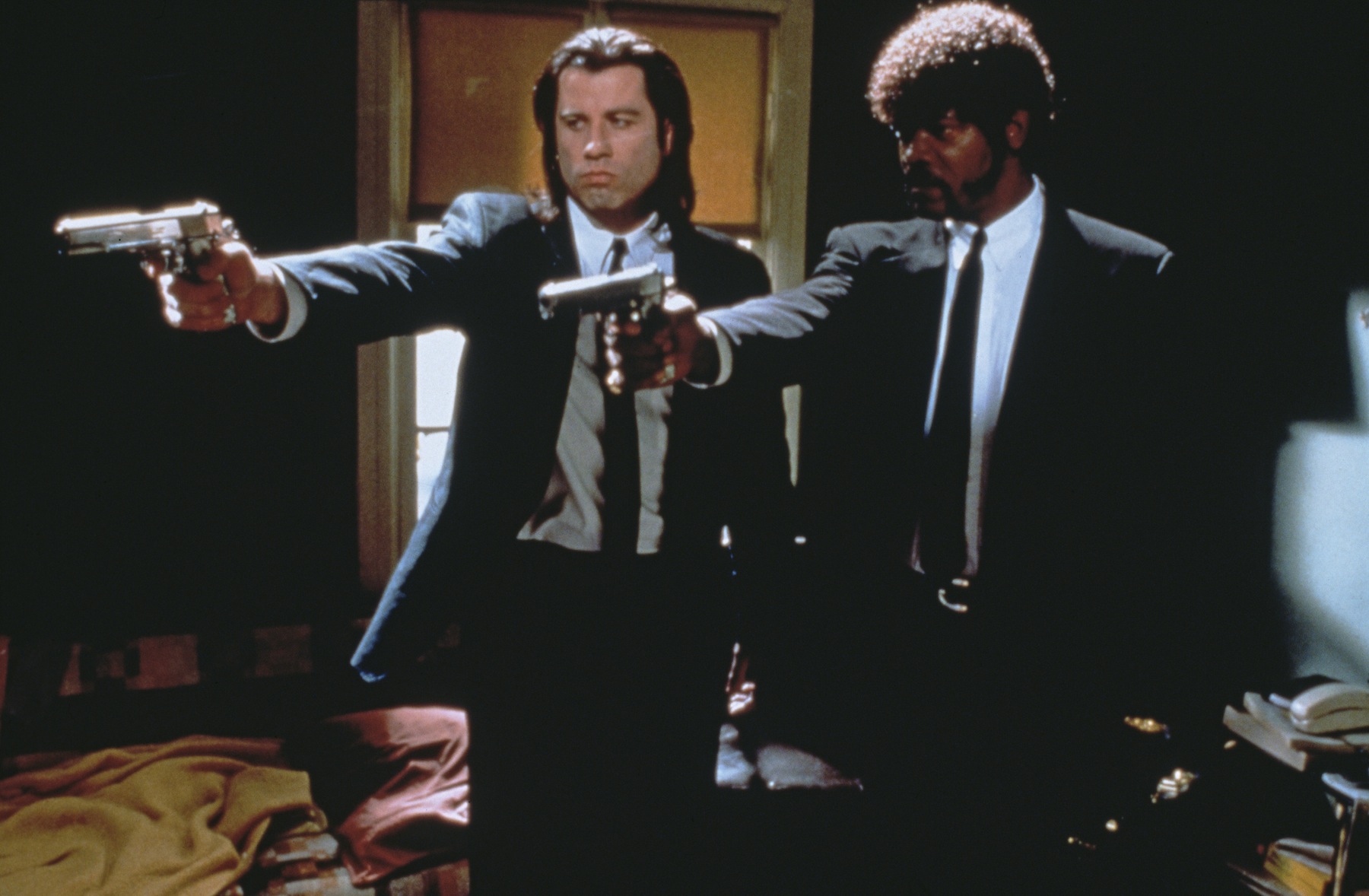
PULP FICTION (1994) – CRIME

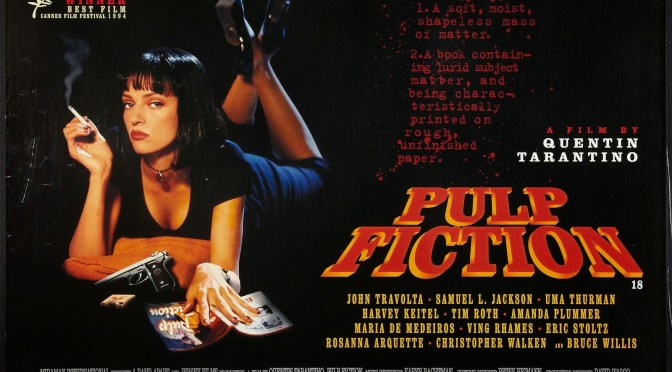
Quentin Tarantino’s second feature film remains a fresh masterpiece of colliding gangsters, uber-cool hitmen, fixers, boxers, sexual deviants, femme fatales, drug addicts and general criminal types. With an over-lapping timeline that kind of does a figure of eight, we get stories ranging from a couple robbing a diner; a boxer double-crossing a crime boss; and an employee almost killing his boss’s wife. Tarantino breathes life into the crime genre and the stock pulp characters with one of the greatest screenplays ever written; full of incredible dialogue, startling twists and a brilliant ensemble cast.


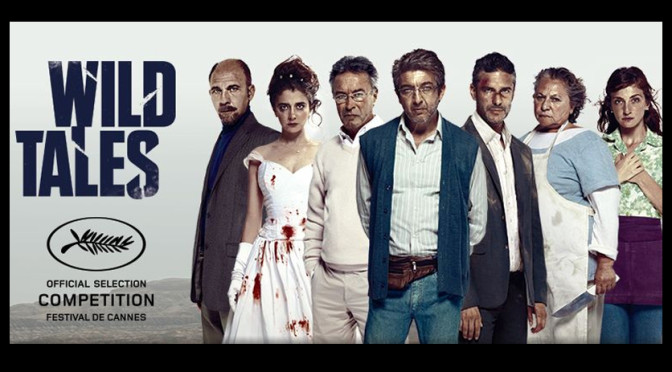
WILD TALES (2014) – DRAMA

Damián Szifron conjures up a delectable and devilish set of stories mostly based around the themes of obsession and revenge.  It opens with a breath-taking little prologue featuring a horrific incident on a plane and culminates in arguably the wildest tale when the Bride goes on the rampage at her wedding.  Everyone’s favourite Argentinian actor Ricardo Darin pops up in the middle as an explosives expert who enacts revenge on City Parking fascists. I love the whole thing as the film delivers a full deck of twists that master of the macabre Roald Dahl would be proud of. 


ALL 4 TV REVIEW: END OF THE F***KING WORLD (2017)

ALL 4 TV REVIEW: END OF THE F***KING WORLD (2017)

Directed by: Jonathan Entwhistle, Lucy Tcherniak

Producer: Kate Ogborn

Written by: Charlie Covell (based on comic novella by Charles Forsman)

Cast: Alex Lawther, Jessica Barden, Gemma Whelan, Wunmi Mosaku, Steve Oram, Christine Bottomley, Navin Chowdhry etc.

Original Network: Channel 4

**MAY CONTAIN SPOILERS**


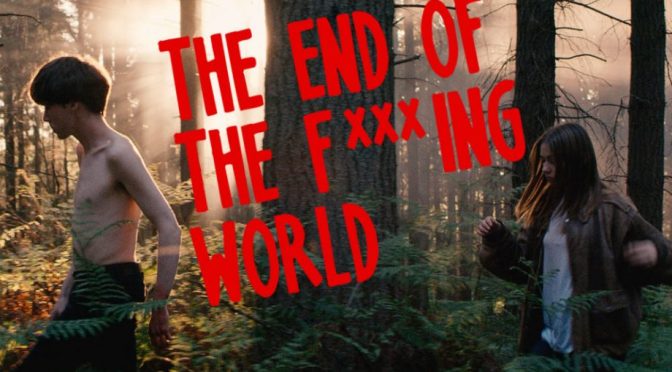
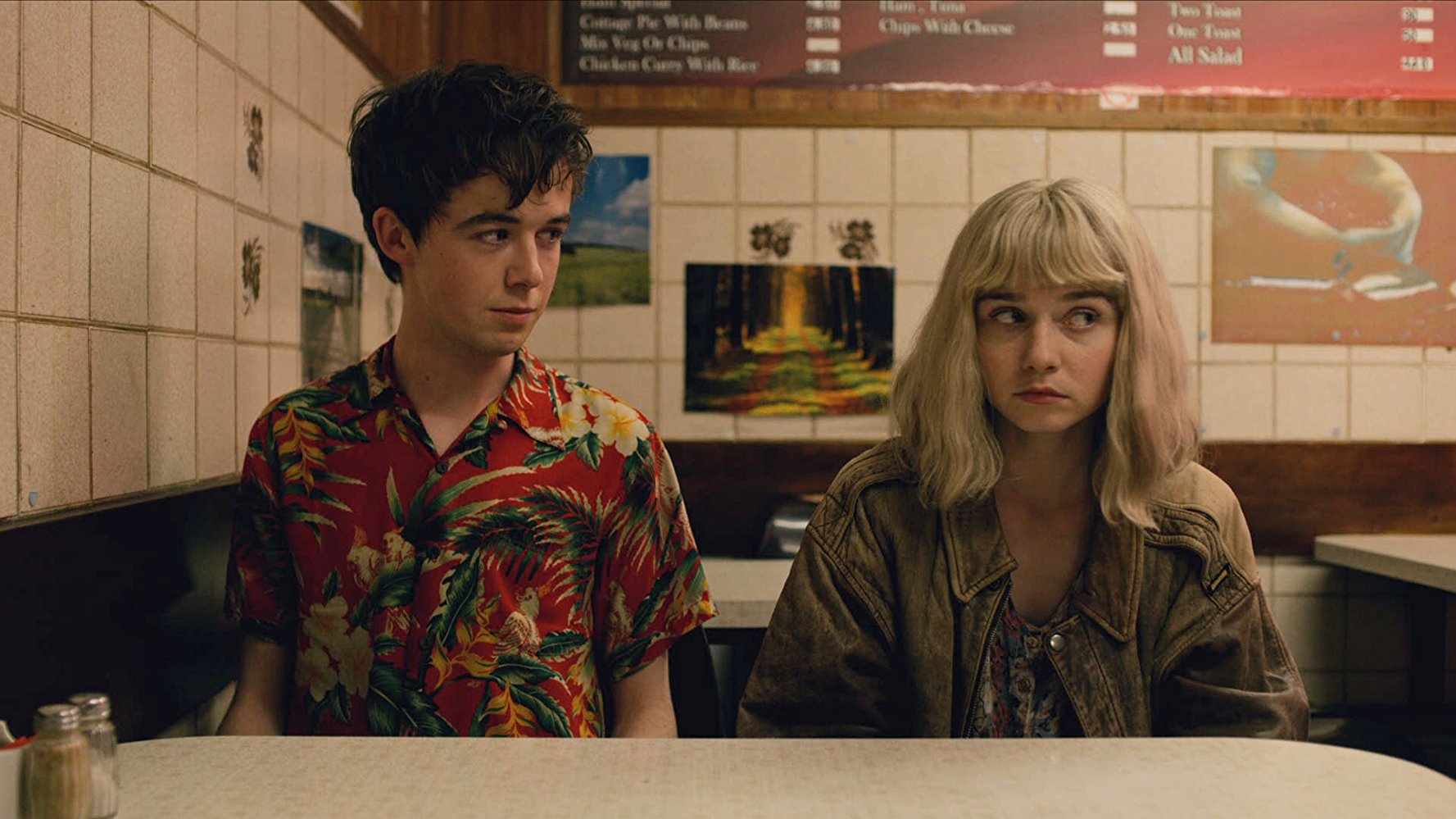
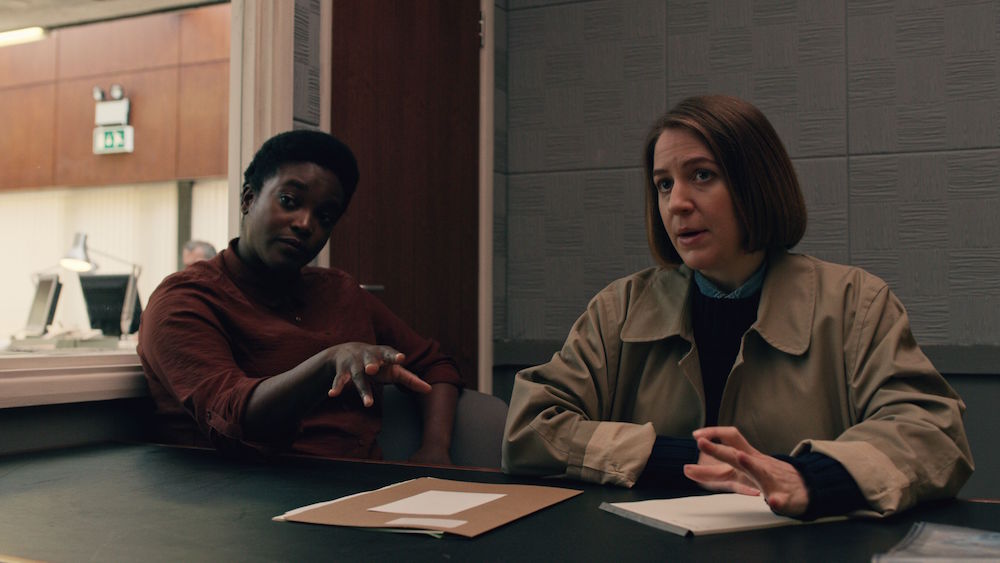
This Channel Four comedy-drama can be found on both ALL 4 and Netflix. It is certainly recommended for those who like their comedy darker than an Arctic winter’s day. It concerns a teenager called James (Alex Lawther) who believes he’s a psychopath, who decides to go from killing animals to people. Enter Jessica Barden’s equally maladjusted Alyssa, and we get eight episodes of acidic, violent, rites-of-passage and anti-romantic mischief.

The first episode is arguably the strongest as it starts with a breakneck pace establishing James character history and how he meets Alyssa. They are both very nihilistic and unlikable but that’s the point. The series is an anathema to the conventional feel-good Hollywood sitcoms and comedy films. This is violent and nasty with lost kids ignored or endangered by the adults around them. Indeed, aside from Gemma Whelan’s likeable police officer there aren’t many characters to empathise with here.


It is a testament to the fine acting by rising stars Lawther and Barden that the show held my interest over the eight short episodes. As the two anti-heroes go on the run across country I was reminded of the Tarantino scripted films True Romance (1993) and Natural Born Killers (1994), but filmed in Surrey. Of course, End of the F***king World (2017) doesn’t benefit from Tarantino’s wicked dialogue, however, it compels with a journey into some very twisted places.

Nominated for a BAFTA for Best Drama Series, I didn’t enjoy as much as some reviewers and critics did. I think this is mainly due to the fact it doesn’t really have much to say other than life is shit. Also, the characters don’t particularly learn anything, change or have a particularly intriguing philosophy. Moreover, their story begins and ends in abject nihilism with little hope for a brighter future. Don’t get me wrong, I love dark comedies and dramas, but this was relentlessly depressing and probably would have been better as a punchier ninety-minute film rather than a series. Overall, though the smart script and malignant characters had a dark magnetism. That and the excellent performances make it worth a watching if you’re feeling in a “I-hate-the-world” kind of mood.

Mark: 8 out of 11


MIDSOMMAR (2019) – CINEMA REVIEW – AMAZING FILMMAKING LET DOWN BY WEAK STORYTELLING!

MIDSOMMAR (2019) – CINEMA REVIEW

Written and directed by: Ari Aster

Produced by: Lars Knudsen, Patrik Andersson

Cast: Florence Pugh, Jack Reynor, William Jackson Harper, Vilhelm Blomgren, Will Poulter etc.

Music: The Haxen Cloak

Cinematography: Pawel Pogorzelski

**MAY CONTAIN SPOILERS**

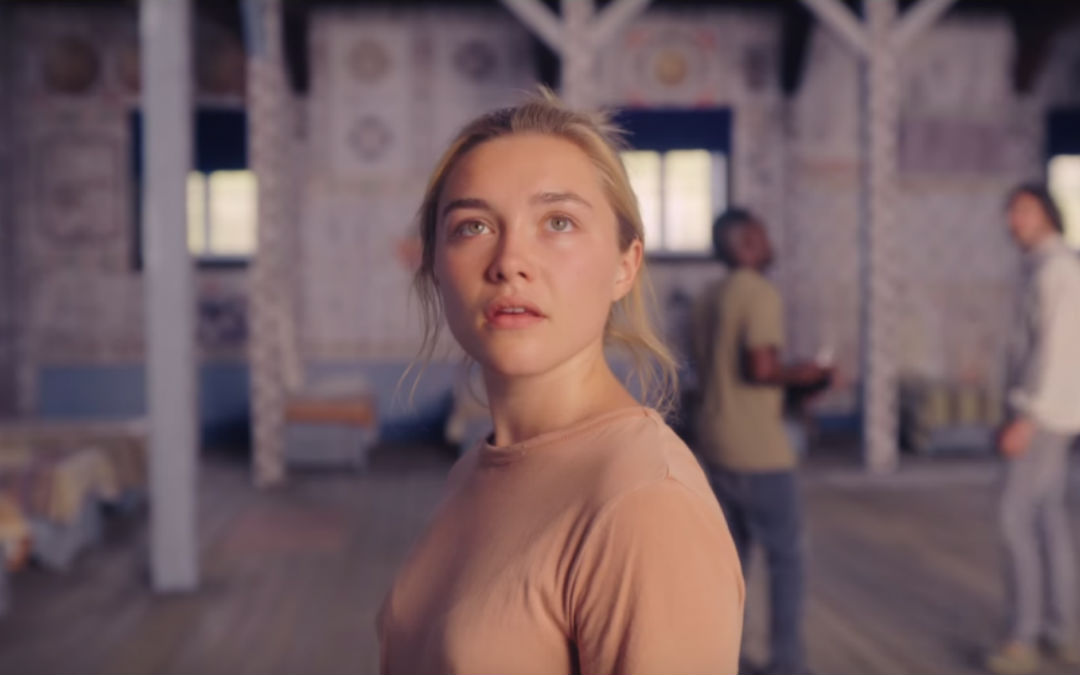
Midsommar (2019), is ultra-talented filmmaker Ari Aster’s second feature film. His first Hereditary (2018), was two-thirds domestic horror masterpiece and one-third insane, symbolic, nonsensical and demonic denouement. Both films have a lot in common. Both have communes or cults at the centre led by strong matriarchal figures. Both find seemingly innocent characters suffering from grief being lured to a fateful demise. Both have incredibly rich visual systems full of striking imagery, sudden violence and mythological folklore. Both, especially Midsommar (2019), are overlong, pretentious and indulgent B-movie stories masquerading as art.

I have to say, and I am not coming from simply a mainstream perspective, Ari Aster is a film artist. However, unlike many great film artists he has, in my opinion, not managed to marry his vision with coherent and emotionally powerful storytelling. Midsommar, for example, takes an age to kick its narrative into gear and when it finally gets started it drags and drags and drags. How many long, drifting tracking master shots can you abide? How many drawn-out-so-pleased-with-myself takes do you have the patience for? Well, get a strong coffee because when the story cries out for pace, Aster puts the brakes on, marvelling in his own indulgent genius. I might add that a plethora of characters screaming and crying does not make good drama either, unless there is sufficient context.

The narrative is very simple. In a nutshell, it’s Eli Roth’s Hostel (2005) meets British horror classic The Wicker Man (1973). Florence Pugh, Jack Reynor, William Jackson Harper and Will Poulter are college students who take a summer break to experience a communal pageant in rural Sweden. While they are PHD students they are not particularly intelligent given the choices they make later in the film.

Moreover, aside from Pugh’s grief-stricken Dani, the script doesn’t particularly imbue them with much in the way of empathetic characterisation. Indeed, the film relies on Pugh’s dominant performance to create emotion for our protagonists. Aside from providing some comic relief there is no actual point to Will Poulter’s character at all. Lastly, there is some absolutely terrible dialogue throughout this film too.

As the film crawls along slowly, it’s reliant on the music to inform us we’re meant to be scared. Then when the gore does kick in during a particularly shocking ritual, I was almost falling asleep. Don’t get me wrong the production design is flawless with an amazing setting and incredible concepts from Aster. The death and torture scenes are particularly memorable. However, the overall pace and rhythm of the film is so bloody slow I just did not care about anyone by the end.

I don’t mind methodical films establishing dread and psychological fear, but I think Aster has been watching too many Kubrick films. Aster seems to believe slow equals art. What Kubrick did though was usually to have characters that were engaging. They may not have been likeable, but Kubrick’s characters hit you in the heart and mind. Not since The Blair Witch Project (1999) have I wanted such dumb characters (Pugh aside) to die so painfully in a horror film. Likewise, the characters in the Swedish commune are mere ciphers of Aster’s fantasy horror and two-dimensional at best.

Visually stunning Midsommar (2019), will no doubt impress critics and other reviewers. However, at nearly two-and-a-half hours it’s an indulgent-arty-collage-of-film-masquerading-as-therapy. The ending was so loopy that the audience I was with were laughing at how ridiculous it was. Perhaps that was the filmmakers’ aim, but I’m not so sure. Yes, I get that this is meant to be allegorical and symbolic about grief and guilt and religion and a relationship break-up and fate and cultural differences. Furthermore, I get the intellectual depth of the themes on show, but Aster tortures the audience as much as his characters. Mostly, it just doesn’t take so long to tell this kind of derivative narrative, however beautiful and artistic the film is presented.

Mark: 6 out of 11

CHERNOBYL (2019) – HBO TV REVIEW

CHERNOBYL (2019) – HBO TV REVIEW

Created and written by: Craig Mazin

Executive Producers: Craig Mazin, Carolyn Strauss, Jane Featherstone

Producer: Sanne Wohlenberg

Directed by: Johann Renck

Starring: Jared Harris, Stellan Skarsgard, Paul Ritter, Jessie Buckley, Emily Watson, Con O’Neill, Adrian Rawlins, Sam Troughton, Robert Emms, David Dencik, Ralph Ineson, Barry Keoghan etc.

Composer: Hildure Guonadottir

Cinematography: Jakob Ihre

**MAY CONTAIN SPOILERS**

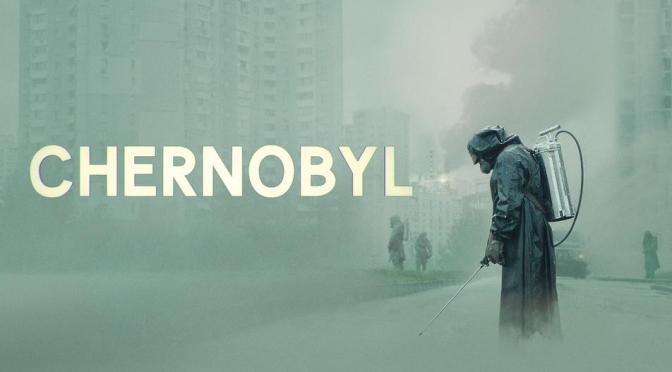
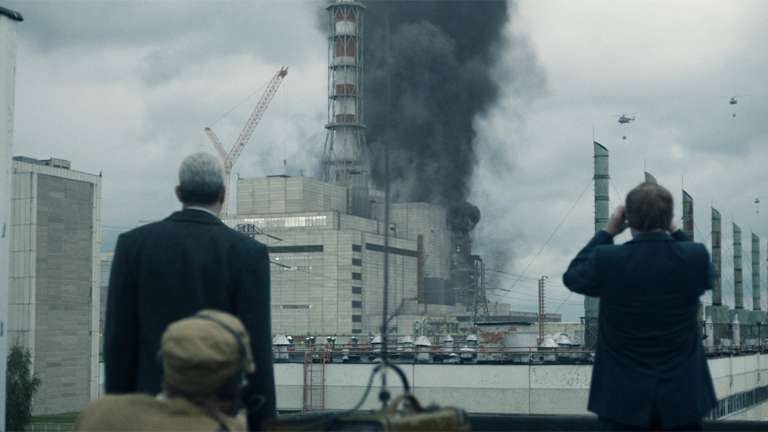
The horror. The human error. The inhumane error. The terror. Meltdown during a safety test. Flaws in the system as ghosts envelop the machine. Science in a brave new world invents progress with which we venture into, only to find we are murdering ourselves.

The terrifying events which took place are chartered with grey, brutalist accuracy. Regular Soviet families live in proximity to a ticking time bomb; believing they are protected by the State. The State trusts the science. The science trusts men to follow nuclear procedures to the letter. But what of pride? What of targets? What price the desire to obsess and force a flawed system?

On that fateful day on 26th April 1986, the nuclear time-bomb exploded. Initially, it was believed it could be contained. The Soviet machine could handle the fallout. Heat. Water. Steam. Graphite. Fire. All conspire to create one of the biggest disasters ever perpetrated against nature.

The Chernobyl nuclear disaster is well documented but for years the alleged truth was covered up. Death toll rose but official statistics stayed low. Naked miners, radiation sickness, blood, pus and falling hair. Style and look was natural and under-stated. Verisimilitude only heightening the horror.

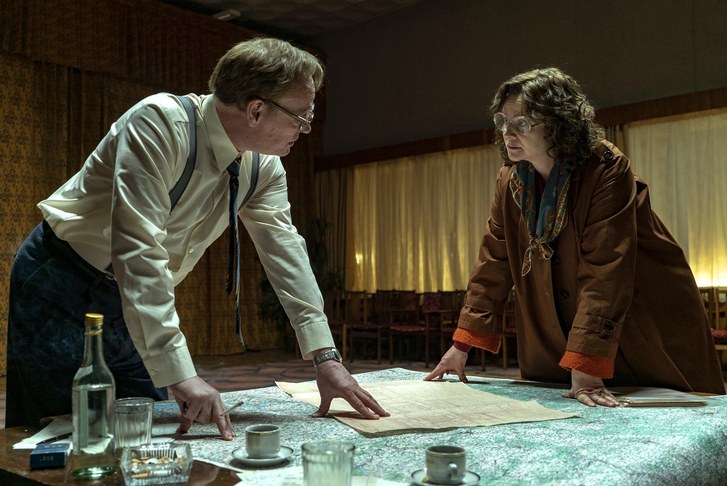
Johann Renck directs with steely commitment from an incredible Craig Mazin screenplay. Jared Harris, Stellen Stensgaard, Jessie Buckley and Emily Watson lead a stirling cast of formidable character actors. The attention to detail in the HBO production is second-to-none. Thankfully the vicarious fear is palpable and I am able to view such events in the comfort of my own home.

We did this to ourselves but it could have been worse. When will humanity learn that we will bring about our own judgement on Earth. The Scientists led by Valery Legazov and composite character, Ulana Khomyuk, fought at length to contain and prevent this ever happening again. Who really believes it won’t? There are approximately four hundred and fifty nuclear power plants in the world. The threat hangs over humanity like a cancer.

I was at school in April 1986. Just sixteen years old. I saw events on the news. Historical dramas such as Chernobyl make real the fear that was there at the time. The site is still poisoned. The exclusion zone remains two-thousand and six-hundred square metres; uninhabitable for twenty thousand year, according to an online source. This event teaches us to never take anything for granted. We have built our own gallows.

1986. Former Soviet Union. Ukraine. Pripyat. Chernobyl Nuclear Power Plant. Disaster. Recovery. Suppression. Lies. Liquidation. Death. Suicide. Exclusion.

The horror. The horror.

Mark: 10 out of 11

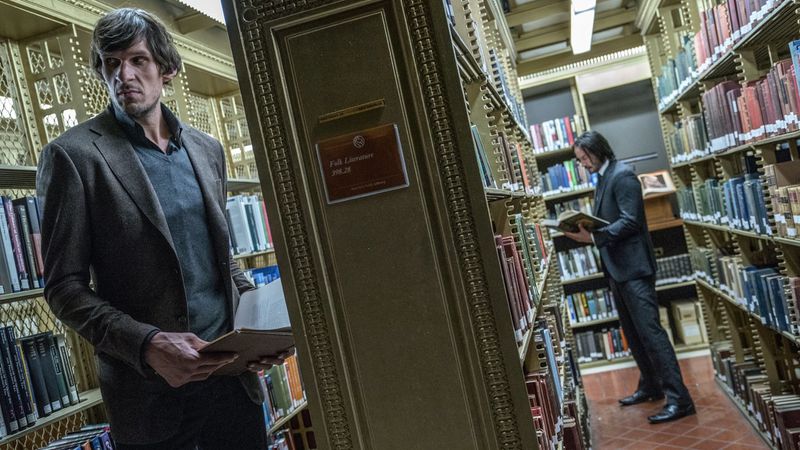
JOHN WICK: CHAPTER 3 – PARABELLUM

JOHN WICK: CHAPTER 3 – PARABELLUM – MOVIE REVIEW

Directed by: Chad Stahelski

Produced by: Basil Iwanyk, Erica Lee

Screenplay by: Derek Kolstad, Shay Hatten, Chris Collins, Marc Abrams

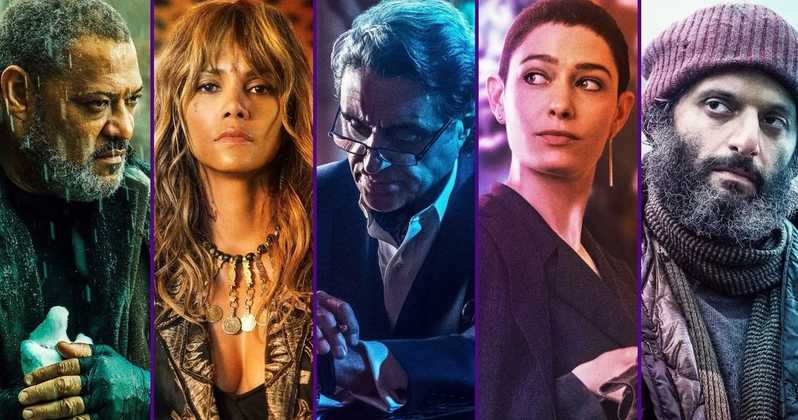
Cast: Keanu Reeves, Halle Berry, Laurence Fishburne, Mark Dacascos, Asia Kate Dillon, Lance Reddick, Ian McShane, Anjelica Huston etc.

Cinematography: Dan Laustsen

**MAY CONTAIN SPOILERS**

Have you ever thought: what’s the point in carrying on? We know we’re going to die someday so why bother trying to live? Dead French bloke Albert Camus wrote an existential essay called The Myth of Sisyphus and deemed life an exercise in the absurd. He offered mythological character Sisyphus as an example. Sisyphus was condemned to immortality for deceiving the Gods and his penance was to push a massive rock up a hill over and over. Camus wasn’t all doom and gloom, because he opined Sisyphus’s struggle ultimately gave his life meaning.

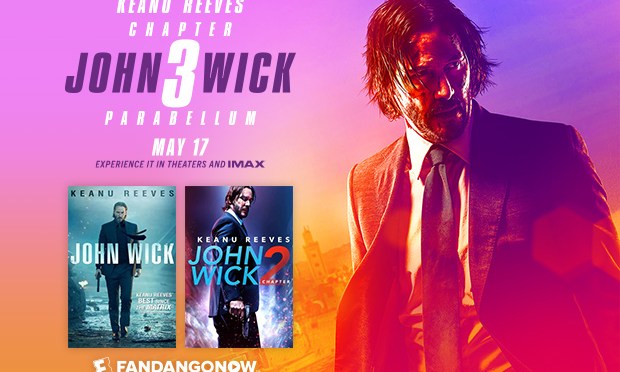
Why am I skirting around such philosophical musings? Well, John Wick is a classic “Sisyphean” character; destined to a repetitive cycle of life and death with very slim reasons for carrying on. In the first film it was revenge. In the second film it was paying back a marker; and then revenge. In the current, and third film of the franchise, it’s because he broke the rules of the assassin’s world and must pay the $14 million price. Plus, more revenge.

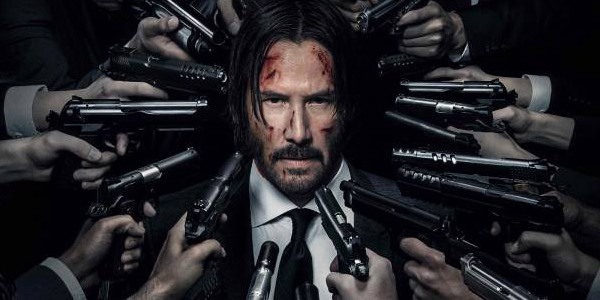
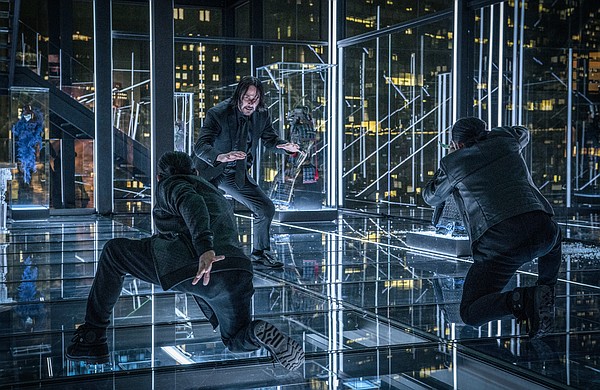
Yet, plot and reason are not the main purpose for watching this franchise. I watch it for the non-stop-Asian-infused-rainy-New-York-noir-flavoured-non-stop-balletic-violence-and-stunts. Here the incredible death toll and bloody killing is differentiated somewhat with: animals, vehicles and assorted sharp ojects joining the array of guns and fists used to hurt the two-dimensional bad people sent by the mysterious High Table gangsters. It doesn’t pay to analyse the film with logic, so just enjoy the immaculate: set design, art direction, cinematography, choreography, editing, visuals; and all-encompassing sound and fury.

Keanu Reeves, once again ignores the limits of his emotional range to deliver a formidable physical performance. Just his face, actions and movement alone are enough to convey his desires. Meanwhile, the writers open out John Wick’s back-story; shading in his past relationships and historical beginnings. This allows us to escape New York and venture to the Middle East, for a bit of sun and much needed change of scenery.

The film also welcomes a slew of fine character actors in support roles including: Halle Berry, Jerome Flynn, Asia Kate Dillon and Angelica Huston. They join the ever reliable Ian McShane, Laurence Fishburne and Lance Reddick from the first two chapters. Although, someone may have asked Fishburne to “rain” in his more bombastic moments, it’s still fun to see Neo and Morpheus on screen together. Oh, but the stunt dogs and 1990s B-movie action hero, Mark Dacascos, steal the show in their featured moments.

Overall, while showing signs of formula fatigue, John Wick: Chapter 3, remains a simple but wonderfully entertaining guilty pleasure. The choreography within the fight scenes and car/horse/motorcycle chases just transcend the action genre. Using: humour, pace, shock and sheer kinetic power they consistently startle and astound. Lastly, one could look at Wick’s character in mythical terms, perpetually fighting the Gods and forever pushing the rock up that hill. Indeed, I guess, like Sisyphus, Wick will carry on ad infinitum as long as there is someone to kill; and an audience wanting to watch such exquisite carnage on a big screen.

Mark: 8.5 out of 11

THE CINEMA FIX PRESENTS APRIL FILM ROUND-UP INC. REVIEWS OF: GRETA, LOVE, DEATH & ROBOTS, TRIPLE FRONTIER ETC.

THE CINEMA FIX PRESENTS: APRIL FILM REVIEW ROUND-UP

With Avengers: Endgame (2019) dominating the cinemas at the moment, I thought I’d let Marvel’s magic dust settle BEFORE seeing that blockbuster this weekend. However, during April I caught a few other newer releases at the cinema and online via Netflix. Thus, here are some mini-reviews with the usual marks out of eleven.

**MAY CONTAIN SPOILERS**

GRETA (2018) – CINEMA – DIRECTOR: NEIL JORDAN

Neil Jordan has an impressive directorial curriculum vitae, including genuine classics such as: Mona Lisa (1986), The Crying Game (1992) and The End of the Affair (1999). Greta is arguably not a patch on them; however, I really enjoyed this B-movie stalker narrative. This is mainly due to a fine cast headed by Isabelle Huppert, Chloe Grace Moretz and Maika Monroe.

Huppert exudes Gallic charm and quiet menace as the obsessive and lonely Greta. Furthermore, as her behaviour becomes more unhinged Jordan wrings every bit of tension from the lean and thrilling script. Seamus McGarvey’s cinematography also adds class to a very entertaining ninety-eight minutes.

Mark: 8 out of 11

LOVE, DEATH & ROBOTS (2019) – NETFLIX – DIRECTOR(S): VARIOUS

This anthology of eighteen animated short films was curated by Joshua Donen, David Fincher, Jennifer Miller and Tim Miller. Produced by various crews from a range of countries, the series is a re-imagining of Fincher and Miller’s long-planned reboot of animated sci-fi film Heavy Metal (1981). Firstly, I love short films and have watched a lot over the last ten years, and I don’t mind animated stuff either.

In Love, Death and Robots the animation, graphics, action, editing, composition and imagery on show here are incredible. The stories themselves are hit and miss; with some actually feeling over-sexualised and retrogressive. Nonetheless, the production values on show raise the bar so high it masks some of the generic writing and weak characterisation. Lastly, there are some brilliant shorts and my favourites include: Three Robots, Shape Shifters, Zima Blue, Ice Age and the very funny Alternate Histories.

Mark: 8 out of 11 (averaged score)

OUTLAW / KING (2019) – NETFLIX – DIRECTOR: DAVID MACKENZIE

According to Wikipedia this historical epic about Scottish nobleman, Robert the Bruce, cost $120 million to make. It’s a shame so much money was wasted because technically speaking the production is an absolute tour de force. It’s a pity the script and narrative are so bereft of intrigue, suspense and character relatability. Yes, I get that the English are bad and the Scottish must stand up to defeat their nefarious “landlords”, but unlike the far more theatrical and entertaining, Braveheart (1995), this all felt irrelevant.

I thought Chris Pine, who is a charismatic movie star, lacked personality in the lead, and Florence Pugh, as his wife, was given little to do apart from run away then get kidnapped. Aaron Taylor-Johnson was fantastic as a bloody revenging Scottish rebel-lord; as was David Mackenzie’s incredible direction of the impressive battle scenes. I have read that the film was hacked to pieces and what is on show is a hung-drawn-and-quartered cut of a longer film. Perhaps, one day we will see a true version of Outlaw / King and Mackenzie’s vision will be properly represented.

Mark: 6 out of 11

TRIPLE FRONTIER (2019) – NETFLIX – DIRECTOR: J.C. CHANDOR

Not quite a dirty dozen but a filthy five as former soldiers and military contractors including: Oscar Isaac, Ben Affleck, Charlie Hunnam, Garrett Hedlund and Pedro Pascal, gang together to rob a drug baron’s fortress holed up deep in the South American jungle.
The story has all the hallmarks of a testosterone-driven-men-on-a-mission-genre classic, but just when I thought it was going in a certain direction, the ending under-mined much of the previous compelling action.

The cast are very impressive though and they more than make up for any deficiencies in the thin characterisations. Similarly, while it starts slowly, once we get into the heist J.C. Chandor’s methodical directorial style really comes into its’ own. Chandor creates a lot of tension during and after the robbery as events twist out of control. Thematically, I thought this was going to become a modern day version of 1948 masterpiece, The Treasure of Sierra Madre. Indeed, if the drug money they steal had become a true threat to test the friends’ loyalty and courage under fire, I would have marked this thrilling film higher.

Mark: 8 out of 11

UNICORN STORE (2018) – NETFLIX – DIRECTOR: BRIE LARSON

This is a very odd film. However, if you pick through the bones of the whimsical script, the rainbow-baubled art direction and Brie Larson’s eccentric child-woman, you’ll find a rites-of-passage genre film in there somewhere. Larson directs herself as the immature narcissist, who having been kicked out of Art College begins a dead end temp job to try and appease her parents. So far so relatable.

However, the film twists into symbolic fantasy when she is offered,
by Samuel L. Jackson’s enigmatic ‘Salesman’, the dream opportunity of owning a Unicorn. WTF!!?! I enjoyed a lot about the film, notably the Napoleon Dynamite (2004) style humour; plus Larson and Mamadou Athie’s performances stand out. Overall though, I got that the Unicorn was an allegory for human maturation but I personally felt the narrative was slow and stretched despite fine work from the very talented Larson.

Mark: 6 out of 11

THE NETFLIX MEMORANDUM – INCLUDING REVIEWS OF: AFTERLIFE, THE SINNER (S2), RUSSIAN DOLL, DAREDEVIL (s3) ETC.

THE NETFLIX MEMORANDUM – INCLUDING REVIEWS OF: AFTERLIFE, THE DIRT, RUSSIAN DOLL, DAREDEVIL ETC.

For some insane reason I have given up alcohol for the year and the weight of reality and time burdens my everyday existence. First world problems abide. Anyway, while my liver breathes a huge sigh of relief, my mind still desires stimulus. Thus, I have, in my constant sobriety, had even more time to stream and watch even more films and television. These bitesize reviews look at the latest stuff I’ve seen on the behemoth streamer Netflix; with the usual marks out of eleven.

**MAY CONTAIN SPOILERS**

Image result for netflix

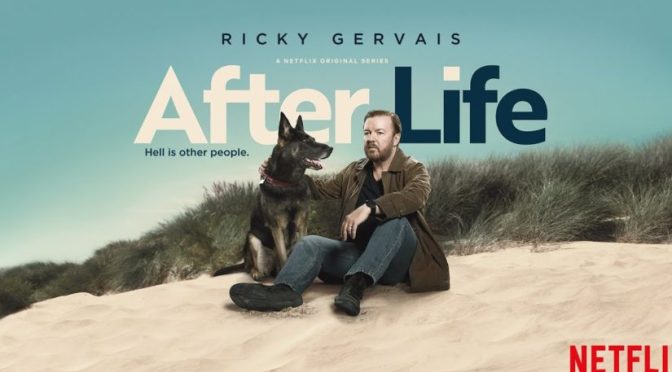
AFTERLIFE (2019)

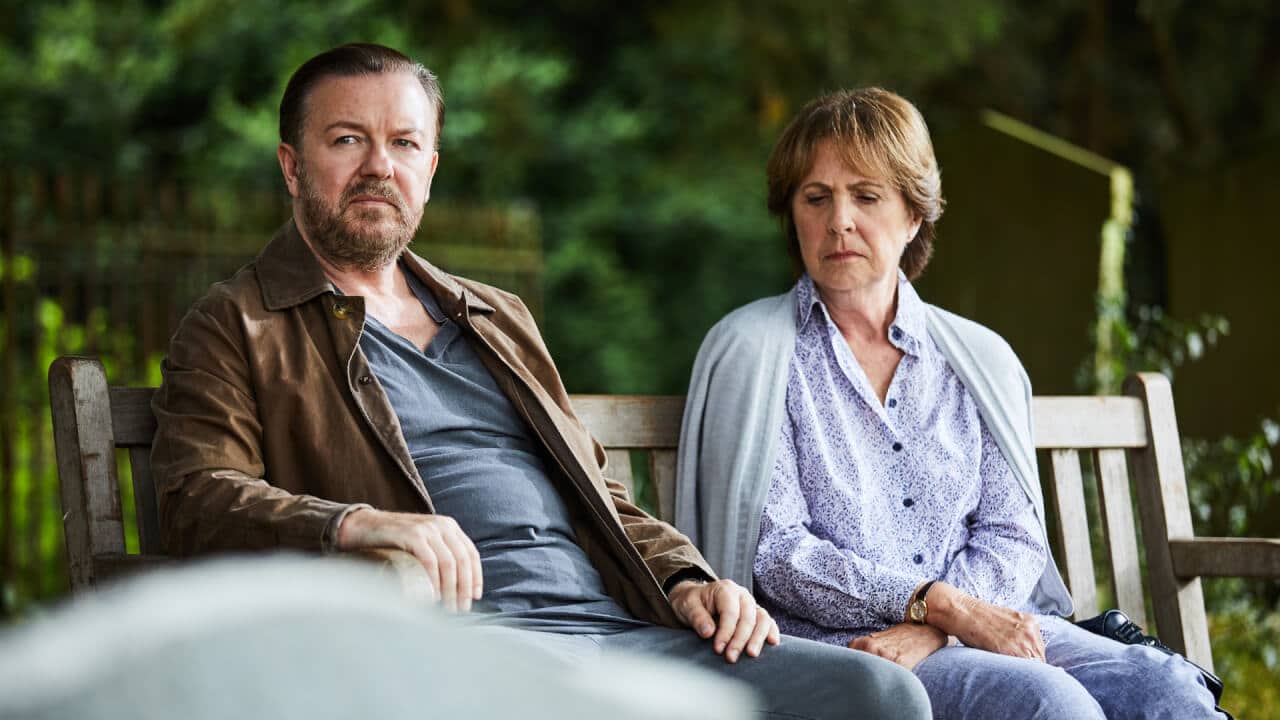
Ricky Gervais’ latest fictional piece is a really enjoyable tragi-comedy. His everyman, Tony, is suffering severe grief following the passing of his wife. Sadly he allows misanthropy and suicidal thoughts to overcome his daily existence in the fictional town of Tambury. The comedy is founded on dark materials but filled with deep humanity as we watch Tony wrestle with his demons.

I especially loved the eccentric characters and jokes concerning Tony’s job as a reporter with the local newspaper. The supporting cast are a joy too and include brilliant comedians like: David Earl, Kerry Godliman, Joe Wilkinson, Tom Basden and Diane Morgan. The ensemble cast and fine writing combine to create a simple, funny and emotional journey through one’s man’s fight with depression and grief. (Mark: 9 out of 11)

ABDUCTED IN PLAIN SIGHT (2019)

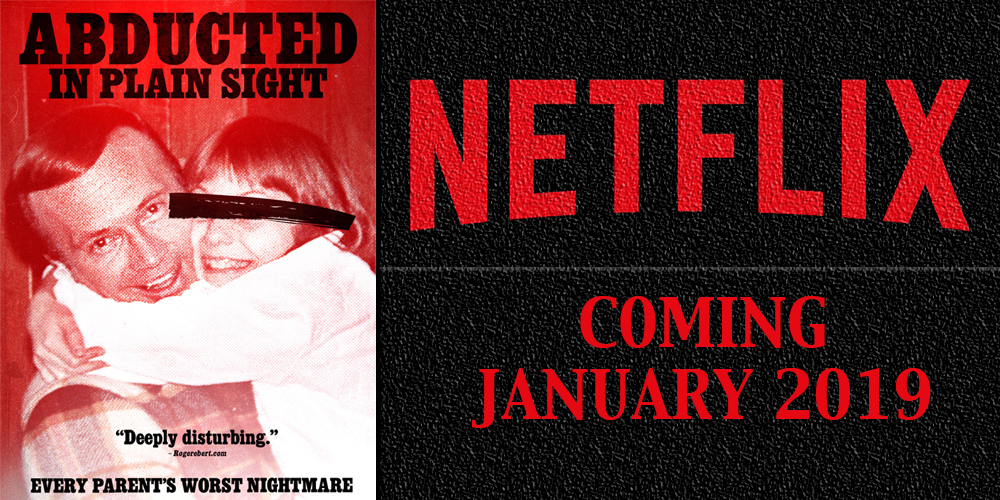
I keep telling myself not to watch such true crime documentaries as they make me feel really sad about the state of human behaviour. This story from the United States was in documentary film form so I got pulled back in by not having to sit through ten episodes of horror. Also, I’d heard it was a pretty incredible story too so my interest was piqued by that.

Safe to say this grim tale of grooming, paedophilia and abduction that one family suffered at the hands of a human monster in the 1970s, is something you wish you could un-see. As a documentary film it is very well made but it does make you lament the gullibility of some people and sickness of others. (Mark: 6 out of 11)

DAREDEVIL (2018) – SEASON 3

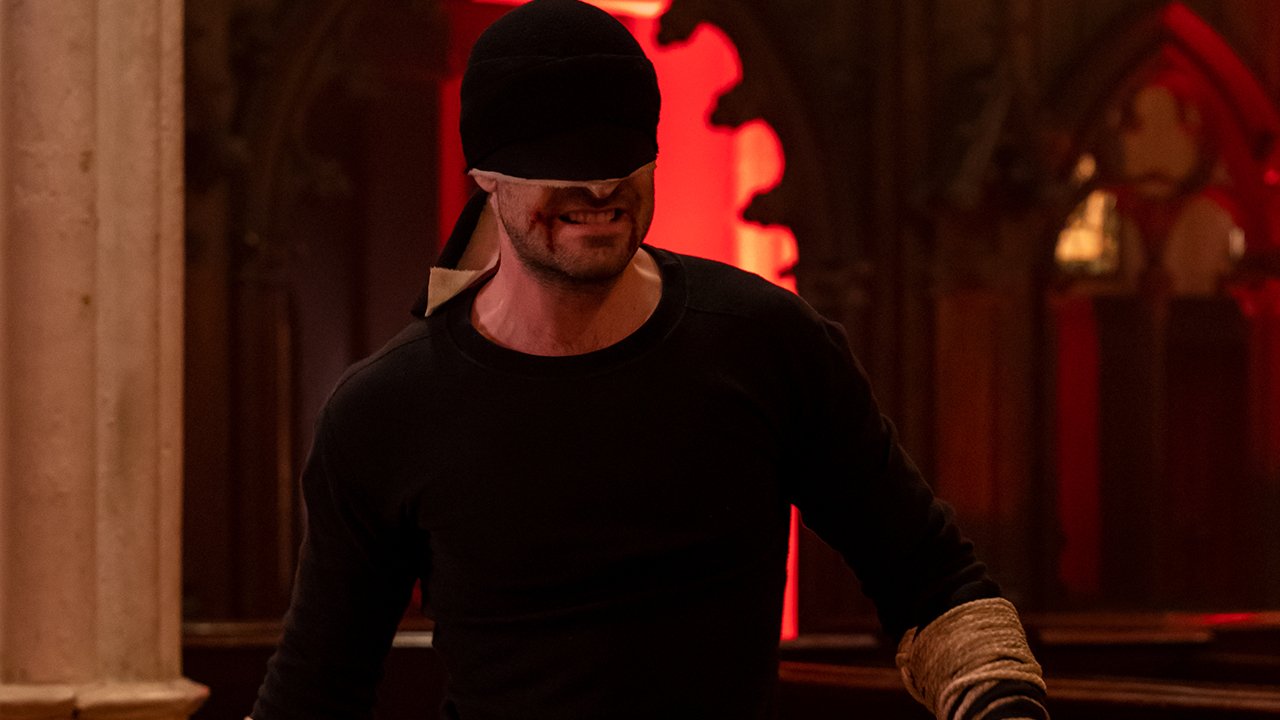
I’d say Matt Murdoch’s Daredevil is my favourite of the Marvel/Netflix streamed offerings. Charlie Cox is a fine actor and the drama, fighting and villainous rendition of Wilson Fisk by Vincent D’Onofrio, make it essential viewing. While it takes a huge gulp to believe that a blind guy could be that great at fighting criminals with sight, once you buy into that premise the show offers a lot of fun.

While not scaling the heights of Season 1, and lacking the brutal Punisher (John Bernthal) side-plot of Season 2, this latest Season 3 finds Murdoch up against Fisk again and a new psychopath in rogue FBI agent, Ben Poindexter. Like other Marvel adaptations on Netflix it’s still five episodes too long and bogged down with plodding angst and lengthy dialogue scenes, so doesn’t quite hit the bulls-eye throughout. Nonetheless, it’s still compelling drama and the hand-to-hand fight scenes are an absolute sensation. (Mark: 8 out of 11)

THE DIRT (2019)

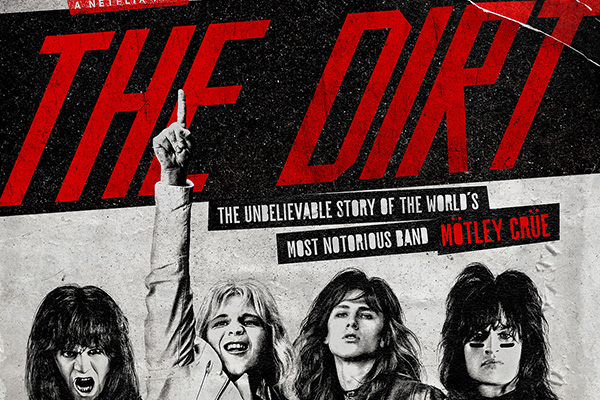
Crazed rock stars take drugs, smash up hotel rooms, screw groupies and almost die due to their excess is the unsurprising narrative ups and downs of this Motley Crue biopic. It’s not a bad watch but is essentially like a poorer version of This is Spinal Tap, without the incredible gag-rate. The film fleshes out the caricature members of the band showing their human side; Douglas Booth and Iwan Rheon bringing depth to their paper-thin roles. Moreover, while the era and stadium shows are really well emulated the direction lacks alot of imagination.

I mean, there was an intense film about addiction and human excess in here, and while we do get some moving scenes, notably with singer Vince Neil’s life struggles and Nikki Sixx’s heroin dependancy; ultimately the film did not dig deep enough into their characters. Still, fans of the band and their energetic rock music will love it no doubt. (Mark: 6 out of 11)

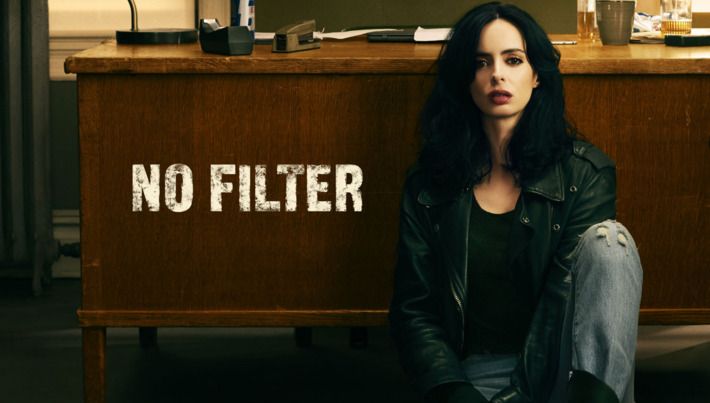
JESSICA JONES (2018) – SEASON 2

Kristen Ritter is back as Marvel’s hard-drinking, misanthropic and super-powered private investigator; and she remains very pissed off. Season 1 of Jessica Jones was absolutely brilliant due to David Tennant’s incredible villain, Kilgrave, and Jones’ character arc reflecting the damaging nature of controlling relationships.

Season 2, alas, is a plodding let-down full of filler episodes and weak sub-plots which quite frankly bored me. While Ritter holds the season together, the investigation into her past gets dragged down by soap operatics and a severe lack of pace and action. Mark: 6 out of 11

POLAR (2019)

Mads Mikkelsen is one of my favourite actors and he is on good form as a crack hit-man daubed ‘The Black Kaiser’. There’s a decent B-movie in here somewhere but the attention-deficient and showy direction detract from a potentially interesting story of regret and redemption. Moreover, while the action scenes are deftly realised the stupid characterisation, exploitative sex scenes and amoral violence drag the film into the unwatchable territory.

The least said about Matt Lucas’ performance as the amoral ‘Mr Big’ the better; here a usually excellent comic actor is given appalling direction that, like most of the film, lacks subtlety, tone and emotion. (Mark: 3 out of 11)

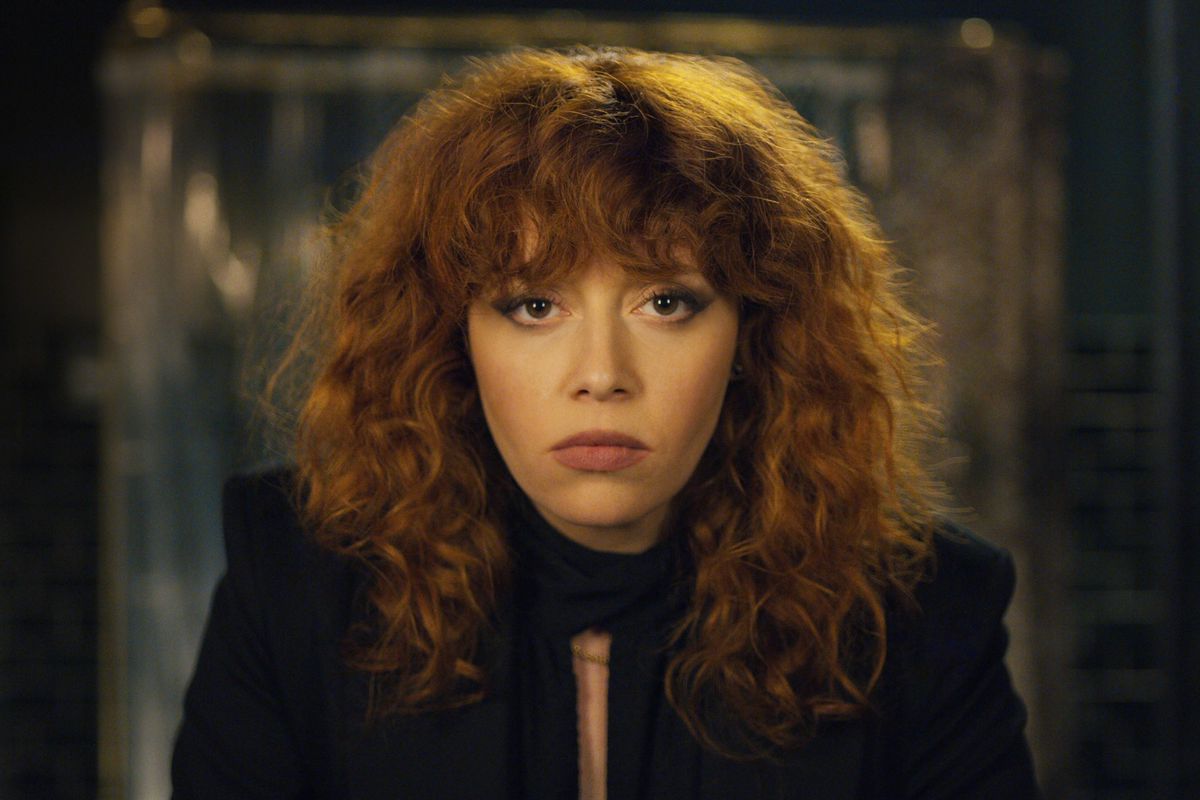
RUSSIAN DOLL (2019)

Another Groundhog Day copy gets a run out with Natasha Lyonne’s sassy computer programmer finding herself living out the same day over and over with various insane diversions along the way. It starts off really interestingly with lots of crazy deaths, character revelations and existential suffering. However, it soon runs out of steam, adding up to eight dramatically paper-thin episodes, more style than content.

Lyonne, is a fine actor who I like very much, delivers every line like New York comedian Andrew Dice Clay and this grated on me in the end as I felt I was watching a stand-up performance rather than a fully-rounded character searching for the meaning of life. (Mark: 6.5 out of 11)

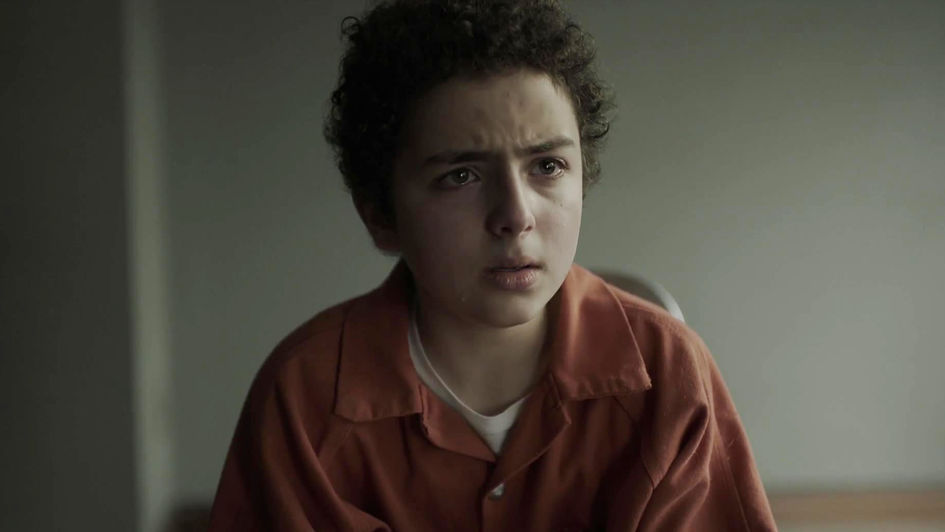
THE SINNER (2018) – SEASON 2

After the surprisingly excellent Season 1 of The Sinner, I was really looking forward to the second season. The cop show format is twisted in a really interesting way as we see the accused commit the crime, yet find the cop, in this case the impressive Bill Pullman, empathising with the criminal. Pullman’s Harry Ambrose is a brilliant creation. He’s not flashy or loquacious but a determined and dogged cop with his own personal demons.

Drawn to the troubled or underdog Ambrose digs for justice and redemption. In this story he sees his own past in the crimes of a 13 year-old boy accused of murder and is determined to find answers. Here the boy in question is given a compelling performance by Elisha Henig; and his characters’ commune existence and family history had me gripped throughout. A supporting cast including Carrie Coon and Tracy Letts also add real quality to this stirring psychological drama with themes relating to: physical and psychological abuse; religious cults; family tragedy; mental illness; and the darkness of the human spirit. (Mark: 9 out of 11)

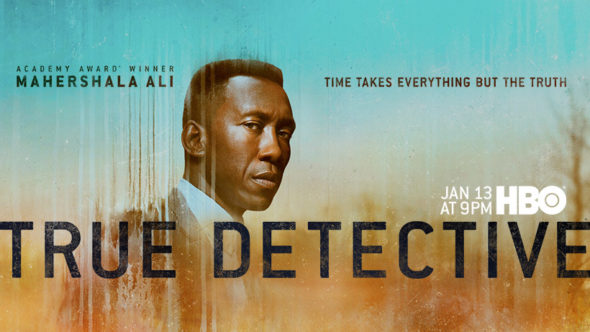
TRUE DETECTIVE (2019) – SEASON 3 – HBO TV REVIEW

TRUE DETECTIVE (2019) – SEASON 3 – HBO TV REVIEW

Created by: Nic Pizzolatto

Writers: Nic Pizzolatto, David Milch, Graham Gordy

Directors: Jeremy Saulnier, Daniel Sackheim, Nic Pizzolatto

Starring: Mahershala Ali, Carmen Egogo, Stephen Dorff, Scoot McNairy, Ray Fisher etc.

No. of episodes: 8

**MAY CONTAIN SPOILERS**

Time is an unforgiving concept. It marches on and absolutely never stops until we are dust. While young we believe we have more time, but deep down we can see our own death. That fear will either drive us forward positively or send us insane. Old age is perhaps the bitterest turn in time we must suffer. If we live long enough to collect a litany of fine memories, the mind disintegrates them, cruelly disallowing us from recalling such happy moments. There is also regret. If you have a conscience you are likely to suffer regret. Regret of what you have done wrong, not done right and been simply incapable of doing. Lastly, it is said time and tide wait for no man or woman. But it is waiting; waiting for us to die.

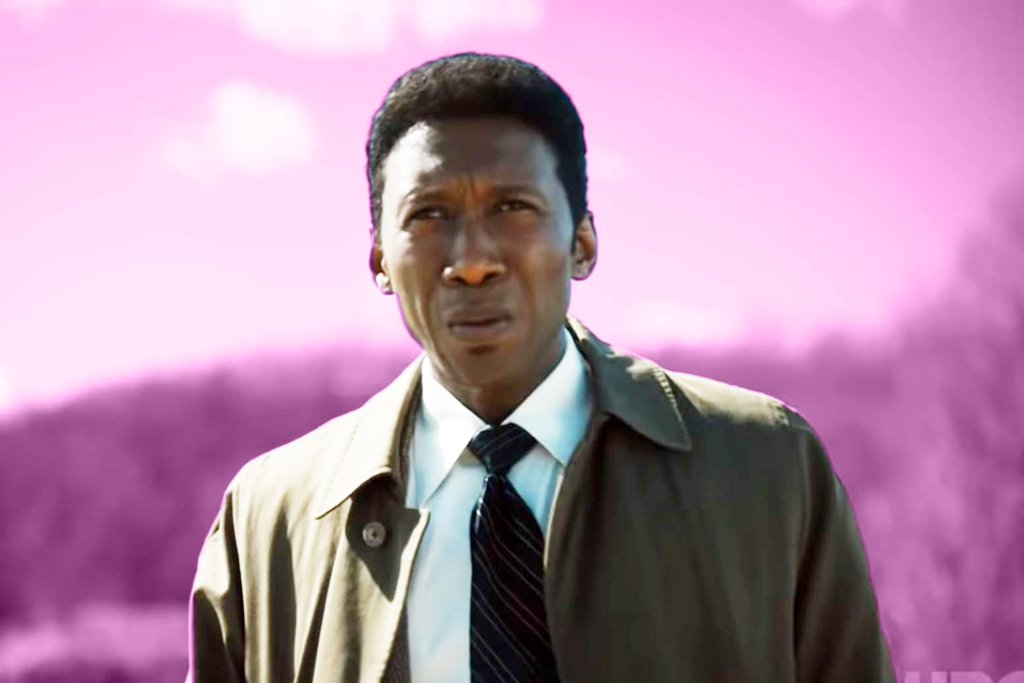
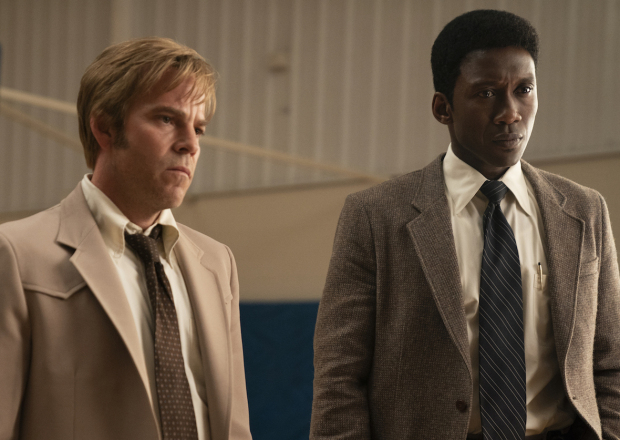
Existential police procedural drama, True Detective, is back for a third season and very good it is too. Starring Mahershala Ali and Stephen Dorff as the, as usual, mismatched cops; it concerns the hunt for two missing children in the Ozarks, Arkansas. Further, the supporting cast include the impressive Carmen Egogo and always compelling Scoot McNairy. Set over eight compelling episodes we criss-cross three separate timelines that centre on the said case. Events unfold circa 1980 (when the crime occurred); circa 1990 (when the investigation is re-opened); and the present with the characters aged and withering from time’s unrelenting march. The complex structure really enhances the genre plot as the intriguing timelines over-lap and bleed into one another, thickening the mystery and heightening suspense.

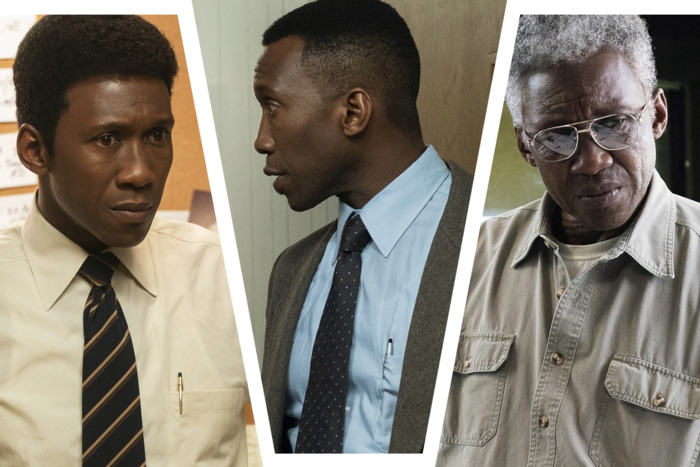
While the criminal case is central to the conventions of the genre, writer Nic Pizzolatto is as much interested in the character development and themes pertaining to: love, time, regret, guilt, aging, memory and death. The character of lead detective, Wayne Hays (Ali) is fascinating. A former U.S. soldier who served in Vietnam, he is a complex soul striving for meaning and trying to do the righteous thing. Consistently, however, he finds his race and social standing a barrier to solving the crime. Through his trio of timelines we feel his sense of loss, love, isolation, anger, happiness and confusion. The confusion especially worsens when his older self is hit by Alzheimer’s. Indeed, it is incredibly heartfelt while he attempts to piece together events from memories past including: the crimes, his actions, violent events, and the romantic moments he had with his wife (Egogo.)

Once again, Mahershala Ali proves he is pound-for-pound one of the best actors around. He gives an incredibly nuanced and intelligent performance as Hays. To inhabit the same character in three different guises takes a particular skillset and the subtle differences in performance are a joy to behold. He is assisted by uniformly excellent direction and production design. Indeed, some of the editing is sublime as the images switch between the young Hays and older Hays brilliantly; dissolves, reflections and over-lapping montage effects used imaginatively throughout. Lastly, it’s was also great to see Stephen Dorff too in a prominent role as Hays’ no-nonsense partner, Roland West. Dorff provides ebullient support during the investigation and their friendship is a mainstay of the show.

After the scintillating first season which had Matthew McConaughey and Woody Harrelson burning the plasma off the TV screen with their intense performances, the unfocussed second season contained star acting power but a confused narrative. However, Season 3 is a fine return to form and if you love your cop shows: dark, existential, meditative, violent and intelligent, then this is definitely worth your time.

BANDERSNATCH (2019) – BLACK MIRROR / NETFLIX REVIEW

BANDERSNATCH (2019) – BLACK MIRROR REVIEW

Directed by: David Slade

Produced by: Russell McLean

Written by: Charlie Brooker

Cast: Fionn Whitehead, Will Poulter, Asim Chaudhry, Craig Parkinson, Alice Lowe etc.

**SPOILER FREE**

Image result for bandersnatch

Choices, choices, choices! We all have so many choices to make every day. Some simple; some much tougher. We didn’t have any choice over whether we were born, but now we are here there’s a myriad of daily selections we get to make. Do we get out of bed? Do we eat? Do we wash? Do we find the strength to get in our car or on the train and face the horrors of employment? Do we engage with violent abandon by calling the driver who cut us up at a roundabout, “a wanker!” Do we wear our clean underwear today or re-use yesterdays? Do we have a salad or burger for lunch? Do we start smoking again? Do we regret having children? Do we tell our partner we love them? Do we have the last beer in the fridge? Do we try and change our life? Do we just give up? Do we watch the new drama box-set or a Netflix special by Black Mirror creator Charlie Brooker. So many tough choices!

Thus, you’ve had a shitty day with so many choices made and you sit down in front of the television in the hope you can switch off your brain. But that darned Brooker won’t let you. The televisual provocateur and his production team are cruelly requesting, for your entertainment, that you make MORE choices. If you’re young enough to remember those: “Go to page 47 to see if your spell vanquished the demon – or go back to page 666 to find out if you are the conqueror of the Universe”, type books, then Bandersnatch is THAT in television form. You may also be used to multiple choice computer games the likes of which I played myself as a kid on the Spectrum 128k computer. This is also the inspiration for Brooker’s twisted vision. But is it any good? I would choose YES! Bandersnatch is dark, hallucinatory and involving “fun”.

Image result for bandersnatch

The story/stories are set rather aptly in 1984. Our main protagonist is a grieving and troubled teenager, Stefan Butler (Fionn Whitehead). Stefan is obsessed by a “choose your adventure” book called Bandersnatch.  Inspired to turn it into a computer game, he soon descends down a veritable black hole mentally, physically and emotionally. The fact that we are vicariously responsible for the characters’ journey create a real sense of dread, doubt and suspense. It’s very clever and immersive and no doubt the writing of it must have been a tortuous process.

While it may not be for some I was engrossed by the show as it felt at times I was living in a Philip K. Dick story. Dick’s novels are often hallucinatory and dream-like with simple yet devastating prose. They deal with reality, alternative reality and beyond reality. You’re often in a place with unreliable narrators or confused protagonists who are existing in some real world, imagined or manufactured nightmare. Paranoia, anxiety and depression infect Dick’s world and Brooker captures that vibe brilliantly in Bandersnatch. However, it’s not also without humour too, albeit incredibly dark sarcastic humour.

Brooker and his filmmaking team achieve a style over substance triumph with Bandersnatch. I have only gone through Stefan’s narrative once but it gripped me from start to finish as an experience. The drained, urban and suburban 1980s colour and council-estate-grey look suited the psychotic breakdown of the main character. Nonetheless, at times, the dizzying twist of choices did take away from the emotional journey of the character. At one point I was so in the meta-hole the whole trip made me feel quite queasy. Having said that, I will be going back into this meta-adventure again; after all, the choices like in life seem endless.

Mark: 9 out of 11

BIRD BOX (2018) and ROMA (2018) – NETFLIX “CINEMA” REVIEWS 

BIRD BOX (2018) & ROMA (2018) – NETFLIX “CINEMA” REVIEWS

Firstly, may I wish you all a happy holiday season and thank all the people who have visited and read my reviews and articles this year. There are a lot of film review sites out there so it’s great so get so many visitors in a saturated online market.

For my final reviews of the year I have decided to double-up two Netflix releases. I watched them pretty much back-to-back in the hope, on top of enjoying them for entertainment purposes; I may be able to add them to my 2018 favourites.

So, here are my quick and concise reviews of Birdbox (2018) and Roma (2018) with the usual marks out of eleven. By the way, if you’re interested my favourite films and TV show lists of 2018 will appear early in January. Happy 2019 in advance!

**MAY CONTAIN SPOILERS**

BIRD BOX (2018)

Directed by: Susanne Bier

Produced by: Chris Morgan, Scott Stuber, Dylan Clark, Clayton Townsend

Screenplay by: Eric Heisserer / Based on: Bird Box by Josh Malerman

Starring: Sandra Bullock, Trevante Rhodes, John Malkovich, Danielle Macdonald etc.

It’s the end of the world as we know it: AGAIN!  I’d say that many of us may be getting apocalypse fatigue by now. So much so that if the end of the world does happen we’ll be mentally ready. Thus, any genre film about the end of the world must fight against the tide of similar films and TV shows released in the last decade or so to gain our attention or praise. Bird Box, for me, was a very entertaining and thrilling addition to the sub-genre. It benefits from an excellent ensemble cast and sterling lead performances from Sandra Bullock and Trevante Rhodes. Moreover, John Malkovich steals every scene he’s in as a cynical and obnoxious lawyer.

The story involves an invisible alien or natural force which infects the world’s population once they look; seeing it is deadly. It grips an individuals’ mind and then forces them to do horrific acts of violence to themselves. The film establishes Bullock’s character, blindfolded, with her two children just about surviving in the wilderness. After which we flash back five years and find Bullock’s pregnant character thrown into a memorably gripping set-piece. After which anyone familiar with George A. Romero’s zombie-film template will recognise many of the twists and turns in the story. Indeed, Bird Box is not that original because the superior, A Quiet Place (2018), also had a very similar premise but used sound rather than vision as the danger. Nonetheless, as a genre film Bird box rips along compellingly and Suzanne Bier has created some intense horror moments throughout.  

Mark: 8 out of 11

ROMA (2018)

Directed by: Alfonso Cuarón

Produced by: Alfonso Cuarón, Gabriela Rodriguez, Nicolas Celis

Written by: Alfonso Cuarón

Starring: Yalitza Aparicio, Marina de Tavira

Alfonso Cuarón writes, directs, edits and shoots a clear love and hate letter to his Mexican childhood. It contains the love he feels for his mother and the maid who helped raise him; and ire towards the men that negatively affected his young life and his country of birth. Set in the 1970s it covers around a year in the life of one middle-class family living in Mexico City; the main focus being the young help, Cleo. We follow her as she carries out her mundane tasks on a daily basis in an Upstairs Downstairs thematic structure. She is committed to her work and it is clear that she dotes and loves the children as if they are her own. As a historical film the era aesthetics are incredibly realistic and Cuaron’s cinematography, presented in crisp black and white imagery, is virtually perfect. You feel like you are there with the characters in 1970s Mexico. Historically too, the film evokes between the lines the politically charged danger of the era; however, Roma is more of a personal film than determinedly socio-political.

Cuarón is an auteur at the height of his powers. His direction on both Children of Men (2006) and Gravity (2013) was phenomenal; utilising technological brilliance with fierce storytelling acumen. Likewise, in Roma his stylistic choices are fascinating, although I think it actually works against the themes and content at times. The long take pans and tracking shots, while expertly done, slow the pace of the story and in my humble opinion are repetitive and overdone. Moreover, Cuaron the editor has fallen in love with own work and to me would have been a masterpiece if trimmed to two hours. There are at least four incredible standout cinematic scenes – that I won’t spoil – which all linger long in the memory. Furthermore, the characters, led by the humble Cleo are empathetic and at times tragically formed against the backdrop of political unrest. Yet, despite evoking the Italian neo-realist era of post-war filmmaking, Cuaron’s film feels padded at times, lacking the economy of Rossellini’s and De Sica’s work. Overall, it’s a touching work of cinema about birth, life and death, which arguably did not need the stylistic flourishes to tell such a simple, slice-of-life story.                                           

Mark: 8.5 out of 11