Tag Archives: drama

ARROW VIDEO – GOOD , BAD AND WEIRD FILM REVIEWS!

ARROW VIDEO FILM REVIEWS!

In keeping with my theme of branching out and watching different subscribers, last month I paid around £4.99 extra for the ARROW VIDEO CHANNEL via AMAZON PRIME. This gave me access to a whole host of good, bad and very weird films. There are some newish films on there, but mainly the channel contains vintage horror, arthouse and cult movies. This was a good old trip down memory lane for me as it meant I re-watched loads of films which were considered part of the 1980’s “video nasties” era. I also watched a number of films I had never seen before.

If you didn’t know ARROW FILMS is a leading independent entertainment distribution company. Established in 1991, it is dedicated to supporting upcoming and established filmmakers of dynamic new cinema and developing a slate of fantastic films from all around the globe. Moreover, they are also a leading restorer of classic and cult films and enjoy releasing anniversary celebrations of landmark titles. You’ll find some films of both incredible and dubious quality. Safe to say though, such releases are never boring. Lastly, ARROW are never frightened to distribute films previously banned, unreleased or heavily censored. They are true pioneers in the world of cinema. Check out their website here!

***MAY CONTAIN SPOILERS***


THE HORROR! THE HORROR!

If, like me, you love horror films then an Arrow subscription is essential. But before I get onto those, they also have a decent roster of world cinema films. Directors such as Krzysztof Kieślowski, Alejandro Jodorowsky, Susanne Bier, Thomas Vinterberg, Marjane Satrapi, Vittorio De Sica, David O. Russell, Hirokazu Koreeda, Richard Kelly, Bruce Robinson, Rainer Werner Fassbinder and Nagisha Oshima have many of their works distributed by Arrow online and via DVD or BLU-RAY. Indeed, I recently watched and loved Kieslowski’s BLIND CHANCE (1987) and Oshima’s MERRY CHRISTMAS MR LAWRENCE (1983). on the Arrow channel.

Yet, it was mainly the horror and cult movies I concentrated on during my month’s sojourn into Arrow’s back catalogue. Thus, here are some mini-reviews and marks out of eleven for the numerous films I watched.


THE BEYOND (1981)

Insane, surreal and with some incredibly gory deaths, this is perhaps Lucio Fulci’s most illogical, but brilliant film. The imagery and music collude to both sicken and chill in equal measures. It also has one of the most haunting final scenes in horror cinema. Mark: 8 out of 11


THE BLACK CAT (1981)

A truly dreadful adaptation of Edgar Allan Poe’s story which is contemporised badly by Lucio Fulci and his scriptwriters. I dislike cats generally and this revenge story does nothing to appease such negativity. Mark: 2.5 out of 11


THE BURNING (1981)

Pretty decent gore-fest which, while written before FRIDAY THE 13TH (1980), suffers mildly in comparison to that murdered-teenagers-at-camp classic. Famous for being produced by the Weinstein’s and early acting appearances from Jason Alexander, Fisher Stevens and Holly Hunter. Mark: 7.5 out of 11


CONTAMINATION (1980)

Truly terrible, but actually “so-bad-it’s-entertaining” mash-up of ALIEN (1979) and the 007 Bond franchise. Dodgy effects, acting and dubbing make this Italian B-movie laughably enjoyable. Mark: 5.5 out of 11


The Beyond (1981)

DON’T TORTURE A DUCKLING (1972)

An earlier Lucio Fulci film which actually has a decent plot and some disturbing, but compelling scenes and themes. Centred amidst a rural Italian setting, a murderer is running amok killing the village children. A reporter sets out to uncover the murderer as villagers begin to suspect the kids died at the hands of witchcraft. Mark: 7.5 out of 11


THE EXTERMINATOR (1980)

I used to revel in this nasty B-movie revenge film as a teenager. The school yard would have hives of thirteen-year olds chattering about the Doberman attack scene, pimps set on fire and the gangster killed in a meat grinder. Watching it back now, it truly is a terrible piece of filmmaking and an extremely lurid viewing experience. For all its derivative faults, I still loved it! Mark: 7 out of 11


HELLRAISER (1987)

Clive Barker’s cult horror classic is not so much about narrative coherence, but an assault on the senses. That damned mysterious and devilish “Rubik’s cube” is opened, giving way to a whole host of demonic monsters breaking Earth’s dimensions and threatening an Anglo-American family. Powerful visuals, incredibly effective prosthetics and brilliant nemeses in Frank and Pinhead, make HELLRAISER (1987) an extremely memorable low-budget horror cult classic. Mark: 8 out of 11


HELLRAISER II: HELLBOUND (1988)

A direct sequel to the original, but without Clive Barker directing this time unfortunately. HELLBOUND (1988) has some wonderful gore and monstrous moments as Kenneth Cranham’s mad doctor opens up the hellish gates to the beyond. But the surreal storytelling is so deranged and ridiculous I was just laughing by the end. Mark: 5.5 out of 11


Hellraiser (1987)

MANIAC COP (1988)

I love a lot of Larry Cohen’s work, but this is arguably only a minor B-movie script from him. The clue is in the title really as a vengeful cop goes on a kill crazy rampage in the dark recesses of the city. Notable for Bruce Campbell’s turn as a bemused cop suspected of the crimes, plus the impactful silent giant of a killer. Mark: 6 out of 11


THE NEW YORK RIPPER (1982)

While I do not agree with censorship as a rule, I can see why this Lucio Fulci United States shocker was banned in Britain for many years. It is disgustingly violent and misogynistic, verging on pornography in many scenes. The biggest crime is it’s so badly made from a capable filmmaker. Avoid at all costs! Mark: 1 out of 11


RAWHEAD REX (1986)

A gigantic phallic cock-monster called ‘Rawhead’ is woken near an Irish village and kills anyone who gets in his way. Another Clive Barker short story gets a film adaptation and this is awful in every way! Barker hated it and that led to him taking more control of HELLRAISER (1987). Lacking narrative context and even basic filmmaking skills, we are in the “so bad it’s hilarious” camp here. Mark: 3 out of 11


RED EYE (2005)

A rare diversion away from the horror genre finds Wes Craven directing Cillian Murphy, Rachel McAdams and Brian Cox in this fast-paced airplane-set thriller. I had never seen this film before as McAdams and Murphy provide committed performances while possessing excellent on-screen chemistry. Extremely suspenseful for the most part until it gives way to huge explosions and shootouts at the end. Great fun overall! Mark: 7.5 out of 11


Rawhead Rex (1986)

TENEBRAE (1982)

I have to admit that I am not a big fan of Dario Argento’s films generally. I find them imaginative, but mostly loud and nonsensical. Moreover, they have little in the way of suspense or actual scares. TENEBRAE (1982) is another empty Argento exercise in misogyny and style-over-substance as an American writer finds himself pitted against a vicious killer copying murders from his novels. There are some decent horror moments, but the twist is too self-knowing and ridiculous to not find laughable. Mark: 6 out of 11


THE WITCH THAT CAME FROM THE SEA (1976)

Now, this is a weird film. Part-revenge-part-feminist-part-porn-part-horror story that was also banned in Britain as a video-nasty. Millie Perkins gives a haunting performance as a psychologically damaged individual, who is so disturbed by a childhood trauma she kills when in sexual congress. It’s almost a really good film because the characterisation and motivation is well conceived. However, it’s also rather eccentrically acted and directed in places, so approach with great caution. Mark: 6 out of 11


ZOMBIE FLESH EATERS (1979)

This classic zombie exploitation from Lucio Fulci is one I’ve seen many times. While not quite as good as the Romero classics in terms of story and theme, it has so many unforgettably bloody scenes. The moment when a zombie attacks a shark is a horror set-piece you will never forget. As Fulci rips off Romero he spins the undead genre into a frenzy with relentless dirt, maggots, sinew, bone and guts on screen, all the while accompanied by a creepy score by Giorgio Tucci. Mark: 8 out of 11


ZOMBIE FOR SALE (2019)

The most contemporary film I watched from Arrow Video is a riotously funny and moving rom-zom-com from Korea. A rural family find a way of making money out of a zombie who has escaped a science laboratory, however, their get-rich-quick-scheme backfires with bloody hilarious results. While it is overlong, it benefits from a clever script and excellent acting, although it over-does the slow motion scenes and jarring narrative tonal switches. Mark: 8 out of 11


This image has an empty alt attribute; its file name is zombieflesheaters.jpg

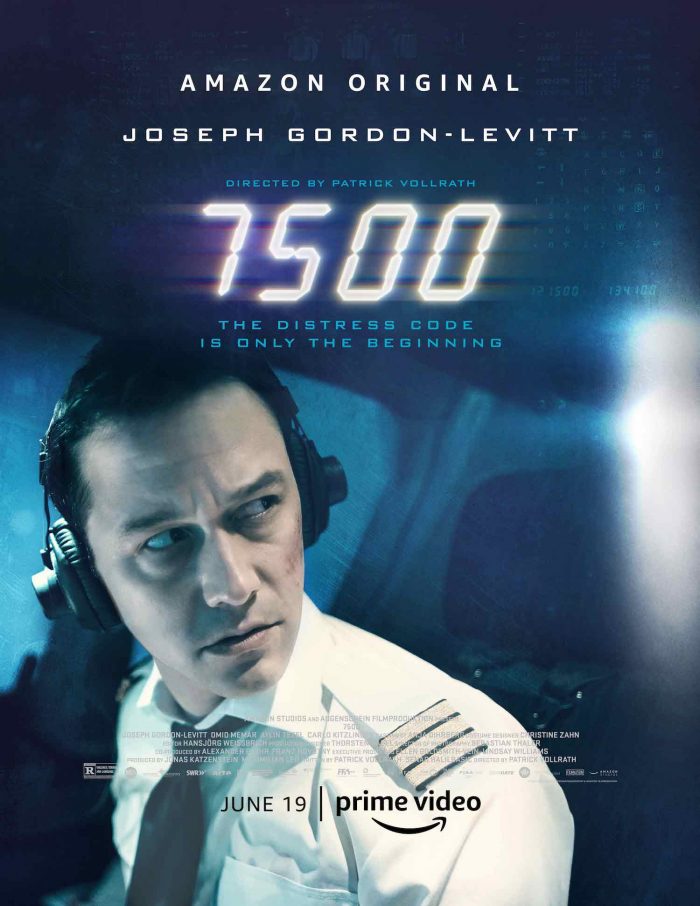
AMAZON PRIME FILM REVIEW: 7500 (2020)

AMAZON PRIME FILM REVIEW – 7500 (2020)

AMAZON PRIME REVIEW – 7500 (2019)

Directed by: Patrick Vollrath

Produced by: Maximilian Leo, Jonas Katzenstein

Screenplay by: Patrick Vollrath

Cast: Joseph Gordon-Levitt, Omid Memar, Aylin Tezel, Carlo Kitzlinger, Murathan Muslu, Paul Wollin etc.

Cinematography: Sebastian Thaler

***MAY CONTAIN SPOILERS***


I am bona fide confirmed aviophobe. Even the merest sight of a plane in the sky gives me the shivers. I imagine it’s a mixture of not being in control, lacking consistent flight experience and the pure fact that when one is that high up there is little chance of escape if anything goes wrong. Personally speaking, I think it’s an extremely rational fear. While I have flown on a plane a few times, if it means never flying again, I am genuinely happy to holiday in my own country for the rest of my life. Bearing this is mind, films that are set on a plane have a head start in increasing the tension I feel watching them. Indeed, good examples of cinema releases with heavy doses of airborne drama include: United 93 (2006), Flight (2012), Sully (2016), Passenger 57 (1992) and Red Eye (2005) etc. Just the mere thought of these, and the spectacular plane crash in Knowing (2006), are enough to have me reaching for the vodka and Valium.

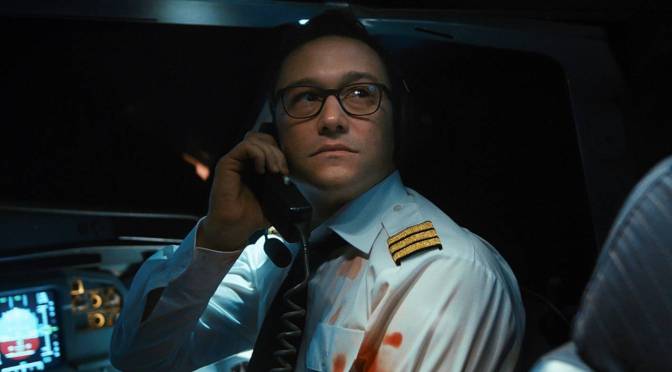
The 2019 action-thriller, 7500 is a worthy addition to such aeronautic movies. Written and directed by Patrick Vollrath, in his directorial feature-length film debut, 7500 stars Joseph Gordon-Levitt as pilot, Tobias Ellis. He joins the Captain on a standard city flight from Berlin to Paris and soon after take-off the crew and passengers on the plane find themselves attacked by hijackers. What follows is a claustrophobic, suspenseful and deadly set of events which push Tobias, and passengers, to the brink of death and back again. Aside from a few establishing CCTV shots of Berlin, virtually all of the action takes place inside the cockpit of the plane. The camera therefore is right up in the face of Joseph Gordon-Levitt throughout the film. Thankfully, he is a seasoned actor and gives a fine performance that runs the gamut of emotions.

One-location thrillers can be hard to pull off, however, the director Patrick Vollrath manages to build the suspense expertly through a good pace and many suspenseful moments. Indeed, when the hijackers were trying to smash their way into the cockpit, my heart was firmly in my mouth. To be honest, my heart began beating loudly even on take-off. Keeping the action to mainly the cockpit allows a real sense of claustrophobia and anxiety to build. We are right in the perilous mix with Tobias and Gordon-Levitt plays the everyman-in-danger to perfection. My main criticisms of the script really lay in the characterisation of remaining characters, especially the villains. It’s a shame the script did not explore their motivations above the cardboard terrorist personalities represented. However, as a singularly committed one-location-individual-in-crisis genre story, 7500 takes off and rarely threatens to crash.

Mark: 8 out of 11


FIFTY NOT OUT! 50 FAVOURITE FILMS IN 5 MINUTES!

FIFTY NOT OUT! 50 FAVOURITE FILMS IN 5 MINUTES!

I celebrated my fiftieth birthday last week. So, for a bit of fun I set myself a cinema game involving the theme of fifty. I gave myself no more than five minutes to list fifty favourite films. The rules are simple:

  • Pick 50 favourite films off the top of your head.
  • Take no longer than 5 minutes.
  • No checking Imdb.com or other cinema sites.
  • One film per franchise.
  • Go with your instinct – don’t overthink it!
  • Once you have written fifty down – you cannot change any.

Of course, these aren’t necessarily the best films ever, but instinctively films I love. Obviously, I am now kicking myself for the many great works of cinema I have missed. But, it’s just a bit of fun! So, here we go! In alphabetical order – FIFTY FAVOURITE FILMS chosen in FIVE MINUTES to celebrate FIFTY YEARS alive!


A GHOST STORY (2017)

AMERICAN BEAUTY (1999)

ANCHORMAN: THE LEGEND OF RON BURGUNDY (2004)

AU REVOIR LES ENFANTS (1987)

THE BIG LEBOWSKI (1998)

CAPTAIN AMERICA: THE WINTER SOLDIER (2014)

CASABLANCA (1942)

CASINO ROYALE (2006)

DAWN OF THE DEAD (1978)

DEAD MAN’S SHOES (2004)


THE EXORCIST (1973)

FARGO (1996)

FIGHT CLUB (1999)

FOUR LIONS (2010)

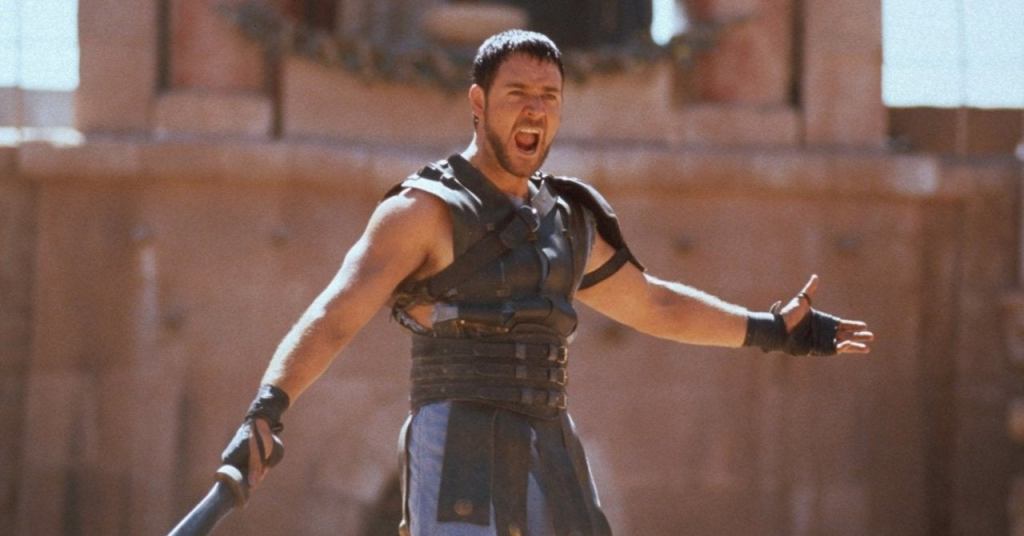
GLADIATOR (2000)

THE GODFATHER: PART II (1974)

GOODFELLAS (1990)

THE GOOD THE BAD AND THE UGLY (1966)

THE GREAT ESCAPE (1963)

HALLOWEEN (1978)


INGLOURIOUS BASTERDS (2009)

JAWS (1975)

KES (1969)

LORD OF THE RINGS: THE RETURN OF THE KING (2003)

THE MAGNIFICENT SEVEN (1960)

MAN ON FIRE (2004)

MEMENTO (2000)

MILLER’S CROSSING (1990)

MISSION IMPOSSIBLE (1996)

NETWORK (1976)


THE NINTH CONFIGURATION (1980)

NOSFERATU (1922)

ONCE UPON A TIME IN AMERICA (1984)

PSYCHO (1960)

RAGING BULL (1980)

RAIDERS OF THE LOST ARK (1981)

RESERVOIR DOGS (1992)

ROBOCOP (1987)

ROCKY (1976)

SCARFACE (1983)


SECRETS AND LIES (1996)

THE SEARCHERS (1956)

THE SEVEN SAMOURAI (1954)

STAR WARS (1977)

THE TERMINATOR (1984)

THE THING (1982)

TREMORS (1990)

TRUE GRIT (1969)

WHEN HARRY MET SALLY (1989)

WITHNAIL AND I (1986)


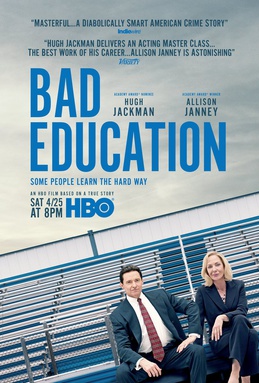
HBO FILM REVIEW: BAD EDUCATION (2019)

HBO FILM REVIEW: BAD EDUCATION (2019)

Directed by: Cory Finley

Produced by: Fred Berger, Brian Kavanaugh-Jones, Julia Lebedev, Mike Makowsky, Oren Moverman, Eddie Vaisman

Screenplay by: Mike Makowsky – Based on: The Bad Superintendent by Robert Kolker

Cast: Hugh Jackman, Allison Janney, Geraldine Viswanathan, Alex Wolff, Rafael Casal, Stephen Spinella, Annaleigh Ashford, Ray Romano etc.

***MAY CONTAIN SPOILERS***


Not to be confused with Pedro Almodovar’s film of the same name — or the BBC comedy show/film, Bad Education, starring Jack Whitehall — this Bad Education (2019), is an altogether different scholastic narrative. Based on true events which occurred at the Rosslyn Union Free School District circa early 2000’s, the story centres on a massive scandal which broke involving the educational District’s managers, financiers and auditors. I am going to review this without too many spoilers, as learning the gravity of what occurred and how it happened is a major part of the film’s jaw-dropping enjoyment.

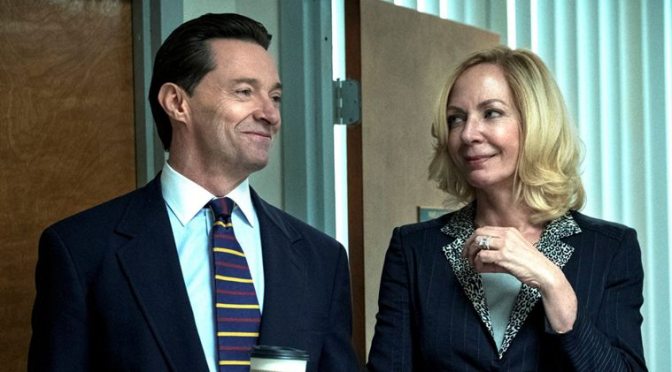
As this is a HBO TV film, there was a heightened expectation of quality on my part. I was not to be disappointed. An expertly crafted screenplay, based on an article by Robert Kolker, finds Hugh Jackman as Frank Tassone. He is a suave, vain and intelligent Superintendent who has the school staff, students and parent under a charm spell. Not only is he a smooth talker, but the exam results for the schools in his charge have improved no end. His Long Island domain has incredible returns and this ensures more middle-class families move into the area, driving up property prices. Everybody’s happy, right? Yes, for a while! Tassone is supported ably by his Financial Manager, Pam Gluckin (Allison Janney). It’s only when school reporter, portrayed impressively by Geraldine Viswanathan, starts digging deeper, that something indeed is revealed to be rotten in the district of Rosslyn High.

Directed with some skill by Corey Finley, this film is highly recommended to those who enjoy compelling dramas with a heavy dose of ironic humour. Finley’s previous film, Thoroughbreds (2017), was an incredibly dark noir character study. Bad Education (2019), on the other hand, deals with serious financial malfeasance in a lighter tone. The dialogue is very witty and full of humorous exchanges between the characters. Moreover, Hugh Jackman and Allison Janney are on top acting form in their respective roles. Jackman especially proves what charismatic and interchangeable talent he has. Indeed, it’s good to see him play a highly complex character again. Ultimately though, the almost unbelievable nature of the events portrayed, prove how bottomless human greed and corruption can become. When will we ever learn?

Mark: 9 out of 11


BBC TV REVIEW – NORMAL PEOPLE (2020)

BBC TV REVIEW – NORMAL PEOPLE (2020)

Directed by: Lenny Abrahamson, Hettie Macdonald

Written by: Sally Rooney, Alice Birch, Mark O’Rowe

Based on: Normal People by Sally Rooney

Executive producer(s): Ed Guiney, Andrew Lowe, Emma Norton, Anna Ferguson, Sally Rooney, Lenny Abrahamson

Producer: Catherine Magee

Cast: Daisy Edgar-Jones, Paul Mescal, Sarah Greene, Aislin McGuckin, India Mullen, Fionn O’Shea, Eanna Hardwicke, Leah McNamara, Frank Blake, Niamh Lynch, Kwaku Fortune, Desmond Eastwood, etc.

Cinematography: Suzie Lavelle, Kate McCullough

Original Network: BBC Studios, Hulu

***MAY CONTAIN SPOILERS***


“The course of true love never did run smooth. . .” –
William Shakespeare

Love is a multi-faceted concept open to a myriad of philosophical, medical, emotional and intellectual interpretations. Conversely, an eternal question in our society still remains: what is love? Is it the joining together of two people forever committed to a relationship built on respect and trust?  Or is it the emotion you feel for a family member or person you have bonded with over time?  Is it nature’s way of tricking us into the act of pro-creation?  Perhaps it’s an abstract and emotional concept created by a higher power to ensure we act positively? For some it could be a dark force which enlivens obsession and stalking and violence or maybe it’s a marketing delusion forced upon us by greedy advertisers, florists and chocolate vendors?  Is it all of the above?

Studies by Helen Fisher of Rutgers University propose that we fall in love in three stages involving a different set of chemicals. They are: lust, attraction and attachment. Indeed, the events occurring in our mind when we fall in love are akin to mental illness. Chemicals such as: testosterone, oestrogen, dopamine, serotonin all conflict and combine to change our emotions when we’re attracted to someone. Further studies show that when choosing a partner we are at the mercy of our subconscious and inner sexual desires as proffered in psychoanalytical studies.

Love, lust and sexual desire are a big part of everybody’s lives whether they are positive or negative; indeed, the continuance of the species is very much reliant on them. Moreover, love or the lack of love has provided the springboard for millions of stories, films, plays, songs, poems, slogans, TV shows, comedies and adverts! The latest excellent love story I watched was the BBC/Hulu production called Normal People (2020). Over twelve episodes we were introduced and lured into the sweet and dark hearts of two Irish teenagers called Connell (Paul Mescal) and Marianne (Daisy Edgar-Jones). They meet, fall in lust, have loads of sex, fall in love, generally fall out with each, fight further, go to University, go abroad, grow up, fall down and then fall back in love with each with other, and so on.


Based on Sally Rooney’s extremely successful novel of the same name, the story events begin at a Sligo Secondary school. Connell is quietly spoken and from a single parent upbringing. But he is very popular with his peers, close to the top of his class and exhibits much sporting prowess. Marianne’s family is wealthier than Connell’s. In fact, the latter’s mum, Lorraine (Sarah Greene) cleans house for Marianne’s mother. The Sheridan household is not a happy one though due to a tragedy which occurred to the father. This causes Marianne to be very angry, self-loathing and outspoken. Because of this she is somewhat of an outsider at home and school. For some unknown reason Marianne’s brother and mother are very cold toward her. Yet, despite the turmoil and class difference, Connell and Marianne share a mutual attraction, which soon becomes a sexual relationship.

As aforementioned, the path of love is not smooth as the first obstacle to the relationship comes from Connell’s paralysing fear of what his school friends think. He is a complex soul and does not have the bravery to share his true feelings to the world. Marianne becomes a secret, and this angers her, causing a major rift between the two young lovers. I won’t give any further plot details away, but it is safe to say that this is not your average romantic comedy or drama. The story beats of the romance genre are present, yet delivered in a sombre, delicate and under-the-surface style. This is not surprising given the first six episodes are subtly directed by Lenny Abrahamson, a filmmaker who has a number of wonderful character-driven films to his credit.

With confident direction, acting and a serene soundtrack, Normal People (2020) is a consistently absorbing and emotional rollercoaster. What I would say it though it often feels as if you’re watching events unfold in extreme slow motion. This isn’t a criticism though, because in the stillness of the performances, the dwelling of the camera on the character’s faces and length of shots, we’re allowed the time to breathe in the joy and pain of this complicated romance. The two lead actors Phil Mescal and Daisy Edgar-Jones are both incredibly well cast. They have exquisite chemistry together in both their passionate sex scenes and when they just simply exist and talk and look and love and hurt together. One may gripe that the drama could have been achieved with a tad more pace and just a few less episodes. However, if you are looking for a truthful representation of young love, with all its angst, kinks, self-loathing, insecurities and exasperating undulations, then Normal People (2020) is definitely a worthwhile experience.

Mark: 9 out of 11


BFI FILM REVIEW: BAIT (2019)

BFI FILM REVIEW: BAIT (2019)

Directed, written, shot and edited by: Mark Jenkin

Produced by: Kate Byers, Linn Waite

Cast: Edward Rowe, Mary Woodvine, Simon Shepherd, Giles King etc.

Production company: Early Day Films

Distributed by: BFI (UK)


**MAY CONTAIN SPOILERS**


Not to be confused with the B-Movie shark movie, Bait (2015), Mark Jenkin’s tour-de-force arthouse classic, Bait (2019), is a whole together different kettle of fish. The story is set in Cornwall and centres around local fisherman, Martin Ward (Edward Rowe), and his various day-to-day struggles. Having had to sell the family cottage to middle-class city types, the Leigh family, Martin is fiercely determined to save up for a boat. In the meantime, he fishes with nets on the beach, as his brother, Steven (Giles King), uses their deceased father’s vessel for tourist cruises. Martin is resentful toward Steven and clashes with his brother and the Leigh’s throughout the film.

Bait (2019) is a low-budget and independent passion project. Mark Jenkin used a vintage hand-cranked Bolex camera, using 16mm monochrome film that he hand processed. He wrote, directed, lit, filmed and edited the film, but also used an army of local people to assist with the production. The story and themes of gentrification and city versus coastal types are explored very effectively in Bait (2019). Wherever you stand on the point of traditionalism versus upward mobility and financial appropriation, via the character of Martin and Edward Rowe’s bruising and hulking performance there are very powerful emotions of grief, loss and cultural absorption represented. The writing is initially quite simple in that the Leigh family are a negative force within the Cornish village. The son, Hugo, creates a lot of conflict by destroying Martin’s lobster traps and clashing with local hothead youth, Wenna (Chloe Endean). However, the Leigh’s are not mere stereotypes, but rather just shown as a family unit, like the Wards, who are trying to make a living.

Bait (2019) won’t be for everyone though as it is very experimental in nature. While the story and themes are clear, the editing, black-and-white-scratchy photography, dubbed dialogue and sound creates a self-consciously arty experience. Indeed, while some may proclaim the style as original, it is obviously influenced by cinematic formalists including Jean-Luc Godard, Ingmar Bergman and Sergei Eisenstein. The elliptical montage editing style, direct address (actors stare either at or just off camera) and overlapping dialogue will certainly appeal to film students and scholars alike. Overall, Bait (2019) treads a fine line between genius cinema and what could be classed as plain bad filmmaking. Thankfully, we have wonderful film critics, like Mark Kermode, to tell us it is one of the best and most important British films released in the last decade.

Mark: 9.5 out of 11

NETFLIX TV REVIEW – BETTER CALL SAUL (2020) – SEASON 5

NETFLIX TV REVIEW – BETTER CALL SAUL (2020) – SEASON 5

Created by: Vince Gilligan, Peter Gould

Executive producer(s): Vince Gilligan, Peter Gould, Mark Johnson, Melissa Bernstein, Thomas Schnauz, Gennifer Hutchison,

Producer(s): Bob Odenkirk, Nina Jack, Diane Mercer, Robin Sweet, Gordon Smith, Jonathan Glatzer,

Directors: Bronwen Hughes, Norberto Barba, Michael Morris, Gordon Smith, Jim McKay, Melissa Bernstein, Vince Gilligan, Thomas Schnauz, Peter Gould,

Writers: Vince Gilligan, Peter Gould, Thomas Schnauz, Gordon Smith, Alison Tatlock, Heather Marion, Ann Cherkis,

Cast: Bob Odenkirk, Jonathan Banks, Rhea Seehorn, Patrick Fabian, Michael Mando, Tony Dalton, Giancarlo Esposito, etc.

Cinematography: Arthur Albert, Marshall Adams

Production company(s): High Bridge Productions, Crystal Diner Productions, Gran Via Productions, Sony Pictures Television

Original network: AMC

UK Release: Netflix

***MAY CONTAIN SPOILERS***


“We all make our choices. And those choices, they put us on a road. Sometimes those choices seem small, but they put you on the road. You think about getting off. But eventually, you’re back on it.”
Mike Ermantraut – Better Call Saul (S5 – Episode 9)


One thought, of many, that I will take to my dying day is in regard to the business of the war on drugs. I get that people want to strive for intoxication in order to medicine themselves against the pain and struggle of everyday life. I get that humans love to get high and have a party. I get that people unfortunately get addicted to substances, so much so they turn into junkies existing only for their next fix. It may not make it right, but I get why people do drugs.

I also understand the business of making money selling drugs. The drug dealers and Cartels across the world earn a fortune farming, creating, distributing and selling narcotics. Moreover, Governments, across our civilisation, attempt yet fail, to stop them. I get all this. What I don’t understand though is when the Cartels make SO much money, and wall it up in safehouses, farms and apartments — why don’t they stop!! They have enough! Just retire. It’s a naive question, obviously. Because the money, drugs, lifestyle and power are also an addiction. It’s an insane game. It’s a bad road. It’s another indictment against the evil of humanity and our greed-driven society. Having said that the conflict with drugs and more specifically that of the Mexican drug Cartels is also providing the masses with some fine television drama.


Bob Odenkirk as Jimmy McGill, Rhea Seehorn as Kim Wexler – Better Call Saul – Photo Credit: Nicole Wilder/AMC/Sony Pictures Television

Following hot on the heels of the gripping Season 3 of Cartel-driven thriller, Ozark (2020), comes Season 5 of Vince Gilligan and Peter Gould’s crime prequel to Breaking Bad — the brilliant, Better Call Saul. Once again, it proves itself an incredibly well written character drama, containing some of the finest acting around. I mean, some shows you watch, and they can be a struggle. But Better Call Saul is like digital silk, so smooth in its presentation. The overall style, colour scheme, imaginative camera angles and framing make the show a joy to experience. The story isn’t too bad either.

Having worked through his conflicts with his brother, Chuck (Michael McKean), in the previous sterling seasons, Jimmy McGill finally embraces the ‘Saul Goodman’ legal name and persona. In this season though, in attempting to create a niche making a living helping the lower level criminal element, Jimmy/Saul, eventually finds his legal skills being employed by the Salamanca drug Cartel. Here Saul makes decisions which drag him, and his partner, Kim Wexler (Rhea Seehorn), into a series of dangerous drug-related situations in and out of court. Indeed, episode 8, Bagman, is as good as crime drama gets in terms of narrative, conflict, characterisation and dialogue.

While Bob Odenkirk again sparkles as the cheeky ducker-and-diver-lawyer, Saul Goodman, it’s Rhee Seehorn as Kim Wexler who steals the show. The development of her character from corporate legal player to something more than a money-driven suit is fascinating. In addition, her shifting attitudes also reflect a possible adrenaline addiction to the danger that Saul’s questionable choices bring. Meanwhile, Jonathan Banks as experienced fixer, Mike Ermantraut; Giancarlo Esposito as drug boss, Gustavo Fring; and new cast member, Tony Dalton as Lalo Salamanca, all add to sheer acting charisma and talent on screen. Ultimately, the war on drugs will never be won because there is an insatiable demand for narcotics, and a more fervent demand to supply them. I’m just so happy I am very far removed from the ‘Badlands’ of the Mexican drug Cartels. No doubt after the latest season of Better Call Saul, Saul Goodman, will be feeling very much the same. After all, we are all eventually a prisoner of our own bad choices.

Mark: 9.5 out of 11


SKY TV REVIEW – GANGS OF LONDON (2020)

SKY TV REVIEW – GANGS OF LONDON (2020)

Created by: Gareth Evans, Matt Flannery

Directors: Gareth Evans (2 episodes), Corin Hardy (4 episodes), Xavier Gens (3 episodes)

Executive producer(s): Thomas Benski, Lucas Ochoa, Jane Featherstone, Gabriel Silver

Producer(s): Hugh Warren

Writers: Claire Wilson, Peter Berry, Joe Murtagh, Gareth Evans, Matt Flannery, Lauren Sequeira, Carl Joos,

Cast: Joe Cole, Sope Dirisu, Lucian Msamati, Michelle Fairley, Mark Lewis Jones, Narges Rashidi, Parth Thakerar, Asif Raza Mir, Valene Kane, Brian Vernel, Jing Lusi, Pippa Bennett-Warner, Orli Shuka, Richard Harrington, Jude Akuwudike, Emmett J. Scanlan, Colm Meaney etc.

Production company(s): Pulse Films, Sister Pictures, Sky Studios

**CONTAINS SPOILERS**


The British, or more specifically, London-based gangster narrative is a well-trodden pathway for writers, directors and filmmakers. In fact, when Guy Ritchie’s Lock, Stock and Two Smoking Barrels (1998) was a low-budget sleeper hit, agents and film companies were never more than a few feet away from a cheeky-chappie-laddish-gangster script. Ritchie obviously has made his name in the crime genre and his most recent film, The Gentlemen (2020), was another rollicking piece of entertainment. However, Ritchie’s stylish geezer model doesn’t always show the serious side of the British crime yarn. Films such as: Villain (1971), Get Carter (1971), The Long Good Friday (1980), Mona Lisa (1986), The Krays (1990), Sexy Beast (2000), Legend (2015), and many more, represent the dark and brutal face of hard-nut masculinity and the profession of violence. Enter the new Sky drama, Gangs of London (2020), which over nine episodes pitches itself as a similarly stern contemporary gangster fable, but with lashings of explosive action set-pieces, savage fisticuffs and a few severed hands thrown in for good measure.

From the opening scene — which finds heir apparent to the Wallace Corporation, Sean (Joe Cole), burning alive and dropping a low-level hoodie off a sky-scraping construction building — the brutal tone is set. Flashbacks then reveal the reason for Sean’s ire. His father, Finn (Colm Meaney), was murdered while on the Albanian mafia’s turf and thus he demands revenge. So far, so Hamlet! Yet, this is no singular character’s journey into the psychological depths of real or invented madness. Mostly, we find a sprawling, multicultural and international ensemble piece with the world of crime represented by aforementioned Albanians, Nigerians, Kurdish freedom fighters, Chinese gangs, Pakistani drug cartels, Welsh travellers and various other criminal elements.

While there is some soul searching for Sean as Finn Wallace’s buried secrets are latterly exposed within the drama, this is very much a symbolic and sadistic manifestation of Brexit. Moreover, it critiques the rise of gangster culture from the mean capital streets into the corporate boardroom. The Wallace’s billion-pound construction business acts as a front for money laundering, drugs deals, prostitution, people smuggling, gun-running and other nefarious crimes. Business has never been so good; that is until Finn Wallace is killed. Henceforth, all hell breaks loose on the streets of London and the police, who all seem to be in the pockets of the gangs, are unable or unwilling to control it.


The gangster genre can be a challenge for writers, directors and actors as they attempt to sidestep the cliches. Moreover, these stories predominantly show violent and amoral characters attacking or cheating or back-stabbing one another. Thus, it can be difficult to create empathy for such nasty people. Nonetheless, given the continued success of such narratives, the anti-heroic ensemble represented by the likes of the Wallace, Dumani, Afridi, Dushaj and Edwards’ families, among others, give the audience plenty to get our teeth into. There are so many different characters, motives, actions and desires on show that the sheer pace and twists in the narrative can leave one breathless. That isn’t to say the pace is rapid. There is a brooding suspense and grave depth to the overall direction. At times the drama, as well as the casting of Michelle Fairley (Lady Stark), reminded me of Game of Thrones in crime form. It gives us high-quality genre storytelling interspersed with some incredibly violent fight scenes and shoot-outs. It doesn’t quite have the heroes that Games of Thrones had though. The closest we get to a rootable character is Sope Dirisu’s low-level enforcer, Elliott Finch, who has a big secret to hold onto. Dirisu gives a powerful performance both emotionally and physically as he fights his way up the Wallace chain of command.

Gangs of London (2020) was created by Gareth Evans and Matt Flannery for Cinemax and Sky Studios. Evans, of course, is the talented Welsh filmmaker who had to go all the way to Indonesia and direct Merantau (2009), The Raid (2011) and The Raid 2 (2014), in order to make a name for himself in the film industry. He is a director with a special set of skills, especially when it comes to the knuckle-breaking and heart-stabbing fight sequences. Thus, the episodes he directs stand out among the best of the series. Notably Episodes 1 and 5, which feature an incredible bare-knuckled-table-leg-glass-in-the-face bar fracas and a bloody-mercenary-raid-on-a- country-farmhouse set-piece respectively. The remainder of the series arguably pales a little where the action is concerned, however, there remains some shockingly grotesque acts of violence as the corpses mount up the further the series proceeds. Indeed, as Sean Wallace attempts to locate his father’s killer and order from the chaos, he will find little in the way of salvation, redemption and satisfaction in the life of a London gangster. If only he’d watched more crime films, he’d know that already.

Mark: 9 out of 11


MY CINEMATIC ROMANCE #20 – KATHRYN BIGELOW

MY CINEMATIC ROMANCE #20 – KATHRYN BIGELOW

If there’s specific resistance to women making movies, I just choose to ignore that as an obstacle for two reasons: I can’t change my gender, and I refuse to stop making movies. It’s irrelevant who or what directed a movie, the important thing is that you either respond to it or you don’t. There should be more women directing; I think there’s just not the awareness that it’s really possible. It is.“— Kathryn Bigelow in 1990


Having most recently directed the searing period drama, Detroit (2017), Bigelow has been making feature films, since her debut, The Loveless (1981), for over thirty-nine years. With a strong academic background, having studied at the San Francisco Art Institute and Columbia University, it’s fascinating to review a career which has eschewed arthouse cinema and essentially been spent working mainly on big-budget genre films. However, one can see in her directorial canon that Bigelow, while striving for commercial success, is constantly testing the boundaries of genre storytelling.

Along with a powerful visual style that attains symbiosis with the core material, she intelligently explores themes relating to violence, individual freedom versus the system, masculinity in crisis, gender representations and socio-political corruption. Lastly, her characters are often outsiders, morally complex and dealing with deep personal trauma. In short: Bigelow’s worldview is one of both healthy scepticism and cynicism, but also an element of hope within the longing for control. So, here are five of Kathryn Bigelow’s most impactful cinematic releases.

***ARTICLE CONTAINS FILM SPOILERS***


NEAR DARK (1987)

While The Lost Boys (1987) is rightly regarded as a very entertaining 80’s vampire film, Near Dark (1987) is way, way superior. Despite not catching fire at the box office, this neo-horror-western contains a fantastic cast of James Cameron alumni, including: Lance Henriksen, Bill Paxton and Jenette Goldstein. These great character actors inhabit this snarling gang of vampires perfectly as the film contains shockingly brutal violence and hard-bitten dialogue amidst a tender love story.


BLUE STEEL (1990)

While Jamie Lee Curtis is generally better known for her horror and comedy film performances, Kathryn Bigelow made excellent use of her dramatic acting ability as a rookie police officer caught up with Ron Silver’s psychotic commodities trader. Blue Steel (1990) is a variegated genre film which takes a standard police procedural narrative and twists it into something far more psychologically compelling. Lee Curtis excels, as does vicious bad-guy Silver, aptly named Eugene Hunt!


POINT BREAK (1991)

This classic heist meets surfing movie meets gay subtext bromance is jam-packed with classic action scenes and faux-deep philosophical musings. Keanu Reeves is the daftly named cop, Johnny Utah, who goes undercover, amidst the beach brigade to find a bunch of bank robbers. His suspicions fall on Patrick Swayze’s elemental surfer-dude-god and a dangerous “bromantic” game of cat-and-mouse ensues. Bigelow scored her first major hit with Point Break (1991), infusing it with some incredibly visceral stunt, surfing, robbery and chase sequences in an exhilarating film experience.


THE HURT LOCKER (2008)

After the box office failures of her previous three films, the under-rated sci-fi thriller, Strange Days (1995), enigmatic mystery, The Weight of Water (2000), and stodgy cold war film, K-19: The Widowmaker (2002), Bigelow’s seemingly took a career break. She would, however, come back with her most critically acclaimed and Oscar-winning film, The Hurt Locker (2008). From a brilliant script by Mark Boal and led by Jeremy Renner’s standout lead performance, The Hurt Locker (2008), put the audience right at the heart of a bomb disposal unit in Iraq. Putting aside the politics for a moment, the film is full of incredibly tense and superbly edited scenes which have your heart in your mouth. Simultaneously too, the film also shows the devastating emotional, physical and mental effect war has on the people of Iraq and the soldiers sent to fight this horrifically unjust conflict.


ZERO DARK THIRTY (2012)

Whereas The Hurt Locker (2008) had highly emotional and empathetic protagonists, Bigelow and Boal’s next film Zero Dark Thirty (2012), is a much more clinical and technically efficient cinematic experience. In parts, both a war drama and espionage thriller, the story also has a feel of an old-fashioned Western as American military and CIA operatives, led by the excellent Jessica Chastain and Jason Clarke, hunt down Osama Bin Laden. Politically speaking this is a film which makes me feel very uncomfortable for a number of reasons. It plays out like a revenge story. It also seems to both criticize and vindicate torture in the early scenes. This makes me uneasy as I understand the 9/11 attacks were just horrific, yet they seemed to get used as a motive for many more atrocities by the United States government. I guess that was what Bigelow and Boal were going for. They attempted to create a morally and emotionally complex war thriller that lets you interpret the events yourself and conclude one’s own judgements.


NETFLIX FILM REVIEW: DA 5 BLOODS (2020)

NETFLIX FILM REVIEW: DA 5 BLOODS (2020)

Directed by: Spike Lee

Produced by: Jon Kilik, Spike Lee, Beatriz Levin, Lloyd Levin

Written by: Danny Bilson, Paul De Meo, Spike Lee, Kevin Willmott

Cast: Delroy Lindo, Jonathan Majors, Clarke Peters, Norm Lewis, Isiah Whitlock Jr., Mélanie Thierry, Paul Walter Hauser, Jasper Pääkkönen, Jean Reno, Chadwick Boseman etc.

Music by: Terence Blanchard, Marvin Gaye

Cinematography: Newton Thomas Sigel

Distribution: Netflix

***MAY CONTAIN SPOILERS***


Shelton Jackson “Spike” Lee has been a prolific actor, director, producer and polemicist for some time now. An ultra-talented and outspoken cinematic artist, he has directed thirty fiction and documentary films since his debut feature film She’s Gotta Have It (1986). Plus, all manner of promos, commercials, music videos, short films and television series. An energetic firebrand of a director he has made films in many genres and is a risk-taker in subject, theme and style. Whether you agree with what he has to say he is a filmmaker who is always creating situations and characters who must be heard.  

His latest film, Da 5 Bloods (2020), is a timely Netflix film release which encapsulates crime, heist, political, war, drama, Blaxploitation, comedy, documentary, love and experimental film genres. Lee has never been afraid of taking risks and sometimes his films have not worked because of it. However, with BlacKKKlansman (2018) he succeeded in making one of the best films of 2018 and should have won Best Film Oscar in my view. Da 5 Bloods (2020) grabs the power baton of Lee’s prior film and runs with it, delivering an entertaining, funny, thought-provoking, stylish and brilliant genre-blending story full of sustainable socio-political arguments in the era of the Black Lives Matter movement.


The narrative begins by establishing four aging Vietnam veterans, portrayed by the magnetic ensemble of Delroy Lindo, Clarke Peters, Norm Lewis and Isiah Whitlock Jr. They meet in Ho Chi Minh City in order to venture into the jungle and locate the remains of their squad leader. During some very stylised, richly colour-saturated and impactful flashbacks, it is revealed their friend, “Stormin Norman” (the charismatic, Chadwick Boseman), was killed in combat. Furthermore, and this is the money reason they are back in ‘Nam – there is army gold in those hills. Thus, the comrades set out to locate their friend’s body, and the gold, in order to find reparation and hopefully some form of redemption.

The film begins warmly as we enjoy the company of these great actors portraying reunited friends on an old boys outing. However, the film, as it introduces further subplots involving Jean Reno’s suspicious businessmen, Desroche and Delroy Lindo’s Paul crumbling mental state, moves into far darker territory the further the men get into the jungle. Lindo himself gives arguably the best performance of his career as a soldier grieving for his lost friend and desperate to get compensation for the unjust loss of so many lives in Vietnam. His character’s downward mental trajectory is one of the most powerful elements of Da 5 Bloods (2020). No doubt Lindo will be nominated come awards time and so he should be.

The cinematic excellence on show too from Spike Lee and his production crew is to be applauded too. Lee’s box of magic tricks includes: jump cuts, aspect ratio switches, colour saturation, Shakespearean soliloquies, documentary footage, flashbacks, conveyor-belt camera tracks, stills photography, slow-motion, direct address and many other devices. The exceptional cinematography is drenched in an opulent score from Terence Blanchard and the incredible voice of Marvin Gaye. I guess my main reservations about the film would be the elongated running time, with some scenes indulgently over-running. Moreover, there were also a couple of convenient plot coincidences which could have been ironed out. Nonetheless, with Da 5 Bloods (2020), Spike Lee has delivered another bravura mix of genre and socio-political filmmaking which, like classics such as The Treasure of Sierra Madre (1948) and Apocalypse Now (1979), stare into the dark heart of humanity and find greed, war and death there. Unlike those two films though, Da 5 Bloods (2020), also contains hope, light in the tunnel, and the idea that togetherness brings strength in the face of adversity.

Mark: 9 out 11