Tag Archives: war

Cinema Review: Eddington (2025) – a daring Western satire on COVID-era America, US politics and the poison of social media!

Cinema Review: Eddington (2025)

Directed by Ari Aster

Written by Ari Aster

Produced by: Lars Knudsen, Ari Aster & Ann Ruark

Main Cast: Joaquin Phoenix, Pedro Pascal, Luke Grimes, Deirdre O’Connell, Micheal Ward, Austin Butler and Emma Stone.

Cinematography by Darius Khondji

*** MAY CONTAIN SPOILERS ***


Ari Aster’s first two horror films, Hereditary (2018) and Midsommar (2019) were rightly critically acclaimed and delivered at the box office too. His third film Beau is Afraid (2023) was a flop when compared and in my view not surprising. The film was arguably, depending on your view, a hilarious, risk-taking arthouse tragi-comedy or a self-indulgent act of egregious career self-sabotage. Safe to say I did not enjoy it, so approached the latest A24-produced film of Aster’s, Eddington (2025), with emotional caution.

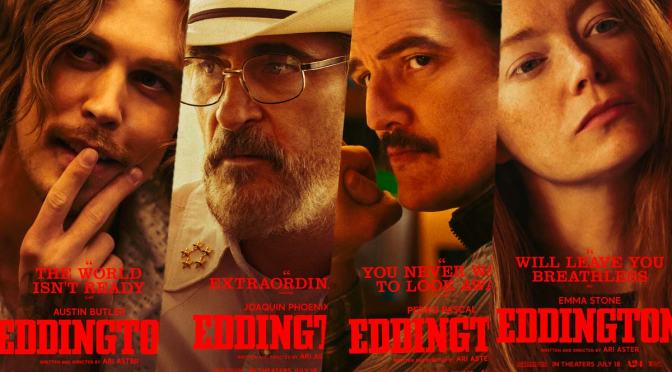
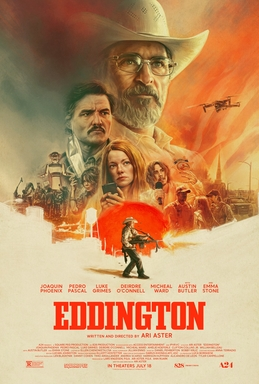
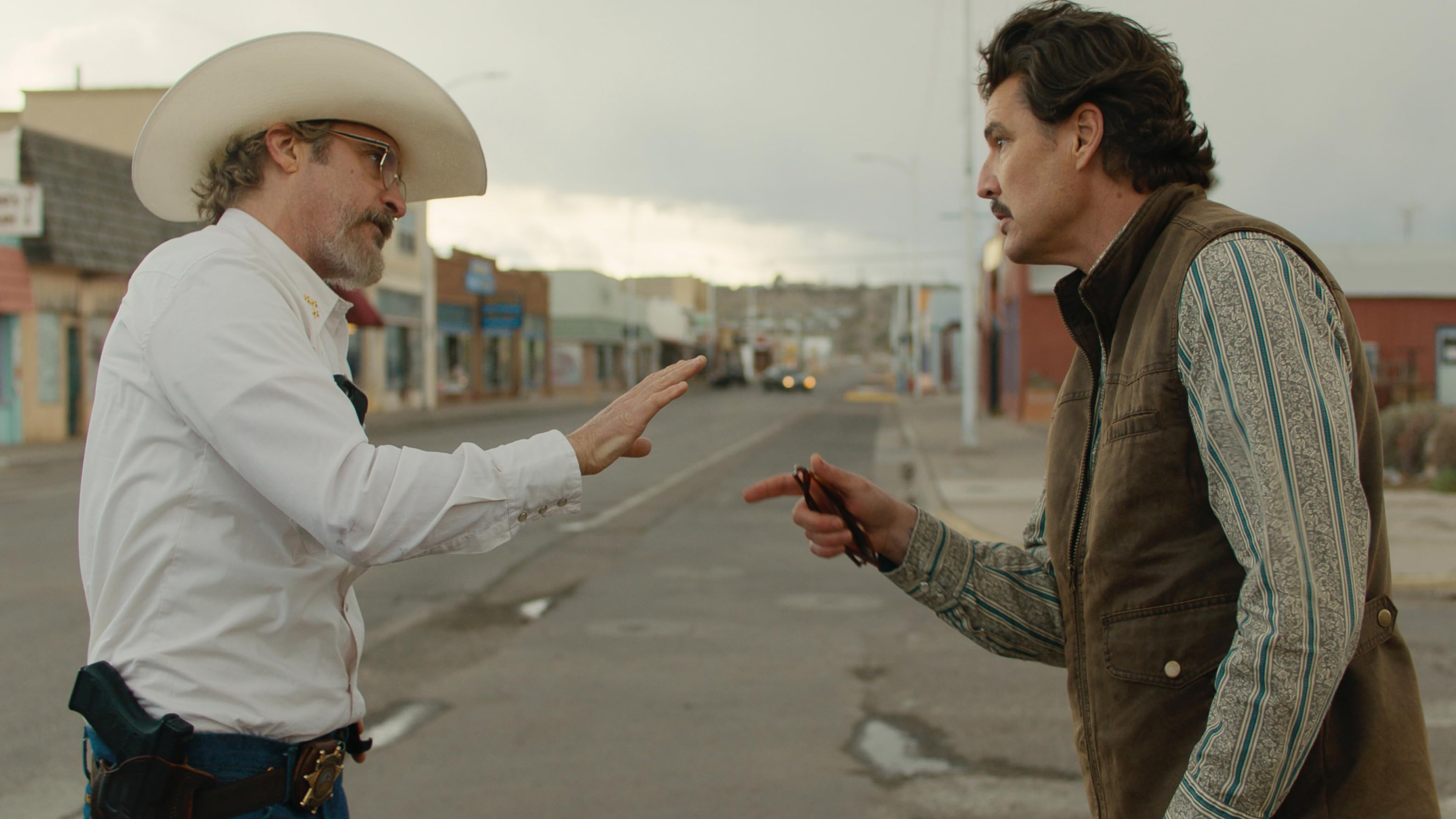
Thankfully Aster’s screenplay, characters and all-round production of Eddington (2025), are far more accessible and focused than his third feature. Pedro Pascal and Joaquin Phoenix anchor Eddington (2025) superbly, as Aster delivers a blistering small-town allegory that uses a public health crisis as the spark for something far larger. What begins with Mayor Ted Garcia (Pascal) dutifully following the Governor’s lockdown orders quickly escalates when Sheriff Joe Cross (Phoenix) refuses to comply and runs for Mayor himself. This casts the town and people into a conflict that mirrors America’s own political division.


Phoenix brings his trademark intensity to Sheriff Cross, whose defiance feels equal parts principled and unhinged, while Pascal’s Mayor, revealed to be a corporate puppet, balances him as a leader losing grip on his authority. Thus, Eddington (2025) is a powerful film whose strength lies in the performances and a brave, intelligent screenplay which asks many questions. The main issues I had were under-developed character arcs for Emma Stone’s and Austin Butler’s characters. Further, as in previous films Aster relies heavily on left-field plot turns, which go more for shock, rather than understandable character development. Indeed, the final act Western-style shootout, while incredibly exciting, seems out-of-sync with the thoughtful build-up and drama established in the first hour.

Ultimately, Director Ari Aster resists turning Eddington (2025) into just a COVID-era-morality tale; instead, the film confidently threads together a powerful mix of left and right-wing US politics, toxic masculinity, historical sexual abuse, conspiracy and alternative theories, cultish religious fervour, white saviour virtue-signalling, homegrown terrorism, algorithmic influence of social media, and the creeping threat of corporate greed. Each theme and subplot fold back into the central question: who really controls the narrative in modern America or is it a nation spiraling out of control toward inevitable civil war? The result is a tense, unsettling portrait of a town—and a country—at war with itself.

Mark: 8 out of 11


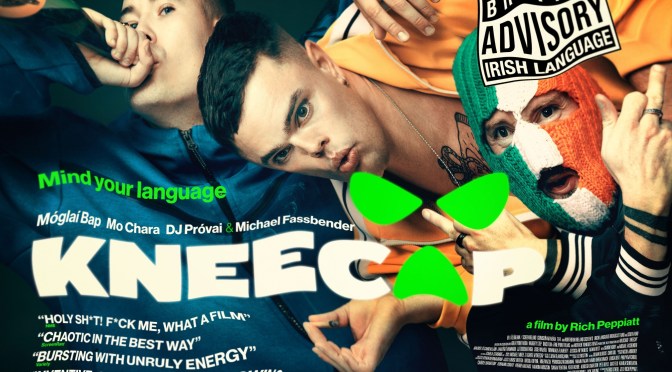
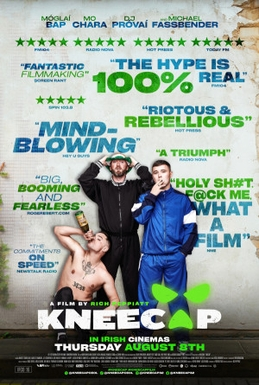
Amazon Prime Film Review: Kneecap (2024) – Irish rap rebels substitute words-for-bombs in riotous youth-in-revolt triumph!

Amazon Prime Film Review: Kneecap (2024)

Directed by Rich Peppiatt

Screenplay by Rich Peppiatt

Story by Rich Peppiatt, Liam Óg Ó hAnnaidh, Naoise Ó Cairealláin, JJ Ó Dochartaigh

Produced by Jack Tarling and Trevor Birney

Main cast: Naoise Ó Cairealláin, Liam Óg Ó hAnnaidh, JJ Ó Dochartaigh, Josie Walker, Fionnuala Flaherty, Jessica Reynolds, Adam Best, Simone Kirby, Michael Fassbender, etc.

Cinematography by Ryan Kernaghan

*** MAY CONTAIN SPOILERS ***


The 2024 film Kneecap is a riotous, politically charged portrait of youth in revolt, channeling the raw energy of punk and hip-hop into a uniquely Irish-language rebellion. Starring the real-life Belfast rap trio—Mo Chara, Móglaí Bap, and DJ Próvaí—as fictionalized versions of themselves, the film blends anarchic humour, biting satire, rites of passage, and cultural defiance to tell the story of how a group of working-class misfits wove their frustrations into musical gold.

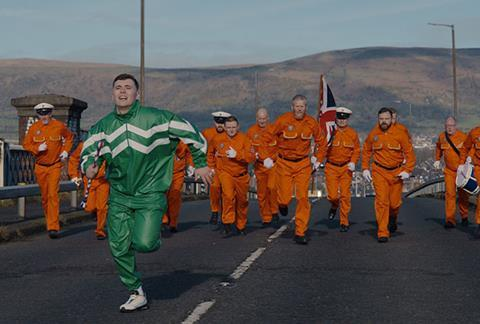
Set in post-Troubles West Belfast, the film captures the lingering scars of British occupation and the generational trauma it left behind. Liam (Mo Chara) and Naoise (Móglaí Bap) are introduced as small-time drug dealers navigating poverty, police harassment, and fractured families. Their lives take a turn when JJ Ó Dochartaigh, a disillusioned Irish-language teacher, discovers their lyrical talents and joins them as DJ Próvaí. Together, they form the eponymous group, an Irish-language rap group that weaponizes music as a form of cultural resistance.

The film is unapologetically rebellious, using the Irish language not just as a means of communication but as a symbol of defiance. Arlo (Michael Fassbender), Naoise’s father and a former republican paramilitary, encapsulates this sentiment when he declares, “Every word of Irish spoken is a bullet fired for Irish freedom” . This philosophy permeates the group’s music, which tackles issues like British colonialism, drug culture, and the complexities of identity in a divided society.


Kneecap (2024), while a bold and electric celebration of youth rebellion arguably overstretches itself emotionally by attempting to cover too many themes at once. In its ambition to be both a political statement and a coming-of-age tale, a musical odyssey and a generational cry for recognition, the film occasionally dilutes its emotional impact. As the film juggles a multitude of weighty themes: the trauma of post-Troubles Northern Ireland, the fight for Irish-language preservation, the drug culture plaguing working-class communities, the fractured nature of family life, absent fathers and mothers, and the burden of political legacy. Add to this the rise of a rap group in an unexpected cultural context, and the film becomes a whirlwind of ideas competing for attention. The result is a film that sometimes feels like it’s racing to say everything at once, rather than letting its most resonant emotional threads breathe.

Nonetheless, director and co-writer, Rich Peppiatt, displays strong visual flair evoking the urban vibrancy of Trainspotting (1996) and underdog musical joy of The Commitments (1991). It helps that the film is often fucking hilarious. Plus, I realise it’s a raw reflection of their life choices, I could take or leave the perpetual scenes of gratuitous drug-taking. At the same time, the film doesn’t shy away from the gritty realities of its setting. It portrays the trio’s clashes with radical republican groups, their run-ins with the police, and the family and romantic struggles that come with their newfound fame.

Amidst the chaos, Kneecap (2024) maintains a sense of humour and humanity, offering a nuanced look at the power of art to challenge the status quo and inspire change. In essence, Kneecap is a ballsy and risk-taking celebration of rebellion, a testament to the enduring power of language and music as tools of resistance, and a vivid portrayal of youth challenging the remnants of a colonial past and a country attempting to find peace and identity after centuries of conflict.

Mark: 8.5 out of 11


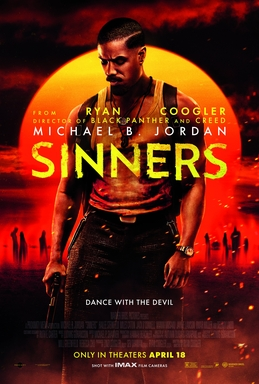
Cinema Review: Sinners (2025) – a blazing, bold and bloody blues opera!

Cinema Review: Sinners (2025)

Directed by Ryan Coogler

Written by Ryan Coogler

Produced by Zinzi Coogler, Sev Ohanian, Ryan Coogler

Main cast: Michael B. Jordan, Hailee Steinfeld, Miles Caton, Jack O’Connell, Wunmi Mosaku, Jayme Lawson, Omar Miller, Delroy Lindo, etc.

Cinematography by Autumn Durald Arkapaw


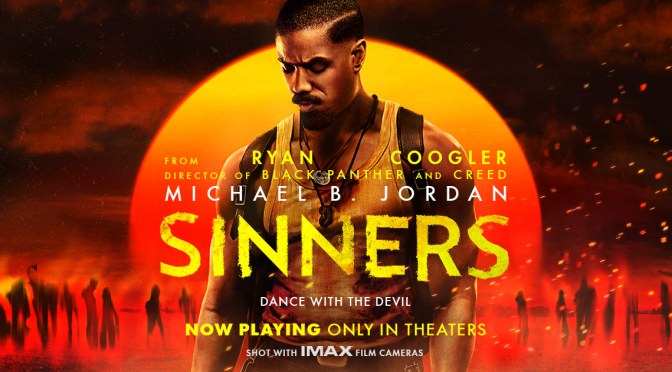
After the bleakly lustful vision of Robert Eggers’ Nosferatu (2024) — a film steeped in shadow, dread, and tragic sensuality — Ryan Coogler offers a wildly different, electrifying take on the vampire mythos: a bold, colourful, and deeply soulful experience that pulses with life even as it drinks from the dead. Where Eggers lingers in gothic majesty, with Sinners (2025), Coogler surges forward with kinetic energy, blending grind-house thrills and emotional depth with From Dusk Till Dawn-style narrative turns.

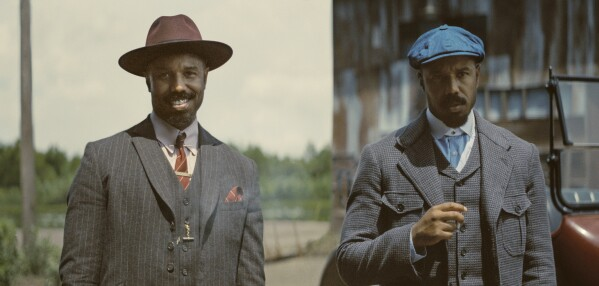
Coogler’s film is set in the richly textured American South of the 1930s, a world still nursing the scars of the Great War and on the cusp of social upheaval. Into this volatile landscape, he drops the muscular Michael B. Jordan as twin war veterans turned Chicago gangsters, Smoke and Stack — men who carry both physical and spiritual wounds from the trenches — now repurposed as businessman looking to set up a juke joint. These characters feel reminiscent of the working class anti-heroes of Peaky Blinders, their emotional trauma rendered in everything from flickering glances to bursts of brutal, operatic violence. The twins have ghosts of the past and present to battle including relationship issues with Stack’s ex-girlfriend, Mary (Hailee Steinfeld), as well as Smoke’s painful reunion with his wife, Annie (Wunmi Mosaku).

Sinners (2025) plot is muscular and sinewy, establishing the characters impressively before shifting the moody Southern gothic tale into an all-out genre-bender. The film contains a fine ensemble cast knitting a series of substantial supporting characters each with their own personalities, humour and wants. The most striking is Miles Caton as the twins’ cousin, Sammie “Preacher Boy” Moore, a young blues musician with an incredible ability, that proves to be a somewhat dangerous talent. Delroy Lindo also throws in another memorable performance as the ebullient pianist, Delta Slim. With the first night’s festivities in full swing three mysterious strangers appear from the near dark, desiring to be let in. Their leader is charismatic Remmick (Jack O’Connell) and he has more than partying in mind.


Visually, Coogler lets his imagination loose, notably in a memorable cross-generational musical montage that literally burns up the cinema screen. Gone is the shadow-heavy monochrome of Eggers; in its place is a palette of dusk reds, moonlit silvers, and deep bayou greens. The film pulses with colour, sex, motion, and sweat. Blood flows, but it never feels gratuitous — it feels earned, ritualistic, even sacramental. But what ultimately makes Coogler’s film so potent is its soul. Amid the genre thrills and gore, there’s a beating heart full of soul. These vampires are not romanticised, nor merely feared; they are hungry creatures. Coogler gives them back their humanity, and in doing so, reanimates the genre with urgency.

Music is where the film truly soars. Coogler and his production team, attuned to the cultural pulse, curate a soundtrack that fuses Delta blues, Appalachian folk, and early jazz into a feverish, ghostly soundscape. There are scenes where the music alone tells the story: a backwoods funeral scored by a bone-dry slide guitar; a juke joint confrontation where the rhythm of violence matches the stomp of the blues; a haunting lullaby sung by Remmick the migrant vampire that channels generations of sorrow. It is music as memory, as resistance, as raw emotional texture.

Sinners (2025) is not just a vampire film. It’s a blues opera. A folk horror elegy. A pulpy, poignant, and powerfully visceral story about the things that haunt us, and how we fight to keep our humanity intact. What begins as a slow-burning period drama smolders into a blood-soaked explosion of action and moral reckoning. Coogler even delivers a Klan-blasting and redemptive shoot-out final act set-piece. Lastly, in Coogler’s hands, the vampire becomes more than a monster; it’s a metaphor for trauma, addiction, religion, racism, and survival. Coogler reclaims the myth for a new generation, one shaped by history, crime, grief, music, and spiritual struggle, delivering a genre masterpiece that bites deep and lingers long after the lights come up.

Mark: 9.5 out of 11


CINEMA REVIEW: CIVIL WAR (2024)

CINEMA REVIEW: CIVIL WAR (2024)

Directed by Alex Garland

Written by Alex Garland

Produced by Andrew Macdonald, Allon Reich, Gregory Goodman

Main Cast: Kirsten Dunst, Wagner Moura, Cailee Spaeny, Stephen McKinley Henderson, Sonoya Mizuno, Nick Offerman, etc.

Cinematography by Rob Hardy

*** MAY CONTAIN SPOILERS ***


Alex Garland has an impressive literary, cinema and televisual curriculum vitae. He gained acclaim as the writer of the novel, The Beach, before moving onto screenwriting duties with fine films such as: 28 Days Later (2002), Sunshine (2007), Never Let Me Go (2010), and under-rated Dredd (2012). He made his directorial debut with Ex Machina (2014), which earned him an Academy Award nomination for Best Original Screenplay. His second film, Annihilation (2018), garnered further acclaim, so much so, FX bypassed a pilot and went straight to series for his science fiction TV narrative, Devs (2020).

While I am a massive fan of Garland’s work, I wasn’t too enamoured of Annihilation (2018). I found it brilliantly made with some fantastic concepts and incredible moments, yet overall it was too slowly paced. With eight superlative episodes of Devs (2020), Garland delivered a story which really connected with me by merging a compelling technological espionage plot to an intelligent exploration of philosophical thought and human behaviour. Where Devs (2020) presciently examined the impact of artificial intelligence, Garland’s new political thriller, Civil War (2024), prophetically imagines an apocalyptic America in the throes of war between combined California and Texas state rebel forces and the current President’s (Nick Offerman) retreating army.

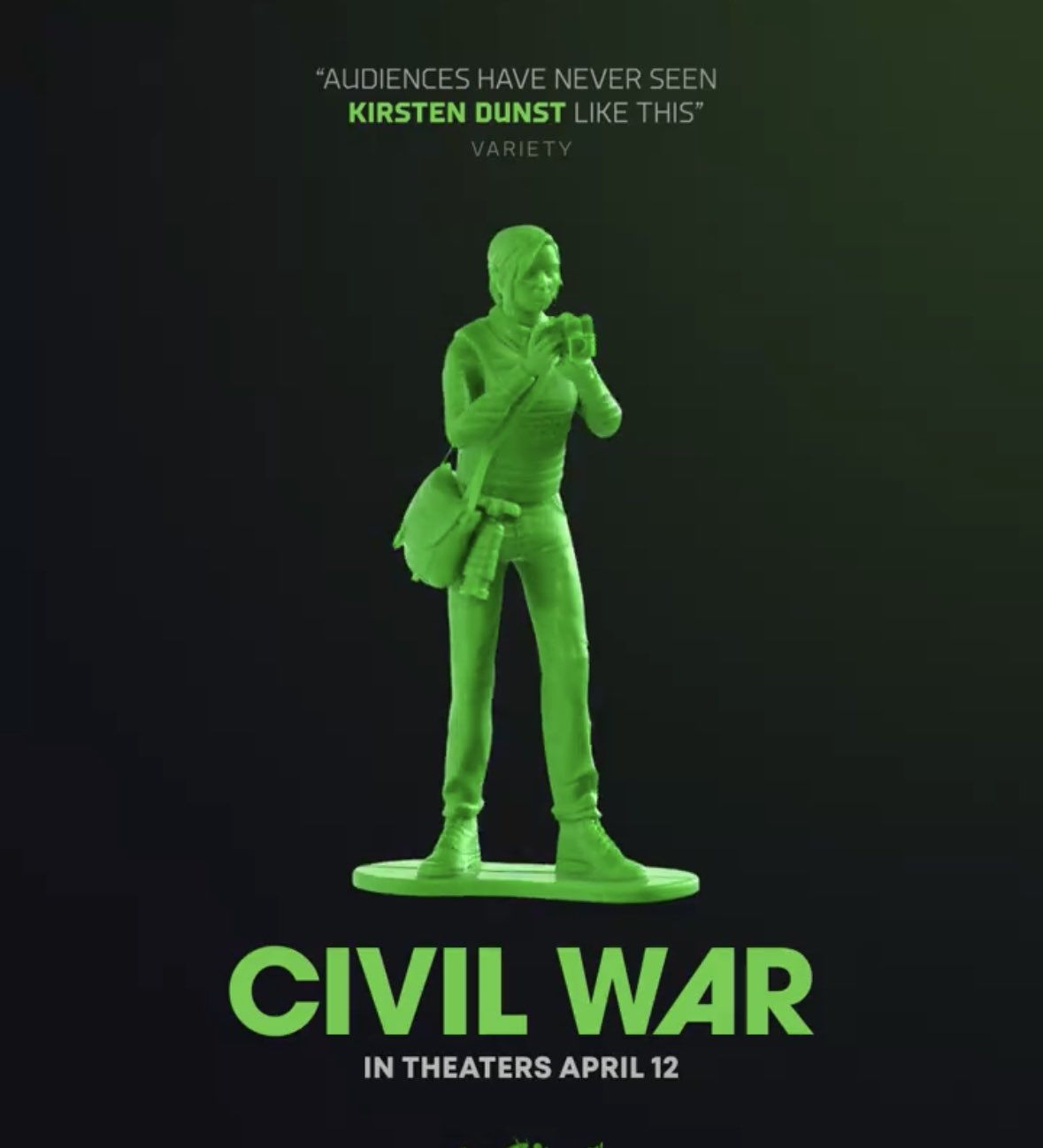
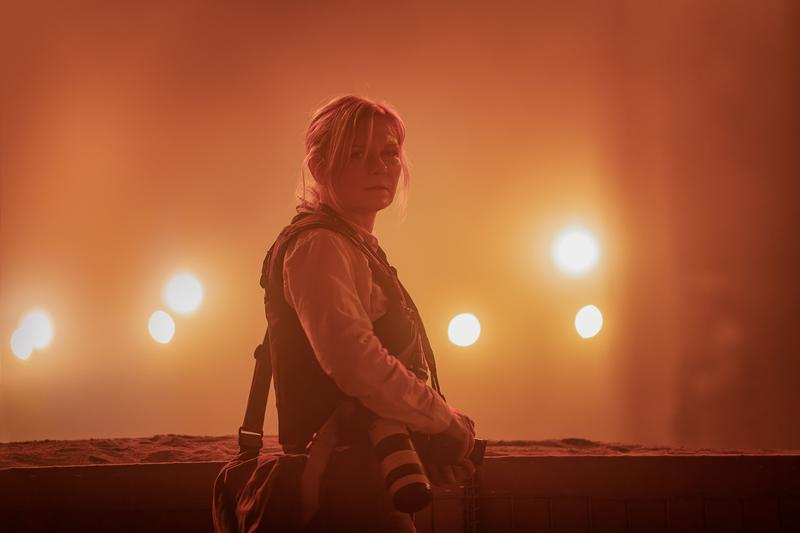
With the ‘January 6 United States Capitol attack’ in mind, Garland opens up a “what if” narrative where the whole of America is conflicted and consuming itself from within. At the heart of the violence is the war photographer, represented by Lee Smith (Kirsten Dunst) and Reuters journalist, Joel (Wagner Moura). Their journey to Washington to photograph the President reveals confusion, destruction and further bloodshed. Generically speaking, a road movie meets dystopian thriller, Civil War (2024) contains thought-provoking themes and incredible cinematography, but with shaky writing in places.


Films about war photographers and/or journalists can be problematic for me. Such characters lend themselves to heroic and the anti-heroic. The writing has to be right because I can lose empathy between such crusading journos and the narcissistic adrenaline junkies looking to deflect their own loathing and self-destructive tendencies. Civil War (2024) struggled to get me onside with the lead characters, although Dunst’s characterisation of Lee Smith is superb. However, her mentor-apprentice relationship with Cailee Spaeny, Jessie Cullen, was under-developed. Spaeny’s “innocent” being used more as a suspense device as opposed to learning the true horrors of humanity and war. Perhaps Garland intended for her to be a sociopath without depth just looking for blood? She finds it!

Moreover, Jessie’s journey from a political perspective was weak as there was no real sense of development in her character. That’s where the decision not to overtly take political sides causes a lack of sociological depth. War films such as Salvador (1986) and The Killing Fields (1984) are more successful as Civil War (2024) loses political impact by not choosing precise sides. But I guess whether they are Democratic or Republican is the whole point. Garland is saying that political parties are all as bad as each other, with human beings their own worst enemy. Politics, like football, gender, sexuality, and religion, are propellants for humans to fight each other.

For a film about photographers, the images on show are incredible and Rob Hardy’s work is genius. Fire, blood and war have never looked so brutal and aesthetically impressive. As well as Dunst, Wagner Moura and Stephen McKinlay Henderson are terrific in their respective roles. Further, there are some nail-biting and suspenseful scenes, notably one involving a film-stealing performance from Jesse Plemons. However, many of the characters’ decisions were weakly written for me. This is surprising given Garland’s prodigious literary and screenwriting talent. Civil War (2024), however, remains another stunning addition to his oeuvre and for all my perceived script weaknesses, the hell of war has never been so artistic and artful.

Mark: 8 out of 11


CINEMA REVIEW: SALTBURN (2023)

CINEMA REVIEW: SALTBURN (2023)

Directed by Emerald Fennell

Written by Emerald Fennell

Produced by Emerald Fennell, Josey McNamara and Margot Robbie

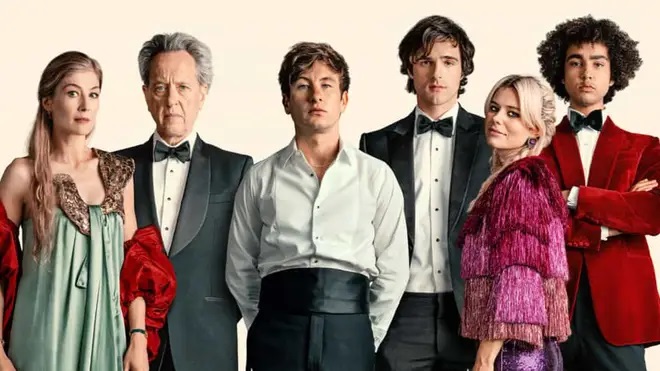
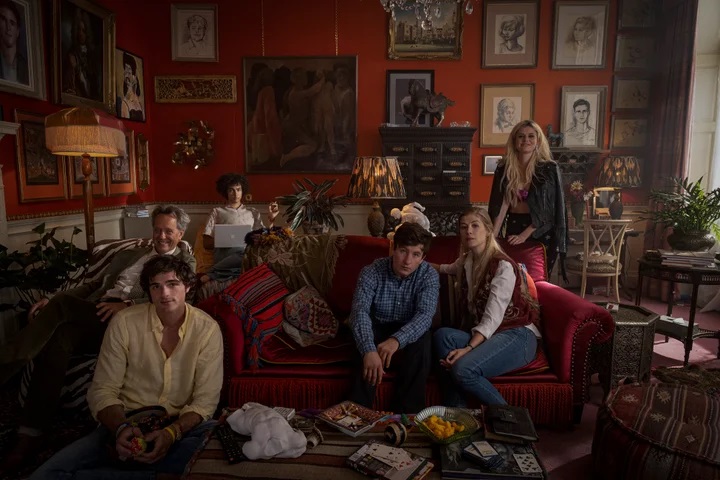
Cast: Barry Keoghan, Jacob Elordi, Rosamund Pike, Richard E. Grant, Alison Oliver, Archie Madekwe, Carey Mulligan, Paul Rhys, etc.

Cinematography by Linus Sandgren

*** MAY CONTAIN SPOILERS ***


As the awards garnered upon Emerald Fennell’s brilliant Promising Young Woman (2020) will testify, she is clearly a major talent. Fennell has also acted in TV shows such as Call the Midwife and The Crown, as well as writing and producing the second series of Killing Eve. Not only is Fennell an excellent actress, writer, director and producer, but is also now an Oscar and BAFTA winner. Thus, Fennell’s “difficult second film” arrives in the guise of the pitch black comedy, Saltburn (2023). Although to describe this hilarious, bleak, sexy, and often twisted exploration of the British class system as such evidently tests the very definition of comedy.

Saltburn (2023) is set in 2006. Oliver Quick (Barry Keoghan) attends Oxford University as a naive fresher with an inferiority complex and desire for company. While he is incredibly intelligent, coming from a lower class background places bookish Oliver as a very small fish in big water. Especially when compared to the so-called Oxford elite including handsome and wealthy, Felix Catton (Jacob Elordi) and his cousin, the handsome and not-as-wealthy, Farleigh Start (Archie Madekwe). While Farleigh is suspicious of Oliver, Jacob soon befriends him and takes the Northerner under his wing. The two connect and form an “odd couple” bromance, with Felix even going so far as to invite Oliver to his stately home, Saltburn, for the summer. There we meet the rest of Felix’s family including his flaky sister, Venetia (Alison Oliver), eccentric father, Sir James (Richard E. Grant) and effervescent mother, Lady Elspeth (Rosamund Pike).


After building Oliver and Felix’s characters carefully during their time at Oxford, Fennell’s savage and satirical screenplay gathers pace in the second act at Saltburn. Here Oliver tries to fit in and ingratiate himself into the Catton family, but it soon becomes clear that however friendly they may be, he will only ever be an outsider to them. Simultaneously, Farleigh sees Oliver as a rival for the Cattons’ emotional and financial affections and the two begin a retaliatory personal war amidst the balmy summer days, breakfasts, dinner parties and social gatherings. Oliver’s main journey is to connect as much with Felix as possible, so much so his passion veers toward obsession. But Felix is a roaming spirit and a hedonist and does not quite requite Oliver’s feelings. Yet, Felix does show compassion for Oliver, as illustrated when he drives him on a mercy mission to visit Oliver’s family. This is where the story takes an intriguing and ever deadly turn.

I cannot recommend Saltburn (2023) enough for its fantastically witty script, devastatingly brilliant cast and some quite disgustingly explicit, but contextually justifiable, character moments and scenes. Fennell takes the setting and structure of Evelyn Waugh’s Brideshead Revisited and turns it upside down, spinning a devious tale of infatuation, love, privilege and social climbing. Through the character Oliver Quick, and I really don’t want to give anything away, there is a powerful and jaw-dropping character arc of upward mobility. Rosamund Pike’s and Keoghan’s performances are both amazing and award-worthy. While the final act twists certainly do shock and surprise they arguably are rushed when compared with the more effective pacing of the opening and middle acts. Moreover, I am also unsure why the exquisite cinematography and stunning locations were presented in the 4:3 (1:33:1) aspect ratio. Why squeeze in Linus Sandgren’s light and framing and not expand them to the widescreen format?

Ultimately, Emerald Fennell proves herself an important voice in British cinema. Unafraid to test the boundaries of taste, genre, and audience expectations, she has crafted one of the most consistently challenging films of the year with Saltburn (2023). One could easily describe the themes presented here as a critique of the upper classes and how the uber-rich are bad people to be brought down to their knees. However, Fennell’s script is not that simplistic. It cleverly careers between love/hate for the characters and irony-bombing the class system, before becoming a damning indictment on the darkest flaws of humanity. Lest one forget the indelible one-liners throughout and THAT final dance sequence, which are both to die for!

Mark: 9.5 out of 11


CLASSIC FILM REVIEW: THE BATTLE OF ALGIERS (1966)

CLASSIC FILM REVIEW: THE BATTLE OF ALGIERS (1966)

Directed by Gillo Pontecorvo

Written by Franco Solinas

Story by Franco Solinas and Gillo Pontecorvo – Based on Souvenirs de la Bataille d’Alger by Saadi Yacef


Produced by Antonio Musu and Saadi Yacef

Main Cast: Jean Martin, Saadi Yacef, Brahim Haggiag, Tommaso Neri and ensemble.

Cinematography by Marcello Gatti

Edited by Mario Morra and Mario Serandrei

Music by Ennio Morricone and Gillo Pontecorvo

*** MAY CONTAIN SPOILERS ***


The Battle of Algiers (1966) was one of the greatest films I had NEVER seen. Now, The Battle of Algiers (1966) is one of the greatest films I have EVER seen. I’m embarrassed to admit that I had, for some unknown reason, not found the time to watch it. But wow, the “best films of all time” lists it appears on are NOT wrong. For sure, I don’t always get on with the critics’ list released by respected publications such as Sight and Sound, nevertheless with this incendiary work of cinema I am in total agreement of its deserved high ranking. In fact it could be higher.

The Battle of Algiers (1966) is set during a particularly brutal period of the Algerian War of Independence which occurred between 1954 and 1962. It is not a conflict I am too familiar with historically, nonetheless, I am aware of the desire by the Algerian National Liberation Front to decolonize themselves from French rule. Their demands were rejected by French leaders, thus the Algerian people took to the streets to wage a guerrilla campaign against both civilian and military targets.

Like many a bloody conflict lives, families, businesses, homes, properties and animals were savagely hurt and left irreparably damaged. As the prolonged fighting ensued in Algiers both sides resorted to more extreme combat measures. But with Algiers becoming a politically adverse battlefield, France’s external allies, such as the USA, moved their support away and eventually the Algerian people would overcome the hostile landlords. For the French, the Algerian rebels were terrorists. But remember, one person’s terrorist is another person’s freedom fighter.


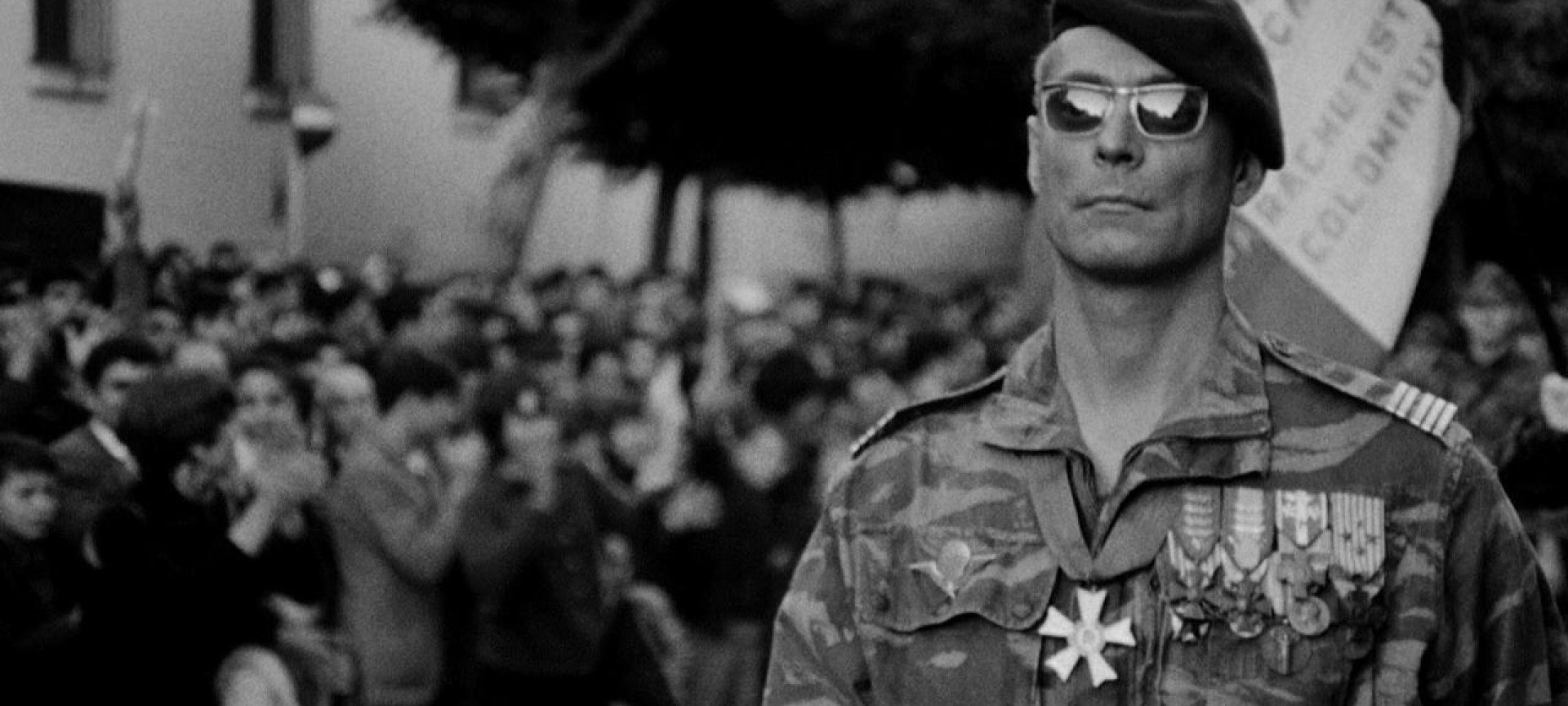
A short review on a humble film blog cannot pretend to imagine the currency of horror, grief and pain encapsulated within this brutal conflict. Yet, incredibly, Gillo Pontercorvo, as well as producing a searing indictment against the barbarity of war, has in The Battle of Algiers (1966) made palpable such horror, grief and pain through sheer formal cinematic ingenuity. In two hours, Pontercorvo and his production team, employ a stark black-and-white-film-documentary-style, non-professional actors, chopping episodic narrative, percussive and beating sounds, handheld cameras, vérité production design and dynamic, dialectic montage to spectacularly bring the psychological power of war to the screen. Not to mention the iconic Morricone and Pontercorvo composition which pulsates throughout the soundtrack.

Intrinsically focussed on events in the Casbah, Algiers between 1954 and 1957, as the story is bookended from the perspective of Ali la Pointe (Brahim Haggiag). La Pointe is a petty criminal who is politically radicalized while in prison, but becomes a formidable force in the fight. The narrative events display a variety of bombings he organizes against the French and his attacks lead the French to bringing in experienced soldier, Lieutenant-Colonel Mathieu (the sole professional actor, Jean Martin). The paratrooper commander is tasked with bringing down the Algerian Liberation Front and his methods of torturing prisoners soon begin to turn the bloody tide.

I cannot overstate how moved I was emotionally and intellectually by The Battle of Algiers (1966). It is momentous filmmaking and made me feel both a fraud and horribly depressed at how evil human beings can behave. I am a fraud because I am safely able to live out my privileged life thankfully free of the horror I have witnessed in the film. Moreover, it is so depressing that we never learn as conflict continues to blight this poisoned planet we exist on. Lastly, Pontercorvo, redefines for me the job a what a director does. The Battle of Algiers (1966) is a pinnacle of how filmmaking style and form can match the heartfelt agony of the narrative themes on show. It is not only one of the greatest anti-war films of all time, but simply one of the most complete films ever made.


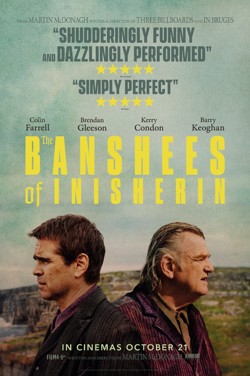
CINEMA REVIEW: THE BANSHEES OF INISHERIN (2022)

CINEMA REVIEW: THE BANSHEES OF INISHERIN (2022)

Written and Directed by Martin McDonagh

Produced by: Graham Broadbent, Peter Czernin & Martin McDonagh

Main Cast: Colin Farrell, Brendan Gleeson, Kerry Condon, Barry Keoghan, etc.

Cinematography: Ben Davis

Edited by: Mikkel E. G. Nielsen

Music by: Carter Burwell

*** MAY CONTAIN SPOILERS ***


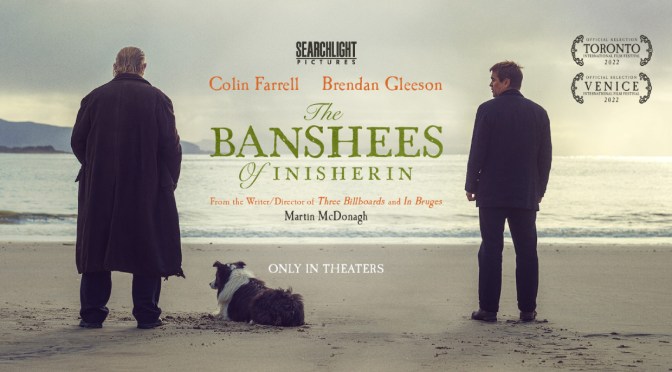
The Banshees of Inisherin (2022) is Martin McDonagh’s latest cinematic masterpiece. Not only is it one of the best films of the year he has, as with Three Billboards Outside Ebbing, Missouri (2017), constructed one of the most formidable screenplays of many a year. As a playwright McDonagh has won many awards for his works. His debut film, In Bruges (2008), was a deceptively simple story of two hitmen on the run which, with rich thematic power, became a darkly hilarious existential cult classic. His follow-up Seven Psychopaths (2012), a heady mix of criminals versus writers in a meta-fictional Hollywood-based narrative was brilliantly written and acted, if slightly lacking thematic clarity. Like Three Billboards Outside Ebbing, Missouri (2017), The Banshees of Inisherin (2022) is a highly emotional human drama which contains intelligent allegory, incredible characterization, and cracking dialogue.

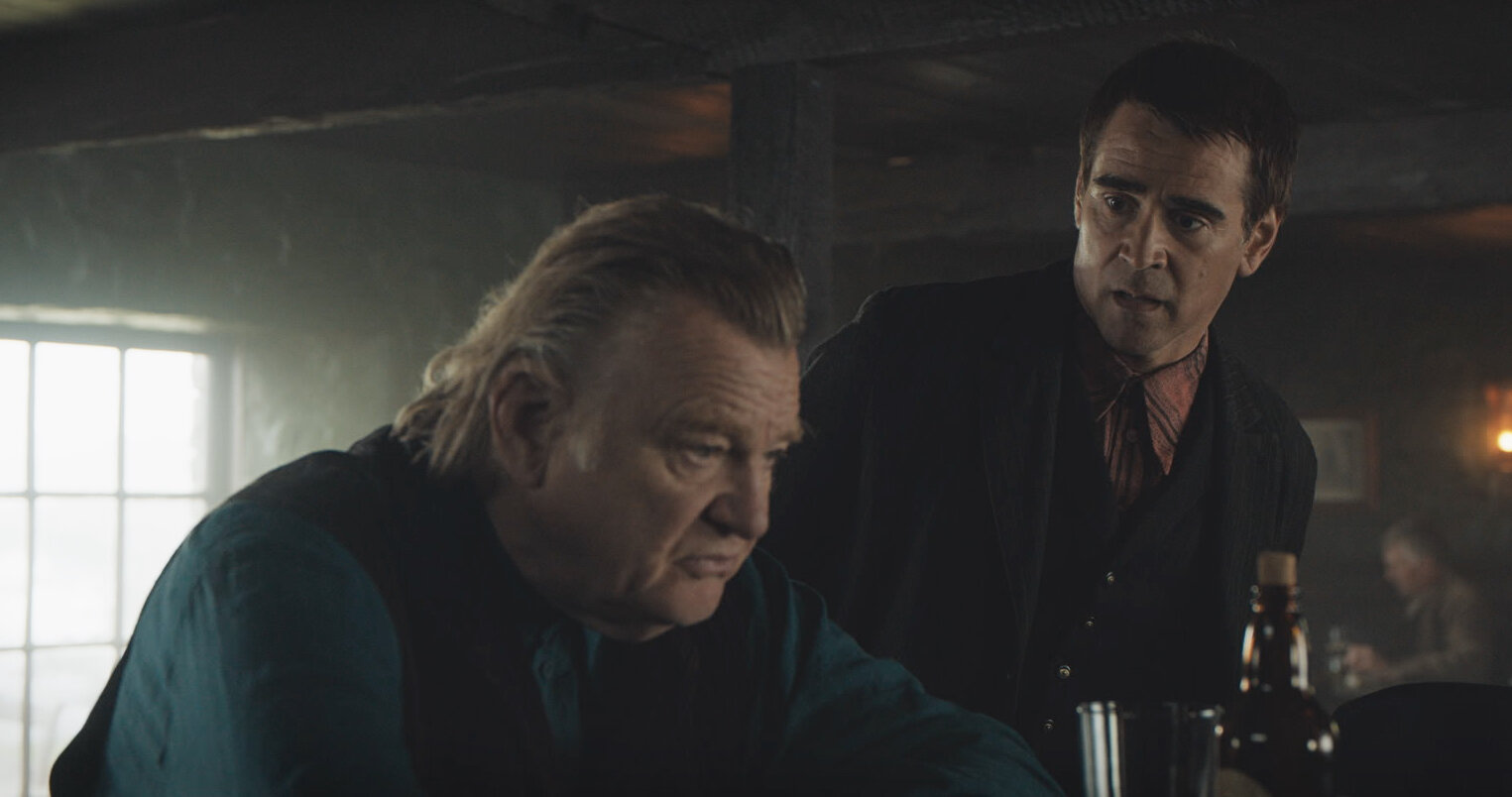
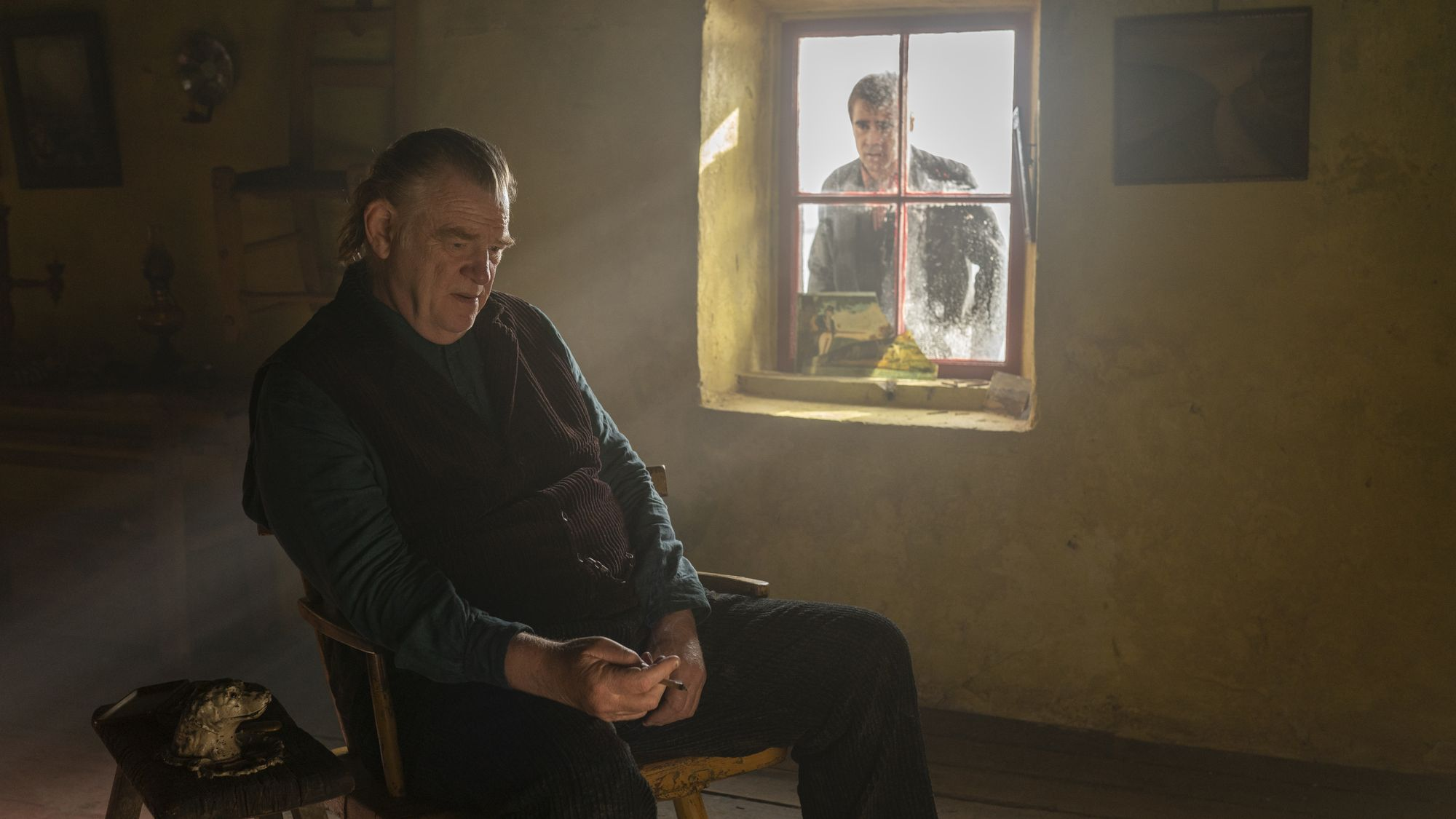
Set in 1923 on an island off of Southern Ireland called aptly Inisherin, the film opens by focussing on genial everyman farmer, Pádraic Súilleabháin (Colin Farrell) and his daily routine. After tending to his animals, he usually calls for his friend, Colm Doherty (Brendan Gleeson) to go to the island pub, the J.J. Devine or Jonjo’s. In England there is an idiom called, “sending someone to Coventry.” This means to ignore or ostracize an individual or individuals. So, basically Colm chooses to do this to his long-standing friend, Pádraic. This shunning completely bemuses Pádraic and despite Colm’s pleading for Pádraic to respect his wishes, he continually seeks an answer to his former friend’s decision.


After this intriguing premise is established, what follows is a tremendously original, darkly funny and emotionally penetrating succession of scenes. The exchanges between the two characters begins as bickering but then descends into some seriously disturbing acts of recrimination. Attempting to make them see sense are various eccentric characters on the island who provide many witty and absurd exchanges that McDonagh specialises in. Further, Pádraic’s sister Siobhán (Kerry Condon) is almost the one voice of reason as the feud escalates. As she tries to diffuse the conflict, even Barry Keoghan’s young idiot, Dominic Kearney, the initial comic relief in the film, attempts to make these two men see sense.

Visually, The Banshees of Inisherin (2022), is incredibly rich. The territory displays gorgeously photographed shots of the rocks, the sea, the stone roads and the lush green countryside. But while there is a sense of expanse and freedom initially, the feeling of isolation pervades. As the story continues the characters feel more and more segregated by the sea and their own or other’s decisions. None more so than Farrell’s Pádraic. A simple man who just wants to do his work and get drunk with his friend, he finds he is sequestered by Colm’s desire to self-isolate and concentrate on his music. Here, Farrell and Gleeson give tremendous character work. Farrell especially has rarely been better as Pádraic’s attitude turns initially from shock to bitterness over the journey of the narrative.


A film director’s job is for me about making key creative choices. Martin McDonagh makes brilliant choices while working from his own exceptional script. I loved everything about The Banshees of Inisherin (2022). The look, the performances, the pacing, the locations and Carter Burwell’s phenomenal score are absolutely first class. I haven’t even mentioned Barry Keoghan’s memorable supporting turn. He surely is one of the most naturally gifted actors of his generation. Not to forget other striking characters in the ensemble such as the creepy, Mrs McCormick (Sheila Flitton), an old harridan who acts as a portent for death on the island.

Martin McDonagh expertly combines a superb ear for dialogue, a psychologically absorbing analysis of the human condition with elements from Waiting For Godot and Channel Four situation comedy, Father Ted. Above all else, The Banshees of Inisherin (2022) is a darkly, spectacular cinematic experience which works on many levels. On one level it is about the isolation of island life and its inhabitants. On another it’s about the death of a friendship. While on yet another level it is about the analogous absurdity of civil war and how conflict can start for the merest of reasons. While the best cinema is certainly about showing and not telling, McDonagh proves again that dialogue-driven films can produce cinematic theatre, comedy and tragedy of the highest order.

Mark: 10 out of 11


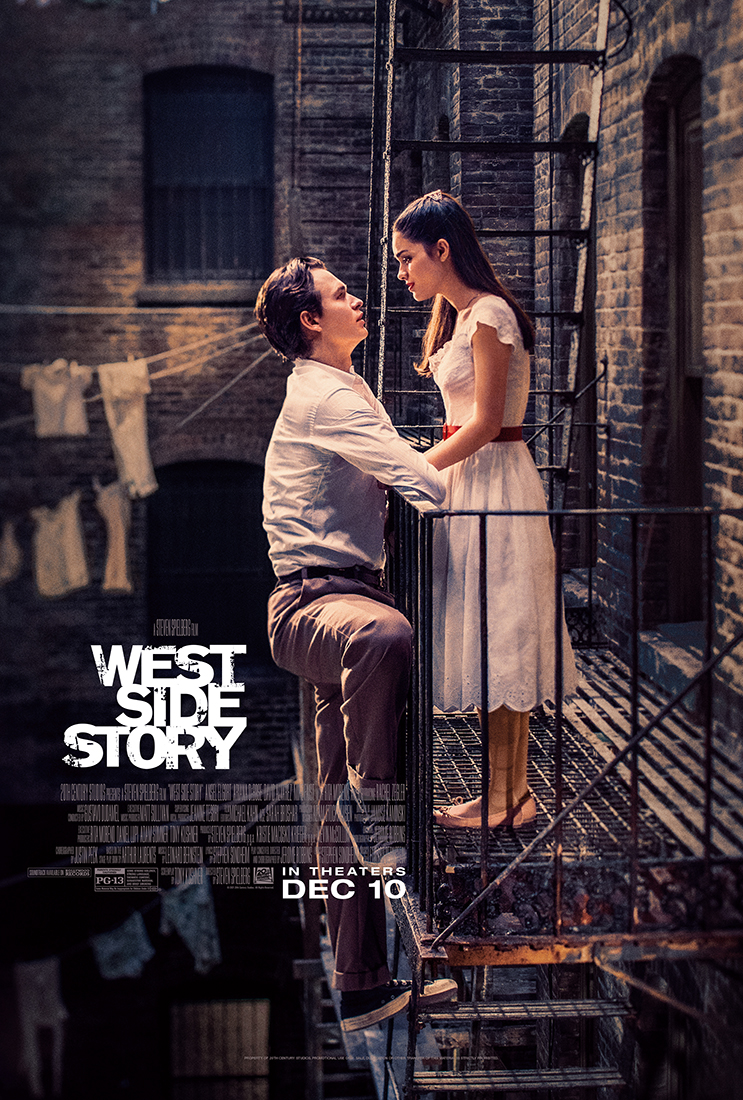
CINEMA REVIEW: WEST SIDE STORY (2021)

CINEMA REVIEW: WEST SIDE STORY (2021)

Directed by: Steven Spielberg

Screenplay by: Tony Kushner

Based on: West Side Story by Jerome Robbins, Leonard Bernstein, Stephen Sondheim and Arthur Laurents

Produced by: Steven Spielberg, Kristie Macosko Krieger, Kevin McCollum

Cast: Ansel Elgort, Ariana DeBose, David Alvarez, Mike Faist, Rita Moreno, Rachel Zegler etc.

Cinematography: Janusz Kamiński

Choreography: Justin Peck

Music by: Leonard Bernstein

*INEVITABLE SPOILERS WITH THIS STORY*


Well, if you removed all the songs and added more dialogue to West Side Story (2021), then I guarantee it would make an amazing stage play. Oh, it has already. I thought it felt extremely familiar. Silly jokes aside, one often hears the decrying of originality in Hollywood cinema. Sequels, prequels, remakes, adaptations and reboots are plentiful as big business. Known quantities are a better bet to executives than original never-heard-of speculative screenplays. And not everyone is averse to re-doing fully developed properties. Thus, one of the most talented filmmakers of a generation, Steven Spielberg, has delivered a stunning remake of a film adaptation of a stage musical that was developed from William Shakespeare’s Romeo and Juliet.

You know the story. If you don’t, stop reading. Young star-crossed lovers fall in love against their families wishes. Their romance explodes into unbridled passion as war escalates between the two rival factions. As the lovers attempt to find a way to be together the conflict brings about eventual tragedy. Shakespeare was a genius and knew how to structure and spin a yarn. No surprise his works have been adapted infinitely to much success. One of the greatest was the musical West Side Story (1961). Exchanging Verona for New York and pitting the Puerto Rican Sharks against the local firm, the Jets, the play and film contain some of the most incredible numbers ever sang and danced to. The original play won awards and broke box-office records. The film West Side Story (1961) deservedly won many Oscars. It is considered almost a perfect musical. How could it be improved?


West Side Story (2021) cannot possibly be classed as better than the original because Jerome Robbins, Arthur Laurent, Leonard Bernstein and Stephen Sondheim, plus their incredible team, had already done all of the challenging work crafting the production. But with this new version Steven Spielberg has once again proved he is one of the great genre directors. Assembling an ultra-talented team including Josh Peck as choreographer, Tony Kushner as screenwriter, Janusz Kaminski as cinematographer and an effervescently wonderful cast.

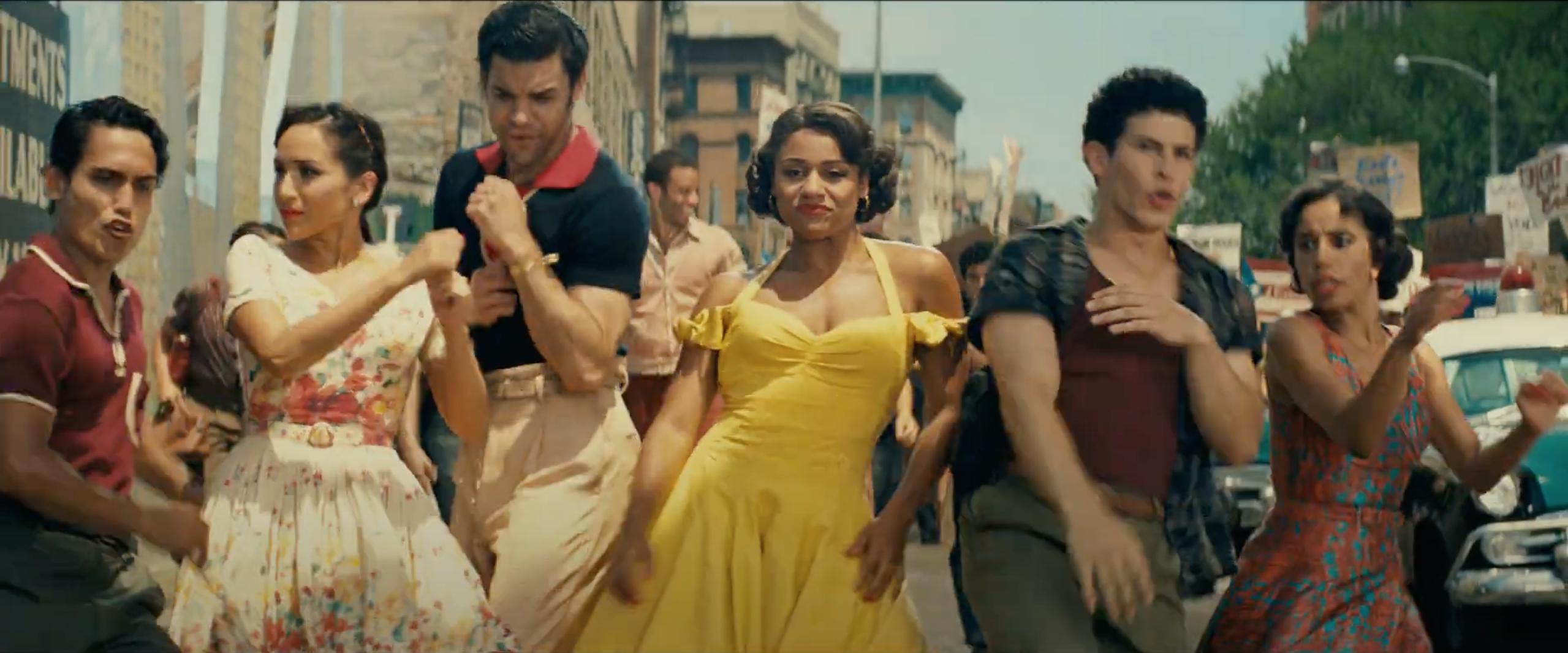
Everything about the film screams colour, energy and movement. The dancing and editing and swinging beats take you on a breathless journey through the romance and street war. Tony (Ansel Elgort) and Maria’s (Rachel Zegler) love story is bounced effortlessly between the expertly devised gang battles. Moreover, West Side Story (2021) keeps all the memorably catchy songs such as: Maria, Tonight, America, Cool, and Somewhere, capturing the heart and imagination in equal measure. If there is a better directed, choreographed and edited set-piece all year in the Gee, Officer Krupke number then I haven’t seen it.

The cast are uniformly excellent with Ansel Elgort, while lacking slightly in the vocal department, more than making up for it with his magnetic screen presence. Rachel Zegler is charming if bland as Maria, but Ariana DeBose absolutely steals the scenes with her all-round performance as fiery Anita. The cast all deliver Tony Kushner’s excellent dialogue and the iconic songs with aplomb. Lastly, West Side Story (2021) is an absolute tour-de-force as cinematic entertainment. However, there is a sense that it is a missed opportunity for Steven Spielberg and his team to perhaps update the themes for the modern day. Kushner’s script hints at some analysis of racism that ultimately only scratches the surface. Spielberg is satisfied emulating a classic adaptation of a classic play, remaining trapped in a shiny post-modern time-warp full to the brim with powerful nostalgia.

Mark: 9 out of 11


AMAZON FILM REVIEW: THE MAURITANIAN (2021)

AMAZON FILM REVIEW: THE MAURITANIAN (2021)

Directed by: Kevin Macdonald

Produced by: Adam Ackland, Michael Bronner, Benedict Cumberbatch, Leah Clarke, Christine Holder, Mark Holder, Beatriz Levin, Lloyd Levin, Branwen Prestwood-Smith, etc.

Screenplay by: M.B. Traven, Rory Haines, Sohrab Noshirvani

Based on: Guantanamo Diary by Mohamedou Ould Slahi

Cast: Jodie Foster, Tahar Rahim, Shailene Woodley, Benedict Cumberbatch, Zachary Levi etc.

Music by: Tom Hodge

Cinematograph: Alwin H. Kuchler

***CONTAINS MASSIVE SPOILERS***


“…a writ requiring a person under arrest to be brought before a judge or into court, especially to secure the person’s release unless lawful grounds are shown for their detention.” — Basic definition of Habeus Corpus


Mohamedou Ould Slahi is a Mauritanian man who was held for fourteen years from 2002 to 2016 without charge in the Guantanamo Bay detention camp. FOURTEEN YEARS without a trial. Let that sink in.

If ever there was a living embodiment of a Kafkaesque experience then this is that. Surely, whatever crime you have or haven’t committed you should be presented to a court of law and evidence be brought to try you for the alleged crimes. Clearly, the United States have, in this singular case against Mohamedou Ould Slahi, by denying him a trial — plus torturing him for years too — committed a heinous war crime. Yes, the 9/11 atrocities were abominable acts of violence, but that does not give anyone the right to wreak revenge against other human beings without concrete evidence to justify such acts. It’s a basic tenet of existence that separates us from the beasts in the jungle, every person deserves a fair trial! To be honest the U.S. administration who were responsible for this and and many other crimes are worse than animals.

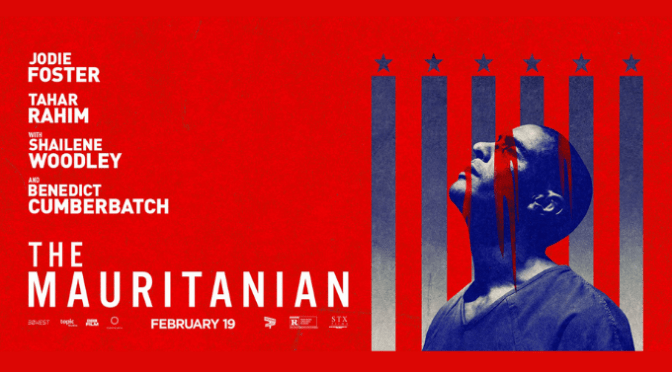
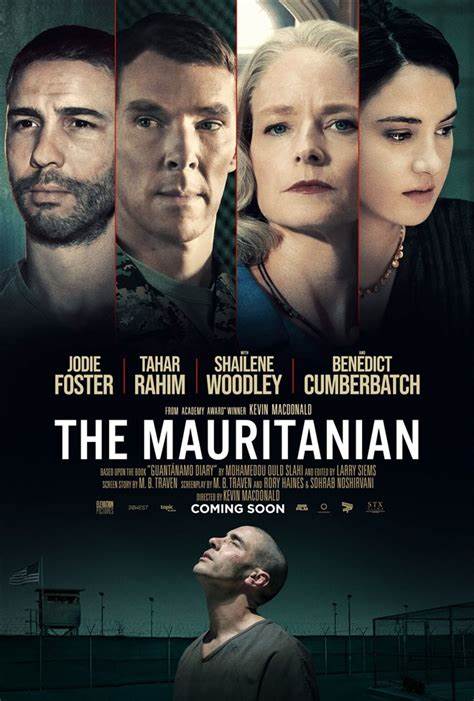
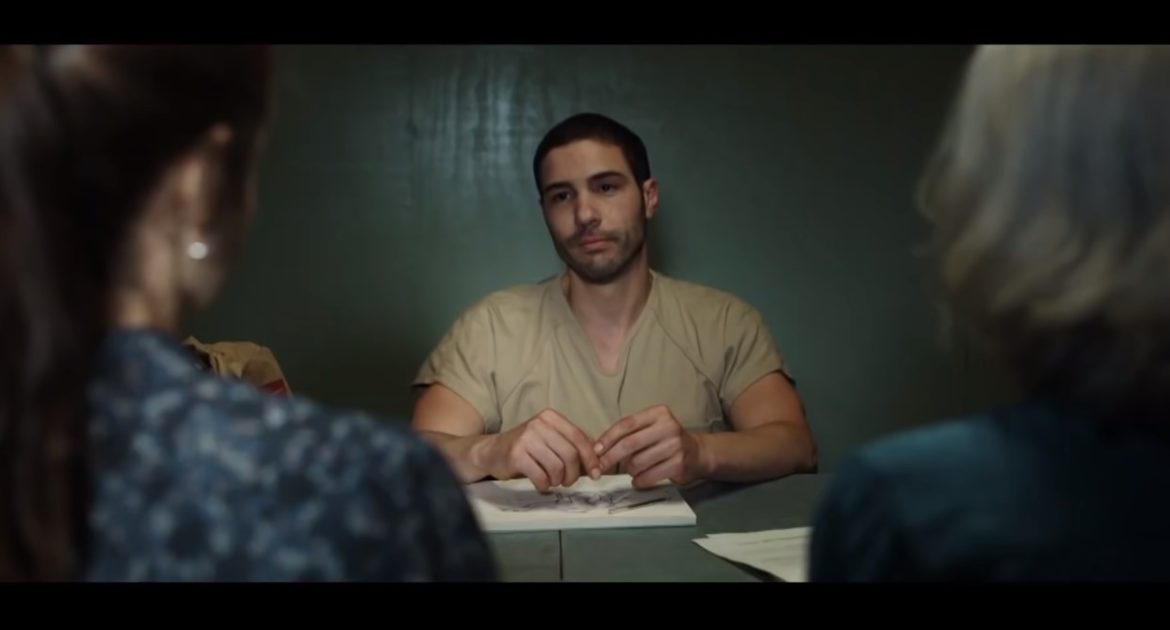
The Mauritanian (2021) is an adaptation of Mohamedou Ould Slahi’s best selling memoir, Guantanamo Diary. It opens with Ould Slahi (Tahar Rahim) attending a wedding in his place of birth. He is then picked up by local Mauritanian police and after that is imprisoned indefinitely, unknown to him, by the American military. The structure of the film compellingly builds his experiences in jail and the brutal torture he endures as the Americans attempt to gather intelligence to prove that he is a key member of the terrorist cells who organised the 9/11 attacks. As the story reveals his horrendous ordeal, lawyers represented by Nancy Hollander (Jodie Foster) and Teri Duncan (Shailene Woodley) take up his case to, at the very least, enable Ould Slahi to get a fair trial.


As well as highlighting the horrors of how Ould Slahi was treated this film is a damning indictment of American foreign policy, notably under the George Bush administration. The fact that Ould Slahi and his lawyers were successful in achieving a win against his imprisonment was not the end of his entrapment. You honestly won’t believe what occurred even after he won his case. But what about the film you may be asking? Well, I am just staggered this and many other sitautions occur in the world so this is more of an emotional review than a cinematic appraisal.

Overall, The Mauritanian (2021) is an exceptional drama which is directed effectively by seasoned filmmaker, Kevin Macdonald. As Ould Slahi, Tahar Rahim is absolutely exceptional. He brings a humanity and humour to the character’s struggle. What I absorbed most from his portrayal, and this is reflected in a moving credits sequence excerpt, is how Ould Slahi retained his humour even in the most trying times. Furthermore, while their character’s smack of white saviour personalities, the legal team — based on the real people — are expertly represented by Jodie Foster and Shailene Woodley. Foster especially shows her usual sterling gravitas in the role. Benedict Cumberbatch, arguably miscast as the military lawyer suffering a crisis of conscience, gives his usual excellent performance.

Lastly, The Mauritanian (2021), because of a slightly choppy screenplay, I felt the book deserved a longer telling via a television series. Yet, the film remains an important narrative about how bloodlust, greed and desire for revenge means humans commit horrific acts in the name of war. Mohamedou Ould Slahi was denied his freedom and human rights for crimes never proved. How he survived is an incredible feat of human endurance. Thus, whether he was innocent or guilty his freedom was earned and then some.

Mark: 9 out of 11


CULT FILM REVIEW: HOUSE/ハウス – (1977)

CULT FILM REVIEW: HOUSE (1977)

Directed by: Nobuhiko Obayashi

Produced by: Nobuhiko Obayashi, Yorihiko Yamada

Screenplay by: Chiho Katsura

Story by: Chigumi Obayashi

Cast: Kimiko Ikegami, Miki Jinbo, Ai Matubara, Kumiko Oba, Mieko Sato, Eriko Tanaka, Masayo Miyako, Yōko Minamida

Music by: Asei Kobayashi, Mickie Yoshino

***MAY CONTAIN SPOILERS***


This Japanese film from the late 1970s is absolutely nuts, but a riotous genre mash-up of rites-of-passage, horror, musical, martial arts, romance, fantasy, comedy and anti-war genre movie styles. If you are a fan of the work of Takashi Miike’s both energetic and often insane genre films, you can definitely see how, House (1977), may have had a major influence on his and many other Asian filmmaker’s cinematic works.

Initially receiving negative reviews, but big box office in Japan on release, House (1977), opens by introducing a set of seven teenage girls called, Gorgeous, King Fu, Prof, Melody, Fantasy, Mac and Sweet. The names give them their major characteristics too. Kung Fu for example loves martial arts, Fantasy is a daydreamer and Melody loves music etc. You get the idea. As each character is introduced in a basic fashion, the energetic performances of the actors and the quirky screenplay develops their characters beyond the initial stereotypes. Gorgeous is especially well developed as she is suffering the loss of her mother and has rejected her father’s choice of stepmother. Eschewing her kindly father’s protestations, she decides to visit her aged Aunt in the countryside.


When Gorgeous’ friend’s school trip is cancelled due to several bizarre plot turns, and a couple of crazy musical numbers later, the girls join her on the visit to the creepy house. When they finally arrive Gorgeous’ aunt behaves extremely oddly. She rarely gets visitors and only has a white cat for company. When the girls begin to disappear one-by-one and Fantasy’s daydreams begin to turn to nightmares, the true horror of the situation takes shape. The house itself is a malevolent force and has trapped the girls. What appeared to be a lovely summer vacation is now the total opposite.

Now, what I have described actually seems quite normal in terms of the narrative content. It’s a standard horror plot of characters imprisoned by supernatural forces and trying desperately to stay alive. However, director, Nobuhiko Obayashi, who devised the story with his daughter, presents a series of images and sounds David Lynch would have been proud to have devised. These include: a mirror attacking the viewer, a watermelon being pulled out of a well appearing like a human head, a pile of futons falling on and attacking a character, a carnivorous piano with biting keys and all manner of surreal fights and deaths. Allied to this the eccentric and jolly music works against the horror and suspense, so one is both laughing and disturbed simultaneously.

Ultimately, House (1977) is one wacky viewing experience, but it also taps into themes of friendship, romance, grief, as well as drawing on the horror of destruction Japan suffered when the atomic bombs hit Nagasaki and Hiroshima. It is fast paced with an abundance of imaginative ideas, film styles and practical effects throughout. Thus, if you love the work of aforementioned Miike, Lynch and Sam Raimi, you are bound to want to stay in House (1977) for the rapid eighty-eight minutes duration.