CLASSIC FILM REVIEW: ONCE UPON A TIME IN AMERICA (1984)

CLASSIC FILM REVIEW: ONCE UPON A TIME IN AMERICA (1984)

Directed by: Sergio Leone

Produced by: Arnon Milchan

Screenplay by: Sergio Leone, Leonardo Benvenuti, Piero De Bernardi, Enrico Medioli, Franco Arcalli, Franco Ferrini

Based on: The Hoods by Harry Grey

Cast: Robert De Niro, James Woods, William Forsythe, Jennifer Connelly, Elizabeth McGovern, Joe Pesci, Burt Young, Tuesday Weld, Treat Williams, William Forsythe, Richard Bright, James Hayden, Brian Bloom, William Forsythe, Adrian Curran, Darlanne Fluegel. Larry Rapp, Mike Monetti, Richard Foronji, Robert Harper, Dutch Miller, Gerard Murphy, Amy Ryder, Julie Cohen etc.  

Music: Ennio Morricone

Cinematography: Tonino Delli Colli


***CONTAINS PLOT SPOILERS***


If you were, like me, thoroughly absorbed by Martin Scorsese’s recent directorial gangster epic, The Irishman (2019), you should definitely check out another incredible gangster drama, Once Upon A Time in America (1984). It is directed by acclaimed Italian filmmaker, Sergio Leone, he of “Spaghetti Western” fame. Indeed, Once Upon A Time in America (1984), was the first feature film he’d made since A Fistful of Dynamite (1971). Sadly, it was to be his final film.

With a director’s cut running at a behemoth 250 minutes and original theatrical release lasting 229 minutes, Once Upon A Time in America (1984), is certainly a marathon viewing experience and fitting epitaph to Leone’s cinematic craft. Yet, the film rarely feels over-long or slow because there are so many memorable scenes, fascinatingly complex characterisations, incredible intrigue and enough narrative density present to satisfy any audience member with the patience to let it absorb you. Structurally, the film is epic in nature too as it cross-cuts between three, arguably four, separate timelines in: 1918, the 1920’s, the 1930’s and 1968. Interestingly, I watched it via Amazon Prime in two sittings and is so long even the original ‘Intermission’ card remains.


Leone and his amazing production cast and crew took almost a year to film Once Upon A Time in America (1984). It’s reported to have had somewhere between eight to ten hours of footage on completion. He originally wanted to release it as a two-part epic, but the studio insisted it was distributed as one film. The almost-four hour theatrical release was received to great critical acclaim in Europe, however, a severely chopped down 139-minute version was put out in America. It was a critical and box office bomb. American critics however, lauded the European version, lamenting the non-release of Leone’s full cinematic vision.

For a filmmaker who was drawn to stories set in the America, Leone would generally film in European studios and locations. While some exteriors for Once Upon A Time in America (1984) were shot on location in Florida and New York, many of the interiors were recreated in Rome’s Cinecitta. Furthermore, a Manhattan restaurant was built in Venice, and incredibly, Grand Central Station was rendered at part of the Gare du Nord in Paris. Having said that, Once Upon A Time in America (1984), is so carefully and exquisitely designed and filmed, you would not notice. While possessing more than an air of European arthouse sensibilities, the film, based on a novel called The Hoods, represents Leone’s and his co-screenwriter’s tarnished vision of the American dream. Most significantly is the theme of a loss of innocence. 1920’s New York is presented through the eyes of these Jewish working-class children, many of them sons and daughter of migrants from Europe. These are tough times and the story explores the collision between young innocence and adult corruption by society and humanity. Once Upon A Time in America (1984) is also a story about friendship, loyalty, passion and crime.


The narrative revolves around the lives of young gang of Jewish friends growing up in Brooklyn called: Noodles, Max, Patsy, Cockeye and little Dominic. It’s majestic storytelling of the highest quality as we flit between past, present, now and future. Robert DeNiro’s older Noodles reminisces both from 1930 and 1968. There is a sense that he may be projecting from the hazy and drug-addled glow of an opium den. That is open to interpretation though. Thematically, the framework hangs a history of childhood friendships, juxtaposing it with the same people as adults and their victories, losses and betrayals. Further themes include: love, lust, greed, crime, broken relationships, Prohibition, union corruption; as well as focusing on the rise of mobsters in American society.

Noodles as portrayed by an imperious Robert DeNiro is calm on the outside, however, his often-rash actions show him as impetuous, emotional and wild on the inside. James Woods’ Max is much more careful, calculating and ice-cold in his business. But the two forge a friendship as teenagers which continues in adulthood. Their childhood gang subsequently becomes a renowned bootlegging and criminal outfit. Leone does not ask us to like or find sympathy for the characters, but rather respect that they are a product of a ruthless era. Sure, they could have got day jobs, but they decide to become criminals and very successful they are too. Even after Noodles gets out of jail for killing a rival, Max has saved a place for him in their illegal liquor trades. Only later does the true deception occur. Ultimately, while their stories are incredibly compelling, these men are violent lawbreakers who spill blood, bribe, threaten, kill and rape, all in an attempt to rise up the ladder of the American capitalist system.

I don’t want to spoil any more of the story, but safe to say the cast in this classic film are amazing. Along with DeNiro and Woods’ brutally convincing performances a whole host of young and older actors are directed beautifully by Leone’s careful hand. The standouts for me are Jennifer Connelly in a very early role. She portrays the younger Deborah, while Elizabeth McGovern is the older version of the same character. Connelly is a picture of angelic innocence and Noodles is smitten with her from the beginning. It’s sad therefore that when the adult Noodles’ is rejected by Deborah, his reaction is both toxic and unforgiveable.


Undeniably, sex and violence are powerful features in Once Upon A Time in America (1984). Sex especially is rarely, if at all, romantic or part of loving relationship. There are two brutal rape scenes in the adult years. Even when they are kids the character of younger Peggy is shown to use her promiscuity as a weapon to blackmail a police officer. There are some tender moments though, notably during the scene where young Patsy seeks to lose his virginity with Peggy. Her payment would be a cream cake, but Brian eats the cake and saves his innocence. Yet such scenes are fleeting as mob rule, violent robberies, fiery death and murder ultimately dominate the character’s bloody existences.

As I say, the actors all give memorable performances and the supporting cast including the likes of Treat Williams, Danny Aiello, Tuesday Weld and Joe Pesci are extremely strong too. A special mention to James Hayden who portrays the older Patsy. He doesn’t have the most dialogue compared to the characters of Max and Noodles; however, he has a quiet power which steals many scenes via strength of personality. The fact that Hayden died of a heroin overdose, in 1983, after completing filming only adds to the cult of tragedy. Dead at 30 years of age, James Hayden never got to see any completed version of Once Upon A Time in America (1984).

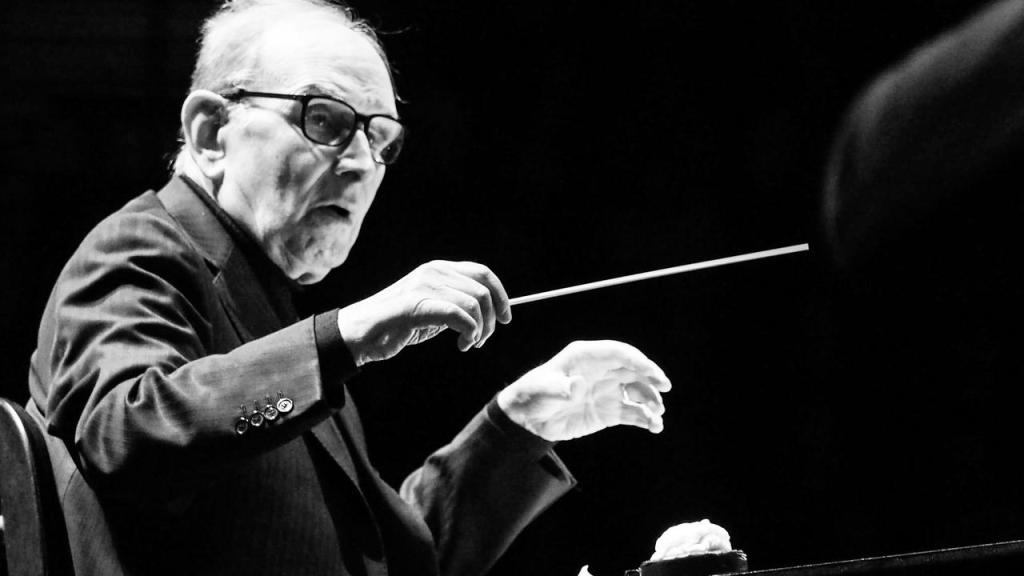
Given this review is getting near epic proportions itself I will begin to wrap up by heaping praise on the incredible production design. The costumes, locations, vehicles, props and era are slavishly and beautifully recreated. So much so you can almost smell the smoke as it drifts up from the Brooklyn streets. Moreover, the film is superbly photographed by Tonino Delli Colli. The music! I haven’t even mentioned the sumptuous score by the legendary Ennio Morricone. His score is a masterful symphony of haunting laments for loss of love, friendship, loyalty and life. Much indeed like Once Upon A Time in America (1984) itself, as a whole. In conclusion, if you haven’t seen it, I urge you to do so in the knowledge that Sergio Leone has transplanted that same brutally elegant vision of the Wild West to the American gangster genre with unforgettable emotional resonance and power.


CULT FILM REVIEW – VIDEODROME (1983)

CULT FILM REVIEW – VIDEODROME (1983)

Written and directed by: David Cronenberg

Produced by: Claude Herroux, Pierre David, Victor Solnicki

Cast: James Woods, Sonja Smits, Deborah Harry, Les Carlson, Jack Creley, Peter Divorsky etc.

Music: Howard Shore

***CONTAINS SPOILERS***


With the lack of cinema-going action, I am now looking at building other review ideas and articles into my blog. I have regular new release reviews, classic film reviews, great ensemble casts and under-rated film reviews. I suppose that’s enough really, but there are some films that don’t quite fit these categories and they are cult movies. How does one define a cult film? It could have been a box-office bomb or be a no-budget gem, be transgressive or have controversial subject matter. Conversely, it could be a video nasty or banned or even an ultra-arthouse film which defies classical filmmaking conventions. More importantly, I do not have to actually like the film for it to qualify as a cult film. It could be a difficult film I am evaluating or re-evaluating from a fan or academic perspective. Lastly, it could just simply be a film that is uncategorizable or so bad it’s bad or so bad it’s good.

My first review in this category is David Cronenberg’s body-horror film, Videodrome (1983). Now, it may fit the specific rules of an under-rated classic laid down in previous articles, however, Videodrome (1983) is not necessarily a film I love or believe is a classic. It is a remarkably original narrative descent into the hellish and surreal world of demented psychological snuff television. It contains amazing practical special effects by the legend Rick Baker, yet, having re-watched it last week I cannot say it’s a film one can enjoy from an entertainment perspective. Don’t get me wrong, David Cronenberg is a true auteur and genius filmmaker, it’s just Videodrome (1983) is a hallucinatory and disturbing nightmare of a film that works outside the boundaries of usual image systems and narrative conventions. Basically, it’s more a powerful set of concepts and scenarios rather than a simple and satisfying story.

The story opens with anti-heroic, Max Renn (James Woods) as president of CIVIC-TV, seeking new content for his Toronto-based TV channel. Despite Woods’ charisma as an actor he is an expert at playing dominant alpha male types who challenge the audiences’ empathy. He portrays Max with a sleazy charm hunting for, what one may consider, soft-pornographic shows for his station. He’s basically an addict looking to push the walls of taste for his sex-hungry viewers. Max then discovers a channel, via a grainy satellite feed, called Videodrome. It shows unfiltered torture and sexual aggression, and Max becomes determined to tap into that market. At the same time, he begins a sado-masochistic sexual relationship with a radio host, Nikki Brand (Deborah Harry). Soon, these two intense narrative strands entwine and threaten Max’s mind, body and very existence.


Videodrome (1983) is a highly intelligent shocker which explores the nature of television violence, notions of taste and censorship, fears of technological programming, and the mental damage caused by over-exposure to violent pornography. It is an extremely psychologically and physically graphic film to watch. Nevertheless, it is also full of incredible imagery involving on-screen murder, Renn being swallowed by his TV; and also literally transforming into a human video cassette player. While an audience may not like Max Renn as a person, his journey is one that grips with magnetic shock and disgust. As he gets ever closer to the Videodrome channel his downward spiral plays out like a demented morality story, with Max representing the journey of those audience members who lose themselves in the illusory realities of television product. As he begins to lose touch with reality, Max experiences a complete lack of control over his mind and desires, all seemingly controlled by a heinous corporation led by insidious suit, Barry Convex (Leslie Carlson).

Incredibly, David Cronenberg apparently turned down directing The Return of the Jedi (1983) to write and direct this more personal vision of cinema. Could there be two more different films? Nonetheless, while it may not be a film I can easily recommend to those of a sensitive disposition or those who like their horror to have tidy conclusions, Videodrome (1983), retains its relevance and power to this day as a shocking critique of modern media. Hence qualifying it as a cult horror film which pushes all the wrong buttons in the right way.


TO BOLDLY REVIEW #9 – STAR TREK: NEXT GENERATION (1990 – 1991)– SEASON 4

TO BOLDLY REVIEW #9 – STAR TREK: NEXT GENERATION (1990 – 1991)– SEASON 4

Based on Star Trek & Created by: Gene Roddenberry

Season 4 writers (selected): Michael Piller, Michael Wagner, Rick Berman, Jeri Taylor, Lee Sheldon, Melinda Snodgrass, Richard Manning, Ronald D. Moore, David Bischoff, , Joe Menosky, Drew Deighan, Brannon Braga, J. Larry Carroll, Hilary J. Bader, Harold Apter, Stuart Charno, Sara Charno, Maurice Hurley, Shari Goodhartz, Timothy DeHaas, Randee Russell, Ira Steven Behr, Rene Echevarria etc.

Season 4 directors (selected): Jonathan Frakes, Winrich Kolbe, Rob Bowman, Robert Weimer, Les Landau, Robert Scheerer, Cliff Bole, Robert Legato, Tom Benko, Chip Chalmers, Timothy Bond, David Carson, Gabrielle Beaumont, Patrick Stewart, David Livingston, Marvin V. Rush, Chip Chalmers etc.

Main Cast: Patrick Stewart, Jonathan Frakes, LeVar Burton, Whoopi Goldberg, Colm Meaney, Michael Dorn, Marina Sirtis, Brent Spiner, Wil Wheaton, Gates McFadden, John De Lancie, Dwight Schultz, Majel Barrett, Rosalind Chao etc.

Music/Composers: Alexander Courage, Jerry Goldsmith, Dennis McCarthy, Ron Jones, Jay Chattaway

Production Company(s): Paramount Television, CBS Television

**** CONTAINS SPOILERS ****


My simultaneous retrospective and futuristic journey into space and time continues, and I have finally finished watching Season 4 of Star Trek: The Next Generation. It’s commonly admitted to being one of the most consistently excellent seasons of TNG. I very much enjoyed the mixture of sci-fi concepts, drama, humour and tragedy within the well established formula of the Starship Enterprise boldly exploring various galaxies.

Major themes of the season related to family, honour, love, espionage, war and divided loyalties. While the Wesley Crusher character left for the Starfleet Academy (Wil Wheaton left the show), the majority of our favourite characters remained. Indeed, Miles O’Brien (Colm Meaney) was given more airtime and a marriage subplot. More dramatically the Klingons and Romulans featured heavily as pillars of conflict, with many of the best episodes featuring Romulan deceptions and Klingon brutalism.

Star Trek: The Next Generation continues to be a compelling show to watch and look back on with respect and nostalgia. While I continually enjoyed pretty much all the episodes, here are six of the best ones featuring Picard and his devoted crew.


THE BEST OF BOTH WORLDS – PART II – EPISODE 1

A continuation of Season 3’s cliff-hanger episode found Picard in the grips of the Borg. Even more thrilling was Riker, Data, La Forge and the rest of the crew have to stop the evil machines from launching a deadly assault on Earth. With dual battles of the mind and in space occurring simultaneously, this episode is memorable in so many ways. Patrick Stewart as Picard gives a fantastically intense performance as he battles the evil within.


FAMILY – EPISODE 2

Gentler in approach than the opening episode, Family, has a brilliantly written script with three very emotionally charged storylines. Wesley Crusher must decide whether to watch a video recorded by his deceased father. Worf is met by his adoptive human parents who seek to console him following his Klingon discommendation. Lastly, a still shaken Picard returns to Earth and reconnects with his brother. The trio of narratives combine to forge a highly satisfying and emotionally charged episode.


REUNION – EPISODE 7

While Patrick Stewart as Captain Picard often garners the acting acclaim with his fine performances, I think Michael Dorn as Lt. Worf always gives great portrayals too. Worf’s conflicted cultural identity – between Klingon and Starfleet – always provides constant moments of explosive and introspective drama. In this episode his former love, K’Ehleyr (Suzie Plakson) returns to oversee, with Picard, the fight for the Klingon leadership. It is revealed that Worf also has a son by K’Ehleyr as the episode delivers excitement, intrigue and tragedy.


THE DRUMHEAD – EPISODE 21

This brilliant episode is unlike many others as the Enterprise crew are not faced with a divisive alien enemy. Instead, Picard and his crew come under Starfleet suspicion from the formidable Admiral Satie. Jean Simmons as Satie gives a memorable acting masterclass, as her over-zealous paranoia causes a witch-hunt culture to poison the court proceedings. I’m a big fan of the courtroom drama and this expertly paced and written episode reminded me of a reverse-engineered version of, The Caine Mutiny (1954).


THE MIND’S EYE – EPISODE 24

Chief Engineer Geordi La Forge is a very under-rated character within the TNG crew. He’s a brilliant engineer with a likable personality, so when he is “brainwashed” by the Romulans to commit an assassination it was intriguing to see his character go over to the dark side as it were. I especially liked the suspense and plot twists of this episode which paid homage to films such as: A Clockwork Orange (1971) and The Manchurian Candidate (1962).


REDEMPTION – PART I – EPISODE 26

This brilliant season culminated with a superlative episode which brought together all of the plots and subplots involving the battles with the Romulans and Klingons. Lt. Worf has a particularly difficult choice between his Starfleet commission and family honour. Ultimately, he chooses to fight for honour and in a wonderful conclusion to the episode joins the Klingon fleet to fight alongside his brother, Kurn (Tony Todd), against the Duras hordes. Despite the out-of-the-box temporally strained twist involving, Sela (Denise Crosby), a Tasha Yar Romulan lookalike, the episode was full of dramatic moments and provided a compelling cliff-hanger for the next season.


FILMS THAT GOT AWAY #9 – ONCE (2007)

FILMS THAT GOT AWAY #9 – ONCE (2007)

Written and directed by: John Carney

Produced by: Martina Niland

Cast: Glenn Hansard, Marketa Irglova

Original songs by: Glenn Hansard, Marketa Irglova and Interference.

Cinematography: Tim Fleming


**** MAY CONTAIN SPOILERS ****


I am not sure why I missed this film first time around, however, it’s most likely due to prior prejudices against musical or music-based films. Yet, since I married in 2016, I have began to watch and enjoy more musicals. This is mainly due to my wife being a massive fan of musical cinema and theatre. While it’s still not necessarily my favourite genre, every now and then an utter gem of a musical will emerge. John Carney’s beautifully moving love story between a hoover repair guy and a flower-selling girl, Once (2007), is certainly one of those.

John Carney is an honest filmmaker who is attracted to outsiders and people with real emotional turmoil. They tend to be at crossroads in their lives and are struggling either with their dreams or their relationships. He also loves musicians, flaws and all. In Begin Again (2013), a washed-up musical executive, portrayed by Mark Ruffalo, meets unhappy singer-songwriter, Keira Knightley and their first-world romance is played out to bittersweet consequences. Similarly, in Sing Street (2016), a troubled teenager comes of age through his 1980’s pop band and bittersweet romance with a rebellious and equally-troubled schoolgirl. Notice a pattern? Well, this style of music, gritty city backdrops and salty romances were established in Carney’s breakout hit, Once (2007).

Made for a ridiculously low budget of around $150,000, this ultra-realistic musical contains songs that burst with love and pain from the characters of Guy (Glenn Hansard) and Girl (Marketa Irglova). The two meet and connect, but this is no conventional romance as they both have powerful emotional histories between them. It’s the beautiful music and their authentic dialogue exchanges which drive the story. Hansard’s singing and guitar playing are so powerful and moving. Their duet in the music shop of the song, Falling Slowly is a tour-de-force. I was not surprised when I saw it had won the Oscar for best original film. Overall, Once (2007) is a surprisingly brilliant no-budget feature, shot on the streets of Dublin, which deservedly became a big hit.

Mark: 9 out of 11


SIX OF THE BEST #25 – FILM PLOT-HOLES!

SIX OF THE BEST #25 – FILM PLOT-HOLES!

One of the main reasons I watch films is because I love a good story. I especially like working out the ins and outs of the plot lines too. So, it stands to reason that some films may have inconsistencies in their story or even plot holes. I would define a plot hole as a gap in the story which remains unexplained by the writer or writers. Sometimes these can spoil the film, but more often than not it can add to the enjoyment. They may in fact be known to the writers, however, they may have left it as an enigma for the audience to work out. Either that or the writers made a mistake or they could not be bothered to, or were unable to close the hole. In fact, they may be hoping we don’t notice or care.

There are so many films out there and I’m sure one could nitpick holes in most stories. Here I have picked out six of my favourites. I have chosen well known films so as to differentiate between good and just plain bad storytelling. Moreover, I have also omitted horror films where people just make stupid decisions. Likewise fantastical, surreal and dream logic narratives are avoided. Lastly, the major Marvel franchise plot hole is skimmed. You know the narrative hole that occurs in the stand alone entries. E.g. in Spiderman: Far From Home (2019), if the world is being threatened why don’t the other Avengers help poor Peter Parker? Oh, they’re conveniently busy. . . hmmm. Anyway, here are six of the best plot holes I like. If you can think of more please let me know.

***CONTAINS MASSIVE SPOILERS***


KING KONG (1933 / 1978 / 2005) – how did they get King Kong back to New York?

This question is not always one that is brought up as an obvious plot hole. However, think about it. Kong is captured on Skull Island, but is suddenly revealed in New York. How did they manage to find a boat big enough to carry him to America? And what if he woke up? He would destroy any ship carrying him with a yawn and stretch. Plus, because we do not SEE him being transported a massive hole in the narrative occurs.


How King Kong quadrupled in size since 1933

HALLOWEEN (1978) – who taught Michael Myers how to drive?

It chills the bones when Donald Pleasance’s Dr Samuel Loomis finds on a dark evening on October 30th, the day before Halloween, his most feared patient, Michael Myers has escaped from a maximum security facility. Myers has stolen a car and sped off into the night. The big question is, given Michael was six when he committed the murder, how the hell did he learn to drive? Obviously given Myers is a manifestation of pure evil, he somehow mastered driving through psychic force.


STAR TREK: THE MOTION PICTURE (1979) – the V’Ger probe would be coded as Voyager!

Talking of William Shatner masks, Star Trek is a wonderful science fiction television series and film franchise. It’s loved by many and given the numerous narratives involving time travel and alien species there are no doubt more plot holes in there. I mean the number of aliens who talk English and look human is quite something. However, in Star Trek: The Motion Picture (1979), there is a major plot hole involving the “V-Ger” probe. Indeed, the entire twist of the plot centers around “V-Ger” actually being “Voyager,” as demonstrated by the corroded name plate on the probe. It seems weird though that nowhere in its programming (or anywhere else) did Voyager have its name recorded. It would be like if a label of a computer, say “Dell”, had the “D” covered up, the boot-up screen would not read, “ell” during post, it would still read, “Dell”! Thus, the plot hole is entirely illogical, Captain.


THE TERMINATOR (1984) – why not just destroy the time machine and stop Kyle Reese going back?

There are loads of plot queries in James Cameron’s classic sci-fi thriller. The one I like the most is more paradoxical than plot hole, but similarly this illustrates flaws in Skynet’s overall plan. Given Skynet and The Terminator have detailed files on everyone, why didn’t they know Kyle Reese was John Connor’s father? If so, just destroy the time machine to stop him going back. If killing Sarah Connor in the past stops John from ever being born, perhaps killing Kyle or stopping him time travelling would have the same effect.


SHAWSHANK REDEMPTION (1994) – when Andy escapes, how does he put the poster back so perfectly?

This is one plot hole I love and is in fact, given Andy Dufresne’s incredible struggle to escape, one you can certainly understand. I mean, thematically speaking, Andy is coded as a spiritual Christ-like figure throughout the film. It’s very subtle, but it is there. Thus, perhaps, he had some divine intervention during his escape. He definitely earned it. Lastly, I also love that it is literally a plot hole and Andy escaped right through it.


SIGNS (2002) – why did the Aliens raid a water-based planet when it hurt them?

While the director has had his fair share of critics, I generally enjoy most of his early films and some of the more recent ones. Signs (2002) is a fantastic sci-fi thriller with themes of faith, family and alien incursion. The major hole is the aliens have to be incredibly stupid to want to invade a planet that is 70% their biggest weakness. However, as some have pointed out, it wasn’t an invasion, but a raid to get some people. However, given people are made up of water and water is in Earth’s atmosphere, perhaps Shyamalan should have made their weakness alcohol or even actual acid. Still a very entertaining film though.


NETFLIX TV REVIEW: INTO THE NIGHT (2020)

NETFLIX TV REVIEW: INTO THE NIGHT (2020)

Directed by: Inti Calfat and Dirk Verheye

Written by Jason George – based on the novel The Old Axolotl by Jacek Dukaj

Cast: Pauline Ettienne, Laurent Capulletto, Stefano Cassetti, Nabil Mallat, Jan Bijvoet, Vincent Londez, Babetida Sadjo, Mehmet Kurtulus, Alba Gaia Bellugi, Regina Bikkinina, etc.

Distribution: Netflix


****MAY CONTAIN SPOILERS ****


Netflix’s first Belgian original production series is an inspired adaptation of Jakub Dukaj’s electronic science fiction work, The Old Axolotl. While that work may be a digital release about a post-apocalyptic Earth, Into The Night (2020), is not a futuristic tale, but rather a very contemporary one set in the now. Opening in the Brussels airport the suspense is ratcheted up from the start when a NATO Officer, Terenzio Gallo, takes a Moscow bound plane hostage at gunpoint. Frantic and dangerous he orders the pilot and crew to take off immediately as they are all in danger. I won’t reveal what that danger is for fear of spoilers. What I can say is though these six episodes are one hell of a thrilling and panic-stricken plane journey.

Jason George’s excellent adaptation is written as a fast-paced disaster movie over six sharp episodes. Given the characters convene at an airport and the Brussels office of the United Nations is close by, the narrative establishes an ensemble of various nationalities including: Polish, Italian, Belgian, French, Turkish, Russian, Moroccan and in later episodes, English. Indeed, as well as the environmental threat and technological challenges the characters face, national identities and cultural clashes drive the drama of the series. The various personalities may be facing impending doom from an unknown source, while flying thousands of feet in the air, yet they cannot put their petty prejudices aside and this leads to much trouble. Amidst the in-fighting though some solidarity is found as the passengers and crew overcome a plethora of suspenseful moments and situations.

I personally cannot stand flying. Thus, my heart was literally in my mouth throughout this exciting series. The acting, action, direction and editing are all extremely well delivered, and I can safely say that this is one of Netflix’s winners. The threat the humans face is also very believable too. Furthermore, a classic disaster movie trope is to give the characters enough depth to bring you into their personal stories. Each episode is named after a character and is accompanied by a mini-flashback establishing their back story. We get one character seeking romance, one facing grief, another having an affair, a mother attempting to save her sick son, and so on. While these are very much standard types within the genre, the breathless pace of Into The Night (2020) leaves you dizzy from both the high altitude and anxiety.

Mark: 8.5 out of 11


UNDER-RATED CLASSICS #7 – SECONDS (1966)

UNDER-RATED CLASSICS #7 – SECONDS (1966)

Directed by: John Frankenheimer

Produced by: Edward Lewis

Screenplay by: Lewis John Carlino – based on the novel, Seconds, by David Ely

Cast: Rock Hudson, Salome Jens, John Randolph, Richard Anderson, Will Geer, Karl Swenson, Jeff Corey etc.

Music by: Jerry Goldsmith


***MAY CONTAIN SPOILERS***


So, I continue my articles on films which have perhaps fallen off the radar and deserve more recognition. The rules are simple. An under-rated classic can be a film I love, plus satisfy the following criteria:

  1. Must not have won an Oscar.
  2. Must not have won a BAFTA.
  3. Must not appear in the AFI Top 100 list.
  4. Must not appear in the IMDB Top 250 list.
  5. Must not appear in the BFI 100 Great British films.
  6. Must not appear in the all-time highest grossing movies of list.

Seconds (1966) is a science fiction drama which is very much of its time, but also truly relevant today. It deals with identity and lifestyle transplants. The film explores notions of escaping one’s everyday existence and living out one’s dreams through plastic surgery and scientific procedure. However, it also contains an important message, that whatever physical, social and personal changes you make there are no guarantees your life will be better. Perhaps, it is best to accept what you have and work with what nature gave you. Make positive changes to your mind and body, but know that there is no such thing as a quick fix.

The character of Arthur Hamilton (John Randolph) certainly finds this out to his cost in the narrative of Seconds (1966). His life is reasonably good, but he is dissatisfied with his job, and love for his wife has dissipated. He discovers an outfit called ‘The Company’ can, at a price, exchange his body and life, allowing him to be reborn a new man. After the procedure that man happens to be called Tony Wilson, who has the movie star looks of Rock Hudson. Hamilton/Wilson settles into a creative and hedonistic life by the beach. Yet, the sand is always softer on the other side. Soon, holes begin to show in Hamilton/Wilson’s new life.

Seconds (1966), is a psychologically eerie body-swap-sci-fi-horror film. It’s shot in crisp black and white by influential cinematographer, James Wong Howe, and contains some psychedelic visuals, weird angles, mirrored images, fish-eye lens shots, and images of actual rhinoplasty during the transformation sequence. Brilliantly directed by John Frankenheimer, it is also thematically very powerful. Aside from the dystopic warnings about plastic surgery, it also explores the nature of cults and closed communities. Rock Hudson gives a career best performance as Tony Wilson. His desperate and paranoiac scramblings in the second half of the film are painfully stressful as the character realises he has not only lost his identity, but possibly also his mind. Overall, it’s important to reiterate that organic change in itself is a positive thing, however, as Seconds (1966) demonstrates, there are no shortcuts to happiness or success.


NETFLIX FILM REVIEW: EXTRACTION (2020)

NETFLIX FILM REVIEW: EXTRACTION (2020)

Directed by Sam Hargrave

Produced: Antony Russo, Joe Russo, Mike Larocca, Chris Hemsworth, Eric Gitter, Peter Schwern

Screenplay by: Joe Russo – based on Ciudad by Ande Parks, Joe Russo, Fernando Leon Gonzalez

Cast: Chris Hemsworth, Rudhraksh Jaiswal, Randeep Hooda, Golshifteh Farahani, Pankaj Tripathi, David Harbour, etc.

Distribution: Netflix


***MAY CONTAIN SPOILERS***


Do you remember when action heroes used to be larger than life, filling up the screens with muscles, charisma, and wise-cracking one-liners. I am old, so I certainly do. The likes of Arnold Schwarzenegger, Steven Seagal, Bruce Willis, Jean Claude Van Damme and of course, Sylvester Stallone were just some of the leading men crunching and blowing up the cinema screens. Okay, they may have been reactionary 1980s and 1990s masculine archetypes, and arguably nationalistic, sexist, militarist and incredibly over-the-top characters, but I kind of miss them. Because today’s action heroes, while equally talented at killing and delivering mayhem, are somewhat less colourful.

Don’t get me wrong, I still enjoy the technically excellent and brutally realised fight scenes and stunts of today. However, John Wick, Bryan Mills of Taken (2008), Lorraine Broughton of Atomic Blonde (2017), Jason Bourne, and now Chris Hemsworth’s mercenary, Tyler Rake in Extraction (2020), are individuals of fewer words and even less humour. I guess Jason Statham isn’t too bad, but he’s still quite serious. Lastly, while one can certainly rely on the sanitized fun of the Marvel Universe for some humour and personality within the action, it’s still not the same as a good old Arnie action flick. The more adult oriented superhero, Deadpool (2016), can be relied on for X-rated violence and constant verbal quips. But, he wears a suit and it’s just not as good as the action heroes I grew up watching. Ah, but that’s nostalgia for you.

Why the trip down memory lane, Paul? What about the kinetic and explosive action of Extraction (2020)? Yes, the well-choreographed manoeuvres are extremely exciting. They are also bone-crushingly relentless from the moment Tyler Rake enters Bangladesh to extract an imprisoned Indian gangster’s teenage son, Ovi Mahajan (Rudhraksh Jaiswal). Hemsworth and director Sam Hargrave get you in and out of hand-to-hand fights, car chases, leaps and falls from buildings, and constant gun battles with stunning brilliance throughout. The camera and editing work present virtuoso work, capped by an almost seamless eleven minute long take involving all manner of mayhem. While Ovi and Tyler kind of bond later in the film, I found myself needing more emotional or political subtext to narrative. Even John Wick (2014) created its own mythology and universe, where this relies on fast-paced movement, military tropes and lazy stereotypes. Ultimately, Extraction (2020) was like an explosive fireworks display. Great to watch while it lasted, but ultimately forgettable. Man on Fire (2004) did this story way better and with way more feeling.

Mark 7 out of 11


“CINEMA” REVIEW – THE ASSISTANT (2020)

“CINEMA” REVIEW – THE ASSISTANT (2020)

Written and Directed by: Kitty Green

Produced by: Kitty Green, James Schamus, Scott Macauley, P. Jennifer Dana, Ross Jacobson

Cinematography: Michael Latham

Cast: Julia Garner, Matthew Macfadyen, Mackenzie Leigh, Kristine Froseth, Noah Robbins etc.

*** MAY CONTAIN SPOILERS ***


The Assistant poster.jpeg

Having worked initially in the documentary genre, Kitty Green now presents her first fictional film, The Assistant (2019), with the ever-impressive Julia Garner in the lead. Garner portrays the titular assistant, Jane, a PA in an unnamed New York based film production company. However, while the characters may be fictional, the events reflected are very much based in reality, as the film explores endemic sexism within the film industry and office workplaces more generally. This isn’t a sensationalist #MeToo expose or revenge story, but rather a subtle narrative which conveys it’s criticisms with hushed and damning power.

The film is structured over one day. I’m a big fan of such a convention and wrote about the positives of single day narratives here. Anyway, The Assistant (2019), begins with Jane first in the office, and ends with her being one of the last there at night. In the middle we get a succession of expertly composed scenes which find Jane working for a big-shot movie producer. The fact that we never see him, but hear him and experience the aftermath of his behaviour through Jane is an ingenious concept. By showing rather telling us directly about his covert sexist exploitation, one is truly brought into Jane’s painful situation. She is told she is lucky to have this job and it presents a great opportunity to eventually become a film producer. Yet, to do so requires her to turn a blind eye to events which other employees horrifically consider to be the norm in a media company.


This image has an empty alt attribute; its file name is assistant-1.jpg

Weinstein’s name is never mentioned. It doesn’t have to be. He is the sexual predator in the room and probably among many film producers who have utilised the casting couch to have their disgusting way with budding actors and actresses. That is why Kitty Green deserves so much praise because she chose a directorial style that really works for the story. Green and her cinematographer suck all of the colour out of the film industry, making it grey and beige and stark and unglamorous. Via the character of Jane, and Garner’s exquisitely reserved performance, we learn that such bullying cultures exist, and the character must choose to accept it or move on. Garner’s scene with the HR Executive, played by Matthew Macfadyen, is superb in conveying the difficult choice Jane faces.

Lastly, as well as making important points about the patriarchal corruption within the film industry, I enjoyed that it also captured the repetitive nature of administration work. Photocopiers hum, phones ring, paper flaps, printers and faxes whir, while florescent strip lights glow amidst the drudge of the daily office grind. Jane is a prisoner within a myriad of shadowy walls and filing cabinets. Further, Jane is also torn between being a just person and following her dream of working in the movies. But, at the end of another exceptionally exhausting day, that dream is soured by the insidious lust of human behaviour. Thus, The Assistant (2019) asks, will things ever change? Go watch it and decide if you think they will.

Mark: 8.5 out of 11


MEMORABLE FILM CHARACTERS #4 – WITHNAIL

MEMORABLE FILM CHARACTERS #4 – WITHNAIL

Written and directed by: Bruce Robinson

Produced by: Paul Heller

Cast: Richard E. Grant, Paul McGann, Ralph Brown, Richard Griffiths


***CONTAINS SPOILERS***


“We want the finest wines available to humanity. And we want them here, and we want them now!” Withnail


I am not one to believe in fate, but there has to be something magical about the random moment, at the age of seventeen, I was perusing my local video shop looking for a film to rent, and the cover of low-budget, British independent character drama, Withnail and I (1987), shone amidst the variety of Hollywood produced fodder. I picked up the box and for some reason the story of two unemployed actors mooching about at the fag end of the 1960s called to me. Perhaps it was the front cover featuring the debauched and worse-for-wear looking character of Withnail which drew me in? Or was it the casting of Paul McGann as the eponymous ‘I’, an actor I recognised from excellent TV drama, The Monocled Mutineer. Whatever the reasons, I rented the film and a special bond was formed forthwith. It lasts to this day.

Firmly in my top-ten-line-for-line-best-dialogue-ever-movies, Withnail and I (1987) simply bursts with memorable spats, insults, one-liners, and speeches. Another major strength of Bruce Robinson’s elegantly profane screenplay is the relationship between permanently inebriated and cowardly ‘thespian’, Withnail (Richard E. Grant) and his buddy, ‘I’ (McGann). It is a strange friendship full of mutual disrespect, petty bickering, and envy, but by the end of the film a kindly form of love is revealed. Withnail may seem an angry man, but ultimately, he’s using that ire to hide pain, sadness, and disappointment.


“I feel like a pig shat in my head.” Withnail


Richard E. Grant is incredible as the paralytic, pathetic and cowardly Withnail, who, along with ‘I’, laments a lack of career opportunities. Such bitterness, jealousy and ranting make him hugely obnoxious. However, Robinson’s exquisite writing and Grant’s subtly empathetic performance actually create an incredibly poignant character. Well, that and he’s absolutely hilarious, Indeed, it’s a hedonistic joy witnessing Withnail drinking every liquid known to humanity as he attempts to obliterate the now and tomorrow. Unbelievably, Richard E. Grant was teetotal, so director Bruce Robinson had to get him very, very drunk in preparation for a role he never bettered in his whole career.

Bruce Robinson, arguably, never reached the heights of Withnail and I (1987) again, although he does have other impressive writing credits. But this screenplay is one of the greatest ever written; conversely making it one of the funniest and tragic films of all time. Lastly, his often quoted but rarely bettered work is one of the greatest I have ever read, brimming with towering poetry, bilious insults, and drunken repartee. I mean there is little plot to the story of two actors getting drunk, going to the country, getting drunk and coming back. However, it remains one of my favourite films of all time, with one of the most memorable characters in Withnail.


Thoughts on Cinema and Filmmaking