Tag Archives: adaptation

CINEMA REVIEW: ALL OF US STRANGERS (2023)

CINEMA REVIEW: ALL OF US STRANGERS (2023)

Directed by Andrew Haigh

Written by Andrew Haigh

Based on Strangers by Taichi Yamada

Produced by: Graham Broadbent, Peter Czernin and Sarah Harvey

Main cast: Andrew Scott, Paul Mescal, Jamie Bell, Claire Foy etc.

Cinematography by Jamie D. Ramsay


Andrew Haigh is a director who has slowly built an impressive body of work over the last decade or so. I haven’t seen his first two low-budget features but have watched films 45 Years (2015), Lean on Pete (2017) and the recent brutal TV drama, The North Water (2021). Together they show Haigh to be a director capable of delivering drama of devastating power. His latest independent film, All of Us Strangers (2023) is arguably his best film to date deserving of all the awards coming its way.

Andrew Scott portrays Adam, a lonely screenwriter, who lives in a London newbuild block of flats where he seems to be the only occupant. Struggling with writer’s block he spends his days and nights remembering his parents, Mum (Claire Foy) and Dad (Jamie Bell.) Seeking inspiration for his work he revisits his childhood home in Sanderstead, Croydon during a fascinating trip down memory lane. Surprised one night by drunken neighbour, Harry (Paul Mescal), knocking at his door, Adam rebuffs Harry at first. However, the two latterly begin a love affair, with this relationship intertwined with Adam’s visits to his former home.


I won’t say anymore as I believe this is a film which benefits from knowing as little as possible, but it is safe to say that All of Us Strangers (2023) is one of the most emotionally cathartic films I have seen for some time. Even my frozen heart began to melt as I experienced Adam’s journey into the past and his attempts to find love and peace. Andrew Scott, under Haigh’s expert direction, gives an astonishing performance. Like his co-star Mescal was in Aftersun (2022), Scott just has that innate ability to convey sheer meaning from a look or the slightest of gestures. Obviously, the script and characterization provide an appreciable weight of feeling in Adam’s story, one that Haigh exerts real control over. Further, Mescal himself is excellent too, once again cementing his status as one of the best actors around.

On a low budget with just a handful of brilliant actors, Andrew Haigh demonstrates that less is indeed more. But while the locations and cast are minimal the emotional landscapes are painted on an expansive cinematic canvas. Grief, love, death, relationships and family are universal themes that are explored with fresh method by Haigh, as he delivers a film of mature power. With impactful performances, direction, cinematography, city locations and soundtrack, All of Us Strangers (2023) is a brilliant love story about loss. But, paradoxically, I didn’t feel empty or downbeat by the end, I actually felt full and lifted. 
Mark: 9.5 out of 11


CINEMA REVIEW: BARBIE (2023)

Directed by: Greta Gerwig

Written by: Greta Gerwig and Noah Baumbach

Based on Barbie by Mattel

Produced by: David Heyman, Margot Robbie, Tom Ackerley and Robbie Brenner

Cast: Margot Robbie, Ryan Gosling, America Ferrera, Kate McKinnon, Michael Cera, Simu Liu, Helen Mirren, Issa Rae, Rhea Perlman, Will Ferrell, etc.

Cinematography: Rodrigo Prieto

*** MAY CONTAIN SPOILERS ***


I saw Barbie (2023) a few weeks ago but work has been really busy so I am only just getting round to reviewing this cinematic adaptation of a lump of plastic that was moulded into a best selling toy. So, after the critical acclaim received for the excellent rites of passage film, Ladybird (2017), and recently starring in the existential comedic folly that is, White Noise (2022), Greta Gerwig takes the helm for this funny, intelligent, sarcastic and brightly coloured filmic vomit.

Gerwig shares writing duties with Noah Baumbach. These two major talents seem an unlikely duo to adapt a story of about an arguably sexist and outdated doll, that profiled unrealistic body images to the millions of people who owned it. I mean, I have never had a Barbie doll and didn’t really like dolls at all as a kid. I might have had an Action Man, but must admit I did enjoy owning my Star Wars figures. They somehow had more character and worth, despite also being made of synthetic polymer. My point is that Barbie (2023), aside from making money, I do not see any reason for a Barbie film to exist. However, it is to Gerwig and Baumbach’s credit they have crafted a wonderful and funny screenplay to ultimately sell more plastic dolls.


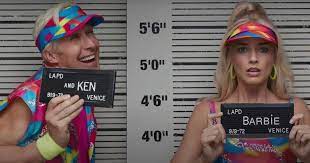
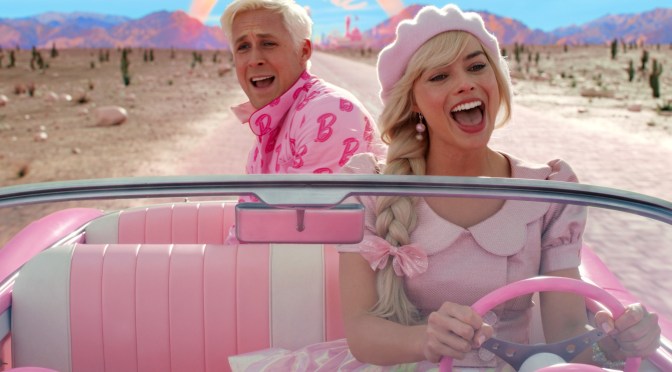
The story finds Margot Robbie’s ridiculously attractive blonde living in a utopian land entirely run by different versions of empowered Barbies. Many of which are played by an energetic who’s-who of an ensemble. Suddenly Barbie is struck by existential dread and a fear of death. Determined to discover why Barbie’s perfect life sucks, she goes on a journey to find the reasons why an anthropomorphic lump of processed oil isn’t going to live forever. Joining her on the trip to the real world is the dopey Ken (Ryan Gosling), who love-stalks Barbie like a pining puppy. Cue Barbie and Ken’s “fish-out-of-water” quest to find whatever in the real world. Yet, after a terrifically imaginative opening series of scenes and sequences, this is where the film starts to unravel.

The opening 2001: A Space Odyssey (1968) homage is easily the best thing about Barbie (2023) for me, along with some cracking one-liner gags throughout. Ryan Gosling also steals the show as the dim-witted Ken, whose character arc is ironically way stronger than Barbie’s. Robbie is sparkling as usual but I found the frenzied colours and manic ensemble a little overwhelming for my taste. The film is also way too long with too many unsatisfactory sub-plots, such as America Ferrara’s underwritten real-women-in-crisis narrative. Overall though, Gerwig and Baumbach have great fun satirising the patriarchy and corporate capitalism while at the same time upholding patriarchal values and making $hitload$ of cash in the process.

Mark: 7 out of 11


CINEMA REVIEW: BONES AND ALL (2022)

CINEMA REVIEW: BONES AND ALL (2022)

Directed by Luca Guadagnino

Screenplay by David Kajganich

Based on Bones & All by Camille DeAngelis

Produced by: Luca Guadagnino, Theresa Park, Marco Morabito, David Kajganich, Francesco Melzi d’Eril, Lorenzo Mieli, Gabriele Moratti, Peter Spears, Timothée Chalamet

Cast: Taylor Russell, Timothée Chalamet, Michael Stuhlbarg, André Holland, Chloë Sevigny, David Gordon Green, Jessica Harper, Jake Horowitz, Mark Rylance, etc.

Cinematography: Arseni Khachaturan

*** CONTAINS STORY SPOILERS ***


After reviewing The Menu (2022) last time out, here’s another film where food and eating and death are at the very marrow of the narrative. I must confess though it’s very difficult to discuss the excellent hybrid genre film, Bones and All (2022) without giving away the main ingredient within this film. So, I give prior warning that I’m going to have to reveal it in the review. I will state therefore if this film had been called, Fine Young Cannibals, I would not have been surprised in the least. Because the theme of people eating human meat is at the heart of the story.

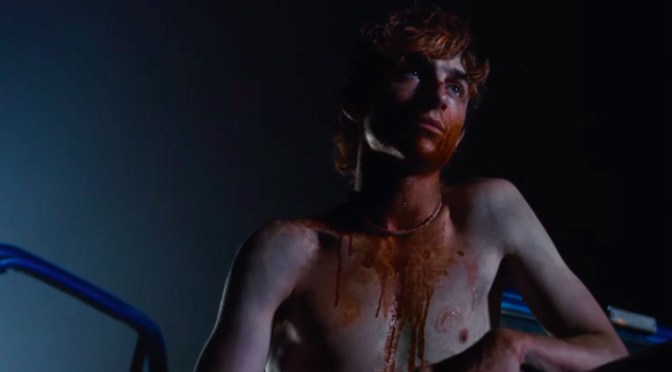
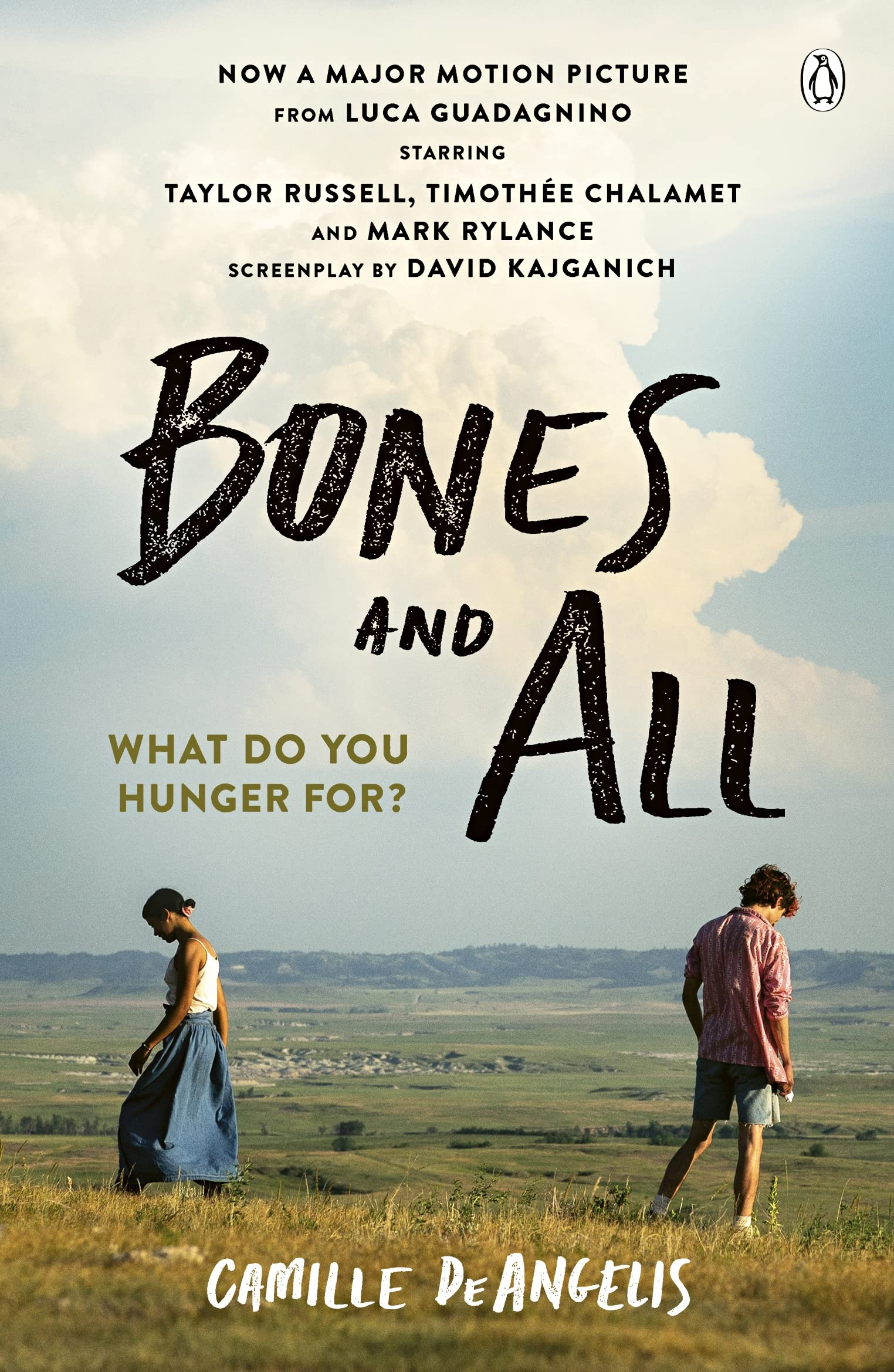
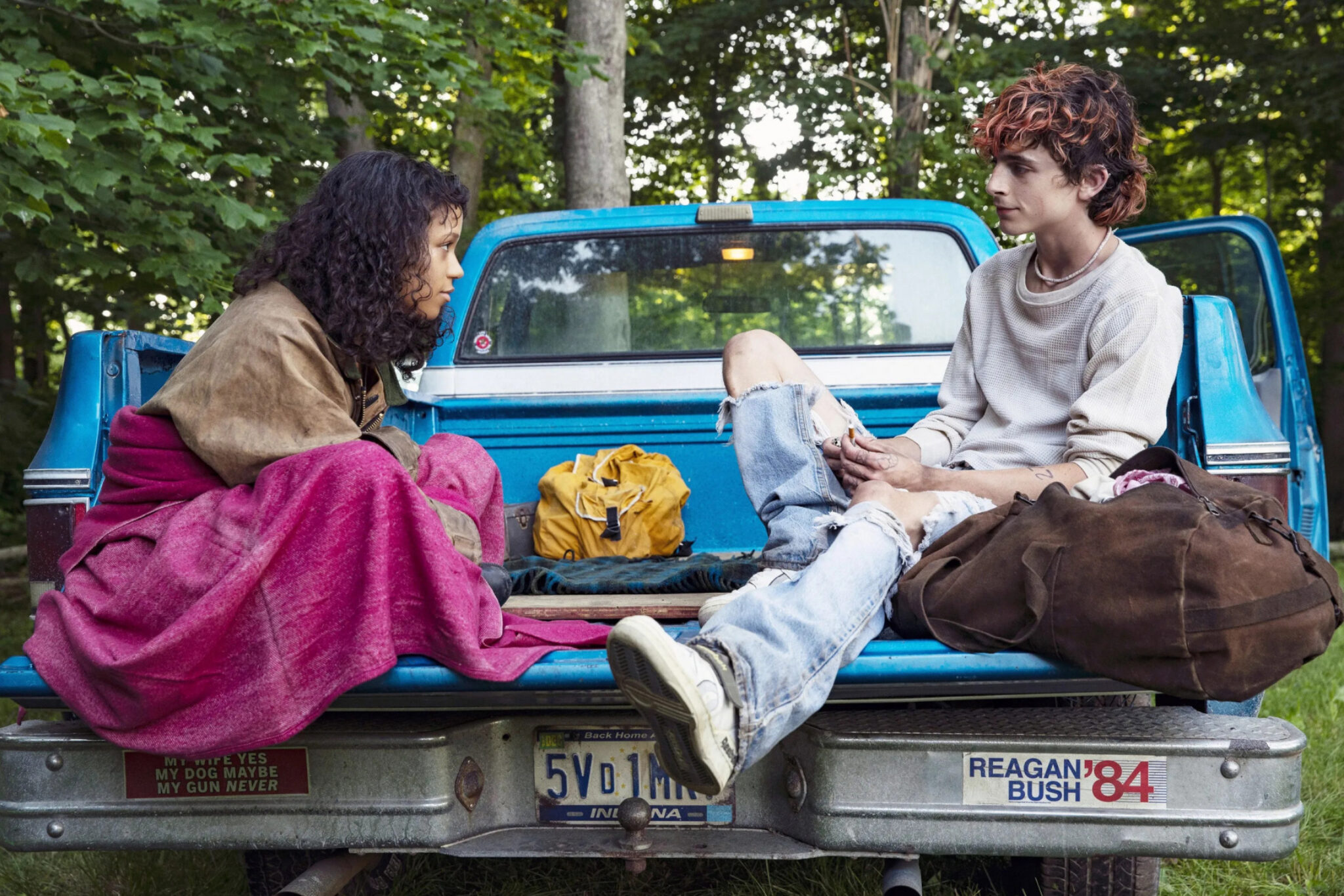
Bones and All (2022) is not a B-movie zombie film with bloody images of flesh-eating monsters devouring people. Yes, there are some gory scenes to satisfy horror fans, however, this arthouse adaptation of Camille DeAngelis’ 2016 novel, is more subtle and sympathetic to the young protagonists with a yearning for mortal flesh. Here murder and cannibalism occur, but it is represented as a curse for both Maren (Taylor Russell) and Lee (Timothee Chalamet), who struggle with their consumptive urges. Moreover, the feeding on flesh is highly symbolic, representing a sensual and almost religious experience for the couple. As they travel across various States, they grow as characters and people. They also explore their own love and share other people’s bodies, romance bleeding through in the process.


Bones and All (2022) is set in the 1980s. It begins with teenager Maren living with her father (Andre Holland) in Virginia. After hitting eighteen years of age, and causing a particularly nasty event at a friend’s sleepover, she is abandoned by him. Left with a cassette tape explaining her family history, Maren sets out to find her mother, meeting Lee along the way. The two are immediately drawn to each other and while driving set about sating their desire for fresh meat. This causes conflict between the couple as it is clear they are not comfortable with the nasty business of killing. Unlike the pursuing serial-killer-trophy-collecting antagonist, Sully (Mark Rylance). He is a venal force of nature, taking animalistic glee during the sacrifice of his victims.

Bones and All (2022) is directed with glacial majesty by Luca Guadagnino. He expertly blends and cooks the genres of horror, period drama, rites-of-passage, romance and road movie with a well balanced approach to tone. Extracting attractive performances from Chalamet and Russell, their onscreen chemistry is potent and touching. Acting legend Mark Rylance steals the show though as the slithery Sully. Overall, I felt the film could have been cut for pace slightly and the Romeo and Juliet-with-a-twist ending was too tragic for me. I think, despite their cannibalistic needs, Maren and Lee deserved a future together. But ultimately it’s all a matter of taste.

Mark: 8 out of 11


CINEMA REVIEW: DEATH ON THE NILE (2022)

CINEMA REVIEW: DEATH ON THE NILE (2022)

Directed by: Kenneth Branagh

Screenplay by: Michael Green

Based on: Death on the Nile by Agatha Christie

Produced by: Ridley Scott, Kenneth Branagh, Judy Hofflund, Kevin J. Walsh

Cast: Tom Bateman, Annette Bening, Kenneth Branagh, Russell Brand, Ali Fazal, Dawn French, Gal Gadot, Armie Hammer, Rose Leslie, Emma Mackey, Sophie Okonedo, Jennifer Saunders, Letitia Wright etc.

Cinematography: Haris Zambarloukos

*** MAY CONTAIN SPOILERS ***


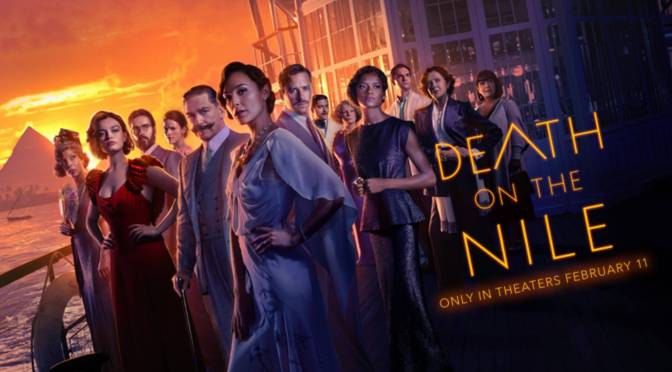
Following the box office success of MURDER ON THE ORIENT EXPRESS (2017), it comes as no surprise there is a sequel to the classy Hercule Poirot train-set murder mystery. Once again Kenneth Branagh directs and stars as the Belgian detective and he has also assembled a wonderful cast of A-listers and solid character actors within the ensemble. I was especially pleased to see Annette Bening lend some gravitas to the glamour and whether the ultra-talented Rose Leslie could break out into bigger film roles. Gal Gadot and Letitia Wright also leave behind recent comic book films for an altogether more period setting. Lastly, who doesn’t want to see French and Saunders reunited on screen.

I have always loved Agatha Christie’s work be it in literary, radio, television or film mediums. DEATH ON THE NILE (1978), while a bit of a guilty romp, is a favourite of mine, especially as it was the first Christie adaptation I saw at the cinema. I must have seen that particular film about twenty times over the years. So much so I know the plot backwards. I guess the nostalgia for watching a film as a child and familiarity with the story create a kind of comfort film. Thus, another positive reason why I was looking forward to the new adaptation.


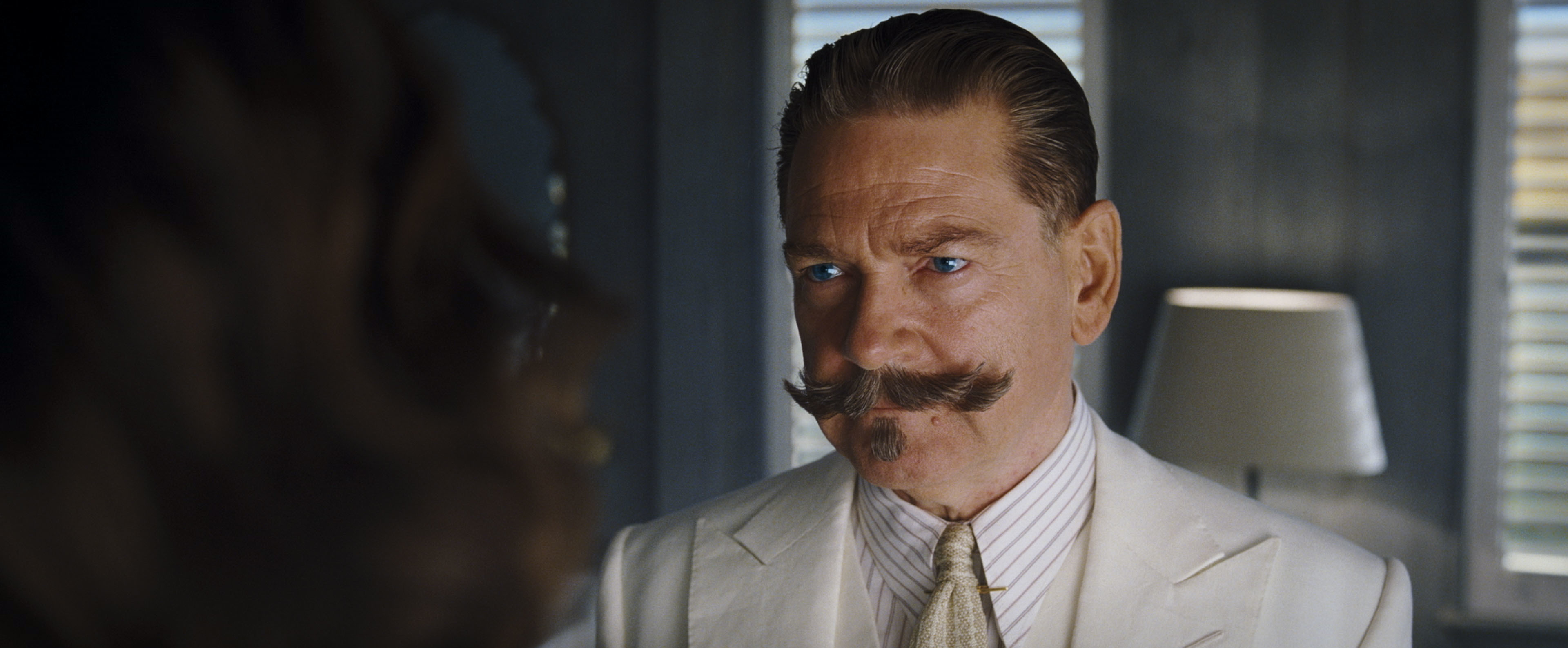
Kenneth Branagh as Hercule Poirot in 20th Century Studios’ DEATH ON THE NILE. Photo courtesy of 20th Century Studios. © 2022 20th Century Studios. All Rights Reserved.

Agatha Christie truly knows how to create a masterful detective plot. In fact, she was a genius. What we now consider to be a cliched genre, the “whodunnit”, was practically invented and reinvented by Christie and this story has a devious plot and surprising ending. While the genre is familiar, I enjoy watching all the players in one location conflicting with each other. Of course, Poirot is an eccentric and brilliant detective, so even though I know he will solve the crime and how, paradoxically I still love the journey of it all. But what of this latest iteration? Well, all throughout I kept channelling the fury of Annie Wilkes! If it’s not broken, why are they howdy-doody trying to fix it!

If you have never read Death of the Nile, it truly is a wonderful detective story, tightly plotted and full of biting wit and observations from Christie. There is subtle critique of English types abroad and the negative impact money, lust and envy have on the human condition. But having said that there is an exotic location, crafty humour, witty dialogue and bright sunshine illuminating the bloody murder in the novel. This is where Branagh and his screenwriter get Death of the Nile utterly wrong for me. From very off they gloom the mood and tone, lose much of the fun and introduce too many different subplots which do nothing to enhance Christie’s original work. Her novel did not need changing!

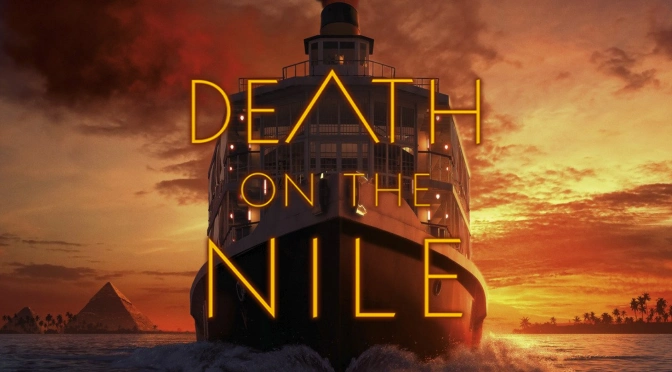
Perhaps I was just too familiar with the material or Branagh’s confident/arrogance got the better of him. Aside from some highly suspect CGI with Bouc (Tom Bateman) on the pyramids, Death of the Nile (2022), looked fantastic. But it felt hollow and drained of joy. I mean, does it matter why Poirot grew a moustache and moreover why has he suddenly become so existential and sad? Gal Gadot felt too modern as the rich victim of the story and Armie Hammer is handsome yet bland. I enjoyed Sophie Okonedo’s performance, but her character was enjoyable comic relief in the 1978 version. Otterbourne is now given unnecessary depth and musical filler as a sultry blues singer. Lastly, Emma Mackey has some fine moments as the vengeful Jackie, but I thought overall the script served the actors badly. My advice is to watch the David Suchet or 1978 version instead of this sinking cinematic vessel.

Mark: 5.5 out of 11


NETFLIX FILM REVIEW: THE POWER OF THE DOG (2021)

NETFLIX REVIEW: THE POWER OF THE DOG (2021)

Directed by: Jane Campion

Screenplay by: Jane Campion

Based on: The Power of the Dog by Thomas Savage

Produced by: Emile Sherman, Iain Canning, Roger Frappier, Jane Campion, Tanya Seghatchian

Cast: Benedict Cumberbatch, Kirsten Dunst, Jesse Plemons, Kodi Smit-McPhee, Thomasin McKenzie, Genevieve Lemon, Keith Carradine, Frances Conroy etc.

Cinematography: Ari Wegner

*** MAY CONTAIN SPOILERS ***


Set in 1925 amidst the spectacular terrain of Montana, The Power of the Dog (2021), centres around a ranching family’s everyday relationships, romances, hatreds and choices. Two brothers run the Burbank ranch, Phil (Benedict Cumberbatch) and George (Jesse Plemons). George is the kinder man who leans more toward progress and business. Phil is more of the land and the traditional cowboy. However, he is incredibly intelligent and could have made more of his education. Instead, he is driven to follow in his hero and mentor, Bronco Henry’s wake, work the ranch and command men.

While hiding a deep secret, Phil is absorbed by the cowboy lifestyle and thrives on controlling those around him. But when George meets Rose (Kirsten Dunst) at a cattle drive inn, he falls for her. Soon they marry and George agrees to provide for Rose and her son Peter (Kodi Smit-McPhee). Phil immediately becomes upset by the intruder to the family equilibrium. Soon Rose and Peter fall foul of his bullying and superiority complex. Thus, begins a series of subtle and ambiguous clashes where Phil and Rose clash, before the bright, androgynous Peter manoeuvres to protect his beloved mother.


The stunning cinematography and vistas of, The Power of the Dog (2021), are more luminous dressing when compared to the compelling characterisation and incredible performances delivered via Jane Campion’s confident direction. Indeed, Benedict Cumberbatch, Kirsten Dunst and Kodi Smit-McPhee are so good you could have set the story on an empty soundstage (like Dogville (2003) and the searing properties of the drama would have been carried just as potently. Cumberbatch is exceptional. This is an Oscar winning performance. His bitter and envious alpha male broods and hides behind violence and biting words. Every now and then he threatens to burst, but is pulled back. Phil wants to love but is so trapped by social expectations and prejudices that he is trapped tragically by the era. The sensitive Peter doesn’t care what people think and that sadly makes him a victim. But still waters run very deep. Peter has a plan.

This film will give you heartburn. It’s subtle and bubbles like acid, reaches the throat before scarring the pit of your stomach. Now, I’m not always a fan of oblique and poetic cinema, especially within a narrative presented as a quasi-Western. Mostly I like to be punched in the gut, not branded slowly from the inside out. Yet Jane Campion’s expert adaptation of Thomas Savage’s novel, The Power of the Dog (2021), contains some bite. You just don’t see when and how it happens. Expect awards galore for this fine drama.

Mark: 8.5 out of 11

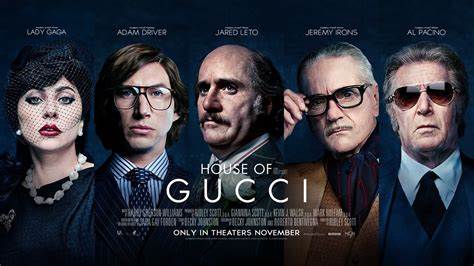
CINEMA REVIEW: HOUSE OF GUCCI (2021)

CINEMA REVIEW: HOUSE OF GUCCI (2021)

Directed by: Ridley Scott

Screenplay by: Becky Johnston, Roberto Bentivegna

Based on: The House of Gucci: A Sensational Story of Murder, Madness, Glamour, and Greed by Sara Gay Forden

Produced by: Ridley Scott, Giannina Scott, Kevin J. Walsh, Mark Huffam

Cast: Lady Gaga, Adam Driver, Jared Leto, Jeremy Irons, Salma Hayek, Al Pacino etc.

Cinematography: Dariusz Wolski

*** MAY CONTAIN SPOILERS***


I’m not a fan of fashion. I wear clothes obviously and like to be smart and clean. Yet, the idea of believing one’s garments, shoes and accessories mean you are important, superior or worthy of adulation sickens me to be honest. However, fashion is a multi-billionaire industry and I get that people of variant social standing love it as a cultural phenomena. People either own or aspire to own over-valued garments and objects to inflate their ego or sense of importance is beyond me. Then again, I passionately enjoy watching human beings kick a ball into a net, so everyone has irrational passions. C’est la vie!

I didn’t go to see House of Gucci (2021) to look at the clothes though. My interest in this star-studded, big budget crime drama directed by the legend, Ridley Scott, was more because I did not know anything about the lives and personalities within the Gucci empire. Who would have thought that a wealthy family unit could have turned out so poisoned by greed and envy?

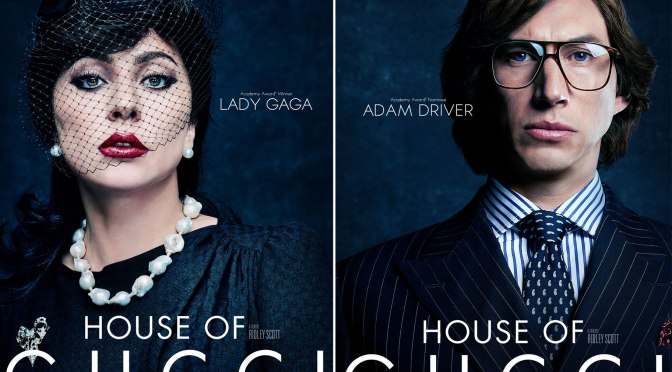
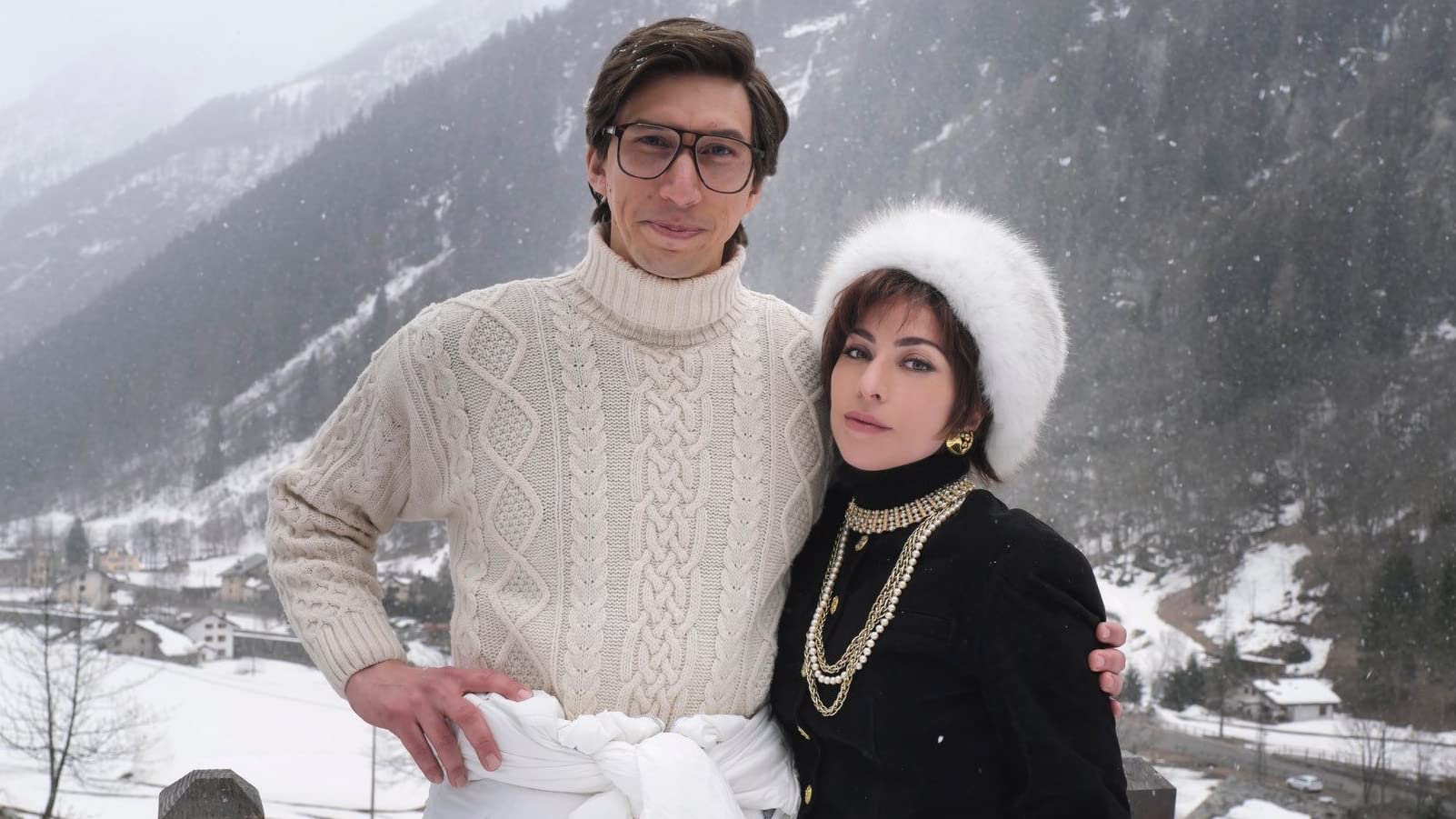
Covering a period of twenty or so years from the late 1970s into the 1990s, the story is structured around the relationship between Patrizia Reggiani (Lady Gaga) and Maurizio Gucci (Adam Driver). They fall passionately is lust, much to the chagrin of his spiteful father (Jeremy Irons) and marry against his will. Patrizia genuinely loves the sensitive Maurizio, but also has green eyes for the Gucci empire and the power that can bring. As her desire for influence in the family business grows, then so does cracks in their marriage. Crumbling relationships, business chicanery and family treachery dominate the narrative, all coming to a head with tragic results.


As a morality tale about how greed corrupts and drives human beings toward unnecessary tragedy, The House of Gucci (2021) is certainly worth a watch. Is there a sense the Gucci family were cursed by there wealth. Perhaps? But the film and screenplay as a whole present this theme without really drawing them out to full dramatic effect. However, the cast are absolutely fantastic throughout with Al Pacino, Adam Driver, and Lady Gaga on particularly exceptional form. Jared Leto dominates many scenes with his bald head, extra weight and screechy voice. While entertaining, the director could have reigned Leto in slightly to extract more pathos from the sad clown that is represented in Paulo Gucci.

I had a few issues with The House of Gucci (2021) inasmuch as it felt incomplete. At times it was as though I was watching a test screening version. The transitions between years were often confusing. What year is it, Ridley? Adam Driver’s arc from likeable young academic to selfish adulterer was rushed and unearned. I got the evocation of a Fredo and Michael Corleone dynamic between Maurizio and Paulo, but this really could have been developed further. The cinematography was grey and dull with the natural lighting style working against the expected colour and vibrancy of the 1980s era. I also wondered if the film had been graded?

While watching The House of Gucci (2021) I just kept thinking of more superior crime and gangster films. It is also mildly disrespectful to a genius like Ridley Scott to say Martin Scorsese would have knocked this story out of the park. I truly felt, while Lady Gaga was excellent in her role, her character could have been written and given a voice-over up there with that of Henry Hill’s. Nonetheless, I still enjoyed the film but wonder if there is a director’s cut out there which doesn’t feel rush released. Or even the possibility HBO or Showtime may adapt it into a longer drama series in time. Yet, does one want to spend more time with such avaricious and vain characters? Depends who is telling the story I guess.

Mark: 7.5 out of 11


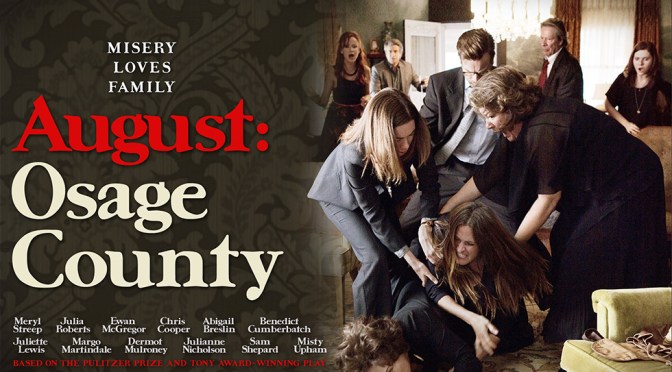
GREAT ENSEMBLE FILM CASTS #6 – AUGUST: OSAGE COUNTY (2013)

GREAT ENSEMBLE FILM CASTS #6 – AUGUST: OSAGE COUNTY (2013)

Directed by: John Wells

Screenplay by: Tracy Letts

Based on: August: Osage County by Tracy Letts

Produced by: George Clooney, Grant Heslov, Jean Doumanian, Steve Traxler

Cast: Meryl Streep, Julia Roberts, Ewan McGregor, Chris Cooper, Abigail Breslin, Benedict Cumberbatch, Juliette Lewis, Margo Martindale, Dermot Mulroney, Julianne Nicholson, Sam Shepard, Misty Upham, etc.

Cinematography: Adriano Goldman

*** MAY CONTAIN SPOILERS ***


Unsurprisingly, the play, August: Osage County, from the typewriter of Tracey Letts – the formidable playwright behind Killer Joe and Bug – about a family suffering loss of a “loved” one was not going to be a feelgood and uplifting affair. Instead, over the period of a month we are introduced to a whole host of characters with a variety of anger, addiction and attitude issues. Brought together by apparent grief, when patriarch, Beverley Weston (Sam Shepard) drowns, the extended Weston family fight and vent spleen at each over current and past dramas, with many a secret soon to be revealed.

Winning the Pulitzer Prize for Drama in 2008, Letts play was subsequently adapted into the dark, feel-bad and tragi-comedy film in 2013. Directed by John Wells, August: Osage County (2013), brought together an unbelievable ensemble cast of actors who did spectacular work with Letts acerbic and razor-sharp dialogue. Given that many of the personalities in the narrative are dominant matriarchal characters, the casting of Meryl Streep and Margo Martindale in the roles of Violet Weston and Mattie Fae respectively, is certain to create sparks on the screen. So, it proves.

Streep has delivered so many memorable characterisations over the years, but as Violet Weston I’m not sure she’s been so bilious and cancerous, both literally and symbolically. Her daughters, portrayed by Julia Roberts, Juliette Lewis and Julianne Nicholson, all have their own issues to deal with, but with such a vicious mother it’s a surprise they aren’t in a psychiatric ward. As harsh truths and bitter revelations unfold over the dinner and kitchen table conversations, Letts shows the complex nature of family existence; how it traps us with people we have nothing in common with. Women are seemingly in charge of the Weston family as the men, represented by Ewan McGregor, Benedict Cumberbatch, Sam Shephard and Chris Cooper, appear more passive and bullied.

Altogether, August: Osage County (2013), is a difficult to watch as there’s not a lot of love shown in the Weston household. Nonetheless, as an acting and writing tour-de-force there are few films that can best it. I guess we all have family problems and many ups and downs to deal with in life. What we can learn from this play and film is that this is definitely NOT the way to behave to people you’re meant to love and care for.


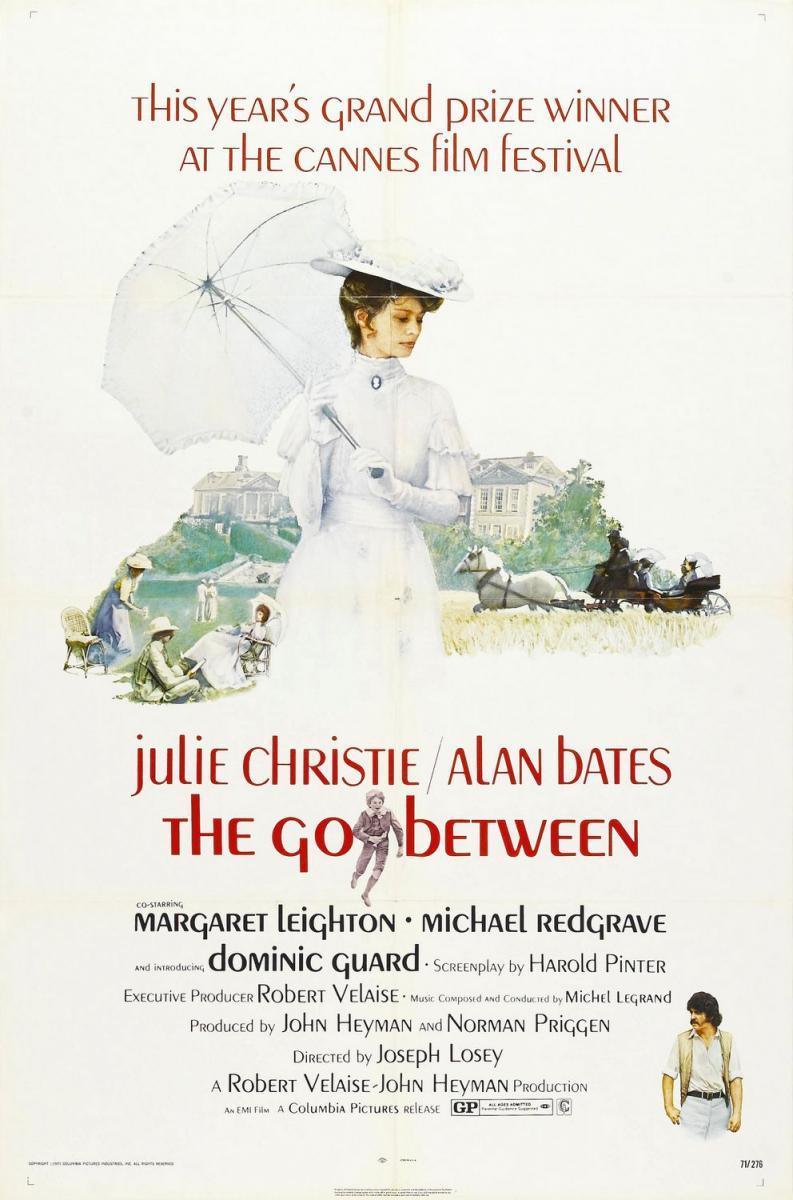
CLASSIC FILM REVIEW – THE GO-BETWEEN (1971)

CLASSIC FILM REVIEW – THE GO-BETWEEN (1971)

Directed by: Joseph Losey

Produced by: John Heyman, Denis Johnson, Norman Priggen

Screenplay by: Harold Pinter

Based on: The Go-Between by L. P. Hartley

Cast: Julie Christie, Alan Bates, Margaret Leighton, Edward Fox, Dominic Guard, Michael Redgrave, etc.

Music by: Michel Legrand


The Go-Between (1971) is one of those expert works of understated cinema which I was sure I had seen before. Yet, I would come to discover I had never seen it when I caught it on the rather marvellous digital channel, Talking Pictures. But then I love that when you find a period classic and watch it for the first time. It’s like unearthing gold in your living room. Because the film is a heartfelt rites-of-passage drama which subtly pulls at the loose end of the knitted cardigan that is the British class system. Nevertheless, while the romance, lies and regret unfold under the surface, The Go-Between (1971) certainly retains much dramatic power.

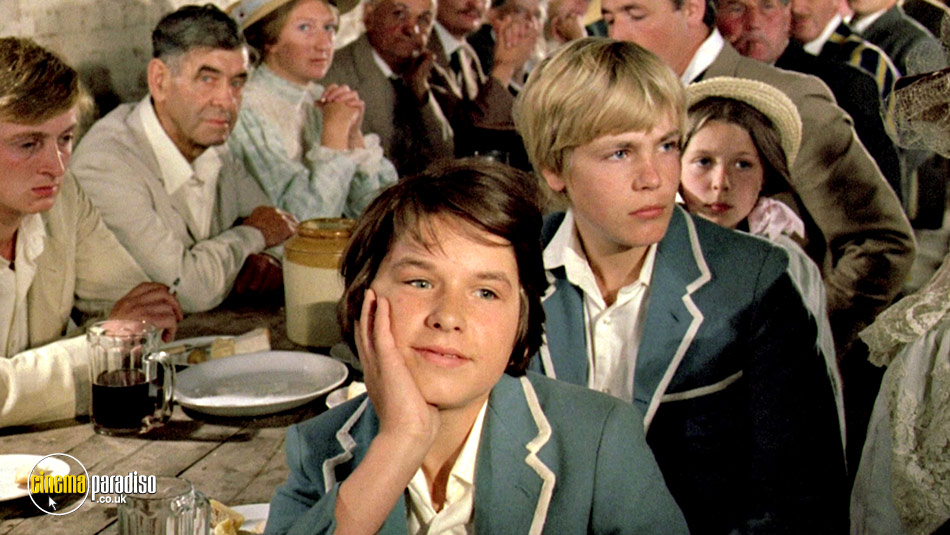
Adapted by acclaimed playwright, Harold Pinter, from the esteemed novel by L.P. Hartley, The Go-Between (1971) stars Julie Christie and Alan Bates as secret lovers separated by the chasm of class and tradition. Bates’ Ted Burgess is a charismatic and muscular farmer with a reputation as a ladies man. Christie is the beautiful and slyly rebellious daughter of the Lord of the Manor, Marian, promised in marriage to Edward Fox’s Viscount Hugh Trimingham. With peering eyes and suspicion coming from Marian’s mother, the lustful affair requires stealth, thus they enlist the help of Dominic Guard’s intelligent but less-privileged, Leo Colston. He is there as guest of Marian’s young brother as both attend the same boarding school; Leo there on a scholarship. The narrative develops very much through Leo’s sweet innocent eyes. The outsider’s point-of-view is expertly presented as it is both objective and allows the audience to make up their own mind about the characters.


Leo is pure of heart and believes he is helping by running notes back and forth between Burgess and Marian. He also makes friends with the cuckolded Viscount, as Fox gives a fine performance of a man who may or may not know whether his potential wife is being unfaithful. I think that is one of the strengths of the book and film, in that it explores the theme of duty versus passion. Burgess and Marian represent freedom, lust and nature, which are opposite to the “doing your duty” arrangements of the upper classes. Of course, dramatically speaking something has to give where the love affair is concerned. Sadly, tragedy intervenes, resulting in the loss of Leo’s innocence, and adding a layer of guilt which gravely haunts him in his later years.

Everything about The Go-Between (1971) reeks of quality. From the production design, locations, costumes, score by Michel Legrand and Gerry Fisher’s exquisite cinematography. Unsurprisingly, Harold Pinter would receive an Academy Award for his confident adaptation. Further, Joseph Losey is not a filmmaker whose work I am not particularly well acquainted with, but the performances from Fox, Bates, Christie and young Dominic Guard are assured testament to his stellar ability to convey meaning and emotion between the lines. Indeed, while some films smash you over the head with emotional melodrama, something I love too, The Go-Between (1971) instead slowly squeezes at your heart and mind. Lastly, this is not simply a damning indictment of the class system, but a lament for loss of innocence, illustrating how monolithic tradition dictates love, fate and tragedy are inextricably entwined.


NETFLIX FILM REVIEW – MA RAINEY’S BLACK BOTTOM (2020)

NETFLIX FILM REVIEW – MA RAINEY’S BLACK BOTTOM (2020)

Directed by: George C. Wolfe

Produced by: Denzel Washington, Todd Black, Dany Wolf

Screenplay by: Ruben Santiago-Hudson

Based on: Ma Rainey’s Black Bottom by August Wilson

Cast: Viola Davis, Chadwick Boseman, Glynn Turman, Colman Domingo, Michael Potts etc.

Music by: Branford Marsalis

Cinematography: Tobias A. Schliessler

*** MAY CONTAIN SPOILERS ***


The spectre of death hangs over us all as time effortlessly drains the life from us. It is an unstoppable force that will quicken on occasion to take a human being way before they deserve. What if said individual has knowledge of their end? Aside from the fear they must be feeling, there is clearly a moment of clarity and strong focus. Something that makes their work gather an altogether unique power. Both player and audience feel such power palpably. This is most certainly the case where Chadwick Boseman’s acting performance is concerned in the screen adaptation of August Wilson’s powerful play, Ma Rainey’s Black Bottom (2020). As talented, hustling and arrogant musician and songwriter, Levee Green, Boseman is a charismatic vision of drive, confidence, energy and naivety, ready to take on the world, not quite knowing the odds are stacked against him.

Boseman steals the film from under the lungs of the formidable Viola Davis as the titular blues legend, Ma Rainey. Her laconic singer with a voice that stops the clocks is being paid to record a series of songs at a Chicago recording studio in the year 1927. Much conflict is derived from Levee Green’s desire to spice up Ma Rainey’s more traditional blues arrangements. Ma Rainey will not give in to what she perceives as ideas of populism and selling out to white producers who want to water down the blues for a white audience. As Ma Rainey, Viola Davis, excels as this irascible and world-weary diva, fighting off her exploitative manager and record producer. Rainey and the other band members try to dampen Levee Green’s enthusiastic ardour, however, the younger trumpeter will not listen to the advice of more experienced musicians. This eventually comes at a grave cost to those within the play.


Events of Ma Rainey’s Black Bottom (2020) are set mainly within a day and in the confines of the recording studio. The mix of a hot day, tempestuous characters and colliding personalities all combine in the enclosed space to create much dramatic tension. Given the screenplay is based on August Wilson’s acclaimed play, what the film loses in cinematic visuals, it more than makes up with sensational dialogue and stellar acting performances. Indeed, the supporting cast including: Colman Domingo as Cutler, Glynn Thurman as Toledo and Michael Potts as Slow Drag provide sterling contributions as Ma Rainey’s band. They banter and battle and spar, especially with the argumentative Levee, desiring to simply play the music and get paid. Safe to say therefore the wonderful blues songs performed are beautifully played. They fill the screen with humour and pathos, puncturing the fizzing dialogue of Wilson’s many fine soliloquys with poignant joy.

Amidst the conflict and music, August Wilson’s original text also contains great thematic power within the words. At the heart of the drama and eventual tragedy there is the underlying critique of the black musicians’ songs and style being stripped away from them by unscrupulous record producers. Ma Rainey stands strong rejecting attempts to assimilate her work and personality and voice into the mainstream. Those songs are her lifeblood, and she refuses to entirely sell her soul. Levee Green does not see the bigger picture and is sucked in by the promise of money, women and fame. He is blinded by the bright city lights and the closer he gets to them the easier it is for the record producers to pick his pocket. In such a tragic character August Wilson has created a memorably complex persona, perfectly rendered by the acting genius, Chadwick Boseman.

Mark 9 out of 11


NETFLIX FILM REVIEW – I’M THINKING OF ENDING THINGS (2020)

NETFLIX FILM REVIEW – I’M THINKING OF ENDING THINGS (2020)

Directed by: Charlie Kaufman

Produced by: Anthony Bregman, Charlie Kaufman, Robert Salerno, Stephanie Azpiazu

Screenplay by: Charlie Kaufman (Based on: I’m Thinking of Ending Things by Iain Reid)

Cast: Jesse Plemons, Jessie Buckley, Toni Collette, David Thewlis

Music by: Jay Wadley

Cinematography: Łukasz Żal

***MAY CONTAIN SPOILERS***


I read some background information online about Charlie Kaufman’s latest film adaptation for Netflix, I’m Thinking of Ending Things (2020), and there is a leaning to describe it as a psychological horror. Of course, in order to market their films, studios write copy to entice an audience for their film. However, this adaptation of Iain Reid’s novel is far more than a psychological horror. It has elements from a whole plethora of genres including: surrealism, comedy, romance, thriller, arthouse, road movie, and even dance, animation and musical genres. Safe to say that once again Charlie Kaufman has delivered yet another ingenious cinematic smorgasbord that defies easy categorization. But is it any good?

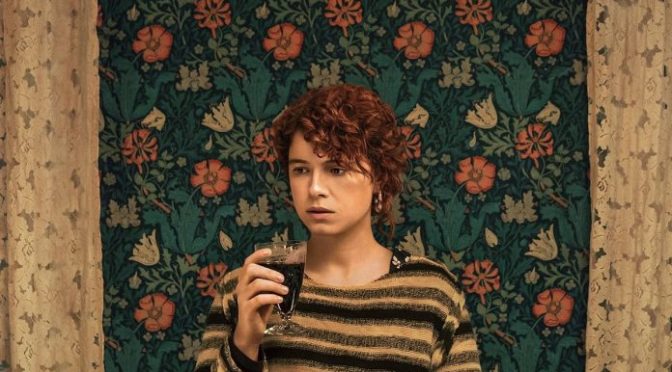
The film opens gently with the lilting voice of Jessie Buckley’s voiceover. We hear her character deliver a set of poetic existential queries, and her mantra throughout the film: “I’m thinking of ending things. . .” over a set of seemingly unconnected images. She waits for her boyfriend of a couple of months, Jake (Jesse Plemons), as they plan to meet his parents, portrayed by David Thewlis and Toni Collette, for the first time at their farm. So far, so straightforward; kind of. However, as Jake and the young woman’s (whose name changes during the film) drive through picturesque and snowy landscapes, Kaufman intercuts to an elderly Janitor going about his cleaning duties at a high school. How these juxtaposed situations eventually marry together is open to many interpretations. While certainly obtuse and narratively impenetrable to many, I really connected with Kaufman’s surreal trip. Because I’m Thinking of Ending Things (2020) is certainly as much about the journey than the ultimate destination.


As he has demonstrated since his debut feature film screenplay, Being John Malkovich (1999), Kaufman has an urgent desire for original invention, sight gags, existential examination, exploration of mental health, relationship breakdowns, non-linear structure and intellectual discourse. The respective journeys of characters like Jake and the young woman are taken by road and in the mind. Whose mind the film is in and out of is also open to question. The car journey is treacherous both due to the weather and the anxious tension between the couple. This is brought about by the young woman desiring to end things. Is it her life or her relationship she wants to end? Or is it both? Things between the two aren’t made easier by the surreal visit to Jake’s parents’ farm. Thewlis and Collette inject much humour and pathos into their characters. Their performances, a succession of visual punchlines and the brilliant dialogue combine to really bring the film to life during the middle act.

After the couple leave the parents’ farm and head back home, events get even stranger as connections with the aforementioned Janitor intensify. An extremely anxious pitstop at an ice-cream parlour, an animated pig and a ballet dance sequence threatened to destabilize the narrative. But once I had suddenly interpreted my truth and understanding of Iain Reid’s and Kaufman’s vision, it all kind of almost made sense. Indeed, compared to Kaufman’s surreal meta-fictional masterpiece, Synecdoche, New York (2008), I’m Thinking of Ending Things (2020) is arguably more accessible, funnier and less bleak.

Having said that, given Kaufman’s predilection for characters on the edge of nervous, depressive and existential breakdowns, some may find this film’s journey tough to complete. But I loved the invention and constant ideas on show throughout. Kaufman’s takes risks structurally, visually and thematically and I congratulate him for challenging the audience. Lastly, I’m Thinking of Ending Things (2020) has a wondrously cinematic look, sound and dreamlike feel to it. Plus, in Jessie Buckley and Jesse Plemons, Kaufman has cast two exceptional acting talents, who are certainly worth going on the road with. However, bizarre and twisted that road may be.

Mark: 9 out of 11