All posts by Paul. Writer and Filmmaker

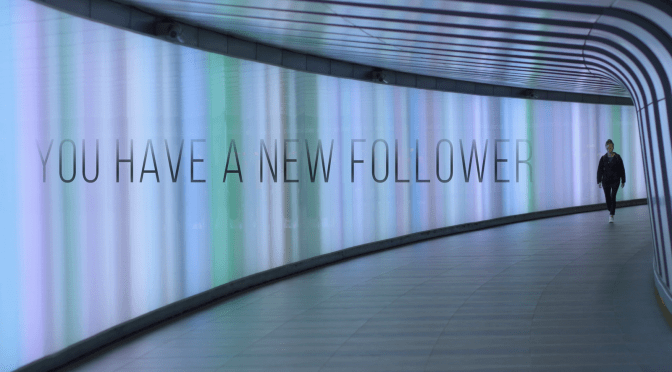
Paul is a writer and filmmaker. He has been committed to a writing career from a very early age. In 1997, he graduated from Staffordshire University with a first class degree in Film, TV and Radio Studies. His 2nd year short film project THE ARTS FILE won a Stoke-on-Trent Young Filmmaker's award. Subsequently, he worked as a Production Assistant on a number of promos and successfully completed a work placement at Sky Movies. In 2002, he gained an MA in Feature Film Screenwriting from Royal Holloway College of London and since graduation has written several feature and many short film scripts. In 2005, he formed FIX FILMS and has written and produced many shorts to date. He has also had several short screenplays commissioned by the Mountview Film Academy and film director Jonathan Wolff. His work can be found here - https://www.youtube.com/c/FixFilmsLtd Most recently Paul wrote, produced and directed his own short horror film called FLATMATES (2018). He has subsequently written and directed the films: MISDIRECTION (2019), TOLERANCE (2019) and YOU HAVE A NEW FOLLOWER (2020). His short films have had screenings worldwide at many film festivals. His latest works are the horror, INFERIS (2024), a set of short film monologues called SIN (2024) and THE SUICIDE SHIFT (2026). PAUL is a versatile and prolific writer with ideas in abundance and a very strong feel for structure, characterisation and dialogue. He favours thought-provoking and entertaining narratives with memorable characters, images and scenes. While he values all styles of film he tends toward genre movies as opposed to overtly "arty" cinema. Moreover, being involved in the producing, casting and crewing of low budget shorts has given him great experience and insight into the filmmaking process; improving his writing no end. From 2008 until 2020, Paul had been on the exciting merry-go-round that is the stand-up comedy circuit. He has done over 1000+ gigs. Venues included: Downstairs at the King's Head, The Comedy Pit, The Comedy Cafe, Soho Comedy, London Comedy Store, Electric Mouse Comedy, Streatham Comedy Club, Mirth Control, Comedy Heat, Lion's Den Comedy etc. He also ran two comedy nights: West End Comedy @ The Comedy Pub and West End Comedy @ The Brazen Head. He used to be the resident MC at Electric Mouse's show at The Fox, Palmers Green and got regular paid bookings as a comic and MC in and out of town. In 2014 and 2016 he performed at the Brighton Fringe Festival and Camden Fringe Festival in 2014. He performed open spots for the Banana Cabaret, The Comedy Store and Up the Creek comedy clubs in London. He is also a keen film and television seer and has a love for all genres of movies from art-house to low-budget z-movies. He also loves television of all kinds notably great comedies and dramas. He is an essayist expressing passionate analysis for all elements of cinema. Links Blog: www.thecinemafix.com YouTube: www.youtube.com/c/FixFilmsLtd

FILMS THAT GOT AWAY #6 – THE UMBRELLAS OF CHERBOURG (1964)

FILMS THAT GOT AWAY #6 – THE UMBRELLAS OF CHERBOURG (1964)

Written and Directed by: Jacques Demy

Produced by: Mag Bodard

Music by: Michel Legrand

Cast: Catherine Deneuve, Anne Vernon, Nino Castelnuovo, Marc Michel, Ellen Farmer, Mirielle Perrey etc.

**MAY CONTAIN SPOILERS**


I knew there were good reasons to get married. The obvious one is the positive nature of a caring relationship and not becoming a lonely, bitter old man. The other is that given my wife loves films too, she will introduce me to the occasional classic film I may have missed. Thus, we went to the BFI and watched the classic musical The Umbrellas of Cherbourg (1964). While she is a massive fan of the musical genre, I can take or leave it generally. Every now and then though I will really love a musical film. The Umbrellas of Cherbourg (1964) is now one of them.

Starting in 1957 and structured over three acts that end in 1963, we follow the lives and loves of two main protagonists, Genevieve (Catherine Deneuve) and Guy (Nino Castelnuovo). The ups and downs of their romance drives the narrative. The two struggle to keep their love alive amidst the obstacles of military conflict, social convention and family pressure. While the story is relatively simple, Jacques Demy’s wonderful script and direction warms you to the two young lovers. So much so, by the emotionally gut-wrenching ending, even a grizzled cynic like myself felt like crying.

The Umbrellas of Cherbourg (1964) is not your classic all-singing-all-dancing musical. It is more an opera of everyday life and love. The actors sing the dialogue all the way through and once I got used to this, the device really worked well for the story. Of course, Michel Legrand’s incredible score literally drenches the colourful sets and mise-en-scene with wonder. Moreover, Demy’s cinematographer, Jean Rabier, works miracles; his camera gliding around the actors in small spaces such as shops, garages, apartments and French cafes. Lastly, Catherine Deneuve and Nino Castelnuovo are such an attractive, but beautifully tragic screen couple. Clearly their touching story, amazing music and Jacques Demy’s cinematic brilliance had a massive influence of Damian Chazelle’s splendid La La Land (2016).

Mark: 9.5 out of 11


SIX OF THE BEST #22 – CHRISTMAS FILMS!

SIX OF THE BEST #22 – CHRISTMAS FILMS!

Once again the festive season is upon us. Thus, the over-privileged first world will buy stuff they don’t need, drink and eat more than humanly possible, and perhaps even celebrate the birth of the son of God. As you may gather, being a miserable cynic, I’m not a massive fan of Christmas, but it is a lovely time to try and be nice to people, take time off from the day job and watch even more films and television.

Watching films and not being at work is definitely my favourite thing about Christmas, so I thought it fun to have a look at what I consider six of the best Christmas films. How do you define a Christmas film? I would say the film should not only be set at Christmas, but also invoke a sense of the Christmas spirit, evil or otherwise. It should also contain Christmas themes or even some kind of moral within the narrative. Therefore, Die Hard (1988) is NOT a Christmas film. Here, in my humble opinion, are six that most definitely are! Happy holidays!


die hard 20th Century Fox

A CHRISTMAS CAROL / SCROOGE (1951)

“Well, then, I’ll just swallow this and be tortured by a legion of hobgoblins, all of my own creation! It’s all HUMBUG, I tell you, HUMBUG!”


Image result for A CHRISTMAS CAROL ALASTAIR SIMS

BAD SANTA (2003)

“I beat the shit out of some kids today. But it was for a purpose. It made me feel good about myself. It was like I did something constructive with my life or something, I dunno, like I accomplished something.”


Image result for bad santa

ELF (2003)

“We elves try to stick to the four main food groups: candy, candy canes, candy corns, and syrup.”


Image result for ELF FILM

GREMLINS (1984)

“First of all, keep him out of the light, he hates bright light, especially sunlight, it’ll kill him. Second, don’t give him any water, not even to drink. But the most important rule, the rule you can never forget, no matter how much he cries, no matter how much he begs, never feed him after midnight.”


Image result for GREMLINS CHRISTMAS

IT’S A WONDERFUL LIFE (1946)

“You see, George, you’ve really had a wonderful life. Don’t you see what a mistake it would be to throw it away?”


Image result for it's a wonderful life film

KRAMPUS (2015)

“Saint Nicholas is not coming this year. Instead, a much darker, ancient spirit. His name is Krampus. He and his helpers did not come to give, but to take. He is the shadow of Saint Nicholas.”
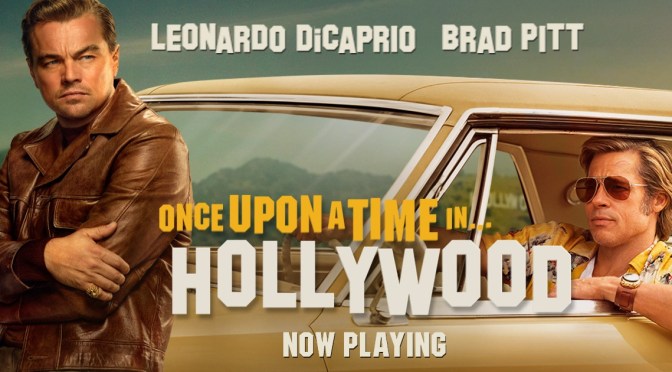

Image result for krampus christmas FILM

THE REPORT (2019) – AMAZON FILM REVIEW

THE REPORT (2019) – FILM REVIEW

Written and directed by: Scott Z. Burns

Produced by: Scott Z. Burns, Jennifer Fox, Danny Gabai, Eddy Moretti, Kerry Orent, Steven Soderburgh, Michael Sugar

Cast: Adam Driver, Annette Bening, Ted Levine, Michael C. Hall, Tim Blake Nelson, Maura Tierney, John Hamm, Douglas Hodge etc.

**CONTAINS REAL EVENT SPOILERS**


The Report (2019) is in the vein of recent films such as, Kill The Messenger (2014), The Post (2017), and Oscar winner, Spotlight (2015). It is based on true events and forensically documents a period of U.S. history which is both illuminating and engrossing. Adam Driver is cast as U.S. Senate staffer, Daniel J. Jones and given the task by Senator Feinstein (Annette Bening) to lead a team to investigate the 2005 destruction of interrogation videotapes. He begins the work in 2009 and is faced with six million pages of CIA materials to work through. It soon, unsurprisingly, becomes an obsessive and ordered job for Jones and it takes him years to ultimately finish the report.

I won’t give anymore away about the narrative events, but first and foremost this is a film about torture and admin. Writer and director, Scott Z. Burns cleverly structures the story between Jones’ researching the CIA materials and the actions of the Counter-Terrorist Centre staff led by the likes of Maura Tierney and George Fumusa’s characters. As the story proceeds, and details of extreme torture of terrorist subjects is revealed, Burns takes us further up the CIA food chain. Here we get a very damning critique of the horrifying lengths CIA operatives went to in order to secure information from suspects.

The Report (2019) is an engrossing film which I thought was going to go down the conspiracy thriller route or even the obsessive character breakdown study. There are elements of this, but essentially it is an extensively researched drama set in enclosed offices, in meetings, in Senate hearings, at desks and computer screens; all with flashes of interspersing violence. I’m not acutely educated in regard to American foreign policy and politics in general, but a potentially dry subject is made so engrossing by a fine script and brilliant cast. Adam Driver essentially goes to Washington, proving once again that he is one of the best actors around at the moment. Above all else though, the film stands as an impressive visual document and precis of the original seven thousand-page report by Daniel J. Jones.

Mark: 8.5 out of 11


MY CINEMATIC ROMANCE #18 – KEN LOACH

MY CINEMATIC ROMANCE #18 – KEN LOACH


I haven’t done one of these articles for a while, but in light of the Conservative Party victory in the General Election the other day, I thought it interesting to lean toward a more political filmmaker for my latest post. Thus, I once again pick five highly recommended films by one of my favourite cinema creatives. Today, I look at the work of Ken Loach.

Loach is now, at time of writing, eighty-three year’s old, and has just released a new film called Sorry We Missed You (2019). At the cinema alone he has singularly directed twenty-five films, plus been involved with many television productions too. His ‘Wednesday Play’ Cathy Come Home (1966), was voted in the top ten best British television programmes of all time at the turn of the millennium. It was so powerful in its depiction of a struggling homeless character, the issues were raised in Parliament at the time. His work continues to address socio-political issues even now and has often provoked controversy.

Loach works generally in the dramatic or social realist genre. However, his raw, almost documentary style, which centres on working or characters from the under-classes, does have much comedy going through it too. Structurally his films build empathy with his characters in a generally linear fashion; slices of life which more often than not result in tragedy. While the landscapes he displays are quite depressing, his characters aren’t victims though. They are always strong and passionate and striving for the best outcome. However, poor life choices, poverty, bureaucracy, gangsters, criminality, addiction, military, and unfair government laws and procedures provide fierce obstacles.

Some have accused Loach of, over the years, being a ‘Champagne Socialist’, comfortably attacking the ruling classes from a position of privilege. He’s also been accused of vicariously holidaying in the land of the under-privileged, for what gain I’m unsure of. Personally, I am always compelled by Loach’s cinema, the issues raised and the characters he presents. He is a true humanist director and storyteller, who has made some consistently brilliant films. Whether you agree with his politics or views, he is at least attempting to reflect the injustices in the world and the underdogs within in it. Here are five films which capture this perfectly.

**CONTAINS SPOILERS**


KES (1969)

Based on Barry Hines’ novel, Kes is one of the finest British films ever. It concerns the everyday existence of Billy Casper (David Bradley) and his attempts to survive the harsh realities of Northern life in Barnsley. Billy struggles at school, but finds salvation when he adopts and trains a young kestrel. Kes represents a microcosm of working-class life where the kids are either damned or sent down the pit to work. Simultaneously warm, harsh, bitter, funny and tragic, Kes is a memorable early work from Ken Loach and deserves revisiting over and over again.


MY NAME IS JOE (1998)

Anchored by an incredible leading performance from Peter Mullen, My Name is Joe, centres on Joe Kavanagh and his attempts to stay sober. Joe has been a destructive alcoholic for some years and uses AA to control his drinking. The narrative drive comes from Joe’s attempt to assist recovering drug addict, Liam (David McKay), plus Joe’s blossoming romance with a local health worker, Sarah (Louise Goodall). It’s a raw rendition of Scottish working-class life with romance and tragedy lying side-by-side in a moving portrait of addiction, love and life’s everyday struggles.


THE WIND THAT SHAKES THE BARLEY (2006)

Incredibly controversial when released, Loach’s war drama is set in 1920’s, Cork, Ireland. It centres on the conflict between the Irish Republican Army and the British army, as civil war broke out prior to the Anglo-Irish Treaty. The lead protagonists are two brothers portrayed by Cillian Murphy and Padraic Delaney. As the war and violence heightens the two brothers, their families and their compatriots are devastated by harsh British rule. Loach was described as “anti-English and traitorous” by the English press and Conservative politicians, when the film was released. However, irrespective of your politics, it is a stunningly human work of cinema; both shocking and heart-wrenching in equal measures.


LOOKING FOR ERIC (2009)

Films about football (soccer in the U.S.A) and footballers can be very tricky to get right as the game itself arguably works better as a live spectacle, rather than at the cinema. However, Loach scored a big win with this really moving story about a lowly postman, Eric Bishop (Steve Evets), who is struggling with family, love and work pressures. Depressed and almost suicidal, Eric finds unlikely help in the magical appearance of Manchester United football legend, Eric Cantona. Sprinkling the kitchen sink realism with fantasy is a departure for Loach, and Paul Laverty’s wonderful script brilliantly espouses the need for teamwork, fraternity and community within its touching narrative.


I, DANIEL BLAKE (2016)

Having worked for the Benefits Agency a few decades ago, I have some understanding of social security and government assistance schemes. Via the titular character of Daniel Blake (the brilliant Davey Johns), Loach savagely criticises Conservative austerity measures. The systematic turning of the screw has seen many British people have their benefits stopped because of somewhat Kafkaesque measures. Of course, the system should work to stop people abusing it, but many deserving people suffered too. This is demonstrated here in this heartfelt drama of one man, who having suffered a heart attack, battles for his pride and future.


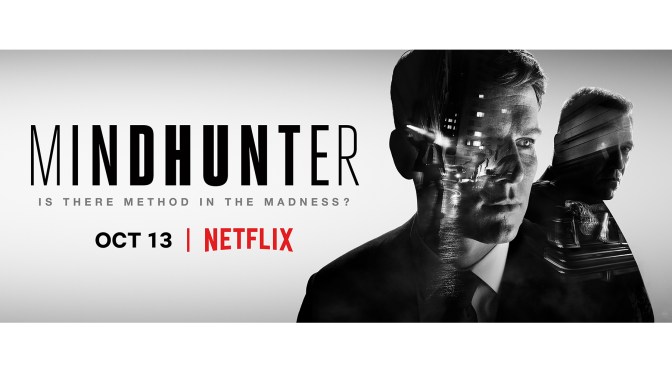
NETFLIX REVIEW: MINDHUNTER (2019) – SEASON 2

NETFLIX REVIEW: MINDHUNTER (2019) – SEASON 2

Directors: David Fincher, Andrew Dominik, Carl Franklin

Created by: Joe Penhall – based on Inside the FBI’s Serial Crime Unit by John Douglas & Mark Olshaker

Writers: Doug Jung, Joshua Donen, Courtenay Miles, Phillip Howze, Jason Johnson, Colin J. Louro, Pamela Cederquist, Liz Hannah, Alex Metcalf, Shaun Grant etc.

Producers: Jim Davidson, Mark Winemaker, Liz Hanna

Cast: Jonathan Groff, Holt McCallany, Cotter Smith, Anna Torv, Stacey Roca, Joe Tuttle, Albert Jones, etc.

Original Network: Netflix

**CONTAINS HISTORICAL SPOILERS**


Serial killers and the subsequent crime investigations are big business. Book, films, musicals, songs, podcasts, television documentaries and fiction shows litter our screens and airwaves. Murder, for all the savagery and horror it brings, is something we as a species are inextricably drawn to explore. I can only speak for myself to say that I am consistently horrified by the evil crimes people commit. Such violence is sickening, yet, in an attempt to understand it I watch and listen to many crime shows and programmes.

Both dark and stylish, Mindhunter, is one of the classiest and well-crafted of the serial killer genre dramas released in recent years. This David Fincher-led production, created by writer Joe Penhall, takes elements from Zodiac (2007)Silence of the Lambs (1991) and standard FBI procedural dramas to brilliantly highlight the embryonic stages of the ‘Behavioural Science Unit’ or BSU serial-killing profiling team.

Season 1 began in 1979 and found the team of Holden Ford (Jonathan Groff), Bill Tench (Holt McCallany) and Dr Wendy Carr (Anna Torv), forming an uneasy alliance at the BSU. They initially began interviewing murderers behind bars to attempt to understand their motives and modus operandi in order to assist with new investigations. The highlight of the season was the appearance of notorious serial killer Ed Kemper (Cameron Britton). Britton’s rendition is incredibly chilling and his intense connection with Ford rattled the FBI agent’s cage so much he unravelled psychologically.


Season 2 is even better than the first because it wastes no time in getting to some major crime investigations. Season 1 got slightly bogged down in Ford’s personal relationships, and while Season 2 find Tench’s and Carr’s home lives providing intriguing subplots, this latest set of nine episodes are more committed to interviewing and catching killers. Kemper returns briefly, but the team also have some intense interviews with ‘Son of Sam’ – David Berkowitz (Oliver Cooper) and Charles Manson (Damon Herriman). The latter, in Episode 5, is a short but striking scene and complete television gold.

The majority of Season 2 is taken up with a major murder case in Atlanta during 1981. A series of teenage black youths, mainly boys, have been going missing and Ford and Tench are sent out to help the Atlanta police department. It’s a hotbed of socio-political and racial tensions. Plus, the parents of the missing kids feel the police are not doing enough to catch the killer. There is also a belief the murders could be the work of the Ku Klux Klan. Tench and Ford have other ideas and meet resistance to their new theories. Much drama and suspense is gained from testing their methods within this charged atmosphere. Jonathan Groff as Holden Ford is especially adept at rubbing people up the wrong way with his off-centre, almost alien, persona. Holt McCallany is also very impressive in his role as his more popular partner, Tench.

David Fincher is one of those filmmakers whose form and style is often unsettling and remarkable. He, along with fellow directors, Andrew Dominik and Carl Franklin, shoot in the shadows, both stylistically and psychologically. Greens, dark yellows and browns stain the screen and create a haunting stylistic palette. Furthermore, with gripping narratives, great direction, memorable performances and the production team’s accurate eye for period detail in mind, I just did not want the latest season of Mindhunter to end. Lastly, while murder has become a lucrative fixture on our TV screens, I have to admit that series like this render it powerfully addictive; something that captures you and refuses to let you go.

Mark: 9.5 out of 11


INDULGENT 500TH POST CELEBRATION – WITH TOP TEN MOST VIEWED ARTICLES!

TOP TEN MOST VIEWED POSTS!

I started this blog in October 2013 with a review of a low budget sci-fi film called Arrival of Wang (2013). 500 posts later and I am still going. I, like many, don’t make any money out of writing this blog, but I really enjoy it. I have also made connections with other bloggers and film fans all over the world and I find that brilliant too.

I thought it may be interesting to look at the TOP TEN most viewed reviews or articles I have written. So, excluding views for the Home page/Archives clicks, here are the top ten articles with links in the heading.


1. “RESPECT MY AUTHORITAH” – MY FAVOURITE 17 SOUTH PARK EPISODES

Published in October 2013 – 4528 views

I basically watched all 17 seasons of South Park in 2013 and selected my favourite episodes of this great comedy show. We’re now up to season


2. SIX OF THE BEST #9 – GAME OF THRONES MEMORABLE MONOLOGUES

Published in August 2017 – 2488 views

HBO’s adaptation of George R. R. Martin is one of the greatest television narratives ever. Full of action, intrigue, treachery, quests, sex and murder, it also had some great dialogue. Here I listed six great speeches from the show.


3. CLASSIC MOVIE SCENES #4 – ZODIAC (2007) – “The Basement Scene”

Published in March 2018 – 1101 views

As the title says, this looked at a masterful work of direction in David Fincher’s tense crime thriller.


4. THE TIN DRUM (1979) – CLASSIC FILM REVIEW

Published in October 2016 – 643 views

I’m unsure why this strange, but classic German film has so many views but there you go!


5. AU REVOIR LES ENFANTS (1987) – CLASSIC FILM REVIEW

Published in November 2013 – 493 views

Another classic European film review gets decent numbers. This is an academic essay more than a review, but a worthy analysis of Louis Malle’s brilliant wartime set drama.


6. NEVER EVER BLOODY ANYTHING EVER! THE GENIUS OF RIK MAYALL!

Published in July 2014 – 473 views

I still cannot believe that Rik Mayall is dead. He was such a hero of mine growing up and genuinely one of the funniest people that ever existed. R.I.P Rik Mayall! This article is a tribute to both his genius and my love of one of his hilarious TV comedies: Mr Jolly Lives Next Door.


7. CLASSIC FILM SCENES #2 – ONCE UPON A TIME IN AMERICA (1984) – “THE CAKE SCENE”

Published in December 2017 – 427 views

Another classic film scene from another classic film gets into the top ten! I should probably write more of these!! Sergio Leone’s gangster epic is rarely screened on television but it is as amazing as it is long.


8. CLASSIC FILM SCENES #1 – KES (1969) – “THE CANE SCENE”

Published in March 2017 – 384 views

Ken Loach is one of my favourite filmmakers in terms of both quality and consistency of cinematic output. His incredibly raw depiction of Northern life in Kes (1969) gave us many memorable scenes, including this one about the injustices of the education system.


9. 100 NOT OUT! SOME GREAT FILMS OF 100 MINUTES OR LESS #1

Published in March 2016 – 317 views

Aside from reviews of past and present films and TV shows, I occasionally do more focused articles. This one picked some great films that tell their story in one hundred minutes or less. Maybe I should do one about classic films over one hundred and eighty minutes too?


10. CINEMA REVIEW: THE HANDMAIDEN (2016)

Published in April 2017 – 315 views

Perhaps it’s because “sex” is included in the tags of this review of Park Chan-Wook’s erotically charged crime noir, or because it is brilliantly written, who knows! Anyway, it’s the highest seen new release review so it must be of some interest to some people.


THE END OF THE WORLD

Well, that’s the top ten most viewed articles out of the five hundred I have posted. For the record, the LEAST viewed article with only SEVEN VIEWS is this one: APOCALYPSE WHEN? VISIONS OF FUTURE EARTH! It goes to show that no one is interested in reading about filmic visions of the end of the world. C’est la vie!

Happy Christmas and thanks for reading!


TOLERANCE (2019) – MY SHORT FILM WINS FESTIVAL AWARD

TOLERANCE (2019) – MY SHORT FILM WINS FESTIVAL AWARD

Just a quick post to say that my short film Tolerance (2019) won best short film at the 2019 UK Offline Webfest. It’s a great independent film festival with the awards held at the Etcetera Theatre in London. As a low budget filmmaker it’s great to get screenings for my films, and while I am not a massive fan of competitions or awards, it was also fantastic to be acknowledged. If you haven’t seen the film you can watch it at the link below.


TOLERANCE (2019)

“What’s your poison?”

Tolerance is a story of obsession, addiction, revenge and murder. It concerns a dinner “date” which takes a twisted turn. Inspired by narratives like those of Hitchcock, Tales of the Unexpected and Inside No. 9, it explores the damage toxic relationships can cause. It is both a thriller and a very dark comedy.


CAST & CREW

Written and directed by Paul Laight
Starring: Georgia Kerr and Patrick Tolan
Sound: Marina Fusella
Camera: Edward Lomas
Lighting: Kato Murphy
Make-up: Camille Nava
Music: James Wedlock
Editor: Jodie Williams
Set Designer: Melissa Zajk

Website: www.fixfilms.co.uk

A Fix Films Production © 2019


EXPLORING ARCHETYPES IN CINEMA

EXPLORING ARCHETYPES IN CINEMA

“All the most powerful ideas in history go back to archetypes.” CARL JUNG

I have recently explored character names and character personas on this blog. These articles can be found here:

  1. WHAT’S IN A NAME
  2. A TEST OF CHARACTER

Now I would like to broaden the subject and have a go at defining some basic film character archetypes. My definition of this has some crossover with personas, but archetypes are not necessarily the component which make up the character – they ARE the character!

Archetypes are a common or typical shorthand; a tool writers, directors and actors can use to define character during the creative process. They are not stereotyping though. They are standardized models and structures that can be built upon to fully flesh out a character.

The archetypes I would like to consider are: Everyman/Woman, Hero, Super-Hero, Anti-Hero, Nemesis, Mentor, Sidekick and Lover/Romantic Interest. Obviously, many of these archetypes can combine, especially in more complex films, plus I’m sure there are loads of others. However, I will limit myself to these for now.


EVERYMAN / WOMAN

The staple for many, many movies is an everyman or woman or boy or girl (or gender fluid) character who is easy to relate to for the audience. It could be Tom Hanks in Castaway (2000), or Tom Hanks in Sully (2016), or Tom Hanks in basically everything – even Toy Story (1995). They tend toward the working or ordinary class with regular jobs and family units. Their stories will be everyday, or they will find themselves facing incredible situations. Alfred Hitchcock favoured everyman and woman characters who would be thrown into dangerous situations. Actors who excel in such roles include: Hanks, James Stewart, Meryl Streep, Amy Adams, Francis McDormand, Jack Lemmon and many more.


HERO

Many characters can begin ordinary or everyday, but over the course of a film become heroes. Luke Skywalker for instance is an bright farm kid with dreams of joining the academy. A series of contrasting events then cause his rise to discovery and heroism. On the other hand, some heroes are fully formed such as James Bond and Indiana Jones. The everyman character and hero are often combined, like with John McCLane or underdog characters such as Rocky Balboa. My favourite hero arcs are stories where the character starts in lower status such as The Terminator (1984), Django Unchained (2012) and Harriet (2019).


SUPER-HERO

So what’s the difference between a hero and a super-hero? For me the hero may be capable of incredible feats of action and endeavour, yet he or she is ultimately mortal. Thus, while they may be a super-hero on the surface, Batman and Iron Man are heroes to me; albeit mechanically improved ones. Superman, Wonder Woman and Thor, for example, have god-like powers, thus defining them as SUPER! Obviously, there are crossovers as illustrated by Peter Parker, Captain America and Captain Marvel. All of them begin as everyboy/man/woman characters and become super-heroes due to military experimentation or being impacted by incredible events which cause physical transformation.


ANTI-HERO

I love a good anti-hero. I think they are my favourite character archetype. They can be charismatic and just on the side of the righteous, but misanthropic and sarcastic like say, Wolverine or Blade. They can be on the wrong side of the law, but redeem themselves at the end of a film like Danny Archer and Han Solo. They can be outsiders or loners like Travis Bickle. They can be hard on the outside and soft on the inner like Juno. Moreover, certain actors have cornered the market on anti-heroes such as Jack Nicholson, Ellen Page, Leonardo DiCaprio and Clint Eastwood. My favourite anti-heroes are often cursed with supernatural forces causing them to be trapped by certain powers. The ‘Wolfman’, Lawrence Talbot, and Carrie White are fine instances of this.


NEMESIS

Given it is pantomime season there’s no harm is looking at villains! For me the greatest villains are the ones which actually have a valid cause or point. Of course, I don’t agree with their actions as they will generally involve killing people or destroying the Earth or Universe. However, villains such as Robert DeNiro’s heinous Max Cady had valid motivation. Likewise, Thanos’ plan to wipe out half of everyone was founded on sound environmental ideology. This doesn’t make it right though. Sympathetic nemeses are also interesting like Marvel’s Erik Killmonger. Moreover, King Kong for example, begins life as a threatening monster, but ultimately ends up being sympathetic compared to man. Nonetheless, you cannot beat a good old fashioned baddie like Hannibal Lecter, The Terminator, Hans Gruber, Nurse Ratched and one of my favourites, The Wicked Witch of the West.


MENTOR

The Mentor character can take many forms. They are very valuable in supporting a hero or heroine on their adventures, plus providing vital exposition or the rules of the world information. The archetypal mentor archetype is a wise, older character like Morpheus, Alfred Pennyworth, Gandalf, Mr Miyagi, or Obi Wan Kenobi. Moreover, they will often have powers and magically assist those around them. The wonderfully helpful Mary Poppins is a great example of this. Every so often mentoring is rejected by the younger partner. A case in point being Brad Pitt’s Detective Mills eschewing Morgan Freeman’s Somerset’s sage advice with deadly results. Then again, mentoring can take a more twisted and controlling turn as seen with The Devil Wears Prada’s (2006), Miranda Priestly, and in Paul Thomas Anderson’s recent arthouse classic, The Phantom Thread (2017).


SIDEKICK

The sidekick is a lower status character that can be an ally, helper, friend or even enemy that also provides comic relief or dramatic tension. Different from the bromance or traditional buddy character, because that double-act dynamic is on an equal level of status. Great sidekicks include: Hermione Granger, Short Round, Robin, Chewbacca, Dr Watson and many more. Often, the sidekick actually becomes more interesting, funny and memorable than the lead protagonist. Examples of this include the brilliant Hit Girl, Igor, Donkey and the aforementioned Hermione. Sometimes the sidekick takes a darker route such as Loki and Lady Macbeth, who use their influence for evil rather than good.


THE LOVER / ROMANTIC INTEREST

So, the love interest can be a romantic extension of the sidekick but can also be a mentor and even a villain. I would differentiate the love interest character from traditional romantic comedies or dramas. For instance, in When Harry Met Sally (1989), Sally and Harry are of equal status and classed as everyman and woman archetypes. However, in James Bond films the love interest is traditionally a female conquest. More in depth love interest characters are those that are not just trophies; they become equal in the story. Princess Leia is a heroine and love interest, likewise Marion Ravenwood in Raiders of the Lost Ark (1981). Most recently, and a reflection of our progressive times, Diana Prince/Wonder Woman found a fine love interest in Chris Pine’s heroic Steve Trevor. Thankfully, the outdated “damsel in distress” stereotype is being consigned to the past and now we have characters of all backgrounds and gender represented on an equal basis.


CONCLUSION

As I said earlier this list is just an exploration of archetypes. There are a number I could have included. That stock character the wife or husband is one which always appears regularly in films. Often, they are waiting by the phone or television screen as some disaster befalls their partner. Lastly, I could have included the double-act, the team or the ensemble archetype; where one or more characters combine to create a whole. But, I think I’ll save that for another essay.


ALL 4 TV REVIEWS – A VERY BRITISH COUP (1988) & SECRET STATE (2012)

ALL 4 TV REVIEWS – A VERY BRITISH COUP (1988) & SECRET STATE (2012)

With a General Election coming up I thought I’d look at a couple of political TV dramas, both of which can be seen on Channel Four’s streaming service All 4. Interestingly enough, they are also both based on Chris Mullin’s book, A Very British Coup (1982).

I don’t propose to be an expert on these things, but I hate politics. It’s a necessary evil as someone has to run society, I guess. What with another General Election on December 12th, 2019, it’s not difficult to feel saturated with all things political and with the cluster-fuck of BREXIT! 


politics.jpg

In the U.K. we have several political parties, but the two main ones are Labour and the Conservatives. They fight and bitch with each other and switch places every four years or so and end up undoing the work the previous party had done. I realise it is a bloody tough thing to run a country, but just wonder whether this the best system we have?

I mean why can’t we join together and work as a collective rather than in constant conflict. Can we not put aside our differences to work toward a common goal? The current system pits us AGAINST each other – left versus right and up versus down and black versus white and green versus blue! Divide and rule seems to be the favoured system to maintain the status quo! Could this change or am I just dreaming!?


A VERY BRITISH COUP (1988) – CHANNEL FOUR

Directed by: Mick Jackson

Adapted by Alan Plater – based on the novel by Chris Mullin

Cast: Ray McAnally, Keith Allen, Alan MacNaughton etc.

Mullins novel imagines a staunch working class and socialist MP, Harry Perkins, rising to the position of Prime Minister and immediately trying to change the political landscape of the ruling upper classes. His biggest desire is to nationalise industry and proceed with nuclear disarmament. This creates, a perceived a security threat, and Perkins finds himself targeted by the Secret Service, including MI5, MI6 and the C.I.A. Moreover, the scandal-lusting media also attempts to bring him down.

Shot on nostalgia-brimmed 16mm film, this is a high quality political drama. Ray McAnally is absolutely brilliant as the strong-willed man of principal attempting to make the system more honest and open. There are echoes of the current Labour leader, Jeremy Corbyn in his socialist policies, so one can see how Perkins would be a threat. With the financial, media, and government factions all fighting each other, it’s a fascinating exploration of political machinations. Sadly, I don’t think much has changed in Westminster or the world either.

Mark: 9 out of 11


SECRET STATE (2012) – CHANNEL 4

Directed by: Ed Fraiman

Adapted by: Robert Jones – based on the novel by Chris Mullin

Cast: Gabriel Byrne, Charles Dance, Ruth Negga, Douglas Hodge etc.

If I hadn’t looked it up online, I would never have known this was another adaptation of Chris Mullin’s book. This modern update leaves behind the classic left-wing and right-wing politics of the original adaptation and moves into the more murky world of corporate, industrial and military political intrigue. Gabriel Byrne is uniformly excellent as Deputy Prime Minister Tom Dawkins, suddenly thrust into the PM’s place following a tragic series of events. With a devastating chemical disaster ongoing, potential war with Iran, the Secret Service and political rivals plotting against him, Dawkins is threatened from all sides.

What unfolds is a meaty conspiracy drama which, while lacking the political depth of the original TV programme, more than makes up with quality cast and suspense. While lacking a truly compelling ending, the drama benefits from some excellent performances, notably Douglas Hodge as the washed up, alcoholic ex-spy. It was interesting too that the writers deemed it unnecessary to define what political party Dawkins was from, such was the more ambiguous nature of the political landscape in the pre-Corbyn and post-Blair era.

Mark: 8.5 out of 11


HARRIET (2019) – CINEMA REVIEW

HARRIET (2019) – CINEMA REVIEW

Directed by: Kasi Lemmons

Produced by: Debra Martin Chase, Daniela Taplin Lundberg, Gregory Allen Howard

Screenplay: Kasi Lemmons, Gregory Allen Howard

Cast: Cynthia Erivo, Leslie Odom Jr., Joe Alwyn, Janelle Monae, Clarke Peters, Zackary Momoh, Vondie Curtis-Hall etc.

**CONTAINS HISTORICAL SPOILERS**


With $100 million being spent on the film Midway (2019), which I haven’t seen, and $160 million being spent on The Irishman (2019), which I have, it’s kind of shame that a way bigger story like that of Harriet Tubman is only afforded a mid-budget tribute adaptation. Because, even if this story is only 10% true, Harriet Tubman’s character deserves so much more. In fact, I am shocked that it has taken this long for her achievements to reach the cinema screen. Especially because we had to endure another rendition of Lincoln (2012), in Spielberg’s recent ponderous epic.

That isn’t to say that old Abraham isn’t deserving of praise. I’m just an ignorant Englander, but Harriet Tubman, as represented by Cynthia Erivo’s sterling performance and Kasi Lemmon’s and Gregory Allen Howard’s fizzing screenplay, is a tour-de-force encapsulation of empowerment. That isn’t to say that the film isn’t without flaws. Indeed, this is an amazing story which is professionally told. However, it seems to have been short-changed on budget and marketing possibilities here in the U.K. I mean Frozen 2 (2019) is on about a million screens, whereas I struggled to find one for this film.


Araminta “Minty” Ross was born in 1820 and into the slavery that blighted the “United” States. Eventually this humanitarian stain would lead to civil war in the U.S.A and the film charts Minty’s legacy from slavery to escape to freedom fighter, during the build up to this fierce conflict. Her character is one of guts, determination, fight and she also has the gift for second sight. Indeed, if the period setting wasn’t so well evoked, you could be mistaken for feeling like the film was using the beats of a superhero origins film.

But that is what Harriet Tubman becomes; a superhero and saviour to her family, friends, slaves and the abolitionist movement as a whole. A superhero needs a nemesis though and white slavers have now become the new Nazis. They are the bad guys and villains we boo and hiss and hate. Here they are represented by Joe Alwyn’s Gideon Brodess. While not as charismatically dastardly as Tarantino’s Calvin Candie (Leonardo DiCaprio), he remains a benign, matter-of-fact vision of evil. Perhaps, the brutality could have been heightened, but this is more of an inspirational and empowering tale, rather than one that wallows in the misery and genius of Steve McQueen’s 12 Years A Slave (2013).

Overall, the film is a fine tribute to an incredible human being. There are some issues in the telling of the story. It feels rushed like a “greatest hits” package. I mean I just wish they could have developed a longer television series for this character or given it the running time Harriet’s plaudits deserved. Plus, some of the direction is a little flat in places. Where suspense and fear could have been ratcheted up a bit, in certain scenes Lemmons rushes through them. Nevertheless, I was thoroughly absorbed by the subject matter, themes and character throughout. Special praise goes to star-in-the-making Cynthia Erivo too. Via Harriet Tubman’s incredible actions Erivo has broken out in more ways than one.

Mark: 8.5 out of 11