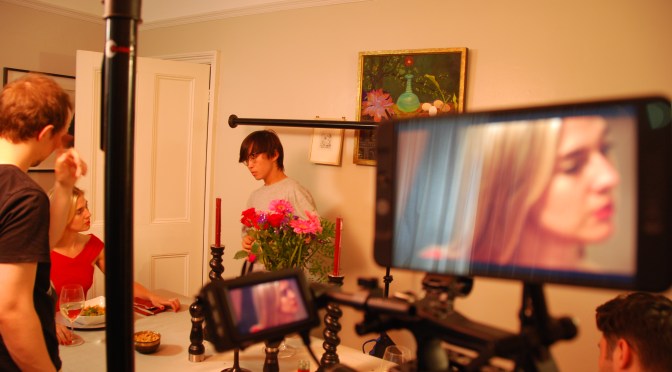
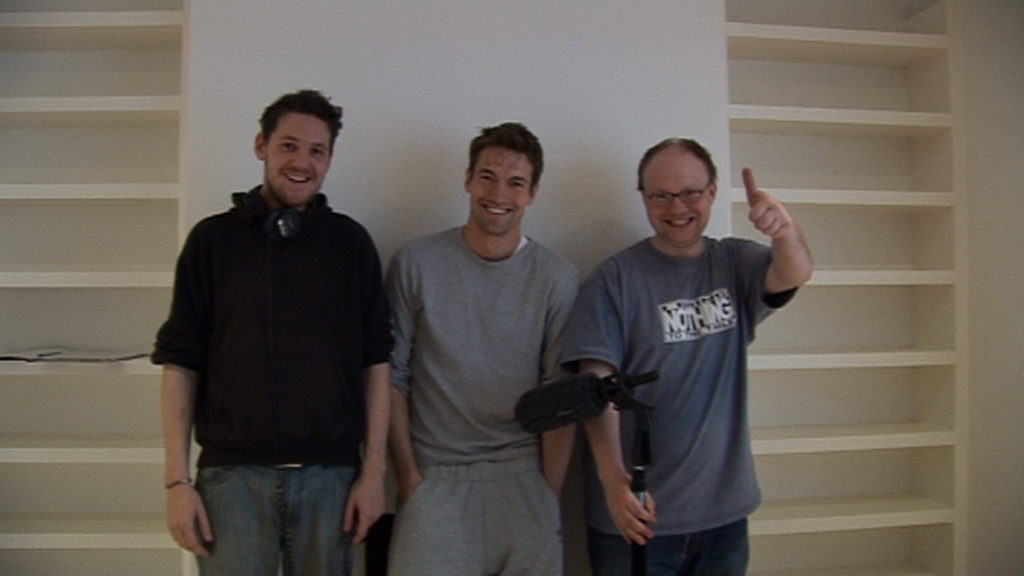
I’ve been busy trying to avoid the booze in the fridge most days, although I did fail miserably on Saturday. But I was kind of celebrating fifteen years of low budget short filmmaking. If you didn’t know my production company is called Fix Films Ltd. Here is my latest showreel video. It’s basically a look back at all the films we have made. Also, it’s a tribute to all of the talented people we have worked with.
Fix Films are a filmmaking collective. Since 2005 they have been involved in the creation of many, many short films and promos. They self-produce, write, direct, edit and score their own films to a very high standard despite the low budgets. They are true independent filmmakers.
This showreel features images, clips and music from most of our major short films productions.
Fix Films Ltd are:
Paul Laight, Gary O’Brien and all the amazing people we have worked with.
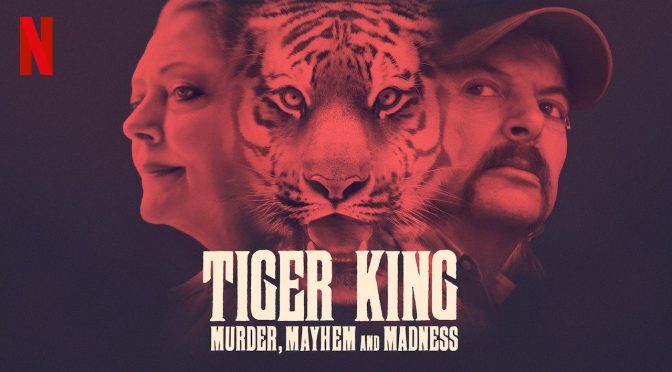
NETFLIX REVIEW – TIGER KING: MURDER, MAYHEM AND MADNESS (2020)
Directed by: Eric Goode and Rebecca Chaiklin
Executive Producers: Chris Smith, Fisher Stevens, Eric Goode, Rebecca Chaiklin
Cinematography: Damien Drake
Edited by: Doug Abel, Nicholas Biagetti, Dylan Hansen-Fliedner, Daniel Koehler, Geoffrey Richmond
Original Network: Netflix
***CONTAINS SPOILERS***
“Truth is stranger than fiction, but it is because Fiction is obliged to stick to possibilities; Truth isn’t.” Mark Twain
Personally, I love nothing more than to immerse myself in fictional worlds created by writers, showrunners and filmmakers, but sometimes it’s important to face the “truth” in storytelling. Thus, documentary filmmaking has always been a popular genre too. Having said that are documentaries actually reflecting the truth? Because the documentary genre over the years has become ultra-sophisticated and many “true” stories are not just simply filmed documents or events or interviews. Now, documentaries are often carefully constructed and mediated narratives with as much, if not more, drama and turns in their tales than fictional works. Conversely, some stories and characters are so incredible they are indeed stranger than fiction.
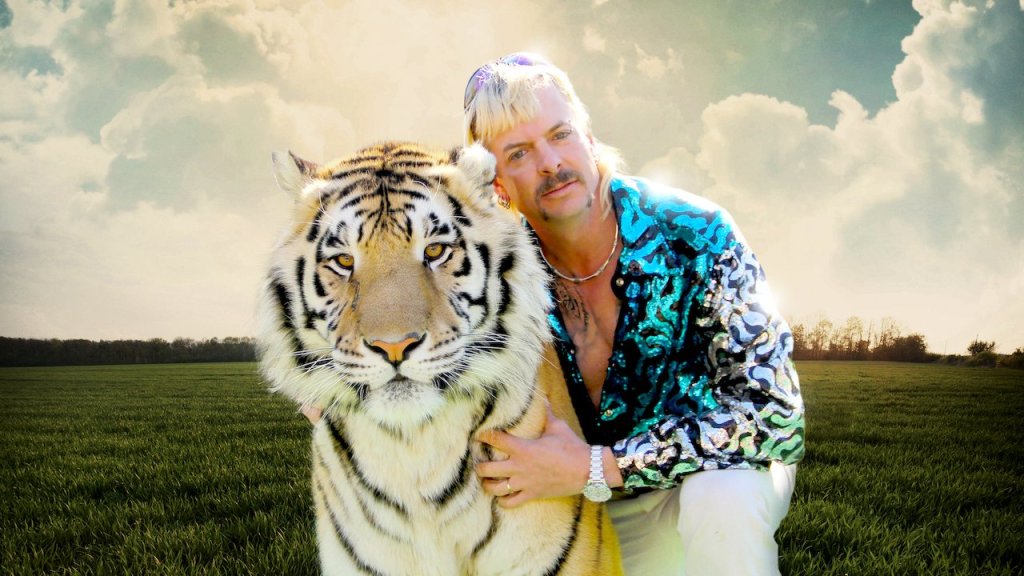
Netflix churns out a lot of quality and not-so high-quality content. There is an arguably scattergun approach with subscribers paying their money and taking their chances. They have of course had some big hits. The documentary Making a Murderer (2015), prestige Royalty drama, The Crown (2016 – ) and 1980’s sci-fi show Stranger Things (2016 – ) are three such shows that have become cultural phenomenon. The latest one is the docuseries Tiger King (2020); a true crime documentary centred around eccentric, to say the least, zookeeper, Joe Exotic (not his real name). Filmed in a “fly-on-the-wall” form it covers a six-year period from 2014 to 2020. The setting is a number of zoos and animal “sanctuaries” in Oklahoma, Florida and South Carolina respectively. These zoos contain some of the most dangerous animals in the world, namely humans. They also contain tigers, lions, leopards, panthers, chimpanzees, lemurs, snakes and all manner of other exotic animals. So, with larger than life people and animals on show, what could possibly go wrong?
This series presents the very worst examples of human madness, cruelty and behaviour. Firstly, I must say that there are some decent people in the show. Some of the zookeepers do display care for the animals and make it their living to protect them, however, the documentary illustrates powerfully the institutional cruelty of those individuals who breed and keep animals in cages for money. Even Carole Baskin, Joe’s bitter rival, who runs the Big Cat Rescue zoo in Tampa, Florida, and an advocate for saving these animals, did seem to make a lot of money out of it. I guess we’re all to blame in society though as we have all visited zoos and safari parks in our day. But this is not an advocate documentary for an organisation like PETA (People for Ethical Treatment of Animals), although they certainly were able to use the footage as evidence for their cause. This, ultimately, is a tabloid expose of a world containing some of the most narcissistic and insane people you could encounter. It’s car-crash-freak-show-television and I feel ashamed to say I was gripped by this zoological soap opera from start to finish.
The leading lunatic is aforementioned Joe Exotic. He is a gay, mullet-haired, gun-toting, self-promoting, country-and-western “singing”, rage-addicted polygamist. Even the greatest Hollywood screenwriter could not invent such a character. Over seven startling episodes the series charts his rise and fall from successful zookeeper to failed politician to eventually, well, I won’t give away the ending. The other characters of the series are just as dodgy. While she does seem to be doing some good, Carole Baskin, was presented as some weird ‘Mother Earth’ type who may or may not have killed her husband. Joe Exotic’s hatred of her drives the narrative and his words and actions toward her are pure malevolence. Other big cat owners such as, Bhagavan “Doc” Antle, and Joe’s former business partner, Jeff Lowe, feature prominently throughout. Doc Antle seemed the sanest of the lot and had provided animals for big Hollywood productions, however, even his lifestyle, according to the documentary, seemed to involve grooming younger women and examples of animal cruelty.
Overall, this short review merely skims the surface of what goes on in this explosive TV show. There are big cat attacks, lawsuits, deaths, murder plots, suspected suicides, drug abuse, arson, constant threats, political campaigns, federal investigations and court indictments. It is both an intense viewing spectacle and also a tragic one. The animals kept in cages are so beautiful and majestic, it is sad that their lives are one of incarceration. The crazy thing is that they were bred in captivity for profit by the likes of Joe Exotic and then sadly discarded when of no use. Tiger King (2020) presents a truth that people do not deserve this Earth and I’m ashamed to be part of the human race. On the other hand, this string of crazy characters and events make absolutely sensational television. The biggest tragedy is the animals will continue to be prisoners, while attention-seeking people profit from such cruelty.
CLASSIC HORROR FILM REVIEWS – BLACK SUNDAY (1960) & BLACK SABBATH (1963)
What better way to distance oneself from the horror of real life than by watching some classic horror films? Not that my life is that bad as I am alive and healthy and doing very well in the lockdown circumstances. Thankfully I am not having to deal with the sick people like those in the NHS and medical facilities across the world. Kudos to those individuals trying to save lives and cure the sick. Who could have predicted that these events could unfold? It’s like society has been cursed.
Talking of curses, the horror genre is one of my favourites. Although, to be honest, I do love most genres of film. Indeed, while I’m not a massive fan of romance or musicals, if the film itself is well made, then I will watch and most likely enjoy it. However, if I want to be sure to favour a film, then horror will be one of my go to genres. One such legendary filmmaker of horror movies was Italian director, Mario Bava. I’m ashamed to admit I had not seen many of his releases, if any. Shocking really as he was known by many as the ‘Master of Italian horror’. Thus, I corrected that by recently watching both Black Sunday/Mask of Satan (1960) and Black Sabbath (1963). Here are two short reviews of these atmospheric horror classics.
Black Sunday (1960)
BLACK SUNDAY (1960)
Director: Mario Bava
Cast: Barbara Steele, John Richardson, Andrea Checchi, Ivo Garrani
Given Mario Bava was a talented cinematographer who worked on many Italian film productions it’s no surprise thatBlack Sunday (1960) looks incredible. The transfer I watched on Blu-ray was pristine with the black and white photography really shimmering on the screen. The lighting is all shards and jagged amidst the foreboding darkness and shadows. The story itself is a creepy gothic tale of curses, witchcraft and revenge. It starts with a grim opening scene as Asa, a witch (Barbara Steele), and her lover being punished by her brother for sorcery. This involves placing a spiked mask on their faces and burying them alive. She damns them to hell with the promise she will return one day to wreak retribution. Guess what happens centuries later? While it runs out of story toward the end the opening hour is full of scary imagery and chilling moments. While it may seem mild by today’s standards, Black Sunday (1960), was in fact heavily censored on release and was even banned in the United Kingdom until 1968. While today’s horror films rely much on cheap jump scares, this one is a good old-fashioned creepfest, spreading a pervading aura of fear from start to finish.
Mark: 8 out of 11
BLACK SABBATH (1963)
Director: Mario Bava
Cast: Boris Karloff, Mark Damon, Michele Mercier, Susy Anderson, Jacqueline Pierreux etc.
The original title of this film was The Three Faces of Fear and this is a much more compelling title than the one we got. Don’t get me wrong BlackSabbath (1960) works, but given this is an anthology featuring three short horror films relating to fear, it seems like a marketing ploy echoing previous horror Black Sunday (1960). Anyway, the three stories are very different in setting and tone but all work well with Boris Karloff introducing them. The first is a pre-Giallo style contemporary murder story called The Telephone. Here a glamorous call-girl is stalked by an unknown person via constant telephone calls. It’s a slow burn build up of fear, as silence then sudden ringing raises the heartrate before the fine twist at the end. The second story is called The Wurdalak. A more traditional vampire story, it finds a handsome nobleman falling in love with a rural village girl, whose family are threatened by a bloodsucking Wurdalak. This was so creepy as we get severed heads and vampiric children in a story which reminded me of Stephen King’s Salem’s Lot. The final story, The Drop of Water is arguably the best. With more than a hint of The Tell-Tale Heart about it, the story finds a nurse stealing something from a dead woman, only for the vengeful ghost (or her guilty conscience) to take exception. Overall, this is a brilliant anthology horror film, which is still scary now and definitely stands the test of time.
Produced by: Todd Liebermann, David Hoberman, Tom Harper
Written by: Jack Thorne – based on the book Falling Upwards: How We Took To The Air by Richard Holmes
Cast: Felicity Jones, Eddie Redmayne, Himesh Patel, Tom Courtenay, Tim McInnerny, Anne Reid, Phoebe Fox, Robert Glenister etc.
Cinematography: George Steel
***CONTAINS MILD SPOILERS***
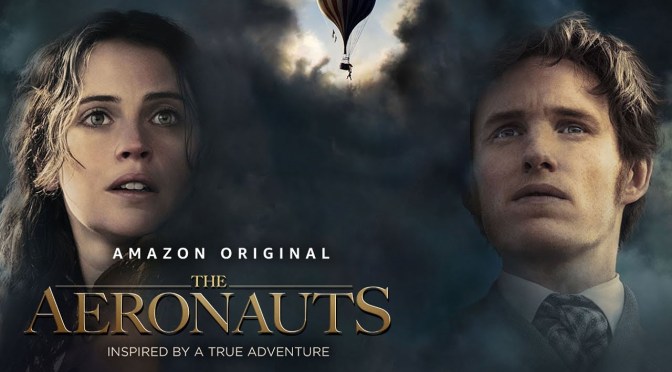
Obviously, with all the cinemas quite rightly shut, one now has to look about the streaming platforms for films missed when first released. While not a massive cinema release, The Aeronauts (2019) was a big budget Amazon original production, thus fits the bill perfectly. Based on true events set in London, circa 1860’s, this period adventure drama focusses on intrepid pilot, Amelia Wren (Felicity Jones) and budding meteorologist, James Glaisher (Eddie Redmayne), as they attempt to conquer the sky and elements in a hot air balloon. Their overall aim is to fly a balloon higher than it ever has, while Glaisher attempts to make scientific progress in regard to predicting the weather. It doesn’t sound that interesting when you put it like that, but how wrong was I?
Now, I am not a fan of adventurers or flying or heights. Therefore, The Aeronauts (2019), did not really interest me as a film narrative. However, I am glad I watched it, as it proved one’s prejudices against themes or subject matter can be short-sighted. Indeed, Jack Thorne’s intelligent script and Tom Harper’s cute direction really pull you into this high-flying and breath-taking drama. While the special effects are amazing, as you are given all manner of exciting and dangerous moments for the lead characters, the real power lies in the empathetic and heartening characterisations. Moreover, Felicity Jones and Eddie Redmayne give tremendously warm and energetic performances. Both their protagonists not only battle against the dangers in the balloon, but also against fierce patriarchal and scientific hierarchal rivals on the land. Lastly, in Amelia Wren’s case, she fights against deeply painful emotions relating to grief and sacrifice too.
Jack Thorne’s script frames events from the spectacular launch of the giant balloon, and the air journey itself provides the spine of the story. Throughout though, the film flashes back and forth between the voyage and Amelia and James’ past. At times I felt the flashbacks hindered the momentum of the adventure, but I recognised they were essential in order provide history and texture. Nonetheless, the amazing skyline vistas and horizons are impressively rendered by the special effects’ personnel. Also, the suspense is palpable as Amelia and James’s lives are threatened constantly by the unpredictable weather conditions. Jones and Redmayne’s on-screen chemistry is especially good as they initially argue, before finding common ground and mutual respect. Jones herself gives a very magnetic performance full of vulnerability and strength. While Amelia Wren is a fictional character compared with James Glaisher, she remains a powerful one. Ultimately, The Aeronauts (2019), is a classic adventure story with a grounding in scientific discovery, but above all else, contains exciting spectacle and a very moving emotional core.
REVIEWS OF THE BOYS (2019), THE EXPANSE (2016) & PREACHER (2016)
So, we are now a few weeks into the lockdown scenario caused by the COVID-19 virus and I have been off work for around that amount of time too. Tragically people are dying, and we owe it to be responsible by continuing to follow the rules laid down that will prevent the spread of the infection. It’s tough for everyone including families, employees and businesses. The capitalist system has taken a massive hit, and some will not survive in terms of life and work. I am not a religious person, but I pray to everyone’s God, whoever that may be, society comes through this. We are digging tunnels, looking for light and an escape. It cannot come soon enough.
In terms of escape it has never been easier to find both the time and formats with which to fill the gap. Thankfully the internet is still up and running, thus I have been filling my time in — aside from some minor administrative work-from-home stuff — writing my film reviews, editing and posting short videos, exercising and watching quite a lot of television and film content. Anything to stop me from becoming a beer monster or functioning alcoholic – AGAIN! The latest focussed viewing has been of Amazon Prime, and the many boxsets they have. So, here are mini reviews of three shows I have seen recently. All with the usual marks out of eleven.
***MAY CONTAIN SPOILERS***
THE BOYS (2019) – SEASON 1 – PRIME VIDEO
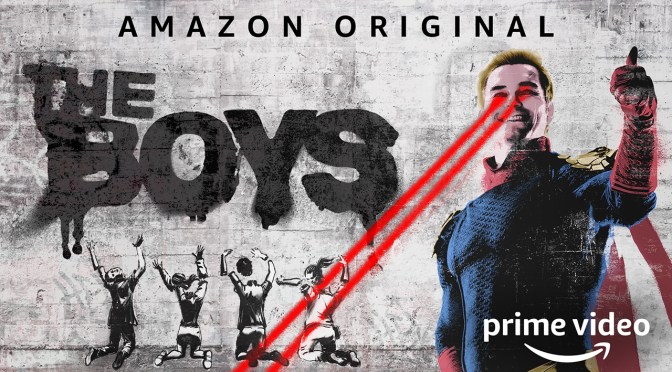
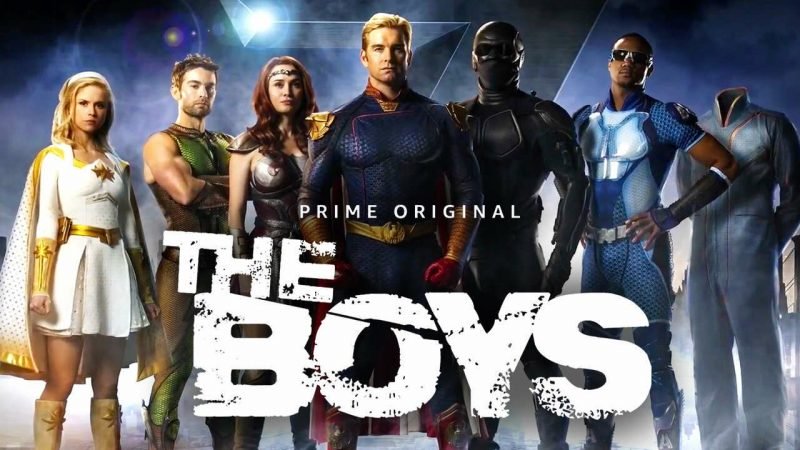
Based on the comic book series created by Garth Ennis and Darick Robertson, this violent superhero comedy is the complete antithesis of the Marvel Universe. Taking savage satirical swipes at huge corporations and United States foreign policy, it features a group of vigilantes, led by Billy Butcher (Karl Urban) called ‘The Boys.’ For a variety of reasons, including good old-fashioned revenge, they have targeted the most powerful business in the world, Vought International. Vought control and monetize ‘The Seven’, a group of all-powerful superheroes who happen to mostly be narcissistic, unstable and psychotic arseholes.
The initial episodes started slowly for me and I found it difficult to warm to any of the characters. This could simply be superhero fatigue or certain weaknesses in the writing throughout. However, the spikes of tremendous action, vicious humour and spectacular violence kept me on board. Elisabeth Shue and Antony Starr impress as the nefarious villains, while Erin Moriarty shone as the one decent superhero, Starlight. The least said about the shockingly bad English accent Karl Urban delivers the better. I mean his acting is impressive, but mate – come on!!
Mark: 8.5 out of 11
THE EXPANSE (2015) – SEASON 1 – SYFY/AMAZON PRIME
Usually when I see something is on the Syfy channel I baulk slightly. I mean the shows are pretty decent as a rule, but some right old fantasy schlock can get dumped there. So, with a saturated streaming market offering a plethora of U.S. cable shows, sometimes the Syfy channel shows get short shrift. It’s a shame because The Expanse is a really good science-fiction programme which began airing on Syfy, but is now on Amazon Prime. The sci-fi show hangs tonally betweenAlien (1979), Blade Runner (1982) and the Philip K. Dick-style “Mars v Terra” stories I have read. Indeed, while it doesn’t contain actual aliens or Dick’s surreal explorations of the psyche, it is, in fact, a fantastically plotted and styled industrial, political and humanistic set of narratives.
Based on James S. A. Corey’s (a pseudonym I believe for two writers), The Expanse(Season 1), is set hundreds of years into the Earth’s future and space has been colonized. But it’s not a utopia. Mars, Earth and an outer-planetary system of space stations called ‘The Belt’ are all conflicted on the brink of civil or galactic war. The multiple narratives follow the likes of the always-excellent, Thomas Jane, as a grizzled cop investigating a missing person and a space freighter gang led by Stephen Strait. The latter’s crew go from episode to episode finding life-threatening situations throughout. It’s a space-rock solid production full of twists, action and conspiracies; retaining a cynical, noir and unglamorous edge which makes me want to watch further seasons.
Mark: 8.5 out of 11
PREACHER (2016) – SEASON 1 – AMC/AMAZON PRIME
Developed by Hollywood players Seth Rogen and Evan Goldberg, along with Breaking Bad writer, Sam Catlin, this darkly comedic post-modern vision of heaven and hell is based on a comic book by Garth Ennis (that man again) and Steve Dillon. Starring the very reliable Dominic Cooper as hard drinking and former career criminal-turned Preacher, Jesse Custer, we find him losing faith in a small Texan town and a dwindling set of hopeless parishioners. That is until one day he is struck by some twisted divine interpretation. Then, literally, all hell breaks loose as Custer battles his inner demons and the local slaughterhouse baron portrayed with callous joy by Jackie Earle Haley.
Like The Boys, I initially found Preacher a little bit slow in terms of setting up the story and characters. But I think that was deliberate as there are so many crazy concepts relating to religion and the afterlife in here, a balance had to be given to combining the fantastic and more realistic elements. I’m not sure they’re wholly successful, however, Cooper is great, and he is ably supported by the effervescent Ruth Negga as his tough-talking ex-girlfriend, Tulip. Moreover, English actor Joseph Gilgun steals the show as the Irish sidekick with a dark secret. While the narrative moves steadily, with arguably too many secondary characters, the bloody gore levels during the fight scenes are absolutely spectacular. If, like me, you enjoy irreverent bible-black comedy which offends most religions and contains lashings of ultra-violence, then Preacher is definitely one to pray to the lords of television for.
Writers: Nick Antosca & Michelle Dean, Dan Dietz, Robin Veitch, Lisa Long, Heather Marion
Directors: Laure DeClermont-Tonnerre, Adam Arkin, Christina Choe, Steven Piet, Hannah Fidell, etc.
Cast: Joey King, Patricia Arquette, Chloe Sevigny, AnnaSophia Robb, Calum Worthy, Dean Norris, Denitra Isler, Margo Martindale etc.
Original Network: Hulu (US) – Starz/Amazon (UK)
*** CONTAINS SPOILERS ***
The capacity for human beings to lie and fake and forge simply knows no bounds. Clearly lying is bad, as it disintegrates trust in families, relationships and society in general. We should all strive for truth. But before one judges and jumps to conclusions there can be mitigating circumstances for lies. It could be a good lie. A lie that protects someone from the horrors of reality or a bad situation. It could be a falsehood which is worth denying in order to circumnavigate a tricky moment. This last example is a subjective decision though. But what if you’re not in your right mind? What if you have a mental illness? Does this forgive the darkest lies you tell or present? No, but it does explain why you’ve told such untruths.
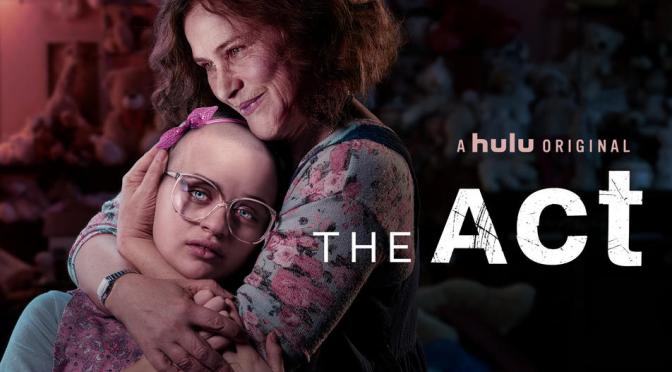
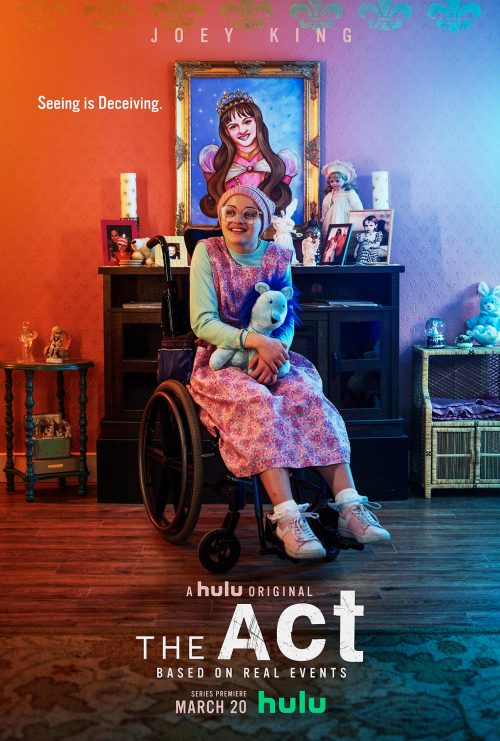
Hulu’s exceptional true-life drama, The Act (2019), centres on a character who is both a liar and mentally disturbed. You would not know from the outside but Dee Dee Blanchard (Patricia Arquette) was a very troubled person. A seemingly loving single mother to a teenage daughter, Gypsy Blanchard (Joey King), Dee Dee unfortunately has to cope with Gypsy’s myriad of medical issues which leave her in a wheelchair and unable to feed herself. But Gypsy is actually incredibly healthy. Her mother has in fact been drugging and faking and benefiting financially from harming her daughter for years. Clingy, controlling and manipulative of her daughter’s every movement, routine and personal interactions, Dee Dee never wants her daughter to grow up. She wants a permanently powerless child and vicariously feeds off all the sympathy this brings. Yet Gypsy is growing up and she wants to do her own thing. Her body is changing and so are her desires. Something had to give.
Over eight brilliantly written and directed episodes, The Act (2019), unfolds as a powerful human tragedy. The story begins in 2015 with a serious crime; someone has been hurt. It then flashes back to when Dee Dee and Gypsy moved from hurricane hit New Orleans to Springfield, Missouri in 2008. Moving consummately back and forth in time the structure builds the drama very well. I genuinely couldn’t believe that someone would do that to their own child. Then, just when you think the story cannot twist any further the events take an even stranger and darker fall. Unsurprisingly, Patricia Arquette won an Emmy for her performance as the tragic faker, Dee Dee. Arquette inhabits the skin of this unhinged mother chillingly. But she’s not a scary monster, more one that subtly gets right under the skin. Joey King as Gypsy is equally brilliant as the co-dependent daughter, ultimately driven to extreme and shocking behaviour by her mother’s lies and twisted vision of love.
CLASSIC MOVIE SCENES #13 – BLADERUNNER (1982) – “TEARS IN THE RAIN.”
Directed by: Ridley Scott
Produced by: Michael Deeley
Screenplay by: Hampton Fancher and David Webb Peoples – based on the novel, Do Androids Dream of Electric Sheep by Philip K. Dick
Cast: Harrison Ford, Rutger Hauer, Sean Young, Daryl Hannah, James Edward Olmos etc.
Cinematography: Jordan Cronenworth
Music: Vangelis
*** CONTAINS MASSIVE SPOILERS ***
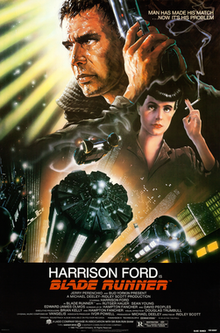
Philip K. Dick’s dense, dystopic and futuristic novel, Do Androids Dream of Electric Sheep (1968), is an ugly, beautiful, depressing, obtuse, hypnotic skip-through-treacle read full of incredible concepts relating to: Artificial Intelligence; robot technology; android simulacra; animal husbandry; apocalyptic disease; virtual reality/empathy mood tech; extinguished humanity; and ultimately, of course, mortality and death. The fact that Hampton Fancher and David Webb Peoples were able to fashion a workable screenplay for Ridley Scott to direct is a creative miracle. Moreover, it is testament to the writing and Scott’s incredible production team that, Bladerunner (1982), is held in such high esteem among cinema fans now.
The original Bladerunner, despite bombing at the box office and subsequently going through a number of cuts, re-cuts, final cuts and re-re-re-releases, has become a bona fide science fiction cinema classic. I watched the original theatrical version recently and despite the deadpan Harrison Ford voiceover and spurious, tacked on “happy” ending, it actually has a lot going for it. Obviously the ‘Unicorn Dream’ re-edits released under the guidance of Ridley Scott are the purer versions but the film holds up notably because of Ford’s gruff, depressive and world-weary performance as Rick Deckard; the imperious psychopathy of Rutger Hauer as android assassin Roy Batty; Scott’s glorious tech noir rendition of our desecrated future; as well as the evocation of Philip K Dick’s thematic existential power.
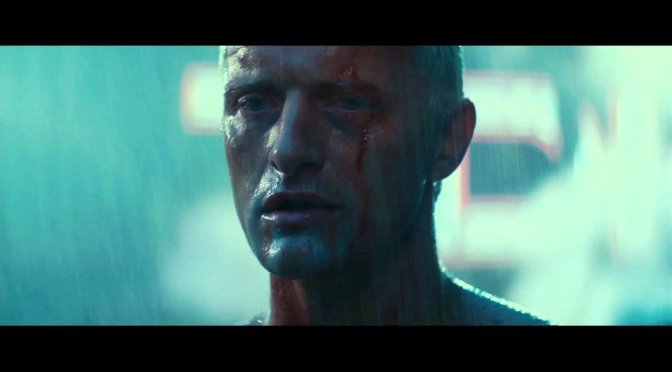
Such existential power is demonstrated in one of the final scenes where Batty has pushed Deckard to the edge of a building and death. The rain falls and the majestic soundtrack swells. A stripped down Batty, rather than let Deckard die, saves his life. It’s an ambiguous decision, but one of redemption for a replicant that is more used to delivering death. Perhaps, it proves that Batty does indeed have human qualities and Deckard will take up the cause. Delivering one final heartfound speech, Batty regales and laments the beautiful things he has seen. But they are gone – just like tears in the rain. It is a moving epitaph and amazing end to an incredible science-fiction classic. Batty closes down for good, but his demise and Hauer’s incredible performance will live long in the memory.
FILMS THAT GOT AWAY #8 – DRAGGED ACROSS CONCRETE (2018)
Written and directed by: S. Craig Zahler
Produced by: Sefton Fincham, Jack Heller, Tyler Jackson, Keith Kjarval, Dallas Sonnier
Cast: Vince Vaughn, Mel Gibson, Tory Kittles, Michael Jai White, Jennifer Carpenter, Laurie Holden, Don Johnson, Thomas Kretschmann etc.
Cinematography: Benji Bakshi
*** MAY CONTAIN SPOILERS ***
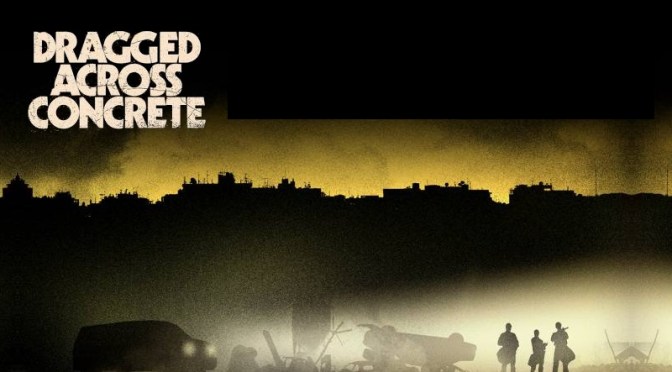
As a major fan of S. Craig Zahler’s first two film releases, namely Bone Tomahawk (2015) and Brawl in Cell Block 99 (2017), I was really looking forward to another example of pulpy, slow burn and hard-bitten genre filmmaking with Dragged Across Concrete (2018). Thus, I was very upset when I found out the Mel Gibson and Vince Vaughn starring cop drama was not released in UK cinemas. I finally caught up with it on Amazon Prime and, while it was probably too long, it was a hypnotically powerful crime thriller.
Set in the city of Bulwark, the film opens with a lengthy preamble which introduces disparate characters whose paths are destined to cross later in the film. These include recent parolee, Henry Johns (Tory Kittles), grizzled-long-in-the-tooth-cop, Brett Ridgeman (Mel Gibson) and his younger, but equally cynical partner, Anthony Lusaretti (Vince Vaughn). Later, Zahler throws professional criminal, Lorentz Vogelmann (Thomas Kretschmann), and his dressed-in-black crew into the dark city soup. After a glacial set-up, the plot kicks in when Ridgeman and Lusaretti are suspended for what is perceived as a racially motivated attack on a suspect. Desiring a way out of the neo-noir and industrial decay, Ridgeman sets up a plan to steal from Vogelmann’s gang. Safe to say that given this is a Zahler film, we do not end up with a soft toy and candy apple ending.
Throwing a succession of anti-heroes at the audience and a litany of cursing and politically incorrect language makes Dragged Across Concrete (2018) a morally questionable film to experience. Do not watch if you are easily offended. Nonetheless, my feeling is Zahler, like Tarantino, is reflecting the world as it is rather than how it should be. Humanity is in the gutter and the only way out of it, in his mind, is to swear and fight and steal and kill. That isn’t to say that the characters are not empathetic. As Zahler’s hard-boiled dialogue is very poetic in places it draws you to them in a way Raymond Chandler used to do. Similarly, the performances from Gibson and Vaughn are brilliant. The scenes where they just sit in the car and eat sandwiches while staking out their quarry, are both hilarious and absorbing. Ultimately, it’s the lengthy second half robbery and final act ultra-violence which makes the film a pulsating and brutally rewarding experience.
MEMORABLE FILM CHARACTERS – SARAH CONNOR – VIDEO ARTICLE
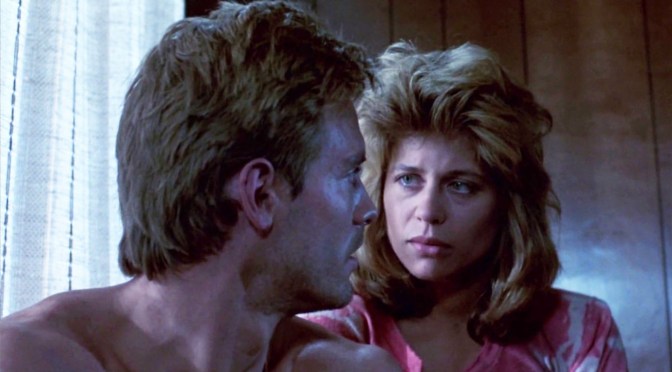
I have already written a text article regarding this subject and that can be read here. However, I am trying to promote my YouTube site too, and thus have been busy creating short online video content which may interest some cineastes. So here is a tribute to one of the most memorable film characters of all time – SARAH CONNOR.
CREDITS
This video article is a fun and educational piece highlighting our one of our favourite film characters – SARAH CONNOR.
Written by: Paul Laight
Narrated by: Melissa Zajk
Music: Sci Fi – Bensound | Royalty Free Music – No Copyright Music | Bensound Music
The copyright of the images and trailers are those of the film studios. I do not own any of the images or films.
Film/Trailer clips credits:
1) The Terminator (1984) – Orion Pictures 2) Terminator 2: Judgement Day (1991) – TriStar Pictures 3) Terminator: Dark Fate (2019) – Paramount Pictures / 20th Century Fox
UNDER-RATED CLASSICS #6 – SEANCE ON A WET AFTERNOON (1964)
Directed by: Bryan Forbes
Produced by: Richard Attenborough, Bryan Forbes
Written by: Bryan Forbes (based on the novel by Mark McShane)
Cast: Kim Stanley, Richard Attenborough, Nanette Newman, Mark Eden,Judith Donner, Gerald Sim, Patrick Magee
Music by: John Barry
***MAY CONTAIN SPOILERS***
I started this series a while ago and posted a few times on the subject with multiple entries; however, I have now decided to make it a feature, like ‘Classic Movie Scenes’, concentrating on singular films. My rules are simple. An under-rated classic can be a film I love, plus satisfy the following criteria:
Must not have won an Oscar.
Must not have won a BAFTA.
Must not appear in the AFI Top 100 list.
Must not appear in the IMDB Top 250 list.
Must not appear in the BFI 100 Great British films.
Must not appear in the all-time highest grossing movies of list.
The latest film I have chosen did receive some critical acclaim when released, but it has since slid into mild obscurity. I only caught it on the cable channel Talking Pictures by chance. This channel, if you didn’t know, is like a British equivalent of TCM. However, it does have less well-known films and TV shows when compared to the American cable channel. Occasionally though, Talking Pictures will have a total gem and that is the case with Seance on a Wet Afternoon (1964).
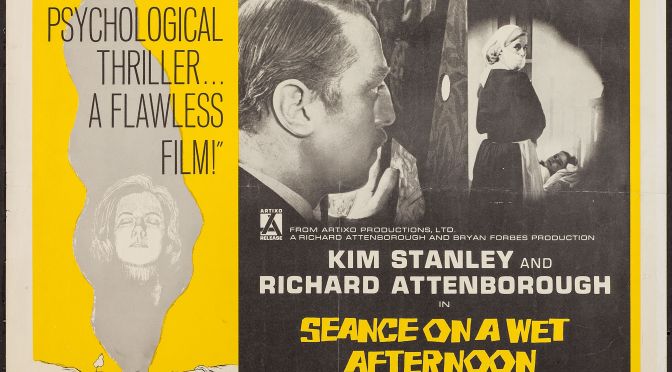
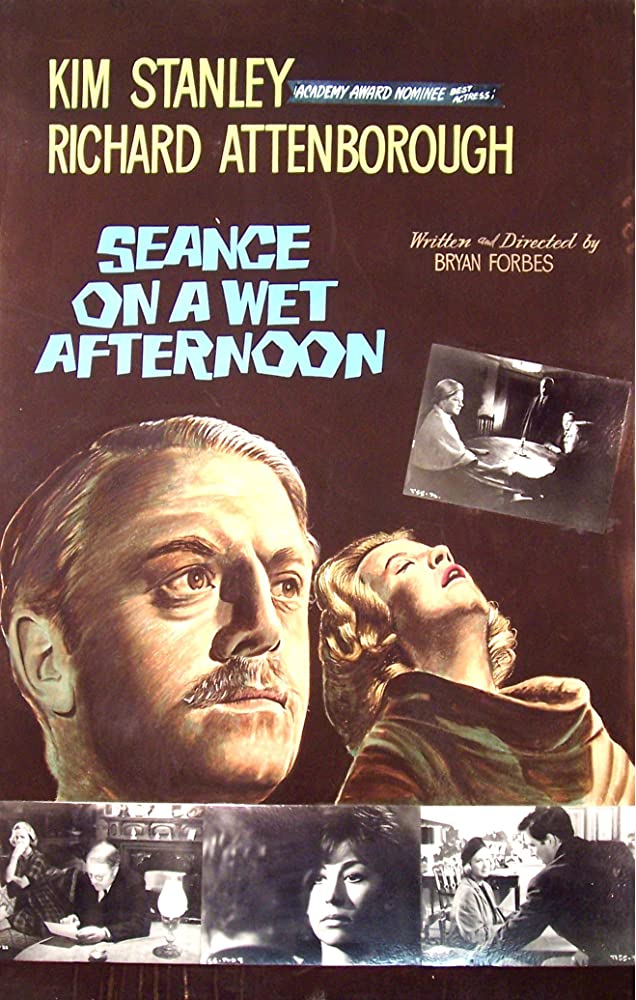
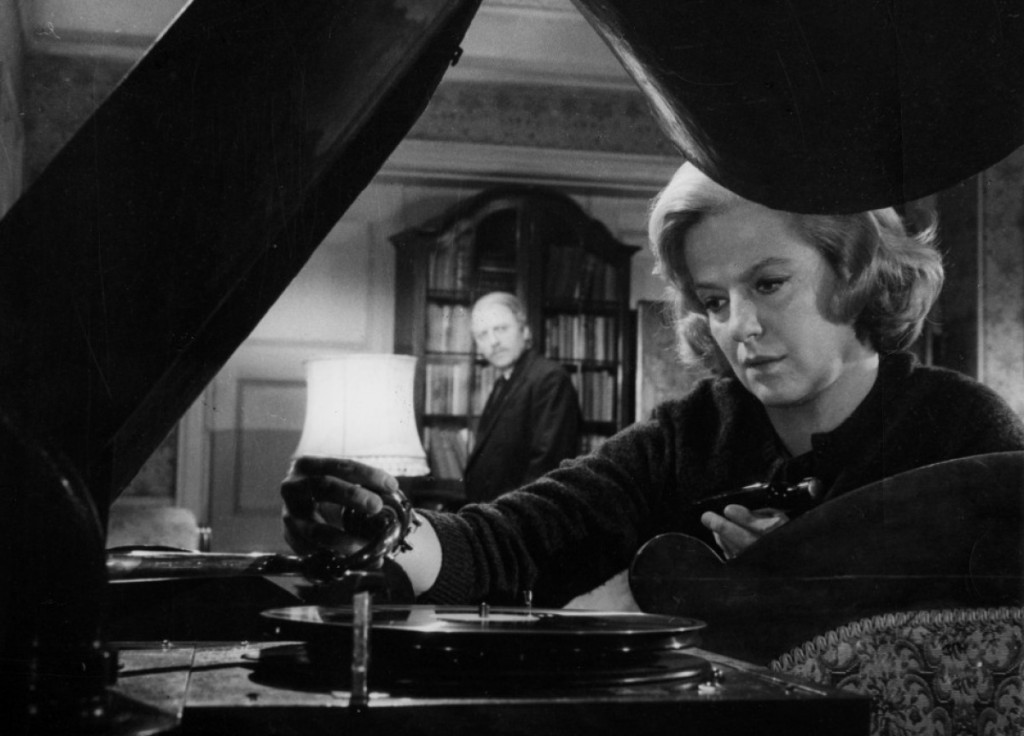
Adapted and directed by experienced British writer and director, Bryan Forbes, Seance on a Wet Afternoon (1964), casts Kim Stanley and Richard Attenborough as a married couple called the Savages. Stanley portrays Myra Savage. She is a psychic medium who hosts seances for small groups of people, while her more timid husband, Billy (Richard Attenborough), assists. They seem to have a comfortable life and live in a nice house; however, their history is blighted by the tragedy of losing a child. This leaves Myra’s personality, while dominant over Billy, somewhat neurotic and nervy. Determined to elevate her career as a psychic, she plots the kidnapping of a millionaire businessman’s young daughter. With Billy reluctantly agreeing to carry out the physical part of the crime, Myra intends to then use her psychic “skills” to help the police and family locate the missing girl. This and the ransom money will secure their financial future.
While we are all familiar with hostage plots, Seance on a Wet Afternoon (1964), is more complex than a basic crime thriller. It explores themes relating to psychic ability, grief and mental illness. Rather creepily, Myra often uses the spirit of her dead son, Arthur, as a guide to her decisions. Moreover, it also contains a series of suspenseful scenes relating to the kidnapping of the girl and the handing over the ransom money. While these are staple tropes of the kidnap genre the film does break with convention. Indeed, while revealing the kidnappers from the very start, the narrative also concentrates many scenes on the gradual breakdown of their fraught marriage. The Savages are not your everyday career criminals and their risky plan is testament to that.
Overall, Seance on a Wet Afternoon (1964) is a brilliant film which should be held in much higher regard. It contains one of the greatest acting performances I have witnessed in a while. Kim Stanley as the psychic, Myra Savage, is a haunted individual full, not only of hidden grief, but also a controlling sociopathy. One feels equally appalled by her and sympathetic at the same time. Richard Attenborough gives a quieter and unselfish performance as husband Billy, his character attempting to keep his tragic wife from going over the edge. The Savages may be kidnappers, but the skill in the writing, while not condoning their actions, makes you understand their skewed motives. In the end, Kim Stanley would be deservedly nominated for an Oscar, but lose to Julie Andrews as Mary Poppins. As we are aware, there is no justice in the world, and it doesn’t take a psychic to know which film and performance is the more memorable.