Based on: Sir Gawain and the Green Knight by Anonymous
Produced by: Toby Halbrooks, James M. Johnston, David Lowery, Tim Headington, Theresa Steele Page
Cast: Dev Patel, Alicia Vikander, Joel Edgerton, Sarita Choudhury, Sean Harris, Ralph Ineson, etc.
Cinematography: Andrew Droz Palermo
*** MAY CONTAIN SPOILERS ***
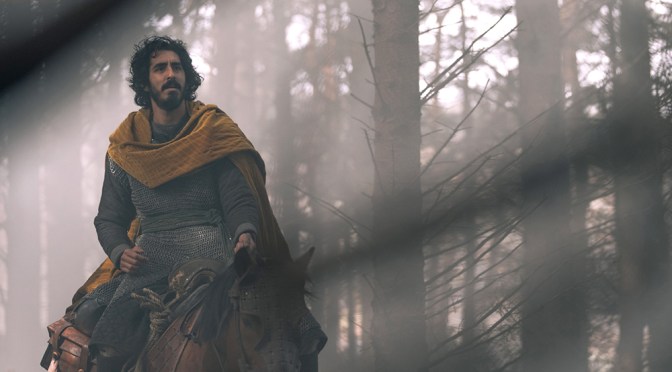
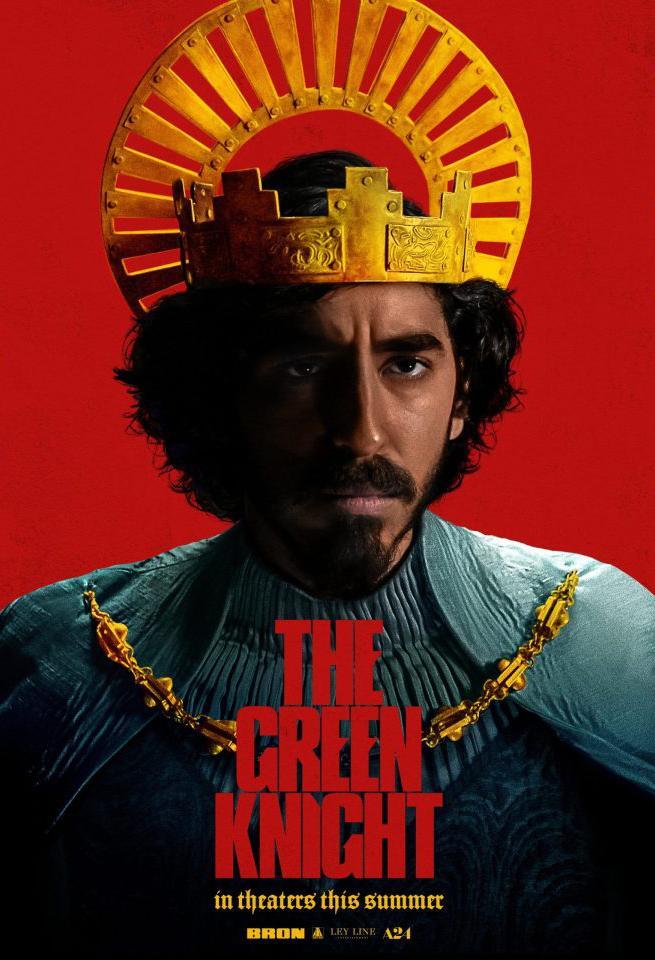
The quest to see The Green Knight (2021) has seemingly taken longer than Gawain’s mythical journey to meet his ultimate fate. Was it worth the wade through COVID determined lockdowns and distribution delays to the cinema to finally watch it on Amazon? Yes and no I would say as the filmmaking on show is of a visually magical standard. Yet, somewhere in the character’s bones is an emotional brittleness. I will expand.
Written and directed by the formidable filmmaker David Lowery, The Green Knight (2021), is based on the rites-of-passage trials of Gawain (Dev Patel), a young subject within the court of King Arthur’s (Sean Harris) Camelot. Happy getting drunk and flirting with apparently loose women, one of which is Essel (Alicia Vikander), he is then faced with a challenge from the Green Knight (Ralph Ineson). Meeting the gamble from this stunningly created craggy work of metaphor head on sets in motion a fight for his life on the road to symbolic discovery. Throw in some exquisite montages of ominous religious and magical subtext and Gawain must face his fears, fate and foes on a dangerous quest.
Once Gawain hits the dirt tracks, bloody battlefields and ghostly houses of this cursed land the The Green Knight (2021) really finds narrative impetus. Gawain’s confrontation with the Green Knight at Arthur’s court is certainly thrilling, but Lowery spends too much time creating poetic juxtaposition and magical image systems, which while beautiful, really slow the pace of the story. King Arthur’s kingdom and Sean Harris’ performance is somewhat downbeat and drab as less time is spent establishing Gawain’s characterisation.
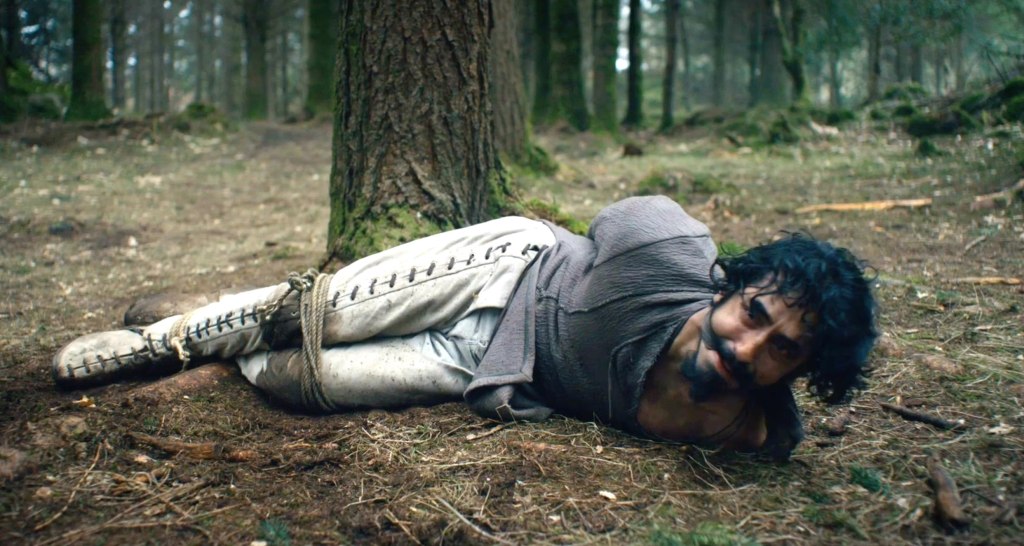
Dev Patel is phenomenal in the role. He brings both strength and vulnerability. But what was Gawain? Was he a fool to be taught a lesson? Was he a determined individual desiring to prove himself? Was he out for revenge? Was he doing it for love? Who is he saving? What did he want? I was never sure. Thus, The Green Knight (2021) was in danger of collapsing under its own stunning visual pretension. That is until Barry Keoghan’s effervescent thief came along and raised the stakes and energy of the story. After that Gawain’s drive was one of survival as Lowery’s screenplay gave him a succession of devilish, deadly and seductive obstacles to overcome.
David Lowery is an original thinking talent, and someone I categorise as an alternative genre filmmaker. Like Quentin Tarantino, the Coens, Bong Joon-Ho and dare I say it, Stanley Kubrick, he takes familiar content and filters it through his own inimitable style and vision. His masterpiece thus far is the truly remarkable romance, A Ghost Story (2017), a low-budget indie gem. The bigger-budgeted The Green Knight (2021) certainly has scale and magic and astounding cinematic power. But such adventure stories, for my taste and preference, need a hero with a clearer goal. Lowery gives the audience sorcery and existentialism and some nightmarishly beautiful sequences, while overall lacking clarity for Gawain’s personation. I imagine this is actually deliberate to counter genre expectations and make the viewer raise their game and apply meaning. I felt the same about Kubrick’s fatalistic, Barry Lyndon (1975), when I first saw that. Indeed, I have no doubt that on future watches The Green Knight (2021) is likely to be similarly revered as cinematic gold.
Who doesn’t like a great movie death? Well, people who abhor violence and gore on the screen. But I am not one of those people. Thus, if done right in terms of combining emotional context and cinematic imagination, there’s nothing I like more than revelling or lamenting a character’s end in fine bloody fashion. Lastly, I hear you ask why no Zahler, Scorsese, Cronenberg, Miike, Peckinpah, Jackson, Fulci, Roth, Romero, Argento etc. on this list? So much death and only six make it, so please suggest any of the thousands I have missed off in the comments.
*** CONTAINS SPOILERS ***
ALIEN (1979) – “Do these eggs taste off?”
I think it may have been something Kane (John Hurt) ate or maybe something that ate him? Anyway, one of the most spectacularly surprising scenes ever still holds amazing power to this very day.
THE FURY (1978) – Separated at death!
This under-rated tele-kinetic thriller is a spiritual sequel to Carrie (1976). Adding a spy conspiracy plot to Amy Irving’s rites of passage character arc, it has a whip-cracking-pace and classic DePalma set-pieces. None more so than the explosive end of the baddie-in-black.
PSYCHO (1960) – Take a bath next time!
What more can be written about one of the most shockingly original scenes in cinema history? Not only did Hitchcock break all narrative rules killing off the main protagonist halfway through, he did it with one of the most ingenious uses of montage, music and murder ever.
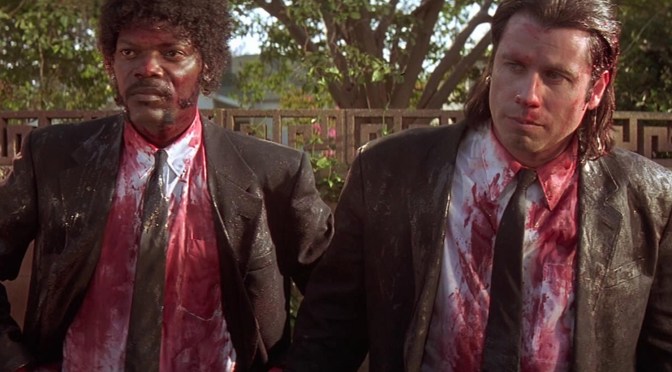
PULP FICTION (1994) – The original “face-off!”
Marvin never saw it coming. But let’s face it – none of us did!
ROBOCOP (1987) – Toxic Wasted!
Whoever designed this action scene, no doubt Paul Verhoeven had much to say, delivered one of the most excessive demises in 1980’s cinema. The vehicle crash, the toxic waste, the melting bad guy, the steam coming off his body and the final disintegration are just cinematic perfection.
WILD AT HEART (1990) – Bobby Peru loses his mind!
David Lynch’s vibrant adaptation of Barry Gifford’s romantic thriller contains many colourful characters. Willem Dafoe’s Bobby Peru is a particularly nasty piece of work and he gets his comeuppance in an incredibly visceral and disturbing way!
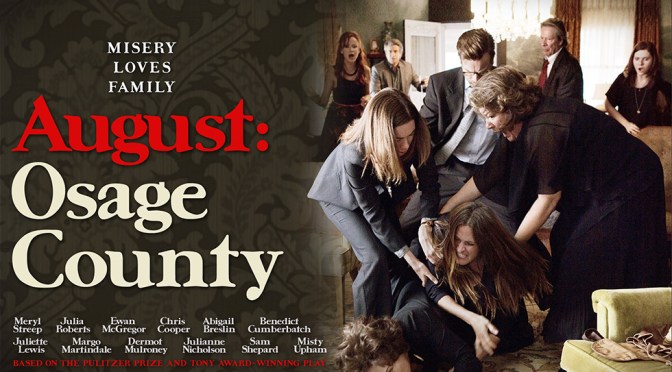
GREAT ENSEMBLE FILM CASTS #6 – AUGUST: OSAGE COUNTY (2013)
Directed by: John Wells
Screenplay by: Tracy Letts
Based on: August: Osage County by Tracy Letts
Produced by: George Clooney, Grant Heslov, Jean Doumanian, Steve Traxler
Cast: Meryl Streep, Julia Roberts, Ewan McGregor, Chris Cooper, Abigail Breslin, Benedict Cumberbatch, Juliette Lewis, Margo Martindale, Dermot Mulroney, Julianne Nicholson, Sam Shepard, Misty Upham, etc.
Cinematography: Adriano Goldman
*** MAY CONTAIN SPOILERS ***
Unsurprisingly, the play, August: Osage County, from the typewriter of Tracey Letts – the formidable playwright behind Killer Joe and Bug – about a family suffering loss of a “loved” one was not going to be a feelgood and uplifting affair. Instead, over the period of a month we are introduced to a whole host of characters with a variety of anger, addiction and attitude issues. Brought together by apparent grief, when patriarch, Beverley Weston (Sam Shepard) drowns, the extended Weston family fight and vent spleen at each over current and past dramas, with many a secret soon to be revealed.
Winning the Pulitzer Prize for Drama in 2008, Letts play was subsequently adapted into the dark, feel-bad and tragi-comedy film in 2013. Directed by John Wells, August: Osage County (2013), brought together an unbelievable ensemble cast of actors who did spectacular work with Letts acerbic and razor-sharp dialogue. Given that many of the personalities in the narrative are dominant matriarchal characters, the casting of Meryl Streep and Margo Martindale in the roles of Violet Weston and Mattie Fae respectively, is certain to create sparks on the screen. So, it proves.
Streep has delivered so many memorable characterisations over the years, but as Violet Weston I’m not sure she’s been so bilious and cancerous, both literally and symbolically. Her daughters, portrayed by Julia Roberts, Juliette Lewis and Julianne Nicholson, all have their own issues to deal with, but with such a vicious mother it’s a surprise they aren’t in a psychiatric ward. As harsh truths and bitter revelations unfold over the dinner and kitchen table conversations, Letts shows the complex nature of family existence; how it traps us with people we have nothing in common with. Women are seemingly in charge of the Weston family as the men, represented by Ewan McGregor, Benedict Cumberbatch, Sam Shephard and Chris Cooper, appear more passive and bullied.
Altogether, August: Osage County (2013), is a difficult to watch as there’s not a lot of love shown in the Weston household. Nonetheless, as an acting and writing tour-de-force there are few films that can best it. I guess we all have family problems and many ups and downs to deal with in life. What we can learn from this play and film is that this is definitely NOT the way to behave to people you’re meant to love and care for.
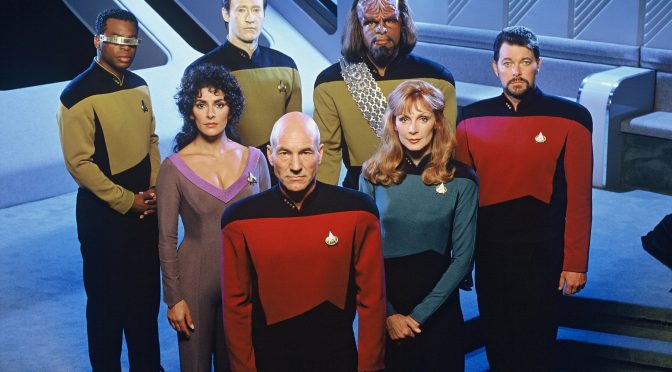
TO BOLDLY REVIEW #12 – STAR TREK: NEXT GENERATION – SEASON 7 (1993 – 1994)
Based on Star Trek & Created by: Gene Roddenberry
Season 7 writers (selected): Joe Menosky, Jeri Taylor, Ronald D. Moore, Brannon Braga, René Echevarria, Michael Piller, Naren Shankar, Jean Louise Matthias, James E. Brooks, Michael A. Medlock, Christopher Hatton, Nick Sagan, Spike Steingasser, Dan Koeppel, etc.
Season 7 directors (selected): Les Landau, Cliff Bole, Winrich Kolbe, Alexander Singer, Robert Weimer, Robert Scheerer, Adam Nimoy, Patrick Stewart, Jonathan Frakes, Gabrielle Beaumont, James L. Conway, LeVar Burton,Gates McFadden,etc.
Cast: Patrick Stewart, Jonathan Frakes, LeVar Burton, Whoopi Goldberg, Colm Meaney, Michael Dorn, Marina Sirtis, Brent Spiner, Gates McFadden, Michelle Forbes, Majel Barrett, Rosalind Chao, John De Lancie, Wil Wheaton, Kirsten Dunst, Paul Sorvino, Dwight Schultz, etc.
Music/Composers: Alexander Courage, Jerry Goldsmith, Dennis McCarthy, Ron Jones, Jay Chattaway
Production Company(s): Paramount Television, CBS Television
**** CONTAINS SPOILERS ****
My Star Trek journey started when I was a kid many moons ago. I used to watch the original series on my portable telly in the kitchen while eating dinner. I loved the adventures of Kirk, Spock, Bones, Uhuru and the rest of these bold space heroes. Thus, it was surprising that the whole of the Next Generation era of shows, including DS9 and Voyager, passed me by. Nonetheless, I have, since writing and producing two Star Trek fan films, been on a dedicated mission to watch every episode and film of the franchise that has been released.
This escapade began with the original series and my first blog review can be read here:
Subsequently, and three engrossing years later, I have finally completed watching the last season of The Next Generation. I have to be honest that this marathon viewing project is certainly a big cultural task. Furthermore, I still cannot work out how the hell they managed to produce so many episodes per season for TNG. It truly beggars belief the amount of high quality TV that was produced. I mean, I was exhausted watching it, so how those making it felt I do not know. I guess the fan’s respect and money and joy of being part of the Star Trek legacy was more than compensation.
Season 7 was again a mammoth twenty-six episode tranche. One might think there would be a drop in quality and there was some element of this in certain episodes. However, that was more to do with attempting to crowbar in a satisfactory ending for certain characters, notably Wil Wheaton’s anaemic, Wesley Crusher. Family ties and dramas linked many of season 7’s narratives, yet there was also the usual high concepts and socio-political themes explored throughout. Thus, dearest Next Generation, I thank you for taking me on a bold ride to the final frontier of journey’s end. Here are six of my favourite episodes of season seven!
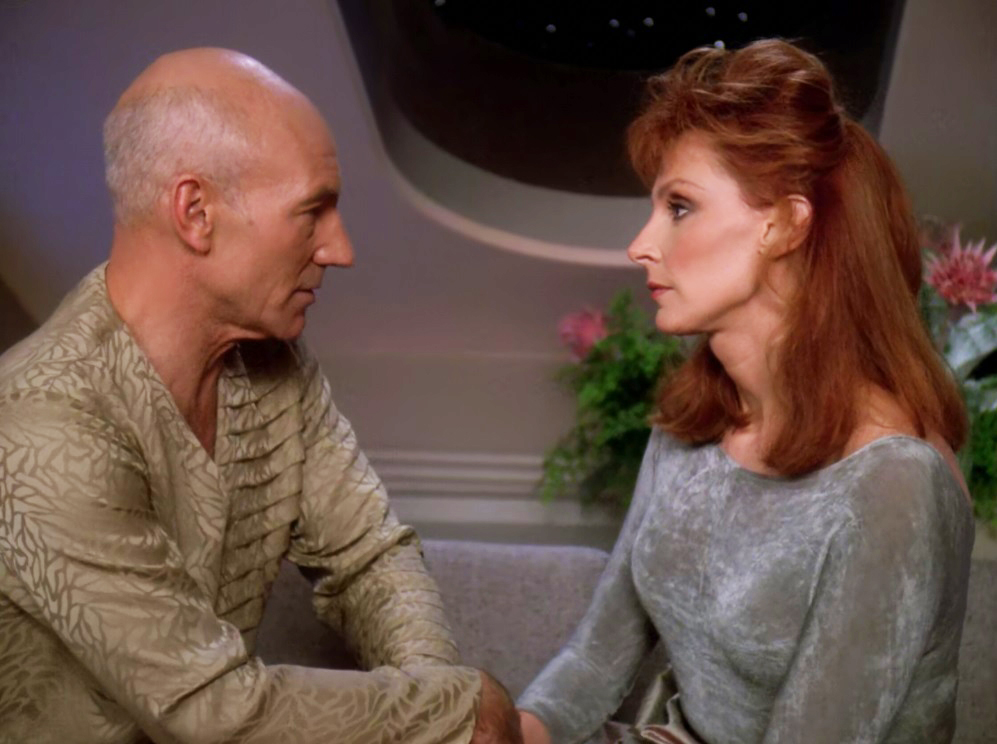
ATTACHED – EPISODE 9
One of the great pleasures of watching The Next Generation is that the show always gave us mature romantic relationships. The “will they-won’t they” romance of Dr Crusher and Captain Picard is directly addressed in Attached, as the two find themselves shackled physically and telepathically by a paranoid alien race. As they attempt to survive and escape capture the two explore their hidden feelings in a moving episode of some power.
THE PEGASUS – EPISODE 12
Commander Riker (Jonathan Frakes) is portrayed as a dynamic action hero of strength and skill, so it is always interesting when his character is tested. In The Pegasushe is faced with both the sins of the “father” and of his own past. The surrogate father is this case is Captain Erik Pressman, portrayed brilliantly by Terry O’Quinn. Pressman is determined to track down the lost ship, ‘The Pegasus’ before the Romulans get to it. He places pressure on Riker to keep confidential the secrets the missing vessel has as the episode contains great drama and conflict.
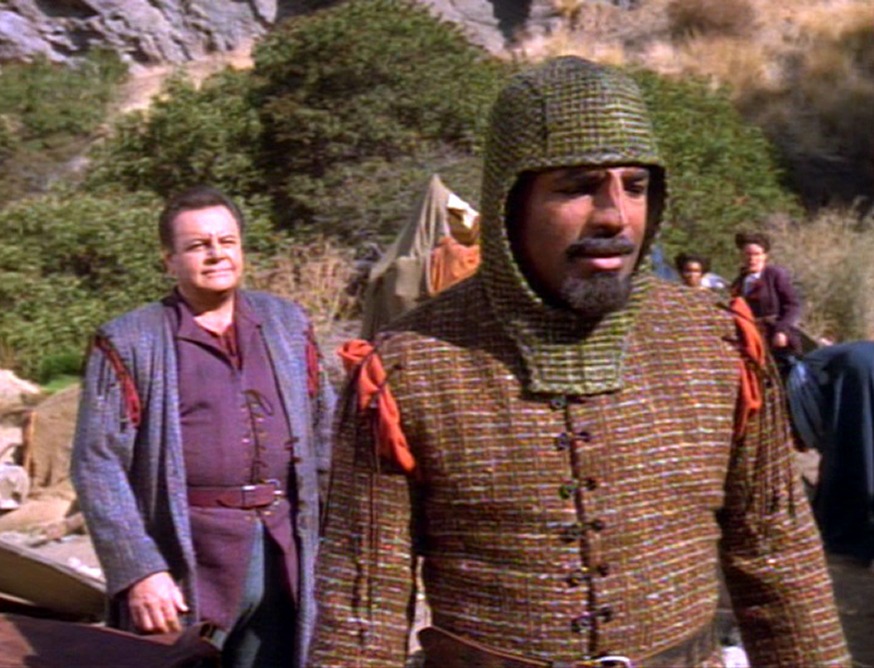
HOMEWARD – EPISODE 13
When shows have been going for many seasons they often have to introduce previously unknown siblings, parents or love interests to manufacture storylines. I totally get this and often it creates fantastic episodes. In Inheritance we get to meet Data’s “mother”, but an even better episode is Homeward where Worf’s foster brother, Nikola (Paul Sorvino) rebels against the ‘Prime Directive’ to save the Boraalan people. It’s a great episode full of twists and some excellent scenes between Paul Sorvino (not playing a gangster for once) and the ever-excellent, Michael Dorn. The use of the holodeck as an integral part of the narrative is highly inventive too.
LOWER DECKS – EPISODE 15
Most episodes of Star Trek will focus on the core characters with a leaning to one or two of the main cast. But Lower Decks turns that around with the fantastic premise of profiling some of the younger crew members. It’s a well written narrative which focusses attention on a Starfleet promotion with Ensigns Sito Jaxa, Sam Lavelle and Taurik in “friendly” competition to achieve the goal. We immediately warm to their personalities as the witty dialogue adds much fizz, but the drama of the piece is heightened when Bajoran, Sito Jaxa, is sent on a dangerous mission, leading to a powerfully emotional denouement.
GENESIS – EPISODE 19
I loved this episode because it contained a fantastic melding of sci-fi and horror genres with some monstrous creatures on show. With Gates McFadden directing her only episode, the story finds the Enterprise crew falling ill and regressing to various animal states. Worf has reverted into an aggressive predator attempting to mate with Troi; Riker an Australopithecine (Caveman); Troi an amphibian; and Barclay a spider. Even Spot the cat has become an iguana. While it may sound weird and a bit silly I loved the imaginative animal transformations as the cast shed both their human skin and inhibitions.
ALL GOOD THINGS – EPISODES 25/26
As they say all good things come to an end. So, after boldly going for many seasons, The Next Generation finally concluded with a moving and inventive two-parter. I must admit that while it was clever to call back to the first episode, Encounter at Farpoint, I was never a massive fan of the character, Q. Even though John De Lancie’s performance always brought great energy to every episode, I just felt that this character with uber-God-like powers could always resolve the drama with a Deus ex Machina click of the fingers. Nonetheless, the idea that he was always testing humanity was a great theme, and once again in All Good Things, he puts Jean Luc Picard through a trio of trials in the past, present and future. It’s a superbly written, acted and directed finale and possibly one of the best final episodes of a long-running TV show of all time! The last scene with Picard finally joining his crew at the poker table is truly logical! Make it so – Number One!
Produced by: Arnold H. Bruck, Edgar Ievins, Tom Kaye
Cast: Kevin Van Hentenryck, Terri Susan Smith, Beverly Bonner
Cinematography: Bruce Torbet
Edited by: Frank Henenlotter
*** REVIEW CONTAINS SPOILERS ***
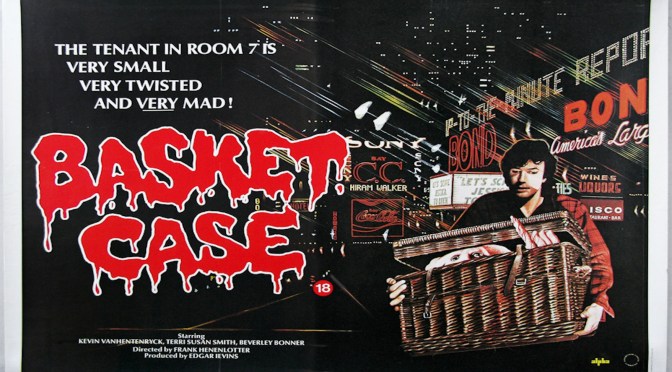
Being a massive fan of horror and cult movies, it is quite incredible that I had never seen Frank Henenlotter’s low-budget exploitation film, Basket Case (1982). So, when I saw it available via my Shudder subscription I dived straight into the basket, and found the insane premise, bad acting, zero-cash lighting style, lo-fi stop motion and monster effects, all combining to deliriously horrific and hilarious effect. Because, what it lacks in polished performances and filming style, it makes up for in riotous bad taste and shocking entertainment.
Henenlotter’s debut film was shot on grainy 16mm film and for a budget of around $35,000. The story finds the enthusiastic Duane (Kevin Van Hentenryck), visiting New York and staying at the low-rent fleapit called the Hotel Broslin. What makes Kevin so intriguing is he carries around a basket. What’s in the basket I hear you ask? Well, you soon find out that it is something quite disgusting and despicable. A grotesque freak which, when you learn it and Duane’s backstory, takes on a bizarre kind of empathy. As Duane begins to make friends, both with a prostitute neighbour and Doctor’s receptionist, his grisly telepathic and physical connection with the monster pushes him to the brink of insanity. Because the demon is driving Duane to assist him on a vengeful journey of bloodlust and murder.
While the story is certainly nuts and much of the acting is woeful, Kevin Van Hentenryck’s energetic performance makes Duane a likeable protagonist. You really root for him when he begins to fall in love, but the monster becomes jealous, wreaking havoc on Duane’s romance. Further, Henenlotter deserves so much credit for making the insanity on the screen work. I think he does this because he gives us a tragic lead character, moves the story along at a whip-crack pace, has a fantastic monster and devises many memorably gruesome deaths. All throughout I was both laughing and feeling sick at the same time. Lastly, I also just love that Henenlotter made up many of the names in the credits because only a handful of people were in the crew. Indeed, Basket Case (1982) is a true independently made gonzo-horror classic, which makes the most of the dirty-porno-sleazy New York streets it is set on. Dare YOU open the basket?
Cast: Donald Pleasence, Norman Rossington, David Ladd, Sharon Gurney, Hugh Armstrong, Christopher Lee etc.
Cinematography: Alex Thomson
***CONTAINS MILD SPOILERS***
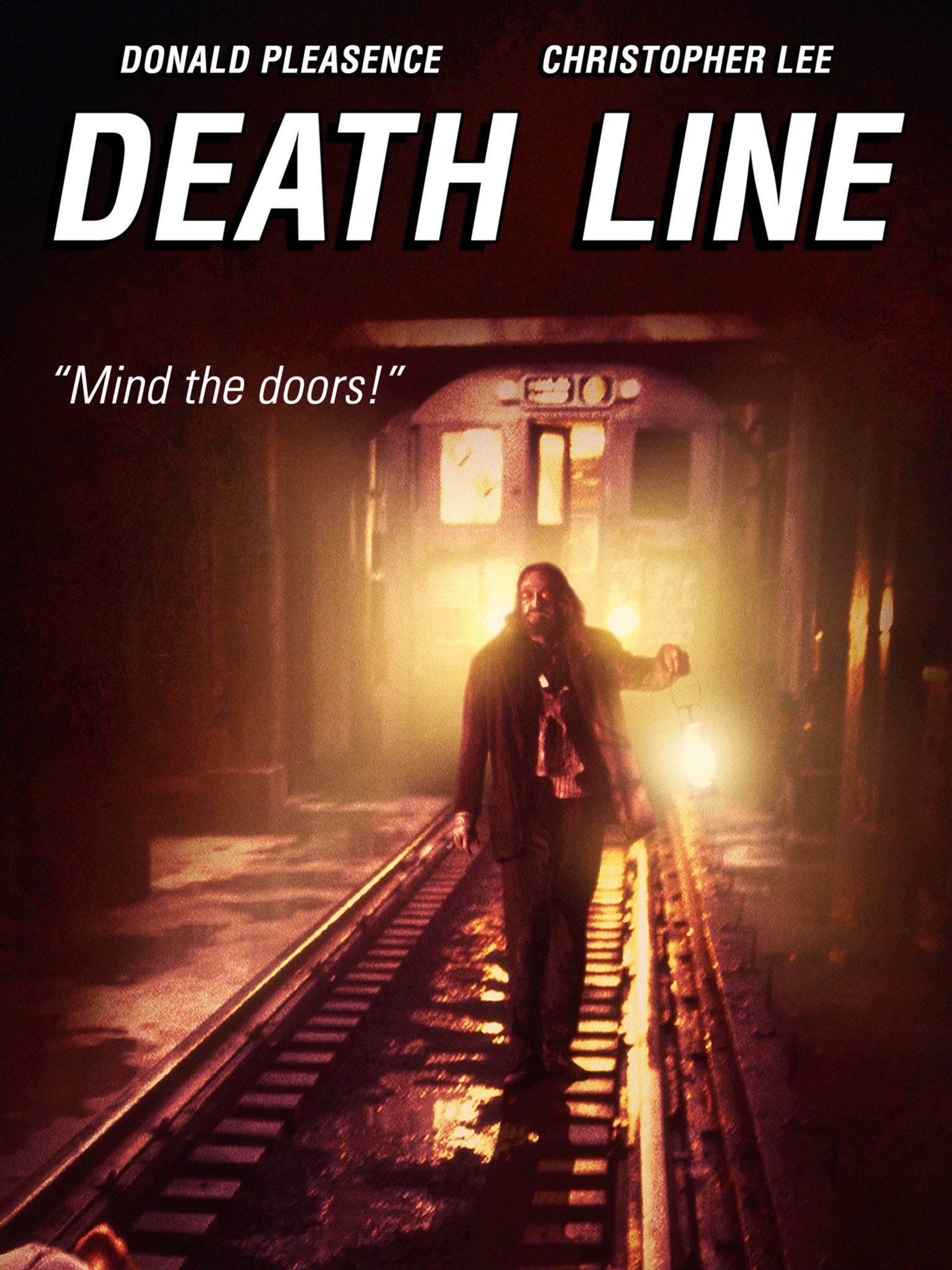
In my last review I wrote with nostalgia about trips to the video shop. Yes, an actual shop where you could hire films existed! Imagine that. Now, I further lament the splintered streaming marketplace where you have to pay a subscription to watch a film when I used to be able to see it on telly for free. Plus, there are TOO MANY platforms. Those £5.99 and £4.99 and £7.99 per month fees soon stack up. I used to love turning on Channel Four or BBC2 or latterly Film Four and there would be a cult horror film, classic film noir, World cinema, art film or early directorial release from a now famous director on there late at night – FOR FREE! Thankfully, aside from all the streaming stems I have to manage, a channel on digital TV called Talking Pictures does show some genuinely great movies that time and humanity may have forgotten. One such is Deathline (1972).
Deathline (1972) – (AKA Raw Meat in the U.S.) is a genuine cult classic horror film which is gruesome, darkly witty and incredibly moving in equal measures. In this era of constant remakes I am surprised no filmmaker has decided to transfer this grimy and quintessentially British movie into the modern day. In many ways I am glad they haven’t as it, despite some glaring flaws in characterisation of two main protagonists, borders on being a bona fide under-rated classic. The premise involves a series of missing persons who are disappearing around the area of Russell Square underground station. The sarcastic Inspector Calhoun (inimitable Donald Pleasence) is tasked with cracking the case. He does so with gallows humour and gallons of cups of tea.
Pleasence is not the only person who gives a memorable acting performance in Deathline (1972). Because the screenplay and direction spends a lot of the grisly running time creating a thematic and visual mythology around the antagonist. Indeed, while the killer, described in the credits as the ‘Man’ (Hugh Armstrong), commits several brutal slayings and abductions, the ghastly backstory given and Armstrong’s emotionally charged portrayal really make you empathise with his situation. The combination of pustular make-up effects, the rat-infested underground lair he inhabits, plus the tragic circumstances surrounding the ‘Man’s’ plight ensure he one of cinema’s most empathetic monsters since Karloff in Frankenstein (1931).
It’s a shame therefore that more wasn’t done to develop the leading couple in the film, students Alex Campbell (David Ladd) and Patricia Wilson (Sharon Gurney). While she is at least sympathetic, he is completely unlikeable and mostly unheroic. So much so I was rooting more for the plague-pocked ‘Man’ at the end rather than him. But hey I’m watching this for the gore and deaths aren’t I? Well, there’s plenty of that in between Inspector Calhoun’s chirpy working-class snipes and demands for cups of tea. Plus, director Gary Sherman gives us a tremendous, long take which establishes the cavernous setting for the murder and horror, utilising the dank London underground tunnel system to maximum impact. While Christopher Lee is given poster billing, he’s only in one scene as a privileged MI5 agent. Finally, did you know Marlon Brando was originally cast as the ‘Man’. Well, I’m kind of glad that was an offer he did refuse. Because Armstrong’s tragic human monster lives on long in the mind, even after the film’s haunting final echoes have faded.
Produced by: Dave Franco, Elizabeth Haggard, Teddy Schwarzman, Ben Stillman, Joe Swanberg, Christopher Storer
Cast: Dan Stevens, Alison Brie, Sheila Vand, Jeremy Allen White, Toby Huss
Cinematography: Christian Sprenger
*** MAY CONTAIN SPOILERS ***
If you’re old like me you will remember the golden era of video rental stores in the 1980’s and 1990’s. I used to love going to the video shop at the weekend and choosing which films to watch. For example, on a Saturday afternoon at Blockbuster I would choose three films usually. One would be a banker like a high quality release or made by an acclaimed filmmaker whose work I was certain to like. Another would be a more commercial choice like a high concept action film or comedy; something to take the brain out for. Lastly, I would take a gamble on either an arthouse or foreign or indie character-driven film; OR an even bigger gamble on a lower-budget or unheard horror film or thriller with a back-of-the-video-box pitch that grabbed me. Often the latter choice would end up being a terribly arty bore or a schlocky B-movie disaster. However, every now and then I would find a film gem which totally gripped me.
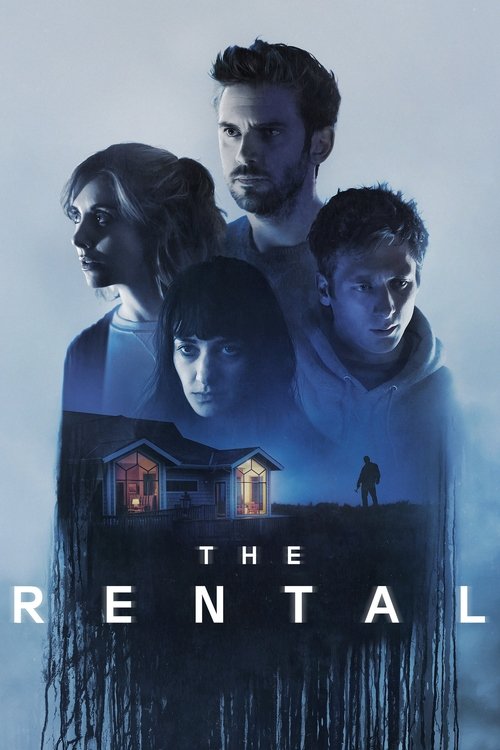
With streaming now there’s not so much of a gamble as you haven’t had to walk or drive to the video shop. Even better there’s no need to return the tapes on time and risk getting fined. You switch on your streaming device and choose your film. If you don’t like it you can turn it off, although I do tend to see things through to the end on most occasions. But hey Paul, enough about comparing the past with the present – WHAT’S YOUR POINT! Oh yes, the Dave Franco directed The Rental (2020) is one of those films which I took a chance on because of the cast and the back-of-video-box-pitch (i.e. the Amazon online trailer). I’m glad I did watch it, as it is a terrific thriller with a tension-filled script which leads and misleads you through a series of compelling twists. It’s a simple premise, involving two couples spending the weekend at a beautiful rural property where poor choices destabilise their harmony, only for all hell to break loose when a serious crime escalates the action.
The cast of Dan Stevens, Alison Brie, Shiela Vand and Jeremy Allen White are arguably punching below their weight where the B-movie material is concerned. Yet, they bring quality to the proceedings as the initial peace between the characters descends into chaos when first infidelity and then murder rears its ugly head. One of my favourite character actors, Toby Huss, is excellent here too as the suspicious property manager. I’ve seen some so-so reviews for The Rental (2020), but it’s the kind of tightly plotted suspense thriller I really thrive on. What starts as an idyllic getaway for two relatively wealthy couples is carefully unravelled by Dave Franco’s well-paced direction, complimented by Brie and Steven’s committed performances, has wonderful locations and a seriously proper killer ending.
Created and written by: Steve Pemberton & Reece Shearsmith
Directors (Season 6): Matt Lipsey, Guillem Morales
Original Network: BBC (available on BBC Iplayer)
No. of Episodes: 6
I have written exhaustively about how brilliant this television programme is, so much so I don’t think I can add any further other than I believe it deserves regaling as TV national treasure. Just when you think Reece Shearsmith and Steve Pemberton could be running out of creative steam they prove you wrong with another superb series of Inside No. 9. If you are interested, here are prior articles I have written about it.
However, to recap, if you have never seen Inside No. 9 I urge you to do so. It is an exceptional anthology series with six stand-alone episodes per series. Individual episodes feature a whole host of different characters and amazing actors each time led by the multi-talented Pemberton and Shearsmith. As per the prior seasons, the latest one is absolutely unforgettable. It again privileges tightly woven thirty-minute short narratives, which more often than not, feature a twist in the tale. Moreover, the events usually unfold in one location with rarely more than a handful of characters. This makes the narratives feel more focussed, intense and intimate. In series 6, there is even more growth within the anthology genre and much risk-taking where style and form are concerned.
So, here are my mini-reviews of each episode from Season 6 with marks out of nine (obviously).
*** BEWARE: POTENTIAL SPOILERS ***
EPISODE 1: WUTHERING HEIST
Main cast: Paterson Joseph, Gemma Whelan, Kevin Bishop, Reece Shearsmith, Steve Pemberton, Rosa Robson, Dino Kelly etc.
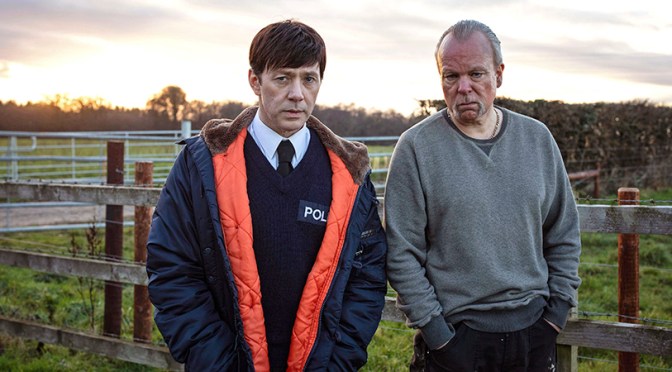
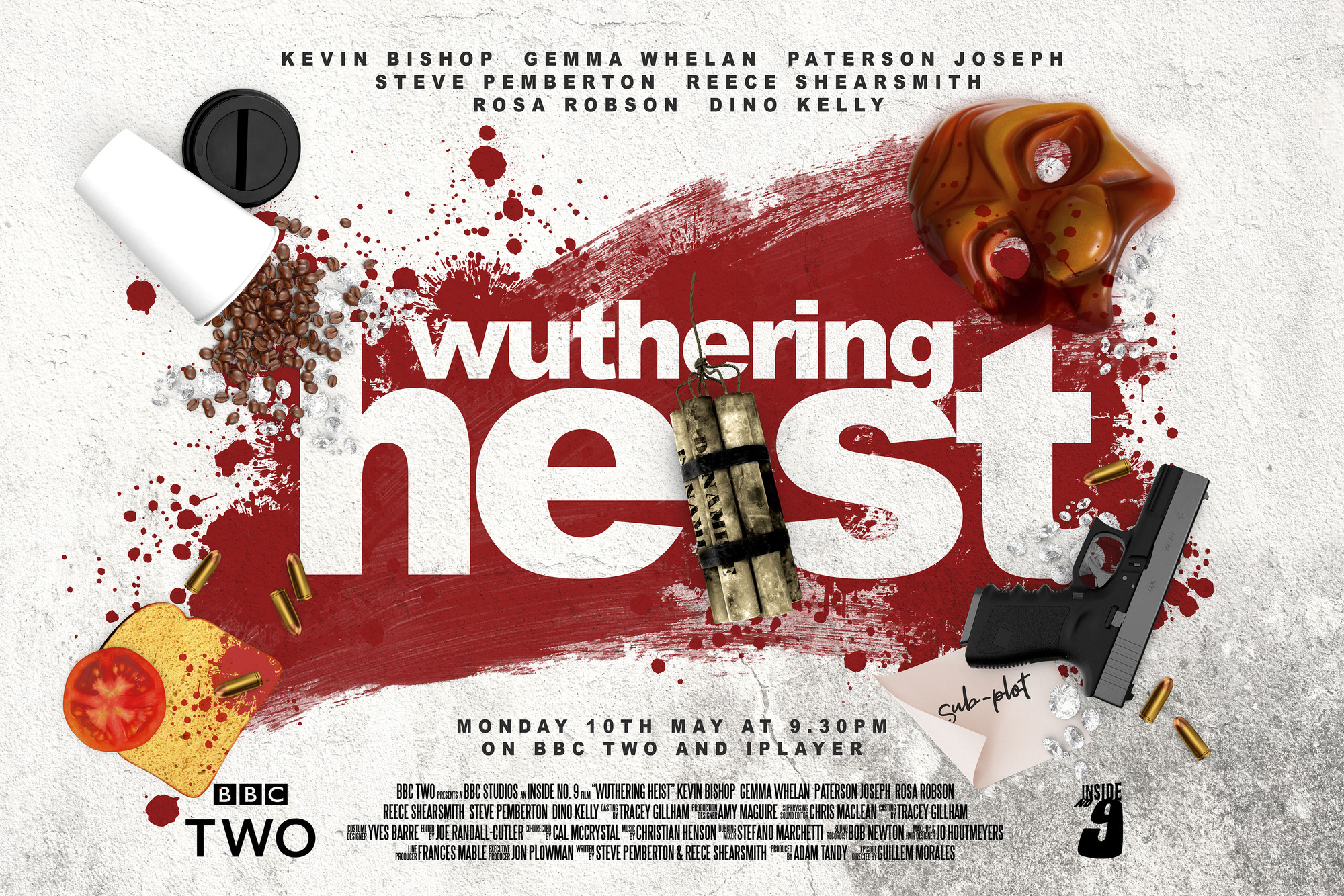
Not only are Pemberton and Shearsmith accomplished actors, writers and directors, they are also acutely aware how fans revel in their incredible work, devilishly mocking their own mythology and playing with audience expectations. They do this to dizzying impact in the puntastic opening episode, Wuthering Heist. Marrying elements from farce, crime, Commedia dell’arte and the plot of Reservoir Dogs (1992), the players wear masks, prat about and bleed over each other while attempting to pull off a diamond heist. Set in one location, a disused warehouse, Gemma Whelan is superb as the fourth-wall breaking narrator attempting to hold all the story innards together. Pretty soon though one realises that the flurry of puns, sight gags, plot contrivances and comical misunderstandings are intended as wondrous and silly fun. The lack of emotional depth is the joke here and the writers know this. Because Shearsmith and Pemberton’s script has a gag every four seconds, be it a sight jape or involve some sparky verbal dexterity. Lastly, not only do they know they are jumping the shark, but they revel in doing so during this hilarious meta-work.
Mark: 8 out of 9
EPISODE 2: SIMON SAYS
Cast: Reece Shearsmith, Steve Pemberton, Lindsay Duncan, Nick Mohammed
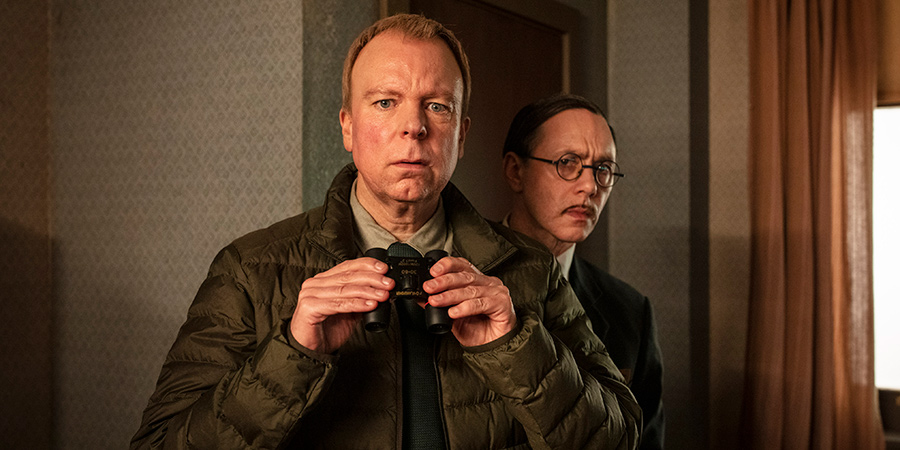
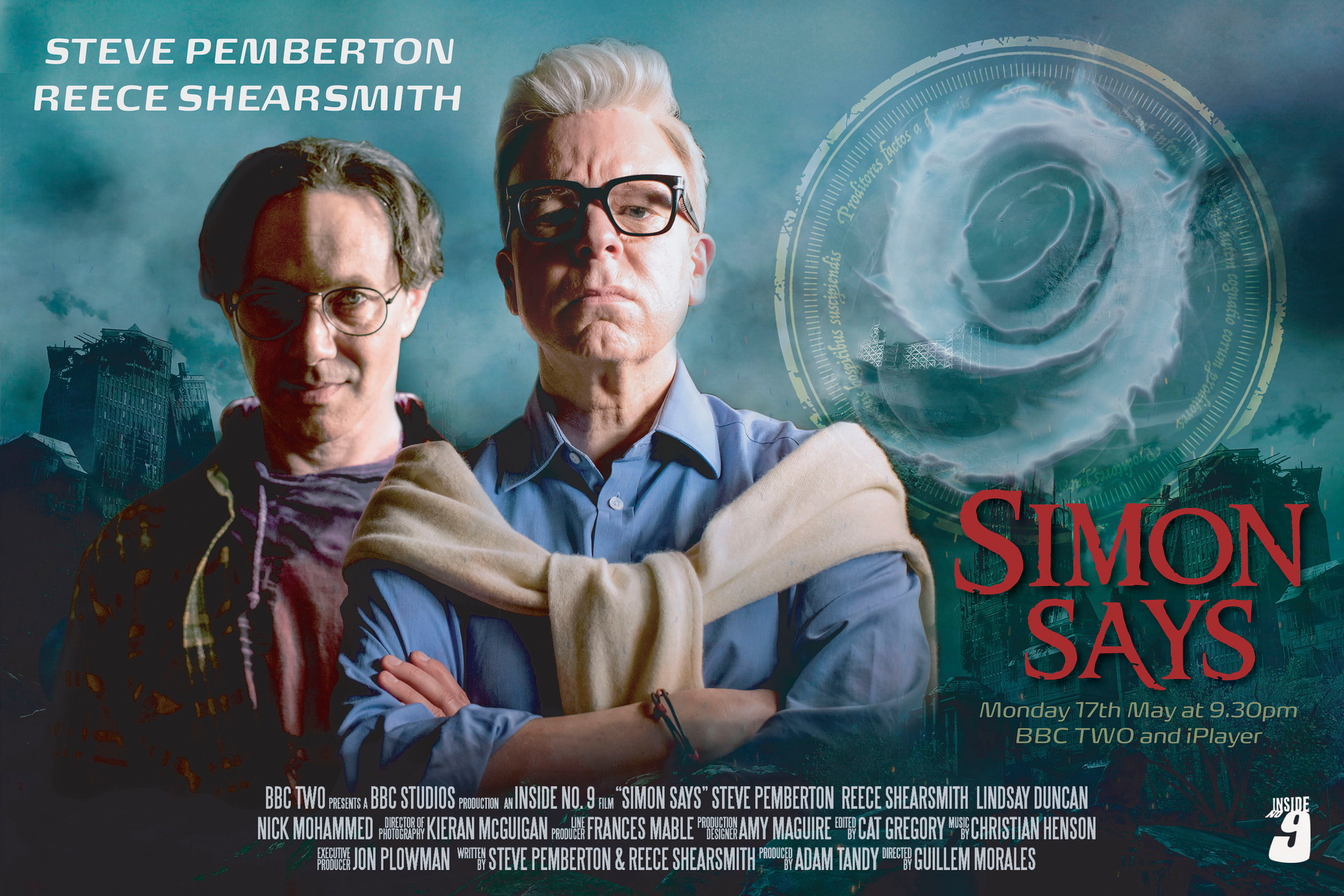
Among many of the recurring pleasures of watching Inside No. 9 is wondering what the number nine will refer to. It’s been a myriad of things including: a karaoke booth, a hotel room, a train sleeper car, a dressing room, a referee’s changing room, and even a shoe. In Simon Says it’s the name of a television epic called The Ninth Circle. This show is very similar to Game of Thrones in genre and scale, and likewise has a battalion of fans across the country who feel the final series undid the majesty of the prior seasons. The episode opens with immediate mystery as Steve Pemberton’s writer, Spencer, enters his flat with blood staining his clothes and conscience. Suddenly, Simon (Reece Shearsmith), is at the door saying he has evidence Spencer has committed a serious crime. Simon, a Ninth Circle uber-fan then blackmails Spencer into, among others things, rewriting the whole of the last season of The Ninth Circle into something more fan-friendly. Managing to be both funny and suspenseful in equal measures, Pemberton and Shearsmith’s characters play cat-and-mouse expertly, throwing in several big plot twists at the end of this compelling tale.
Mark: 8 out of 9
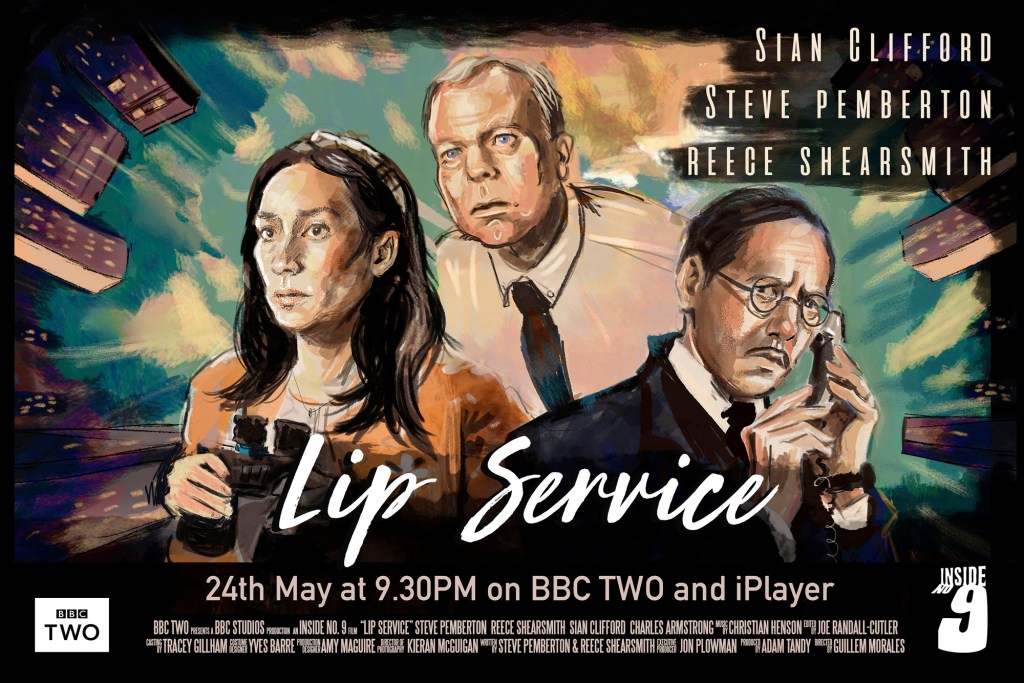
EPISODE 3: LIP SERVICE
Cast: Sian Clifford, Steve Pemberton, Reece Shearsmith
I watch some television series and films and am often struck at how much time is wasted in setting up the protagonists and story. Similarly, in unnecessarily long TV series you get either eight or ten episodes full of padding in the middle which destabilizes the momentum of the story. Nothing of the sort occurs in Inside No. 9. Stories are set-up with stylish economy and the situations immediately grab you by the throat and rarely let go. In Lip Service, Steve Pemberton’s downtrodden Felix is holed up in a hotel room waiting to liaise with a woman. But it’s not what you think. Sian Clifford’s Iris arrives and it turns out she is there to offer her services as a lip-reader. Felix suspects the woman he loves is having an affair and he requires Iris to read her and a possible lover’s lips at an adjacent hotel suite. I’ve now seen this episode three times and it truly is breathtaking. There’s empathy for Felix’s lost soul, some fine linguistic comedy, a potential romance, Clifford’s performance knocking it out of the park, Reece Shearsmith having great fun as an officious German hotel manager and THAT ending. The denouement, while totally believable, comes out of nowhere and leaves you genuinely speechless.
Mark: 8.5 out 9
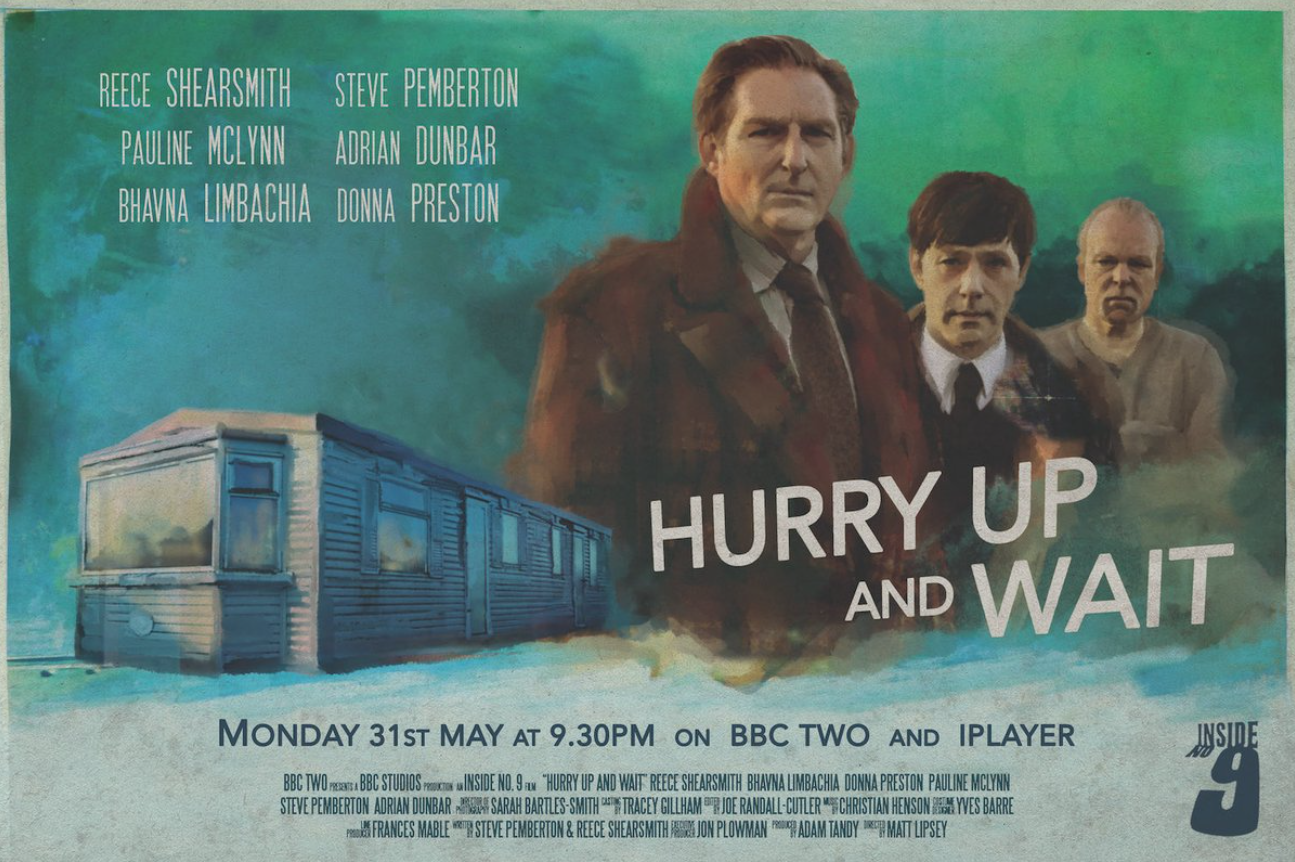
EPISODE 4: HURRY UP AND WAIT
Cast: Adrian Dunbar, Steve Pemberton, Reece Shearsmith, Donna Preston, Bhavna Limbachia, and Pauline McGlynn
Quite possibly my favourite episode of the series, Hurry Up and Wait manages to achieve that difficult juxtaposition of being meta-textual and containing some real emotional power. Because it is one thing to be self-referential and satirise the creative process, in this case the making of a television police drama starring famous actor Adrian Dunbar, but it’s quite another to build in a murder mystery and empathetic characters who you root for. While Reece Shearsmith is always excellent playing angry characters, here he portrays James, a mild-mannered actor, who has got a break playing a scene with the precious talent, Dunbar. The TV drama they are in concerns a missing child and the “green room” happens to be a static caravan owned by a working-class family who may have important information about said grisly crime. Steve Pemberton and Pauline McGlynn play the parents of immature, Beverley – the brilliant Donna Preston – adding much comic relief, but all possibly hiding a dark secret. As James learns his lines he also plays detective seemingly discovering the truth until the truly chilling ending is revealed.
Mark: 9 out of 9
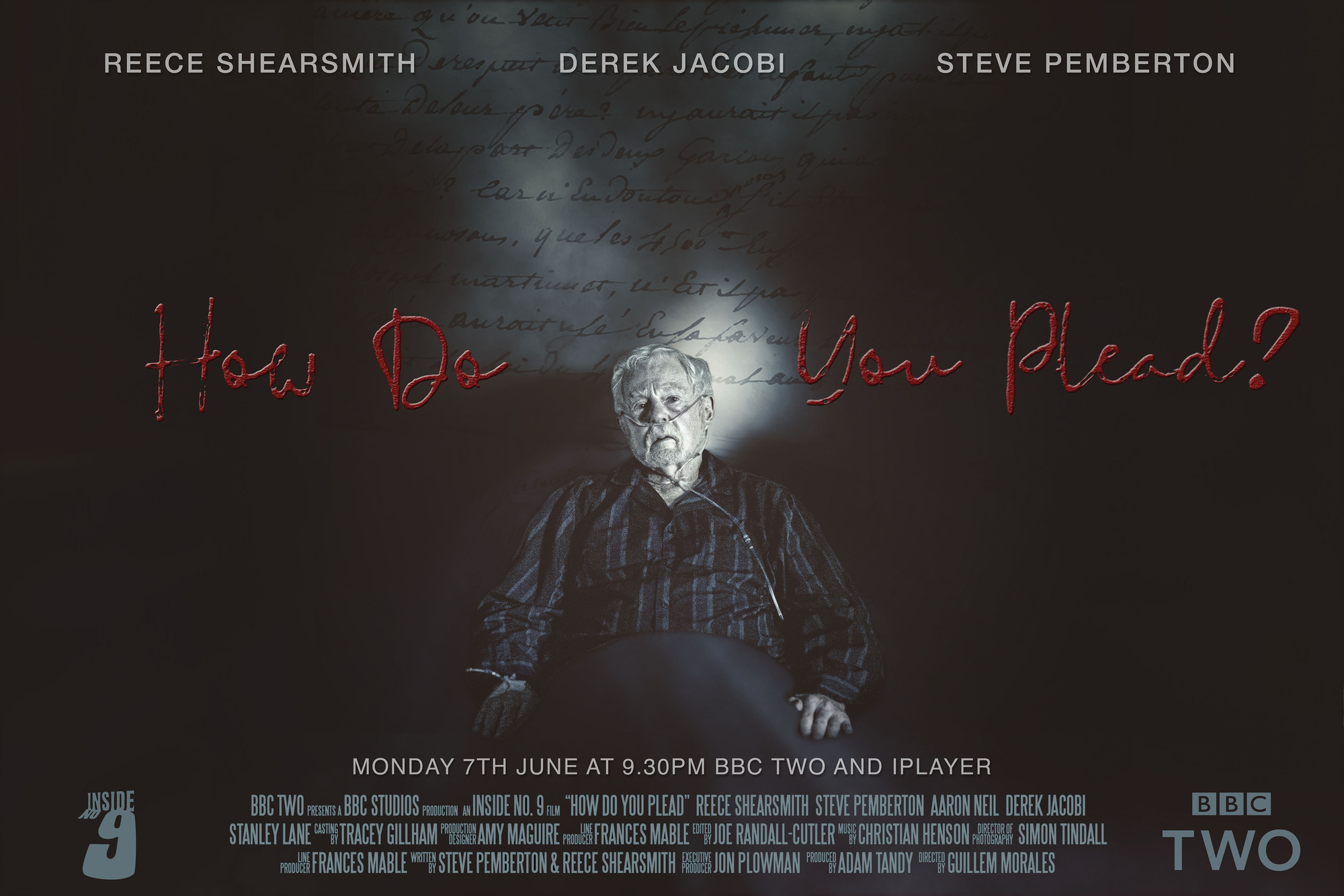
EPISODE 5: HOW DO YOU PLEAD?
Cast: Steve Pemberton, Reece Shearsmith, Derek Jacobi
Arguably the darkest tale, both in terms of the noir lighting and foreboding themes, it is difficult to discuss this tale of soul-searching guilt and justice without giving away too much of the story. Thus, I’ll talk about the actors and characters more. Derek Jacobi gives a deeply moving performance of a dying barrister who prides himself of, after an upturn in his early legal career, never losing a case in court until retirement. As he lies dying in bed, lungs heavy around his heart, he feels guilt about one case where he defended the indefensible. As he confesses his regret to Shearsmith’s cheery carer, it is soon revealed both men have sins they buried in the past which will soon come back to bite them. Watching these two fine actors spark off one another is as compelling as television drama can get, but there’s also comedy there too as Shearsmith delivers some spirited one-liners in between Jacobi’s grand screen gravitas. But where’s Pemberton I hear you ask? He’s sitting there waiting patiently in the shadows of this evocatively lit and thrilling tale.
Mark: 8 out of 9
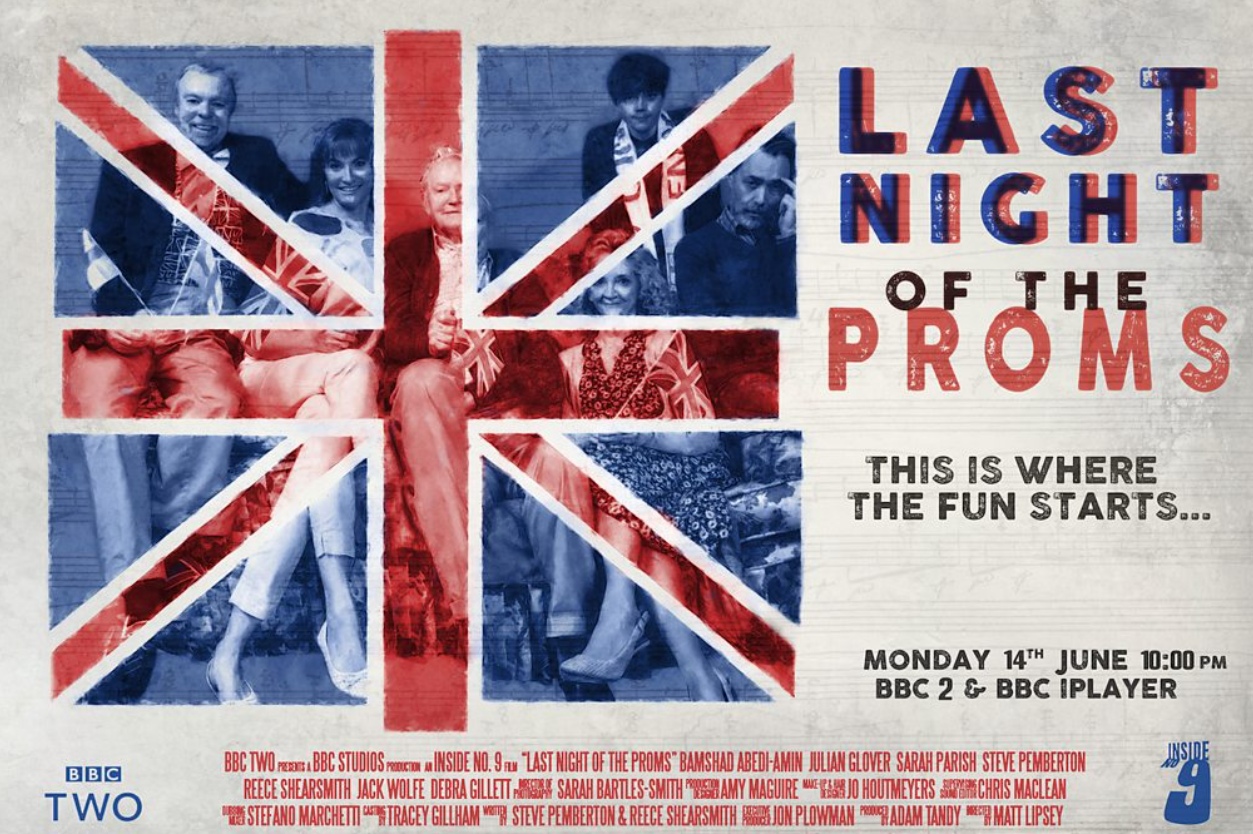
EPISODE 6: LAST NIGHT OF THE PROMS!
Cast: Steve Pemberton, Reece Shearsmith, Julian Glover, Debra Gillett, Bamshad Abedi-Amin, Sarah Parish etc.
Are you aware of the work of Dennis Potter? He was one of the finest writers in British television from the 1960’s way into the early 1990’s. His scripts were always highly erotic, political and incredibly controversial. They skewered very British and human themes and burnt great sacred cows of the church, government, family, sex and marriage on the TV barbecue, leaving charcoal remains in their stead. Potter was a genius and with Last Night of the Proms, Pemberton and Shearsmith match him for bravado in deconstructing human nature and what it means to be British. Set in a well-to-do, middle-class household, a family of three generations sit down to watch the Last of the Proms on the BBC. It’s a big traditional classical music event and cultural celebration of what it means to be British. It makes me sick! Britain isn’t great. The British are racist, imperialistic and hardy murderers, who have a history and present (fucking Brexit!) they should be ashamed of. The thought-provoking screenplay here is heavy on compelling themes, memorable imagery and striking symbolism. This is a jarring and messy episode and what it lacks in precise plotting it more than makes up for in juxtaposing horror, satire, drama, surrealism, Jesus, social commentary and comedy to rather mesmerising effect. Potter’s ghost would have watched with glee and disgust and hate and love and pity and sadness; which is much how I felt witnessing Last Night of the Proms.
THE HORROR OF IDENTITY: DOUBLE BILL FILM REVIEWS – DEERSKIN (2019) & POSSESSOR (2020)
“Be yourself; everyone else is already taken.”-Oscar Wilde
We’ve all wanted to exist outside our own skin. Or perhaps inhabit someone else’s? Or, maybe even change our own identity, both literally and psychologically. Or is that just me? At the least we have all thought about it. Even losing weight and going down the gym or giving up alcohol or changing our hairstyle is a means of basic transformation. We may make a more defiant change and leave that job we hate or break out from a negative relationship. Arguably though, personality, attitude and mental changes in one’s life are the most difficult. After all, it is incredibly difficult to change the very fabric of one’s personality or character.
We can find an alternative source of transformation in a vicarious sense through storytelling mediums such as literature, television and cinema. The horror genre especially is replete with monstrous visions of identity switches, psychotic breakdowns and physical transmogrification. I personally take great pleasure in seeing altered identities occur on the screen and am especially drawn to characters who experience mental and corporeal metamorphosis. That simply isn’t because I cannot change who I am or what I do on a daily basis, but it’s quite scary to attempt to reshape one’s existence and identity. It’s bloody hard work without much guarantee of success. Horror films, while also frightening when done well, are far more satisfying and give a more immediate hit than the grind of reality.
Two films I have seen recently both relate to mid-life crises and exhibit themes that illustrate two characters changing their appearance to bring about a shift in identity, behaviour and personality. They also show characters spiralling out of control in incredibly violent, bizarre and entertaining ways. Those films are Deerskin (2019) and Possessor (2020) and here are my reviews.
*** MAY CONTAIN SPOILERS ***
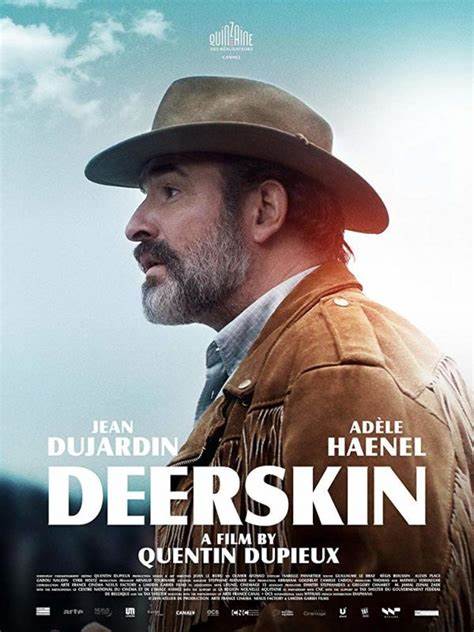
DEERSKIN (2019)
Directed and written by Quentin Dupieux
Main Cast: Jean Dujardin, Adele Haenel
Have you ever seen the film Rubber (2010)? It is a gonzo horror-comedy about a murderous-tyre called Robert killing birds and people with telekinetic powers. Beneath the insanity of the pitch there is in fact a subtextual satire on the nature of Hollywood filmmaking and an audience starved of originality; I think!It came from the mind of Quentin Dupieux, so I was intrigued that he had nabbed for a subsequent production the grand talents of Jean Dujardin and Adele Haenel for the obsidian killer comedy, Deerskin (2019).
Dujardin is Georges, a middle-aged loner, recently dumped by his wife whose only aim now it appears is to purchase a deerskin jacket. Buoyed by the confidence the jacket has given him, and armed with a video camera thrown in with the deal, George plots up at a rural hotel and befriends Adele Haenel’s bar server and enthusiastic film editor. Their budding friendship threatens to turn this into a relatively conventional love story, however, a series of twisted turns tip the story into a hilarious series of murderous set-pieces, with Georges determined to get money to make a movie, but most importantly buy deerskin trousers, hat and gloves.
The story of a middle-aged man altering his outer look in order to transform his life and fortune is a staple of Hollywood comedies and romance films. Deerskin (2019) is that kind of film on the surface. Yet when filtered through Dupieux’s iconoclastic imagination the premise is an altogether different kind of demented animal. Ultimately, it is a low-budget gem of a black comedy with some fantastic ideas and fascinating character study of a man attempting to shift skin, but falling deeper and deeper into psychopathy. It’s a wacky journey with committed performances, yet, it felt like the ending was just too sudden, as if the filmmaker either ran our of money or just wanted to screw with audience expectations right up until the final sudden frame.
MARK: 7.5 out of 11
POSSESSOR (2020)
Directed and written by Brandon Cronenberg
Main Cast: Andrea Riseborough, Christopher Abbott, Sean Bean, Tuppence Middleton etc.
Whereas Deerskin (2019) finds a literal and figurative metamorphosis when a character buys a jacket, Brandon Cronenberg’s vicious horror film, Possessor (2020), is an altogether more cerebral, violent and psychologically stunning journey. Andrea Riseborough is as intense as ever portraying an assassin named, Tasya Vox, who through some incredible technology is able to inhabit the mind and body of another individual and use them as a human puppet to commit murder. It’s a perfect set-up for the assassination agency led by Jennifer Jason Leigh’s handler, Girder. Yet such murder by scientific proxy comes at a cost to Vox’s family life and mental stability.
After a glorious opening scene featuring an astoundingly brutal stabbing, Vox attempts to reconnect with her partner and son, but finds herself becoming ever more disconnected. The pressure of taking over another individual’s identity is causing Vox to discombobulate as her mind begins to fracture. Despite this she takes the next job, a contract to kill John Parse (Sean Bean), using Christopher Abbott’s Colin Tate as a conduit. As Vox struggles with her splitting psyche, Tate himself is having personal issues also and this leads to some mind-bending and psychedelic montage scenes as the two battle within Tate’s brain. If this all sounds a bit weird, it is and it isn’t because the filmmaking is of such a high quality one believes the process. Further, the director never loses his grip on the narrative and Cronenberg gets a compelling performance from Abbott as his character confronts the invasion into his soul.
Overall, Possessor (2020) has a stunning concept at its heart but I just kept wondering how a genre filmmaker like Leigh Whannell may have handled the idea. He certainly would have made the characters more empathetic because it is so tough to warm to either Vox or Tate. Indeed, Tate’s character should have been developed more at the beginning in my view as he would have made an ideal “innocent/wrong man” type character so often used by Hitchcock. Nonetheless, Brandon Cronenberg has crafted one of the most visually impressive and shocking psychological horror films I have seen in a long time. Like Whannell’s Upgrade (2018), it contains some memorable gore and violence. It is also very intelligent as the fantastic ideas explore what it means to not only inhabit another person’s skin, but rip through their very soul.
SIX OF THE BEST #32 – CINEMATIC STATEMENTS OF INTENT!
This is a dive into the world of punchy dialogue that sums up a film or character or a relationship in a few key words. Because sometimes you just don’t want to think and sometimes you don’t want subtle hints to a character’s intentions. On occasions you want the whole plot and cinematic situation summed up succinctly and in an emotionally impactful way. I like ambiguous or complex characters, but from time to time I just gots to know, in a few words, what the character wants or their plans or capabilities. How do they do that? Well, through a good old-fashioned statement of intent.
I would categorise a statement of intent as generally involving the words “I” or “me” and has a character telling another character or group, plus the audience, what they intend to do or how they feel about a particular moment in their life. Or indeed their life as a whole. There is no ambiguity, but rather a direct proclamation of where the character stands and what he or she wants. Actually, I should say this is an extremely masculine list, but la-di-da, it is what is and so it goes. Thus, here are six of the best, of what I call statements of intent from film.
*** CONTAINS SPOILERS ***
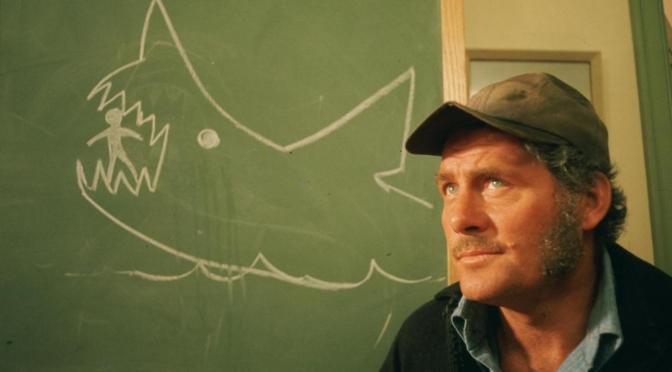
QUINT – JAWS (1975)
“I’ll catch this bird for yer – but it ain’t gonna be easy. . . bad fish!”
One of the great character introductions of all time and an incredible statement of intent too. In a way Quint did catch the “bird”, but that big bird caught up with Quint too! What a speech! What a film!
HOWARD BEALE – NETWORK (1976)
“I’m as mad as hell and I’m not going to take this anymore!”
Acclaimed playwright Paddy Chayefsky arguably wrote one of the greatest cinema speeches of all time with Peter Finch’s newscaster, Howard Beale, reaching the end of his tether with society and life! The saddest thing about this statement of intent is that NOTHING has changed – the world is still nuts and it gets crazier by the day!
T101 / T800 – THE TERMINATOR (1984)
“I’ll be back!”
Sometimes three simple words can say more than a lengthy monologue, as James Cameron and Arnold Schwarzenegger combined to amazing impact in this classic sci-fi action film! Arnie lived up to his promise too, coming back again and again in a series of sequels and prequels and, aside from Terminator 2: Judgement Day (1992), rarely equalled follow-up films.
MARTIN RIGGS – LETHAL WEAPON (1987)
“Do you really wanna jump… Well, that’s fine by me!”
Amidst all the mullets, bullets and B-movie baddies of Shane Black’s over-the-top 1980’s script, there is in fact a moving buddy relationship in here too. There is also a compelling character arc of a suicidal man finding a reason to live through an adopted family. Mel Gibson’s Riggs has so many great scenes to demonstrate his wild-man acting style and the “jumper” scene is probably the best of them.
HAWKEYE – THE LAST OF THE MOHICANS (1992)
“You stay alive no matter what occurs – I will find you!”
This statement of intent comes later than they usually might in a film. But, under the fall of water and with the majestic score swelling Daniel Day Lewis’ Hawkeye powerfully declares his love and intentions to Madeline Stowe’s Cora Munro in Michael Mann’s incredible romantic war drama.
BRYAN MILLS – TAKEN (2008)
“I have a particular set of skills… I will look for you. I will find you. And I will kill you!”
Despite the xenophobic undertones within Pierre Morel and Liam Neeson’s rapid-paced action thriller, it does have one of the most iconic statements of intent in recent film history. Neeson delivers it brilliantly and what’s great is he does find the kidnappers and he does kill them! Just like he said he would! Nothing I like more than a man who keeps his word!











 The Cinema Fix presents