Tag Archives: Film Review

NETFLIX FILM REVIEW: HIS HOUSE (2020)

NETFLIX FILM REVIEW: HIS HOUSE (2020)

Directed by: Remi Weekes

Produced by: Aidan Elliott, Martin Gentles, Arnon Milchan, Ed King, Roy Lee

Screenplay by: Remi Weekes

Story by: Felicity Evans, Toby Venables

Cast: Wunmi Mosaku, Sope Dirisu, Matt Smith, etc.

Cinematography: Jo Willems

***MAY CONTAIN SPOILERS***


Similar in spirit to the Jacques Audiard directed film, Dheepan (2015), the latest Netflix film release, His House (2020), takes the migrant experience as a key narrative driver, then filters it through exciting genre style. While Dheepan (2015) started as a story of survival before crossing over into thriller territory, His House (2020) superbly combines social commentary with the horror genre. Moreover, a key plot reveal later in His House (2020) is extremely similar to that found in Dheepan (2015). Nonetheless, it is a powerful film, both unnerving and thought-provoking in equal measure.

His House (2020) introduces us to Bol (Sope Dirisu) and Rial (Wunmi Mosaku), a refugee husband and wife seeking asylum in Britain from South Sudan. Having survived a treacherous journey from this war-torn part of the world, their young daughter is not so lucky. Alas, Nyagak (Malaika Agibaka) dies during a stormy boat journey. This incident and their social status immediately garners sympathy and empathy for the protagonists. Allied to this, on achieving probational asylum status their jaded case worker, Mark (Matt Smith), brings them to a rundown council estate to live in. It is to Bol and Rial’s credit that they accept their new abode with gratitude. Bol especially is keen to mix with the locals and fit into the British way of living. However, the two soon encounter indifference, racism and prejudice.

This image has an empty alt attribute; its file name is 1024px-his_house_film_poster-1.png

As the narrative continues Bol and Rial have more to contend with than ignorant locals. Rial is resistant to integration as she desperately holds onto her Sudanese clothes and customs. While Bol is clearly trying to distract himself from the tragedy, Rial’s grieving takes the form of clinging onto the memory of her daughter and their Sudanese ways. This familial division is exacerbated by disturbing supernatural phenomena, as a strange dark spirit and the ghost of Nyagak both appear. Could it be grief and guilt manifesting such spectres? Or are they suffering from post-traumatic stress following their harrowing journey to Britain? Or has a genuinely evil spirit hijacked their attempts to build a home and find peace?

Declaring himself as a director to keep tabs on, Remi Weekes, has written and directed an excellent first feature film in, His House (2020). The pacing of the story is excellent as we get flashes of Bol and Rial’s past in Sudan, juxtaposed with their attempts to acclimatise in Britain. As someone whose life is extremely privileged when compared to that of such characters, I was both moved and fearful for the protagonists. This is not only down to an excellent script full of subtext, symbolism and dread, but also due to Sope Dirisu and Wunmi Mosaku’s compelling performances. Furthermore, you really feel the pain of the couple’s loss and suspense created by that which lurks within the stained walls of their apartment. While there are many tense moments, my one reservation with His House (2020) was there arguably wasn’t enough true horror moments. Having said that, the actual reality of Bol and Rial’s situation in losing a daughter, suffering British administrative red-tape and living amidst everyday prejudice, is far scarier than ghosts and monsters can ever be.

Mark: 8.5 out of 11

NETFLIX FILM REVIEW: THE DEVIL ALL THE TIME (2020)

NETFLIX FILM REVIEW: THE DEVIL ALL THE TIME (2020)

Directed by: Antonio Campos

Produced by: Jake Gyllenhaal, Riva Marker, Randall Poster, Max Born

Screenplay by: Antonio Campos, Paulo Campos

Based on: The Devil All the Time by Donald Ray Pollock

Cast: Tom Holland, Bill Skarsgård, Riley Keough, Jason Clarke, Sebastian Stan, Haley Bennett, Eliza Scanlen, Mia Wasikowska, Robert Pattinson, Harry Melling, etc.

Narrated by: Donald Ray Pollock

Music by: Danny Bensi, Saunder Jurriaans

Cinematography: Lol Crawley

***MAY CONTAIN SPOILERS***


Netflix’s latest major film release is a literary adaptation of Donald Ray Pollock’s psychological thriller, The Devil All the Time (2020). One has to believe it is a pretty faithful adaptation because the novelist himself narrates the tale to us via voiceover. Set in the years after World War II, the grim events unfold in the states of Ohio and West Virginia, respectively. While the action is not located in the deep South, the story has many of the tropes synonymous with the Southern Gothic genre, notably: religious fanaticism, explicit sexuality, flawed characters, sickening violence, poverty and human alienation.

The film, directed by Antonio Campos — who helmed the under-rated character study, Christine (2016) — starts extremely purposefully. Returning soldier, Miller Jones (Bill Skarsgard), meets a waitress on his bus journey home and eventually marries her. Both Skarsgard and Hayley Bennett, portraying his wife, inhabit empathetic characters working hard to bring up their son and saving for their own place. Jones, however, is haunted by a traumatic incident in the Pacific, and strives for solace in God and family. Indeed, the corrupt force of religious mania spreads like a cancer throughout The Devil All the Time (2020), becoming a constant threat and reason for many of the characters downfall.


Just as I was connecting with Jones’ life and becoming absorbed by Bill Skarsgard’s commanding performance, tragedy strikes and the narrative takes one of several jarring switches between characters. As such the film does not really have a strong plot, meandering from one character to another witnessing all manner of horrific events fate throws at them. Because, let’s be honest, The Devil All the Time (2020), is no way close to being a feelgood film. In fact, it revels in representing the evil acts of so-called human beings. Thus, throughout I felt a constant sense of dread and anxiety. Barely had Skarsgard misery ended and we are then introduced to the tragedies of characters portrayed by Harry Melling and Mia Wasikowska. Simultaneously, Jason Clarke and Riley Keough join the fray as two violent and sex-driven thrill-seekers. Yet, they are weakly written characters who again drive the mood of the film into pitch blackness.

The film gathers some strength and momentum n the middle act when Tom Holland’s son of Miller Jones comes of age. By focussing on his story we get more drama and emotion, especially where his relationship with his step-sister (Eliza Scanlan) is concerned. Holland gives an excellent performance as the young man attempting to make his way in this filthy and ungodly world. Similarly, Robert Pattinson’s oily Preacher oozes repugnant charm in another sterling piece of acting work. Alas, Sebastian Stan’s Sheriff and Douglas Hodge’s rural gangster are given short shrift in another crime subplot which goes nowhere.

Overall, Antonio Campos delivers an extremely solid thriller from an acting and thematic standpoint. Unfortunately, the fragmented screenplay should arguably have been given a more committed plotline. Of course, it has most likely shadowed the structure of the source novel so therein lies the rub. Having said that, despite the structural shortcomings, there are many shocking and violent set-pieces to satisfy horror fans. Ultimately though, The Devil All the Time (2020) lacks redemption, catharsis and even some decent suspense. By the end we are given few characters to care about and delivered the pessimistic vision that life is a belt of misery. Even a suggestion of sugar helps the poison go down and this film offers very little in the way of sweetness or light.

Mark: 7.5 out of 11


CINEMA REVIEW: MEMORIES OF MURDER (2003)

CINEMA REVIEW: MEMORIES OF MURDER (2003)

Directed by: Bong Joon-ho

Produced by: Cha Seung-jae

Written by: Bong Joon-ho, Shim Sung-bo

Based on: Memories of Murder (play) by Kim Kwang-rim

Cast: Song Kang-ho, Kim Sang-kyung, Kim Roi-ha, Park Hae-il, Byun Hee-bong etc.

Music by: Tarō Iwashiro

Cinematography: Kim Hyung-koo

***MAY CONTAIN SPOILERS***


In this current COVID-19 climate it’s going to take a big film release or an extremely excellent film to get me to go to the cinema. Not only because of the underlying health risks, but also because I think social distancing is a societal duty to be respected. Moreover, it is better to be safe than sorry where health and wealth are concerned. If I was to come in contact with an individual or group who possibly had the virus then having to self-isolate would leave me in a tricky place where work is concerned. Of course, the number of new releases have been stymied too. Yet, despite these factors and armed with our face coverings and hand sanitizers, myself and my wife, ventured to Clapham Picturehouse to watch a re-released genre classic, namely Bong-Joon-ho’s, MEMORIES OF MURDER (2003).

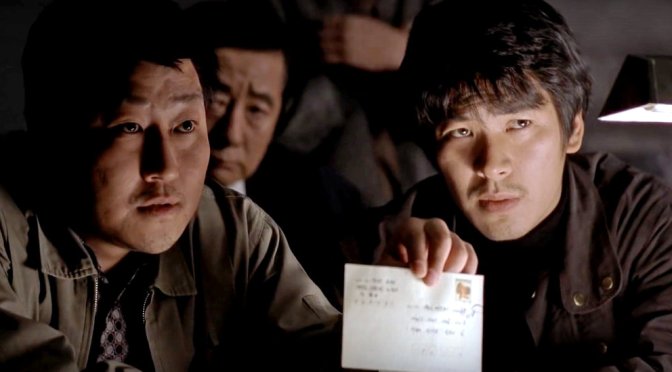
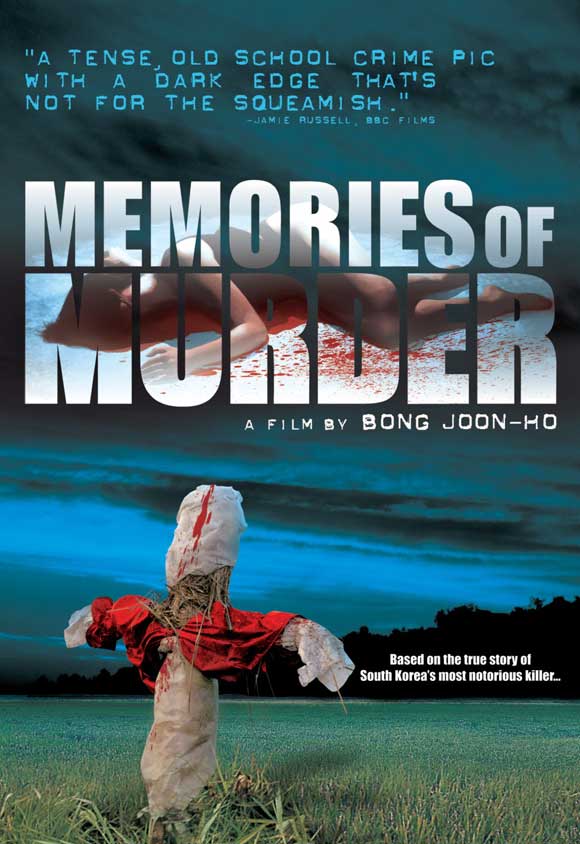
Interestingly, it made me long for the days of the proper independent repertory films that I frequented in the late 1980’s and 1990’s like the Scala, Prince Charles and Everyman. There you could catch old, forgotten and classic movies on re-release, often on double bills or late- night line-ups. To be fair some of these cinemas are still around, but unfortunately not as many as twenty years ago. Unsurprisingly, because of the commercial and critical success of PARASITE (2019), Bong Joon-ho’s back catalogue has been plundered, hence the re-release of MEMORIES OF MURDER (2003). This truly brilliant police procedural thriller is loosely based on the true story of Korea’s first serial murders which took place between 1986 and 1991 in the Gyeonggi Province. The story follows the police department as they pursue a number of leads and suspects over a number of years. However, the killer proves incredibly cunning and, as in the David Fincher helmed crime classic, ZODIAC (2007), it becomes an almost impossible case to crack.


Song Kang-ho and Kim Sang-kyung star as Detective Park and Detective Seo, respectively. They are two very different cops striving to solve the murders of young women who usually wear red. Esteemed Korean actor Song Kang-ho portrays the more instinctive and emotional detective, while Kim Sang-kyung’s cop relies on thorough investigation and deduction. Kang-ho especially proves what a wonderfully natural talent he is and his character’s marital relationship provides warmth amidst the bloody horror of the serial killings. Indeed, it made a change to see a police officer who wasn’t an alcoholic, divorced or utterly cynical.

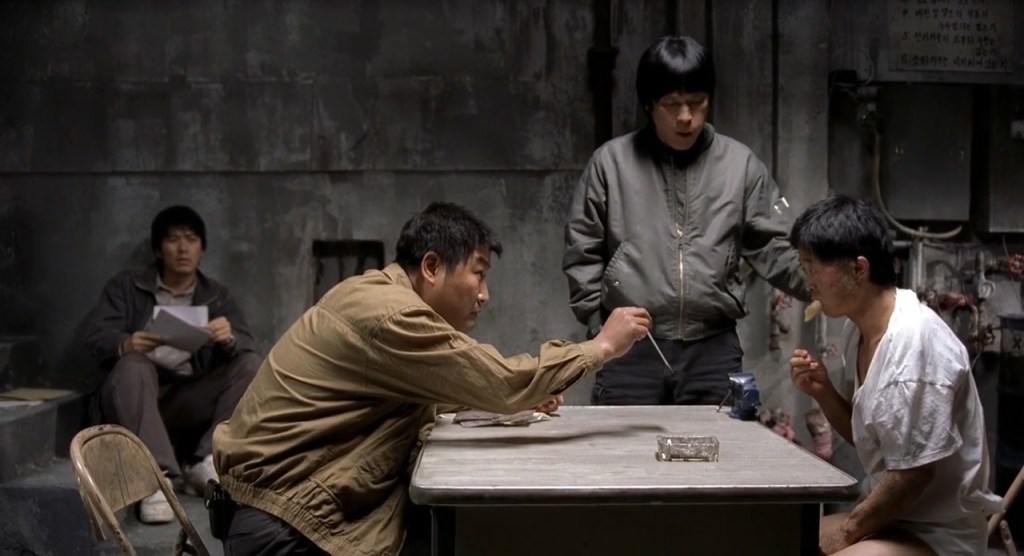
Allied to a plot that over many narrative years is full of twists and turns, the themes and characters within MEMORIES OF MURDER (2003) are what makes it a cut above the standard police drama. While the lead detectives are mostly empathetic, the screenplay finds time to critique their unscrupulous interviewing techniques of suspects. It is only when Detective Seo applies proper forensics and logic do they begin to make headway in the case. Seo especially becomes obsessed with catching this venal murderer of young women. So much so it pushes him to breaking point.

MEMORIES OF MURDER (2003) also presents an early example of the intelligent and precise directorial style of Bong Joon-ho. His framing of multiple actors in the same shot, overlapping dialogue and the exquisite cinematographic representations of both rural and urban landscapes make this an aesthetically pleasing film to experience. Joon-ho loves scenes in the rain too and these add to the film’s atmosphere. Lastly, while it deals with crimes that are dark and shocking, there is also much quirky humour within the excellent screenplay. The bickering between the exasperated police Captain his team provides laughs that spike the grim mood the murders bring. Thus, overall this is very much a film worth leaving the house and going to the cinema for.

Mark: 9.5 out of 11


CLASSIC FILM REVIEW: BLIND CHANCE/PRZYPADEK (1987)

CLASSIC FILM REVIEW: BLIND CHANCE/PRZYPADEK (1987)

Directed by: Krzysztof Kieślowski

Produced by: Jacek Szelígowski

Written by: Krzysztof Kieślowski

Cast: Bogusław Linda, Tadeusz Łomnicki, Zbigniew Zapasiewicz, Boguslawa Pawelec, Marzena Trybała, Monika Gozdzik, etc.

Music by: Wojciech Kilar

Cinematography: Krzysztof Pakulski

Edited by: Elżbieta Kurkowska

**MAY CONTAIN SPOILERS**


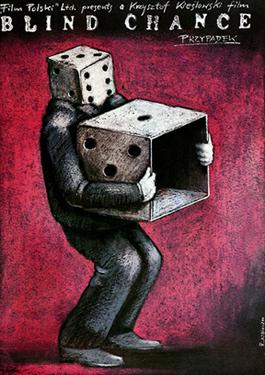
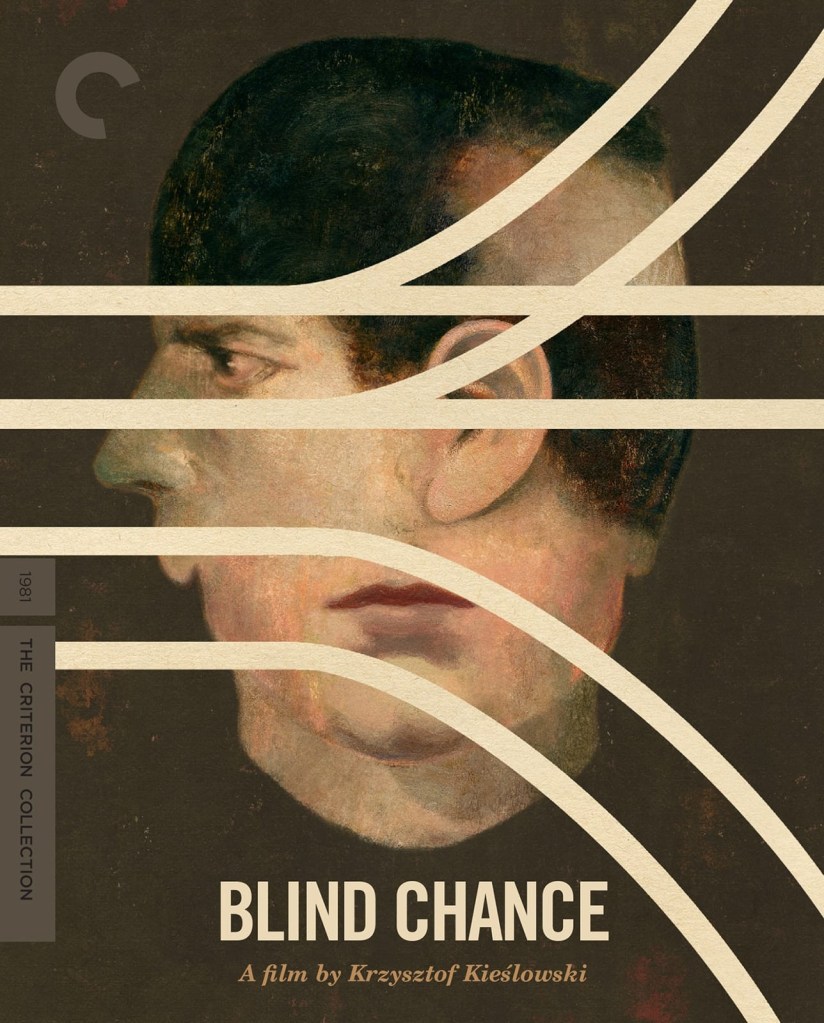
The English translation, according to Google, of the original title of Kieslowski’s classic film, PRZYPADEK, is CASE. Clearly this was considered too simpler a name to give to such a complex film, thus it become known as the more evocative, BLIND CHANCE (1987), when distributed to Western audiences. The title CASE is quite appropriate as the lead character is a case subject in a trio of varying narratives. The brilliant screenplay splits the lead protagonist’s fate into three potentialities and shows how random chance can shape people’s lives. If you think this idea sounds familiar then the films SLIDING DOORS (1998) and RUN LOLA, RUN! (1998), used the same concept in the romance and crime genres, respectively.

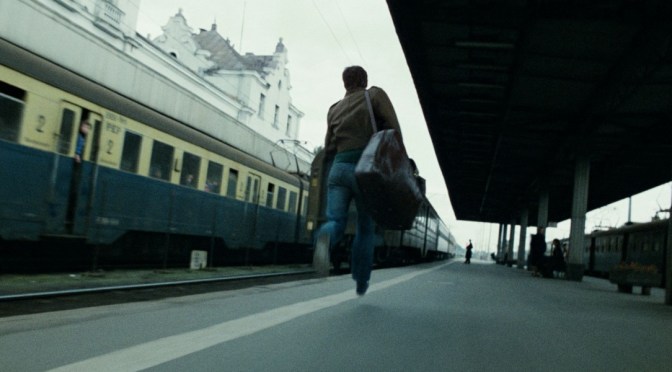
Set against the background of Communist Poland, the narratives follow Witek, a medical student at a crossroads in his life. His father dies and he questions whether he wants to be a Doctor. He takes a break from studies and gets a train to Warsaw to explore future possibilities. Kieślowski dramatizes Witek’s journey as a series of three strands, where fate can be decided by chance as well as choice. The splitting point of the story is Witek rushing to catch his train. In the different scenarios he is shown to board the train and not get on the locomotive. Structurally the film is fascinating as the three different episodes explore Witek’s life from a political, spiritual and personal perspective. Popular Polish actor, Bogusław Linda, brings great empathy and humanity to the characterisation of Witek. Each of the strands finds him in difficult situations politically, romantically and philosophically. However, he is a very sympathetic character, who I very much wanted to succeed, because he always tries to make honest and righteous choices.


If you find yourself absorbed by compelling human dramas that make you think, then you will definitely enjoy, BLIND CHANCE (1987). Kieslowski is a truly masterful filmmaker who creates complex ideas and emotions, but delivers them in a digestible fashion. Kieslowski is not overly intellectual or pretentious, even when positing deep existential questions. Are we tied to fate or do we have some element of control over our lives? Does pure chance rule our world and should we fight against our fate? As such, the film is both fascinating analysis and absorbing drama, because Witek is such a believable character. He desires a career, friends, love and belonging. Moreover, Kieslowski uses Witek as a case study to critique both politics and religion, at the same time opining the importance of loyalty, love and family.

Revered Polish filmmaker, Kieślowski, wrote and directed BLIND CHANCE (1987) in 1981, but due to heavy censorship it was not released for a number of years. Even on initial release many scenes which were cut as they were considered to have critiqued the Polish government. The version I watched on Arrow Video thankfully was restored expertly with just one scene missing. The crisp restoration also highlighted Krzysztof Pakulski’s exquisite cinematography. Indeed, while the use of natural lighting techniques is quite commonplace today, the mood and atmosphere of the composition really compliments the seriousness of Witek’s various journeys. Overall, while there are no easy answers to the questions raised, Kieslowski’s remarkable ending to the film will leave you in no doubt as to his feelings toward life’s rich but fatalistic tapestry.

Mark: 9.5 out of 11


“CINEMA” REVIEW: THE NIGHTINGALE (2019)

“CINEMA” REVIEW: THE NIGHTINGALE (2019)

Directed by: Jennifer Kent

Produced by: Kristina Ceyton, Steve Hutensky, Jennifer Kent, Bruna Papandrea

Written by: Jennifer Kent

Cast: Aisling Franciosi, Sam Claflin, Baykali Ganambarr, Damon Herriman, Harry Greenwood, Ewen Leslie, Charlie Shotwell, Michael Sheasby, etc.

Music by: Jed Kurzel

Cinematography: Radek Ladczuk

***MAY CONTAIN SPOILERS***


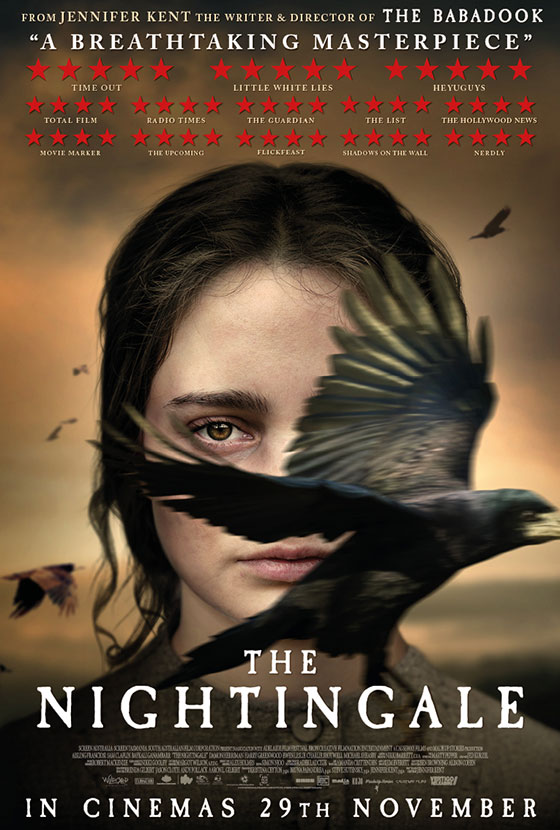
THE NIGHTINGALE (2019) is a brutal film about rape and murder. It’s about the rape of an individual. The rape of a nation. The murders of youth, race, nature, humanity and life itself. It is an extremely powerful and impactful viewing experience, but not for those of a faint heart or sensitive disposition. When released it caused much controversy with some audience members walking out during festival screenings. This is no doubt due to several scenes displaying sickening moments of violence against men, women and children. However, the director Jennifer Kent, has not written and helmed a mere exploitation revenge film here. Instead, she has fashioned a beautiful and ugly tragedy, which prevails damning indictment against masculine savagery, colonialism and British rule.

Set in 1825 in the penal colony of Van Diemen’s Land (presently Tasmania), THE NIGHTINGALE (2019), follows a young female convict seeking revenge for an unspeakable act of violence committed against her family. Clare Carroll, nicknamed “Nightingale” due to her lovely singing voice, is a young mother and wife looking to be given her freedom. It is held by Sam Claflin’s abusive British officer, Hawkins. Rather than free her he decides to thrust himself upon her sexually. Yet, when she rebuffs his drunken and lurid behaviour, he goes mob-handed to take her. Then when her husband intervenes, Hawkins and his soldiers act without honour or courage, leaving a family wrecked in their wake.


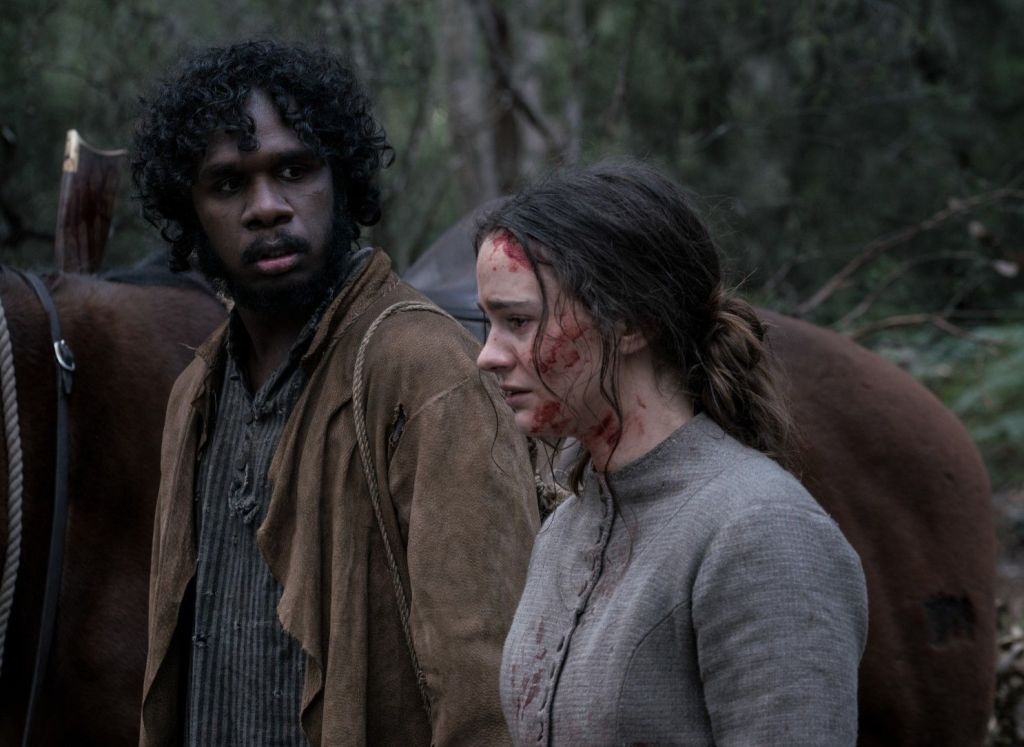
Hawkins and his men venture through the bush to Launceston the next day, to gain a promotion from the top brass he believes he deserves. Claire rallies and pursues them with bloody revenge in mind. She is assisted in her search by Aboriginal guide, “Billy” Mangana (Baykali Ganambarr). Billy is initially reluctant to chase British soldiers. Not surprising as the British have ravaged his people, land and culture, leaving the indigenous people outcasts in their own country. While Claire and Billy initially conflict they soon realise they have a common foe. Thus, while revenge supplies the bones for the narrative, the screenplay fleshes out their chase with intriguing cultural clashes and reconciliation. Indeed, the unlikely pair will eventually come to respect each other’s differences and find common ground over the course of the story.

Having received much critical acclaim with the low-budget horror film THE BABADOOK (2014), Jennifer Kent has moved from inner demonic possession to a more epic and external approach to horror. Because amidst the bucolic wonder of the Australian wilderness, the British brought death and chaos to the area. While one understands the need to have a place to house its prisoners (the barbarous treatment of the working classes is a whole different story), the rapacious desolation of the indigenous culture is a vital message within the film. Claire Carroll and Billy Mangana are symbols of a lost and damaged generation. They are emblems of people who deserve justice and reparation. Moreover, the message remains valid today, especially with the rise of the alternative-right and the continued sexual abuse faced by women everyday. Lastly, with a moving and tough leading portrayal by Aisling Franciosi, Baykali Ganambarr providing a spiritual heart, and Sam Claflin giving a fearlessly repugnant representation of British aggression, THE NIGHTINGALE (2019), tells a horrific, disturbing, but righteously relevant tale.

Mark: 9 out of 11


SHUDDER HORROR CLASSIC REVIEW – THE CHANGELING (1980)

SHUDDER HORROR CLASSIC REVIEW – THE CHANGELING (1980)

Directed by: Peter Medak

Produced by: Joel B. Michaels, Garth H. Drabinsky

Screenplay by: William Gray, Diana Maddox

Story by: Russell Hunter

Cast: George C. Scott, Trish Van Devere, Melvyn Douglas, John Colicos, Jean Marsh, Helen Burns, Madeleine Sherwood,

Cinematography: John Coquillon

***MAY CONTAIN SPOILERS***


If, teenagers being stalked and slashed by a crazed non-speaking maniac are your preference, then you probably would not enjoy the classic ghost story, The Changeling (1980). However, if you are rivetted and chilled by expertly crafted cinematic horror, built on a compelling screenplay, excellent performances and fine cinematography, then this is a film for you.

Not to be confused with the kidnapping thriller, Changeling (2008). The Changeling (1980) feels like one of those older films which created the mould for many other contemporary ghost narratives. A few examples include: The Woman in Black (2012), Candyman (1992), the Ring series and more recently, Hereditary (2018). Such films often feature genre tropes like:

  1. Grieving or vulnerable lead protagonist(s).
  2. A vengeful ghost or spirits who were murdered or done wrong when alive.
  3. A creepy house or location which holds a dark secret and becomes a character in it’s own right.
  4. A detective plot structure which finds said protagonist attempting to solve the mystery of the ghost’s past.
  5. Lots of creepy supernatural comings and goings that ultimately lead to the ghost’s redemption or a successfully chilling retribution.

Of course, the model for such conventions lay in the pages of classic literary ghost stories, however, having not seen The Changeling (1980) for over thirty-years, I felt like I was watching a masterpiece of the supernatural film genre. It doesn’t hurt having Oscar winning actor, George C. Scott, subtly playing the lead as grieving John Russell, a musical professor trying to come to terms with the death of his wife and child. Moreover, the mature approach to pacing and direction by Peter Medak slowly builds the terror to a real crescendo. The horror within the plot, involving a murdered child, is ably imbued by the compelling score, elegant editing and John Coquillon’s exquisite camera movement and lighting composition. Ultimately, I enjoy a good slasher film, but give me a classy supernatural tale such as The Changeling (1980) any night of the week.

Mark: 9 out of 11


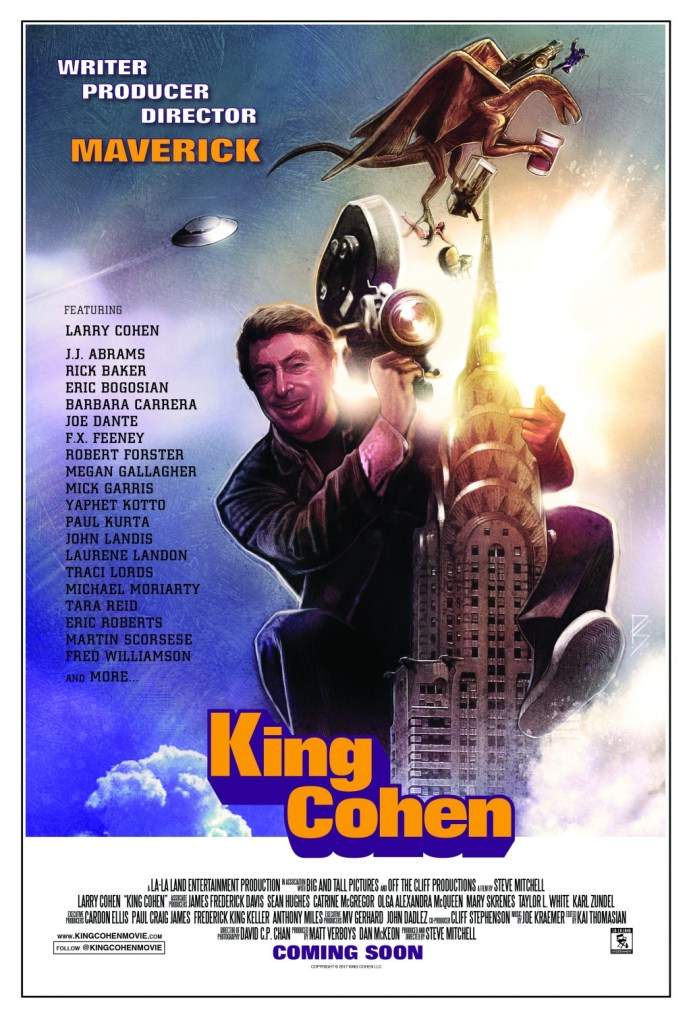
SHUDDER HORROR REVIEW: KING COHEN (2018)

SHUDDER HORROR REVIEW: KING COHEN (2018)

Directed by Steve Mitchell

Featuring: Larry Cohen, J.J. Abrams, Rick Baker, Eric Bogosian, Richard J. Brewer, Jon Burlingame, Barbara Carrera, Joe Dante, James Dixon, F.X. Feeney, Robert Forster, Megan Gallagher, Mick Garris, Paul Glickman, Frederick King Keller, David Kern, Yaphet Kotto, Paul Kurta, John Landis, Laurene Landon, Traci Lords, Michael Moriarty, Daniel Pearl, Eric Roberts, Martin Scorsese, Nathaniel Thompson, Ryan Turek, Janelle Webb, Fred Williamson etc.


In England, where I grew up in the 1970’s, we used to used have only THREE television channels to choose from. Latterly in the 1980’s that increased to four. Now, we have what seems like millions of streaming and cable channels to choose from. They’re coming out of our ears and minds and from the skies and the darkened underground. Of course, we have the major channels such as Sky, Apple, BBC, ITV, Netflix, Disney + and Amazon, to but name a few, however, there are now specific streaming outlets geared toward whole genres.

One of these is Shudderhttps://www.shudder.com/ – and they specialise in screening B-movies, video nasties, slasher, serial killer, monster, essential and non-essential horror films from past and present. Fellow blogger, Bobby Carroll, has recently been reviewing some of Shudder’s catalogue and I too will be doing the same. Check out his site here – it’s very good! So, over the last few weeks I have binged on so many horror films. Some are very good ones, some pretty bad ones and some just absolutely downright ugly releases. I guess one could consider me strange to immerse myself in so many horror films back-to-back; however, I love to be moved by fear and sickened with fright. Having said that the true terror on this Earth is happening out there in the real world. What occurs on the cinema or TV screen within the horror genre is actually an escape for me; albeit a gruesome, deathly and bloody one.


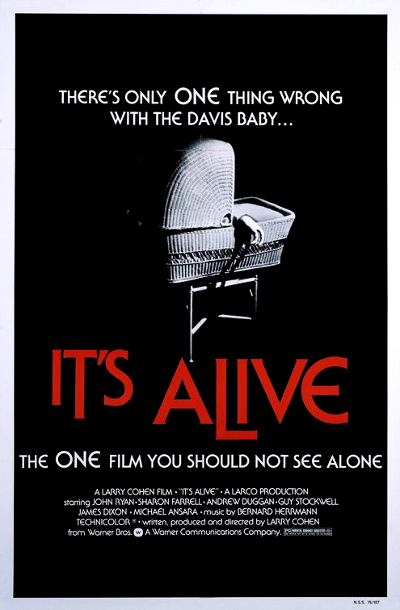
The first film I’d like to review is King Cohen (2018). It is a very lively jaunt through the career of independent filmmaker Larry Cohen. If you didn’t know Larry Cohen, he is one of the most prolific screenwriters ever. Born in 1941 in Washington Heights, New York, he began a stand-up career at the age of seventeen, before moving onto writing teleplays and TV scripts for CBS and NBC. Working within the TV and Hollywood system was creatively stifling for Cohen, so he decided to write, produce and direct his own films as a true independent. Examples of his directorial work include: Bone (1972), Black Caesar (1973), It’s Alive (1974), God Told Me To (1976), The Private Files of J. Edgar Hoover (1977), Q-The Winged Serpent (1982), The Stuff (1985), plus he wrote the screenplays for Best Seller (1987), Maniac Cop (1988), Phone Booth (2002) and Cellular (2004).        

As a tribute to Larry Cohen, who passed away last year, this is a tremendously lively and positive documentary about a true maverick filmmaker. Larry Cohen indeed features heavily in the interviews. He comes across as energetic, intelligent, funny and ballsy. Testimonies from Fred Williamson, Martin Scorsese, Joe Dante, Rick Baker, Eric Roberts and many, many more people who worked with Cohen bear witness to his prolific output and unorthodox ways of shooting films. Because he wanted control over his writing, many of his directorial releases were very low budget and he would often film in a guerrilla style on the streets of New York or even in his own house. He became famous for “stealing” scenes which included, unbeknown to them, the general public and NO film or work permits. I admired both his hubris and determination to tell his cinematic stories, and despite the lack of money his scripts were full of ingenuity, humour and much intelligence. Thus, if you love films about filmmaking and exploitation movies in general, then you should definitely check out King Cohen (2019) and Larry Cohen’s back catalogue of horrors too.

Mark: 8 out of 11


UNDER-RATED CLASSICS #8 – THE NINTH CONFIGURATION (1980)

UNDER-RATED CLASSICS #8 – THE NINTH CONFIGURATION (1980)

Directed, written and produced by: William Peter Blatty

Based on The Ninth Configuration by William Peter Blatty

Starring: Stacy Keach, Scott Wilson, Jason Miller, Ed Flanders, Robert Loggia, Moses Gunn, Joe Spinell, Neville Brand etc.

Music by: Barry De Vorzon

Cinematography: Gerry Fisher

*** MAY CONTAIN SPOILERS ***


“I became insane, with long intervals of horrible sanity.”
― Edgar Allan Poe

Sparked by uber-film critic Mark Kermode waxing lyrical about The Ninth Configuration (1980) in one of his cinema books, I was extremely pleased when I found a remastered 2016 reissue streaming on Amazon Prime. I don’t always agree with Kermode’s effusive praise of certain films, however, his opinion should always be respected. Having watched the film I can concur that it is indeed an under-rated classic. Just to clarify, for me, an under-rated classic can be a film I love, plus satisfy the following criteria:

  1. Must not have won an Oscar.
  2. Must not have won a BAFTA.
  3. Must not appear in the AFI Top 100 list.
  4. Must not appear in the IMDB Top 250 list.
  5. Must not appear in the BFI 100 Great British films.
  6. Must not appear in the all-time highest grossing movies of list.

While the writer and director, William Peter Blatty, won a Golden Globe for best screenplay, I feel that The Ninth Configuration (1980) is somewhat of a lost masterpiece. It was released at the same time as Ordinary People (1980) , The Elephant Man (1980) and Raging Bull (1980) and rarely seems to be discussed or praised at all these days. Well, aside from Mark Kermode’s gratefully received validation. Thematically, it is very strong as it deals with mental breakdown and illness amidst soldiers post-Vietnam. Moreover, it also contains memorable iconography within a curiously foreboding setting.


Based on Blatty’s 1978 novel, which in itself was a reworking of an earlier story called, Twinkle, Twinkle “Killer” Kane, The Ninth Configuration centres the action in a grand chateau located, rather weirdly in America somewhere. The dark, shadowy castle (which was actually in Germany), is surrounded by deep forestation and is used by the U.S. government as an insane asylum for military personnel. Spring-boarding themes and ideas from movies such as: One Flew Over The Cuckoo’s Nest (1975), Mash (1970) and, in regards to its exploration of P.T.S.D., The Deer Hunter (1978), the narrative features a whole host of eccentric and over-the-edge characters. They include an Astronaut, Captain Billy Cutshaw (Scott Wilson), who went mad and sabotaged a space launch, Jason Miller as Lieutenant Frankie Reno, a soldier attempting to direct Hamlet with a cast of dogs; and the recently arrived, new psychiatrist, Colonel Vincent Kane (Stacey Keach). It is Kane’s and Cutshaw’s developing relationship which powers many of the philosophical and existential debates within the film’s incredible script.

For a film set in an asylum Blatty unsurpisingly uses dark humour, hysterical personalities and some incredibly funny lines of dialogue to propel an absurd first half. However, as Cutshaw and Kane’s connection grows deeper, the two men push each other into some very dark places. Exploring the slight gap between insanity and sanity is a tricky thing to get right in terms of tone, however, Blatty, is a brilliant writer and succeeds with a script that zig-zags the line between chaos and structure. He also benefits from an amazing ensemble cast of character actors who throw themselves heartily into the chaos on show. Scott Wilson and Stacey Keach are especially memorable in their intense and honest portrayals of soldiers pushed too far by their respective commands.

Overall, The Ninth Configuration (1980) is a forgotten masterpiece which deserves revisiting. I was blown away by the endlessly quotable dialogue and the risks Blatty took as a director. I mean, he opens with an incongruous Country and Western song-backed montage before the credits. This pop video beginning is jarring, but somehow makes sense in the end. Blatty then veers between farcical humour, crazed episodes involving the lunatics taking over the asylum, and philosophical and theological discourse within the therapy sessions. Finally, the film finishes with a violent and cathartic denouement, yet one which, given the dark existentialism that has unfolded, is amazingly full of hope, faith and optimism.

Mark: 9.5 out of 11


NETFLIX FILM REVIEW: DA 5 BLOODS (2020)

NETFLIX FILM REVIEW: DA 5 BLOODS (2020)

Directed by: Spike Lee

Produced by: Jon Kilik, Spike Lee, Beatriz Levin, Lloyd Levin

Written by: Danny Bilson, Paul De Meo, Spike Lee, Kevin Willmott

Cast: Delroy Lindo, Jonathan Majors, Clarke Peters, Norm Lewis, Isiah Whitlock Jr., Mélanie Thierry, Paul Walter Hauser, Jasper Pääkkönen, Jean Reno, Chadwick Boseman etc.

Music by: Terence Blanchard, Marvin Gaye

Cinematography: Newton Thomas Sigel

Distribution: Netflix

***MAY CONTAIN SPOILERS***


Shelton Jackson “Spike” Lee has been a prolific actor, director, producer and polemicist for some time now. An ultra-talented and outspoken cinematic artist, he has directed thirty fiction and documentary films since his debut feature film She’s Gotta Have It (1986). Plus, all manner of promos, commercials, music videos, short films and television series. An energetic firebrand of a director he has made films in many genres and is a risk-taker in subject, theme and style. Whether you agree with what he has to say he is a filmmaker who is always creating situations and characters who must be heard.  

His latest film, Da 5 Bloods (2020), is a timely Netflix film release which encapsulates crime, heist, political, war, drama, Blaxploitation, comedy, documentary, love and experimental film genres. Lee has never been afraid of taking risks and sometimes his films have not worked because of it. However, with BlacKKKlansman (2018) he succeeded in making one of the best films of 2018 and should have won Best Film Oscar in my view. Da 5 Bloods (2020) grabs the power baton of Lee’s prior film and runs with it, delivering an entertaining, funny, thought-provoking, stylish and brilliant genre-blending story full of sustainable socio-political arguments in the era of the Black Lives Matter movement.


The narrative begins by establishing four aging Vietnam veterans, portrayed by the magnetic ensemble of Delroy Lindo, Clarke Peters, Norm Lewis and Isiah Whitlock Jr. They meet in Ho Chi Minh City in order to venture into the jungle and locate the remains of their squad leader. During some very stylised, richly colour-saturated and impactful flashbacks, it is revealed their friend, “Stormin Norman” (the charismatic, Chadwick Boseman), was killed in combat. Furthermore, and this is the money reason they are back in ‘Nam – there is army gold in those hills. Thus, the comrades set out to locate their friend’s body, and the gold, in order to find reparation and hopefully some form of redemption.

The film begins warmly as we enjoy the company of these great actors portraying reunited friends on an old boys outing. However, the film, as it introduces further subplots involving Jean Reno’s suspicious businessmen, Desroche and Delroy Lindo’s Paul crumbling mental state, moves into far darker territory the further the men get into the jungle. Lindo himself gives arguably the best performance of his career as a soldier grieving for his lost friend and desperate to get compensation for the unjust loss of so many lives in Vietnam. His character’s downward mental trajectory is one of the most powerful elements of Da 5 Bloods (2020). No doubt Lindo will be nominated come awards time and so he should be.

The cinematic excellence on show too from Spike Lee and his production crew is to be applauded too. Lee’s box of magic tricks includes: jump cuts, aspect ratio switches, colour saturation, Shakespearean soliloquies, documentary footage, flashbacks, conveyor-belt camera tracks, stills photography, slow-motion, direct address and many other devices. The exceptional cinematography is drenched in an opulent score from Terence Blanchard and the incredible voice of Marvin Gaye. I guess my main reservations about the film would be the elongated running time, with some scenes indulgently over-running. Moreover, there were also a couple of convenient plot coincidences which could have been ironed out. Nonetheless, with Da 5 Bloods (2020), Spike Lee has delivered another bravura mix of genre and socio-political filmmaking which, like classics such as The Treasure of Sierra Madre (1948) and Apocalypse Now (1979), stare into the dark heart of humanity and find greed, war and death there. Unlike those two films though, Da 5 Bloods (2020), also contains hope, light in the tunnel, and the idea that togetherness brings strength in the face of adversity.

Mark: 9 out 11


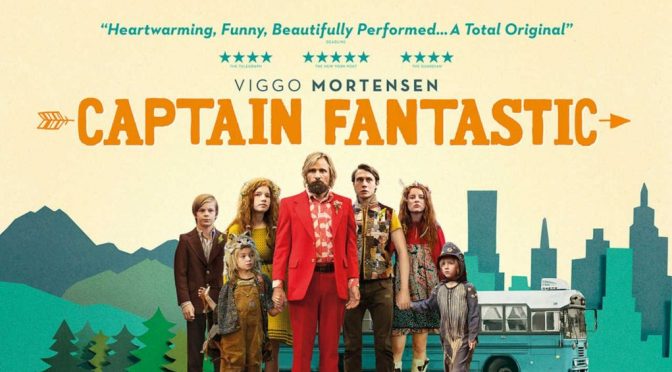
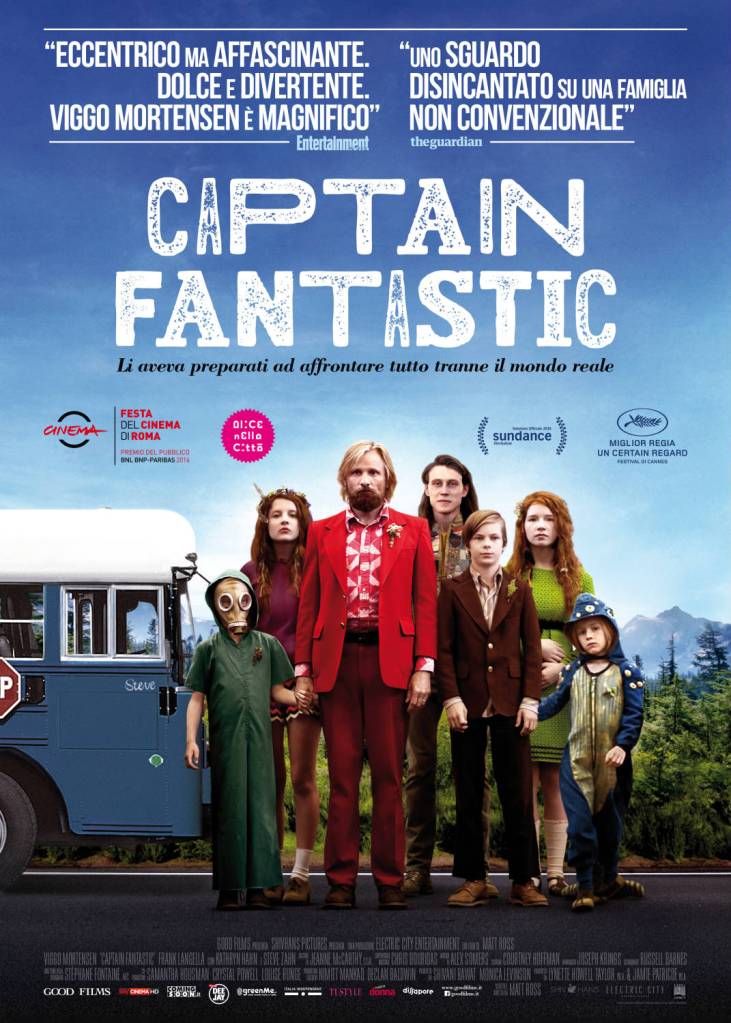
FILMS THAT GOT AWAY #10 – CAPTAIN FANTASTIC (2016)

FILMS THAT GOT AWAY #10 – CAPTAIN FANTASTIC (2016)

Written and directed by Matt Ross

Produced by: Nimitt Mankad, Monica Levinson, Jamie Patricof, Shivani Rawat, Lynette Howell Taylor

Cinematography: Stephen Fontaine

Music: Alex Somers

Cast: Viggo Mortensen, Frank Langella, Kathryn Hahn, Steve Zahn, George MacKay, Samantha Isler, Annalise Basso, Nicholas Hamilton, Shree Crooks, Charlie Shotwell, Trin Miller, Elijah Stevenson, Teddy Van Ee, Erin Moriarty, Missi Pyle, Ann Dowd,

***MAY CONTAIN SPOILERS***


Have you ever thought about living “off the grid?” Maybe you already do. It’s something I have considered from time to time. Get out of the rat race and stop punching the clock. I don’t think I have the abilities or desire to do so though ultimately. Moreover, I would probably miss my television and home comforts like baths and central heating. Having said that, it’s always fascinating to watch films or TV programmes about characters or people who have tried to live outside conventional societal rules. Films like: Together (2000), The Commune (2016), Leave No Trace (2018) and Into the Wild (2007) are all excellent narratives which represent characters who, to varying degrees of failure and success, have eschewed civilization. Matt Ross’ excellent recent release, Captain Fantastic (2016), is another darkly humorous and poignant movie to add to that list.

I’m not sure why I missed seeing Captain Fantastic (2016) first time round at the cinema, but I am so glad I caught up with it on Netflix. It stars the ever-brilliant Viggo Mortensen as Ben Cash, the father-of-six children, ages ranging from seven to late teens. Their mother, Leslie, alas, has suffered long bouts of depression linked to bipolar disorder and is currently in a mental health facility. Having established Ben and the children’s unorthodox living arrangements in a forest dwelling, the script throws them the tragic curveball of Leslie’s suicide. The family leave behind their strict hunting, education and exercise routine, as well as their self-built huts, shacks and wooden dens, to drive cross-country on their transformed mobile home, a bus called Steve, to attend Leslie’s funeral.


While grief and sadness hang heavy over the family unit, Matt Ross’ brilliant screenplay structures the film around that great American film genre — the road movie. As the bus, Steve, carries them away from the wilderness into civilisation, the clashing of the Cash’s alternative lifestyle and socially eccentric behaviour with society, provides a rich vein of comedic and dramatic moments. For example, Viggo Mortensen eating breakfast naked at a campsite while people pass by, and oldest son, Bodevan (George Mackay), romantically declaring his love to Claire (Erin Moriarty), who was just expecting a random hook-up, are both hilarious scenes. Similarly, Ben and Leslie, having tutored their kids at home quite impressively, have not factored in their apparent lack of socialisation in the outside world. Lastly, Ben’s candidness in matters of sex is shocking too and he conflicts with his sister, portrayed by Kathryn Hahn, who believes the children should have a more “normal” life.

Amidst the humour and hilarious culture clash punchlines, the director, Matt Ross, expertly weaves some heartfelt drama in their too. Ben fights with his father-in-law, Jack (Frank Langella) over Leslie’s funeral arrangements. Jack then attempts to take the children off him via legal means. Throughout all this Viggo Mortensen’s majestic acting performance anchors the film with searing emotional depth. His character must deal with the death of his wife and whether he has made the right decisions for his family. I mean, the kids have cuts and bruises from hunting exploits, possess strange invented names, wear unconventional clothes and do not celebrate Christmas at all. Furthermore, they eschew all organised religion in favour of celebrating academic philosopher, Noam Chomsky’s birthday. With the death of his wife and pressure from her family, it’s no surprise Ben feels cornered. However, Matt Ross’ film, Captain Fantastic (2016), lives up to the positive title and overall gives us a sense of warmth, community and love, proving that family unity is often an impossible bond to break.

Mark: 9 out of 11